Find equipment by installation point and separation task.
All magnetic separators →Start with the material or production line you need to protect.
All applications →Compare technologies, check parameters and prepare your RFQ.
All guides →See the factory, quality checks and answers before you request a quotation.
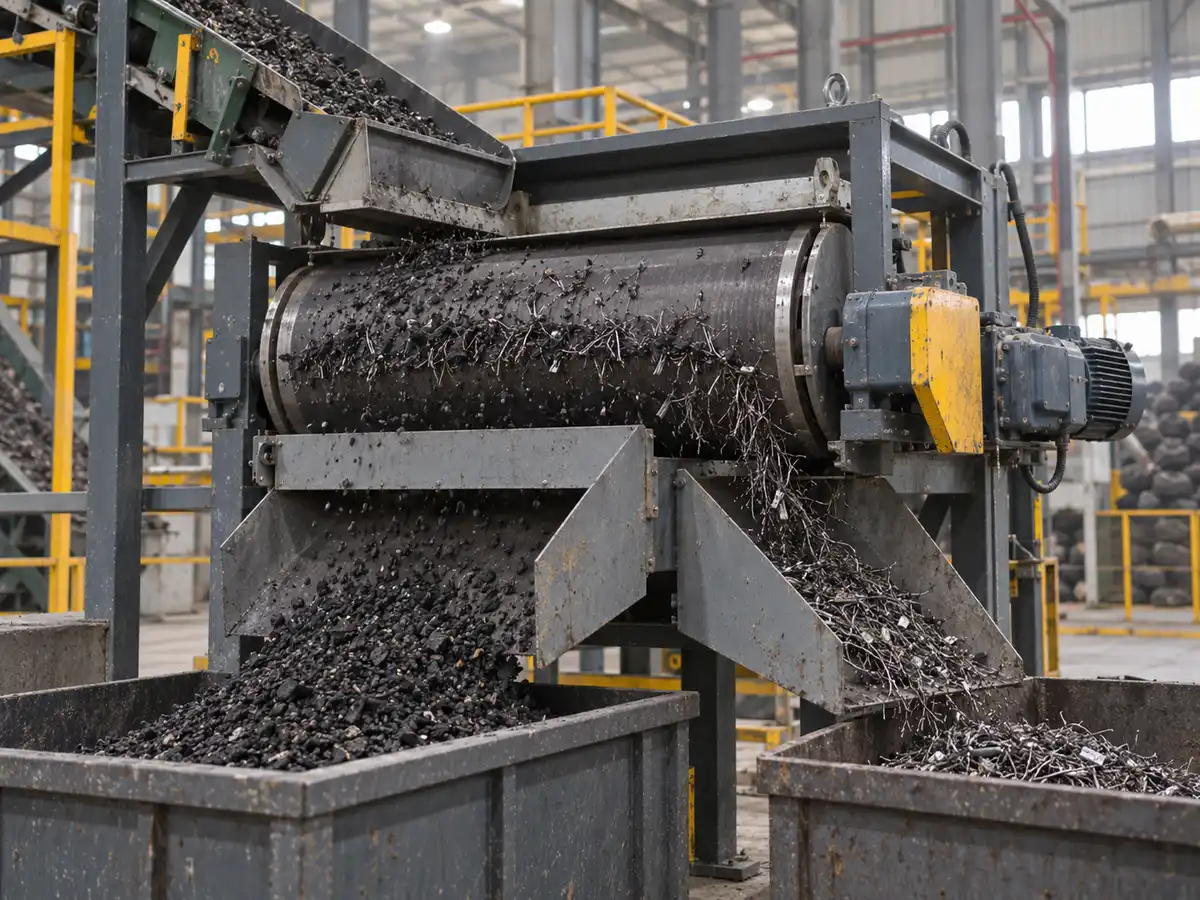
Recover liberated steel wire and ferrous fragments from shredded tire rubber at the stage where the metal is actually exposed. Corvelan configures overband, suspended and drum magnetic separation around your tire size-reduction process, wire condition, material depth, working distance and required separation result.
If bead wire or reinforcement is still locked inside an intact tire or thick rubber section, mechanical liberation comes before magnetic separation.
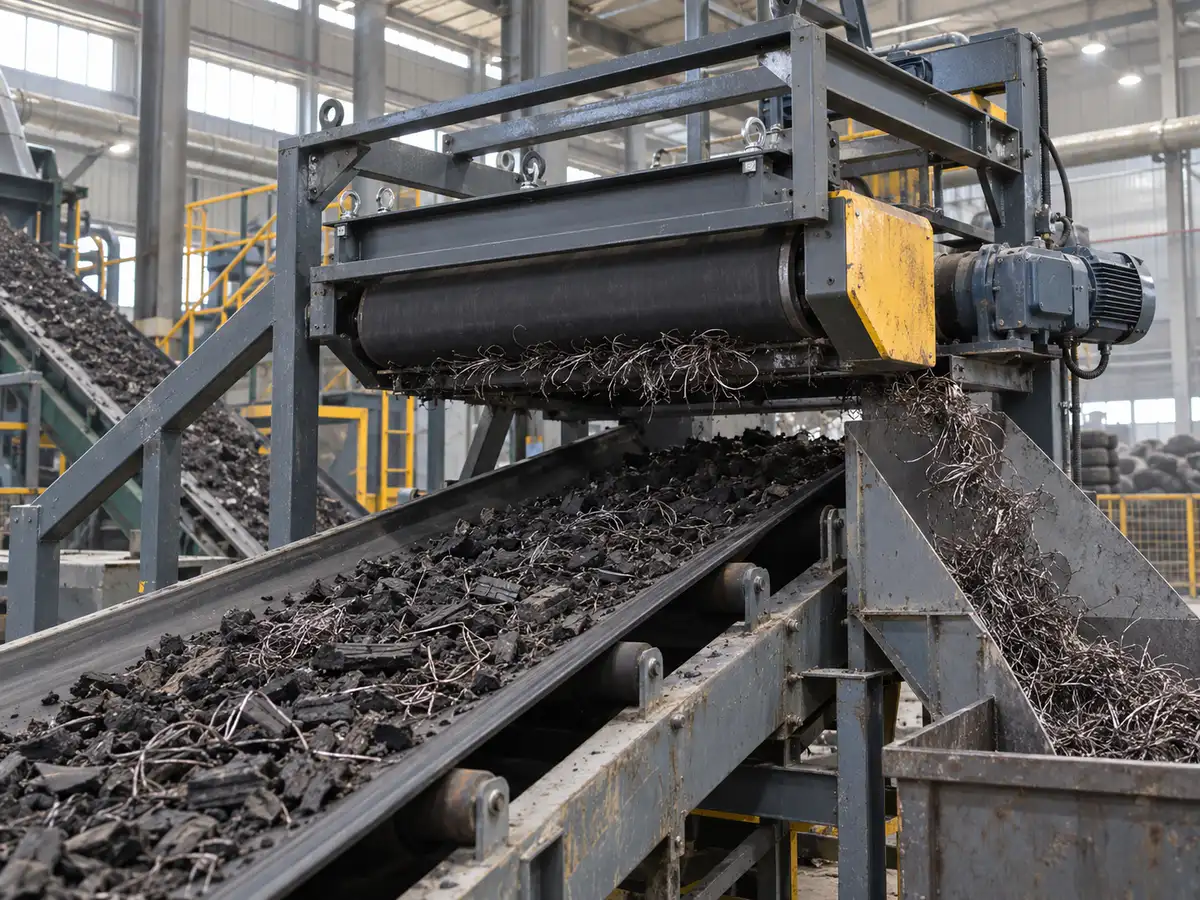
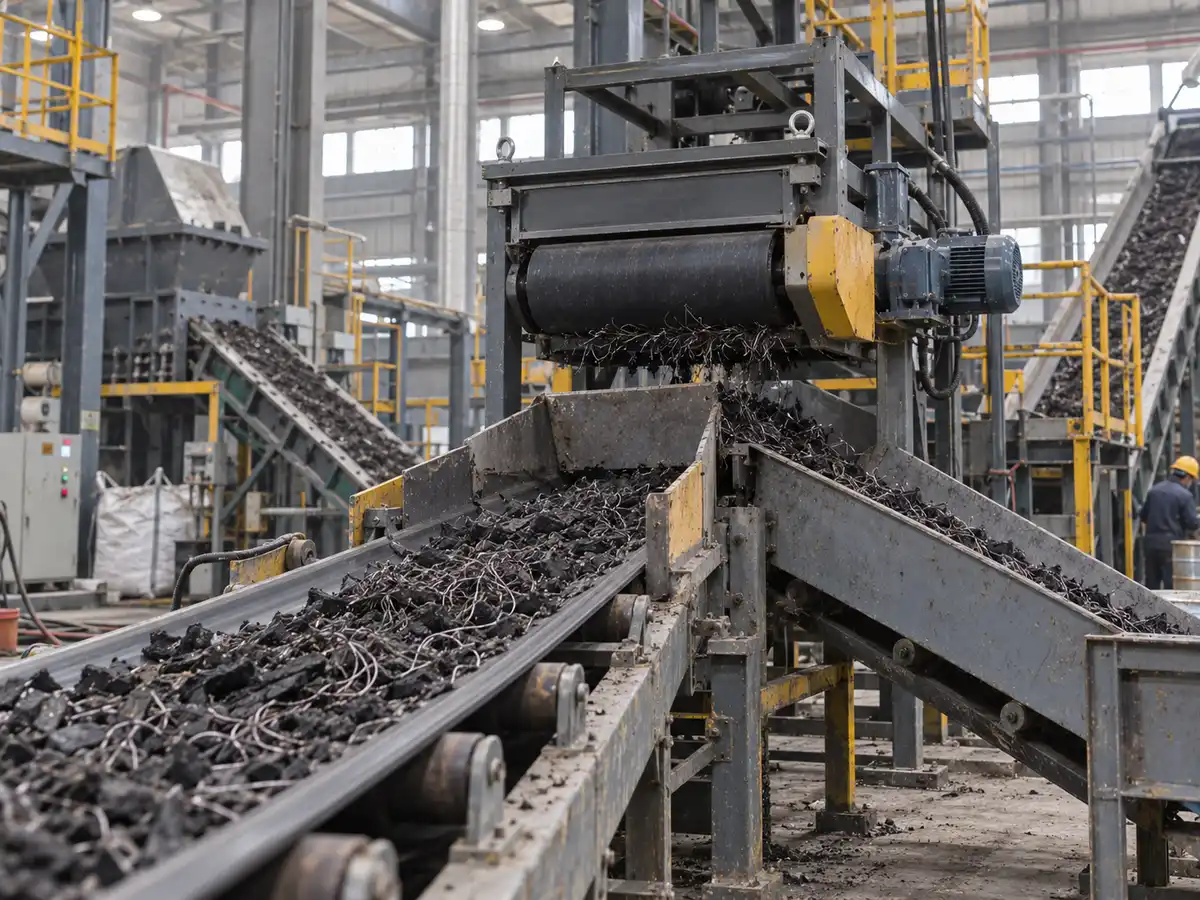
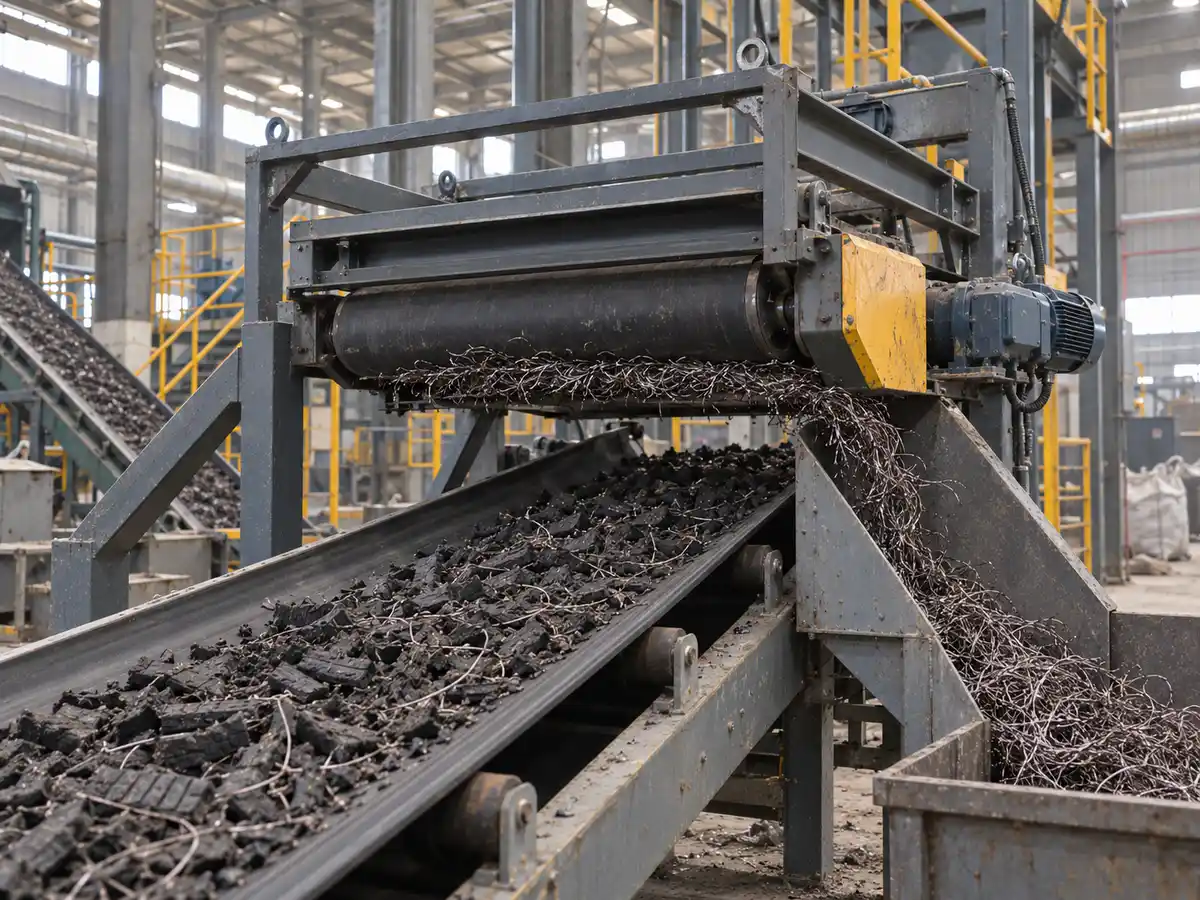
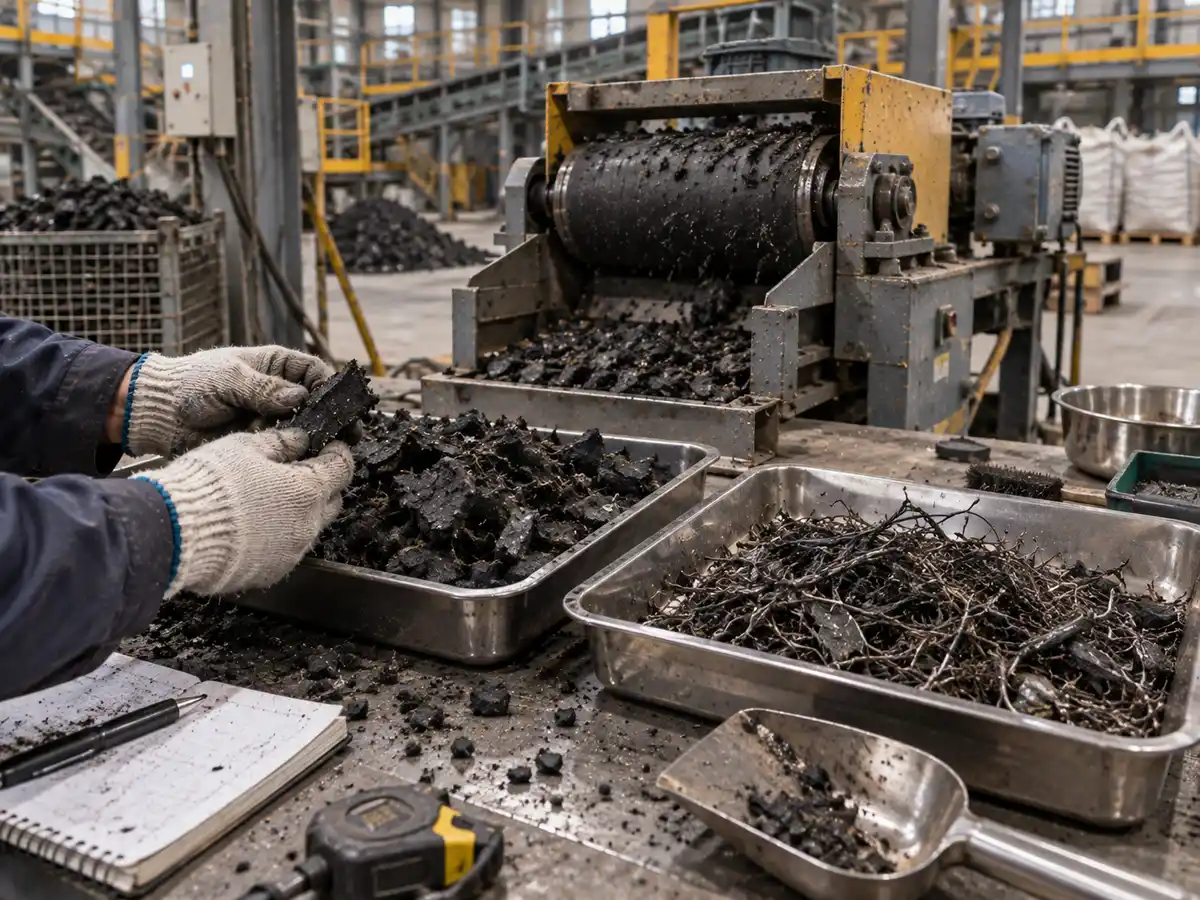
Concept application image showing tire-recycling magnetic separation after steel liberation.
These are different operations. Corvelan magnetic separators are designed to remove exposed steel wire and ferrous pieces after tire shredding or size reduction.
Use mechanical extraction or further size reduction when bead wire and reinforcement are still locked inside an intact tire, sidewall or thick rubber section. A stronger magnet does not solve insufficient liberation.
Use magnetic separation after shredding, rasping or granulation has exposed steel cord, bead-wire fragments or other ferrous material that can be presented to a magnetic field and discharged as a separate fraction.
Whole tires and thick rubber pieces are poor magnetic-separation targets because the steel remains mechanically locked inside the rubber. Once shredding, rasping or granulation exposes enough wire, waste tire magnetic separation becomes practical. Headline Gauss values cannot compensate for steel that is not yet liberated.
The right separator depends on the steel condition, material size and the recovery result you need — not only the magnetic strength.
Steel may still be partly embedded in thick rubber and may not yet behave as a free magnetic fraction.
More cord wire is liberated and can be presented on a conveyor for continuous ferrous recovery.
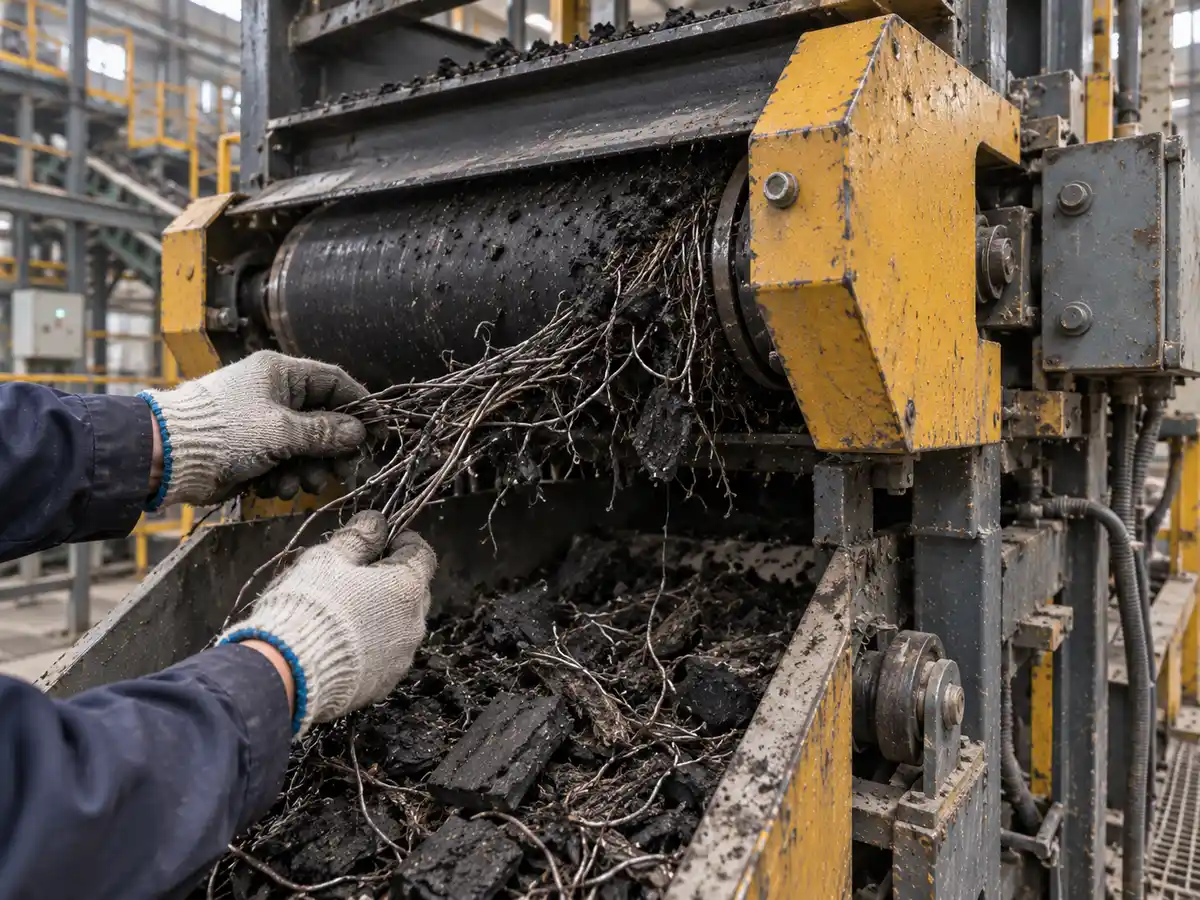
The recovered magnetic fraction may still contain attached or entrained rubber.
Smaller liberated wire or ferrous fragments remain in a more controlled rubber fraction.
Magnetic separation is used after tire size reduction when steel becomes exposed for recovery. Some applications require bulk steel recovery, while others need additional cleaning or residual-wire removal.
Provide material samples from the point where magnetic separation will be installed. The same tire recycling line can produce different separation results depending on material size and steel exposure.
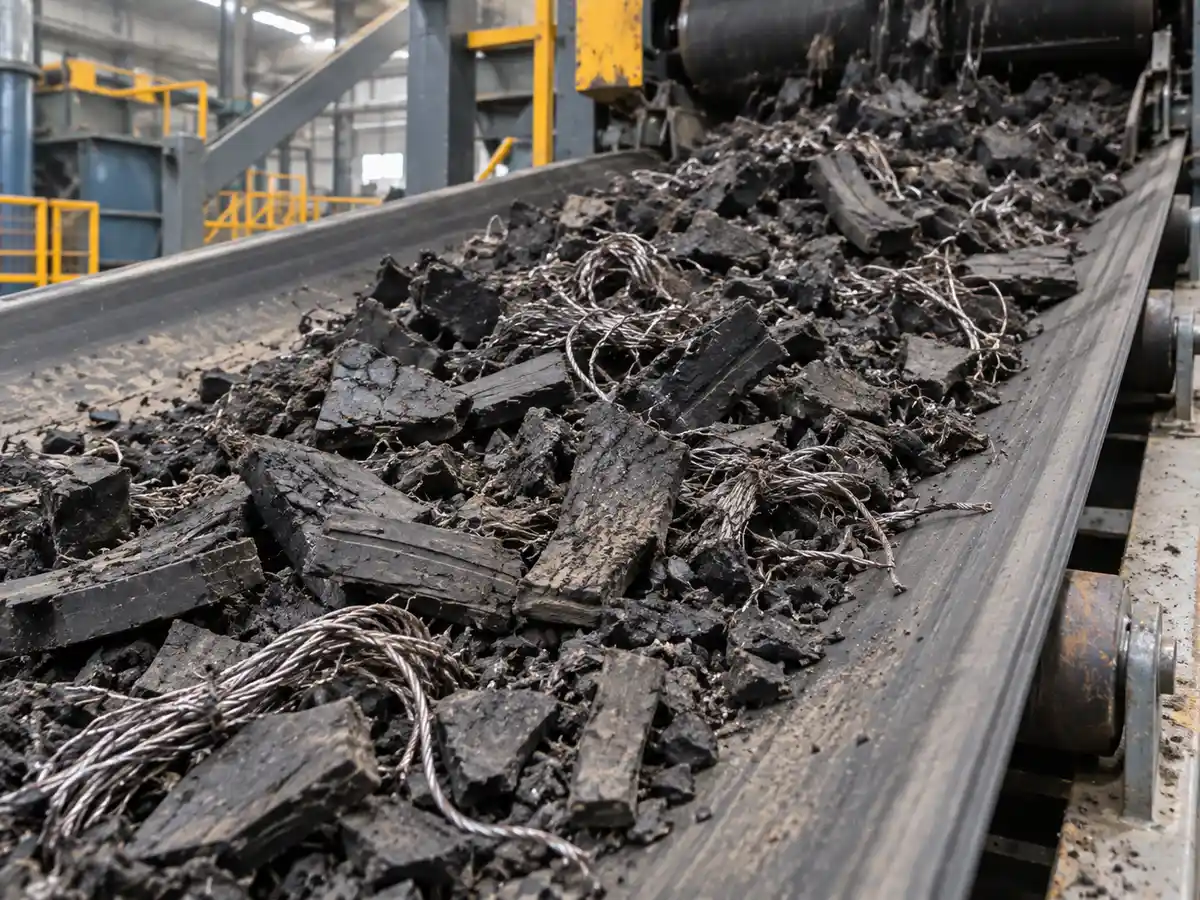
Large rubber shreds containing exposed or partly exposed cord wire.
Smaller rubber pieces with increasing steel liberation and irregular wire shapes.
Steel wire containing attached or entrained rubber that may need secondary cleaning.
Granulated rubber containing short liberated wire or other ferrous fragments.
Downstream material that may require a polishing stage for residual fine ferrous contamination.
Tire recycling applications require different magnetic separators. Corvelan selects suitable equipment based on steel condition, material size, processing capacity and installation requirements.
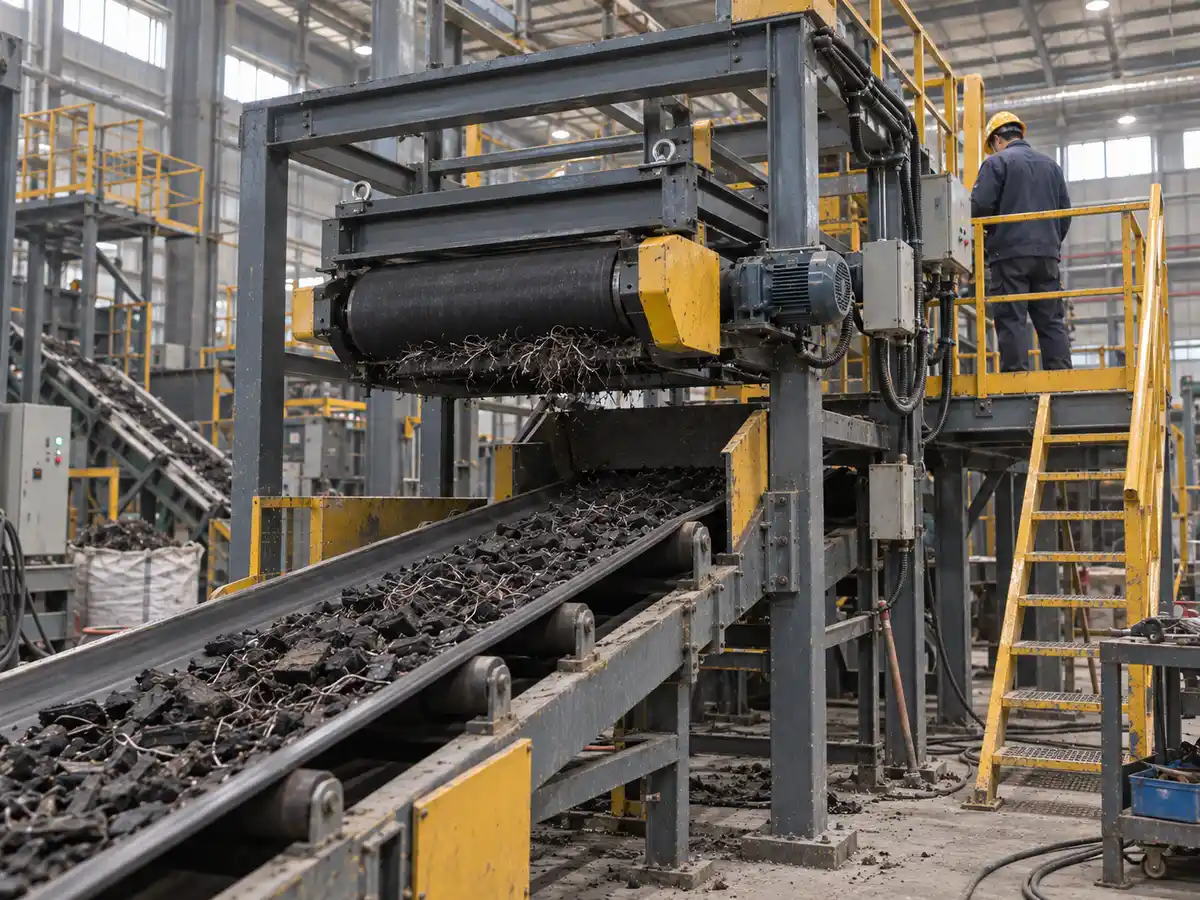
Recommended when exposed steel travels on a conveyor and continuous automatic discharge is preferred over frequent manual cleaning.
Main boundary: automatic cleaning does not correct poor steel liberation or excessive working distance.
Recommended for lower or intermittent ferrous loading where manual cleaning is acceptable.
Main boundary: manual cleaning can become impractical when long wire arrives frequently or tangles.
Recommended when smaller liberated steel wire or ferrous fragments can be distributed across a controlled width with separate magnetic and non-magnetic discharge paths.
Main boundary: a drum cannot correct unstable feed or steel still locked inside rubber.
A dry magnetic drum becomes more relevant after the material has reached a controlled stage: smaller rubber pieces or granules, liberated short wire or ferrous fragments, a defined feed width and enough space to create separate discharge paths.
Corvelan treats the magnetic circuit, shell, feed layer, working distance, drum speed and splitter as one separation system. Separator selection should consider the complete application requirements rather than only magnetic strength or capacity data.
Tire wire is difficult because long strands tangle, attached rubber changes how the wire behaves, and a deep burden increases working distance. These factors should be considered together when selecting the suitable separator.
Capturing more steel is not always a better recycling result if valuable rubber is lost or recovered steel still contains excessive rubber. Corvelan evaluates recovery, residual steel, rubber carryover and steel cleanliness separately.
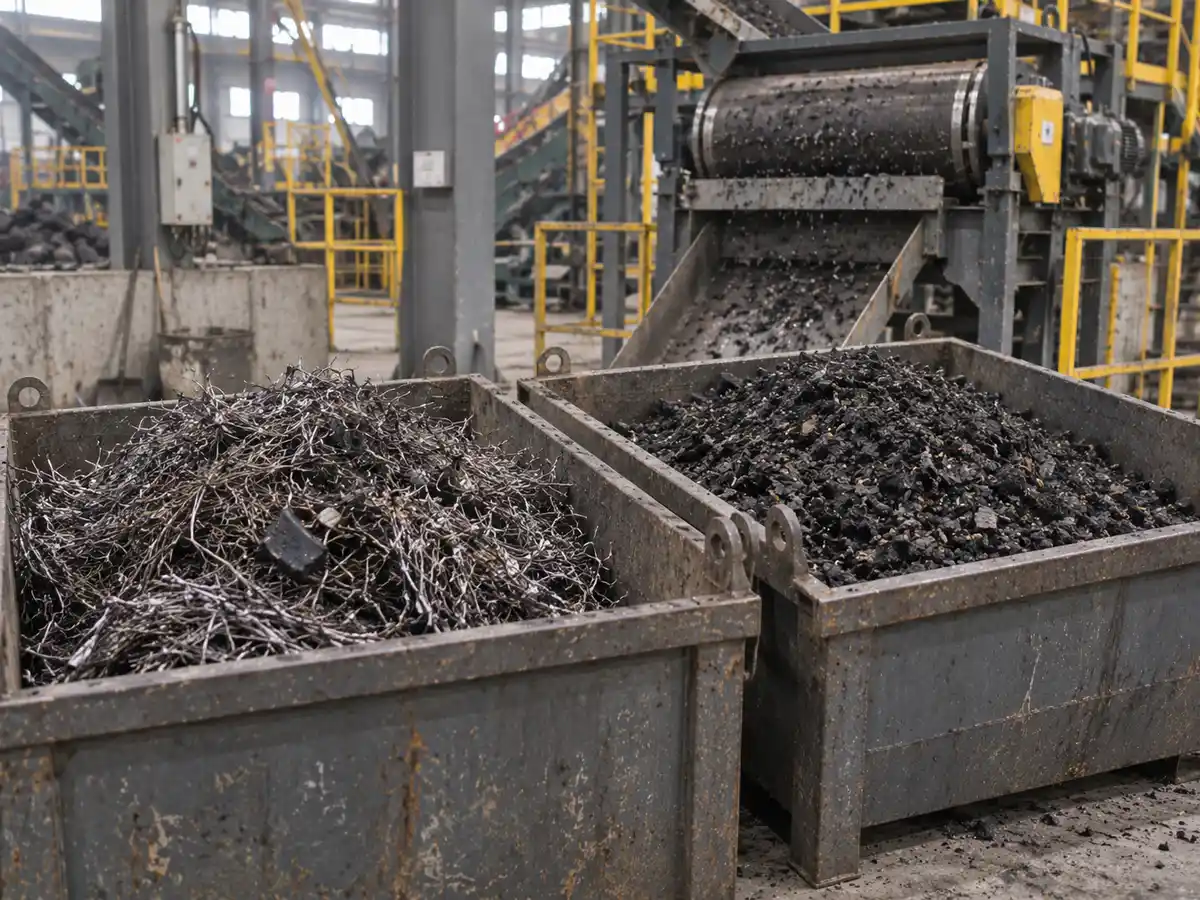
How much target exposed ferrous material reports to the magnetic fraction under the defined test condition.
How much target ferrous material remains in the rubber product after the specified separation stage.
How much usable rubber leaves with the recovered steel fraction and may require reprocessing.
How much rubber remains attached to or entrained with the recovered tire-wire fraction.
Proper installation is important for reliable separation performance. Working distance, support structure, discharge arrangement and maintenance access should match the application. Tire wire can also create wrapping and wear risks that should be considered during installation planning.
Provide belt or chute width, material speed, feed direction, normal burden depth and how evenly the material is distributed.
Confirm the real distance from the magnetic face or active zone to the target steel, including material layer, shell and wear protection where relevant.
Define where recovered wire and rubber will go, including bin or conveyor position, splitter clearance and safe wire-handling space.
Allow inspection, cleaning, wire removal, drive service, wear-part replacement, isolation and guarding around moving parts and strong magnetic fields.
Long steel strands can wrap around shafts, rollers, drums, guards and splitters. The layout should make abnormal accumulation visible and removable.
Sharp exposed wire can cut or abrade belts, liners and discharge surfaces, so the real wire shape matters when wear protection is selected.
Cleaning or removing tangled wire should be planned around safe isolation and access. Site-specific dust or hazardous-area requirements must be defined by the actual project.
Test the actual tire-recycling fraction under recorded feed and separator conditions, then measure the magnetic and rubber fractions separately. This makes the result repeatable and useful for equipment selection.
Magnetic strength is only one factor affecting separation performance. Actual results also depend on material condition, working distance and separator configuration.
You do not need to define the separator model before contacting Corvelan. Send the material, line and acceptance data you already have, and we can recommend a suitable separator configuration before preparing a detailed drawing and quotation.
Corvelan can recommend a suitable tire recycling magnetic separator based on your material condition, installation requirements and separation goals. Photos, process videos and line drawings are useful even when complete specifications are not yet available.
Send Your Tire Material & Line DataSteel wire is first exposed by tire size reduction such as shredding, rasping or granulation. Once the steel is sufficiently liberated, a magnetic separation stage can remove the ferrous fraction from the rubber stream. The suitable separator depends on wire condition, steel loading, feed presentation, working distance and the required result.
Not effectively while bead wire or reinforcement remains mechanically locked inside thick or intact rubber. Mechanical extraction or additional size reduction is normally required before magnetic separation becomes a useful downstream process.
A tire debeader mechanically extracts bead wire from an intact or partly processed tire. A magnetic separator works downstream after enough steel has been exposed so that liberated wire or ferrous fragments can respond as a separate magnetic fraction.
The answer depends on what the shredding stage produces. Frequent long liberated wire on a conveyor can justify a self-cleaning overband. Lower intermittent ferrous loading may suit a suspended magnet. Smaller liberated wire in controlled downstream rubber feed can justify a magnetic drum or polishing stage.
Review an overband when exposed steel travels on a conveyor, the capture load is frequent and continuous automatic discharge is preferable to repeated manual cleaning. Belt width, speed, burden depth, working distance, discharge space and wire-wrapping risk still need to be checked.
A magnetic drum is most relevant when smaller liberated steel wire or ferrous fragments can be distributed across a controlled width and the line can create separate magnetic and non-magnetic discharge paths. Feed depth, working distance, drum speed, splitter position, wear and wire wrapping are part of the design review.
Use a representative sample under recorded feed and separator conditions, collect the magnetic and rubber fractions separately, and measure steel recovery, residual steel, rubber carryover and recovered-steel cleanliness as separate results. Do not compress all four into one undefined efficiency percentage.
Send the process stage, rubber particle-size range, wire condition and liberation, approximate steel loading, normal and peak throughput, belt or chute dimensions, burden depth, available space, discharge arrangement, representative photos or video, and the result you need to measure. A current line drawing is especially useful.