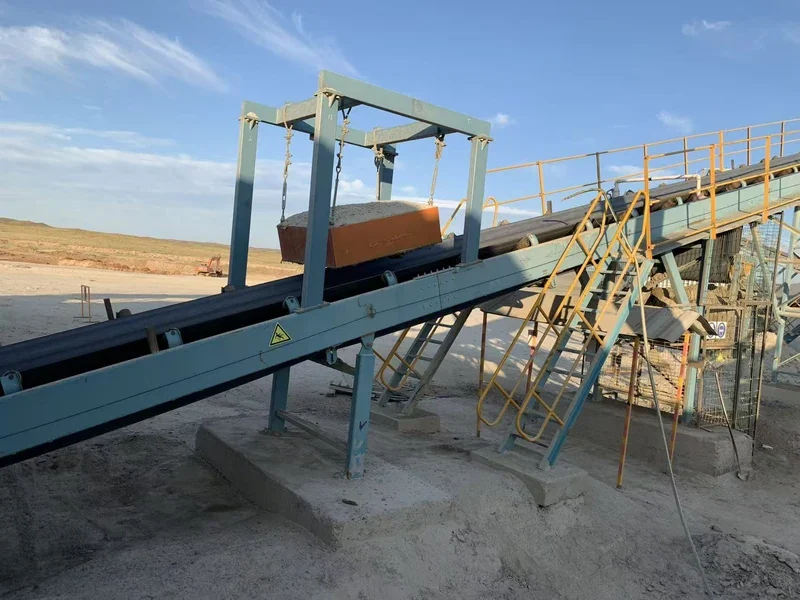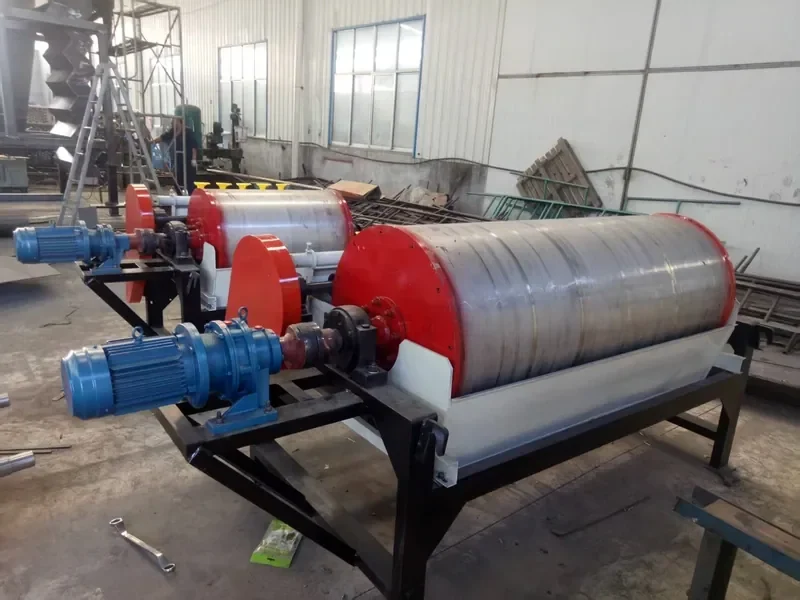
Quick Answer: How to Choose a Magnetic Separator
Start with two questions: what are you trying to remove or recover, and how does the material move? Large unwanted ferrous pieces on a conveyor usually point toward suspended, overband, pulley, or drum arrangements. Free-flowing dry material may suit grate, drawer, plate, drum, or other close-contact arrangements. Fine or weakly magnetic material often needs closer presentation, a stronger change in magnetic force over distance, or a representative sample test. Wet slurry needs a wet-separation route. If the main target is aluminum or copper, ordinary magnetic attraction is not the primary mechanism.
After the equipment family is narrowed, check the real distance between the magnet and the target, material depth, particle condition, flow behavior, cleaning method, installation space, and how the required result will be checked. A magnetic number such as surface Gauss is useful only when the measurement point and application conditions are clear.
Which Situation Looks Most Like Yours?
You do not need to know every separator name before you start. First identify the situation you can actually see in the process.
Choose a Magnetic Separator in 5 Steps
| Step | Question | What changes the answer? |
|---|---|---|
| 1 | What must the separation achieve? | Equipment protection, product cleanliness, magnetic recovery, and metal control use different success measures. |
| 2 | How does the material move? | Belt, gravity flow, enclosed dry line, and wet slurry require different interfaces and material presentation. |
| 3 | What exactly is the target? | Strong ferrous tramp, fine iron, weakly magnetic material, and non-ferrous metal do not respond to the same mechanism. |
| 4 | How close can the target get to the magnetic surface? | Deep burden, liners, large gaps, poor feed distribution, and high speed can change the real capture condition. |
| 5 | How will the equipment be cleaned and the result checked? | Contaminant loading, production schedule, access, reject handling, and the acceptance method can change the practical configuration. |
Fast route: conveyor + large ferrous tramp → start with suspended/overband or head-end pulley/drum options; free-flowing dry bulk → start with close-contact gravity-flow families; dry fine or weak target → start by comparing high-intensity or high-gradient dry separators and plan a representative test; wet strongly magnetic material → start by comparing wet-drum separators; wet fine or weak target → start by comparing wet high-intensity or high-gradient separators and plan a representative test; aluminum/copper → use another separation mechanism.
If one of these conditions changes later, the answer may also change. For example, material that was free-flowing when dry may become sticky after moisture increases, and a manual-clean arrangement that was acceptable for intermittent production may become impractical after the line moves to continuous operation.
Step 1: Define What the Separation Must Achieve
The same magnetic separator can be judged differently depending on the real job. Define the success condition before comparing models.
| Separation job | What success means | Common wrong shortcut |
|---|---|---|
| Protect downstream equipment | Intercept dangerous ferrous pieces before a crusher, mill, shredder, pump, or other vulnerable machine. | Judging the project mainly by product-purity language. |
| Improve product cleanliness | Reduce the specific magnetic contamination that matters to the product. | Assuming a magnet that catches a large bolt will automatically control fine iron. |
| Recover a magnetic fraction | Separate a valuable or unwanted magnetic fraction while controlling recovery, grade, selectivity, or product loss. | Assuming “more magnetic material captured” always means a better separation. |
| Control unwanted metal | Detect, capture, or prevent metal according to the process objective. | Treating metal detection and magnetic capture as the same task. |
Tramp iron means unwanted ferrous pieces such as bolts, tools, wire, or steel scrap that enter the material stream. This is different from fine iron contamination that may come from wear, grinding, or the raw material itself.
For mineral recovery, another term becomes important: liberation. This means how fully the target mineral has been physically freed from the material around it. A fine weakly magnetic mineral that is already free behaves differently from the same mineral still locked inside another particle.
Step 2: Follow the Material Path
Belt conveyor: large tramp and shallow burden
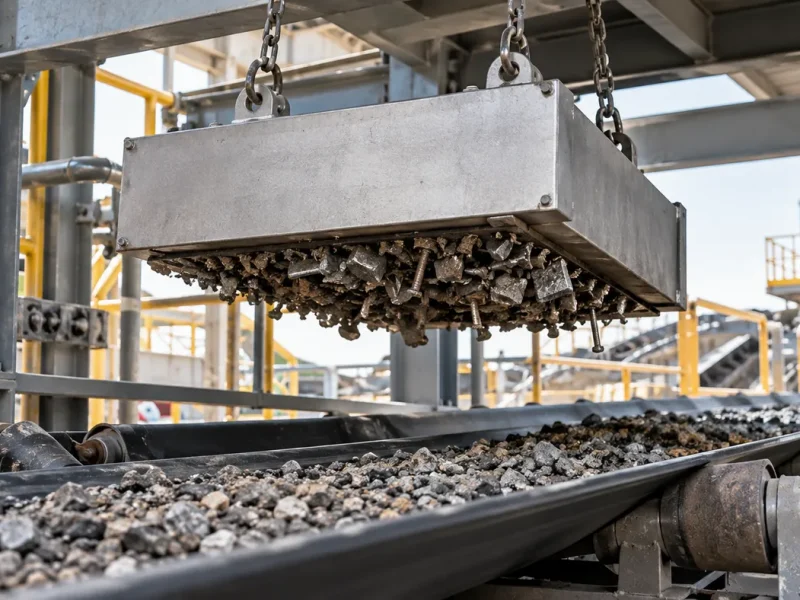
If large ferrous pieces occasionally enter a conveyor and the burden is relatively shallow, suspended or overband arrangements are a common starting point. The main checks are belt width, belt speed, burden depth, target tramp size, mounting position, and where the rejected metal will go.
Do not choose from surface Gauss alone. The real question is whether magnetic force reaches the target at its farthest realistic position.
Belt conveyor: large tramp and deep burden
Deep burden changes the problem even when the target metal and separator stay the same. A piece of steel near the top of the burden is closer to the magnet than an identical piece near the belt. If the dangerous target can be buried near the bottom, use that deeper position when checking the conditions used to select the separator.
Do not confuse magnet-to-material-top distance with working distance to the target. The target can be much farther away than the visible top surface of the burden.
Belt conveyor: deep burden plus high belt speed
This combination deserves more attention than either condition alone. A deeper burden increases the distance to buried tramp, while higher speed can reduce the time available for magnetic action before the target moves out of the effective zone. A selection that works at a shallow burden and lower speed should not automatically be assumed to give the same result after both conditions increase.
How to check: record maximum burden depth, actual belt speed, mounting geometry, and the target position that matters most. Compare equipment under those conditions rather than under an easier nominal condition.
Head-end separation
A magnetic pulley or drum route can be useful when the conveyor head is a practical separation point and magnetic and non-magnetic fractions can leave on different trajectories. It becomes a weaker choice when the head end has no space for a splitter, reject chute, or controlled discharge path.
A magnetically suitable head pulley is not a complete process solution if the separated fraction falls back into the main product stream.
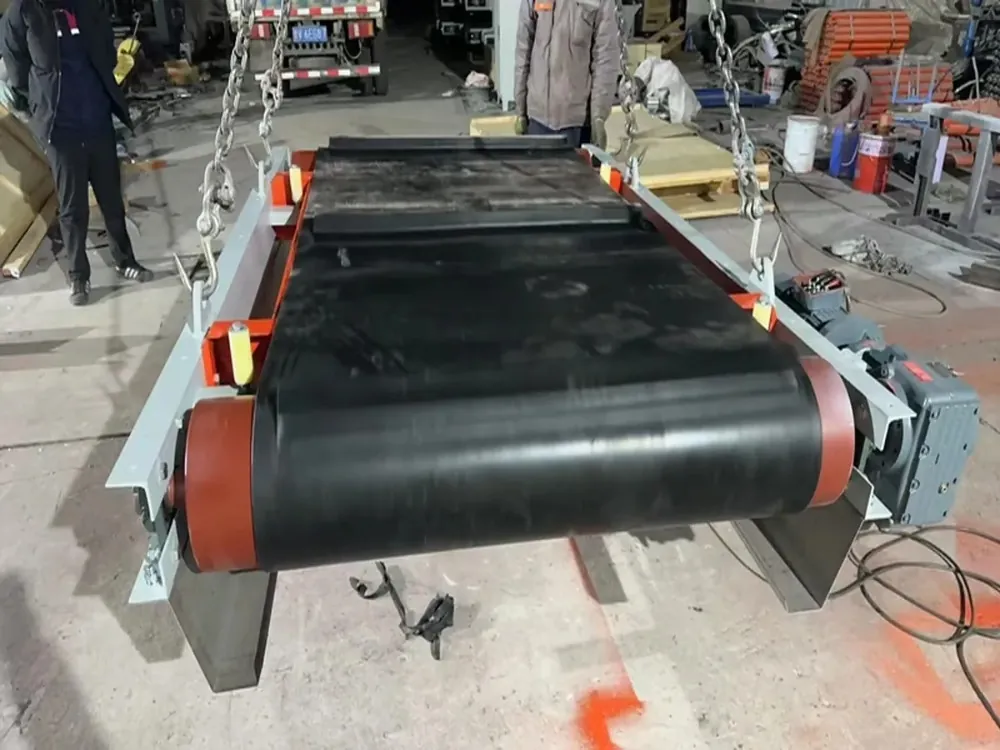
Gravity-fed dry material
For dry powder, granules, flakes, or lumps falling by gravity, direct-contact or close-presentation equipment can be attractive because the product can pass near magnetic surfaces. But “dry bulk” is not one material condition. Free-flowing powder, dusty fines, moist sticky material, bridging product, and abrasive lumps can require different geometry and cleaning arrangements.
Enclosed dry line
In a pipe or enclosed dry line, confirm line size, flow velocity, pressure or vacuum where applicable, product behavior, and cleaning access. Do not assume a housing used in an open chute is automatically interchangeable with an enclosed line. The mechanical interface and operating condition are part of the selection.
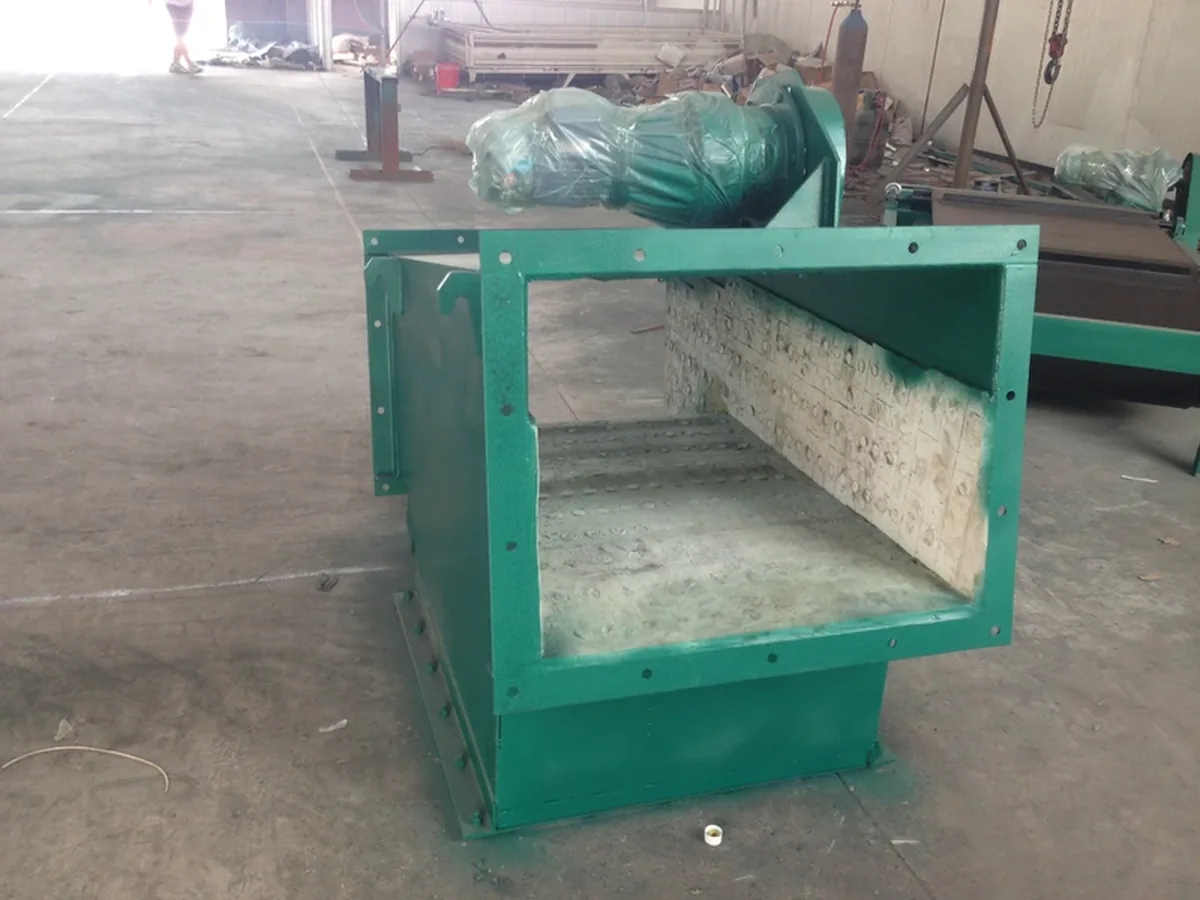
Wet slurry
A slurry is a mixture of liquid and solid particles. If the material is already in slurry, start with wet magnetic separation. Strongly magnetic, relatively free particles can point toward a wet-drum route. Fine or weakly magnetic targets may require wet high-intensity or high-gradient separation and a representative material test.
The key boundary is liberation. Fine, weakly magnetic material that is already free is different from fine, weak material still locked inside another particle. If the target is poorly liberated, simply increasing magnetic field strength may not create the selectivity the process needs.

Step 3: Check the Target Material
Do not classify the target only as “magnetic” or “not magnetic.” Particle size, magnetic response, and liberation interact.
| Target condition | What it usually means | Main check |
|---|---|---|
| Strongly magnetic + large/free | Magnetic response is favorable, so geometry and reach often dominate. | Working distance, burden depth, speed, and discharge. |
| Strongly magnetic + fine/free | The material responds well magnetically, but presentation and layer control become more important. | Feed distribution, contact distance, buildup, and cleaning. |
| Weakly magnetic + coarse/free | Higher magnetic intensity or gradient may be needed, but particle behavior still matters. | Representative test under realistic feed conditions. |
| Weakly magnetic + fine/free | Magnetic force, field gradient, thin controlled presentation, and selectivity become more demanding. | Particle-size distribution, layer control, and test result. |
| Weakly magnetic + fine/locked | Increasing magnetic strength alone may not solve the process. | Confirm liberation before final separator selection. |
| Non-ferrous target | Ordinary magnetic attraction is the wrong primary mechanism. | Review eddy-current separation, detection, or another suitable method. |
A field gradient describes how quickly magnetic field strength changes over distance. Fine or weakly magnetic particles may need not only a strong field, but also enough change in magnetic force over a short distance to produce useful attraction. This is why one surface Gauss number cannot describe every separation duty.
Step 4: Check How the Material Behaves
Two materials can both be called dry bulk and still require different magnetic arrangements because their flow behavior is different.
Free-flowing material
If material falls smoothly through a chute and does not normally hang up on process surfaces, close-presentation equipment can be easier to apply. The main questions become opening size, layer distribution, contaminant loading, and cleaning access.
Fine or dusty material
Fine powder can coat surfaces and build up around magnetic elements even when the base material is dry. This can change cleaning frequency and the effective space available for flow. If dust already accumulates on nearby equipment, treat that as a useful warning before choosing narrow product passages.
Moist or sticky material
If material sticks to chute walls, agglomerates, or leaves a coating on process equipment, first ask whether it can physically pass through the proposed magnetic geometry. A magnetically suitable grate or drawer is not useful if sticky product blocks the opening or creates unstable flow.
Bridging material
Bridging means the material forms an arch or stable mass instead of flowing freely through an opening. If the existing hopper or chute already has bridging problems, high-obstruction magnetic elements deserve extra flow testing. The next step may be a lower-obstruction route rather than simply a stronger magnet.
Abrasive material or large lumps
With abrasive solids or heavy lumps, impact, wear, liner condition, clearance, and serviceability become more important. Magnetic performance is only one part of the selection; the mechanical interface must survive the real material.
Step 5: Check Working Distance and Material Exposure
Working distance is the real gap between the magnetic surface and the metal or mineral you want to capture. Burden depth is the thickness of material above the belt or separation surface. These are not the same thing.
For a suspended magnet, build the real distance stack:
- magnet face;
- mounting gap;
- cover, liner, or other barrier;
- top of the material burden;
- depth of the target inside the burden.
The same separator can face two very different duties when one target is near the top of the material and another identical target is near the belt. The surface Gauss value has not changed, but the target position has.
For direct-contact or thin-layer equipment, distance is smaller, but product presentation becomes more important. An uneven feed can send some material close to the magnetic surface and other material through a less favorable path.
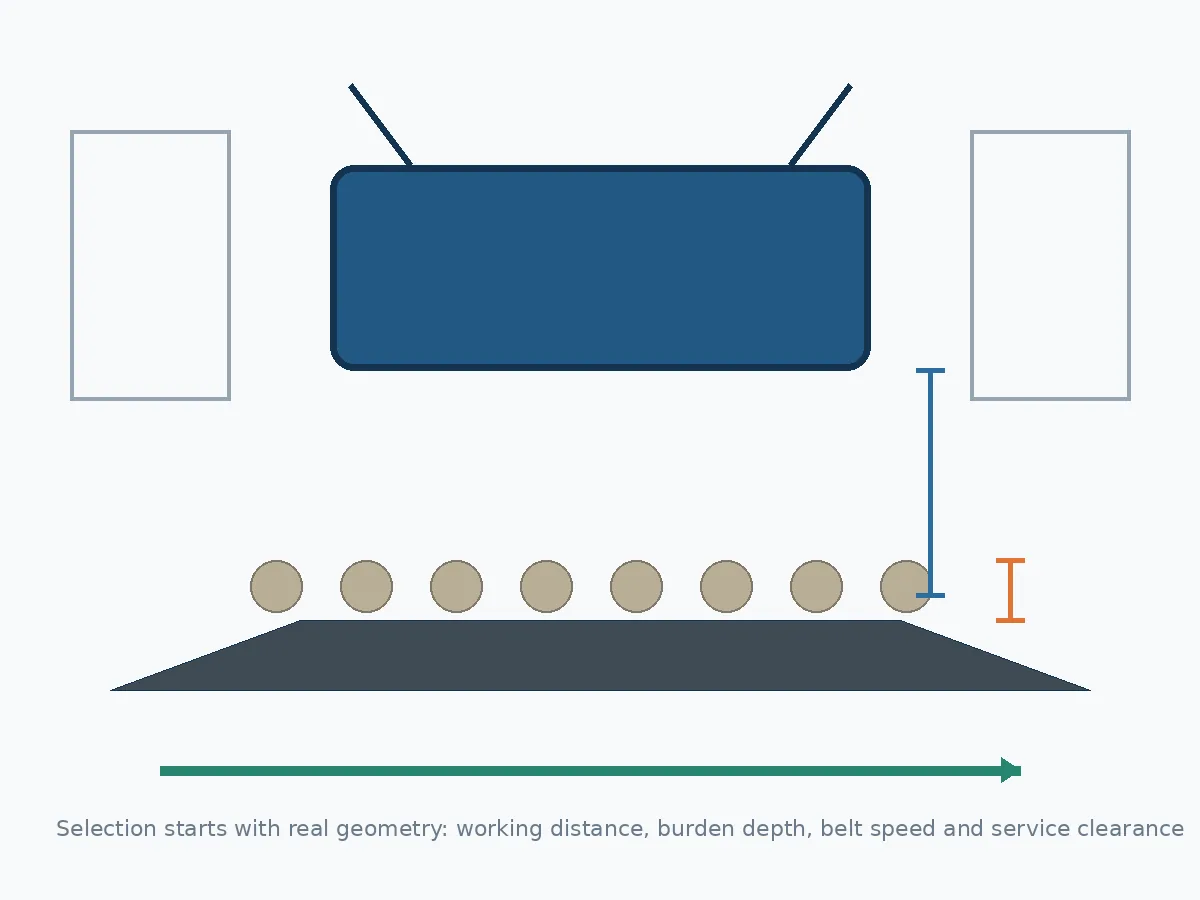
Key decision: if working distance, burden depth, or feed distribution changes after the original selection, do not assume the original result remains unchanged. Recheck the actual operating condition.
When Several Conditions Change at the Same Time
Real process problems rarely change one variable at a time. These combinations are especially easy to misjudge.
| Condition combination | What changes | How to recognize it | Next action |
|---|---|---|---|
| Deep burden + high belt speed | The target can be farther from the magnet and spend less time in the useful magnetic zone. | Maximum burden and actual belt speed are both higher than the conditions used for the original selection. | Check the separator under the combined worst practical condition. |
| Fine particles + weak magnetic response | More attention is needed on gradient, presentation, and testing. | The target is both small and only weakly attracted. | Use controlled feed and representative testing before exact selection. |
| Fine + weak + poor liberation | More field may not create the required selectivity because the target is still locked in another particle. | Material analysis shows target and surrounding material remain combined. | Confirm liberation before assuming the separator is the main limitation. |
| Sticky material + close-contact magnetic elements | Flow can fail even when magnetic strength is suitable. | Existing chutes show buildup, coating, or bridging. | Check product flow through the proposed geometry. |
| High contaminant loading + continuous production | Manual cleaning can become an operating bottleneck. | Captured metal builds quickly and planned stops are limited. | consider self-cleaning or continuous-discharge options earlier. |
| High surface Gauss + large working distance | A high surface reading does not prove useful force at the target location. | The quoted measurement is at the magnet surface but the target is much farther away. | Request comparable data and the conditions used to select the separator for the real installation geometry. |
The Same Number Can Mean Different Things
Two quotations can show the same number and still describe different process conditions.
| Same number | Why the result can still differ |
|---|---|
| Same Gauss value | Measurement point, working gap, pole geometry, and field gradient can differ. |
| Same throughput | Bulk density, moisture, particle size, feed distribution, and layer depth can differ. |
| Same belt width | Belt speed, burden depth, tramp size, and mounting distance can differ. |
| Same particle size | Magnetic response, liberation, moisture, and surrounding material can differ. |
Compare numbers only after the conditions behind the numbers are comparable. This is more useful than ranking equipment from the largest value printed on a data sheet.
When a Sample Test Becomes Important
Not every project needs the same level of material testing. Testing becomes more important as the separation depends more heavily on fine particles, weak magnetic response, selectivity, uncertain flow, or a specific recovery or purity target.
| Situation | Test priority | Why |
|---|---|---|
| Large obvious tramp protection | Project-dependent | Geometry, reach, target size, and capture duty may be the main conditions used for the design. |
| Fine iron contamination | High | Particle size, product presentation, and contamination distribution can change the result. |
| Weakly magnetic mineral | High | The real magnetic response should be checked under representative conditions. |
| Recovery or purification duty | High | Recovery, grade, selectivity, and product loss may need to be balanced. |
| Sticky or unusual flow behavior | High | A magnetically suitable configuration may still create a flow problem. |
| New or poorly understood material | High | A test can establish whether the assumed magnetic route is practical. |
A useful sample test should match the real process closely enough to support a decision. Record the sample condition, moisture, particle-size distribution, feed method, solids condition for wet material, equipment settings, and the result being measured. A test on an easier or different material condition should not automatically be treated as the production result.
Choose the Cleaning and Discharge Method
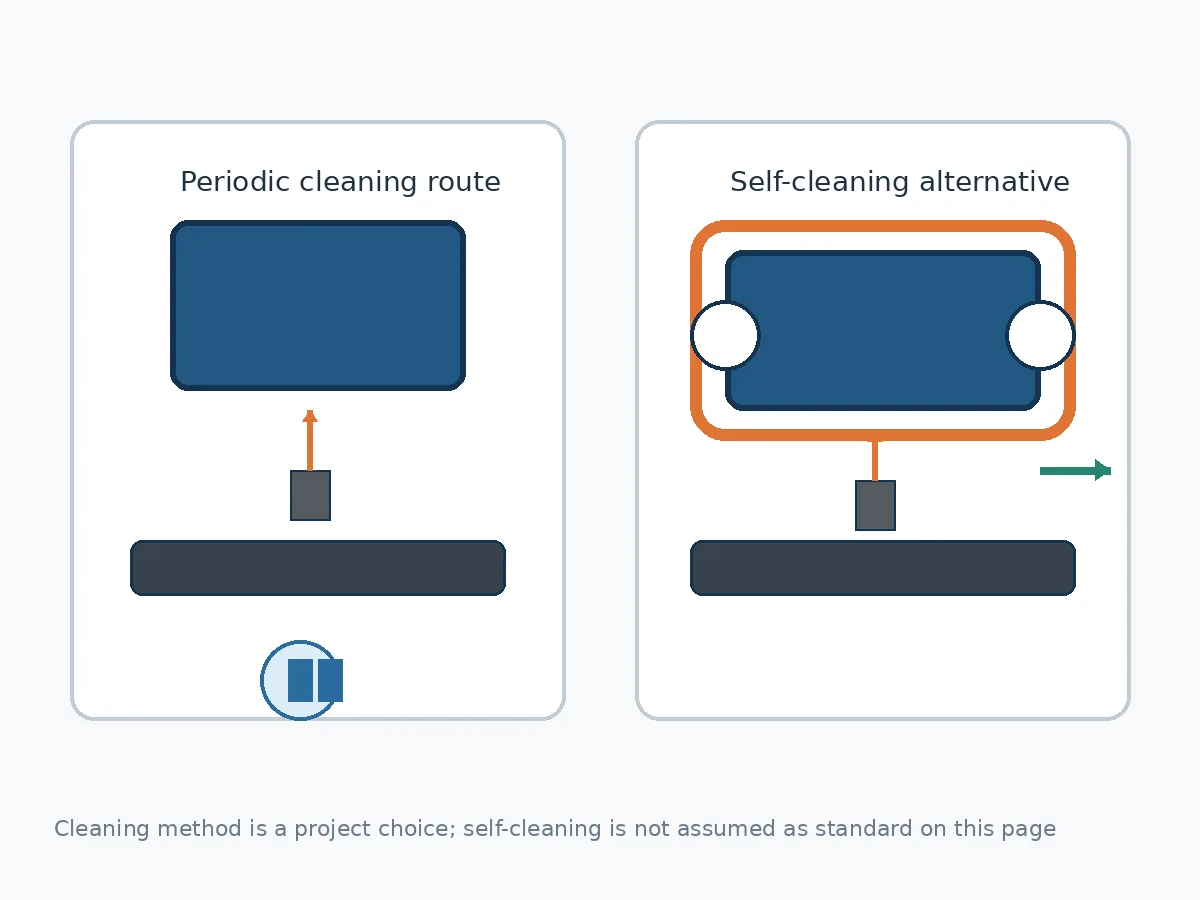
Cleaning choice depends on more than purchase price. Contaminant loading, production mode, access, and reject handling interact.
| Contaminant loading | Production mode | Access | Option to consider first |
|---|---|---|---|
| Low | Intermittent | Easy and safe | Manual cleaning can be practical. |
| Low | Continuous | Difficult | Self-cleaning deserves earlier review even if loading is modest. |
| High | Intermittent | Easy | Check how fast captured metal builds before assuming manual cleaning is acceptable. |
| High | Continuous | Difficult | Self-cleaning or continuous discharge becomes much more important. |
Low purchase price is not a good reason to choose manual cleaning if safe access and cleaning frequency make operation impractical. Also check where the reject will go. A self-cleaning separator is not fully solved if discharged metal falls back into the product stream or creates another handling hazard.
Check Installation Before Final Model Selection
A correct separator family can still be a poor installation. Before an exact model is approved, confirm the opening, mounting space, support, maintenance clearance, safe cleaning route, reject path, lifting needs, and the process environment.
| Installation problem | Why it changes the result |
|---|---|
| Magnet installed farther away than the conditions used to select the separator | The real working distance increases. |
| Reject has nowhere to go | Separated metal can return to the product or create a new handling problem. |
| Maintenance door or cleaning path cannot be accessed | The equipment may be difficult to clean or service safely. |
| Feed lands unevenly | Some material can receive less favorable magnetic exposure. |
| Temperature, corrosion, washdown, pressure, or dust-area condition differs from the conditions used for the design | Construction, sealing, documentation, or component choice may need to change. |
Do not finalize the exact model yet if the target is unclear, maximum burden or working distance is unknown, the separation point has not been fixed, reject handling is unresolved, cleaning requirements are unknown, or the project has no defined way to judge success.
Magnetic Separator Selection Matrix
Use this matrix to narrow the equipment family. It is not a substitute for the process data needed to select an exact model.
| What you see in the process | Likely situation | Equipment family to consider first | Why | Verify before selection |
|---|---|---|---|---|
| Large bolts or steel pieces occasionally enter a conveyor before a crusher | Tramp protection above belt | Suspended magnet or self-cleaning overband | Removes ferrous material before downstream equipment. | Belt width, speed, burden, target size, working distance, mounting, reject clearance. |
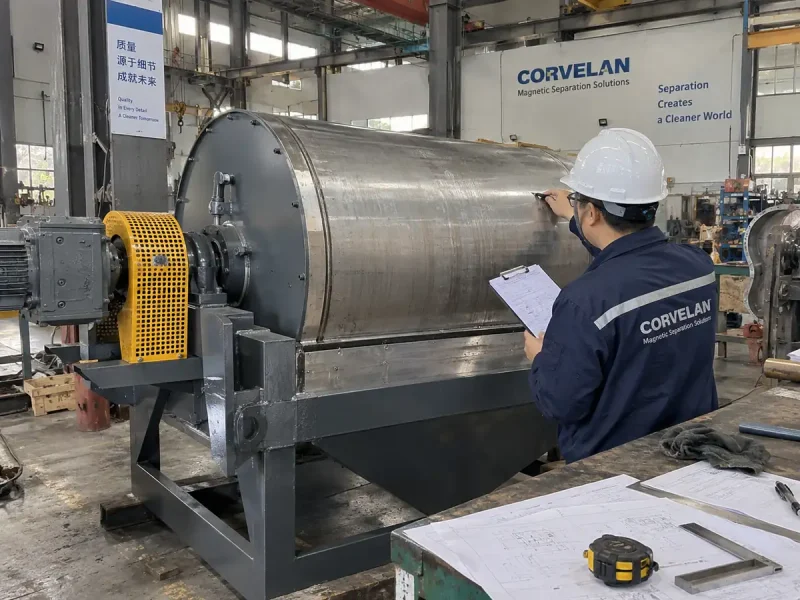
| The conveyor head is a practical place to split magnetic and non-magnetic discharge | Head-end separation | Magnetic pulley or drum route | Uses different discharge trajectories at the head. | Head geometry, material layer, splitter/reject path, access. |
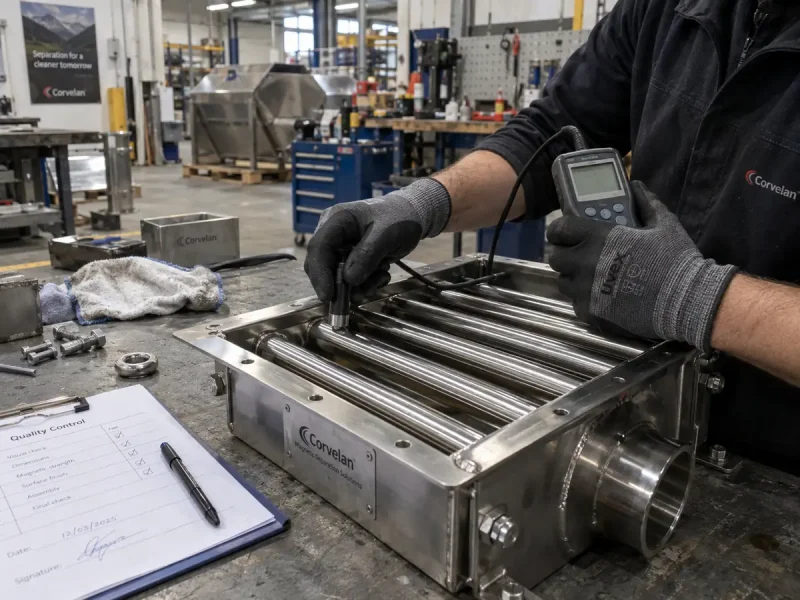
| Dry material falls freely through a hopper or chute | Gravity-flow contamination control | Grate, drawer, plate, housed drum, or another suitable gravity-flow arrangement | Allows close material presentation to magnetic surfaces. | Flowability, opening, bridging risk, loading, cleaning access. |
| Dry fine or weakly magnetic material must be separated in a controlled layer | High-intensity dry separation | High-intensity roller/filter or another high-gradient dry route | Better suited to weak magnetic response when material can be presented consistently. | Particle size, liberation, layer control, representative test. |
| Strongly magnetic material is already in slurry | Wet strongly magnetic separation | Wet drum route | Designed for magnetic separation in a slurry process. | Flow, solids condition, particle size, target fraction, tank/feed arrangement. |
| Fine or weakly magnetic target is in slurry | Wet high-intensity/high-gradient separation | Wet high-intensity/high-gradient route | Consider this option when weak or fine targets require a stronger magnetic gradient and controlled wet presentation. | Liberation, representative sample, feed condition, recovery/purity target. |
| The target is mainly aluminum or copper | Non-ferrous separation | Do not rely on ordinary magnetic attraction alone | The separation mechanism is different. | Review eddy-current separation, metal detection, or another suitable technology. |

If you already know your process direction, you can compare the relevant Corvelan equipment families, starting with the magnetic separation equipment category and the relevant published product routes: overband magnetic separator, magnetic pulley separator, dry drum magnetic separator, wet drum magnetic separator, magnetic roller separator, and wet high-intensity magnetic separator. These pages show the main equipment options for different process conditions. Exact configuration still depends on your material, installation, and required separation result.
When the First Choice May Be Wrong
| First reaction | Reconsider it when… | What to check instead |
|---|---|---|
| “Choose more Gauss” | The real limit is working distance, deep burden, poor presentation, buildup, or poor liberation. | Geometry, gradient, material condition, and test conditions. |
| Overband | The working distance is too large or the reject cannot be handled. | Mounting geometry and reject route. |
| Magnetic pulley | The head end cannot separate two discharge streams. | Splitter space and actual material trajectory. |
| Grate or drawer | Sticky or bridging material cannot pass reliably through the element spacing. | Flow behavior and lower-obstruction alternatives. |
| High-intensity separator | Poor liberation, not weak magnetic force, is the main process limit. | Particle/mineral condition first. |
| Wet route | The plant requires the product to stay dry or slurry handling is not practical. | Whole-process compatibility, not magnetic performance alone. |
| Self-cleaning | Contaminant loading is very low, access is easy, and added complexity has little operating value. | Actual loading and cleaning interval. |
| Magnetic separator | The main target is non-ferrous. | Use the mechanism that responds to the real target. |
How to Check Magnetic Separator Data
Magnetic data is useful only when the test condition is clear. Ask enough questions to make one supplier’s number comparable with another supplier’s number.
| Supplier data | Ask this | Why it matters |
|---|---|---|
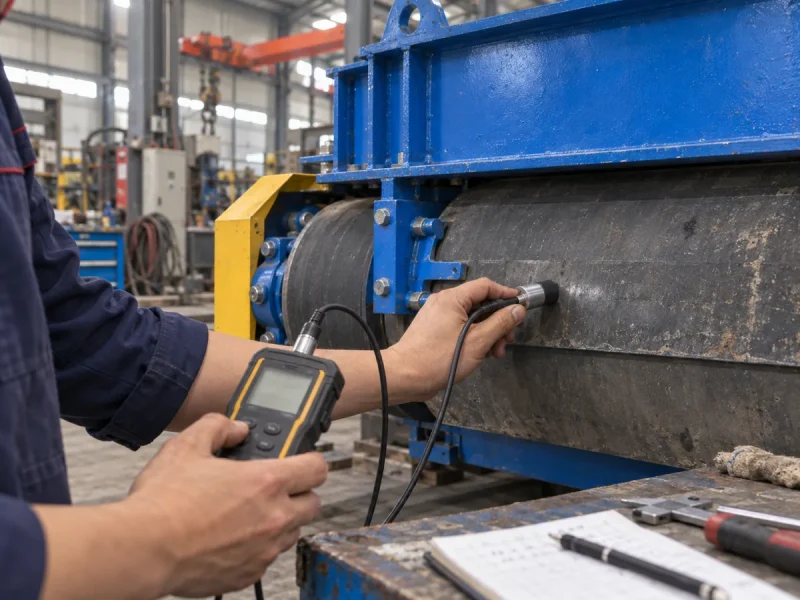
| Gauss value | Where was it measured? | Surface and working-gap readings describe different positions. |
| Magnetic reading | What instrument and method were used? | Different methods may not be directly comparable. |
| Pull-force result | What test piece, contact condition, position, and geometry were used? | A pull-force number needs a repeatable method to be meaningful. |
| Capacity | With what material, density, moisture, feed distribution, and layer condition? | Nominal throughput without material conditions can be misleading. |
| Separation result | Was the result capture, contamination reduction, recovery, purity, or product loss? | These measures answer different project questions. |
| Sample test | Was the sample representative of production material and was the geometry repeated consistently? | Test value falls when material or test conditions do not match the project. |
For a project check, record the measurement location, method, test piece where relevant, gap, material/feed condition, and the agreed way the result will be judged. That gives the project team a clearer basis than a single isolated magnetic number.
How to Compare Supplier Quotations
Compare quotations only after the suppliers are answering the same application conditions. First remove quotations that are not technically comparable yet.
| Quotation says | What is still missing? |
|---|---|
| “12,000 Gauss” | Measurement location, method, and working geometry. |
| “50 t/h” | Material, density, moisture/slurry condition, feed distribution, and layer condition. |
| “99% separation” | What was separated, how the percentage was calculated, test material, and operating condition. |
| “High recovery” | Definition of recovery and what happened to grade, purity, or product loss. |
| “Stainless steel construction” | The exact construction or compliance requirement the project actually needs. |
| “Suitable for your line” | Application data or drawing that supports the statement. |
| “Model XYZ recommended” | The reason that model matches the real target, geometry, material, and cleaning duty. |
A practical comparison should align the separation objective, material condition, particle size, throughput, working distance, feed geometry, cleaning/discharge method, installation limits, and the way the result will be checked.
Compare Operating Cost, Not Only Purchase Price
A lower equipment price can become a poor decision if the configuration creates unnecessary cleaning labor, downtime, wear, utilities, or product loss.
| Operating item | Why it can change the decision |
|---|---|
| Cleaning labor | Frequent manual cleaning adds labor and can interrupt production. |
| Electrical demand | Relevant where the selected magnetic route uses powered equipment. |
| Water or slurry handling | Relevant for wet-separation routes and downstream process handling. |
| Wear surfaces and liners | Abrasive material can increase maintenance requirements. |
| Maintenance access | Poor access can increase service time even when the separator performs magnetically. |
| Reject handling | Captured material still needs a safe and controlled discharge path. |
| Product loss or false reject | Important when the rejected or recovered fraction has economic value. |
| Process downtime | A simple separator can become expensive if it repeatedly interrupts the line. |
What Different Project Roles Should Check
The same quotation answers different questions for different members of the project team.
| Project role | Main question | What should be visible in the selection |
|---|---|---|
| Process engineer | Can this separation mechanism work with the real material and target? | Material state, target response, particle condition, feed route, test conditions. |
| Mechanical engineer | Will it physically fit and remain serviceable? | Dimensions, mounting, loads, clearances, access, reject route. |
| Production team | Will cleaning or buildup interrupt operation? | Loading, cleaning method, access, discharge, expected operating pattern. |
| Quality team | How will success be judged? | Defined sample, test method, metric, and acceptable result. |
| Procurement | Are supplier quotations based on the same conditions? | Comparable scope, data basis, included equipment, interfaces, and exclusions. |
| Project manager | Are responsibilities and interfaces clear? | Drawings, utilities, installation responsibilities, documentation, and project acceptance items. |
What to Put in the RFQ
Do not make every project fill the same oversized checklist. Start with a minimum data set, then add the inputs that matter for the actual material path.
Minimum information for every project
- material name and whether it is dry, moist, sticky, or wet;
- what metal or mineral must be removed or recovered;
- throughput and whether the flow is continuous or intermittent;
- how the material moves through the separation point;
- basic installation dimensions or a drawing;
- the result the separation step must achieve.
For conveyor projects
- belt width and belt speed;
- maximum burden depth;
- target tramp size or contamination type;
- available mounting height and position;
- reject path and available clearance.
For gravity-fed dry bulk
- bulk density where available;
- particle-size range;
- moisture and flow behavior;
- bridging or buildup history;
- cleaning frequency or contamination loading where known.
For wet separation
- slurry flow and solids condition;
- particle-size range;
- target magnetic fraction or impurity;
- available information about liberation;
- recovery, purity, or contamination objective.
For enclosed dry lines
- pipe or housing dimensions;
- flow velocity where known;
- pressure or vacuum condition where applicable;
- product behavior and cleaning method;
- temperature and environmental requirements.
If Your Existing Magnetic Separator Is Not Performing as Expected
Do not start by assuming the magnet has simply become “too weak.” First check whether the process now differs from the conditions used when the separator was selected.
- Has the material changed? Check particle size, moisture, stickiness, magnetic fraction, or contamination type.
- Has burden depth increased? The deepest target may now be farther from the magnetic surface.
- Has belt speed or flow rate increased? Material presentation and exposure can change.
- Has the target become finer or more weakly magnetic? A separator suitable for large tramp may not address the new duty.
- Is there more buildup on the magnetic surface? Cleaning condition and available capture area may have changed.
- Has the installation changed? A new liner, larger gap, changed chute, or moved magnet can alter working geometry.
- Has the required result changed? A new cleanliness or recovery target can turn an acceptable old selection into an insufficient current one.
If one of these conditions changed, compare the present process with the conditions used for the original selection before replacing the equipment. This helps separate an equipment problem from a material, installation, or operating-condition problem.
Frequently Asked Questions
Should I choose the magnetic separator with the highest Gauss rating?
No. Surface Gauss describes one measurement point. Selection also depends on target material, working distance, burden or layer depth, magnetic gradient, material presentation, flow, and cleaning. Compare magnetic numbers only after the measurement location and method are clear.
How do I decide between a wet and dry magnetic separator?
Start with the real material state and the surrounding process. If the feed is already slurry, a wet route is normally the relevant starting point. If the product must remain dry, compare dry magnetic separator options. Fine or weakly magnetic targets may still need testing before one route is selected.
When is an overband magnet a better starting point than a magnetic pulley?
An overband route is usually considered when ferrous material should be removed above a conveyor before the head discharge. A magnetic pulley is considered when the conveyor head itself can become the separation point and there is room to separate the discharge trajectories.
Can a magnetic separator remove aluminum or copper?
Not by ordinary magnetic attraction. Aluminum and copper are not ferromagnetic. Recycling lines may use eddy-current separation for conductive non-ferrous metals, while metal detectors can be used when the task is detection rather than magnetic capture.
Do I need a sample test before ordering?
A sample test becomes especially important for fine or weakly magnetic targets, recovery or purification duties, unusual flow behavior, or new materials with uncertain response. The sample and test condition should represent the production process closely enough to support the decision.
Permanent or electromagnetic separator: which should I choose?
Do not choose from the power source alone. Compare the required duty, working distance, control needs, installation, operating mode, maintenance, and operating cost. The better route is the one that meets the process requirement under the real site conditions.
When should I choose manual cleaning instead of self-cleaning?
Manual cleaning can be practical when contaminant loading is low, the process has suitable planned stops, and access is safe and easy. If buildup is frequent, production is continuous, or access is difficult, self-cleaning or continuous discharge should be considered earlier.
Why can the same separator work differently after a process change?
The separator may be unchanged while burden depth, belt speed, moisture, particle size, target type, cleaning condition, or installation geometry has changed. Any of these can alter the distance, exposure, flow, or magnetic response that controlled the original result.