RCDB Manual-Clean Conveyor Tramp Iron Removal

RCDB Suspended Electromagnetic Separator

Corvelan suspended electromagnetic separators remove unwanted iron and steel from material moving on a conveyor. This helps protect crushers, mills, screens and other equipment further down the line. The unwanted metal is often called ferrous tramp metal.

Our documented RCDB manual-clean series covers conveyor belt widths from 400 to 2,000 mm. Send us your belt width, material depth, belt speed and the iron you need to remove. We use these details to select the model instead of relying on a Gauss number alone.

RCDB Model RangeRCDB-4 to RCDB-20
Conveyor Belt Width400–2,000 mm in the current RCDB specifications
Rated Suspension Height120–550 mm across the listed models
Cleaning MethodManual-clean RCDB configuration
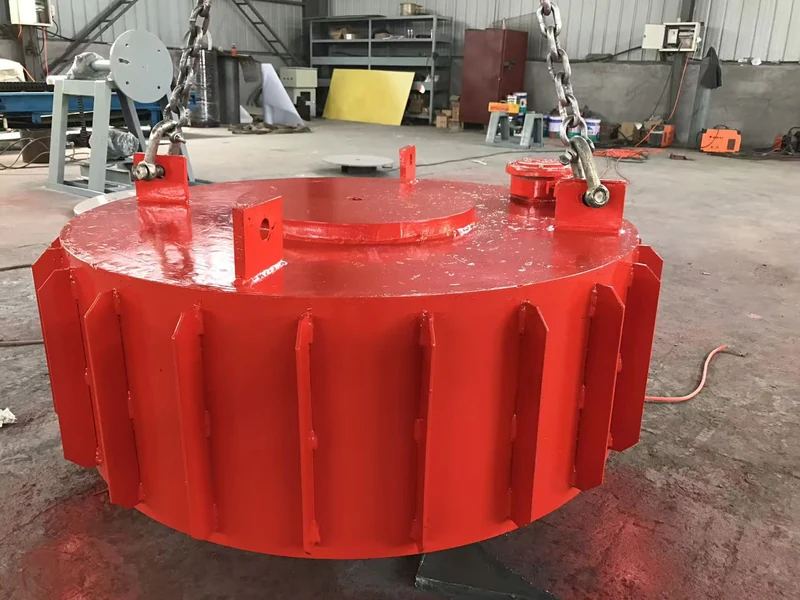
Real RCDB suspended electromagnetic separator with lifting chains in a workshop
11 Documented RCDB ModelsRCDB-4 through RCDB-20
400–2,000 mm Belt RangeCovered by current RCDB specifications
Actual Product PhotosCorvelan RCDB equipment
Conveyor Installation ReferencesTwo conveyor installation reference photos are shown below
Ferrous Attraction DemonstrationOperating video showing ferrous attraction under the stated conditions
Quick Fit

When Should You Use a Suspended Electromagnetic Separator?

Use a Corvelan suspended electromagnet when material moves on a conveyor. It removes unwanted iron or steel from above the material stream. This unwanted metal is called ferrous tramp metal. The documented RCDB series is a good fit when iron loading is intermittent and planned manual cleaning is acceptable.

Protect Downstream Equipment

Position the separator before crushers, mills, screens, shredders or other equipment where unwanted iron can cause damage or unplanned downtime.

Reach Iron Inside the Material

The magnet must reach the iron from above the conveyor. The layer of material on the belt is often called the burden. We check the suspension height and how deep the hardest target sits inside that material layer.

Use Manual Cleaning Where It Fits

RCDB manual-clean units fit applications with planned cleaning stops. They work best when those stops do not interrupt production too often.

Documented Product Range

RCDB Suspended Electromagnetic Separator Specifications

Our supplied RCDB product sheet lists 11 models, from RCDB-4 to RCDB-20. Use the table below to see the available range. Then send us your conveyor details and the iron you need to remove. We will check the model and installation before quotation.

11 documented RCDB models
400–2,000 mm belt width range
120–550 mm rated suspension height range
≤2.5 m/s listed compatible belt speed
Continuous listed operation
ModelBelt Width
mm
Rated Suspension Height
mm
Material Depth
≤ mm
Magnetic Flux Density
≥ mT
Excitation Power
≤ kW
Belt Speed
≤ m/s
Operating ModeWeight
kg
Dimensions A×B×C
mm
RCDB-440012070500.62.5Continuous250500×270×320
RCDB-5500150100601.02.5Continuous430600×280×330
RCDB-6600/650180130631.62.5Continuous580650×280×330
RCDB-6.5650200150702.02.5Continuous680720×280×330
RCDB-8800250200703.62.5Continuous950960×300×350
RCDB-101000300250705.02.5Continuous15201200×320×370
RCDB-121200350300706.82.5Continuous22501400×370×470
RCDB-141400400350709.02.5Continuous29501650×405×500
RCDB-16160045040070132.5Continuous48001900×460×560
RCDB-18180050045070182.5Continuous69002150×570×630
RCDB-20200055050070202.5Continuous75002300×580×680
How to read the table: These values come from the supplied RCDB product sheet. Magnetic flux density is listed in millitesla (mT). The published technical specification does not state the measurement point, probe direction or test method. The mT value does not tell you the pull force or final iron-removal efficiency by itself. Excitation power is the electrical power used to energize the magnet coil. Final model selection still depends on the iron you need to remove, material depth, working distance and conveyor condition.
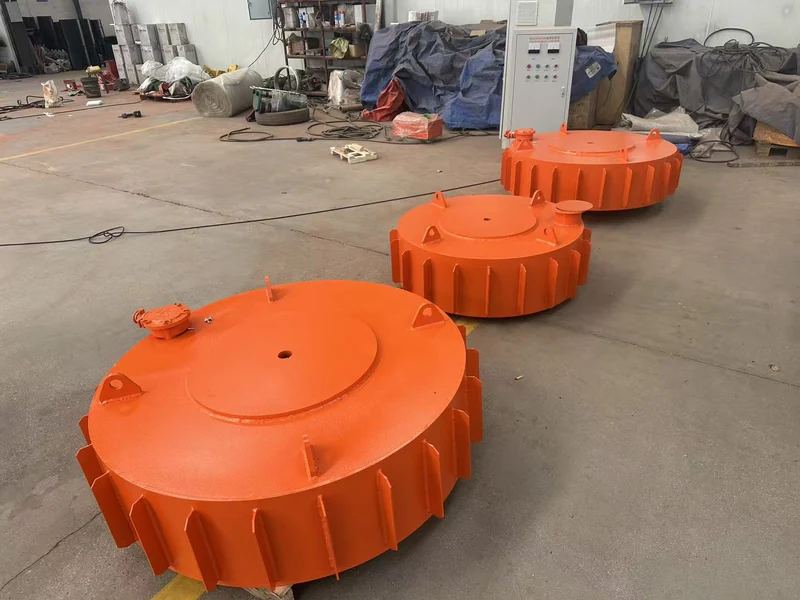
Multiple real RCDB suspended electromagnetic separator units in a workshop

Four Values to Check Before You Pick a Model

  • Belt width: Start with the actual conveyor belt width, then check the documented model range.
  • Rated suspension height: This is the listed installation height for the model. You still need to consider how deep the target iron sits inside the material.
  • Material depth: Use the deepest material layer the separator must handle, not just the average depth.
  • Target iron: Tell us the approximate size, shape and how often the iron appears.
Applications

Where We Use Suspended Electromagnets

We use this equipment when unwanted iron must be removed from material moving on a conveyor. The right separator depends on the material condition, the iron you need to remove and the available installation space.

Mining & Quarrying

Remove unwanted iron before crushers and screens handling mined rock, ore or quarry material.

Coal & Bulk Handling

Protect conveyors and other handling equipment when unwanted steel enters the material stream.

Cement & Aggregates

Remove unwanted iron from raw material and aggregates before crushers, mills or the next process step.

Recycling

Remove iron and steel from conveyor-fed material before shredding, sorting or another separation step.

Crushing & Screening Lines

Place the separator before equipment that could be damaged by unwanted iron.

General Conveyor Protection

Use an RCDB manual-clean model when material moves on a belt. It works well when manual removal of collected iron fits your operating plan.

Working Principle

How Does a Suspended Electromagnetic Separator Work?

When electrical power energizes the coil, the suspended magnet creates a magnetic field above the conveyor. The magnet pulls iron and steel upward from the material on the belt. The captured metal stays on the bottom working surface, called the magnet face, until cleaning. On the documented RCDB manual-clean model, the metal is removed during a planned stop.

1

Material Enters the Magnetic Zone

Material passes under the suspended magnet at the actual belt speed and material depth.

2

Iron and Steel Are Attracted

The magnet attracts iron and steel. Greater distance, gravity and tightly packed material can make the iron harder to lift.

3

Iron Is Lifted

The iron must move from its real position inside the material up to the magnet face.

4

Captured Iron Is Removed

To clean the RCDB unit, stop the process and safely switch off the magnet before removing the collected iron.

How We Select the Model

Why Working Distance Matters More Than a Gauss Number Alone

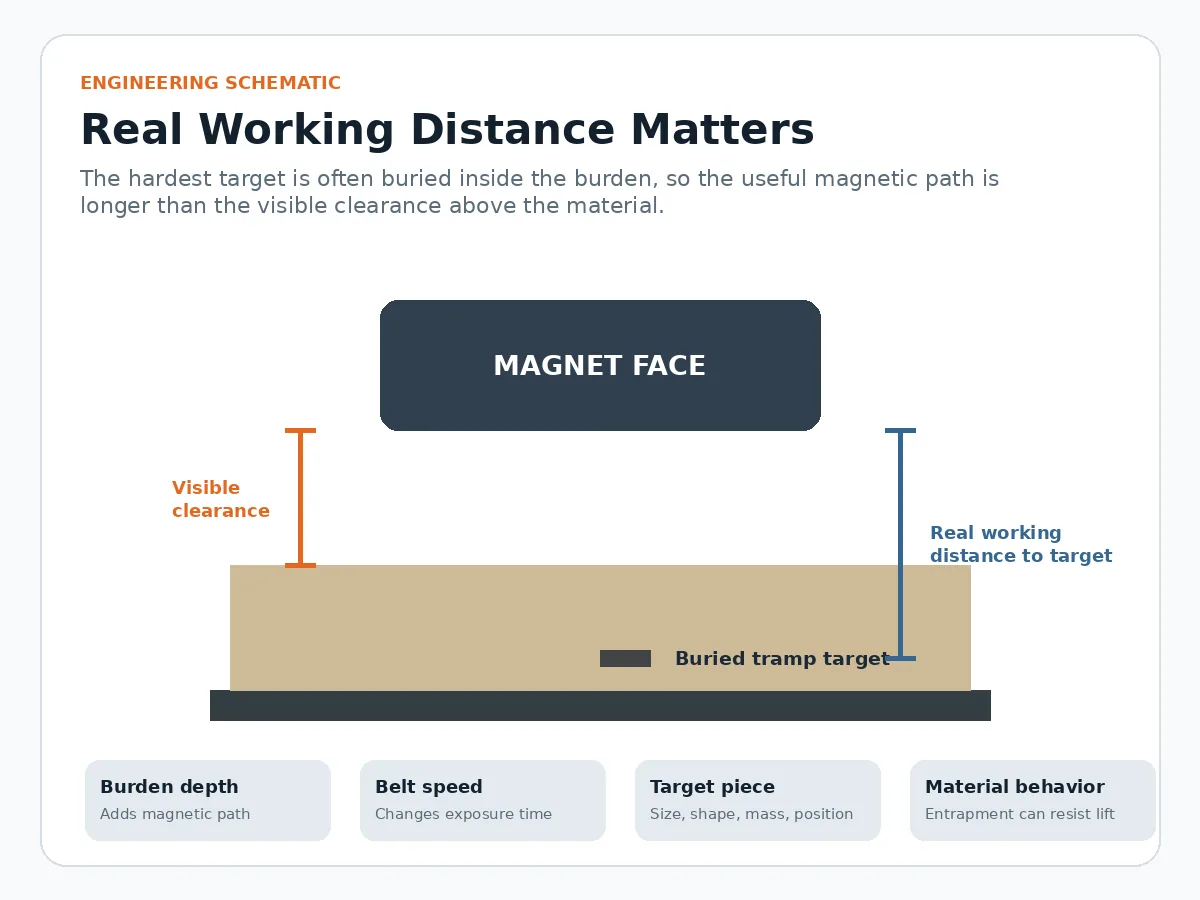
A higher Gauss number does not automatically mean the separator will remove your iron better. We need to know the real distance between the magnet and the target iron. Material depth, belt speed and the iron itself also matter.

1

Start with Belt Width

Use the RCDB table to find the documented model range that matches the conveyor width. Belt width is the starting point, not the final selection.

2

Check Real Working Distance

We check the gap below the magnet and how deep the target iron may sit inside the material. The full magnetic path matters.

3

Check the Iron to Remove

Tell us the approximate size, shape, mass and how often the iron appears. A bolt, plate and long steel piece do not present the same capture condition.

4

Check the Conveyor Condition

We then check belt speed, material depth, installation space, nearby steel and the cleaning plan before confirming the model.

Engineering diagram showing visible conveyor clearance and real working distance to buried ferrous tramp metal

Six Inputs We Use for Selection

  • Real working distance: The distance from the magnet face to the hardest target position.
  • Maximum burden depth: Use the deepest material layer, not only the normal or average depth.
  • Belt speed: The current RCDB specifications list belt speed up to 2.5 m/s. We still check the actual operating condition.
  • Target iron: Approximate size, shape, mass, position and how often it appears.
  • Material condition: Tell us the particle size, bulk density and moisture. These factors can make the iron easier or harder to pull out.
  • Installation layout: Headroom, support points, nearby steel and safe cleaning access.

Important: Gauss and millitesla (mT) describe magnetic flux density measured at a specific point. They do not directly tell you the pull force or final iron-removal efficiency. Working distance, target size, material depth and belt speed still matter.

Selection Example

Starting the Review for a 1,000 mm Conveyor

Assume a 1,000 mm conveyor carries a material layer about 180 mm deep and the unwanted metal includes steel bolts or plate fragments. The published RCDB specifications identify RCDB-10 as the preliminary reference for a 1,000 mm belt.

RCDB-10 remains a preliminary starting point. Final selection also depends on the actual suspension gap, deepest target position, belt speed, target-metal size and available installation space.

See How the Magnet Is Installed

Plan the Installation and Cleaning Space Together

The separator must fit the conveyor and have enough magnetic reach. We check where the magnet will hang, how it will be supported and what steel structures are nearby. We also make sure there is enough space to remove collected iron safely.

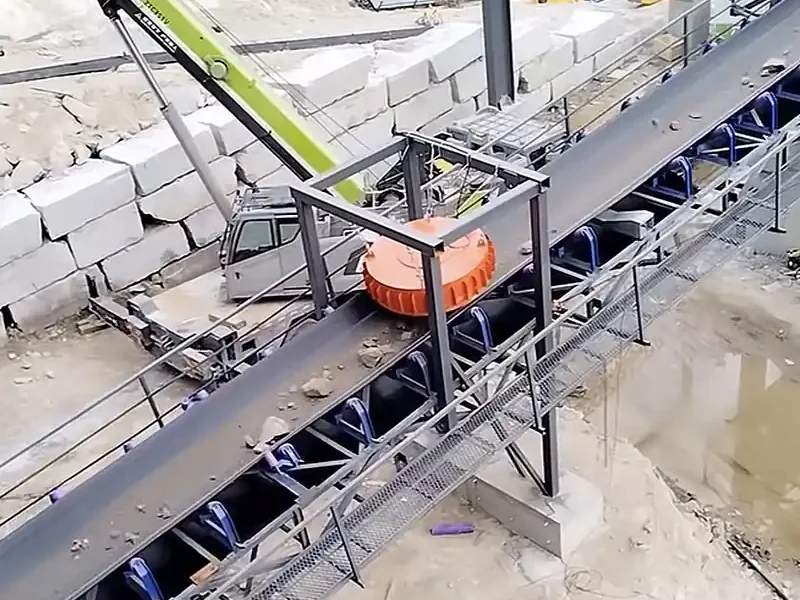
Real suspended electromagnetic separator installed over a belt conveyor at an industrial site
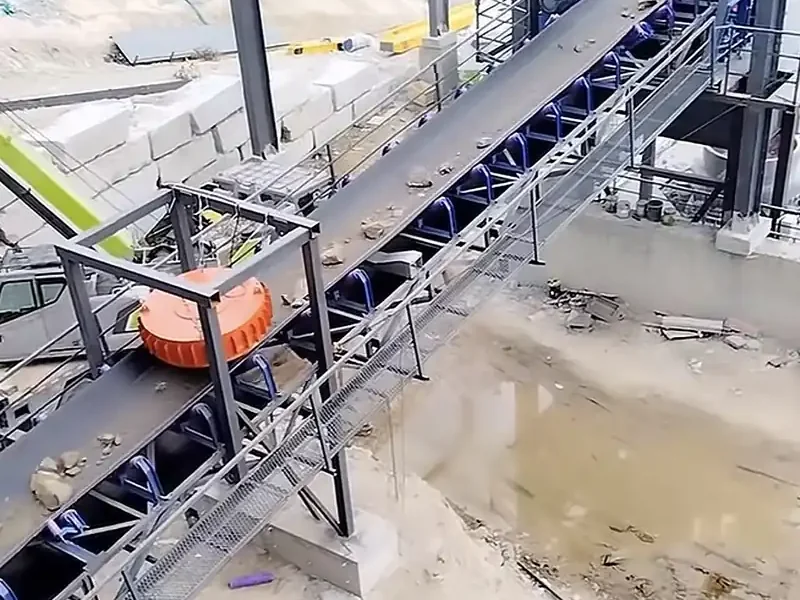
Second real site view of a suspended electromagnetic separator over a conveyor
Installation reference, not a performance case study. These photos confirm that the supplied equipment has been installed above a conveyor. These installation photos show the separator above a conveyor. The model, mounting height and required performance are confirmed for each project.

Support & Headroom

Confirm where the magnet will hang and how the structure will support it. Also check how much space is available above the material.

Magnetic Working Zone

Show us the steel parts near the magnet, including beams, conveyor rollers (idlers), chutes and guards. Nearby steel can affect the magnetic installation.

Safe Manual Cleaning

Before cleaning, stop the conveyor and safely switch off the magnet. This power-off safety step is often called electrical isolation. Make sure there is enough room to remove the collected iron safely.

Configuration

The Documented RCDB Series Uses Manual Cleaning

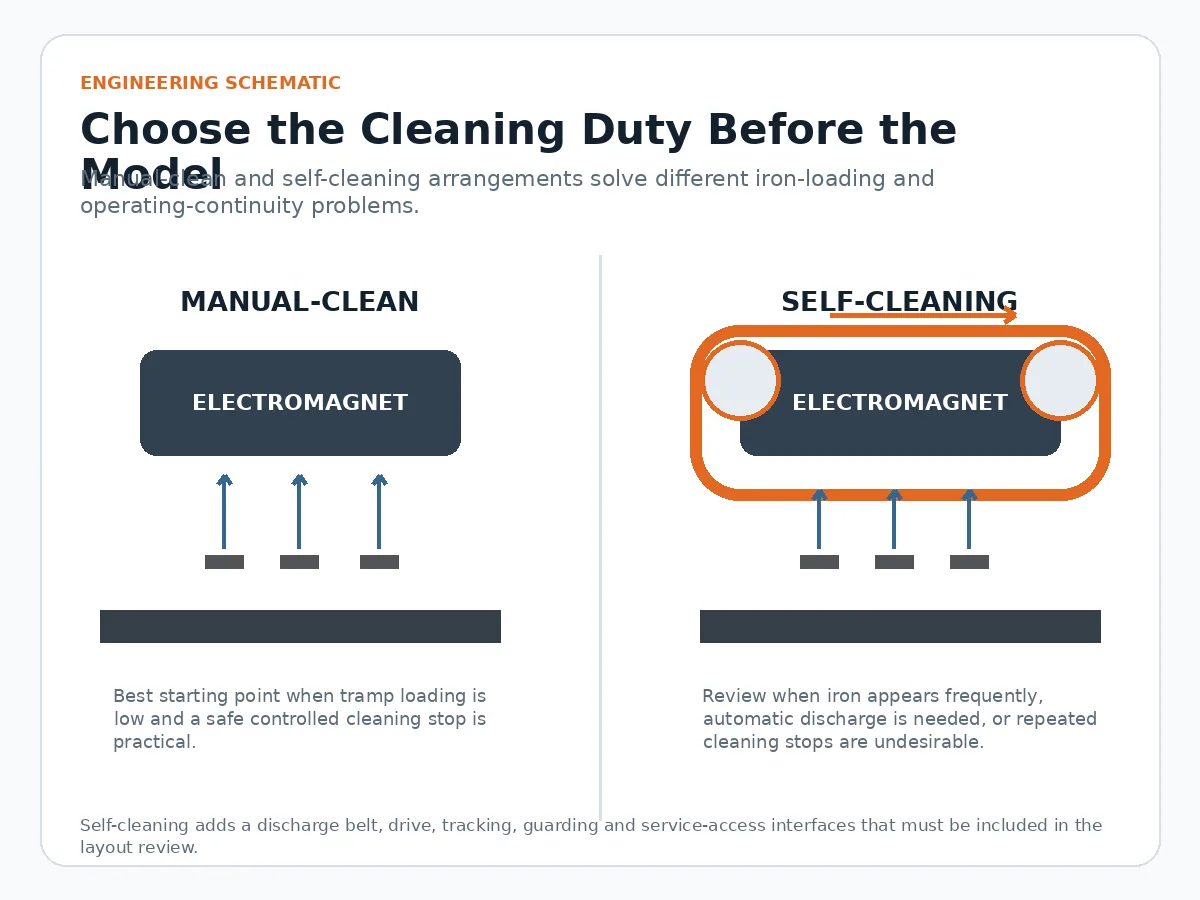
The RCDB range shown on this page does not have an integrated self-cleaning discharge belt. It is a good fit when iron loading allows planned manual removal of the collected metal.

RCDB Manual-Clean Model

Choose a manual-clean RCDB model when iron loading is intermittent and planned cleaning will not interrupt production too often.

We confirm the model, suspension height, mounting method and control requirements from your actual conveyor condition.

Need Automatic Iron Discharge?

If iron loading is frequent or repeated cleaning stops are not acceptable, tell us at the start. We can select a self-cleaning suspended electromagnetic separator instead. This is a better choice when frequent stopping would cause problems.

Electrical Excitation & Control

An electromagnetic separator needs electrical power and a control system. The magnet coil is energized by this electrical package. We confirm the required voltage, control setup and protective enclosure for the selected model and site.

We do not assume one voltage, enclosure protection rating (IP rating), certification or cooling method for every project. We confirm these items for the actual installation.

Educational comparison of manual-clean and self-cleaning suspended electromagnetic separator options
Compare the Starting Options

Permanent Magnet or Electromagnet? Manual Clean or Self-Cleaning?

The right separator depends on the process, not on one magnetic number. Use this table as a starting guide, then send us the real conveyor condition so we can check the equipment type.

Process NeedStarting OptionWhat to Confirm Next
You want a suspended separator without electrical excitation for the magnet itself.Permanent suspended magnetWorking distance, target iron, belt width, burden depth and cleaning method.
You need an energized suspended magnet and manual cleaning is acceptable.RCDB manual-clean electromagnetBelt width, real working distance, belt speed, target iron, control system and cleaning interval.
Iron enters frequently and repeated manual cleaning stops are not acceptable.Self-cleaning suspended separatorDischarge direction, crossbelt/inline arrangement, belt duty, working distance and site space.
The process is wet, targets weakly magnetic minerals, or targets non-ferrous metals such as aluminum or copper.Another separator typeMaterial, target, particle size, process condition and the separation goal.

This is selection guidance, not a performance guarantee. Final equipment type and configuration depend on the actual process data.

Send Your Conveyor Data and We Will Match the RCDB Model

Start with the belt width, material depth, belt speed and the iron you need to remove. Add a conveyor photo or drawing if you have one.

Send Your Conveyor Data
Inspection and Testing

What We Can Prove Now—and What Needs a Project Test

The workshop demonstration shows the magnet attracting ferrous steel. Removal performance on your conveyor should be checked against your material and installation conditions.

Documented now

RCDB Series Data

The supplied product sheet documents RCDB-4 through RCDB-20, including belt width, suspension height, material depth, magnetic flux density, power, weight and dimensions.

Documented now

Actual Equipment

Real product and product-range photos show the physical suspended electromagnets supplied in the source materials.

Documented now

Installation Reference

Real site photos show a suspended electromagnet installed above a conveyor. They prove the installation type, not a specific throughput or removal rate.

Documented now

Attraction Demonstration

The real workshop video shows an energized magnet attracting and holding ferrous steel. It is functional evidence, not a calibrated performance test.

Watch the Real Ferrous-Attraction Demonstration

Project Tests We Can Define Before Production

If your project needs a measured result, tell us before production. We can define the test condition first so the result has a clear meaning.

  • Magnetic measurement: Agree the instrument, measurement point, gap and operating condition.
  • Target-piece test: Agree the test piece, material depth, belt speed and pass/fail rule.
  • Installed functional check: Confirm the mounting, clearance, electrical operation and safe cleaning access.
If your project requires a pull-force measurement, magnetic-field reading or material capture test, specify the required conditions before quotation. These items require a defined test or project record before they can be published as Corvelan facts.
Suitable / Not Suitable

When to Use This Separator—and When to Choose Another Type

We recommend this separator when material moves on a conveyor. The unwanted iron must be close enough for the magnet to reach it from above. If the target or process needs a different separation method, we will recommend another separator type.

This Separator Is a Good Fit When

  • Dry or manageable bulk material on a belt conveyor
  • Iron or steel that the magnet can attract is the main unwanted target
  • Headroom and structural support are available
  • Manual cleaning is acceptable for the documented RCDB model
  • The site can provide the required electrical/control connection

Tell Us More If

  • The material layer is deep or changes a lot
  • The unwanted iron pieces are large or heavy
  • Iron enters the material stream frequently
  • The belt speed is high or installation space is limited
  • The site has high temperature, heavy dust, corrosion or special compliance requirements

Choose Another Separator If

  • Aluminum or copper is the primary target
  • Your main goal is to separate fine, weakly magnetic minerals during mineral processing (beneficiation)
  • The process uses slurry or requires wet magnetic separation
  • The target iron is too far from the magnet for a practical working distance
  • The site cannot provide safe support and cleaning access
Why Corvelan

Why Choose a Corvelan RCDB Suspended Electromagnet?

We do not ask you to choose a suspended electromagnet from one magnetic number. Send us your conveyor data and the iron you need to remove. We use the documented RCDB range and your installation condition to match the equipment.

11 RCDB Models for Different Conveyor Sizes

The supplied data covers RCDB-4 through RCDB-20. It lists belt width, suspension height, material depth, magnetic flux density, excitation power, weight and dimensions.

See the Actual Equipment

This page uses Corvelan RCDB product and product-range photos, so you can see the actual equipment.

See How the Magnet Is Installed

Site photos show the equipment suspended above a conveyor. These images help us discuss mounting, nearby steel and cleaning space before quotation.

Watch the Magnet Pick Up Steel

A real workshop video shows the energized magnet attracting steel. If your project needs a measured result, we agree a separate test method.

Product Information

What This Page Is Based On

The product information on this page comes from the supplied RCDB series data, real product photos, real installation references and a real workshop attraction demonstration. We use general engineering explanation only to help you understand selection.

Documented Product Facts

Model, belt-width, suspension-height, material-depth, magnetic-field, power, weight and dimension values come from the supplied RCDB product sheet.

Product and Installation Photos

Product, installation and demonstration visuals are separated from educational diagrams so you can see which images are real evidence.

Project-Specific Confirmation

Voltage, control setup, cooling method, certification, test method and performance result are confirmed only when supported by the actual project or unit record.

FAQ

Suspended Electromagnetic Separator FAQ

What RCDB model fits a 1,000 mm conveyor?

The published RCDB specifications list RCDB-10 for a 1,000 mm conveyor belt. It lists a rated suspension height of 300 mm and material depth up to 250 mm. We still need details about the iron you want to remove. We also check the real material depth and installation layout before confirming the model.

How high should the electromagnet hang above the conveyor?

The correct hanging height depends on the selected model and the real position of the target iron. Suspension height is the listed installation distance. Material depth tells us how deep the material layer is on the belt. We check the full distance from the magnet face to the target iron.

Can the RCDB series operate continuously?

The current RCDB specifications list continuous operation. Manual cleaning is still required. The operating plan should include safe power isolation. Set the cleaning interval to match the amount of iron entering the process.

How do I remove the iron collected by an RCDB separator?

The documented RCDB model is manual-clean. Stop the process, safely switch off the magnet and remove the collected iron. If you need automatic iron discharge, we can select a self-cleaning suspended electromagnet instead.

Does an RCDB electromagnetic separator need a control system?

Yes. The electromagnet needs electrical power and a control system. We confirm the required power supply, control setup and protective enclosure for the selected model and your site.

Does a higher Gauss or mT value guarantee better iron removal?

No. Gauss and mT describe magnetic flux density measured at a specific point. They are not the same as pull force or iron-removal efficiency. Working distance, target size and shape, material depth, belt speed and how tightly the iron is trapped all affect capture.

What information should I send Corvelan for model selection?

Start with the material, the iron you need to remove, throughput and conveyor condition. If available, also send the belt width, belt speed and normal and maximum material depth. Add the target size, available space, nearby steel, site power and a photo or drawing.

Are the installation photos on this page customer performance case studies?

No. We use them as real installation references because they show the suspended electromagnet above a conveyor. We do not assign a throughput, capture rate, customer name or performance result unless the project record supports that claim.

Selection & RFQ

Send Us These Details to Match the Separator to Your Conveyor

You do not need a finished specification. Send the process information you already have. We will tell you if anything else is needed before model selection and quotation.

1. MaterialName, physical form, lump size and any important moisture or sticking behavior.
2. Iron to RemoveApproximate size, shape, mass and how often it appears.
3. ConveyorBelt width, belt speed, normal/maximum material depth and throughput if known.
4. InstallationAvailable headroom, support arrangement, nearby steel, site power, plus a photo or drawing.

If available, also send the bulk density, particle size, operating hours and ambient temperature. Tell us how often you expect to clean the magnet and whether the project has a required test result. For a shipping quotation, also send the destination country or port.

What We Do with Your Information

We first check whether a manual-clean RCDB model fits your conveyor. Then we narrow the model range and check the installation. If any information is still missing, we tell you what we need before preparing the quotation.

Model MatchInstallation CheckMissing Data ListQuote Inputs
Next Step

Get an RCDB Model Recommendation & Quote

Send your belt width, material depth, belt speed and the iron you need to remove. Corvelan will use these details to match the RCDB model and check the installation before quotation.

Get An Instant Quotation Now