Scrap Recycling Magnetic Separator Applications
Magnetic separation is usually one stage inside a larger recycling process. The correct equipment depends on the scrap condition, material size and the separation result you need.
1Incoming ScrapMixed scrap, bulky pieces, tramp iron or pre-sorted feed.
2Pre-Shred ProtectionRemove exposed damaging ferrous pieces where required.
3Shredding / SizingExpose and liberate iron and steel from attached material.
4Ferrous SeparationRecover liberated ferrous material from a controlled stream.
5Downstream SortingContinue with non-ferrous or final cleanup stages.
Selection guideline: do not select the magnetic separator as an isolated machine. Choose it based on scrap condition, material flow and required separation result.
Six Factors That Change Ferrous Recovery
1. Liberation
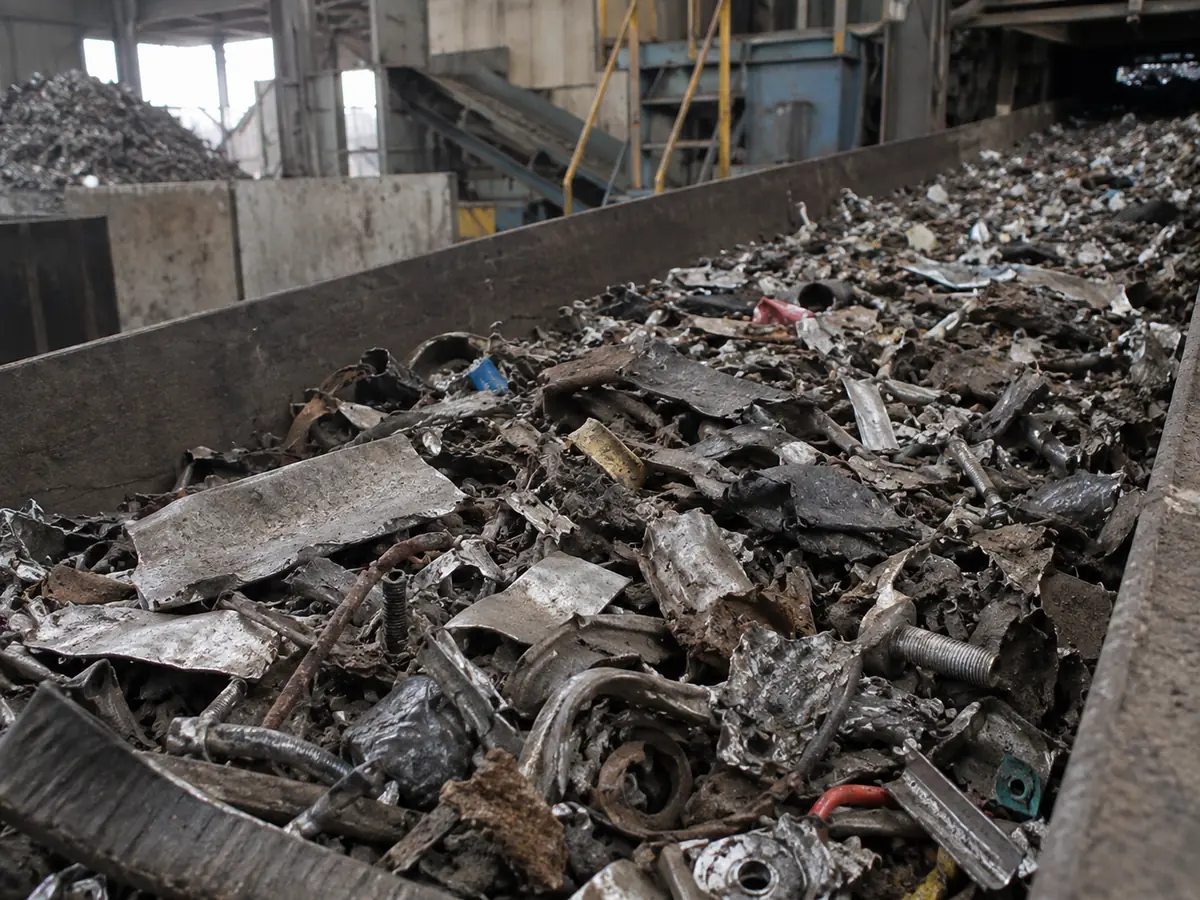
Exposed steel can respond independently. Locked or attached ferrous material behaves as a composite piece.
2. Burden Depth & Feed Distribution
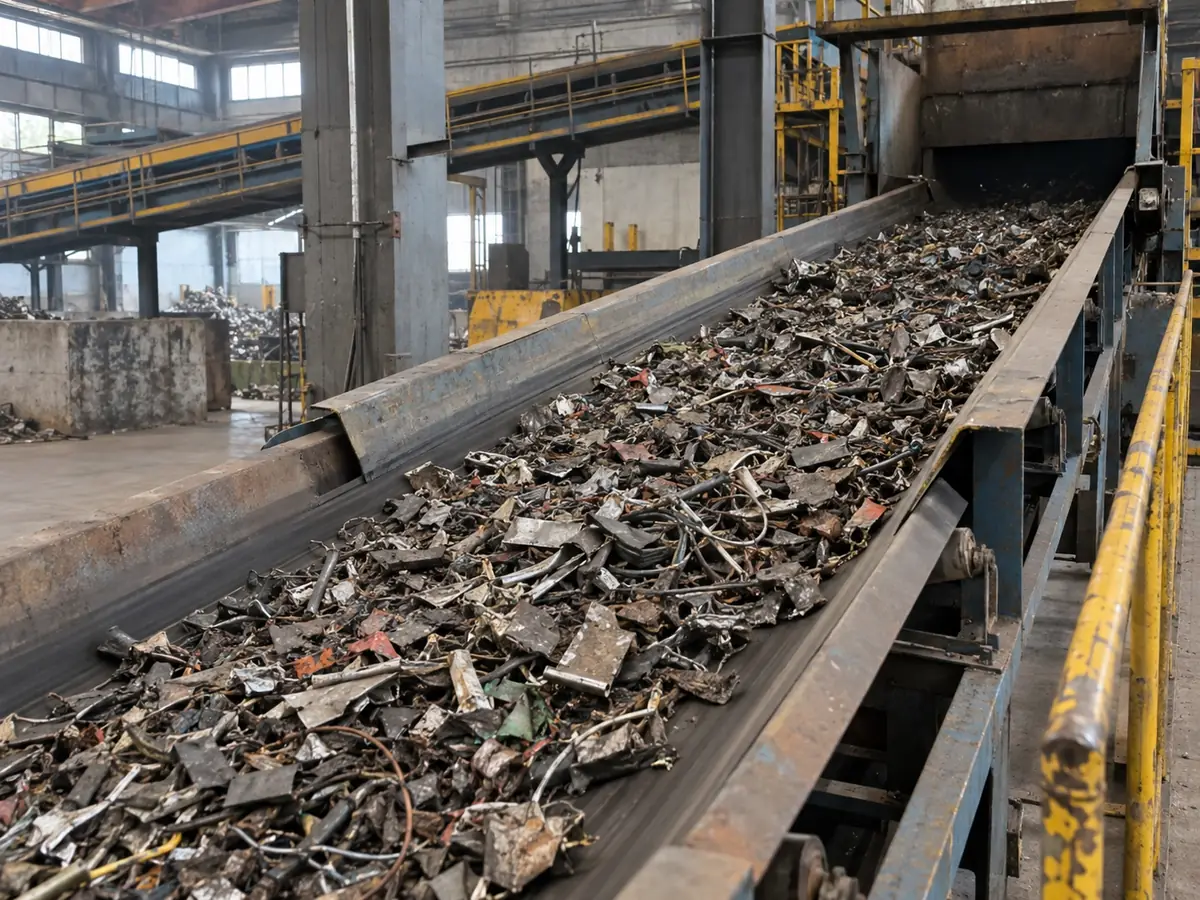
A deep or uneven burden increases the distance between buried ferrous pieces and the magnetic surface.
3. Working Distance
Chutes, covers, wear liners and air gaps all add distance between the target and the magnetic circuit.
4. Particle Size & Shape
Long wire, flat sheet, compact steel pieces and fine fragments behave differently during attraction, retention and release.
5. Drum Speed & Retention
Speed changes residence time, centrifugal effects and the release trajectory of captured ferrous material.
6. Splitter & Discharge Geometry
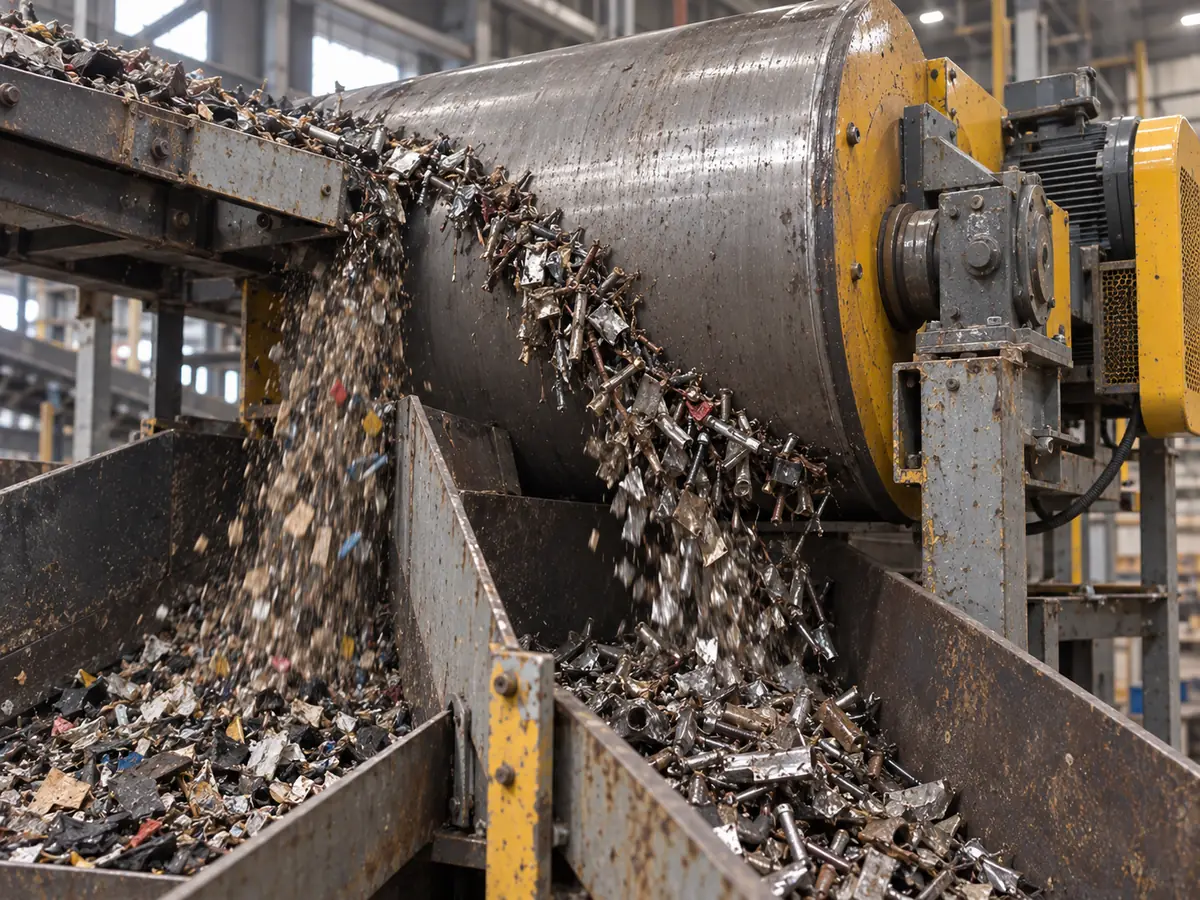
Recovery can be lost if the physical discharge paths do not match the actual trajectories of the separated fractions.
Other duty conditions: ferrous loading, abrasion, sharp pieces, moisture and feed instability can affect separator design and separation performance.
Installation Information We Need Before Quotation
We do not need a finished engineering package to start. A simple line drawing, photos and measured interfaces are usually enough for the first review.
Feed width and material direction
Inlet and discharge elevations
Available machine envelope
Burden depth at the magnetic zone
Chute, conveyor or transfer-point geometry
Maintenance and cleaning access
Required discharge directions
Environmental and guarding conditions
Measuring Scrap Metal Separation Performance
A repeatable test is more useful than a vague claim such as “high recovery.” Corvelan recommends defining the feed, collection method and acceptance calculation before comparing results.
1. Define FeedMaterial type, size range, feed mass, burden depth and test duration.
2. Collect FractionsKeep ferrous product and remaining stream separate during the test.
3. Measure Missed FerrousInspect or reprocess the remaining fraction with the agreed method.
4. Record ConditionsDocument feed setting, drum speed, splitter position and relevant observations.
Performance results depend on the tested material and operating conditions.
Scrap Metal Magnetic Separator FAQ
What is the best magnetic separator for scrap metal?
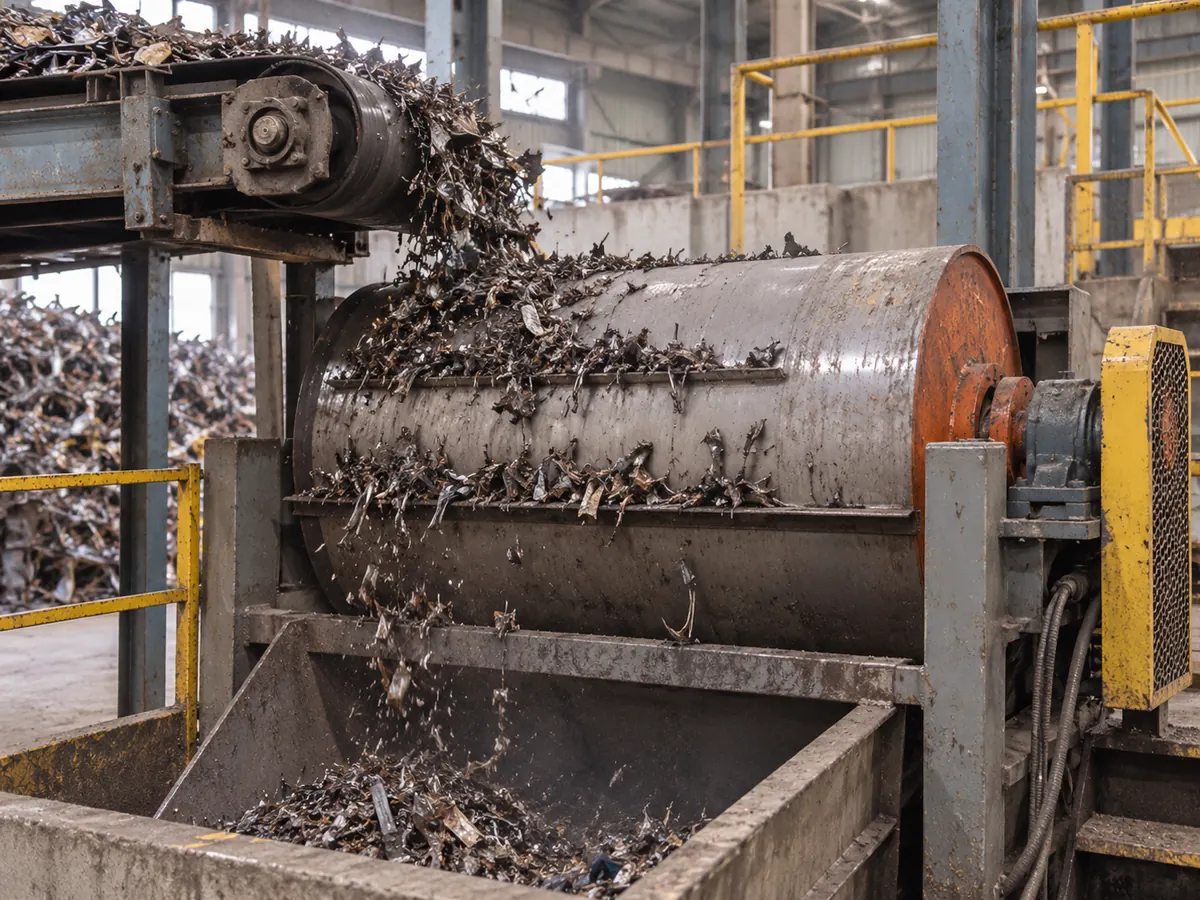
There is no single best separator for every scrap line. A magnetic drum is a strong starting point for continuous ferrous recovery from controlled post-shred material. A suspended or overband magnet fits conveyor tramp-metal removal, while a magnetic head pulley fits separation at a belt discharge.
Should magnetic separation come before or after shredding?
It can be used in both positions for different jobs. Before shredding, magnetic separation may remove exposed tramp iron and protect equipment. After shredding, newly liberated ferrous material can be recovered from the processed stream.
Can a magnetic separator recover aluminum, copper or brass?
Not by ordinary ferromagnetic attraction. Magnetic drums, overband magnets and head pulleys primarily target sufficiently magnetically responsive ferrous material. Free aluminum, copper and brass normally require another downstream separation method.
Why does liberation matter in scrap recycling?
A magnetic separator cannot create mechanical liberation. If iron or steel remains attached to plastic, rubber, aluminum or another material, the attached material may travel with the steel pieces. Shredding, crushing or sizing may need to expose the steel pieces first.
How do you size a scrap metal magnetic separator?
Corvelan evaluates scrap type, particle-size range, feed width, normal and peak throughput, burden depth, working distance, ferrous loading, abrasiveness, target fraction and installation envelope. Throughput alone is not enough.
Does higher Gauss mean higher scrap recovery?
No. Gauss is magnetic flux density at a defined measurement point. Scrap recovery also depends on working distance, field gradient, feed depth, liberation, particle behavior, drum speed and discharge geometry.
What should I send Corvelan for a quotation?
Send the scrap type, feed photos, particle-size range, normal and peak throughput, feed width, burden depth, typical ferrous size and loading, line drawing, available space, discharge directions, environmental conditions and your separation objective.