Conveyor-Fed Tramp Iron Removal

Conveyor Belt Magnetic Separator for Tramp Iron Removal

Remove ferromagnetic tramp metal from conveyor-fed bulk materials before it reaches crushers, screens, shredders, mills or other vulnerable equipment. The right separator depends on your conveyor layout, material conditions, tramp iron type and operating requirements. Corvelan supplies manual suspended magnets and self-cleaning overband separators for bulk material handling applications.

Manual or Self-Cleaning Crossbelt or Inline Configured Around the Conveyor

A conveyor photo or drawing is enough to start. Send the data you already have; missing information can be confirmed during the discussion.

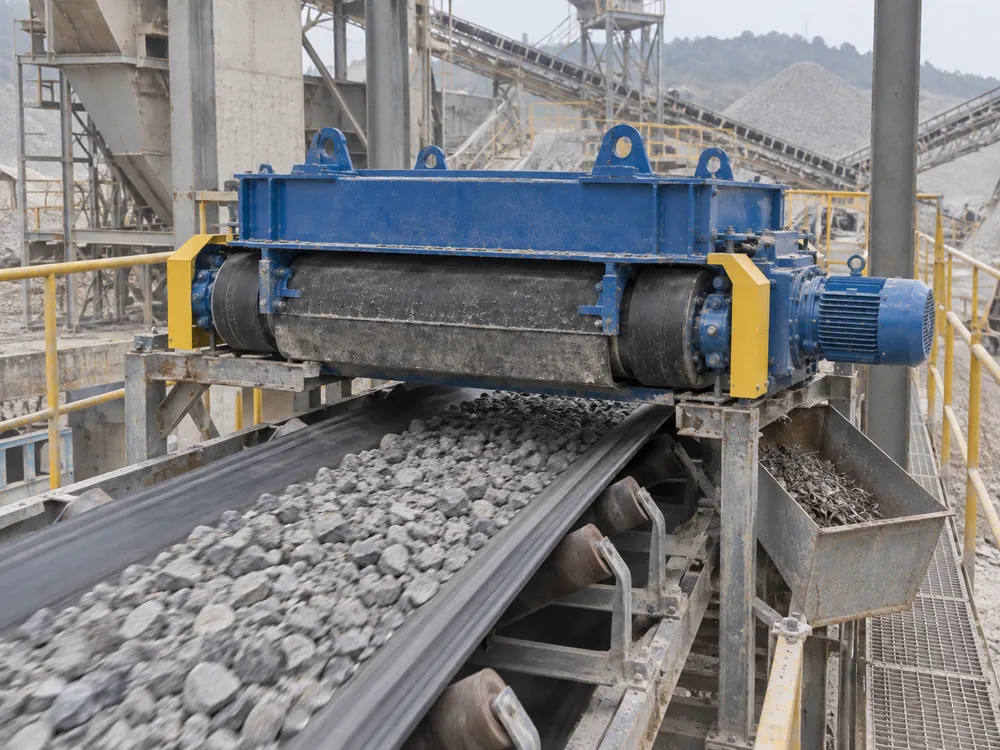
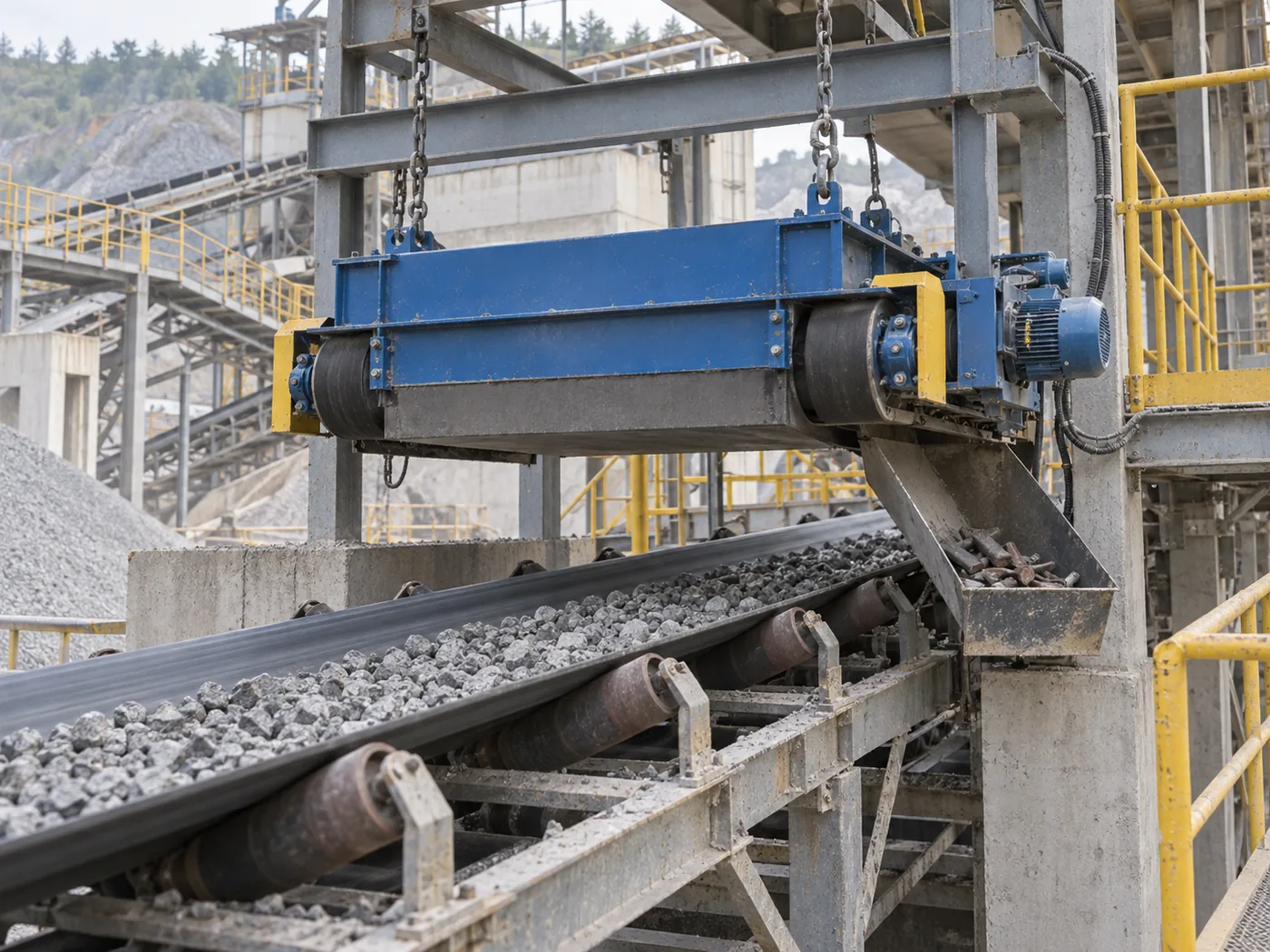
Self-cleaning overband magnetic separator installed above a crushed-stone conveyor
Quick answer: A conveyor belt magnetic separator removes unwanted iron and steel from bulk materials while they move on a conveyor. Manual suspended magnets are suitable for occasional tramp iron removal, while self-cleaning overband separators are used when continuous operation and automatic iron discharge are required. The best choice depends on your conveyor layout, material condition and removal requirements.
Choose the Right Conveyor Magnet for Your Application

Choose the Right Conveyor Magnet for Your Application

Start with your material and conveyor conditions, then select the separator type that best fits your working environment. The right configuration depends on your conveyor layout, tramp iron level and operating needs.

ConfigurationStarting pointConfirm for the dutyProduct details
Manual suspended permanent magnetOccasional tramp iron where planned manual cleaning and safe access are practical.Cleaning frequency, burden depth, target position, belt width and working distance.Suspended Permanent Magnet Separator
Permanent self-cleaning overbandCaptured ferrous material needs automatic discharge during conveyor operation.Reject direction, discharge space, conveyor speed, burden, support structure and maintenance access.Overband Suspended Permanent Magnet Separator
Electromagnetic self-cleaning cross-beltThe project is considering an electromagnetic arrangement with self-cleaning discharge.Electrical supply, cooling arrangement, working distance, duty conditions and agreed test basis.Self-Cleaning Cross-Belt Electromagnetic Separator
Magnetic head pulleyFerrous separation is being considered at the conveyor head-pulley position.Material presentation, belt construction, target size, discharge trajectory and downstream layout.Magnetic Pulley Separator
Selection rule: Belt width is only one factor. Burden depth, working distance, belt speed, tramp iron type and installation conditions can affect the best separator choice.
Why Remove Tramp Iron

Why Conveyor Belt Iron Removal Matters

Protect Downstream Equipment

Remove ferromagnetic tramp such as bolts, steel fragments, nails, wire and other responsive iron-bearing pieces before they reach crushers, mills, screens, shredders or similar equipment.

Reduce Ferrous Contamination

Extract unwanted iron and steel from conveyed bulk material before the next production, handling or separation stage.

Improve Process Reliability

Reduce the risk that a large ferrous object becomes a blockage, damages downstream equipment or creates an avoidable process interruption.

Cleaning Duty

Manual-Clean Suspended Magnet or Self-Cleaning Overband?

Cleaning duty should be decided from iron loading, operating continuity and safe access. A self-cleaning belt is useful when automatic discharge is justified, but it also adds drive, tracking, guarding and maintenance interfaces.

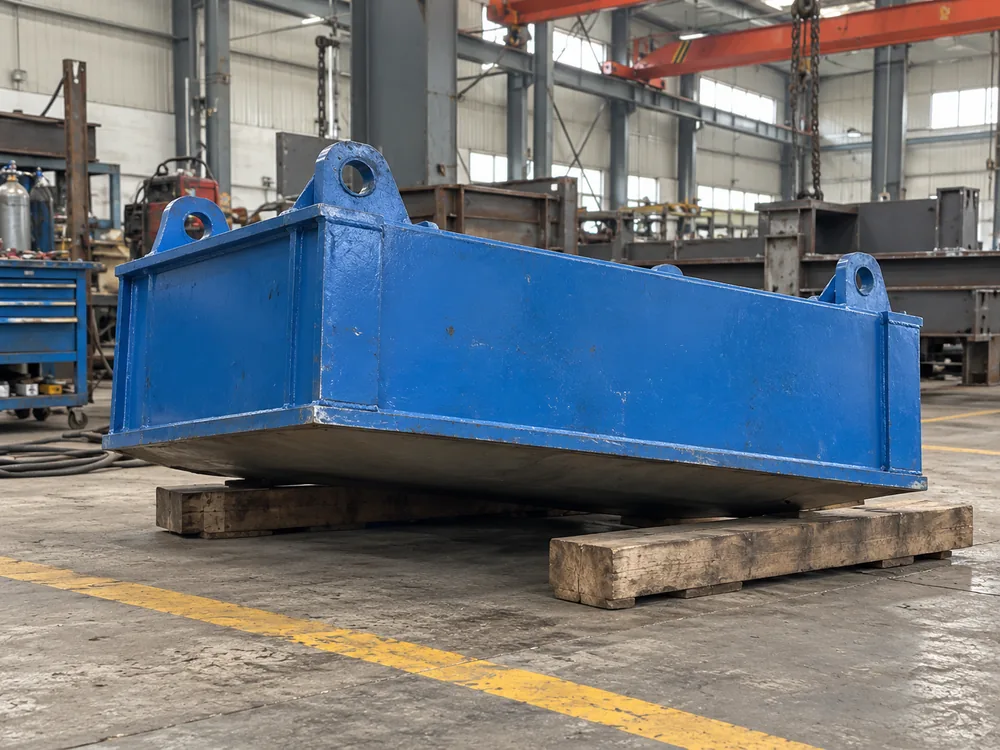
Manual-clean suspended permanent magnet in a Chinese equipment workshop
Occasional Tramp Iron

Manual-Clean Suspended Magnet

Best starting point when: tramp iron is occasional, planned cleaning is acceptable and safe manual access can be provided.

Consider: working distance, accumulation level, suspension points, cleaning access and clearance for larger captured pieces.

Safety note: Electrical isolation can stop the conveyor or drive; it does not switch off a permanent magnetic field.
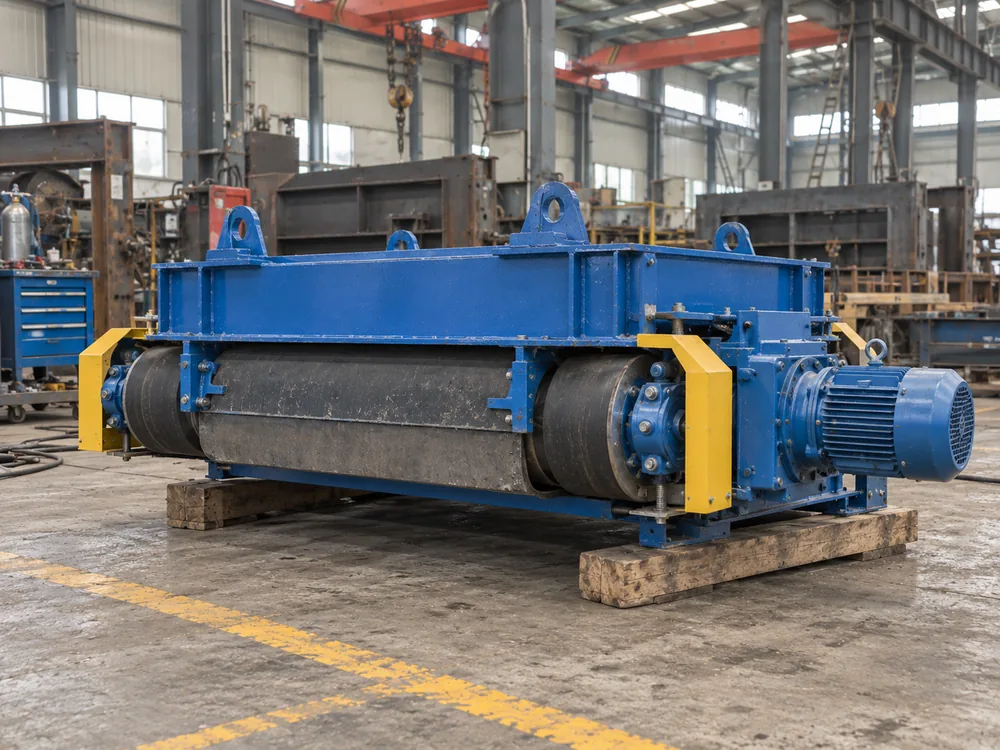
Self-cleaning overband magnetic separator assembled in a Chinese factory
Frequent Iron / Automatic Discharge

Self-Cleaning Overband Separator

Best starting point when: tramp iron is frequent, captured metal must discharge automatically or repeated cleaning stops are undesirable.

Consider: discharge direction, belt tracking, installation space and maintenance access.

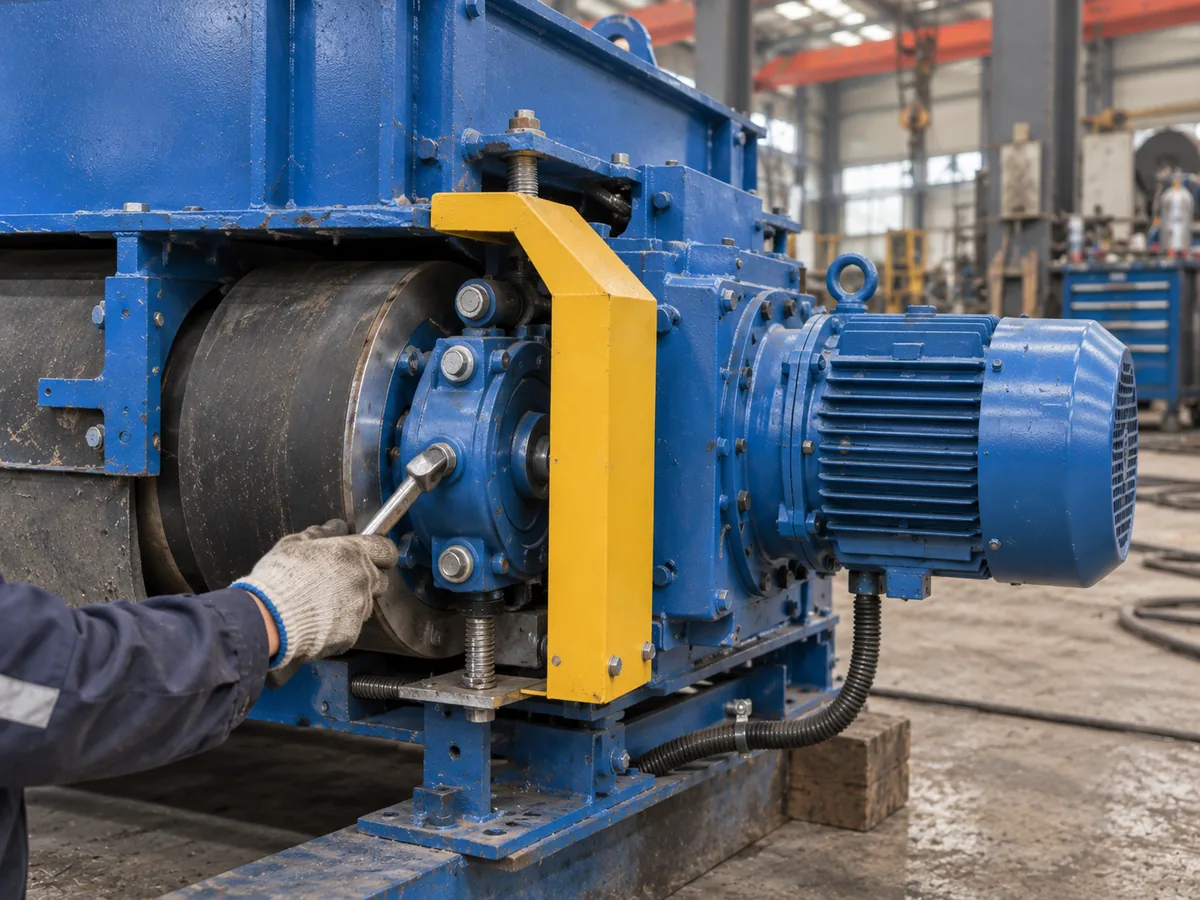
The motor drives the cleaning belt, while the permanent magnet system provides the magnetic force for continuous iron removal.
Installation Direction

Crossbelt or Inline? Design Around the Conveyor Layout

Neither arrangement is automatically stronger. The better layout is the one that gives the magnet enough working distance while keeping installation, cleaning and maintenance practical.

Crossbelt magnetic separator installed across a crushed-stone conveyor

Crossbelt Installation

The separator runs across the main conveyor and normally sends captured iron to a side collection point.

  • Side discharge and collection clearance
  • Support frame width and trough profile
  • Burden depth beneath the active zone
  • Guarding and maintenance access
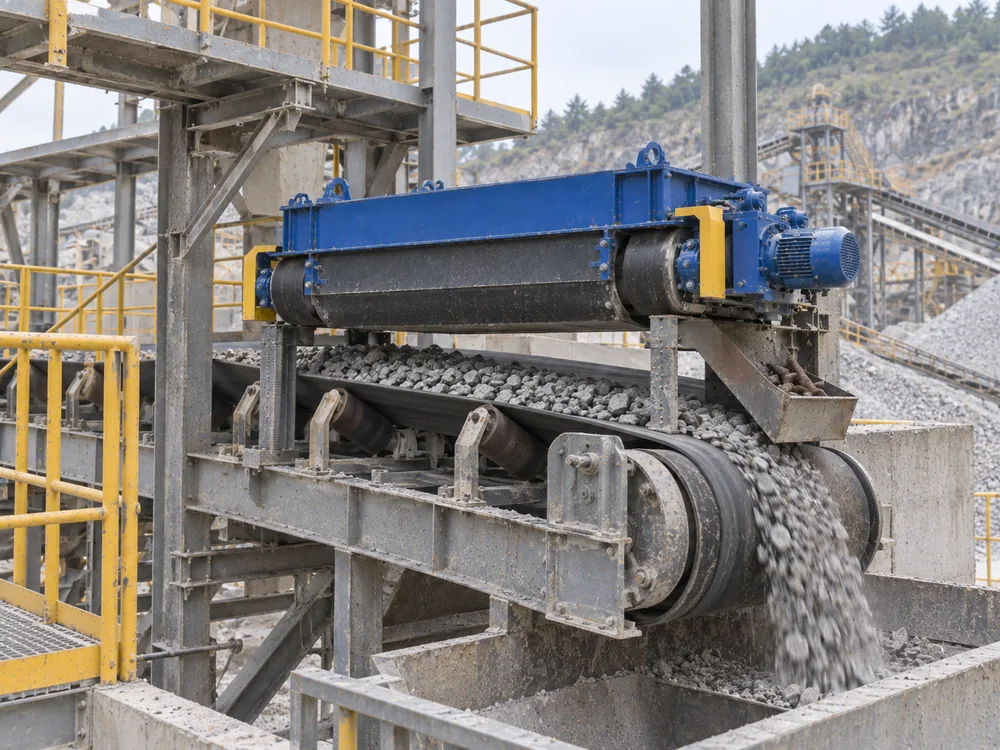
Inline magnetic separator positioned at a conveyor discharge area

Inline / Discharge-Area Installation

The separator follows the material travel direction, commonly near the conveyor discharge where material trajectory and available clearance can be reviewed together.

  • Head-pulley geometry and material trajectory
  • Longitudinal installation space
  • Iron discharge path and splitter position
  • Nearby steelwork and service envelope
Installation Location

Where Should the Magnet Be Installed on the Conveyor Line?

The magnet should be installed where it can remove tramp iron effectively and remain easy to operate and maintain.

Before Vulnerable Equipment

Place the separation point upstream of crushers, shredders, screens, mills or other equipment when the main objective is tramp-iron protection.

Above the Carrying Run

Review an overhead position when retrofitting an existing conveyor and suitable headroom, support, burden depth and side-discharge space are available.

At or Near Conveyor Discharge

Review the head-end area when material trajectory, conveyor geometry and available longitudinal space make an inline arrangement practical.

Installation tip: Do not install the magnet only because there is available space above the conveyor. The ideal position is where tramp iron can be removed before it reaches equipment that needs protection.
Working Principle

How a Magnetic Separator for a Conveyor Removes Tramp Iron

1

Material Passes Below

Bulk material travels through the selected separation point at the actual belt speed and burden depth.

2

Iron Enters the Working Field

Responsive ferrous pieces experience magnetic attraction while distance, gravity, material drag and entrapment oppose capture.

3

Iron Is Lifted and Retained

A manual unit holds captured metal at the magnetic face. A self-cleaning unit retains it against the moving cleaning belt.

4

Iron Is Cleaned or Discharged

Manual units are cleaned during a controlled stop. Self-cleaning units carry metal beyond the effective magnetic zone into a planned collection area.

Selection Factors

6 Factors That Affect Conveyor Magnet Selection

The hardest tramp iron to remove is usually the piece buried deepest inside the material. That is why separator selection should consider your actual conveyor conditions.

01

Burden Depth

Deeper material increases the magnetic path to iron travelling near the belt. Normal and peak burden should both be reviewed.

02

Real Working Distance

Define the distance from the magnetic face to the target iron, including mechanical clearance and the target location inside the burden.

03

Belt Speed

Higher speed reduces exposure time in the useful magnetic zone and can change material trajectory near a conveyor discharge.

04

Target Iron

Size, shape, mass, orientation, magnetic response and frequency all matter. A long steel bar and a compact steel piece are not equivalent targets.

05

Material Presentation

Particle size, bulk density, moisture, lumping, feed stability and interlocking can affect how easily ferrous contamination can be pulled free.

06

Installation Geometry

Crossbelt or inline position, trough shape, surrounding steel, discharge route and available clearance affect practical operation and serviceability.

Not sure which values you have?

Send a conveyor photo and the operating data already available. A simple conveyor photo is often enough to start the discussion.

Common Failure Modes

Why Conveyor Magnets Miss Tramp Iron

When a suspended magnetic separator underperforms, the problem is often the real conveyor condition rather than a single catalog number.

Magnet Too Far From the Target

The visible gap above the belt may look acceptable while the deepest target iron is much farther from the magnetic face.

Burden Is Deeper Than Expected

Iron buried at the bottom of a deep or uneven burden is more difficult to lift than contamination already near the surface.

Belt Speed Is Too High for the Duty

Higher speed reduces the time available for a target to respond inside the useful magnetic zone.

Steelwork Interferes With the Magnetic Zone

Ferrous idlers, beams, chutes or nearby structure can alter the magnetic circuit and complicate the intended separation point.

The Discharge Route Is Poorly Planned

Captured iron needs a clear route to a collection area so it does not strike equipment or fall back into the product stream.

The Separator Was Chosen by Surface Gauss Alone

A surface reading does not define working-distance field, pull force or actual capture performance under conveyor conditions.

Why Surface Gauss Is Not Enough for Magnet Selection

Surface flux density is one measurement at one location. It is not the same thing as magnetic field at the target, field gradient, pull force or tramp-iron removal efficiency. Compare magnetic values only when the measurement position and method are defined, then evaluate them against the real working distance and target.

Surface Gauss ≠ Working-Distance FieldGauss ≠ Pull ForceGauss ≠ Removal Efficiency
Information We Need to Recommend the Right Separator

Information Needed for Conveyor Magnet Recommendation

A conveyor magnetic separator should match your conveyor conditions and material type. The information below helps us recommend a suitable separator configuration.

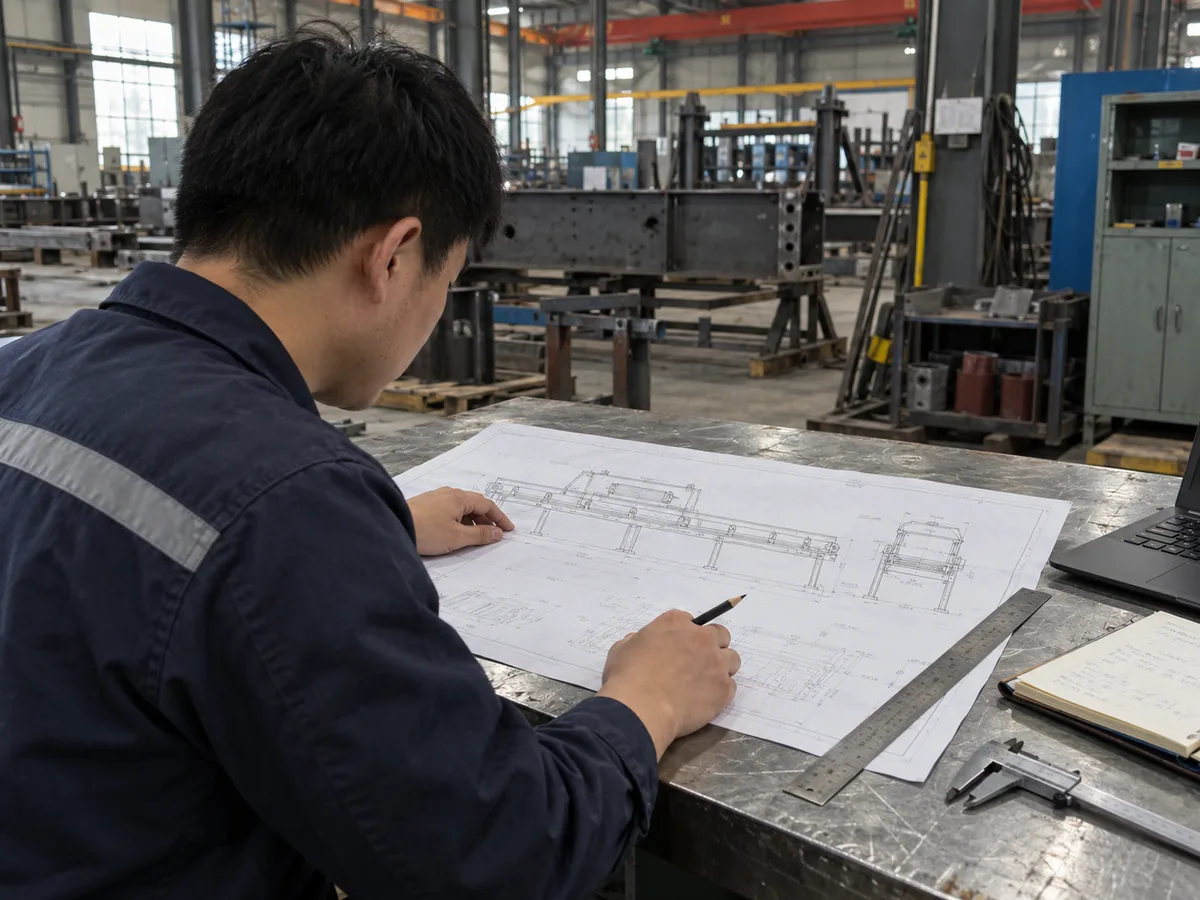
Engineer reviewing a conveyor magnetic separator installation drawing in a factory
ConveyorBelt width, belt speed, flat or troughed profile, normal and peak burden depth, and material trajectory near discharge.
StructureAvailable headroom, support and suspension points, lifting access, and available side or longitudinal clearance.
Magnetic ZoneMagnet-face reference position, deepest expected target distance, nearby steelwork and clearance for large tramp pieces.
Iron DischargeSide or end discharge route, collection chute or bin, largest expected captured piece, and prevention of iron falling back into product.
MaintenanceManual-clean access where applicable, cleaning-belt service space, drive/pulley access, guarding and lockout points.
Site ConditionsOperating hours, cleaning frequency, temperature, dust/corrosion exposure, and site electrical or safety requirements for driven equipment.
Technician inspecting the drive-side bearing and gearbox of an overband separator
Make sure the installation area is free from magnetic interference: Steel idlers, beams, chutes or other ferrous components near the working area can affect magnetic performance. Show the surrounding structure on the drawing so the installation can be reviewed correctly. Exact clearance requirements depend on the selected design, not a generic web-page number.

Electrical, safety and certification requirements depend on the selected equipment and site conditions. Any CE, ATEX, IP or other certification requirements should be confirmed with the final quotation.

Applications

Where Conveyor Belt Iron Removal Is Commonly Used

Aggregate & Quarry

MaterialCrushed stone, aggregate and similar bulk solidsPossible trampBolts, wear parts, steel fragments and toolsProcess riskCrusher, screen or conveyor damageTypical positionBefore crusher, screen or another vulnerable step

Mining & Ore Handling

MaterialOre and mine bulk materialPossible trampSteel fragments, bolts, wire and larger ferrous piecesProcess riskDamage or blockage before downstream processingTypical positionUpstream of crushing or downstream processing equipment

Recycling

MaterialShredded or mixed bulk materialPossible trampResponsive steel fragments, wire and fastenersProcess riskShredder damage or unwanted ferrous carryoverTypical positionBefore shredding or downstream separation, depending on the target

Coal, Cement & Bulk Handling

MaterialConveyor-fed coal, clinker-related bulk material and other dry solidsPossible trampIron and steel contamination from handling equipment or process wearProcess riskEquipment protection and contamination controlTypical positionBefore vulnerable downstream conveying or processing equipment

Wood & Biomass

MaterialChips, recycled wood and similar conveyed feedPossible trampNails, wire, screws and steel piecesProcess riskDamage to shredders, grinders or later processingTypical positionBefore shredding, grinding or size-reduction equipment

Plastics & Rubber Recycling

MaterialRegrind, shredded plastic or rubber streamsPossible trampSteel fragments, wire and fastenersProcess riskContamination and downstream equipment damageTypical positionBefore sensitive processing or further separation stages
Explore Other Magnetic Separation Solutions

When Another Magnetic Separator May Be Better

Do not force an overhead suspended magnet into every process. The correct separator family depends on where the material and target can be presented most effectively.

Separation is already at a conveyor discharge
Consider whether a magnetic head pulley better matches the conveyor discharge condition and material flow.
Reason: the magnetic separation point becomes part of the conveyor pulley and material trajectory rather than an overhead lift path.
Controlled bulk feed can pass through a split discharge
Consider a magnetic drum separator.
Reason: a drum can provide continuous magnetic and non-magnetic discharge when the feed and splitter geometry are suitable.
Fine weakly magnetic particles are the main objective
Consider high-intensity mineral-separation equipment and material testing.
Reason: this is a different separation problem from removing larger tramp iron from a conveyor burden.
The main target is non-ferrous
Use another separation technology.
Reason: conventional suspended magnets are primarily for responsive ferromagnetic iron and steel.
Performance Verification

How We Check Magnetic Separator Performance

Magnetic separator performance should be compared under the same test conditions. This helps customers understand how different separators perform in real conveyor applications.

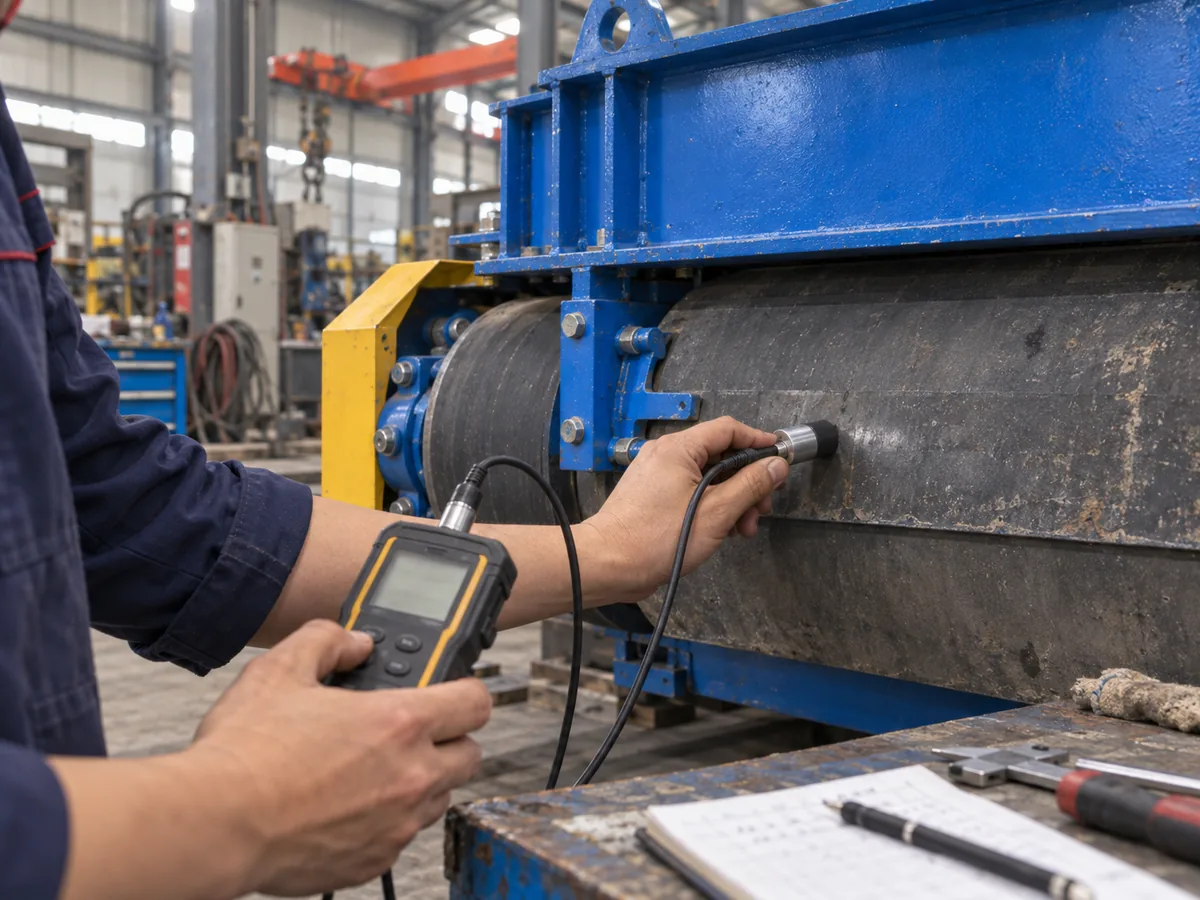
Technician checking the magnetic field of a separator with a handheld gauss meter

Magnetic Field Verification

Magnetic readings should be compared using the same measurement method and distance. A surface Gauss value alone does not show actual separation performance on a conveyor.

Representative Tramp-Iron Test

Test results should use a representative tramp iron size, material condition and conveyor operating condition.

Installed Acceptance

Confirm the approved position, support, clearance, discharge path, guarding and agreed process interface after installation.

Commercial Configuration

What Changes the Conveyor Magnet Configuration and Quote?

A conveyor magnetic separator should not be compared by a single “standard price” when the duty and installation are different. The quotation changes as the engineering requirement changes.

Belt Width & Layout

The conveyor width, trough profile and available installation space influence the required equipment envelope and support interface.

Burden & Working Distance

Deeper burden or a larger magnetic path can change the magnetic duty that must be reviewed.

Target Tramp Iron

The expected size, shape, mass, frequency and position of the target affect the required separation duty.

Manual vs Self-Cleaning

Automatic discharge adds cleaning belt, drive, pulley, guarding and service interfaces that are not present on a manual-clean magnet.

Mounting & Discharge Structure

Support steel, chute/bin arrangement, lifting access and surrounding conveyor structure affect integration scope.

Site Requirements

Environmental, electrical, guarding and other project-specific requirements must be defined against the quoted equipment scope.

Information Needed for Recommendation

What Information Helps Us Recommend the Right Separator?

You do not need a finished specification before contacting Corvelan. Send the information you already have; a conveyor photo or layout drawing can often resolve several questions at once.

1. MaterialMaterial name and physical form.
2. Belt WidthMain conveyor belt width and flat/troughed profile if known.
3. Belt SpeedNormal operating speed or available conveyor data.
4. Burden DepthNormal and maximum material depth where possible.
5. Target Tramp IronType, approximate size/shape and expected frequency.
6. Conveyor Photo or DrawingShow the proposed separation point, surrounding structure and available space.
Do not know the burden depth or belt speed? Send the conveyor photo and the data you already have. Corvelan can identify the remaining engineering inputs during the review.
Additional engineering data used when available: particle/lump size, bulk density, moisture, trough angle, headroom, suspension points, discharge clearance, operating hours, cleaning frequency, temperature, environment, power/control requirements for driven equipment and the agreed performance check method.
FAQ

Conveyor Belt Magnetic Separator FAQ

What is a conveyor belt magnetic separator?

It is a magnetic separation unit installed above a conveyor or around a conveyor discharge area to attract and remove responsive ferromagnetic tramp metal from a moving bulk-material stream. Common routes include a manual-clean suspended magnet and a self-cleaning overband separator.

What tramp iron can a conveyor magnetic separator remove?

Typical targets include responsive iron and steel pieces such as bolts, nails, wire, steel fragments and similar tramp material. Whether a particular piece can be captured depends on its size, shape, orientation, magnetic response, location in the burden and the actual operating condition, so critical targets should be defined or tested.

What is the difference between a suspended magnet and an overband magnet?

A manual suspended magnet holds captured ferrous metal at the magnetic face until it is cleaned during a controlled stop. A self-cleaning overband adds a moving cleaning belt that carries captured metal out of the active magnetic zone for separate discharge.

Should I use a manual-clean or self-cleaning separator?

Start from iron loading, cleaning access and operating duty. Manual cleaning can fit occasional tramp iron where safe planned cleaning stops are acceptable. Self-cleaning is normally reviewed when iron appears frequently, automatic discharge is required or repeated manual cleaning would interfere with operation.

What is the difference between crossbelt and inline installation?

A crossbelt unit runs across the main conveyor and normally discharges captured iron to the side. An inline unit follows the material travel direction, commonly near the discharge area. Select the layout from burden presentation, material trajectory, support structure, discharge route, headroom and maintenance space; neither arrangement is automatically stronger.

Where is the best place to install a magnetic separator on a conveyor?

The best position is where the target iron can be reached and removed before the protected process step. Common positions include above the carrying run, upstream of vulnerable equipment, or near a conveyor discharge. Final placement depends on burden depth, working distance, material trajectory, support structure, discharge route and maintenance access.

How high should a magnetic separator be above a conveyor belt?

There is no reliable universal height. The required position depends on conveyor geometry, burden depth, target iron, mechanical clearance and the selected magnetic circuit. The useful reference is the real magnetic path from the separator face to the hardest target, not a generic catalog gap.

Does higher Gauss mean better iron removal?

No. A Gauss reading describes flux density at a defined point; it does not by itself specify field gradient, pull force or capture efficiency at the real working distance. Burden depth, belt speed, target size and shape, material behavior and installation geometry also affect capture.

What information does Corvelan need before quotation?

For an initial review, send the material, conveyor belt width, belt speed, normal or maximum burden depth, target tramp iron and a conveyor photo or drawing. Additional site, environmental, electrical, discharge and acceptance information can be added after the equipment route is screened.

Start With the Conveyor

Send Your Conveyor Layout Before You Choose the Magnet

Send Corvelan the belt width, speed, burden depth, target tramp iron and a conveyor photo or drawing. We will help review your conveyor conditions, recommend a suitable separator type and confirm the details needed for the final configuration.

Get An Instant Quotation Now