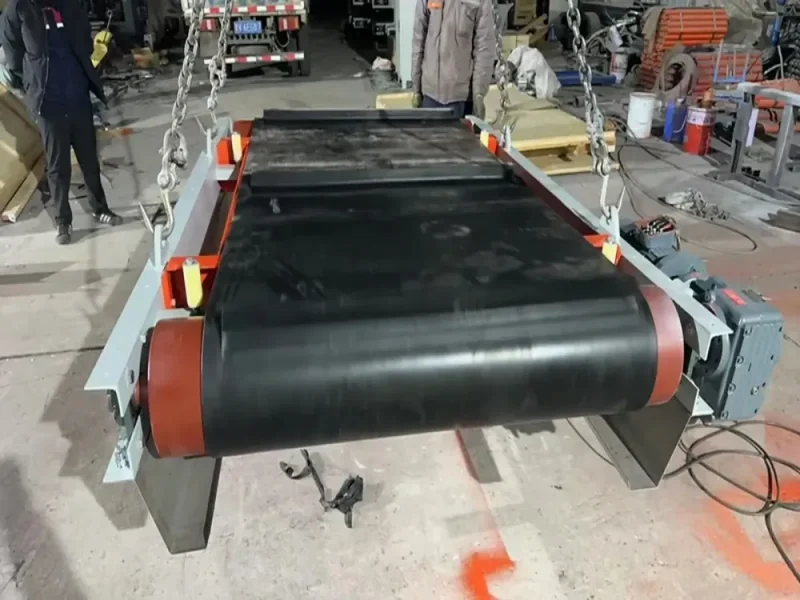
Quick answer: Gauss alone is not a capture rating. Gauss tells you the magnetic flux density B at a defined point, while field gradient tells you how that field changes with position. For fine iron, the useful question is whether the magnetic condition at the actual particle path is strong enough relative to the forces and process conditions acting on the particle. Working distance, particle magnetic response, field gradient, material state and particle movement can therefore matter as much as the headline surface Gauss value.
If two suppliers quote different Gauss values, first check whether they measured the same quantity at comparable locations and distances with a comparable method. If not, the larger number may not represent the stronger magnetic condition at the particle path.
What Gauss and Field Gradient Actually Tell You
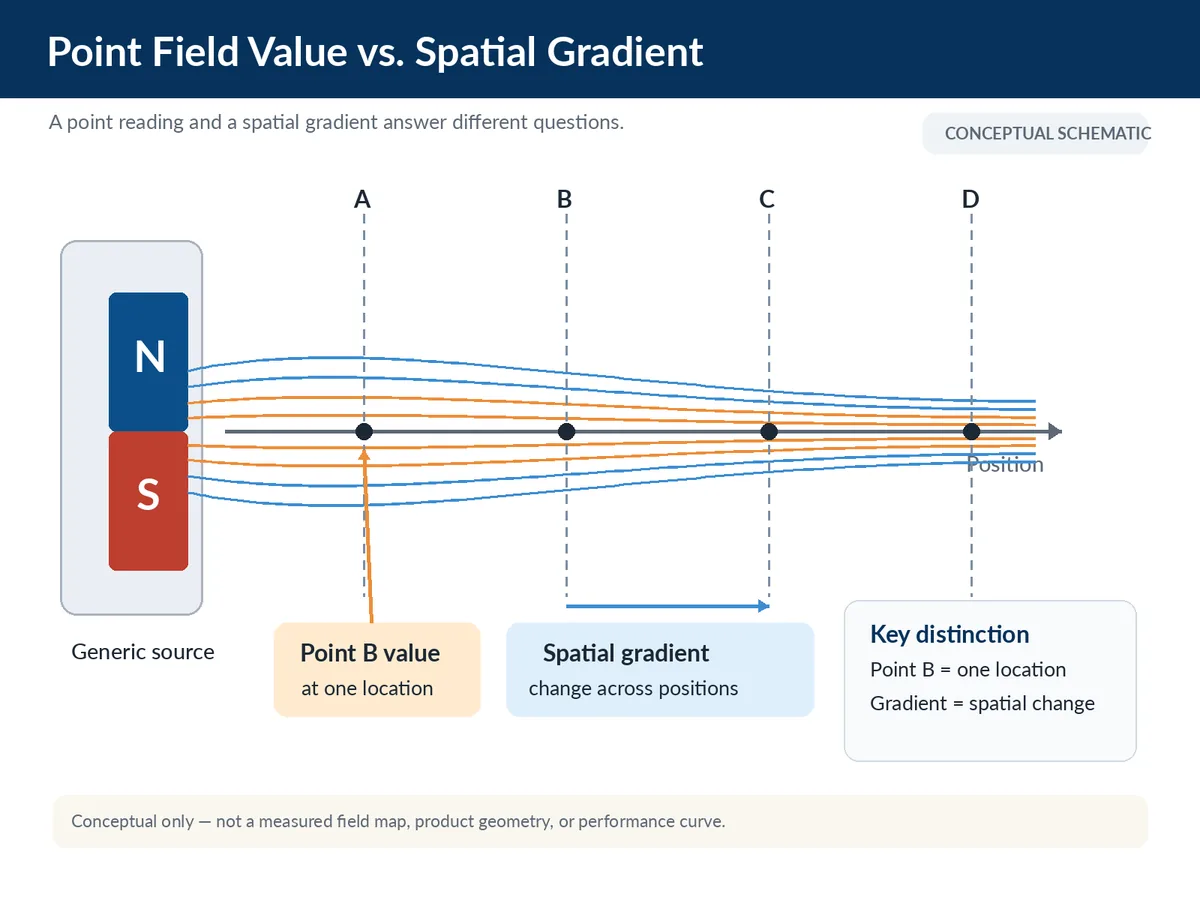
Gauss reports magnetic flux density B at a defined point; field gradient describes how that field changes with position, so the two are related but not interchangeable. You cannot determine a spatial gradient from one isolated Gauss reading.
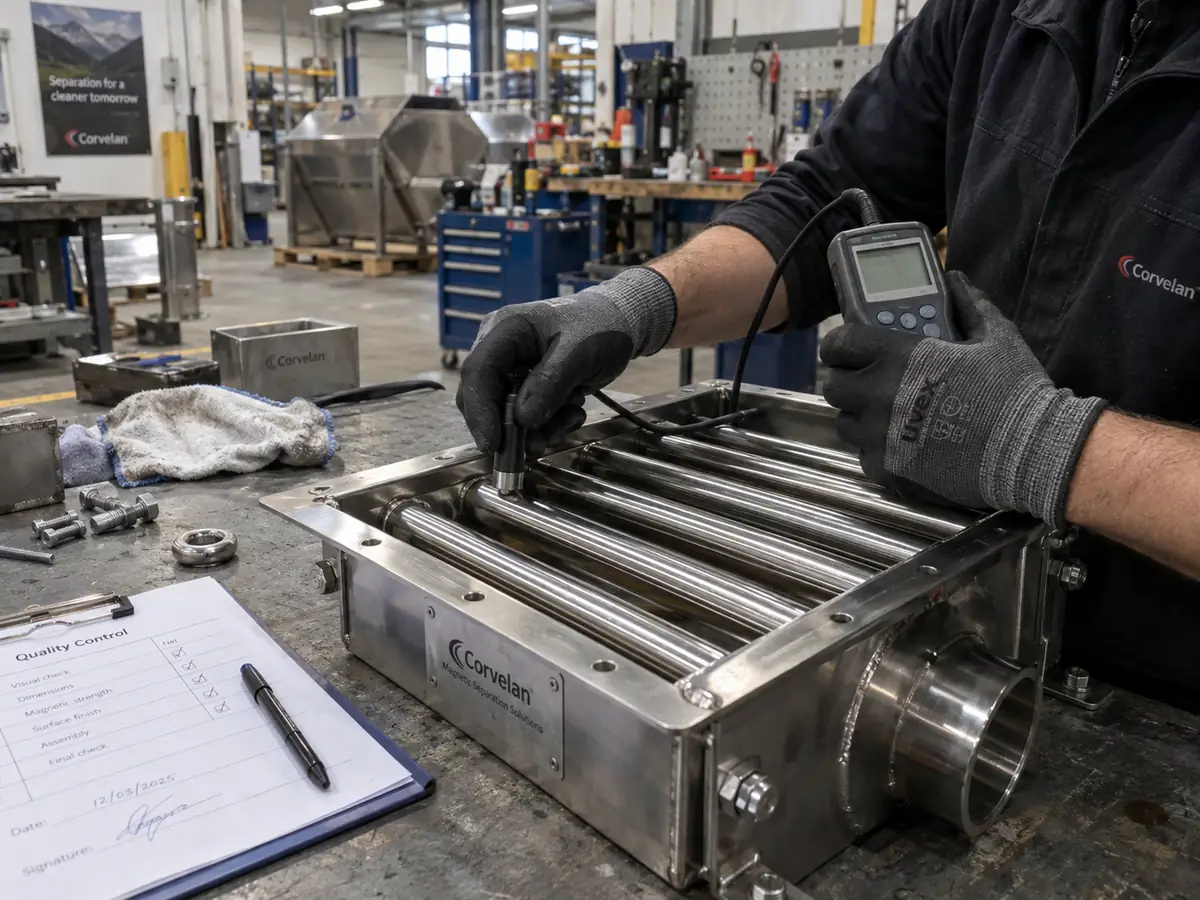
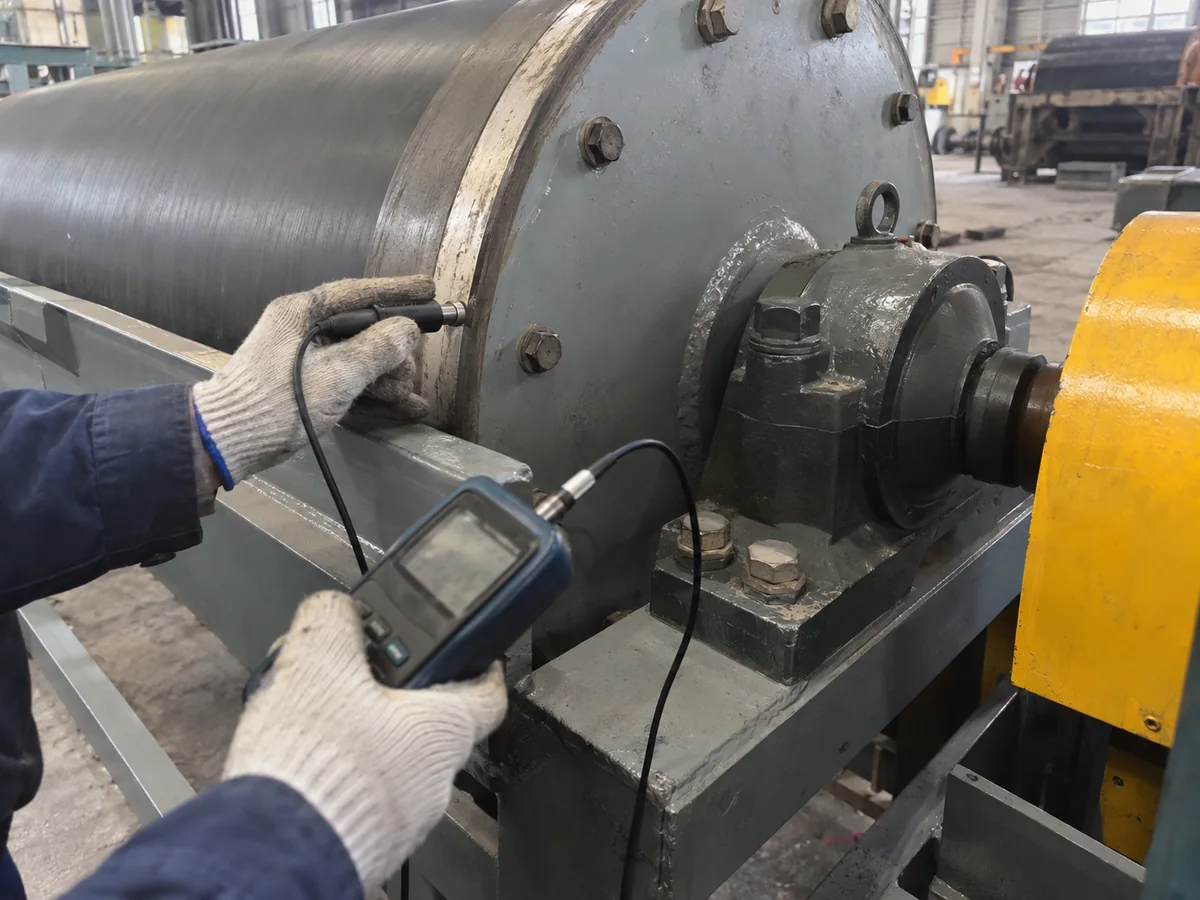
A gaussmeter is useful for checking B at a defined point or for taking multiple readings along a known path. A field gradient needs spatial information—multiple positions, a field map, or a defensible field model.
| Question | Gauss / B reading | Field gradient |
|---|---|---|
| What does it describe? | Magnetic flux density at a defined point | How the field changes with position |
| Can one point reading establish it? | Yes, for that point | No |
| Does measurement position matter? | Yes | Yes |
| Does it alone prove separation performance? | No | No |
A simple way to remember it:
Gauss asks: “How much magnetic flux density is present at this point?”
Gradient asks: “How quickly is that magnetic condition changing as the particle moves through space?”
The term “magnetic field strength” is sometimes used loosely in industrial literature. For a precise comparison, define the quantity first. Gauss is a unit used for magnetic flux density B; magnetic field strength H is a different quantity. NIST lists them separately in its magnetic-units guidance: NIST — Units for Magnetic Properties.
What to do: if the supplier cannot clearly identify the reported magnetic quantity, do not use that number as the basis for comparing separators.
Why the Same Gauss Number Can Describe Different Conditions
Equal Gauss readings are directly comparable only when they refer to the same magnetic quantity and functionally comparable measurement points, distances, probe orientation/method and equipment condition. Magnetic geometry should also be documented, because it affects how the field changes away from the measured point.
That is the practical reason two separators can show the same headline Gauss value without creating the same magnetic condition for the contaminant.
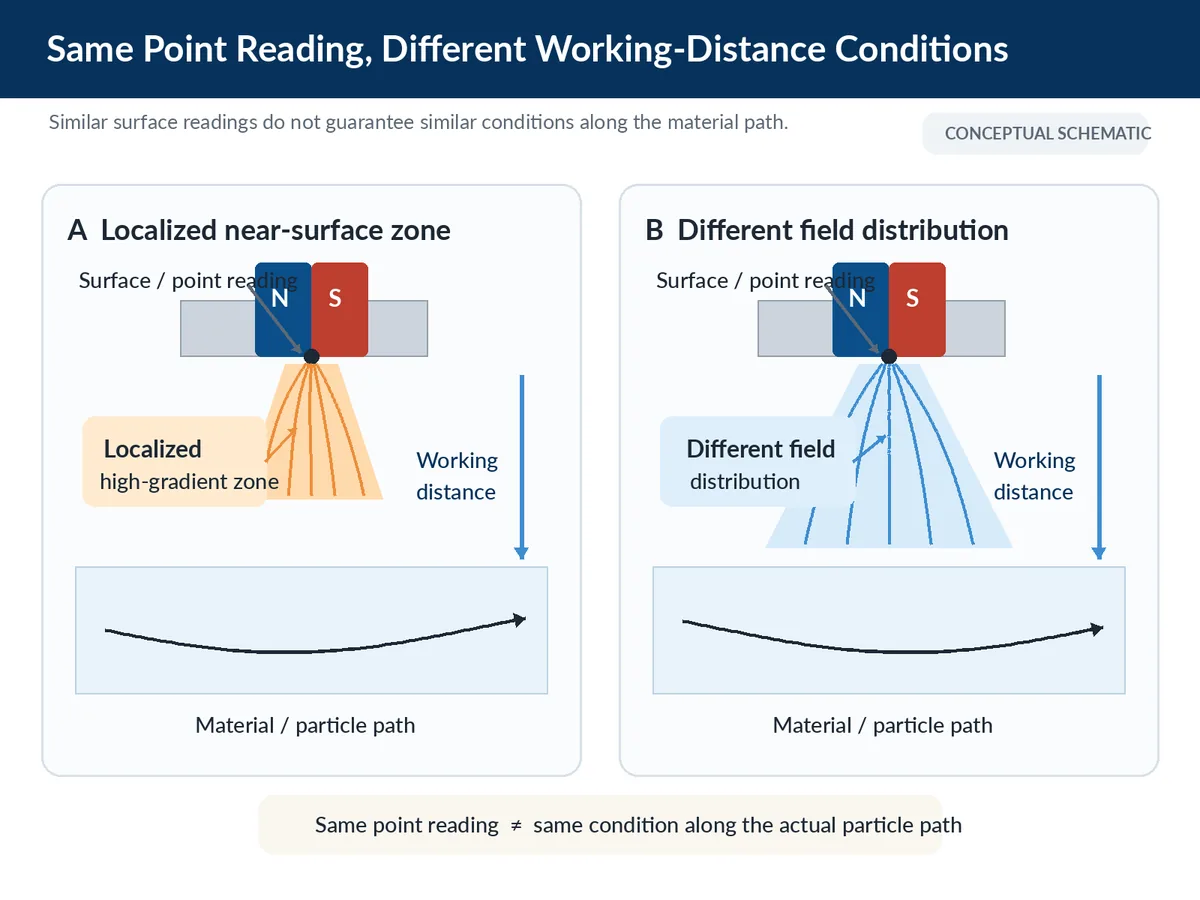
Example: same surface Gauss, different particle-path condition. Consider two separators that report the same surface Gauss value. In one application, the target particles pass very close to a narrow pole or magnetic matrix. In another, the particles are separated from the magnetic surface by a liner, belt, product layer or larger air gap. The headline Gauss number can be the same while both B and the field gradient along the actual particle path are different.
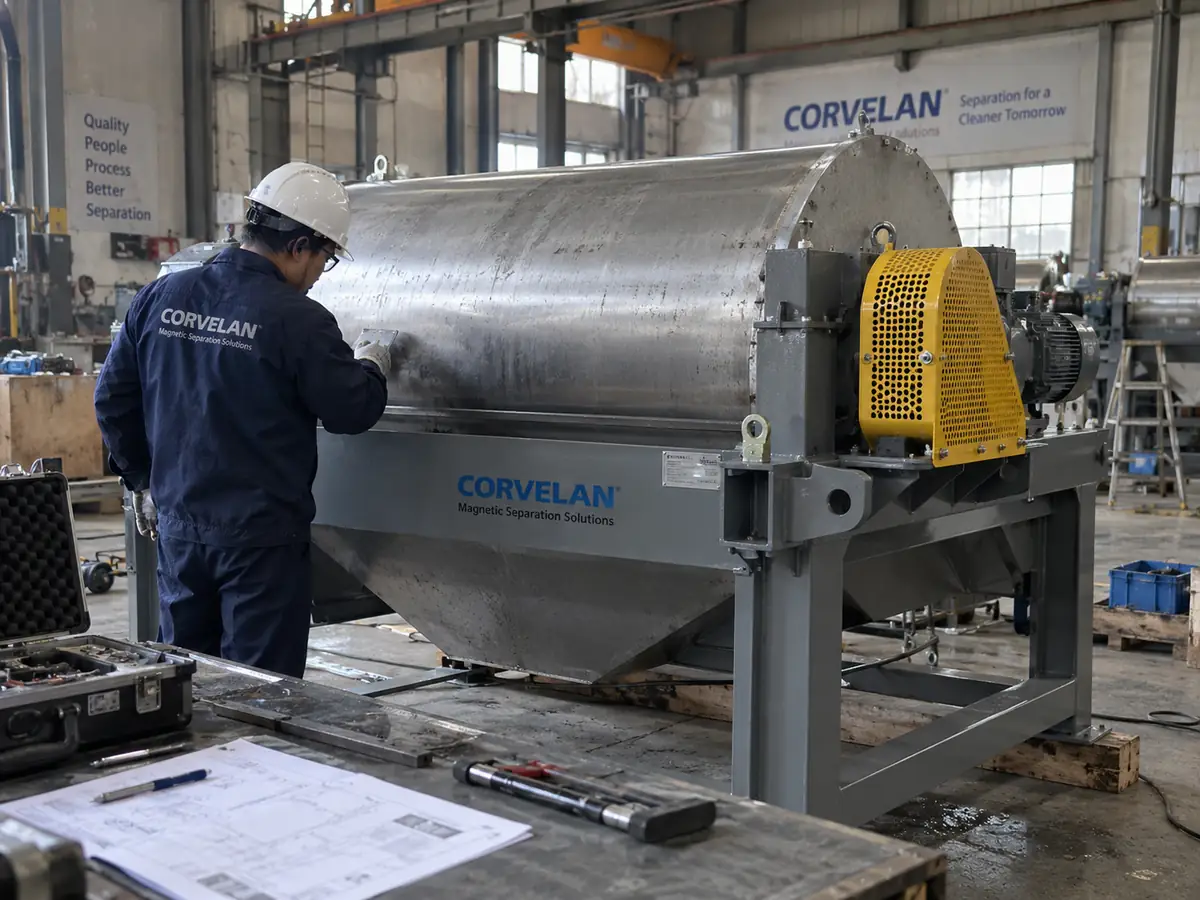
Check the field where the contaminant actually travels
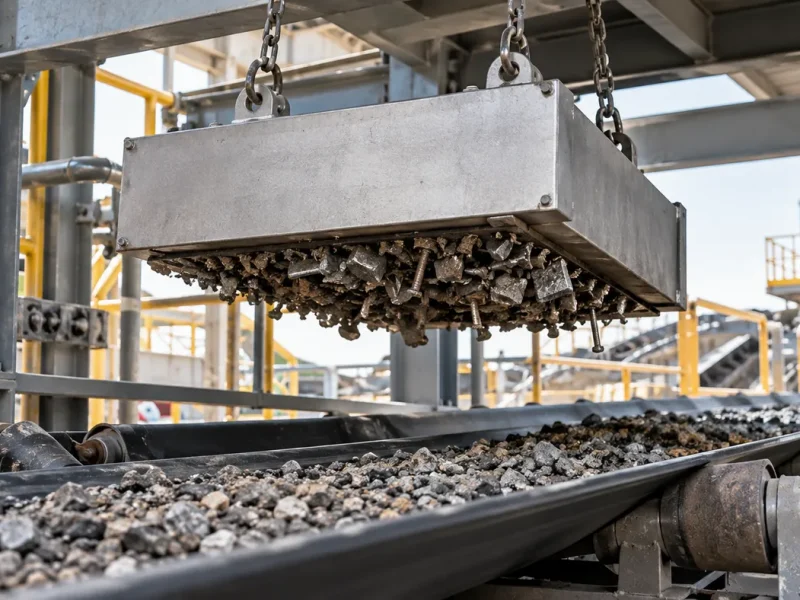
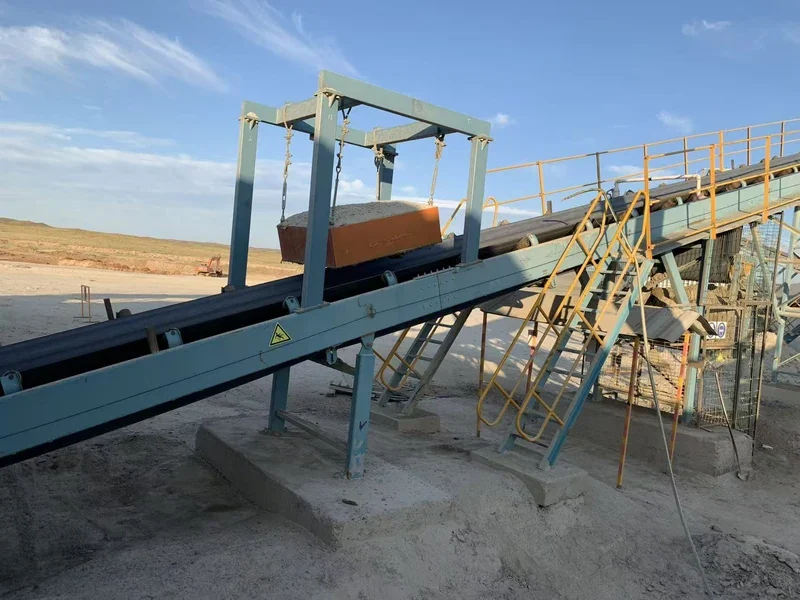
A surface or near-surface reading describes the field close to the selected magnetic face. The contaminant may travel farther away because of an air gap, liner, belt, pipe wall, product layer, or matrix path.
That distance between the particle path and the magnetic surface or active element is the working distance. For separator comparison, the field along that path is often more useful than a surface maximum because magnetic-circuit geometry controls how the field changes with distance.

Keep the measurement method comparable
Magnetic fields vary across separator surfaces and gaps. A reading at a local pole or flux-concentration point can differ from a reading elsewhere on the same assembly.
Hall-probe readings also depend on how the sensor is oriented relative to the field, and steep gradients can make the probe’s active area relevant to interpretation. The instrument manual should govern the method; Lake Shore’s Model 425 documentation discusses probe orientation and gradient-related measurement considerations: Lake Shore Model 425 Gaussmeter Manual.
Compare these supplier details first: magnetic quantity, exact measurement point, distance from the reference surface, probe method/orientation, reported statistic, equipment condition, and the magnetic geometry around that point.
One point can match while the field distribution does not
Two magnetic circuits can produce the same B reading at one selected point. One may create a steep local change near a narrow pole or matrix element; another may distribute the field differently across a larger gap. The point readings can match while the conditions along the particle paths differ.
| Supplier data | Can you compare it directly? | Why |
|---|---|---|
| Same quantity, functionally comparable point/distance, same probe method/orientation, same statistic and condition; geometry documented | Usually suitable for a field-level comparison | The measurements answer the same question |
| Same Gauss, different measurement distance | No | The field is being described at different positions |
| Surface peak vs field at a defined working distance | No | The readings describe different locations |
| Background field vs localized matrix reading | No | The readings describe different magnetic regions |
| One peak value vs a field map | Not as equivalent data | One is a local maximum; the other shows distribution |
Do not approve the comparison if a decision-critical Gauss value has no stated measurement point and method.
Why Fine Iron Changes How You Should Read Gauss
For fine particles or weakly magnetic particles, capture must be evaluated as a force-balance problem at the actual particle path. Field magnitude and gradient, particle magnetic response, working distance, and the way material moves through the active region can all change the result, so a surface Gauss value alone cannot close the decision.

Why both field magnitude and gradient appear in the capture problem
Under a simplified linear, unsaturated condition, magnetic force on a weakly magnetic particle scales with the particle volume, the magnetic-susceptibility difference, and the product of B × ∇B. This is not a universal separator-performance equation. It is a useful engineering relationship for understanding why one Gauss number cannot describe the whole capture condition.
It also explains why particle size, magnetic response, field magnitude at the real path, and spatial field gradient can all change the result together. Ferromagnetic particles, saturation effects and complex magnetic geometries can require more detailed treatment, so this relationship should be used as a physical explanation rather than a universal capture formula. Magnetic-separation literature treats these variables and competing physical effects as parts of the capture mechanism rather than a one-number rule: Zheng et al., 2019.
This does not mean every smaller particle follows one universal rule. It means fine-particle applications should not be reduced to a single surface-field threshold when particle response and process path are part of the result. For that reason, a statement such as “X Gauss captures Y-micron iron” is not a sound universal rule unless the material, geometry, particle path and test conditions are also defined.
High local gradient does not mean deep magnetic reach
A shaped pole, wire, rod or matrix can create a strong local gradient close to the flux-concentrating feature. That can be useful when the target particle actually passes through that active region.
It does not follow that the same geometry creates an equally useful magnetic condition farther away. Matrix geometry changes local field and gradient distribution, which is why high-gradient systems need to be interpreted in their actual geometry and particle path: Ge et al. — HGMS magnetic-matrix review.

Avoid this mistake: high gradient is not the same as long magnetic reach. A strong local gradient over a short distance does not prove equivalent performance through a deeper product layer or larger gap.
How the Same Magnetic Number Changes Meaning Under Different Process Conditions
What happens: a localized high gradient can matter greatly when particles actually pass close to a pole, wire or matrix.
How to recognize it: the product layer is thin or the particle path runs close to the active magnetic structure.
Check next: confirm the real path-to-element distance rather than relying on the surface maximum.
What happens: fluid drag, slurry velocity, trajectory and exposure time become part of the force balance.
How to recognize it: the target is carried through a wet process rather than approaching a magnetic surface as a dry, slow-moving layer.
Check next: define wet operating conditions and use representative material testing when the decision is real separation performance.
What happens: field distribution with distance becomes more important than the surface peak.
How to recognize it: a belt, liner, pipe wall, product depth or larger air gap separates the target from the magnetic surface.
Check next: compare the field at the relevant working distance or along the actual particle path.
What happens: the magnetic system can remain unchanged while particle presentation, collisions, clustering and time near the active region change.
How to recognize it: performance shifts with moisture, lumping, feed distribution or loading even though the magnetic assembly has not changed.
Check next: investigate the material and process path before assuming the magnet has lost strength.
When Difficult Conditions Occur at the Same Time
Fine or weakly magnetic + larger working distance: the target is already difficult to influence, and the magnetic condition available at its path may also be weaker or distributed differently. Increasing a headline surface Gauss value without checking the real working distance can solve the wrong problem.
High local gradient + fast slurry or poor particle presentation: a strong local gradient helps only if the target particle actually enters that region under a suitable process condition. If flow, trajectory or presentation carries the particle through too quickly or away from the active zone, increasing local gradient alone may not correct the process problem.
Practical clue: if magnetic measurements remain consistent but separation performance changes with flow, moisture, loading or presentation, investigate the process path instead of assuming the magnet is the only variable.
Which Situation Are You In?
| If you observe… | Most relevant question | Check first | Do not assume |
|---|---|---|---|
| Fine target passes very close to a matrix or pole | Is local gradient available at the path? | Path-to-element geometry | Surface Gauss alone proves performance |
| Target sits deeper in material or behind a liner/belt | How does the field change with distance? | Working distance / field map | Highest surface Gauss gives deepest reach |
| Fine particles move in slurry | Can particles respond while crossing the active region? | Flow, path and representative material test | Dry or static Gauss predicts wet performance |
| Result changes although the magnetic assembly is unchanged | Did the process condition change? | Material state, loading, path and distance | Magnet strength must have changed |
| Two suppliers quote the same Gauss | Are they measuring the same magnetic condition? | Point, distance, probe method and reported statistic | Equal headline numbers are directly comparable |
Before comparing equipment, define: the contaminant, actual particle path, working distance, material state, and flow or presentation.
How to Compare Supplier Magnetic Data Fairly
Supplier data should be compared only after the reported quantity, measurement point, distance, probe orientation/method, reported statistic and test condition are put on a comparable basis, while the relevant magnetic geometry is documented and interpreted.
The separators do not need identical magnetic circuits. The measurements do need to answer the same engineering question.
Three Levels of Evidence Should Not Be Mixed
Do not collapse the levels: a Level 1 number should not be used as if it were Level 3 performance evidence.

Use one comparison sheet for every supplier
| Detail | What to record | Why it matters |
|---|---|---|
| Quantity and unit | B in gauss/tesla, H, or another clearly defined quantity | Prevents different magnetic quantities from being ranked together |
| Reference point | Defined surface or position | Shows where the distance measurement starts |
| Point and distance | Exact location and contact/surface/working gap | Makes working-distance comparison possible |
| Probe method/orientation | Probe type, sensing orientation, and repeatable method | Reduces instrument and setup ambiguity |
| Reported value | Peak, average, minimum, mapped values, or another defined output | Prevents unlike summaries from being compared |
| Equipment condition | Clean/loaded or another relevant state | Defines the condition represented by the reading |
| Magnetic geometry | Pole/tube/roll/matrix arrangement or measurement sketch | Helps explain why field distribution changes away from the measured point |
| Material-test basis, if performance is claimed | Feed/contaminant conditions, sampling/result definition, required result | Separates magnetic-field evidence from process-performance evidence |
A background or applied field and a localized value near a magnetized matrix can both be valid measurements, but they describe different magnetic regions. Label them separately instead of putting them in one ranking column.
Likewise, a peak value identifies a local maximum while a field map shows spatial distribution. If a quotation gives only a headline Gauss value, ask for the missing measurement context before giving that number technical weight.
When a Field Map Is Enough—and When You Need a Material Test
Use repeatable field measurements when the decision is whether the magnetic condition matches a defined baseline; use representative material testing when the decision is actual separation performance under process conditions. Here, representative material means material from normal production or a sample that matches the production conditions closely enough to answer the question being tested.
Use field measurements to check a magnetic condition
A repeatable gaussmeter check or field map can help answer questions such as:
- Is the field at a defined point consistent with a documented baseline?
- How does B change across a defined working path?
- Are two quoted field values being measured on a comparable basis?
- Has a magnetic assembly changed relative to its documented reference condition?
For these questions, keep the reference point, distance, probe orientation/method, instrument and procedure consistent enough for a repeatable comparison.
Use material testing when the question is process performance
A field map alone cannot tell you the contaminant removal, recovery or purity that a real process stream will achieve. Those outcomes also depend on material and operating conditions outside the Gauss reading.
If the question is process performance, test material from normal production or a sample that matches the relevant production conditions. Record the contaminant characteristics, feed state, flow or presentation, working distance, loading and separator configuration. Also define how samples are taken, how repeat/pass is judged where relevant, how the result is calculated, and what result must be achieved before treating the test as performance evidence.

In customer-facing terms, define what result must be achieved and how it will be measured before treating any material test as proof.
| What you need to know | Better evidence | Main limitation |
|---|---|---|
| Is the field at this point consistent with the specification? | Repeatable point measurement | Does not show the full field distribution |
| How does the field change along this path? | Field map / defined multi-point measurements | Does not prove material outcome |
| Will the application meet a defined separation objective under stated conditions? | Material from normal production tested with a defined sampling/result basis | Applies only to the defined test conditions and metric |
| Can two supplier proposals be compared? | Comparable measurement basis, plus material testing if process outcome is decisive | Non-equivalent methods can invalidate the comparison |
If an Existing Separator Starts Missing Fine Iron
Do not immediately assume that the magnetic system has lost strength. First separate a magnetic-condition change from a process-condition change.
- Repeat the magnetic check using the same measurement point, distance, probe orientation and method used for the baseline.
- Check whether working distance has changed because of liner wear or replacement, buildup, product depth, belt position, pipe condition or another installation change.
- Check whether material state, moisture, agglomeration, flow, loading or feed presentation has changed.
- Check whether the particle path or residence time through the active magnetic region has changed.
- If the magnetic measurements still match the baseline but the process result has changed, investigate the material/process side and use representative material testing when the actual separation result needs to be verified.
What this means: use magnetic measurements to answer magnetic-condition questions. Use a material test with a pre-defined result and measurement basis when the decision is actual process performance. One is not automatic proof of the other.
What to Ask for Before You Approve a Magnetic Specification
Before approving a magnetic specification, require the measurement basis and the process conditions that make the number meaningful, then choose the measurement or test that can prove the result you actually need.

| Project detail | Why it matters | What to request or define |
|---|---|---|
| Target contaminant | Magnetic response is not defined by size alone | Material/contaminant description and known magnetic behavior where available |
| Relevant particle-size range | Size can change trajectory, exposure and force-balance conditions | The range that matters in production; do not turn it into a universal Gauss threshold |
| Material state | Dry powder, slurry, granules and other states create different transport conditions | State, moisture/slurry condition and relevant bulk behavior |
| Flow or presentation | Changes particle path and exposure | Flow rate/velocity or presentation description where relevant |
| Actual particle path | Shows where the magnetic field should be evaluated | Product depth, gap, pipe/belt/liner spacing, matrix path, or other working distance |
| Magnetic quantity | Prevents terminology mismatch | B/Gauss, H, background field, localized field, or another defined quantity |
| Measurement method | Determines whether the result can be repeated | Reference point, location, distance, probe orientation/method, instrument and reported value |
| Required result | Determines what evidence is relevant | Magnetic baseline, field distribution, contaminant removal, recovery, purity, or another defined metric |
| Performance verification | Prevents a field reading from becoming a process-performance claim | Material test with a defined sampling, calculation, and pass/fail basis when process outcome is the target |
Four questions to answer before approval
Do not approve the magnetic specification until you can answer:
- What exactly is being measured?
- Where is it being measured relative to the particle path?
- What material or operating condition could change the result?
- What measurement or test proves the result you actually need?
Once those four answers are clear, a Gauss number becomes useful engineering information instead of a standalone marketing number.

Common Questions About Gauss, Gradient, and Fine Iron
Does higher Gauss always mean a better magnetic separator?
No. A higher B reading at one defined point does not automatically mean a stronger field at the working distance, a more useful gradient along the particle path, or better separation under the process conditions.
Is field gradient more important than Gauss?
Not as a universal rule. The relevant magnetic condition depends on field magnitude, gradient, geometry, distance, particle response and the process path. Treating either Gauss or gradient as the single winning number creates the same comparison error.
Is Gauss the same as pull force?
No. A gaussmeter measures magnetic flux density at the sensor location; a pull test measures force using a defined target and procedure. They answer different questions and cannot be directly converted. For the conditions needed to compare those measurements fairly, read the Gauss vs Pull Force guide.
What magnetic number should I request from a supplier?
There is no single number that replaces measurement context. Ask for the quantity, point, distance, probe method, reported value, equipment condition and relevant geometry for the particle path. If the decision is actual separation performance, define the material-test and required-result basis as well.

What to Send Corvelan About Your Application
The practical rule is simple: compare magnetic conditions at the particle path, not isolated marketing numbers. A Gauss value is useful when its measurement basis is defined. A gradient is useful when the spatial field condition is defined. Neither is a universal capture rating on its own.
If You Are Comparing Magnetic Specifications
Send the supplier data you are comparing together with the stated measurement point, distance, probe method, reported value and any available equipment drawing. We can help identify whether the numbers are actually comparable and which missing condition prevents a fair comparison.
If You Are Trying to Solve a Separation Problem
Send the material, target contaminant, relevant particle-size range, material state, working distance or product depth, flow or presentation condition, installation constraints and the result you need to improve or verify. If a magnetic number cannot answer that decision, the next useful step may be a field map, a defined measurement or representative material testing rather than simply requesting a higher Gauss value.
If you are still comparing separator principles, start with the equipment geometry and where the active magnetic region sits relative to the product path. If your process details are already defined, use those conditions—not a target Gauss number alone—as the basis for the next comparison.