Kaolin Iron Removal & Purification Application

Kaolin Magnetic Separation for Iron Removal & Purification

Quick answer: Kaolin magnetic separation removes magnetically responsive iron-bearing impurities that can affect product purity, brightness or fired color. Strong magnetic contamination can often be removed in a pre-removal stage, while fine weakly magnetic impurities commonly require a high-gradient magnetic separation route after suitable feed preparation.

Corvelan selects the magnetic separation route from the kaolin mineralogy, particle size, dry or slurry condition, throughput and final product target. The goal is not to choose the largest Gauss number. The goal is to match the separation duty to the material.

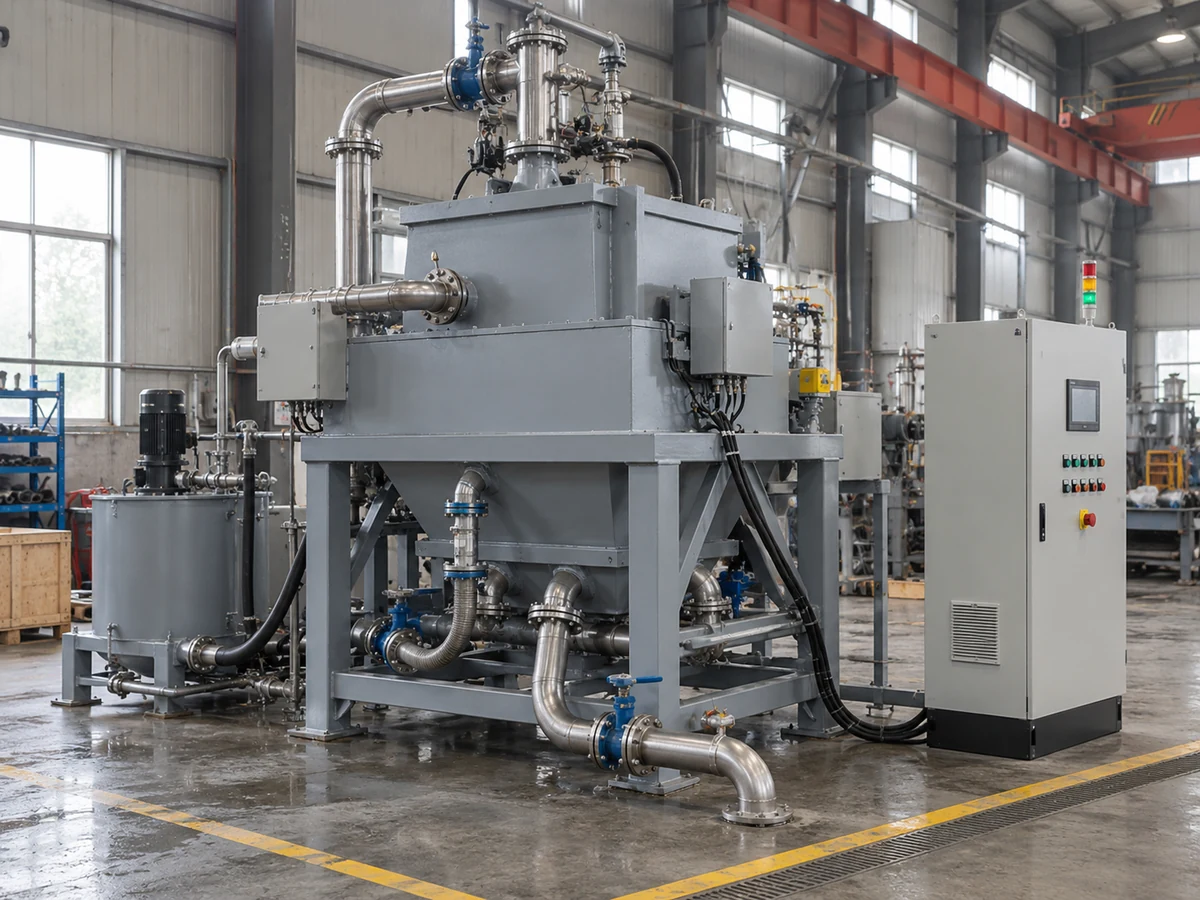
High-gradient magnetic separation equipment assembled in a Chinese industrial workshop

Start with the separation question

  • Which iron-bearing impurity is actually present?
  • Is it liberated at the current particle size?
  • Is the feed dry, damp or a dispersed slurry?
  • What Fe2O3, brightness or product-quality target matters?
  • Do you need to remove coarse iron first, reduce fine iron impurities, or use both stages?
Removal Duty

What Can Magnetic Separation Remove?

Strongly magnetic contamination and sufficiently liberated magnetically responsive iron-bearing particles can be targeted. The response depends on mineralogy and particle condition, not total iron alone.

Separation Method

When Is High-Gradient Separation Needed?

Fine weakly magnetic impurities in prepared kaolin commonly require HGMS, WHIMS or another matrix-type high-gradient separation route rather than a conventional open-field magnet.

Performance

What Determines the Final Result?

Mineralogy, liberation, particle size, feed dispersion, magnetic field gradient, matrix geometry, flow, loading and separation stages all influence the result.

What Iron Impurities Can Magnetic Separation Remove From Kaolin?

Magnetic separation works best when the iron-bearing impurity is magnetically responsive and sufficiently liberated from the kaolin. Two feeds with similar total Fe2O3 can behave very differently if the iron occurs in different mineral forms.

Strongly Magnetic Contamination

Tramp iron, steel fragments and strongly magnetic particles are the easiest magnetic-removal duty and are often handled upstream.

Weakly Magnetic Iron-Bearing Minerals

Fine hematite-, siderite- or other weakly responsive iron-bearing particles may require higher magnetic gradients and controlled feed presentation.

Iron-Stained Accessory Minerals

Iron-bearing mica, anatase-related particles and other accessory minerals can respond differently depending on composition, size and liberation.

Structural or Non-Liberated Iron

Iron held in the mineral structure, chemically stained material or locked particles may not respond sufficiently to magnetic separation alone.

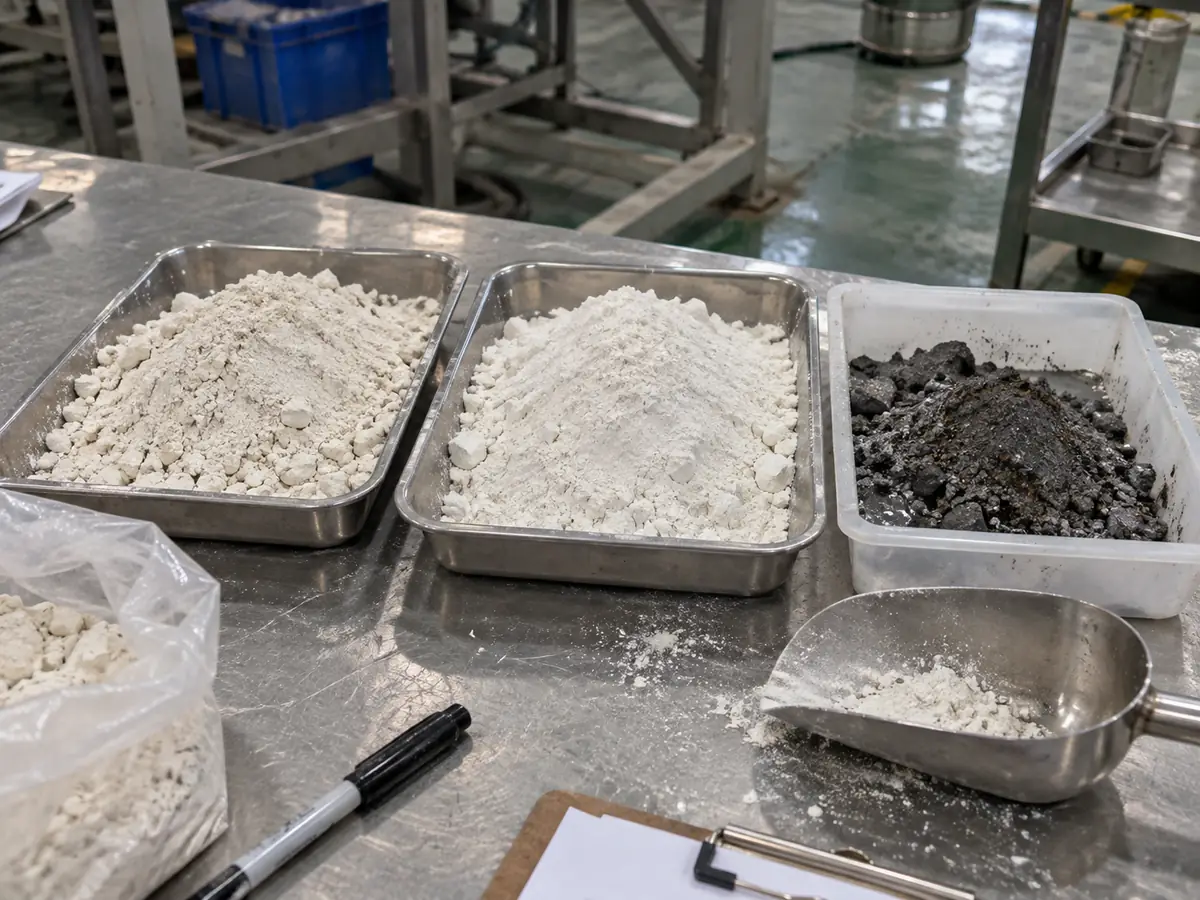
Kaolin feed, purified product and dark magnetic fraction samples on an industrial test bench

What Kaolin Quality Are You Trying to Produce?

The separator choice depends on the required kaolin quality as well as the iron content of the incoming material. Corvelan uses the final application target to decide what must be removed and what result must be validated.

Ceramic-Grade Kaolin

  • Iron contamination
  • Fired color
  • Product cleanliness

Paper / Coating Kaolin

  • Brightness
  • Coloring impurities
  • Fine-particle quality

Filler-Grade Kaolin

  • Iron level
  • Brightness
  • Consistency

Calcined Kaolin Feed

  • Feed impurity control
  • Iron / titanium-related discoloration risk
  • Downstream color target

Where Magnetic Separation Is Used in Kaolin Processing

Magnetic separation is usually one unit operation inside the beneficiation route. It should be positioned after the feed has been prepared well enough to expose the target impurity and before downstream finishing locks in product quality.

Raw Kaolin
Blunging / Preparation
Screening
Classification / Dispersion
Magnetic Separation
Dewatering
Drying / Finishing

The separation process may vary depending on kaolin characteristics, feed condition, plant requirements and final product goals.

Which Kaolin Magnetic Separator Route Fits Your Feed?

Do not force every kaolin feed into one machine family. First, determine whether your kaolin needs coarse iron removal, fine impurity removal, a dry process or multiple separation stages.

1

Magnetic Pre-Removal

Best fit: tramp iron and coarse strongly magnetic contamination before fine purification.

Confirm: contaminant size, burden depth, working distance, feed presentation and cleaning requirement.

2

Wet High-Gradient Purification

Best fit: fine kaolin slurry containing sufficiently liberated weakly magnetic iron-bearing particles.

Confirm: PSD, slurry solids, dispersion, viscosity, flow, matrix behavior and final analytical target.

3

Dry High-Gradient Separation

Best fit: suitable dry classified feeds where the material can be presented consistently without excessive agglomeration or dust-related loss of selectivity.

Confirm: liberation, particle-size distribution, feed dispersion and dust-control requirements.

4

Staged Separation

Best fit: mixed contamination or a stringent product target.

Typical logic: pre-removal → high-gradient purification → optional polishing when testing shows another stage is justified.

Magnetic separation equipment under assembly and trial fitting in a Chinese factory

How Wet High-Gradient Magnetic Separation of Kaolin Works

In wet high-gradient magnetic separation, prepared kaolin slurry passes through a magnetized matrix. The matrix creates localized magnetic gradients that capture sufficiently responsive iron-bearing particles while the kaolin-rich non-magnetic fraction continues to the product outlet.

For prepared kaolin slurry, review our wet high-intensity plate separator when the slurry can spread evenly across the plate. This is a separate equipment configuration from the matrix-type route described above.

1. Prepare and Disperse the Feed

Screen, classify or disperse the kaolin as required so the target impurity reaches the separation zone in a representative and controllable condition.

2. Present the Slurry to the Matrix

Feed distribution, solids content and flow influence how consistently particles contact the active high-gradient collection zone.

3. Capture Responsive Impurities

The magnetized matrix concentrates the field locally. Weakly magnetic iron-bearing particles with sufficient response are attracted to the matrix surface.

4. Discharge Product and Clean the Matrix

The kaolin-rich fraction leaves through the non-magnetic product path. Captured material is removed during the cleaning stage according to the selected machine architecture.

Wet-route priority: For fine kaolin purification, a wet high-gradient route is usually the first route to evaluate because particle dispersion and matrix contact can be controlled more consistently. Dry separation remains a material-specific alternative where the feed condition supports it.
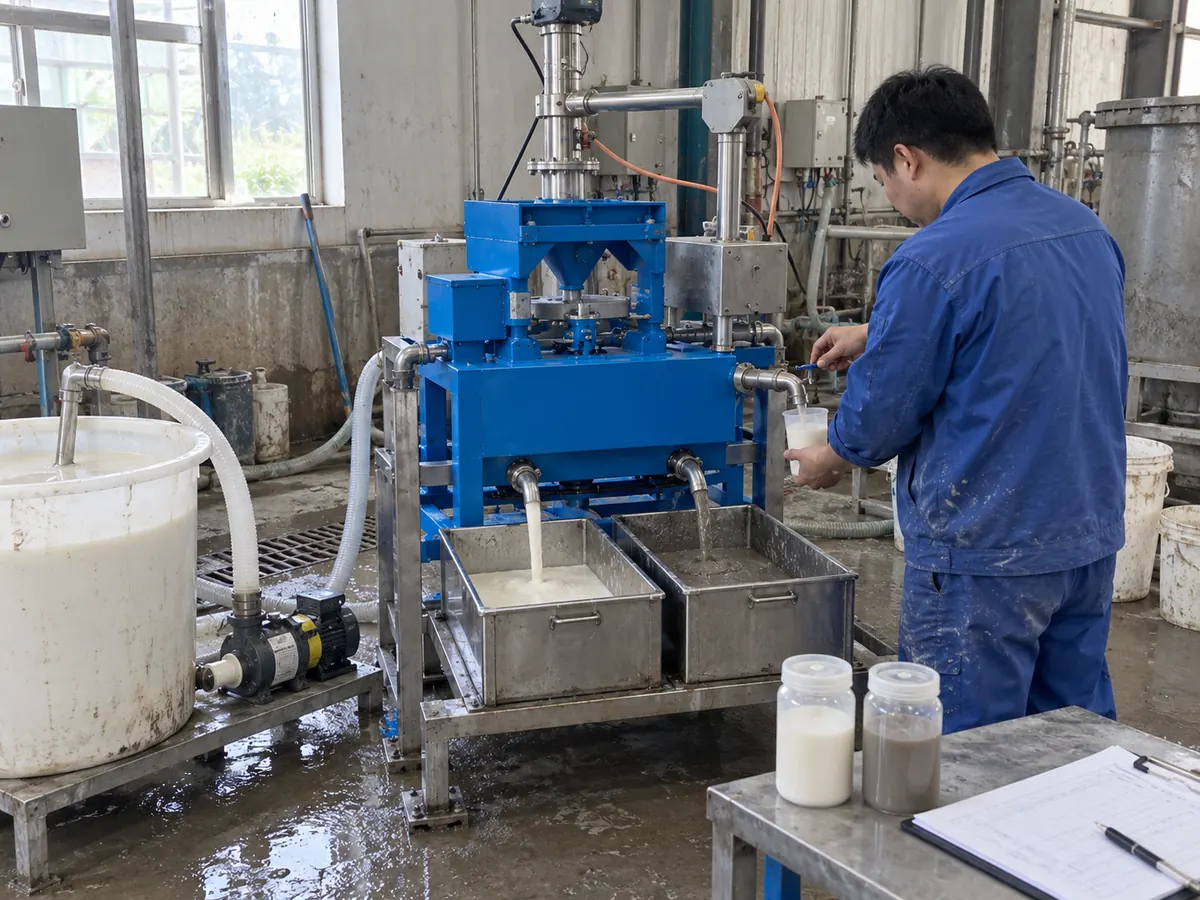
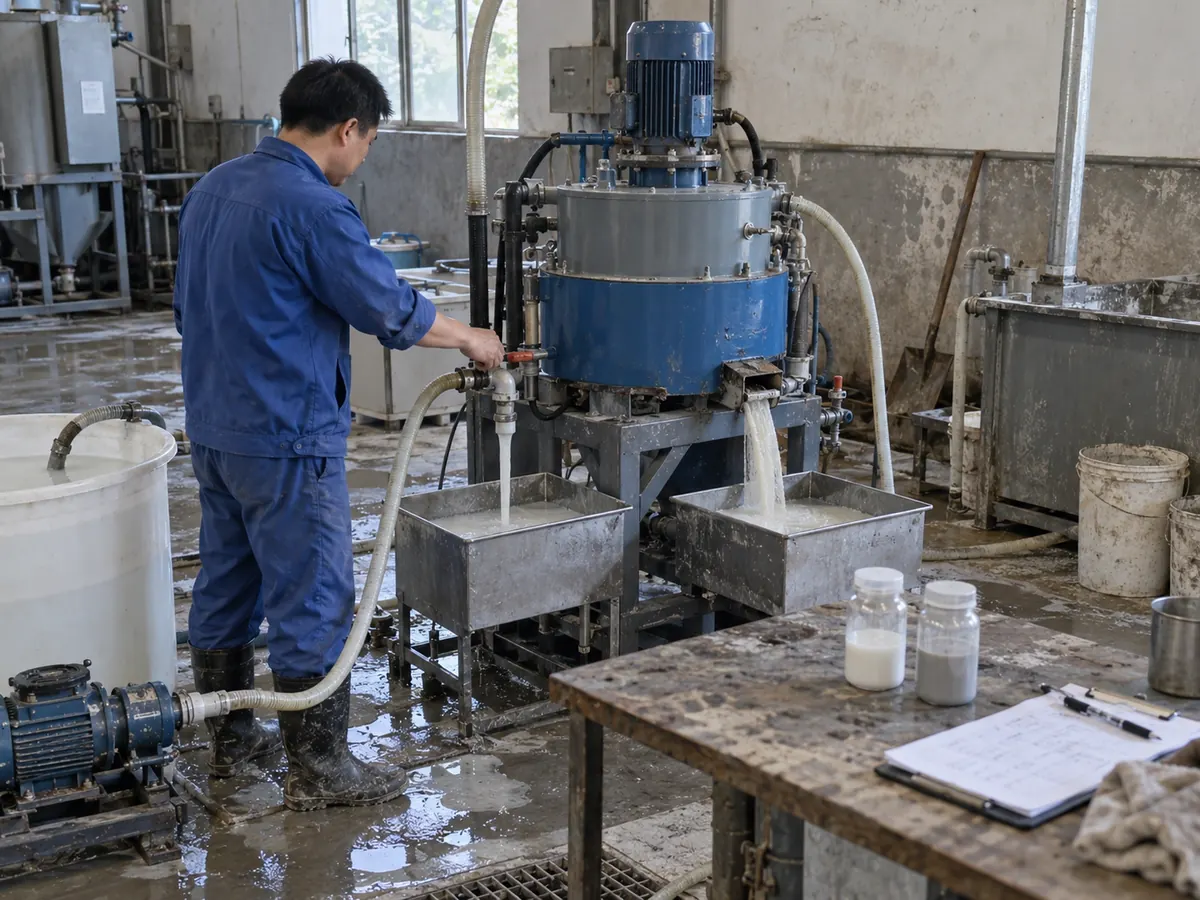
Wet kaolin slurry separation setup with product and reject sampling containers

What Controls Kaolin Iron Removal Performance?

Magnetic separation performance depends on kaolin characteristics, feed condition and selected equipment configuration. A suitable separator should match the material behavior and product requirements.

Mineralogy

Which iron-bearing minerals are present and how magnetically responsive are they?

Liberation

Is the impurity free or still locked inside kaolin or accessory mineral particles?

Particle Size

PSD controls presentation, contact probability and the appropriate matrix / route.

Slurry Condition

Solids, dispersion, viscosity and agglomeration affect fine-particle transport.

Field & Gradient

Applied field and local gradient both matter at the particle collection zone.

Matrix Geometry

Matrix form changes the local collection environment and available capture surface.

Flow Velocity

Flow affects residence time and the balance between magnetic capture and hydrodynamic drag.

Matrix Loading

Accumulated magnetic material changes available collection area and cleaning demand.

Cleaning Cycle

Cleaning must restore the matrix without mixing reject back into the product path.

Separation Stages

One pass is not automatically the optimum process; staged duty should be justified by testing.

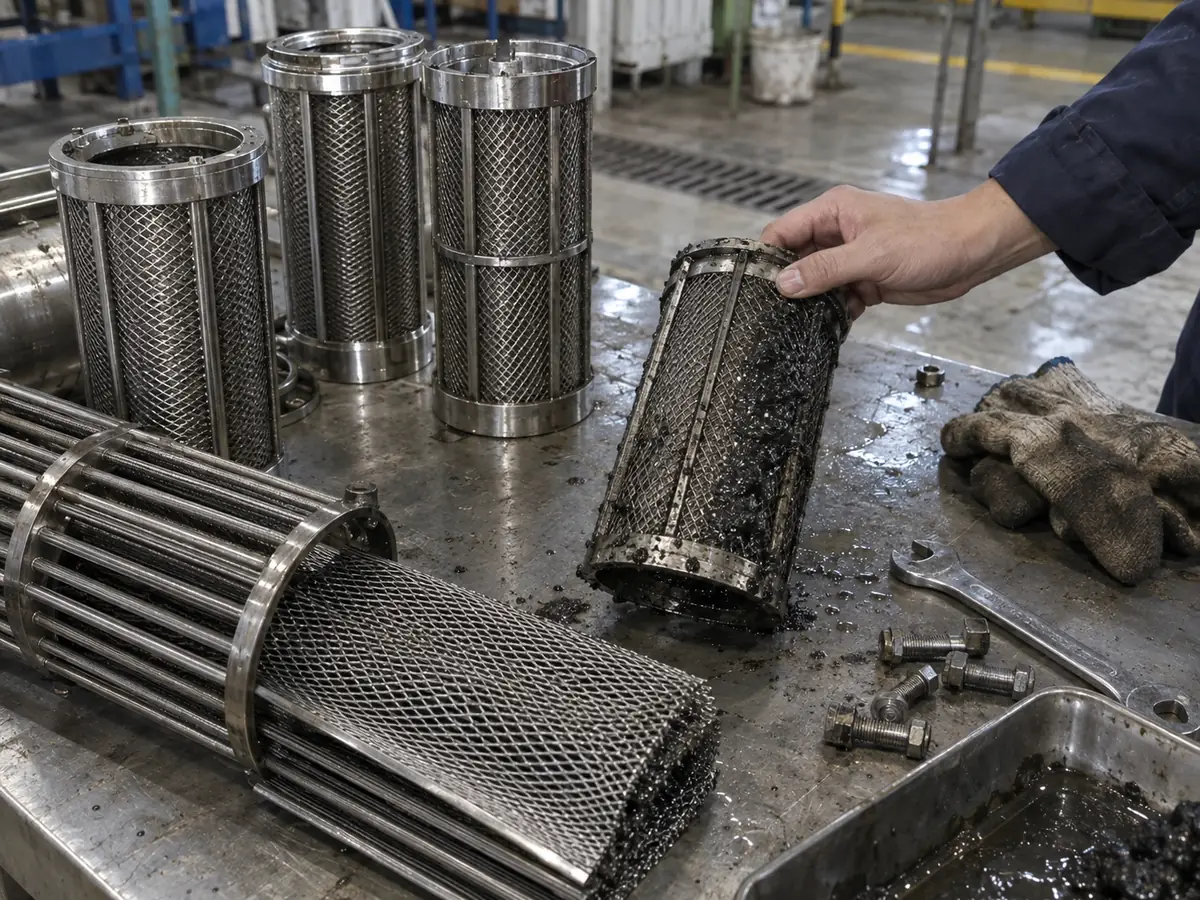
Magnetic matrix cartridges with captured iron-bearing material during workshop inspection

Why Higher Gauss Does Not Automatically Mean Better Kaolin Purification

Separation result is not the same thing as a Gauss headline. Gauss describes magnetic flux density at a stated measurement position. Kaolin purification also depends on local field gradient, matrix geometry, particle response, liberation, feed dispersion, flow and cleaning.

Buyer check: Ask where the magnetic field is measured, how the field is created at the actual collection zone, what matrix is used, what material was tested and under which feed conditions. A higher magnetic field number alone does not guarantee better purification results.

When Magnetic Separation Is Not Enough

Magnetic separation should be used for an impurity that is both magnetically responsive and sufficiently liberated. If the underlying problem is non-magnetic, chemically bound or physically locked, increasing magnetic field strength does not fix the root cause.

Good Candidate for Magnetic Evaluation

  • Magnetically responsive impurity
  • Sufficient liberation at the process particle size
  • Feed can be presented consistently
  • Product and reject can be sampled separately

Poor Candidate Without Additional Beneficiation

  • Structural iron in the clay mineral
  • Non-magnetic chemical staining
  • Impurity locked inside composite particles
  • Quality target controlled by another non-magnetic contaminant

Typical Equipment Elements in a Kaolin Magnetic Separation Stage

An application page should not force one fixed machine layout. For a wet fine-purification project, the quoted stage is typically defined around four functional areas.

Feed Preparation

Tank, agitation, screening, classification or pumping as needed to create a stable feed condition.

Magnetic Separation Zone

Magnetic architecture and matrix selected for the required separation duty and feed behavior.

Product & Reject Handling

Separate flow paths that support representative sampling and prevent cross-contamination.

Cleaning & Utilities

Water, air, drainage, access and maintenance requirements matched to the chosen machine design.

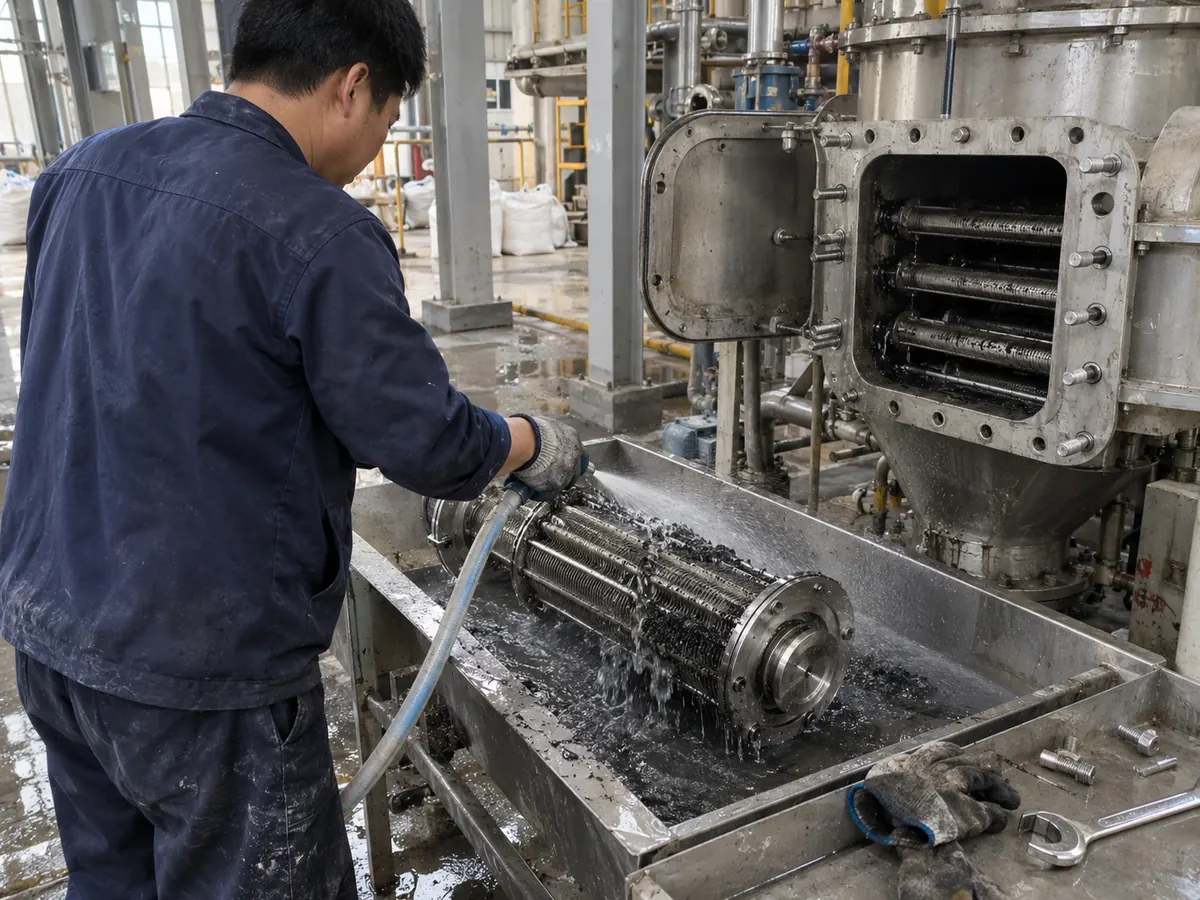
Chinese technician flushing a magnetic matrix during separator maintenance
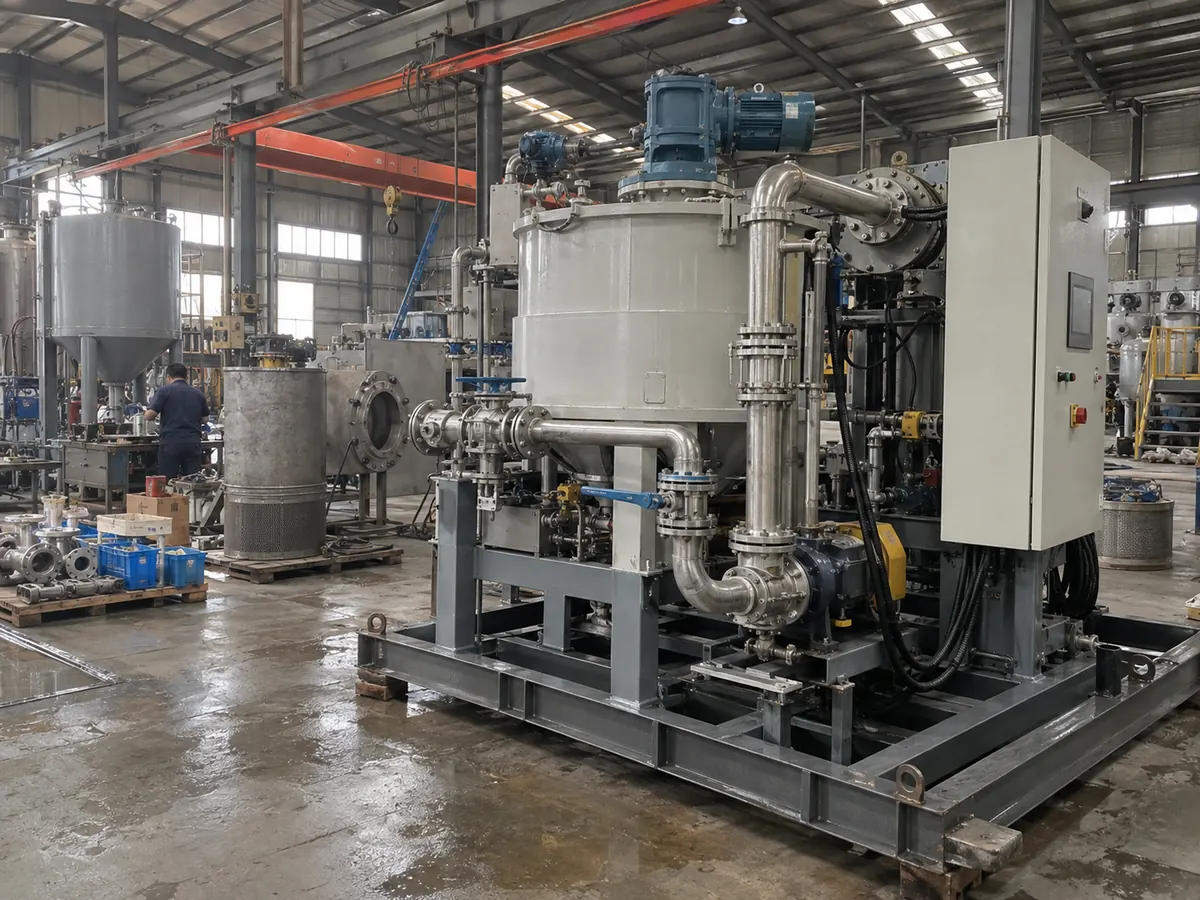
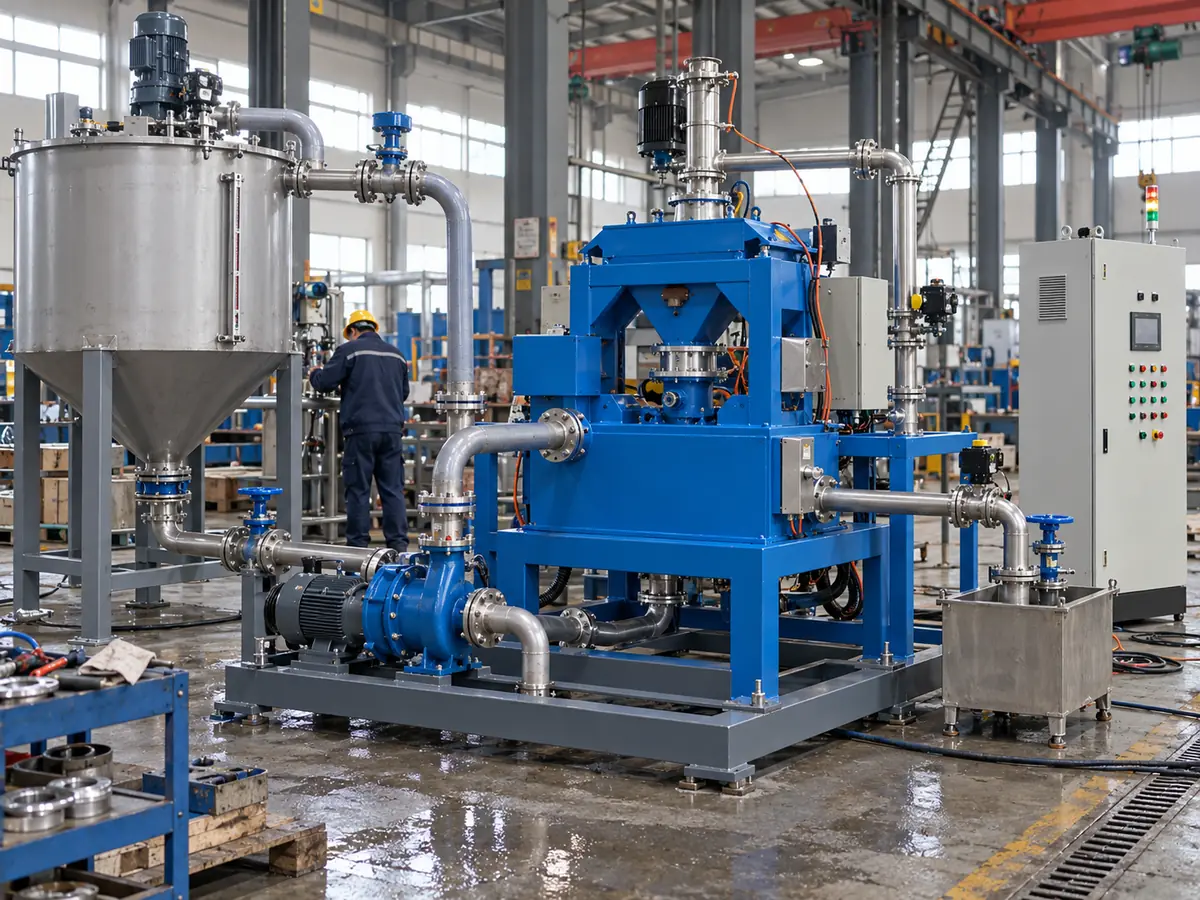
Kaolin slurry separation system with feed tank, pump, piping and control cabinet

Test Your Kaolin Before Equipment Selection

Representative material testing helps determine whether magnetic separation can achieve the required product quality and which equipment solution is suitable for your project.

1

Send the Sample & Analysis

Provide representative feed, particle-size information and available chemistry or mineralogical data.

2

Define the Product Target

State the Fe2O3, brightness, fired-color or other acceptance metric that actually controls the decision.

3

Evaluate the Separation Route

Compare the relevant pre-removal, high-gradient or staged route under defined feed and sampling conditions.

4

Configure Equipment & Interfaces

Use the test conclusion to define the separator family, cleaning concept, utilities, connections and installation envelope.

Performance validation: Corvelan does not treat a magnetic-field number as a substitute for kaolin test results. Final Fe2O3, brightness, removal rate, recovery or throughput claims should be tied to the actual material and defined test conditions.
Chinese technician collecting kaolin slurry samples during magnetic separation testing

What Corvelan Needs to Select Your Kaolin Magnetic Separator

Material

  • Kaolin source and current product form
  • Dry, damp or slurry condition
  • Particle-size distribution
  • Slurry solids / viscosity information if available
  • Representative sample

Impurity & Product Target

  • Feed Fe2O3 or relevant analysis
  • Known iron-bearing mineral information
  • Current brightness / fired-color metric if used
  • Required product specification
  • Preferred sampling and acceptance method

Process & Installation

  • Normal and peak throughput
  • Existing flowsheet or PFD
  • Upstream tank, screen, classifier or pump
  • Inlet / outlet requirements
  • Available utilities, drainage and maintenance space

Why Corvelan for Kaolin Magnetic Separation?

Process-First Selection

We start with the impurity, feed condition and product target instead of forcing the project into one standard separator.

Test-Based Validation

Where the result cannot be supported from existing evidence, the material should be tested before a commercial performance target is used.

Dry, Wet & Staged Route Review

Pre-removal and fine purification are treated as different duties so the equipment route matches the actual process problem.

Plant Integration Review

Feed, product, reject, cleaning, utilities, surrounding equipment and maintenance access are considered together.

Kaolin Magnetic Separator FAQ

What type of magnetic separator is used for kaolin?

It depends on the separation duty. Strongly magnetic contamination can be handled by a conventional pre-removal magnet. Fine weakly magnetic iron-bearing particles in prepared kaolin commonly require a high-gradient route such as HGMS, WHIMS or another matrix-type separator. The correct route depends on mineralogy, liberation, feed condition and product target.

Can a magnetic drum remove all iron from kaolin?

No. A magnetic drum is useful for strongly magnetic particles and can be an effective pre-removal stage, but it is not a universal kaolin purification machine. Fine weakly magnetic particles may need high-gradient separation, while structural or non-magnetic iron may require another beneficiation method.

Is higher Gauss always better for kaolin iron removal?

No. Gauss is only magnetic flux density at a stated measurement position. Kaolin purification also depends on local field gradient, matrix geometry, particle response, liberation, feed presentation, flow, matrix loading and cleaning. A larger headline value does not guarantee a cleaner kaolin product.

Should kaolin magnetic separation be wet or dry?

Use the feed and impurity behavior to decide. Dry pre-removal can suit bulk feed and strongly magnetic contamination. Fine kaolin purification is commonly evaluated in a wet, dispersed slurry because particle presentation to a high-gradient matrix can be controlled more consistently. Dry high-gradient separation remains a material-specific route.

Can magnetic separation improve kaolin brightness?

It can when the particles responsible for discoloration are sufficiently magnetically responsive and liberated. The achievable brightness change depends on the actual impurity mineralogy, feed preparation and separation conditions, so representative testing is required before a result is promised.

What iron impurities can magnetic separation remove from kaolin?

Magnetic separation can target strongly magnetic contamination and sufficiently responsive weakly magnetic iron-bearing minerals. Iron held in the mineral structure, chemical staining or non-liberated iron may respond poorly. Mineralogy and liberation therefore matter as much as total Fe2O3.

Can Corvelan predict the final Fe2O3 level before testing?

Not responsibly from a field-strength number alone. Final iron content, brightness, removal rate, recovery and throughput depend on the actual kaolin and operating conditions. A commercial performance target should be tied to representative material, a defined test method and agreed performance requirements.

What information does Corvelan need for equipment selection?

Send the kaolin condition, particle-size distribution, dry or slurry data, throughput, feed analysis, target product analysis, current process drawing, inlet and outlet requirements, available utilities and any representative sample or test report.

Send Your Kaolin Sample for Separation Evaluation

Start with the material, not a magnetic-field headline. Send your kaolin analysis, particle size, dry or slurry condition, target product specification and process drawing. Corvelan will review whether the project needs magnetic pre-removal, wet high-gradient purification, a dry specialty route, staged separation or a different beneficiation step.

Get An Instant Quotation Now