Dry High-Intensity Magnetic Separation

High-Intensity Magnetic Roller Separator

We use a high-intensity magnetic roller separator for dry material that contains weakly magnetic particles. It works best when those particles are already separate from the valuable material. Engineers call this good mineral liberation. Send us the material, particle-size range, throughput — how much material you need to process — and the product result you need. We use those details to set the feed method, machine width, speed, splitter position and number of stages.

Choose this separator whenThe feed is dry and can be spread into a thin, even layer.
Typical separation targetWeakly magnetic iron-bearing particles that are already separate from the valuable material.
Where it fits in the processAfter drying, sizing or pre-cleaning, and before the next cleaning or mineral-processing step.
What we set for your materialFeed method, working width, speed, product-stream divider and number of stages.
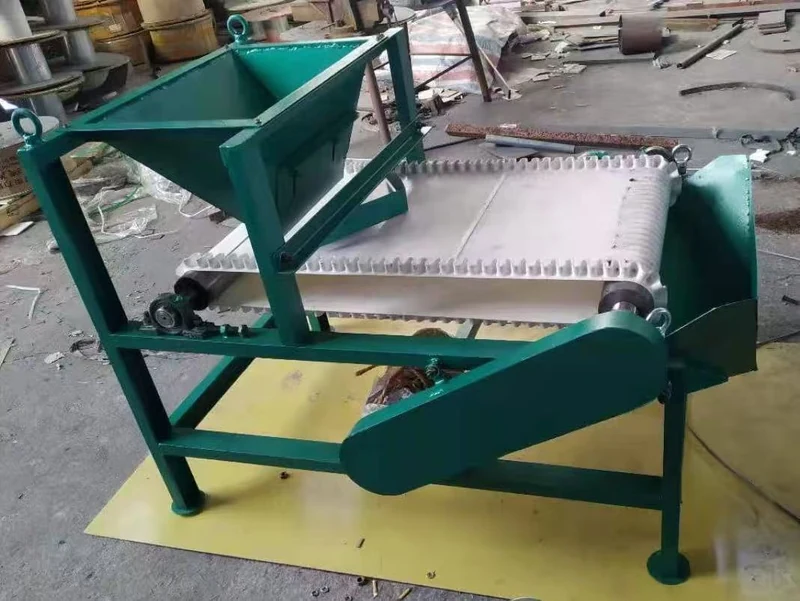
Single-stage high-intensity magnetic roller separator with feed hopper and transport belt
Single-stage high-intensity magnetic roller separator with a feed hopper, transport belt and magnetic roll section.
Choose the Right Process

When Should You Choose a Magnetic Roller Separator?

Use this separator for dry, stable feed when weakly magnetic particles are already separate from the valuable material. If the feed is wet or clumpy, the iron is still locked in the product, or the main problem is large tramp iron, solve that problem first or use another separator.

A. Use a Magnetic Roller Separator

Choose it for dry, free-flowing material with weakly magnetic particles that already exist as separate particles. It is for selective fine separation, not just large iron removal.

B. Use More Than One Stage

Add a stage when one pass improves purity but also sends too much good material into the magnetic stream. The extra stage must have a clear cleaning or recovery job.

C. Fix the Feed First

Dry, screen, break up clumps or stabilize the feeder when moisture, a wide size range or surging prevents a thin, even feed layer.

D. Use Another Separator

Use another process for wet slurry, non-magnetic targets, large strongly magnetic tramp iron, or material in which the unwanted mineral is still locked inside the valuable particle.

Material & Contaminant Fit

What Material Conditions Make High-Intensity Magnetic Roll Separation Work?

The unwanted particle must respond to the magnetic field, exist as a separate particle and get close enough to the roll. When the unwanted mineral is already separate from the valuable mineral, engineers call this mineral liberation. Two plants processing the same mineral can still need different setups because particle size, moisture, liberation and feeding can be different.

MaterialUse this separator whenDo this first whenWhat to send us
Silica or quartz purificationIron-bearing particles are already separate, respond to the magnet and the feed is dry enough to form a thin layer.If the iron is locked inside the quartz particle, improve liberation first. If large steel pieces are the main problem, remove them before fine purification.Particle-size range, moisture, current impurity level, target product quality and mineral test data if available.
Feldspar or ceramic raw materialWeakly magnetic iron-bearing impurities are separate from the valuable mineral and dry cleanup is needed.If the feed is sticky or clumpy, dry or disperse it first. If the contamination is mainly large ferrous metal, remove that before this stage.Particle-size range, moisture, impurity type, current product quality and required product quality.
Industrial minerals and concentratesThe feed contains mineral groups with enough difference in magnetic response for a useful separation.If the difference in magnetic response is too small, compare another mineral-processing method or a combined process.Mineral makeup, lab analysis, particle-size range, throughput and the amount of good material you can accept losing.
Dry granules or recycling finesThe target is a fine or weakly magnetic fraction that needs a selective dry separation step.If large steel pieces, nails or bolts dominate, remove them first with equipment made for strongly magnetic tramp metal.Target material, target size, feed depth, normal and peak flow, and available installation space.
Simple rule: a stronger magnetic field cannot free one mineral from another if both are locked in the same particle. It also cannot fix a feed that arrives in thick, uneven surges.
Working Principle

How Does a High-Intensity Magnetic Roller Separator Work?

The separator makes magnetic and non-magnetic particles follow different paths. Weakly magnetic particles stay close to the roll longer. Less-magnetic or non-magnetic particles leave the roll earlier. A splitter sits between these paths and sends the material into separate outlets.

Spread the Feed

A feeder spreads the dry material into a thin, even layer. This stops weakly magnetic particles from being hidden under too much material.

Bring Particles Close to the Roll

The transport surface carries particles close to the magnetic roll. The gap between the particle and the active magnetic area is called the working distance. A larger gap can make weakly magnetic particles harder to capture.

Create Different Paths

Particles that respond to the magnetic field stay with the roll longer. Other particles leave earlier and move along a different path.

Split the Streams

The splitter is placed between those paths. It keeps the magnetic, non-magnetic and optional middle fractions in separate discharge streams.

How the Machine Is Set Up

What Does Each Part Change in the Separation Result?

A stronger magnetic roll alone does not guarantee a better result. Feed rate, layer depth, speed and splitter position also change how the material separates.

Metering Feeder

Controls how much material enters the machine and how evenly it is spread. If the feeder surges, the result can change even when the magnetic roll stays the same.

Transport Belt / Surface

Keeps particles close to the roll and carries them to the separation point. Wear, buildup or poor tracking can increase working distance and make the result less stable.

High-Intensity Magnetic Roll

Creates the magnetic field that acts on the target particles. Gauss is a unit used to report magnetic flux density at a defined point. A surface Gauss reading does not describe the full separation result by itself.

Variable-Speed Drive

Changes the path of the particles and how long they stay near the magnetic area. The right speed depends on the material, so we do not copy one speed from another application.

Adjustable Splitter

Sets the dividing line between product streams. A stricter splitter position can improve purity, but it can also send more good material into the reject stream.

Additional Separation Stage

Add another stage when one pass cannot balance purity — how clean the product is — and recovery — how much of the target material is kept. The next stage can clean the product or recover useful material from the middle fraction, often called middlings.

See the Magnetic Roll Hardware

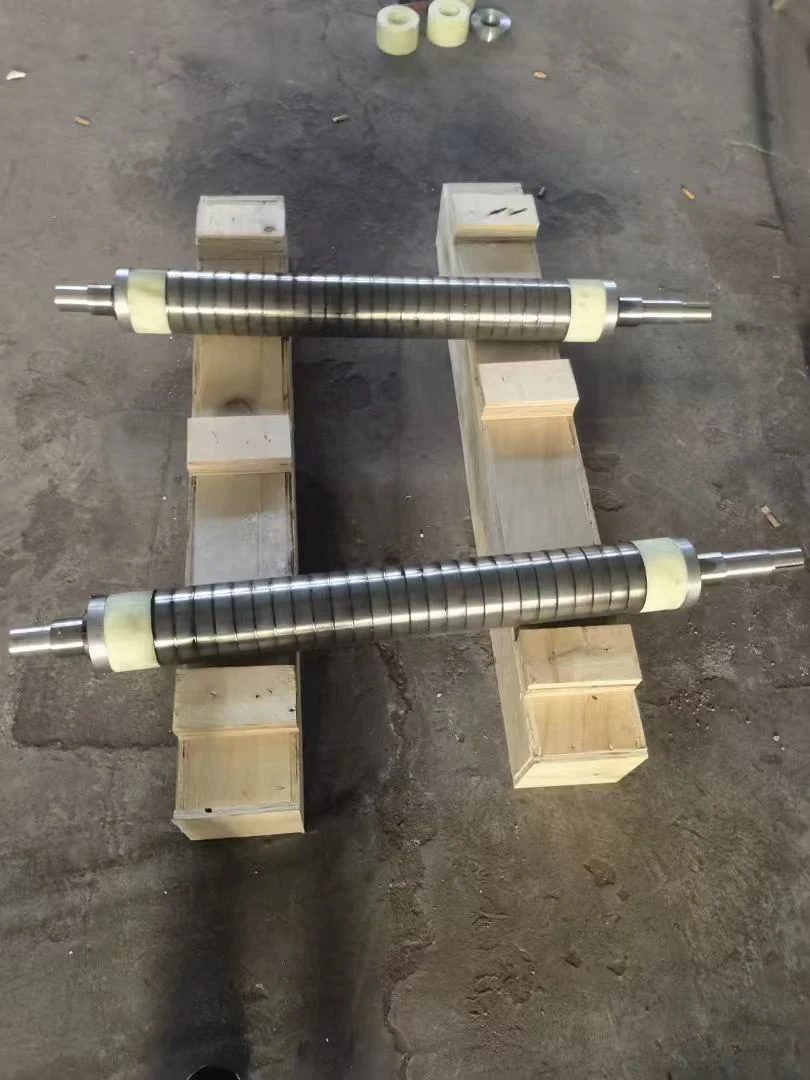
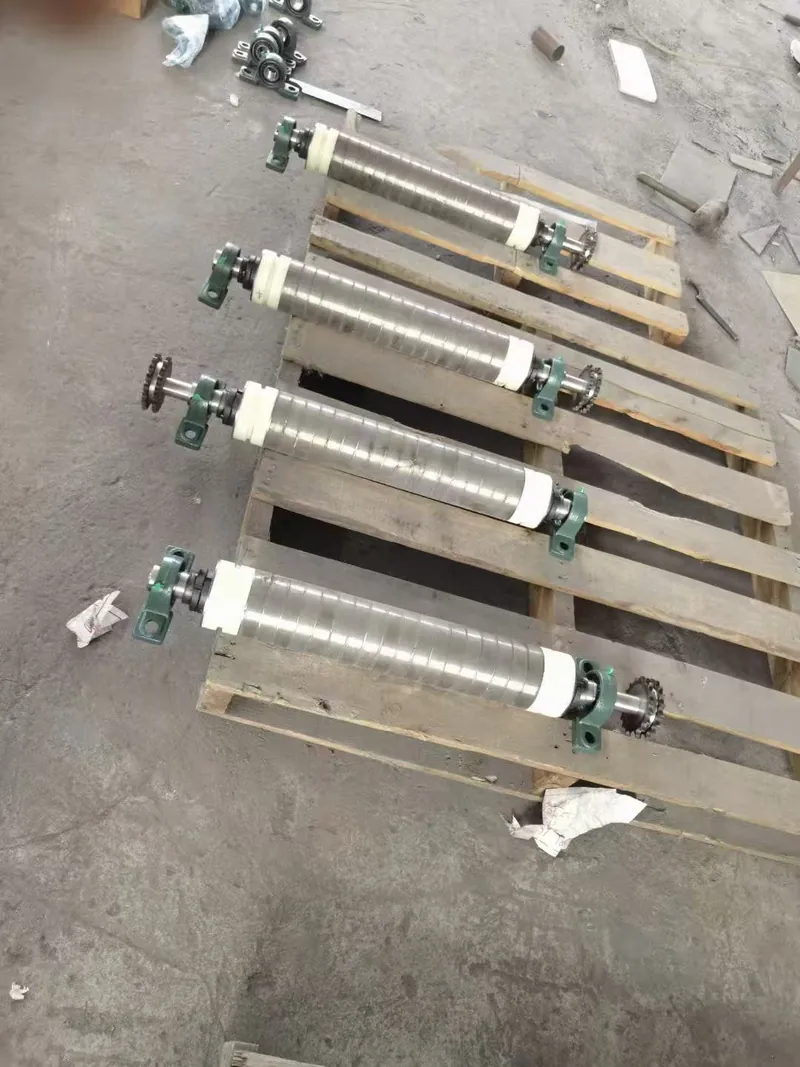
These product photos show assembled roll sections, central shafts, bearing supports and drive-side connections. A common high-intensity roll design uses a central shaft with stacked magnetic and non-magnetic spacer sections, supported by bearings at both ends. The exact internal stack, magnet material and roll dimensions are confirmed for the machine supplied rather than judged from appearance alone.

Magnetic roll assemblies used in high-intensity magnetic separation equipment
Magnetic roll assemblies used in roller-type high-intensity magnetic separation equipment.
Magnetic roller assemblies with shafts bearing supports and drive connections
Roll assemblies with visible shafts, bearing supports and drive-side connections.
What to Change First

If the Separation Result Is Wrong, What Should You Change First?

Check the feed and machine settings before assuming you need a stronger magnetic system. During material testing, three of the most important operating adjustments are feed rate, roll or belt speed, and splitter position. Feed depth, particle-size range and working distance also affect how those settings behave.

Feed Rate / Feeder Speed

Controls how much material reaches the belt and how thick the material layer becomes. Aim for a thin, even layer across the usable separation width. A deep or surging layer can hide weakly magnetic particles from the roll.

Roll / Belt Speed

Changes the balance between magnetic attraction and the force carrying particles away from the roll. Higher speed can open the particle paths, but too much speed can also send magnetically responsive particles into the wrong stream.

Splitter Position

Changes where the particle paths are divided. Moving the splitter changes the trade-off between product quality and recovery, so the best position must be judged from both the product assay and the amount of good material lost.

What you seeCheck firstWhat to change firstWhen you need a different setup
Magnetic recovery is too lowFeed depth, feed rate, mineral liberation, speed, splitter position and working distance.Make the feed layer thinner and more stable. Then adjust speed and splitter position while using the same test material.If no practical speed and splitter setting gives a stable result, test another magnetic arrangement or another stage.
Purity improves but too much good material is lostSplitter position and how much valuable material enters the magnetic stream.Move the splitter to protect more good material. Then check whether a second cleaning or recovery stage is needed.Use more than one stage when one splitter position cannot protect both purity and recovery.
Results change between shiftsMoisture, particle-size range, feeder surging, feed width, splitter movement and belt condition.Make the feed and mechanical settings stable before changing the magnetic settings.If the feed will always vary, change the feed-preparation or control system to handle that real range.
Fine weakly magnetic particles stay in the productMineral liberation, clumping, feed depth and the target's real magnetic response.Improve drying or dispersion, make the feed layer thinner and test again with fixed settings.If the target is still locked in another mineral or responds too weakly, use a different mineral-processing step instead of forcing the same separator.
Product streams mix again after the rollSplitter position, discharge chutes and available drop space.Move the splitter or chutes so each stream has a clear path.Change the discharge layout if there is not enough space to keep the streams apart.
Gauss is not the final separation result. Gauss describes magnetic flux density at a measurement point. The result also depends on how quickly the field changes with distance, called the field gradient, plus particle response, working distance, feed depth, speed and splitter position.
One Stage or More

When Do You Need a Multi-Stage Magnetic Roller Separator?

Use more than one stage when a single pass cannot reach the product quality you need without losing too much good material. Every extra stage should have a clear job.

One Stage

Use one stage when one controlled test reaches the required result and the amount of good material lost is acceptable.

Two Stages

Use two stages when the first pass makes a useful separation but cannot protect both purity and recovery. The first stage can remove a larger share of the unwanted fraction; the next stage can then focus on product cleaning or recovery of the middle fraction.

Three Streams or More Stages

Use magnetic, middle and non-magnetic streams when the middle material is worth processing again. This middle stream is often called middlings.

Feed
First Separation
Middle Fraction
Cleaning / Recovery
Final Products
Single-stage magnetic roller separator layout
Single-stage layout: one main separation section is used when one pass can reach the required result without excessive good-material loss.
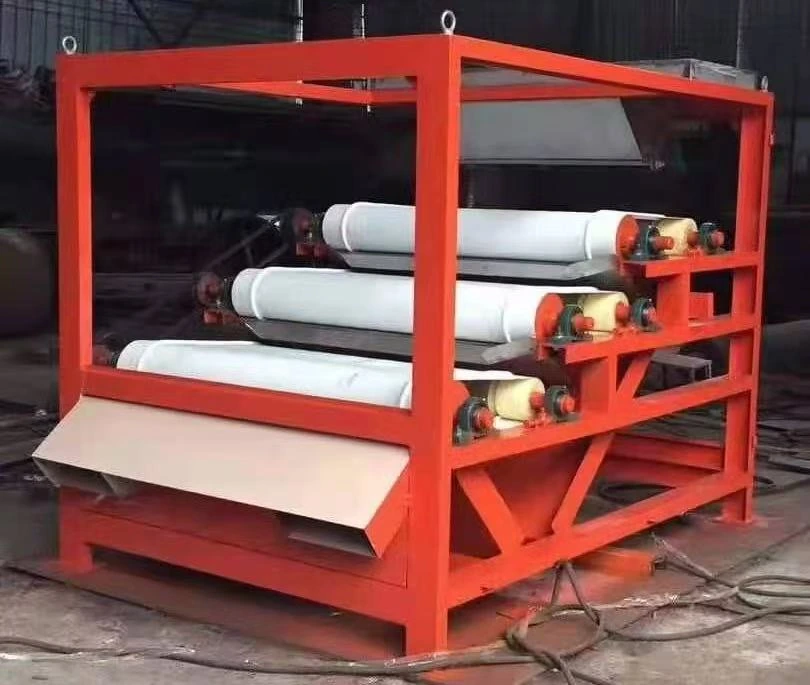
Multi-stage high-intensity magnetic roller separator with stacked separation sections
Multi-stage layout: several separation sections can be arranged in one machine frame when later stages have a clear cleaning or recovery job.

We choose the number of stages from your required result and tests using material that represents your normal feed, not from a fixed catalogue rule.

Common Selection Examples

What Would We Do in These Five Common Situations?

The material condition decides the next step. These are selection examples, not performance results from a specific Corvelan project.

A. Dry Quartz or Silica, Iron Already Free

Use: start with one magnetic-roll stage when the feed is dry, stable and the iron-bearing particles are already separate from the quartz or silica.

Check: particle size, moisture, starting impurity, final product quality and good-material loss.

B. One Pass Cleans the Product but Loses Too Much Good Material

Use: add a second cleaning or recovery stage instead of forcing the first splitter to make an overly aggressive cut.

Check: product quality, stream weights, recovery and good-material loss from both settings.

C. Feldspar or Mineral Feed Is Wet, Sticky or Clumpy

Use: dry, screen, break up clumps or stabilize the feed before final machine sizing.

Check: moisture, feed stability and a repeat separation test after the feed condition is corrected.

D. The Main Problem Is Large Steel Pieces, Bolts or Nails

Use: start with equipment for coarse tramp-iron removal. Add a magnetic roller only if fine weakly magnetic cleanup is still needed.

Check: contaminant size, depth of material on the belt or conveyor, material path and removal point.

E. Iron Is Still Locked Inside the Valuable Mineral

Use: improve mineral liberation first by crushing, grinding or size classification as needed, then test again.

Check: mineral analysis or microscopy plus a test on the newly liberated size fraction.

Simple rule: fix unstable feed first, improve liberation when minerals are still locked together, add a stage only when it has a clear job, and use another separator when the target is the wrong type for this process.
How We Set Up the Machine

How Do We Set Up the Magnetic Roller Separator for Your Material?

We look at your material, the result you need and how the machine will connect to your line. Each condition below changes a specific part of the setup.

Your conditionWhat we changeWhy it matters
Higher throughputFeeder capacity, working width, number of rolls or parallel units.This helps keep the feed layer from becoming too deep and hiding the target particles.
Wide particle-size rangescreening the feed into a narrower particle-size range, test conditions, speed range and splitter position.Large and small particles can follow different paths even when their magnetic response is similar.
Wet or clumpy feedDrying, breaking up clumps, feed preparation or another process type.Clumps make it hard to form a thin, even feed layer.
Strict final purity targetSplitter position, speed range and one-stage or multi-stage setup.A stricter cut can improve purity but may send more good material into the reject stream.
Too much good material is being lostMiddle-fraction recovery or a separate cleaning stage.This protects recovery instead of forcing one splitter position to do two different jobs.
Abrasive materialWear surfaces, feed-contact parts and maintenance access.Wear can change the material path and working distance over time.
Limited installation spaceMachine layout, feed and discharge layout, and service access.The machine must fit without making material flow or maintenance difficult.
Three product streams are neededMagnetic, middle and non-magnetic discharge paths.This keeps the middle fraction separate so it can be processed again instead of mixed into a final stream.
Before We Quote

What Do We Confirm Before We Quote the Final Machine?

We first confirm your material, the separation target, the machine setup and how the separator will fit your line. This keeps the quote tied to the real job instead of a generic catalogue label.

Your Material

  • Material name and form, such as powder or granules
  • Particle-size range
  • Moisture and how well the material flows
  • Bulk density — how much the material weighs for a given volume — if available
  • Temperature and wear condition, when relevant

What You Need to Remove or Recover

  • material you need to remove or magnetic mineral
  • Current feed quality
  • Product quality you need
  • Magnetic recovery target, when relevant
  • Maximum amount of good material you can accept losing, when relevant

Machine Setup

  • Feed arrangement and working width
  • Roll or belt speed control
  • Splitter position and number of product streams
  • One-stage or multi-stage setup
  • Wear and maintenance needs

Installation & Final Check

  • Feed and discharge height
  • Available installation and maintenance space
  • Electrical supply
  • Dust and site requirements
  • How the agreed product result will be checked
Machine & Quote

What Changes the Machine Setup and the Quote?

The price cannot be judged from magnetic strength alone. The machine width, number of stages, feed system, controls, enclosure and installation details can all change the final build.

Working Width & Feed System

Higher flow or a wider feed can require more usable separation width or a different feeding arrangement. We size this from the real material flow, not from throughput alone.

One Stage or Multiple Stages

A second or third stage adds rolls, belts, drives, splitters and discharge paths. We add a stage only when it has a clear separation job.

Dust, Wear & Enclosure

Very dusty or abrasive material can change the enclosure, sealing, wear parts and maintenance access needed for the project.

Drive & Speed Control

The required speed range, motor arrangement and control method depend on the material test and how the machine connects to the process.

Feed & Discharge Layout

Feed height, outlet direction, number of product streams and available floor space can change the frame, chutes and overall machine arrangement.

Testing & Documents

If the order needs a defined material test, magnetic measurement, drawing package or special inspection record, agree those items before the quote is finalized.

When comparing two quotations: first check that working width, number of stages, feed system, speed control, enclosure, discharge layout and test scope are the same. A lower price for a different machine setup is not a like-for-like comparison.
When to Use Another Process

When Should You Not Use a Dry High-Intensity Magnetic Roller Separator?

Do not choose this machine only because iron is present or because a high Gauss number sounds safer. The right separator depends on the material, the target particle and what you need the process to do.

ConditionUse this magnetic roller?What to use or do instead
Dry, separate, weakly magnetic particles in a stable feedYes. This is the main use for this machine.Set the feed, speed, splitter and number of stages from the real material data.
Large strongly magnetic tramp ironUsually not the first choice.Use a drum, head pulley, suspended magnet, plate or grate magnet based on where the iron must be removed.
Wet slurry or pulpNo for this dry machine.Use a wet magnetic separation process made for the slurry condition.
Sticky or clumpy dry feedNot until the feed is stable.Dry the material, break up clumps, classify the feed or improve the feeding system first.
Iron-bearing mineral is locked inside the valuable particleNo, not by itself.Crush or grind enough to free the iron-bearing mineral. Then test magnetic separation again.
Target is non-magneticNo as the main separation method.Use another physical separation method based on the property that makes the target different.
Installation

What Must Happen Before and After the Separator?

The feed must reach the roll in a steady layer, and each product stream needs a clear path after separation. In process terms, the equipment before the separator is the upstream side, and the equipment after it is the downstream side.

Before the Separator

  • Keep the material feed steady and avoid large surges
  • Dry or break up clumps when moisture makes the feed stick together
  • Screen or classify the feed when the size range is too wide for a stable cut
  • Remove large tramp metal if it could damage or disturb fine separation
  • Spread the material across enough width to use the active working area

After the Separator

  • Use separate chutes for magnetic and non-magnetic streams
  • Add a third chute when a middle fraction is collected
  • Leave enough drop space so the streams do not mix again
  • Add easy-to-reach sampling points when product checks are required
  • Leave room for cleaning, belt tracking, splitter adjustment and service
Cleaning, Maintenance & Safety

What Must Be Maintained for Stable Magnetic Roller Separation?

The feed path, belt, splitter, roll and discharge chutes must stay in the same working condition used when the process was set up. Small mechanical changes can move the separation point and change product quality.

Feed System

Keep the feeder clean and steady. Buildup, surging or uneven feed changes the layer depth and can change the separation result.

Belt / Transport Surface

Check tracking, wear, buildup and tension. A damaged or dirty surface can increase working distance and change the particle path.

Splitter & Chutes

Keep the splitter at the selected position and keep the discharge chutes clear. A moved splitter can change product quality immediately.

Roll & Drive

Check rotation, bearings, drive condition and speed control. The process can only stay stable if the machine holds the same speed and mechanical position.

Magnetic Working Area

Keep loose ferrous tools and metal away from the magnetic area. If your order requires repeat magnetic measurements, use the same measurement point and method each time.

Safety

Guard rotating parts and control access around strong magnetic areas. Follow the site's lockout, electrical and dust-safety rules during installation, cleaning and service.

Material Testing

How Should You Test the Separator Before You Set a Strict Performance Target?

Use material that represents your normal feed, and keep the test conditions the same while you compare settings. A useful test shows what was removed, what stayed in the final product and how much good material was lost.

Use the Same Feed Sample

Record the sample name, sample weight, particle-size range, moisture and starting impurity level. A laboratory analysis of the material is often called an assay.

Record the Machine Settings

Record feed rate, usable separation width, layer condition, roll or belt speed, splitter position and number of stages for every test run.

Collect Every Stream

Collect magnetic and non-magnetic streams separately. If you use a three-stream cut, also collect the middle fraction, or middlings, on its own.

Weigh and Test Each Stream

Compare the weight of each stream and its impurity or mineral level. Use the same calculation method for every setting.

For a strict product target: agree the sample, test method, machine settings, sampling method and calculation used to decide whether the test passes before the target is written into the order. Do not change the test method after the result is known.
Test Record

What Should Be Recorded in a Useful Material Test?

A test is useful only when another person can understand what material was tested, how the machine was set and what each product stream contained. Keep the same test basis when you compare different settings.

RecordWhat to write downWhy it matters
SampleMaterial name, sample ID, sample mass, particle-size range and moisture.Confirms that the test material represents the feed you want to process.
Starting qualityImpurity level, target mineral level or other lab result used as the starting point.Gives a clear before/after comparison.
Machine settingsFeed rate, usable separation width, layer condition, speed, splitter position and number of stages.Lets you see which setting actually produced the result.
Product streamsMagnetic, non-magnetic and middle stream when one is collected.Prevents material from different outlets being mixed in the result.
Stream massWeight of every collected stream.Lets you check whether the collected outlet weights account for the original feed. This check is called a mass balance and is needed for reliable recovery and good-material-loss calculations.
Stream qualityImpurity level, mineral content or other agreed lab result for each relevant stream.Shows whether the cleaner product came from real separation or from throwing away too much good material.
Final choiceKeep one stage, add another stage, change the feed condition or use another separator type.Turns the test into a machine-selection result instead of a loose laboratory observation.
Test Calculations

How Do We Calculate Whether the Separation Result Is Actually Better?

Do not judge the test from one purity number. Use the weight and lab result from the feed and each collected outlet. This shows whether the product became cleaner because of real separation or because too much useful material was rejected.

Mass Yield

Shows how much of the original feed ends up in the product stream you want to keep.

Product stream mass ÷ Feed mass × 100%

Target Mineral Recovery

Use this when the magnetic mineral is valuable. It shows how much of that mineral in the feed reaches the required recovered stream.

Target mineral in recovered stream ÷ Target mineral in feed × 100%

Impurity Removal

Use this when the magnetic fraction is the unwanted impurity. Calculate the impurity mass removed, not only the change in percentage.

Impurity mass removed ÷ Impurity mass in feed × 100%

Good-Material Loss

Shows how much useful material leaves with the reject. A very clean product is not a good result if too much valuable material is thrown away.

Valuable material in reject ÷ Valuable material in feed × 100%

Mass Balance Check

Add the weights of all collected outlets and compare them with the feed sample. A large gap means the test record may be incomplete.

Collected stream mass ÷ Feed mass × 100%

Use the Same Basis

Use the same units, sample basis and lab method when comparing two settings. If moisture or analysis basis changes, correct that before comparing the numbers.

Same sample basis + Same lab basis + Same calculation method
Important: a lower impurity percentage alone does not prove a better separation result. Check product mass, recovery or removal, and good-material loss together.
How to Judge the Result

Which Test Result Matters: Purity, Recovery, Removal Rate or Product Loss?

These numbers answer different questions. A cleaner product does not always mean better recovery, and higher recovery does not always mean better purity.

Product Purity

Use this when the main question is how clean the final product becomes. Check how much unwanted material remains in the product stream.

Magnetic Recovery

Use this when the magnetic mineral is the valuable product. Check how much of that target mineral is recovered from the feed.

Impurity Removal

Use this when the magnetic fraction is the contaminant. Check how much of that impurity is removed from the feed.

Good-Material Loss

Check how much useful material is sent into the reject stream. This is often called valuable-product loss. A cleaner product is not a good result if too much good material is thrown away.

What to compare: for purification, check product purity and good-material loss together. For magnetic recovery, check recovery and the quality of the recovered magnetic product together. For contaminant removal, check removal and the contamination left in the final product.
From Test to Machine Setup

How Does the Test Result Change the Separator Setup?

What the test showsWhat we do nextWhy
The required product quality is reached and good-material loss is acceptable.Keep the one-stage setup unless the plant layout needs another change.Adding another stage would add cost and complexity without a clear separation job.
The product becomes clean enough only when good-material loss rises too much.Add a cleaning or recovery stage instead of making the first splitter cut more aggressive.The next stage can protect recovery while still improving product quality.
The result changes a lot between repeat tests with the same recorded machine settings.Fix feed stability, moisture, layer depth or sample consistency before sizing the final machine.An unstable feed can make a good separator look inconsistent.
Changing speed and splitter position produces little useful separation.Check mineral liberation and magnetic response before increasing machine complexity.The target may not be free enough or magnetically different enough for this process.
The main contaminant is coarse strongly magnetic iron.Use a tramp-iron separator first and keep the magnetic roller only for fine cleanup when needed.High-intensity roll separation is not the most direct tool for large strongly magnetic pieces.
Need a Clear Starting Point?

Send the Material Details Before You Choose the Number of Stages

Send the material name, particle-size range, moisture, throughput and the result you need. If you already have a lab report or previous magnetic test, send that too. We use those details to tell you whether to start with one stage, more than one stage, feed conditioning or another separator type.

Most Useful Files

  • Material or mineral analysis
  • Particle-size report
  • Moisture data
  • Photos of the material
  • Previous test result, if available
  • Line drawing or installation dimensions
Before Production & Shipment

What Do We Confirm Before Production and Before Shipment?

Before production, we confirm how the machine will fit the line and which checks apply to the order. Core machine checks and project-specific tests are kept separate so the quotation, drawing and final inspection use the same basis.

Core Machine Checks to Confirm

These are the basic machine items that should be written into the order for the quoted setup:

  • Overall dimensions and feed / discharge connections
  • Mechanical rotation and basic function
  • Feed system, belt or transport-surface movement
  • Splitter and discharge-chute position or movement
  • Guarding and visible assembly condition
  • Required drawings and project documents

Project-Specific Checks

Add these only when the project needs them and define the method before production:

  • Magnetic measurement with a defined point and method
  • Material separation test with an agreed sample and calculation basis
  • Special dimensional inspection
  • Third-party inspection, when required
  • Special document, packing or marking requirements
  • Other agreed checks tied to the final product result

What You Should Be Able to Check Before Production Starts

  • Machine arrangement and usable separation width
  • Feed direction and feed connection
  • Magnetic, non-magnetic and optional middle outlets
  • Number of separation stages
  • Drive and speed-control requirement
  • Electrical supply requirement
  • Main installation dimensions
  • Maintenance and adjustment access
Important: a magnetic reading taken with no material on the machine is not the same as a material-separation result. If purity, recovery or removal must be checked, use the agreed material test and calculation method.
Why Corvelan

Why We Start With Your Material Instead of a Gauss Number

We start with what is in your material and what result you need. Then we set the feed, working width, speed, splitter and number of stages around the real process.

We Start With the Material

We ask what is in the feed, what must be removed and what must stay. This stops the machine from being chosen only because one magnetic number looks larger.

We Make the Main Settings Clear

Feed rate, layer depth, speed and splitter position all change the result. We treat them as part of the process, not as hidden setup details.

We Add Stages Only When They Have a Job

We add another stage to clean product or recover the middle fraction. More stages do not automatically mean better separation.

We Keep Magnetic Readings Separate From Product Results

Gauss, purity, recovery, removal and good-material loss are different measurements. We do not use one number as a substitute for another.

We Check How the Machine Fits Your Line

Feed height, discharge paths, installation space and maintenance access are checked before the machine arrives, not left as problems to solve later.

We Agree How the Result Will Be Checked

When a strict performance target matters, the sample, machine settings, sampling method and calculation method should be fixed before the final result is judged.

What Happens Next

What Happens After You Send Us Your Material Details?

You should know what happens before you send an inquiry. We use the material and process information to narrow the equipment choice first, then move to the quoted machine, drawing basis and agreed checks.

01

Material Review

We review the material, particle-size range, moisture, throughput and what must be removed or recovered.

02

Process Choice

We decide whether the job should start with a magnetic roller, feed conditioning, more than one stage or another separator type.

03

Machine Setup

We define the working width, feed arrangement, speed control, splitter, outlets and stage arrangement needed for the quoted setup.

04

Quote & Drawing Basis

The quotation is tied to the agreed machine setup. Installation dimensions and feed / discharge details are confirmed for the project drawing.

05

Production Confirmation

Before production, confirm the machine layout, electrical requirement, project documents and any special material test or inspection requirement.

06

Pre-Shipment Check

The machine checks and any project-specific test are completed on the basis agreed in the order before shipment.

FAQ

Magnetic Roller Separator FAQ

What material is suitable for a magnetic roller separator?

Use it for dry material when weakly magnetic target particles are already separate from the valuable material and the feed can form a thin, even layer. Wet, clumpy or poorly liberated material needs another step first.

When should I choose one stage or multiple stages?

Use one stage when one pass reaches the required result without excessive good-material loss. Add a stage when one pass cannot protect both product quality and recovery.

Can a magnetic roller separator remove iron from silica, quartz or feldspar?

Yes, when the iron-bearing particles respond to the magnetic field and are already separate from the valuable mineral. If they are still locked inside the particle, improve liberation first.

What if my feed contains moisture?

Dry or condition the feed first if moisture makes particles stick together or causes unstable feeding. A stronger magnetic field does not fix clumps or an uneven feed layer.

What if the iron-bearing mineral is not liberated?

Free the iron-bearing mineral first. If iron and the valuable mineral are still locked in the same particle, the magnet cannot separate them; this is poor mineral liberation.

How do feed rate and roll speed affect separation?

A higher feed rate can make the layer too deep and hide weakly magnetic particles. Roll or belt speed changes the particle path and time near the magnetic roll.

How should the splitter be set?

Set the splitter between the product paths. Moving it can improve purity but may also increase good-material loss, so check both purity and recovery.

Does higher Gauss mean higher recovery?

No. Gauss is magnetic flux density at a specific point. Recovery also depends on working distance, field gradient, particle response, feed depth, speed and splitter position.

What test data should I compare before ordering?

Record sample weight, particle-size range, moisture, feed rate, speed, splitter position, stage count, stream weights and the relevant lab result for each stream.

What information do you need to select the machine?

Start with the material, what you need to remove or recover, throughput and installation point. Add particle size, moisture, bulk density, lab data, space and electrical details if available.

What do you confirm before production?

We confirm the machine layout, usable separation width, feed and discharge layout, stage count, speed control, electrical supply, main dimensions and service access.

Is a magnetic roller separator the same as a rare earth roll separator?

The terms are often used for similar dry high-intensity roll separators. “Rare earth roll” should be used only when the magnetic roll actually uses rare-earth permanent magnet material.

What changes the price of a magnetic roller separator?

Working width, stage count, feed system, speed control, enclosure, wear protection, discharge layout, controls and agreed tests can all change the quote.

What to Send Us

Send Us These 4 Details to Start

You do not need complete technical data to start. Send the four items below first. We use them to choose the separator type, set the main machine layout and tell you what other information is still needed.

01

Material

Tell us the material name and physical form. Add the particle-size range and moisture if you have them.

02

Target

Tell us what must be removed or recovered. Add the current and required product quality if you know it.

03

Throughput

Send the normal and peak feed rate. Add bulk density if it is available.

04

Process / Installation

Tell us where the separator will sit in the dry process. Photos or a simple line drawing are helpful.

We Use These Details to Set

  • Separator type
  • Feed setup
  • Working width
  • Speed control
  • Splitter and discharge layout
  • One-stage or multi-stage setup
  • Extra test data still needed
  • Information needed for the quote and drawing

If You Have Them, Also Send

Particle-size range, moisture, bulk density, current impurity level, target product quality, laboratory data such as X-ray fluorescence (XRF) for elemental chemistry or X-ray diffraction (XRD) for mineral phases, previous magnetic test results, temperature, dust-control and site needs, voltage and frequency, available space, feed and discharge height, and the final product result you need.

Next Step

Start With Your Dry Feed and Product Target

Tell us the material, what you need to remove or recover, the throughput and where the separator will sit in the process. We use that information to recommend the next machine setup and tell you what test data we still need.

Get An Instant Quotation Now