
Choose This Type When
Choose this type for dry bulk material on a conveyor when iron or steel must be removed continuously and you do not want to stop for manual cleaning.
Find equipment by installation point and separation task.
All magnetic separators →Start with the material or production line you need to protect.
All applications →Compare technologies, check parameters and prepare your RFQ.
All guides →See the factory, quality checks and answers before you request a quotation.
Automatic Iron & Steel Removal | Cross-Belt Electromagnet
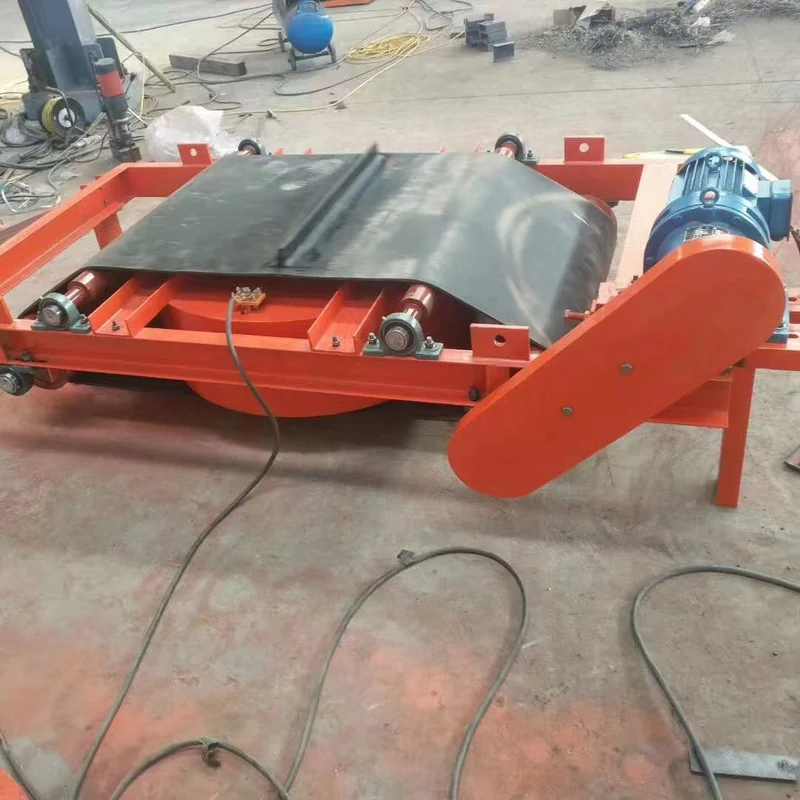
Corvelan builds self-cleaning cross-belt electromagnetic separators to remove unwanted iron and steel from material moving on a conveyor. These unwanted pieces are often called ferrous tramp metal. We first check your conveyor width, material depth, belt speed and the metal you need to remove. We then check the real distance from the magnet face to that metal. This is the working distance. From there, we set the cleaning belt, mounting position, discharge side, cooling and electrical setup for your conveyor.
Quick Fit
Choose a self-cleaning cross-belt electromagnet when iron or steel pieces appear often, the conveyor should keep running, and there is room to discharge the removed metal to the side. Do not choose the machine from a Gauss number alone. Start with the metal piece you must remove and the real distance from the magnet face to that piece.
Choose this type for dry bulk material on a conveyor when iron or steel must be removed continuously and you do not want to stop for manual cleaning.
Compare a permanent overband or manual-clean magnet when the working distance is short, tramp metal is rare, or a permanent magnet can do the job without electrical excitation.
Choose another separation method when the main target is aluminum or copper, the material is a slurry, or the job is fine weakly magnetic mineral recovery. If the site is a hazardous area, confirm the area classification before choosing the electrical package.
Quick Separator Choice
Choose self-cleaning cross-belt when ferrous metal appears often, the conveyor should keep running, and there is enough side space for automatic discharge. If metal is rare and safe planned stops are acceptable, compare manual-clean first. If there is no side discharge space, compare inline before choosing cross-belt.
| Your Situation | What We Recommend | What Not to Choose First | What to Check |
|---|---|---|---|
| Iron or steel appears often and the conveyor should keep running | Choose self-cleaning. The moving belt removes captured metal without stopping the conveyor. | Manual-clean as the first choice. | How often metal appears, largest pieces, side discharge space and cleaning-belt load. |
| Iron or steel appears only occasionally and planned stops are acceptable | Compare manual-clean first. | Adding a self-cleaning belt when it is not needed. | Cleaning frequency, safe access and the cost of a conveyor stop. |
| The separator will sit above a straight conveyor section and there is side space for removed metal | Choose cross-belt first. | Inline before checking the head-pulley area. | Side discharge space, support steel, working distance and maintenance access. |
| The separator can sit near the head pulley and there is a clear collection area ahead | Compare inline with cross-belt. | Choosing cross-belt automatically. | Material path off the head pulley, target position, collection area and support space. |
| There is no safe side space for removed metal | Do not force a cross-belt layout. Use inline or change the discharge layout. | A cross-belt unit with nowhere safe to drop the metal. | Plant layout and the size and location of the metal collection area. |
| The material layer is deep or metal can be buried far below the magnet | Start with an electromagnet and size it from the real working distance. | Choosing from surface Gauss alone. | Distance from magnet face to the buried target, target size and belt speed. |
| The working distance is short and a permanent magnet can provide enough magnetic performance | Compare a permanent self-cleaning overband. | Using an electromagnet only because it sounds stronger. | Required lifting performance at the real working distance and target metal. |
| Large rebar, bucket teeth, bolts or plate pieces could damage a crusher | Size the separator for crusher protection using the hardest damaging metal piece. | Testing only with easy, small metal pieces. | Largest realistic metal piece, deepest position, belt speed and lifting path. |
| The goal is to reduce smaller iron pieces left in the product | Test for product cleanup. | Assuming a large-piece lifting test proves small-piece removal. | Smallest important metal piece, material depth, belt speed and required result. |
| The main target is aluminum or copper | Use another separation method, such as an eddy current separator. | A suspended electromagnet as the main separator. | Target metal type and the product stream. |
| The main target is a fine weakly magnetic mineral | Use equipment made for mineral magnetic separation. | Using this tramp-metal separator for ore upgrading. | Mineral magnetic response, particle size and process method. |
| The site is very dusty, hot, wet, corrosive or a hazardous area | Tell us the site conditions before the electrical and cooling setup is selected. | A standard electrical package before the site conditions are known. | Ambient temperature, dust, moisture, corrosion and hazardous-area classification when applicable. |
Application Examples
These examples show how the equipment choice changes when the conveyor, metal problem or installation changes. The numbers are examples used to explain the choice. They are not Corvelan model ratings or customer project results.
Application Example A
Situation: 1200 mm conveyor, crushed stone, about 250 mm material depth, 2.0 m/s belt speed, frequent bolts, plate pieces and occasional rebar, with clear side discharge space.
Choose: a self-cleaning cross-belt electromagnetic separator.
Why: frequent metal makes manual cleaning a repeated production stop. The cleaning belt can carry captured metal to the side while the conveyor keeps running.
How We Check It: run the cleaning belt, confirm the side discharge path, and test the hardest agreed metal piece from the difficult position.
What Counts as a Pass: the test piece lifts, transfers to the cleaning belt and falls fully into the metal collection area without returning to the product stream.
Application Example B
Situation: 800 mm conveyor, dry aggregate, only occasional bolts or tool fragments, and the line can stop safely for cleaning.
Choose: compare a manual-clean suspended electromagnet before choosing self-cleaning.
Why: a cleaning belt, drive, rollers and tracking system add parts that may not be needed when metal is rare.
How We Check It: test the largest damaging metal piece from the hardest expected position and confirm that the planned stop and cleaning method are safe.
What Counts as a Pass: the target piece is captured securely and the planned manual cleaning method fits the plant operation.
Application Example C
Situation: 1400 mm conveyor, about 350 mm material depth, limited mounting height, continuous operation, and steel pieces may sit near the bottom of the material.
Choose: start with an electromagnetic separator and size it from the deepest realistic target position.
Why: the hardest target is far from the magnet face. A surface Gauss value does not tell you whether buried metal can be lifted.
How We Check It: check the agreed magnetic value at the agreed working distance and run a capture test with the target buried at the difficult position.
What Counts as a Pass: the agreed metal piece is removed at the agreed material depth, belt speed and working distance—not only from the surface.
Application Example D
Situation: side space is limited, but there is usable room near the head pulley and a clear metal collection area ahead.
Choose: compare an inline electromagnet before choosing cross-belt.
Why: cross-belt needs side space for the cleaning belt and removed metal. Inline can discharge in the conveyor travel direction.
How We Check It: review the head-pulley drawing, material path, target position and collection area.
What Counts as a Pass: the selected position gives a clear lifting path, clear metal collection path and enough access for installation and maintenance.
Application Example E
Situation: rebar, bucket teeth, large bolts or steel plate pieces could damage the crusher.
Choose: size the separator around the largest realistic damaging metal piece.
Why: the main job is stopping dangerous metal before it reaches the crusher, not proving removal of every tiny iron particle.
How We Check It: place the largest realistic damaging piece in the hardest expected position and run the conveyor at the real speed.
What Counts as a Pass: the metal is completely removed before it can enter the crusher. Lifting it briefly and dropping it back onto the conveyor does not count.
Application Example F
Situation: the goal is product cleanliness rather than crusher protection.
Choose: test the smallest iron piece that actually matters to the product requirement.
Why: a large steel plate test does not prove small-piece removal.
How We Check It: use the agreed small metal piece at the real material depth and conveyor speed.
What Counts as a Pass: the agreed target piece is removed under the agreed operating condition.
Application Example G
Situation: construction or recycling material contains rebar, wire, steel strips or sharp plate pieces.
Choose: use self-cleaning, but give more attention to cleaning-belt protection and the metal discharge path.
Why: sharp pieces can cut the belt, damage cleats, jam the discharge area or pull the belt out of track.
How We Check It: check the belt cover, cleats, impact area, rollers, tracking and collection chute with the expected metal shape in mind.
What Counts as a Pass: the metal discharges without cutting, jamming or pulling the cleaning belt out of track.
Application Example H
Situation: the main job is removing aluminum or copper from a recycling stream.
Choose: do not use this separator as the main machine for aluminum or copper separation. Use a suitable non-ferrous method such as an eddy current separator.
Why: this separator is made for ferrous metal. A suspended electromagnet can still be placed before the non-ferrous separator to remove iron and steel.
How We Check It: confirm which metals must be removed and where ferrous and non-ferrous separation should happen in the process.
What Counts as a Pass: each separator is used for the metal type it is designed to remove.
Material & Contaminant Fit
Use this separator for unwanted iron and steel carried in dry bulk material on a conveyor. Common targets include bolts, nuts, bars, tools, rebar, bucket teeth, plate pieces and broken steel parts.
The hardest piece to remove is not always the heaviest one. A steel part buried at the bottom of a deep material layer can be harder to lift than a larger piece sitting on top. We therefore size the separator from the hardest realistic target position, not only from the empty space above the conveyor belt.
Typical Process Situations
The same separator type can solve different problems. What we size it for changes with the material, the metal you need to remove and the job you need it to do.
Use it before crushers or transfer points when rebar, bucket teeth, bolts or steel pieces could damage downstream equipment. Size the separator for the most damaging realistic metal piece at its deepest expected position.
Use it on conveyor lines that need continuous iron removal. A deep material layer and high belt speed make the job harder, so include both when sizing the separator.
Use it to protect crushers, mills or other equipment from iron and steel in dry bulk feed. Tell us the metal you need to remove and where the separator will sit before we size the magnet.
Use it when rebar, wire and steel plate pieces must be removed continuously. Sharp metal can damage the cleaning belt, so belt protection, discharge space and wear checks become more important.
Use it for nails, bolts and broken machine parts when the material moves under the separator. Light or uneven material can change the material depth and where the metal sits, so check the real conveyor condition.
Use it when iron and steel must be pulled from a mixed conveyor stream and discharged continuously. If a lot of metal is expected, provide enough side space for discharge and use a cleaning belt built for the load.
Working Principle
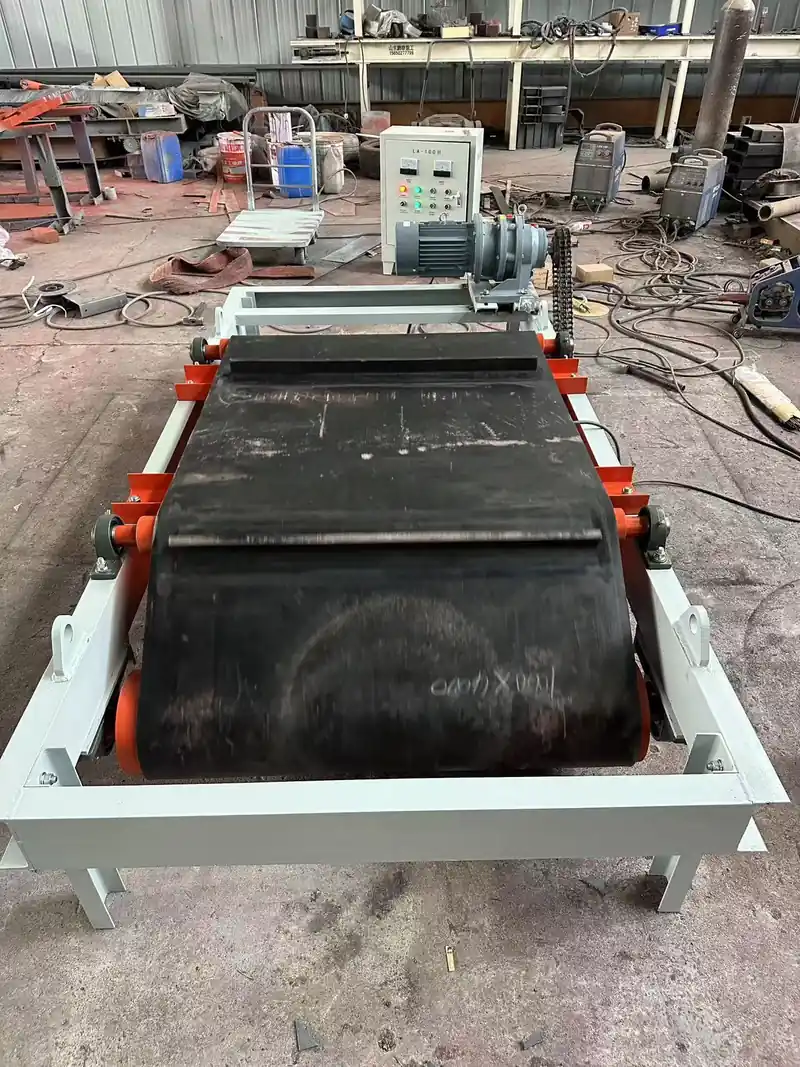
The electromagnet pulls iron and steel upward from the material on the conveyor. The moving cleaning belt carries that metal sideways. When it leaves the useful magnetic area, it drops into the collection area. This collection area is often called the reject area.
For automatic discharge to work, four things must happen: attract the metal, lift it, carry it sideways and release it. A magnet that can attract the metal but cannot move and discharge it cleanly is not enough.
The cleaning belt runs around pulleys and rollers and is moved by a drive. The belt must track straight, keep the right tension and have enough discharge space. These simple mechanical details matter to continuous operation.
The iron or steel piece enters the magnetic working area.
The metal is pulled out of the material layer toward the cleaning belt.
The moving belt carries the captured metal sideways.
The metal leaves the useful magnetic area and drops into the reject area.
Operation reference showing the self-cleaning belt and drive in motion.
The video shows the belt movement, roller layout and drive direction. For the final project test, we separately agree on the metal test piece, working distance, conveyor condition and what counts as a pass.
What Are You Trying to Protect?
Size the separator for the most damaging realistic metal piece. Use this approach when the main risk is rebar, a bucket tooth, bolt, tool or steel piece entering a crusher, mill or other machine.
Test it with the hardest realistic metal piece at the most difficult expected position. Run the conveyor at the real operating speed. The metal should lift out of the material, move with the cleaning belt and fall into the reject area.
Size and test the separator for the smallest metal piece that actually matters to your product. A machine that can lift a large steel bar has not automatically proved that it can remove much smaller iron pieces.
Before testing, agree on the metal size and shape, material depth, belt speed and what result counts as a pass.
Use two test targets. One should represent the large metal piece that could damage downstream equipment. The other should represent the smaller metal piece that matters to product cleanup.
We can use both targets so the separator is checked for both equipment protection and product cleanup.
Working Distance
Working distance is the distance from the magnet face to the metal that must be removed—not only the gap between the magnet and the conveyor belt.
Magnet-to-belt gap: 300 mm
Material depth: 250 mm
Target metal: near the bottom of the material
The hardest target can be much farther than 300 mm from the magnet. That deeper target position must be used when choosing the separator.
Send the magnet mounting height, maximum material depth, conveyor cross-section and the metal piece you need removed.
We use those items to check the hardest target position before choosing the separator size and magnetic performance.
Material Depth
A deeper material layer puts buried metal farther away from the magnet, which makes removal harder. The depth of material on the conveyor is often called burden depth.
When the working distance is short and the target metal is easy to reach, compare whether a permanent overband can do the job before choosing an electromagnet.
When the target metal may sit far below the magnet and automatic cleaning is required, start with an electromagnet and check the deepest realistic target position.
Performance Factors
Start with the actual target distance and conveyor condition, not a surface Gauss number. The separator has to attract, lift and transfer the target while the material is moving.
Use the distance from the magnet face to the metal in its hardest expected position. If the metal can sit at the bottom of the material layer, include that depth.
A deeper material layer puts buried metal farther from the magnet and can also hold the metal down.
A faster conveyor gives the magnet less time to pull up and move difficult metal.
Long bars, solid lumps, thin plate and irregular pieces behave differently when the magnet lifts and moves them.
Lump size, moisture, bulk density and uneven loading change how deeply the metal can be buried.
The separator position changes the metal path, working distance and where the removed metal can fall.
Frequent or sharp metal puts more load and wear on the belt, cleats, rollers and discharge area.
How long the electromagnet runs and how hot the site gets affect the cooling and electrical setup.
Difficult Conditions
| What Happens | Check This First | Do Not Do This First | What We Would Change |
|---|---|---|---|
| Metal on top is removed, but metal buried deeper in the material is missed | Working distance and material depth. | Ask for a higher surface Gauss number. | Recalculate the deepest target position and review magnet size/performance or installation height. |
| The separator works at low conveyor speed but misses metal at higher speed | Maximum belt speed and how long the metal stays in the magnetic area. | Change the cleaning belt first. | Review separator position, magnetic working length and magnet performance at maximum normal speed. |
| Metal lifts but falls back into the product | Cleaning-belt path, belt speed, release point and discharge chute. | Increase field strength before checking the discharge path. | Correct the transfer path, release point and collection area. |
| Sharp rebar or plate pieces damage the cleaning belt | Metal shape, belt cover/cleats and the impact path into the collection area. | Treat the job like light, smooth tramp metal. | Use a heavier-duty cleaning belt and protect the discharge path. |
| The cleaning belt keeps running off-center | Pulley/roller alignment, belt tension, tracking and uneven loading. | Increase belt tension before checking alignment. | Correct the tracking setup and worn or misaligned parts. |
| Captured metal builds up near the discharge side | Discharge clearance and collection-area capacity. | Assume the magnet is too weak. | Increase or reposition the discharge space and collection area. |
| The coil or electrical system runs hotter than expected | Operating time, ambient temperature and cooling condition. | Keep running without checking the electrical and cooling setup. | Review operating time, electrical load and cooling against the real site condition. |
Machine Setup
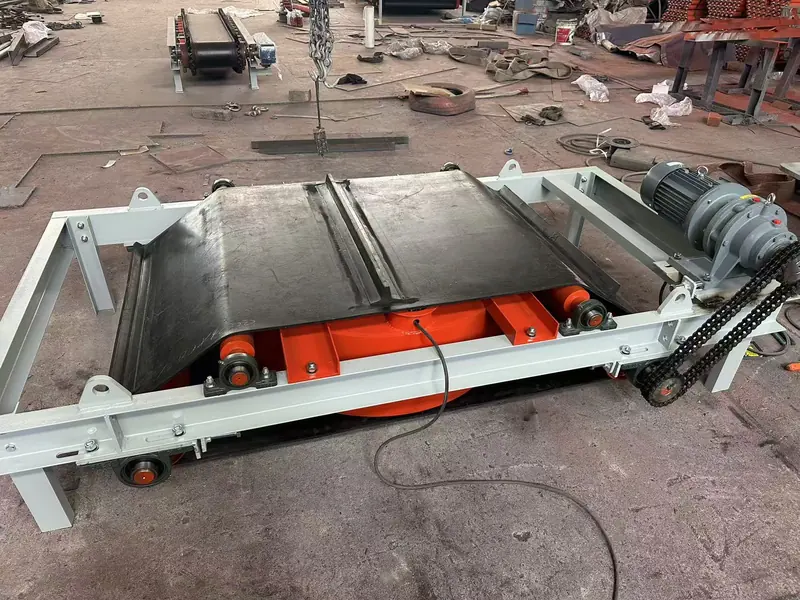
Corvelan treats the separator as a complete magnetic, mechanical and electrical system. We do not stop at choosing a magnet body.
What We Need From You
Every input below changes the machine size, position or setup. Send the best data you have. We will tell you what still needs to be measured before the machine setup is fixed.
| What We Need | Why It Matters | How It Changes the Separator | What to Send Us |
|---|---|---|---|
| Conveyor belt width | It tells us how wide the magnetic working area must be. | We size the magnet to cover the real belt and trough profile. | Belt width and trough/profile. |
| Gap from magnet to conveyor | It is the starting part of the working distance. | Keep only the space needed for material/lump clearance and safe operation. Extra height makes removal harder. | Section drawing or measured gap. |
| Material depth (burden depth) | Metal at the bottom of the material is farther from the magnet. | We include the buried target depth when checking the hardest working distance. | Normal and maximum material depth. |
| Conveyor speed | Higher speed gives the magnet less time to lift the metal. | We size/check the separator at the maximum normal operating speed. | Normal and maximum speed. |
| Hardest metal piece to remove | This sets the lifting job for equipment protection. | We use the largest damaging realistic piece at its hardest position. | Photo, dimensions, material and estimated weight if known. |
| Smallest metal piece that matters | This sets the cleanup test. | For product cleanup, a large-piece pickup test is not enough. | Target size/shape and what result you need. |
| How often metal appears | This helps choose manual-clean or self-cleaning and the cleaning-belt load. | Frequent metal favors self-cleaning. Very low metal loading can justify manual-clean. | Occasional / frequent / heavy, plus known peak events. |
| Where the separator will sit | This helps choose cross-belt or inline. | A straight conveyor section with side discharge favors cross-belt. A head-pulley position should also compare inline. | Plan/section drawing and photos. |
| Discharge side and available space | The cleaning belt needs somewhere safe to drop the captured metal. | If there is no safe collection area, fix the layout before choosing cross-belt. | Available side clearances and preferred discharge side. |
| Support steel and allowable load | The separator must be safely supported. | We confirm the final support points after the machine size and load are selected. | Existing steelwork drawing / allowable load. |
| Ambient conditions and operating time | Heat, dust, moisture and corrosion can change cooling and electrical design. | We match the selected setup to the real site condition. | Ambient range, operating schedule, dust/moisture/corrosion. |
| Site power and controls | The machine must match the available electrical supply and control method. | We set the electrical interface from the actual site power and required operating logic. | Voltage/frequency and control requirements. |
Your Project Specification
Once the conveyor, target tramp and installation condition are known, Corvelan turns them into a concrete equipment specification.
| Item | How We Set It | What You Receive |
|---|---|---|
| Magnetic source | Electromagnetic for this product type. | The selected electromagnet setup and electrical scope. |
| Installation direction | Cross-belt when the plant has side discharge space and suitable support. | Confirmed separator position and direction. |
| Cleaning method | Continuous driven self-cleaning belt. | Belt direction, drive side and discharge side. |
| Conveyor coverage | From conveyor width and trough/profile. | Required magnetic coverage and machine span. |
| Working distance | From the magnet face to the hardest target position. | The working distance used to size/check the magnet. |
| Magnetic test | From the agreed target metal and test method. | A defined measurement point and/or agreed metal pickup test. |
| Cooling | From operating time, electromagnet load and ambient condition. | Cooling setup for the selected design. |
| Electrical supply and controls | From site power and required operating logic. | Electrical connection and control scope. |
| Mounting / support | From machine load, location and plant steelwork. | Mounting points and interface drawing. |
| Overall size / weight | From the selected machine setup. | Final values on the project drawing / technical sheet. |
| Maintenance space | From access needed for the belt, rollers, drive and lifting. | Required space around the machine for inspection and service. |
| Metal collection area | From metal loading, discharge side and plant layout. | Required discharge direction and collection space. |
We put the exact Gauss value, excitation power, dimensions, weight, certifications and performance values on the project documents only after the final Corvelan setup is selected and the values are supported by project data.
Suitable / Not Suitable
| Your Situation | What to Do | Recommended Type |
|---|---|---|
| Frequent iron/steel on a dry bulk conveyor | Use this separator type. | Self-cleaning cross-belt electromagnet. |
| Very little tramp metal and safe planned cleaning stops | Compare a simpler option. | Manual-clean suspended electromagnet. |
| Short working distance and no need for an energized coil | Compare a permanent magnet. | Permanent self-cleaning overband. |
| Head-pulley position is available and side space is tight | Compare the installation direction. | Inline electromagnet / inline overband. |
| No safe side discharge path exists | Do not install cross-belt until the layout is changed. | Inline or revised plant layout. |
| Aluminum or copper is the main target | Do not use this separator as the main solution. | Eddy-current / non-ferrous separation method. |
| Fine weakly magnetic mineral recovery is the goal | Use mineral magnetic-separation equipment instead. | Mineral magnetic-separation method. |
| The material is a wet slurry | Do not use the standard dry suspended separator. | Wet magnetic separation method. |
| A hazardous-area classification applies | Confirm the site classification before choosing the electrical package. | A project setup using the required compliant components and documents. |
Cross-Belt vs Inline
Installation
Reserve space for magnetic working distance, side discharge, cleaning-belt service, drive access and structural support. Do not treat the machine as a box that only needs to fit above the belt.
Cleaning, Maintenance & Safety
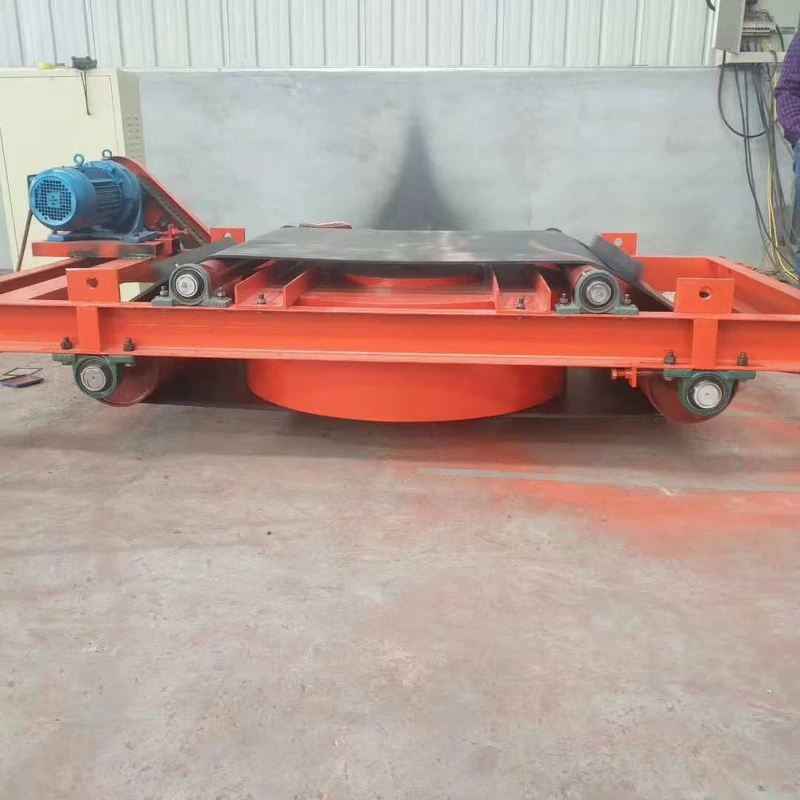
Self-cleaning removes metal automatically, but the cleaning belt, drive and electrical parts still need routine checks.
| Part | What to Check | When It Needs More Attention |
|---|---|---|
| Cleaning belt | Tracking, cuts, cover wear, splice/connection and tension. | Sharp rebar, steel plate or frequent metal is present. |
| Belt cleats — raised parts that carry metal sideways | Damage, looseness and ability to move the expected metal. | Large or irregular pieces must be carried to the side. |
| Pulleys / rollers | Alignment, surface condition and free rotation. | The belt drifts, vibrates or wears unevenly. |
| Bearings | Noise, temperature, lubrication and looseness. | The separator runs continuously or in heavy dust. |
| Drive / reducer | Direction, mounting, abnormal noise, leakage and transmission condition. | Automatic discharge is frequent or loading is heavy. |
| Magnet body | Physical damage, unusual heating and secure mounting. | Operating time or ambient temperature is high. |
| Cables / electrical connections | Connection condition, insulation protection and routing. | There is vibration, dust, moisture or washdown exposure. |
| Discharge chute / collection area | Blockage, rebound and enough free space. | Large or frequent metal is discharged. |
Test & Required Result
Agree on the test target and pass rule before the final machine is accepted. Crusher protection, product cleanup, belt running, magnetic measurement and mechanical fit each need their own check.
| What You Need to Prove | How We Check It | What Counts as a Pass | What This Test Does Not Show |
|---|---|---|---|
| Equipment protection | Use the largest or most damaging metal piece that can realistically enter the conveyor. Put it at the hardest agreed position and run the conveyor at the agreed operating speed. | The metal is attracted, lifted from the material, carried by the cleaning belt and discharged into the collection area without falling back into the product. | Removal of smaller metal pieces that were not part of this test. |
| Product cleanup | Use the smallest metal piece that matters to the product requirement. Test with a material depth and belt speed close to normal production. | The agreed metal piece is removed using the agreed test method and pass rule. | The same removal result for every particle size, material depth or product condition. |
| Cleaning-belt function | Run the belt and drive. Check direction, tracking, roller rotation and discharge side. | The belt runs in the correct direction, tracks steadily and moves without interference during the agreed check. | Magnetic capture performance. |
| Mechanical fit | Check machine size, mounting points, drive side, discharge side and maintenance space against the approved drawing. | The checked dimensions and interfaces match the approved drawing and agreed tolerances. | Whether the plant support structure is strong enough unless that structure is included in our project scope. |
| Magnetic measurement | Measure only at the agreed point, distance and energized condition in the test plan. | The measured value meets the agreed project value at the agreed location and condition. | Pull force, buried-metal pickup or separation efficiency by itself. |
| Electrical / cooling function | Check the agreed electrical connections, running direction, controls and cooling function for the selected setup. | The agreed functions operate as stated in the project test plan. | Site certification or hazardous-area compliance unless it is specifically included and documented. |
Product Details
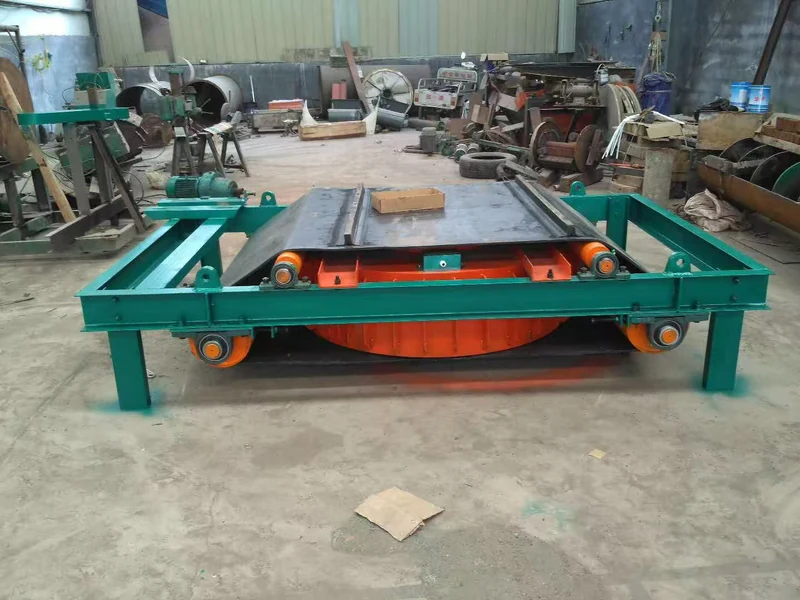
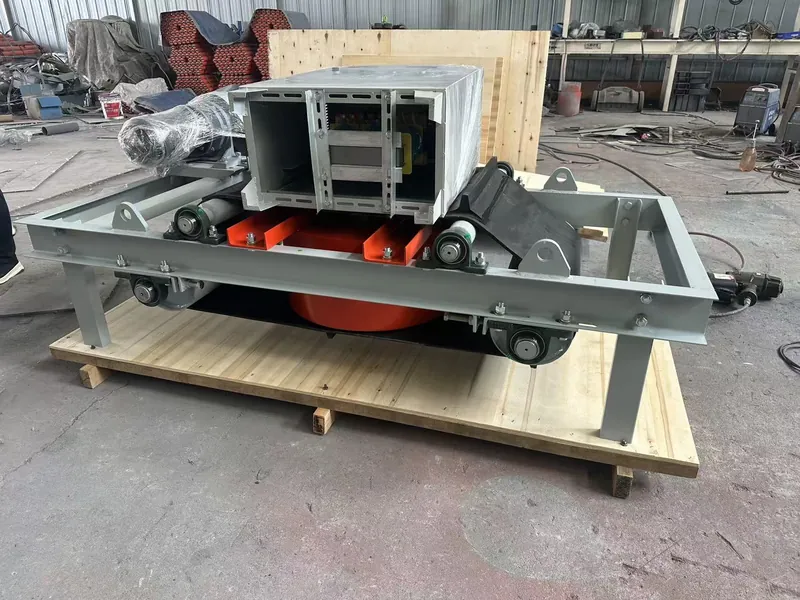
Use the product photos and running video to understand the cleaning belt, drive, separator body and installation space. Magnetic performance is checked separately at the working distance that matters to the job.
Before Shipment
The checks should match the job. A crusher-protection project and a small-metal cleanup project should not use the same test piece.
Check overall size, mounting points, magnet position, drive side, metal discharge side and the space needed for maintenance.
Check belt direction, tracking, drive rotation, rollers and abnormal rubbing. The belt should run smoothly and stay centered.
If a magnetic value is part of the order, record the measuring position, distance and energized condition. Do not replace the agreed working-distance check with a surface reading.
For crusher protection, use the hardest damaging metal piece. For product cleanup, use the smallest agreed metal piece that matters to the product.
Compare the critical mounting and overall dimensions with the approved drawing before shipment.
Check the agreed electrical functions, drive direction, controls and cooling function for the selected setup.
Before Production
We do not move from “we need a strong magnet” straight into production. We first confirm the metal problem, conveyor, separator type, installation and test target.
Material type, target metal, largest damaging piece or smallest important piece, and the operating condition.
Conveyor width, belt speed, material depth, working distance and proposed installation position.
Cross-belt or inline; electromagnetic or permanent; self-cleaning or manual-clean.
Mounting height, support points, drive side, metal discharge side, maintenance space, power supply and cooling needs.
Which test piece matters, where it should be placed and what result counts as a pass.
Project Information
The exact document set follows the final order, but the project should clearly show what separator was selected, how it fits the conveyor and how the agreed checks are recorded.
Shows the selected machine setup and the project values confirmed for the order.
Shows installation dimensions, mounting points, orientation and metal discharge side used for production.
Shows the agreed site supply and the electrical and cooling setup included in the project.
When included in the order, records the agreed checks and results before shipment.
Related Equipment Options
Choose an air-cooled self-cleaning electromagnet when air cooling fits the site and operating conditions. Use the same conveyor and target-metal checks, then confirm the cooling setup for the project.
Choose or compare a manual-clean magnet when metal is rare and planned cleaning stops are safe and acceptable. This avoids adding a self-cleaning belt when it is not needed.
Compare a permanent self-cleaning overband when a permanent magnet can handle the required working distance and target metal. It keeps automatic discharge without an energized electromagnet coil.
FAQ
Choose self-cleaning when metal appears often enough that stopping the conveyor for manual cleaning would be a problem. If metal is rare and safe planned stops are acceptable, compare a manual-clean suspended electromagnet.
Choose cross-belt when the separator sits above a straight conveyor section and there is clear side space for the removed metal. Compare inline when the head-pulley area is available or side space is tight.
Compare a permanent overband when a permanent magnet can handle the target metal at the required working distance. Use an electromagnet when the working distance or operating condition calls for an energized magnet that can be sized for the job.
Use the distance from the magnet face to the metal in its hardest expected position. Do not use only the empty gap above the conveyor belt. If the metal can sit at the bottom of the material layer, include that depth.
No. Gauss tells you magnetic flux density at a specific measurement point. The metal still has to be attracted, lifted and carried away at the real working distance and conveyor speed.
Do not assume it can. Different stainless grades respond differently to a magnet. Send the grade or a sample when stainless steel is the target.
Use the largest or most damaging realistic metal piece at the hardest agreed position. Run the conveyor at the real operating speed. The metal should lift out, move with the cleaning belt and fall into the collection area without returning to the product.
Use the smallest metal piece that matters to your product requirement. Test it with a material depth and belt speed close to normal production. A large-piece pickup test does not prove removal of smaller metal.
Send your material, target metal, conveyor loading or throughput and installation condition. Belt width, speed, material depth, target size/weight, available height, discharge side, site power and a drawing or photo help us recommend the right separator faster.
Agree on the separator type, working distance, conveyor condition, mounting and discharge layout, electrical/cooling condition, and the test target that will be used to accept the machine.
Ask for the selected specification and approved installation drawing. If electrical data, inspection records or test records are part of the order, list them clearly in the technical agreement so both sides know what will be delivered.
Send Your Conveyor Details
You do not need a finished specification. Start with your material, target metal, conveyor condition and installation space. We will use these details to recommend the separator type and setup.
Next Step
We will tell you which separator type fits the line, what working distance controls the job, what layout details still need to be confirmed, and what test should be used before required result.