Choosing the Right Separator
Which Magnetic Separation Method Fits Your Iron Ore?
“Iron ore” is not one magnetic material. Start with the iron-bearing mineral, liberation and feed condition before choosing a separator. The table below is a selection starting point, not a performance guarantee.
| Ore / Feed Condition | Recommended Separation Approach | Why This Method Fits |
|---|
| Magnetite-rich, coarse, dry feed | Dry magnetic pre-concentration | Strong candidate when the liberated magnetic fraction can be presented in a controlled layer. |
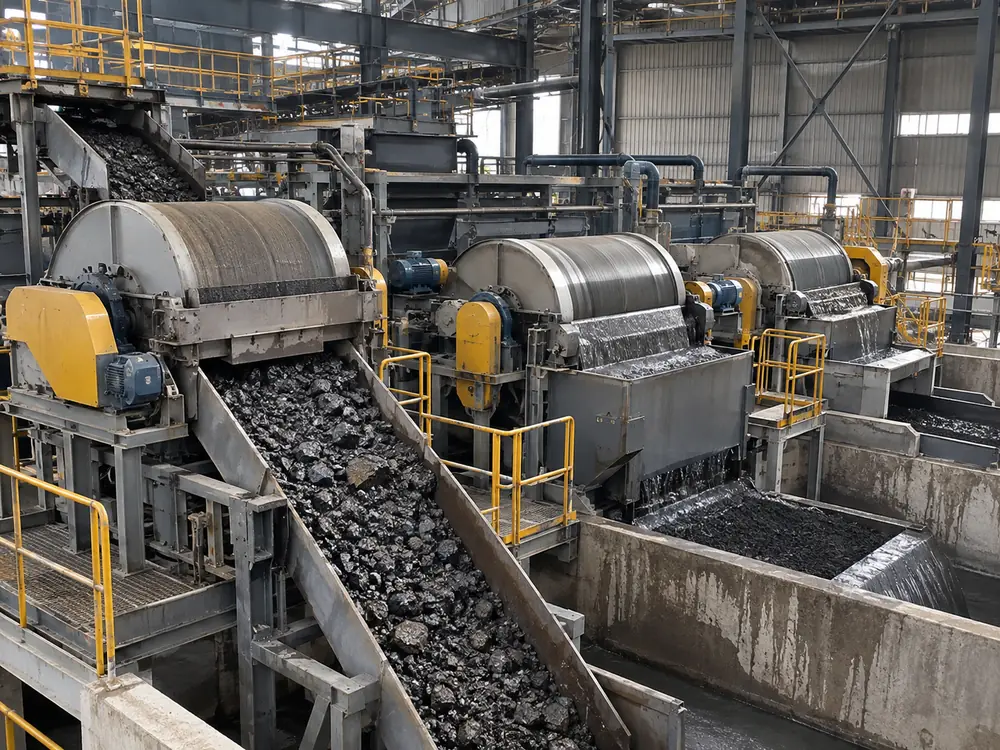
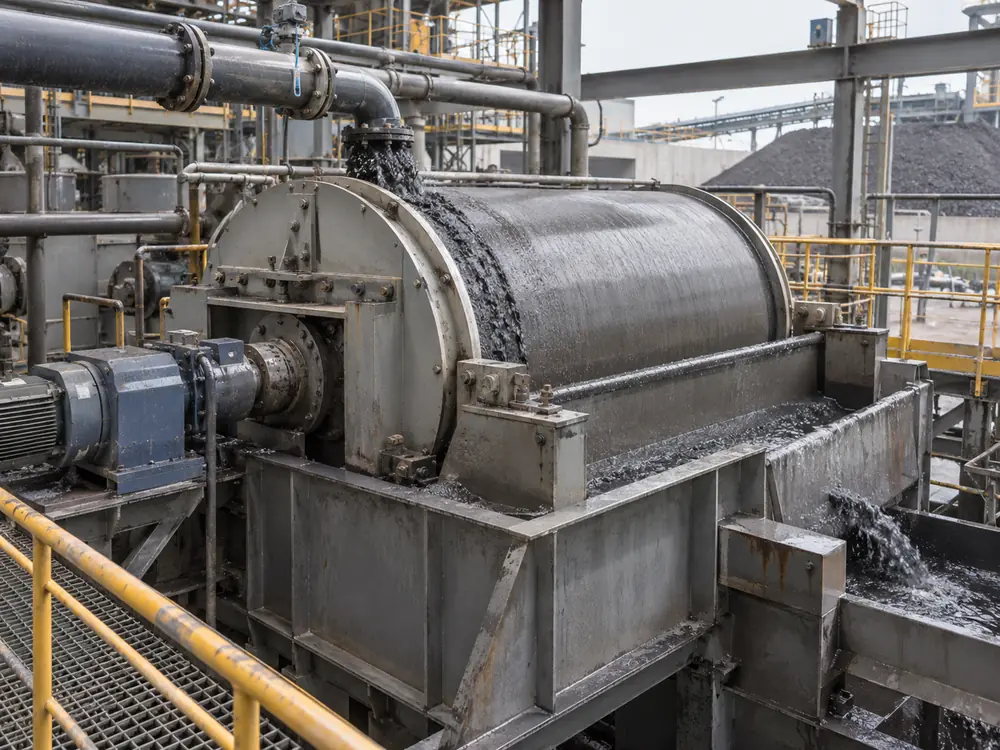
| Ground magnetite slurry | Wet drum magnetic separation | Strong candidate after grinding/classification when slurry presentation is controlled. |
| Magnetite rougher concentrate | Wet cleaning stage | Compare the expected concentrate quality and recovery goals with actual test data. |
| Mixed magnetite + hematite | Material / magnetic-response testing first | Do not select a permanent drum from total Fe grade alone. |
| Hematite-dominant feed | High-intensity magnetic separation may be required | A conventional permanent drum is not the default assumption. |
| Limonite / goethite-rich feed | Check mineralogy and magnetic response first | An alternative or combined beneficiation method may be required. |
| Poorly liberated magnetite | Check grinding and liberation first | A separator cannot compensate for inadequate mineral liberation. |
Beneficiation Flowsheet
Where Magnetic Separation Fits in Iron Ore Beneficiation
Magnetic separation can appear at more than one point in a magnetite circuit. A typical process may remove waste rock with dry separation first, then recover and clean magnetite with wet separation after grinding. The actual sequence should follow mineralogy, liberation and the required concentrate specification.
ROM Iron Ore
Crushing & Screening
Optional Dry Pre-Concentration
Grinding & Classification
Wet Magnetic Roughing / Cleaning
The actual beneficiation process may vary depending on ore characteristics, test results and project requirements.
When Magnetic Drum Is Not Suitable
When You Should Not Choose a Permanent Magnetic Drum
A permanent drum should not be forced into the project when the iron-bearing minerals are too weakly magnetic, the feed is not sufficiently liberated, dry material cannot be presented consistently, or the beneficiation objective depends on a different separation mechanism.
For hematite-, limonite-, goethite- or siderite-dominant feed: establish magnetic response and liberation first. If the ore requires high-intensity or high-gradient magnetic separation, that requirement should be identified during application review rather than forcing a standard permanent drum outside its appropriate operating range.
Performance
What Actually Controls Iron Ore Magnetic Separation Performance?
Concentrate grade, recovery, mass pull and throughput are system results. They come from the ore, feed presentation, separator design and test method working together.
Ore & Liberation
- Iron-bearing mineral and magnetic response
- Liberation at the actual feed size
- Particle-size distribution and fines
Feed Conditions
- Feed rate and distribution
- Dry moisture or wet slurry solids
- Burden depth or slurry flow
Separator Conditions
- Magnetic working distance
- Drum speed and residence time
- Splitter position or tank flow path
Test Method
- Representative sample
- Sampling points and duration
- Mass balance and calculation method
Material Testing
Test the Ore Before Locking the Separator
If grade, recovery, mass pull or residual iron will become a commercial performance requirement, define how the ore will be tested before treating a target as a guarantee.
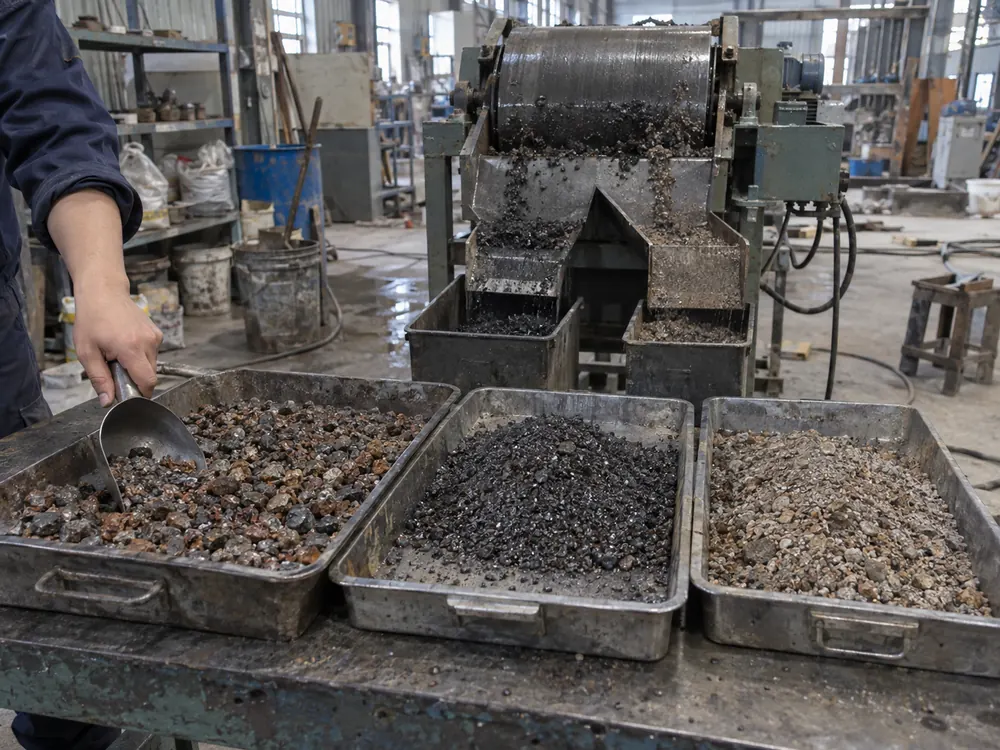
Representative Sample
Use material that reflects the expected feed rather than a hand-picked fraction.
Define the Separation Goal
State whether the goal is pre-concentration, recovery, cleaning or final upgrading.
Record Feed Conditions
Document PSD, mineralogy, moisture or slurry conditions and the test configuration.
Separate & Analyze
Collect magnetic and non-magnetic fractions and calculate results with an agreed sampling method.
Bench or pilot results apply to the tested sample and conditions. Actual plant performance depends on the final ore characteristics and operating conditions.
Equipment Configuration
Translate the Ore and Separation Requirements Into the Equipment Configuration
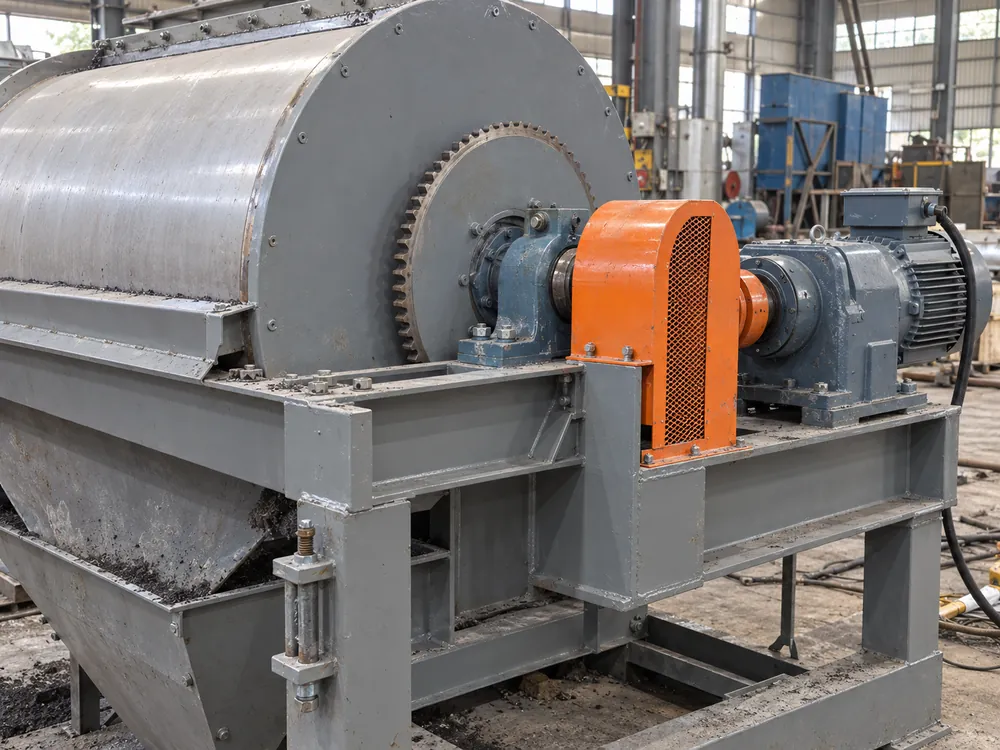
Once the ore characteristics and separation requirements are confirmed, Corvelan can recommend the suitable separator configuration. For a permanent magnetic drum project, consider the magnetic system, drum design, wear protection, feed arrangement, discharge design, drive system and plant connection requirements together.
Magnetic Circuit
Match the magnetic system and working distance to the material response and separation requirements rather than selecting equipment based on surface Gauss alone.
Drum & Wear Protection
Iron ore can be abrasive. Shell and wear protection should balance service life with magnetic separation performance.
Feed Presentation
Dry feed needs controlled width and burden depth. Wet feed needs stable slurry presentation through the active separation zone.
Discharge Geometry
Dry splitter location or wet concentrate/tailings discharge should match the actual material flow and separation goal.
Drive & Drum Speed
Speed affects residence time and discharge point. The drive arrangement should be selected after the application requirements and drum design are confirmed.
Access & Interfaces
Maintenance space, guarding, support, inlet, outlet and plant connections should be considered when finalizing the equipment design.
Why Corvelan
Why Work With Corvelan on an Iron Ore Magnetic Separation Project?
Every iron ore project has different material characteristics and separation requirements. Corvelan focuses on selecting suitable magnetic separation solutions based on your specific application needs. The goal is to understand your ore characteristics, separation goals and operating conditions before recommending the final equipment configuration.
Application-Based Selection
Start with the ore characteristics and separation requirements instead of using a standard separator solution for every project.
Clear When Magnetic Drum Is Not Suitable
Weakly magnetic iron ores are identified as a different process problem rather than being hidden inside a permanent-drum sales claim.
Complete Project Information
Mineralogy, particle size, throughput, feed condition, plant connections and testing requirements help define the suitable equipment configuration.
Reliable Selection Based on Testing
Grade and recovery targets should be tied to representative material and an agreed test method.
FAQ
Iron Ore Magnetic Separator FAQ
What type of iron ore is best suited to magnetic separation?
Magnetite-rich ore and other strongly magnetic, sufficiently liberated iron-bearing fractions are the clearest starting point for low-intensity magnetic separation. Final suitability also depends on particle size, feed condition and the beneficiation objective.
Is magnetite easier to separate magnetically than hematite?
Yes. Magnetite responds much more strongly to low-intensity magnetic separation. Hematite and other weakly magnetic iron minerals may require higher-intensity equipment or a combined beneficiation route, so they should not be treated as equivalent feed.
Should iron ore use dry or wet magnetic separation?
Dry drum separation is commonly reviewed for coarse, dry pre-concentration where particle size and controlled feed presentation suit a drum. Wet drum separation is typically reviewed for ground magnetite processed as slurry after grinding and classification.
Where is magnetic separation installed in an iron ore beneficiation plant?
Possible positions include dry pre-concentration before fine grinding and wet roughing or cleaning after grinding and classification. The correct position depends on liberation and the purpose of each separation stage.
Does higher Gauss mean higher iron recovery?
No. A Gauss value is a magnetic measurement at a defined point. Recovery also depends on mineralogy, liberation, particle size, feed presentation, working distance, drum speed, slurry or dry-feed conditions and the test method.
What controls iron concentrate grade and recovery?
The main controls include magnetic response, liberation, particle-size distribution, feed rate and distribution, dry moisture or slurry solids, magnetic working distance, drum speed, discharge geometry and the sampling method used to calculate results.
How many magnetic separation stages are needed for magnetite?
There is no universal number. Pre-concentration, roughing, cleaning and final upgrading have different duties. The required number of stages should follow magnetite content, liberation, target concentrate quality and representative test results.
Should iron ore be tested before equipment selection?
Testing is recommended when ore response is uncertain or when grade, recovery, mass pull or residual iron will become an acceptance criterion. The sample, operating conditions, sampling method and calculation method should be defined before the result is treated as a performance basis.