Corvelan Conveyor Magnet Solutions

RCYQ Light-Duty Cross-Belt Magnetic Separator

RCYQ Series Self-Cleaning Permanent Magnet Separator

Corvelan supplies this self-cleaning cross belt magnetic separator for removing iron and steel tramp from belt conveyors.

The magnet lifts the metal from the moving material. A cleaning belt then carries it to the side for discharge.

We size the separator around your conveyor, material depth and available installation space. In magnetic separation, the distance from the magnet face to the target metal is called the working distance. The depth of material on the belt is called burden depth.

Standard ModelsRCYQ-4 / RCYQ-5 / RCYQ-6.5 / RCYQ-8 / RCYQ-10
Conveyor Belt Width400–1000 mm standard family range
Rated Suspension Height100–300 mm by standard model
Drive Power0.75–2.2 kW by standard model
DutyContinuous self-cleaning
TargetFerrous tramp metal on belt conveyors
Light-duty self-cleaning cross-belt permanent magnet separator with continuous discharge belt
Quick Fit

Is This Light-Duty Cross Belt Magnetic Separator Right for Your Conveyor?

We usually recommend this model when you need automatic removal of recurring iron or steel tramp from an open belt conveyor.

Good starting fit

  • Iron or steel tramp appears regularly on the conveyor.
  • You want automatic discharge instead of stopping for manual cleaning.
  • There is enough room for captured metal to discharge to the side.
  • The required working distance suits a permanent magnetic route.

What we check next

  • Working distance and burden depth
  • Conveyor width, speed and trough angle
  • Size, shape and frequency of tramp metal
  • Available height and side clearance

We may recommend another route when

  • The magnet must work across a much larger distance.
  • The process is slurry, pipeline or enclosed pneumatic conveying.
  • The target is aluminium, copper or another non-ferrous metal.
  • The conveyor geometry is better suited to in-line, head-pulley or electromagnetic separation.
“Light-duty” is not one fixed capacity number. It is a practical product position inside the cross-belt family. We still size the machine from your real process conditions.
Material & Contaminant Fit

What Can This Cross Belt Magnetic Separator Remove?

This separator is for iron and steel pieces that a magnet can attract. In magnetic separation, these are called ferrous or ferromagnetic tramp metal.

Typical fit

  • Bolts, nuts, nails, wire and steel fragments
  • Recurring tramp metal in a dry or manageable bulk-material stream
  • Conveyor protection before crushers, mills, screens or shredders

Not the right tool for

  • Aluminium, copper and other non-ferrous metal recovery
  • Liquid or slurry pipelines
  • Fine mineral separation that needs a different magnetic field design
  • Applications where the real working distance has not been checked

Material condition still matters. Particle size, moisture and bulk density — how heavy the material is for its volume — can change how deeply the target metal is buried in the burden.

RCYQ Application Environments

Where Is the RCYQ Light-Duty Cross Belt Series Used?

The current RCYQ family specification lists environmental protection, wood processing, grain, foundry, chemical, building-material, mining and light-industry applications. We still size the separator from the actual material and conveyor conditions rather than from the industry name alone.

Wood & grain handling

Remove ferrous tramp from conveyor flow before downstream handling or processing equipment.

Foundry & building materials

Use the suspended magnet as a conveyor-protection step where iron or steel contamination is present.

Mining & bulk solids

Remove magnetically responsive tramp metal from suitable conveyor applications before downstream equipment.

Chemical processing

Use the family only where the material, environment and installation conditions suit this equipment type.

Environmental processing

Remove ferrous pieces from suitable bulk-material conveyor streams.

Light industry

Apply the same selection checks: working distance, material depth, belt speed and tramp-metal condition.

How It Works

How Does a Self-Cleaning Cross Belt Magnetic Separator Work?

The magnet pulls iron and steel pieces out of the moving material. The cleaning belt then carries the captured metal away from the working face. Once the metal leaves the strongest part of the magnetic field, it drops into the planned collection area.

Material passes below

The main conveyor carries the product beneath the suspended magnet.

The magnet lifts the metal

Ferrous tramp is pulled upward when the magnetic force is strong enough at the real working distance.

The cleaning belt moves it out

The cross belt carries the captured metal away from the product flow.

The metal discharges

The separated metal falls to the side into the discharge area or collection point.

Permanent magnet, powered cleaning belt

The magnetic field comes from a permanent magnetic system, so the separator does not need excitation power to create magnetism. The cleaning belt still uses an electric motor.

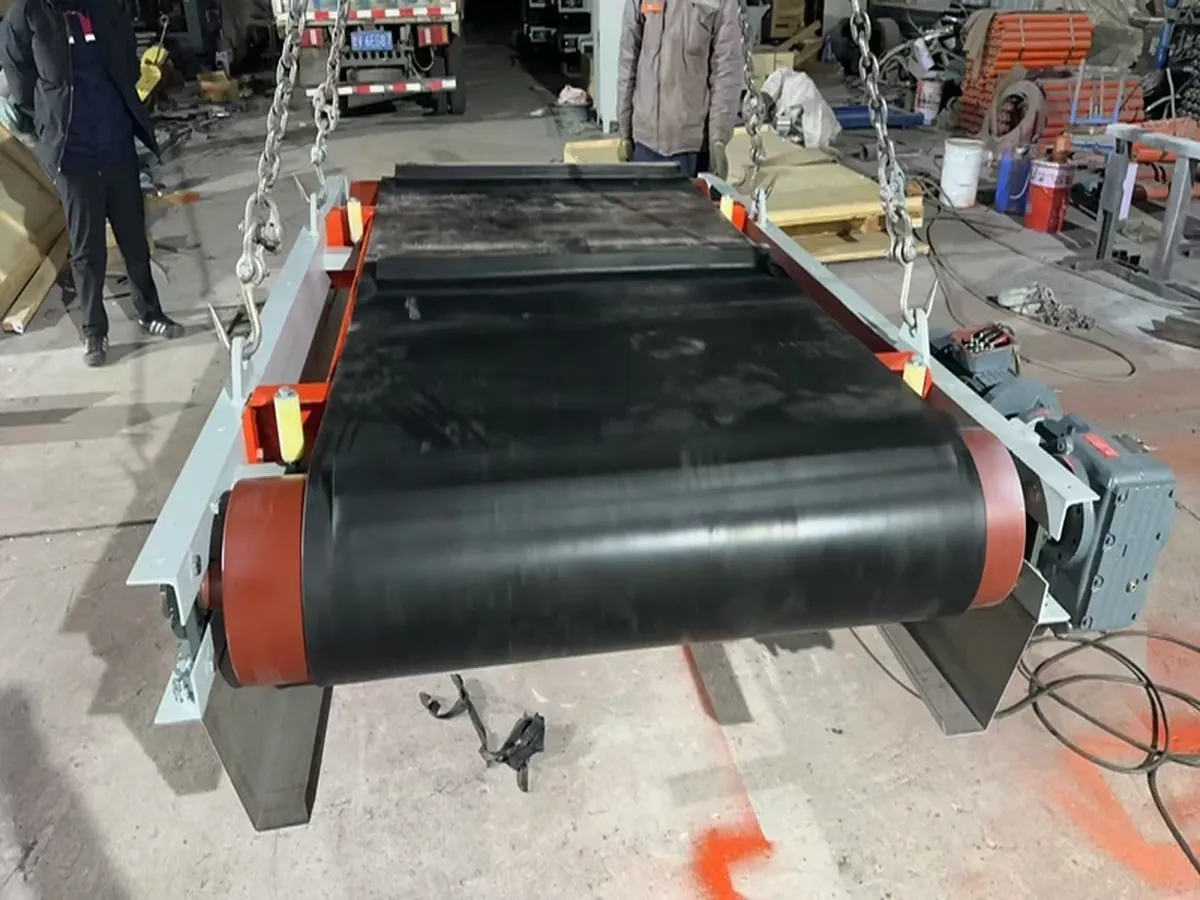
Cross-belt magnetic separator showing the cleaning belt, pulleys and open working face
The cleaning belt carries captured metal beyond the strongest magnetic area so it can discharge.
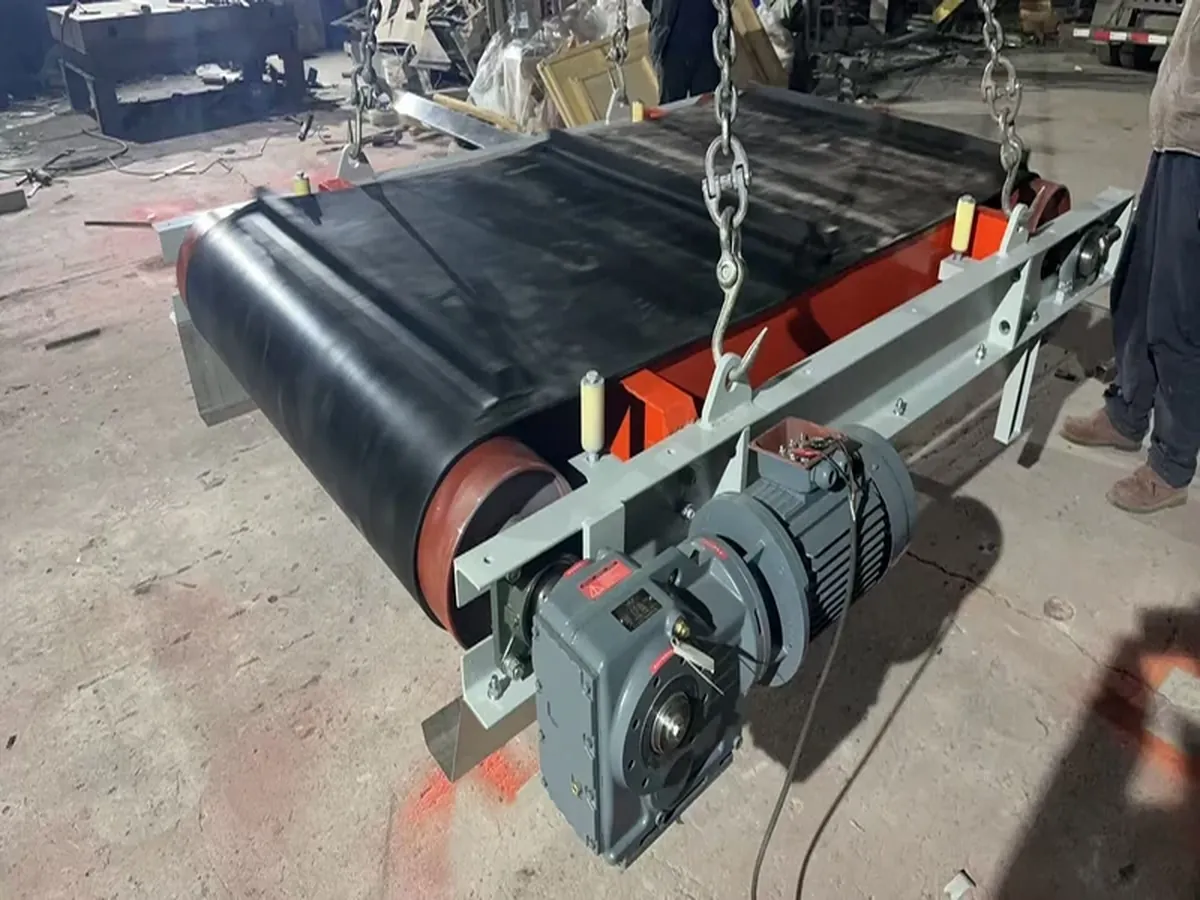
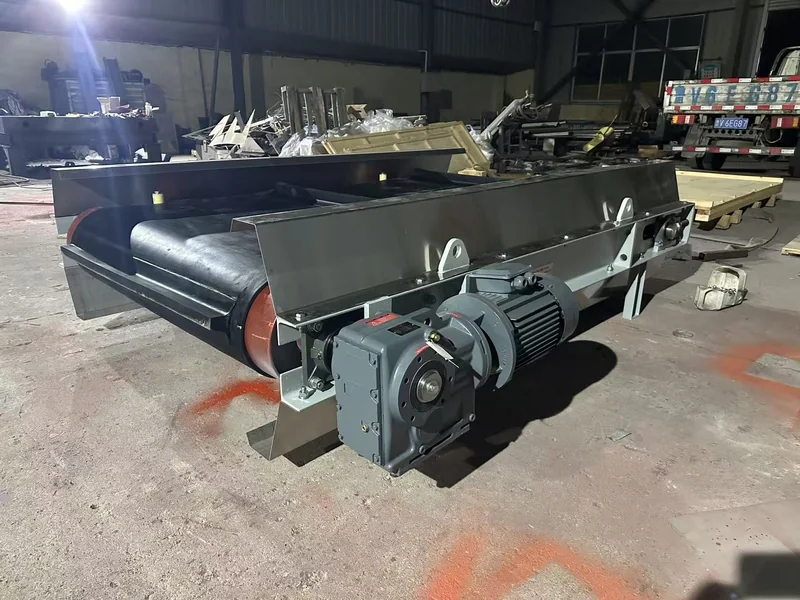
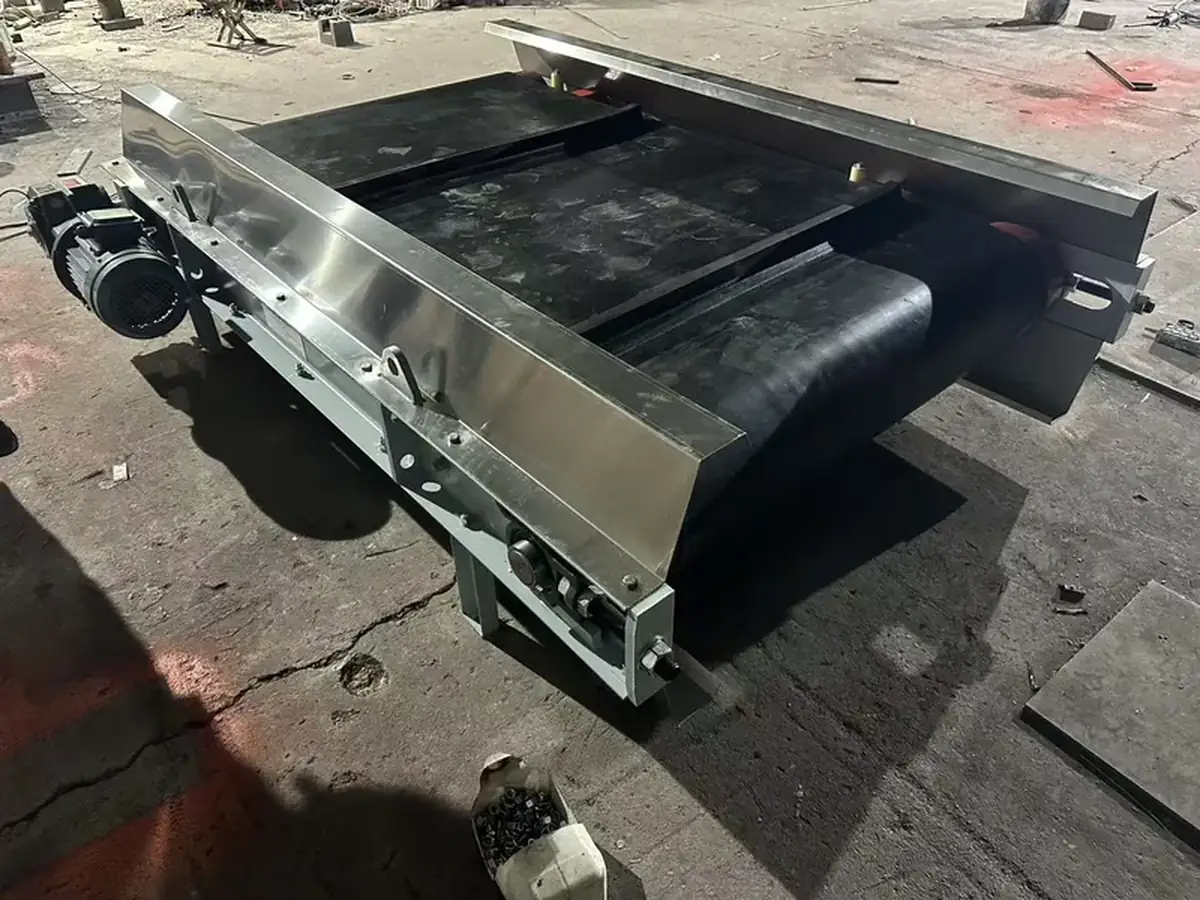
Drive-side view of the self-cleaning belt system on a cross-belt magnetic separator
Drive-side view of the self-cleaning belt. Corvelan checks the motor, voltage and controls for the project.
Performance Factors

What We Check Before Sizing Your Cross Belt Magnetic Separator

We do not choose the separator from one Gauss number alone. We first check how far the magnet needs to work, how deep the material is, how fast the conveyor runs and what kind of tramp metal needs to be removed.

Process conditionWhat changesWhat Corvelan does
Working distanceThe magnetic field becomes weaker as the metal moves farther away from the magnet.We size from the real metal-to-magnet distance, not from mounting height alone.
Burden depthBuried tramp metal sits deeper in the material bed and is harder to lift.We review normal and maximum material depth before choosing the magnetic route.
Conveyor speedA faster conveyor gives the magnet less time to act on the metal.We review speed together with magnet size, position and separator type.
Conveyor widthThe separator must cover the full material stream.We match the machine width and frame layout to the real belt width.
Tramp-metal shapeWire, bolts, plate and long steel pieces do not behave the same way inside the burden.We ask for a photo or size description of the target metal.
Material conditionMoisture, particle size and bulk density change how the metal is buried in the material bed.We use the material name and process condition to judge whether a permanent cross-belt route is suitable.
Installation spaceSupport points, headroom and discharge clearance can limit the layout.We confirm the mounting direction and discharge side before quotation.
RCYQ Series

RCYQ Model Selection and Standard Family Specifications

Conveyor belt width is the first model filter, but it is not the only selection factor. The current RCYQ family specification defines five standard models. Corvelan still checks burden depth, working distance, belt speed and tramp-metal condition before confirming the final model.

ModelsRCYQ-4 to RCYQ-10
Belt Width400–1000 mm
Rated Suspension Height100–300 mm
Drive Power0.75–2.2 kW

Quick model filter by conveyor belt width

Conveyor Belt WidthStandard ModelRated Suspension HeightCatalog Magnetic Field
400 mmRCYQ-4100 mm60 mT
500 mmRCYQ-5150 mm60 mT
650 mmRCYQ-6.5200 mm70 mT
800 mmRCYQ-8250 mm70 mT
1000 mmRCYQ-10300 mm70 mT

Full RCYQ family table

ModelBelt Width mmRated Suspension Height mmCatalog Magnetic Field mTApplicable Belt Speed m/sDutyDrive kWA mmB mmC mmD mmE mmF mmWeight kg
RCYQ-4400100602.0Continuous0.751270840540670580270380
RCYQ-5500150602.5Continuous0.7513221006615722680270490
RCYQ-6.5650200702.5Continuous1.115451150710945830270640
RCYQ-8800250703.5Continuous1.5171213857351112980270850
RCYQ-101000300704.0Continuous2.218821535735128211802701300

RCYQ family table note: A–F follow the outline-dimension references used in the current RCYQ family specification.

RCYQ Light-Duty Design

What the RCYQ Light-Duty Design Is Built Around

The current RCYQ family specification describes the series as compact, relatively light and designed for continuous iron pickup and discharge. The real equipment photos also show a simple self-cleaning belt, pulley, drive and frame arrangement.

Compact mechanical layout

The light-duty family uses a compact frame and cleaning-belt arrangement that is practical where installation space matters.

Continuous self-cleaning

The cleaning belt carries captured ferrous metal away from the magnetic working area during operation.

Simple service access

The belt, pulleys, bearings and drive are visible mechanical service points on the real equipment.

Designed for suspension

The real units show lifting and suspension points that support overhead conveyor installation and handling.

Low-noise design intent

The family specification identifies low noise as a product feature. No fixed dB value is published on this page.

Economical light-duty route

The RCYQ family is positioned as a practical permanent-magnet route for suitable light-duty conveyor applications.

Magnetic Data

How to Read the RCYQ Magnetic Field Values

The current RCYQ family specification lists 60 mT for RCYQ-4 and RCYQ-5, and 70 mT for RCYQ-6.5, RCYQ-8 and RCYQ-10.

The current family specification does not define the exact measuring position, air gap, probe direction or instrument. For that reason, these values should be treated as catalog magnetic-field references, not as separation-efficiency guarantees.

Before comparing field values

  • Check where the value was measured.
  • Check the air gap or working distance.
  • Check whether the value is a surface reading or a reading at the working position.
  • Use the same measuring method when comparing two values.

What the number does not tell you by itself

  • It is not the same as pull force.
  • It is not the same as separation efficiency.
  • It does not replace burden depth or conveyor-speed data.
  • It does not define capture performance without a test condition.
Catalog field value ≠ Pull Force ≠ Separation Efficiency. Final selection still depends on the real working distance, burden depth, belt speed and target-metal condition.
Tramp Metal Condition

Tell Us What the Tramp Metal Looks Like

A photo of the tramp metal often tells us more than the word “iron.” A long steel bar, a bolt, thin wire and a flat plate do not behave the same way in a moving burden.

Bolt or nutCompact pieces are useful reference targets for size and frequency.
WireThin metal can change orientation inside the material bed, so shape matters.
Plate or flat steelLarge flat pieces behave differently from compact pieces of the same weight.
Long steel pieceLong or sharp tramp metal can also affect discharge clearance and guarding.
Mounting Direction

Cross-Belt or In-Line: Which Layout Fits Your Conveyor?

We choose the mounting direction from the conveyor layout, material flow and metal discharge path — not from the separator name alone.

With a cross-belt layout, the cleaning belt runs across the main conveyor and usually discharges captured metal to the side. With an in-line layout, the separator follows the conveyor direction, often near the head pulley or transfer point where the material stream may open up.

What to compareCross-BeltIn-Line
Magnet positionAcross the main conveyorIn the direction of conveyor travel
Typical metal dischargeTo one side of the conveyorBeyond or around the transfer point
RetrofitOften easier above an existing conveyor when side space is availableDepends more on head-pulley and transfer-point geometry
Material presentationThe target metal stays inside the moving burdenThe material may open as it leaves the head pulley, which can expose buried metal
Main space to checkSide-discharge and maintenance clearanceEnd-of-conveyor and transfer-point clearance
What to send CorvelanBelt width, material depth and side-clearance photoHead-pulley / transfer-point drawing and available end clearance
We do not treat cross-belt and in-line mounting as interchangeable. The working distance, material presentation and metal discharge path change with the mounting position.
Sizing & Setup

How We Size a Cross Belt Magnetic Separator for Your Conveyor

Corvelan sizes the separator around your conveyor instead of forcing one fixed model onto every line.

What you sendWhat Corvelan definesWhy it matters
Conveyor widthSeparator working width and frame coverageThe magnet must cover the full material flow.
Material depthRequired magnetic working reachBuried metal sits farther from the magnet.
Belt speedMagnet size and mounting checkHigher speed reduces the time available to lift the metal.
Tramp-metal photo / sizeMagnetic route and cleaning-belt dutyShape, size and frequency change both capture and discharge needs.
Preferred discharge sideCleaning-belt direction and drop pointCaptured metal needs a clear path out of the product flow.
Available heightSuspension and mounting layoutWorking distance and maintenance room must both fit.
Voltage / frequencyCleaning-belt motor and electrical setupThe permanent magnet needs no excitation power, but the cleaning belt does.
EnvironmentConstruction and protection requirementsDust, weather, washdown or corrosion can change the mechanical setup.

We check fit before quotation

  • How far the magnet needs to work
  • Whether the magnet covers the full material stream
  • How the cleaning belt will discharge the metal
  • Whether there is enough room for support, guarding and maintenance
  • What motor and electrical setup the site needs
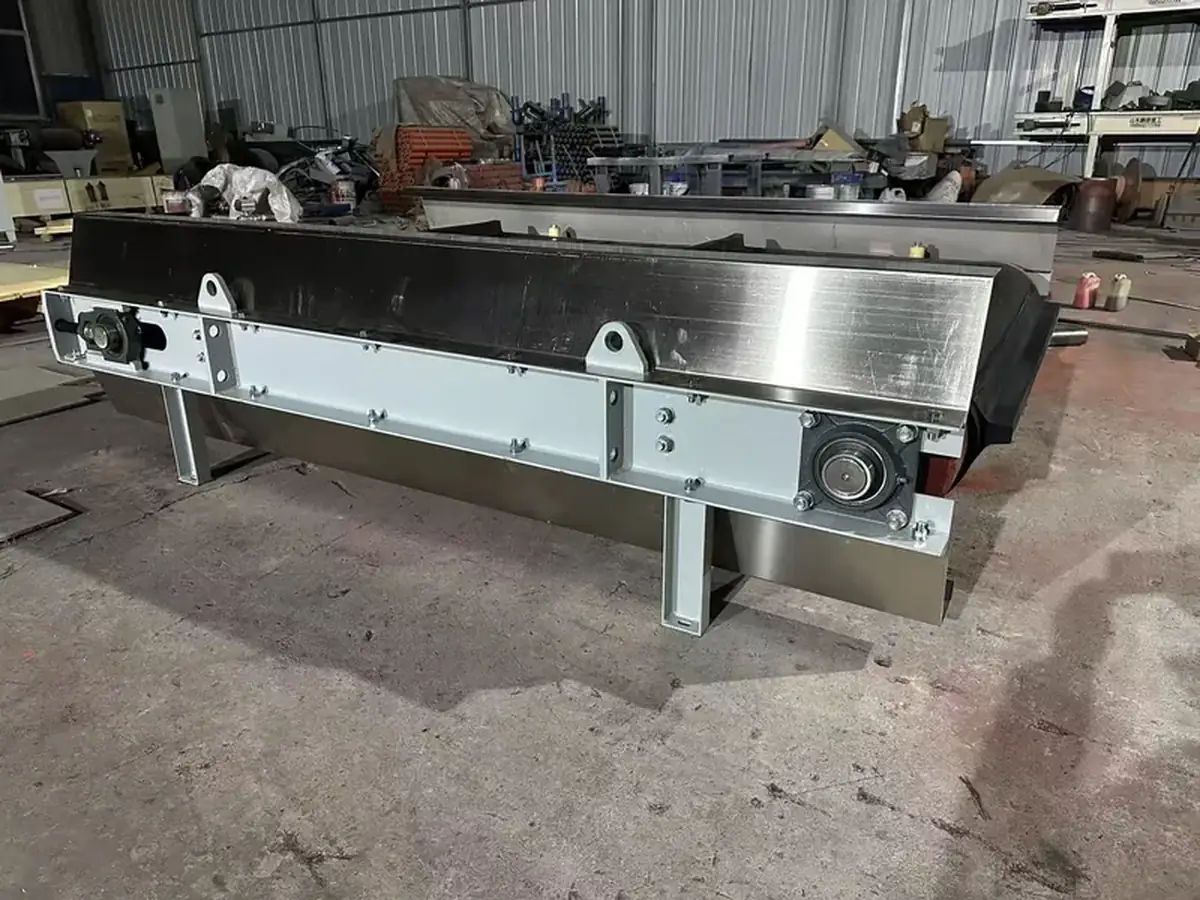
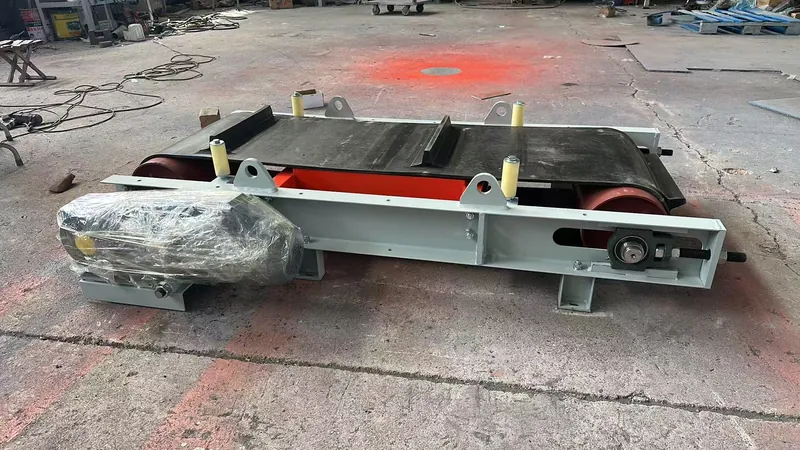
Side view of a light-duty self-cleaning cross-belt permanent magnet separator
Side view of the light-duty cross-belt separator. Final dimensions and drive details are confirmed after we review the conveyor data.
Light-Duty Selection

When a Light-Duty Permanent Cross Belt Magnet Makes Sense

Typical fit for this light-duty route

  • Moderate working distance
  • Manageable burden depth
  • Recurring but manageable tramp-metal loading
  • Adequate side-discharge clearance
  • Conveyor width and speed suitable for a permanent magnetic route

We move to a larger or different route when

  • The burden becomes deeper or the working distance grows larger.
  • The belt speed is high enough to change the practical capture difficulty.
  • The tramp-metal load becomes too heavy for this equipment position.
  • The conveyor is very wide or the layout clearly favors another separator family.
Real Equipment Details

Real Cross Belt Separator Details

The photos below show real belt, drive and frame details from the current equipment set. We use them to show how the self-cleaning mechanism is built and where routine inspection happens. They are product-construction evidence, not a controlled separation-performance test.

Cross-belt magnetic separator showing the cleaning belt, pulleys and open working face
Self-cleaning beltThe belt carries captured metal away from the strongest magnetic area.
Drive-side view of the self-cleaning belt system on a cross-belt magnetic separator
Drive sideThe motor powers the cleaning belt. It does not create the magnetic field.
Side-frame and belt-tracking detail on a light-duty cross-belt magnetic separator
Tracking & service areaThe frame and pulley zone need access for inspection, adjustment and routine maintenance.
Product Photos and Components

Additional Real RCYQ Family Views

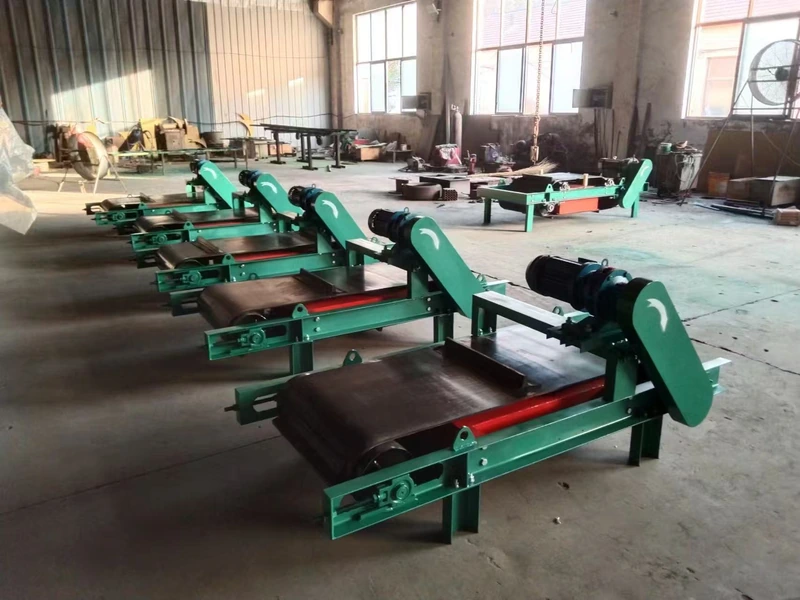
These are real product photos from the current RCYQ family equipment set. They show real family equipment and mechanical construction. The visible photos do not show a readable model nameplate, so we do not assign a specific RCYQ model number to an individual machine photo.

Installation

What We Check Around the Conveyor Before Finalizing the Layout

We check where the magnet will sit, how it will be supported and where the captured metal will discharge.

Full material coverage

The magnet should cover the full width of the material flow. We also review nearby steelwork that may affect the magnetic field.

Room for mounting and maintenance

We check available height, support points and the space needed to inspect and adjust the cleaning belt.

Clear discharge path

There must be a clear path, chute or collection area so captured metal does not fall back into the product.

Keep Unwanted Steel Away from the Magnetic Working Area

Steel directly below or very close to a suspended magnet can become magnetized and change the intended field around the separator.

Corvelan reviews rollers, support steel and conveyor structures around the mounting position before the final layout is fixed.

What to show us on the drawing

  • Rollers or idlers directly below the separator
  • Steel frames close to the magnetic working area
  • The head pulley or reversing roller if the magnet is near a transfer point
  • Any structural steel that cannot be moved

The exact non-magnetic clearance is not published as one universal Corvelan number on this page because it depends on the final magnetic design and conveyor layout.

Non-Magnetic Working Zone

WCTG Non-Magnetic Idler Option for the Suspended Magnet Area

The current technical data also include the WCTG non-magnetic parallel-idler family for use with suspended magnetic separators. The sheet describes the idler as a non-magnetic metal roller installed below the conveyor belt so the belt can be supported without placing a conventional magnetic-steel roller directly in the magnetic working zone.

The WCTG technical data also describe the flat-support arrangement as helping the material spread more openly under the suspended separator. Final suitability still depends on the real conveyor structure and installation layout.

WCTG ModelBelt Width mmWeight kgA mmB mmD mm
WCTG-55001375060089
WCTG-6600 / 6501690075089
WCTG-880020110095089
WCTG-1010002813001150108
Why this matters: nearby ferromagnetic rollers and steelwork can affect the intended magnetic field. A non-magnetic idler is one practical installation option when the conveyor structure places a roller inside the working zone.

The current RCYQ page shows only the WCTG sizes most directly aligned with the RCYQ belt-width family. The supplied sheet also contains larger WCTG sizes for wider conveyors.

When Another Separator Is Better

When We Recommend a Different Magnetic Separator

We do not try to force every conveyor to fit one machine. If another separator gives you a better layout or a more suitable working route, we change the recommendation before quotation.

We keep the light-duty cross-belt model when

  • The target is iron or steel tramp on an open belt conveyor.
  • Automatic cleaning is useful for the tramp load you actually see.
  • There is enough room for side discharge.
  • The working distance suits the selected permanent magnet route.

We change the separator when

  • Manual cleaning is simpler for very occasional tramp metal.
  • An in-line magnet fits the transfer point better.
  • A magnetic head pulley is better at the conveyor discharge.
  • The job needs a different or stronger magnetic route.
Maintenance & Safety

What Needs Routine Attention After Installation?

  • Cleaning-belt tracking, tension, cleats and visible wear
  • Pulleys, bearings, motor and fasteners
  • The metal discharge path and collection area
  • Material build-up that reduces the real working gap
  • Alignment after belt replacement or mechanical adjustment
Safety: keep hands away from the moving belt and pulley pinch points, often called nip points. The machine is also a suspended load and creates a strong magnetic field. The final installation still needs suitable guarding, lockout and structural support.
Side-frame and belt-tracking detail on a light-duty cross-belt magnetic separator
Keep the belt and frame area accessible for inspection, tracking and adjustment.
Final Check

What We Check Before the Final Separator Is Released

Before we release the final setup, we check that the separator matches the agreed conveyor, discharge direction and installation space. These are configuration checks. We do not claim a completed factory test unless that evidence is part of the actual order.

CheckWhat it confirms
Application checkThe agreed material, conveyor width, belt speed and target metal still match the selected separator route.
Layout checkThe working distance, discharge side, support points and maintenance access match the approved layout.
Belt-path checkThe cleaning belt has a clear movement path and metal can leave the working area correctly.
Electrical checkThe cleaning-belt motor and electrical setup match the order requirement.
Acceptance checkIf magnetic measurement is part of the order, the measuring point, gap and method are agreed before values are compared.
Why Corvelan

How Corvelan Helps You Choose the Right Cross Belt Magnetic Separator

We do not size a cross-belt magnet from conveyor width alone. We also check material depth, belt speed, tramp-metal condition and the actual installation layout.

1. You send the process basicsMaterial, target metal, throughput and a conveyor photo or drawing are enough to start.
2. We check the separator familyWe confirm whether a light-duty cross-belt route is suitable or whether another separator family makes more sense.
3. We size the magnetic and cleaning-belt setupWe match the magnet route, machine width and discharge direction to the job.
4. We review the installation layoutWe check support points, nearby steel, maintenance room and discharge clearance.
5. We prepare the quotationYour quotation is based on the agreed setup, not on a generic catalog assumption.
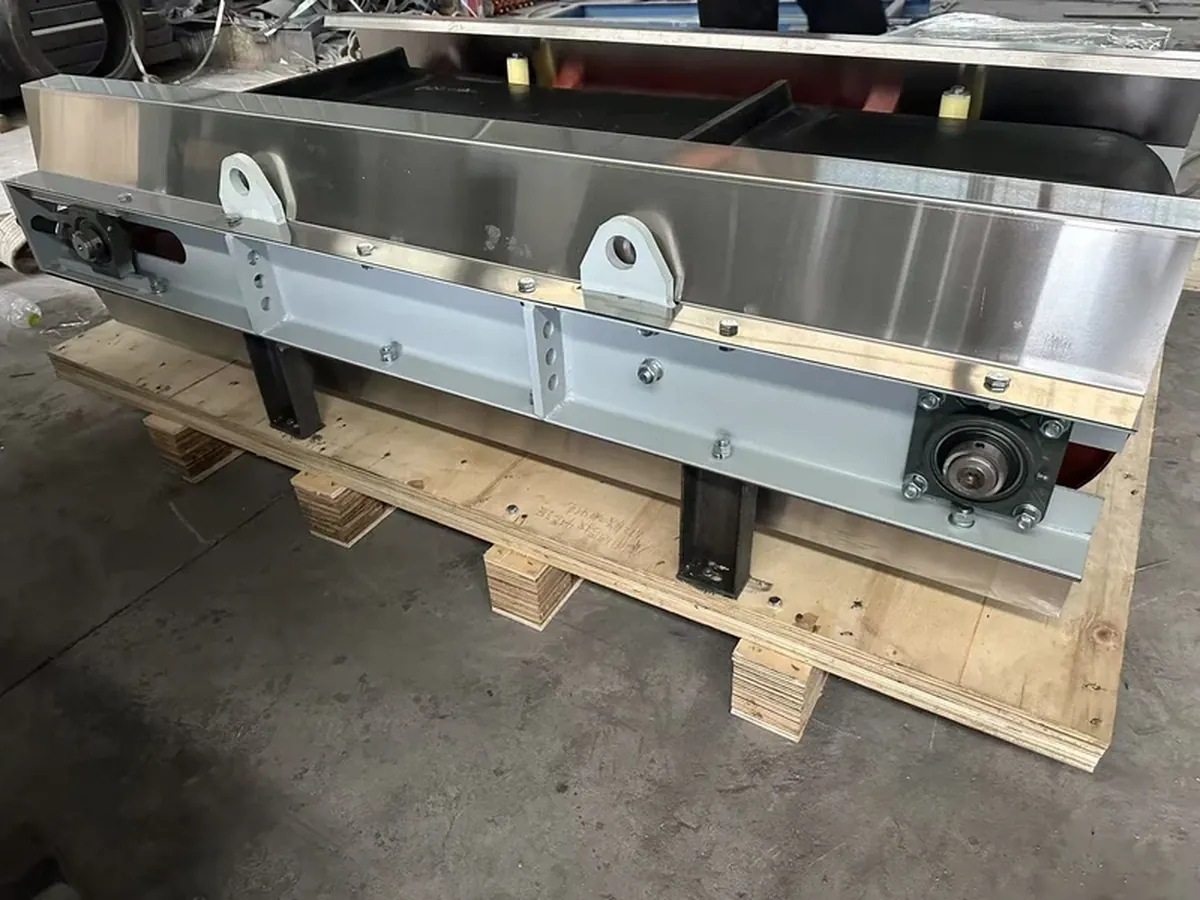
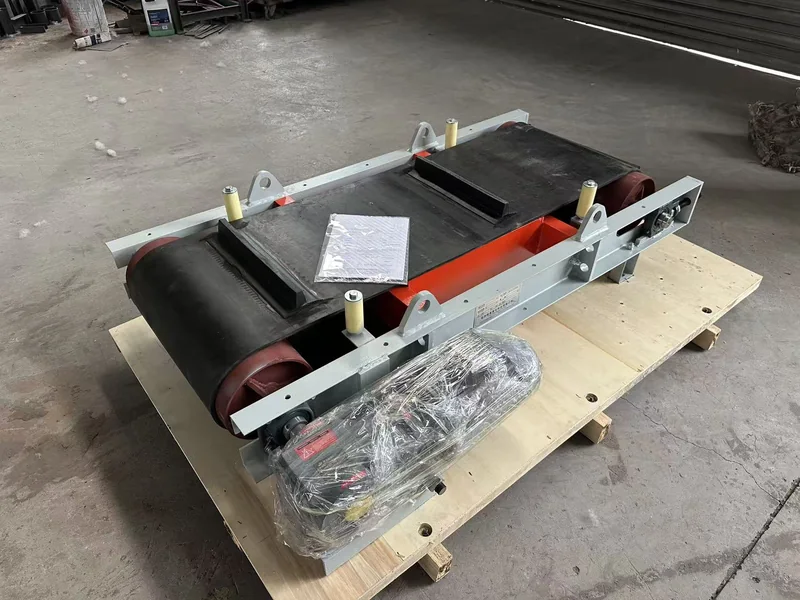
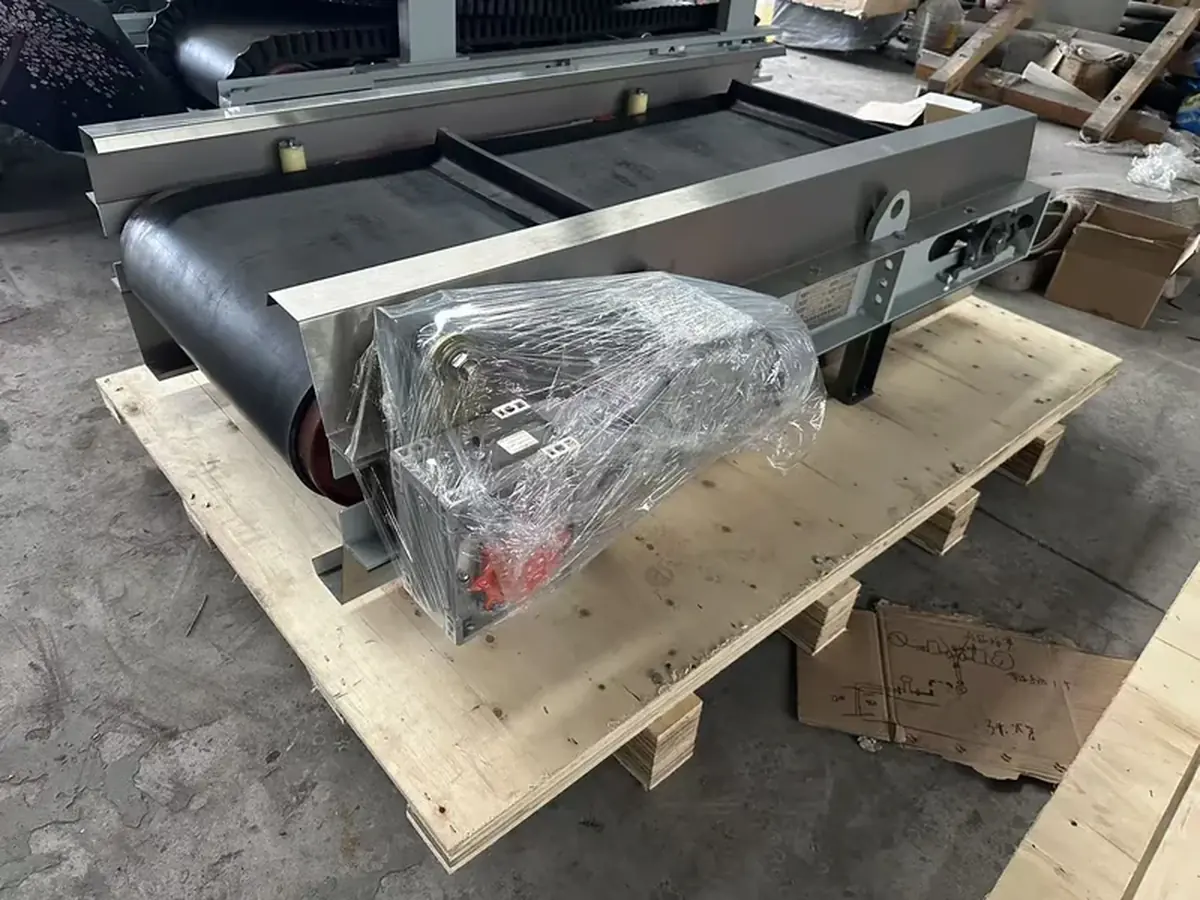
Light-duty cross-belt permanent magnet separator on a pallet during handling
Current light-duty cross-belt equipment during handling. Final lifting and support details depend on the chosen size and project layout.

What this helps avoid

  • Choosing only by the highest surface Gauss number
  • Ignoring burden depth and real magnet-to-metal distance
  • Using self-cleaning when a manual magnet would be enough
  • Running out of room for discharge or maintenance
  • Treating cross-belt and in-line layouts as the same thing
  • Promising performance before the real process is known
Standard Data vs Project Data

What Is Already Defined in the RCYQ Family — and What We Still Confirm

Defined in the current RCYQ family specification

  • Standard model codes: RCYQ-4 / 5 / 6.5 / 8 / 10
  • Conveyor belt width: 400–1000 mm
  • Rated suspension height: 100–300 mm
  • Catalog magnetic-field value: 60 or 70 mT by model
  • Applicable belt speed: 2.0–4.0 m/s by model
  • Continuous duty
  • Drive power: 0.75–2.2 kW
  • A–F outline dimensions and model weight

Still confirmed for your conveyor

  • Material and burden depth
  • Real magnet-to-target working distance
  • Tramp-metal size, shape and loading
  • Cross-belt or in-line mounting direction
  • Discharge side and collection space
  • Nearby steelwork and non-magnetic-zone needs
  • Site voltage and controls
  • Acceptance or magnetic-measurement method if required
FAQ

RCYQ Cross Belt Magnetic Separator FAQ

What is a cross belt magnetic separator?

A cross belt magnetic separator is a suspended magnet installed above a conveyor. It pulls iron and steel pieces out of the moving material, and a cleaning belt carries the captured metal to the side for discharge.

Does a permanent RCYQ cross belt magnetic separator need electricity?

The permanent magnet does not need excitation power to create the magnetic field. The self-cleaning belt still needs an electric motor. The current RCYQ family specification lists drive power from 0.75 to 2.2 kW depending on model.

Which RCYQ model fits my conveyor belt width?

The current RCYQ family specification starts with RCYQ-4 for 400 mm belts, RCYQ-5 for 500 mm, RCYQ-6.5 for 650 mm, RCYQ-8 for 800 mm and RCYQ-10 for 1000 mm. Final selection still checks material depth, belt speed and working distance.

What does rated suspension height mean?

It is the catalog suspension reference listed for each standard RCYQ model. It should not be treated as the same thing as the distance from the magnet to buried tramp metal, because burden depth increases the real working distance.

Does a higher magnetic-field value mean better separation?

Not by itself. The current RCYQ family specification lists 60 or 70 mT by model, but it does not define the exact measuring position or air gap. Magnetic-field value, pull force and separation efficiency are different quantities.

What is the difference between cross-belt and in-line installation?

A cross-belt separator runs across the conveyor and normally discharges captured metal to the side. An in-line separator follows the conveyor direction, often near a head pulley or transfer point. Corvelan reviews the actual conveyor layout before recommending either route.

Why should nearby steel rollers and frames be checked?

Ferromagnetic steel close to the suspended magnet can become magnetized and change the intended working field. The current technical data also include WCTG non-magnetic idlers as one option for the conveyor zone below a suspended separator.

What should I send Corvelan for RCYQ sizing and quotation?

Start with the material, target tramp metal, throughput and a conveyor photo or drawing. Also send belt width, belt speed, burden depth, expected suspension height, available installation space and site voltage if known.

RFQ Checklist

Send Your Separation Requirement

Start with the conveyor belt width. This lets us compare your line with the standard RCYQ-4 / 5 / 6.5 / 8 / 10 family. Then send the material, target tramp metal, throughput and a conveyor photo or drawing.

Start with these five items

  • Conveyor belt width
  • Material being conveyed
  • Iron or steel contamination you want to remove
  • Normal and peak throughput
  • Conveyor photo or drawing

If you already know them, also send

  • Belt speed
  • Normal and maximum burden depth
  • Expected suspension height or available headroom
  • Tramp-metal size, shape and frequency
  • Preferred discharge side
  • Site voltage and environmental conditions

What happens after you send the data?

  1. We check the separator family.
  2. We identify any missing process data.
  3. We size the magnetic and cleaning-belt setup.
  4. We confirm the installation direction.
  5. We prepare the quotation.

After we receive the data, we first check whether this light-duty permanent cross-belt route fits. If another magnetic separator is a better choice, we change the recommendation before quotation.

Get An Instant Quotation Now