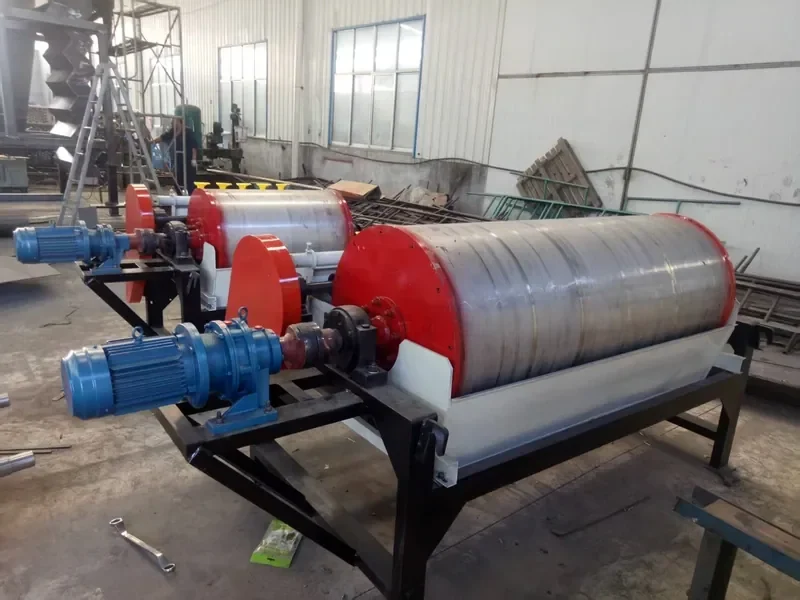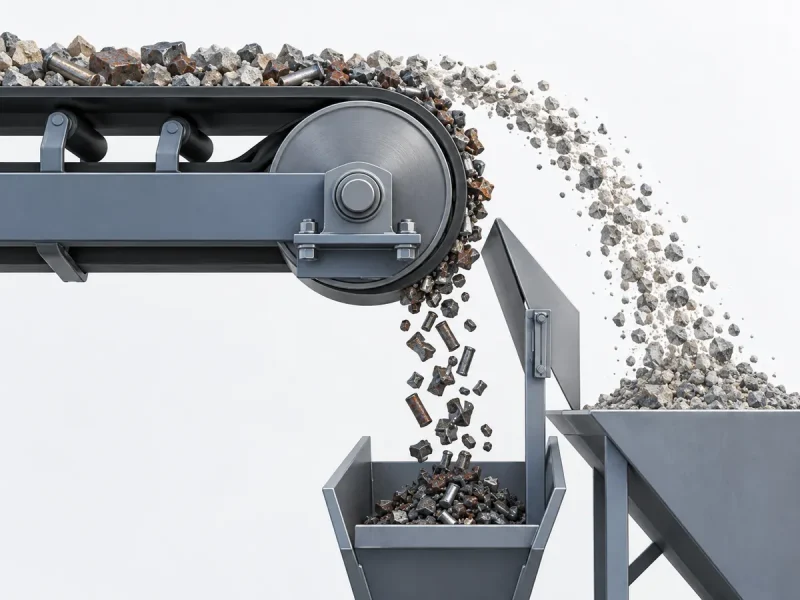
A magnetic drum separator price depends on the separation job and the equipment included in the quote. A bare drum, a housed separator with a drive, and a wet drum with a tank are different purchases. Start by matching the feed, required result and supply scope; then compare the price.
The largest differences often come from useful drum width, magnetic circuit, feed control, wear protection and installation interfaces. At Corvelan, we use your material, separation target, normal and peak throughput, and line layout to define the equipment before quotation.
On this page
What is included in a magnetic drum separator price?
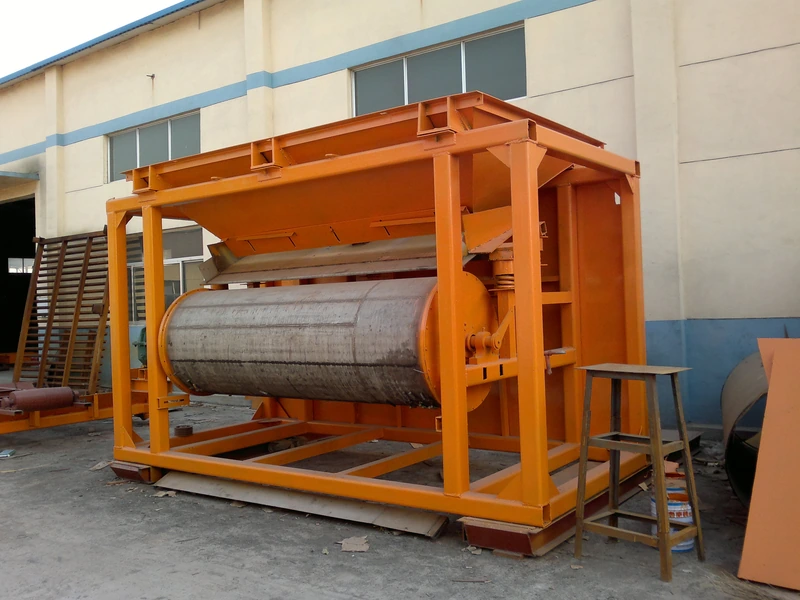
First establish whether the price covers the drum alone or a working separator package. The housing, motor, feeder, splitter and controls can change both the invoice and the work left for your site team.
| Quoted equipment | What to define | What may remain outside the price |
|---|---|---|
| Drum only | Drum diameter, useful magnetic width, magnetic circuit, shell, shaft and mounting arrangement | Drive, housing, feeder, supports, guards and separate discharge chutes |
| Housed dry separator | Drum, housing, drive, splitter, inlet and outlet interfaces, plus the agreed controls | Upstream feed control, dust extraction equipment, site steelwork and wiring |
| Wet drum assembly | Drum, tank design, drive, support, slurry connections and agreed wear protection | Pumps, pipework, water handling, upstream conditioning and additional separation stages |
These are scope questions, not standard inclusion lists. Put each item in an included, excluded or optional column on the actual quotation. A permanent magnet can be used in either a dry or wet design, so “permanent,” “wet” and “housed” should not be treated as mutually exclusive price categories.
The distinction has a practical basis: Eriez’s dry drum installation manual describes separate drums and housed units with drives, as well as the feed and splitter arrangements they need.
Use our drum magnetic separator range to compare the dry and wet families. The magnetic drum separator product page covers continuous ferrous removal and the main drum, feed and discharge choices.
Which process details change the drum size and quote?
The quote must match the volume of material reaching the drum, its magnetic content and the result you need—not just tonnes per hour. The same mass flow can produce a different feed layer or slurry load when material conditions change.
Dry feed: compare volume as well as tonnes
For dry material, start with mass flow and bulk density: the mass of loose material in a known volume. Divide tonnes per hour by tonnes per cubic meter to find cubic meters per hour.
For example, suppose two dry materials both run at 20 t/h. At a bulk density of 0.8 t/m³, the volume is 20 ÷ 0.8 = 25 m³/h. At 1.6 t/m³, it is 20 ÷ 1.6 = 12.5 m³/h. The lighter material occupies twice the volume.
That difference can change the feeder, chute or useful drum width needed to present the material evenly. It does not, by itself, tell you the correct drum diameter. Feed speed, particle size, moisture, distribution across the face and the separation target still matter.
Record the peak feed rate as well as the average. A batch discharge can overload part of the drum even when the daily average looks modest. Our dry drum magnetic separator page explains how feed depth, distribution and discharge layout affect the setup.
Wet feed: separate solids rate from slurry flow
For slurry, specify dry solids in t/h, total slurry flow in m³/h, and solids concentration with its measurement basis. A figure such as “10 t/h” is incomplete if it does not say whether it means dry solids or the whole slurry.
Suppose the feed contains 10 t/h of dry solids. At 20% solids by mass, total slurry mass flow is 10 ÷ 0.20 = 50 t/h, including 40 t/h of water. At 40% solids by mass, total slurry mass flow is 25 t/h, including 15 t/h of water.
The added water changes the hydraulic load. Obtain total volumetric flow from a suitable flow measurement or from the slurry density and mass flow; do not label slurry tonnes per hour as cubic meters per hour. Also state how much of the solid feed is magnetic, because the drum must carry that captured material out of the tank.
Eriez’s wet drum operating guidance identifies hydraulic capacity, solids concentration and magnetic loading as separate operating factors. Our wet drum magnetic separator page sets out the corresponding tank, feed and recovery questions for a wet application.
Which custom features are worth paying for?
Pay for features that address a known feed condition, separation target or installation need. Start with stable feeding and the required product result. Then select the magnetic circuit, mechanical construction and controls that support that job.
| Feature | Why the quote changes | When it earns its place |
|---|---|---|
| Useful width and drum diameter | Change the magnetic assembly, shell, supports and drive requirements | The feed volume, magnetic load or existing line needs that working area |
| Magnetic circuit and arc | Change the magnets, pole arrangement and area over which material is held | The target needs a different capture or holding action; judge this with representative material |
| Shell and wear protection | Change material, fabrication and replaceable wear components | Abrasive feed or sharp iron attacks the shell and impact areas |
| Corrosion resistance and temperature suitability | Can require different contact materials, seals or magnetic materials | Feed chemistry, wash conditions or measured peak temperature demand them |
| Feeder, housing and splitter | Add equipment and fabrication around the drum | Feed must be spread, dust contained or the two discharge streams kept apart |
| Drive and controls | Add speed adjustment, panel components, sensors or line connections | Changing feed needs speed adjustment, or the plant needs coordinated starts and stops |
| Extra separation stage | Add another drum, transfer points, drive and space requirements | Testing shows a second recovery or cleaning step is needed to reach the target |
A higher surface gauss reading is not a complete reason to pay more. Gauss describes magnetic flux density at a measurement point. Capture also depends on how the field changes with distance, the target particle, the feed layer and the path through the magnetic area. Compare readings at the same position and then compare separation results.
Temperature deserves attention before the magnetic circuit is fixed. Give the normal and maximum material temperatures, including hot batches or upset conditions. A circuit suited to cool feed may need a different design for hotter service; use the offered circuit’s temperature rating rather than a general limit for all drum magnets.
For a retrofit, custom shaft ends, mounting centers and outlet positions can be useful spending. They may avoid relocating conveyors or rebuilding chutes. Send the existing drawing and service clearances so the equipment price can be considered alongside the site work it saves.
How do you compare two separator quotes fairly?
Give both suppliers the same feed conditions and required result, then add the excluded items needed to reach the same installation stage. A lower equipment line can disappear once the feeder, controls and site work are included.
- Fix the task. State normal and peak feed, material condition, target magnetic fraction and the required clean-product or recovery result.
- Match the equipment list. Compare the drum, housing or tank, drive, feeder, splitter, guards, controls and connections item by item.
- Match inspection and delivery scope. State the agreed checks, records, packing, delivery term and named place. Identify freight, insurance, unloading, duties, taxes and installation as included or excluded.
- Price the remaining work once. Add site-supplied parts and services to the offer that excludes them. Use the same currency, quantities and comparison date.
For example, suppose two proposed dry drum packages are being compared for the same separation task. The following amounts are assumed figures in US dollars to show the method.
| Cost to reach the same installed scope | Offer A | Offer B |
|---|---|---|
| Equipment quoted | $9,000 | $12,500 |
| Feeder and controls excluded from the equipment price | $2,800 to add | Included above |
| Required chute and mounting work | $1,200 | $600 |
| Freight and installation labor | $1,000 | $900 |
| Compared subtotal | $14,000 | $14,000 |
In this example, Offer A’s $3,500 equipment-price advantage is fully used by the extra scope. Neither offer wins on the compared subtotal. The next decision rests on the agreed separation result, wear life, maintainability and the remaining commercial terms.
The table covers only its listed costs. Add any applicable import charges, taxes, commissioning or other remaining project costs to both sides before approving the project budget. Use itemized freight and installation figures when those responsibilities differ, and avoid adding shipping again when it is already inside a delivered price.
What should a separation test show before you order?
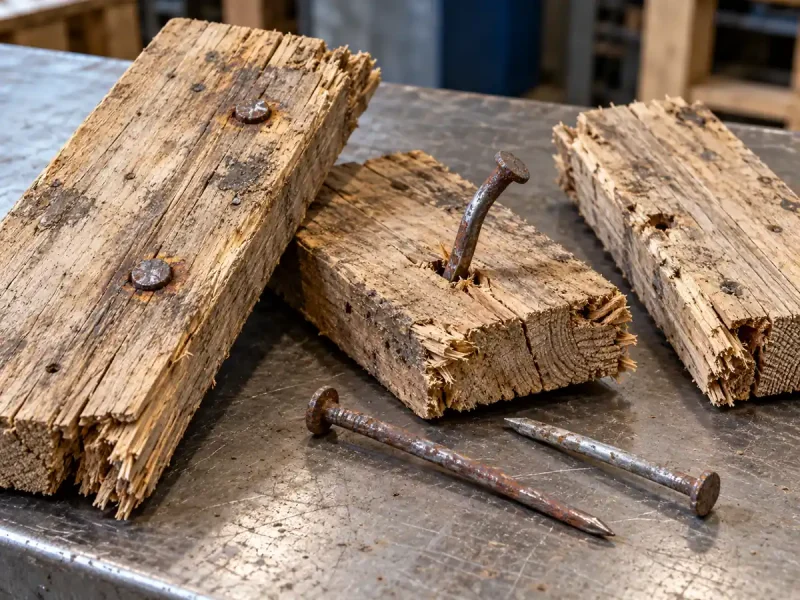
A useful test shows the required separation result at a defined feed rate and material condition. For an iron-removal job, measure the target contamination left in the clean product and how much good material leaves with the reject. For mineral recovery, measure both recovery and concentrate grade.
Recovery is the share of the target magnetic material in the feed that reaches the magnetic product. Concentrate grade is the share of the magnetic product that consists of the desired material. Collecting a heavier magnetic stream can raise apparent output while also carrying more unwanted material.
- Use representative feed. Include the relevant particle-size range, moisture or slurry concentration, and magnetic content. Identify whether the sample represents normal feed or a difficult batch.
- Record the setup. Note feed rate and distribution, drum speed, feed gap, magnetic arrangement and splitter position. For a wet drum, include tank arrangement and slurry flow.
- Collect both output streams over the same period. Weigh them and take samples using the agreed method. Compare feed and output mass totals, and investigate an unexplained imbalance before calculating performance.
- Measure the target component. For recovery, divide the mass of target material in the magnetic product by its mass in the feed, then multiply by 100. Use a suitable composition test for that material; gross product weight alone is insufficient.
Set the required result and test method before selecting a more expensive circuit or another separation stage. If the result changes when feed becomes deeper or wetter, that condition belongs in the quotation basis. Ask for the sample work, inspection records and any acceptance test to be itemized so both the price and the agreed checks are clear.
How can you lower cost without weakening separation?
Remove duplicated equipment and avoid unnecessary site changes before reducing the parts that control separation or wear life. An existing feeder, support frame or control panel is worth reusing when its capacity, condition and interfaces match the new drum.
For dry feed, start with distribution. If material piles onto one side, improve the chute or feeder before paying for a stronger magnetic circuit. A wider drum helps only when the feed can use that width. If the target remains difficult to capture after feeding is controlled, compare the circuit options with the same material.
For abrasive feed, compare the cost and replacement method of the shell or wear surface. A lower initial price can lose its advantage if the machine needs frequent shell work or the layout makes removal difficult. Include access for lifting, drive removal and shell replacement in the drawing before fabrication.
Separate essential items from options on the quote. A future control connection or second stage can remain an option when the current task does not need it. Keep the feed control, guards, discharge separation and protection required for the actual installation in the base scope.
For operating cost, use measured or supported figures for electricity, wear parts, maintenance labor, downtime and product loss. Count only the difference between the options. A permanent magnetic field needs no electrical supply to create the field, but the drum drive and associated equipment still consume power.
What should you send for a custom drum separator quote?
Start with your material, what must be removed or recovered, normal and peak throughput, and a sketch of the installation. Add the source of each important figure so a short-term peak, a dry-solids rate or a rough estimate is interpreted correctly.
| Input | Where to get it | How it affects the quote |
|---|---|---|
| Normal and peak feed | Production or weighing records; include the time interval and batch discharge pattern | Defines continuous load and surges the feed system must handle |
| Size, moisture and bulk density | Current material tests or a representative sample; state test conditions and units | Helps define dry-feed volume, flow behavior and drum presentation |
| Slurry flow and solids concentration | Flow records and sampled concentration; state mass or volume basis and dry-solids throughput | Defines hydraulic load separately from solids and magnetic load |
| Target material and required product | Feed/product analyses, contamination records and the plant’s product requirement | Sets the capture, recovery or cleaning task and the result to compare |
| Installation and service space | General arrangement drawing, measured mounting points, inlet/outlet sizes and site photos | Defines housing, supports, chutes, connections and access |
| Temperature, utilities and supply scope | Operating records, electrical supply details and a list of site-supplied equipment | Identifies special construction, drive/control needs and avoidable duplicate supply |
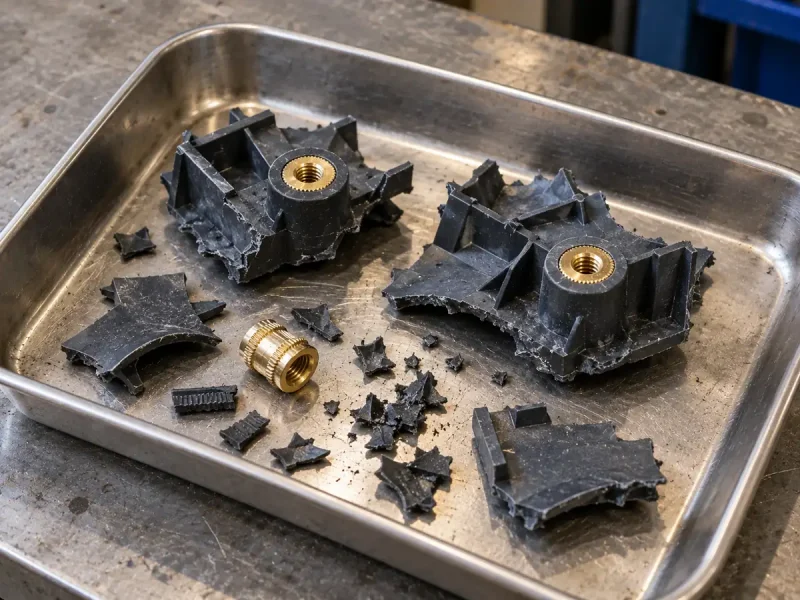
For example: “We process dry crushed glass and want to remove ferrous contamination before the next production step. Our line already has a controlled feeder. Please price a housed separator with a drive and separate discharge outlets. We will send the feed-rate records, material tests and layout drawing.” This tells us what needs separating and which equipment is already on site.
The most useful magnetic drum separator price is the price for a defined job and a defined package. Match the feed and required result first, compare the missing equipment and site work next, and keep the separation and wear requirements intact when reducing cost.
Send Corvelan those four starting details through our contact form. For drawings or longer process records, email [email protected] and identify the relevant dimensions and operating conditions.
Magnetic drum separator price FAQ
Can I request a budget quote before laboratory testing?
Yes, an initial budget quote can start from the material, separation goal, normal and peak feed, and installation outline. Identify unmeasured inputs. Ask which equipment is covered by the budget figure and which choices remain open until sample work or site dimensions are available.
Can I reuse an existing motor and gearbox to reduce the price?
Yes, when they suit the proposed drum and operating conditions. Send the motor nameplate, gearbox ratio, output speed and torque data, shaft connection and mounting drawing. A motor with the same power rating can still have the wrong speed, connection or starting arrangement.
Is a used magnetic drum separator a sensible low-cost option?
It can be, when its working width, magnetic circuit, condition and interfaces fit the job. Obtain the model and serial number, inspect shell wear and damage, and establish the condition of the drive and bearings. Add missing guards, controls, adaptation and replacement parts to the purchase price, then compare separation results with representative feed.
Is a wet drum always more expensive than a dry drum?
A wet drum is not always more expensive; size, magnetic system, construction and included equipment determine the machine price. For the project budget, also compare the required pumps, pipework and water handling for the wet option with the feeding, enclosure and dust-handling needs of the dry option. Choose the process that suits the feed and target before comparing complete costs.
Should I pay for a second drum stage at the start?
Include it when the required recovery or product quality needs another recovery or cleaning step. If a single-stage test already meets the target under representative conditions, request the extra stage as a separately priced option. Its cost includes the transfer arrangement, drive, controls and space as well as the second drum.
What changes the quote when installation must fit a planned shutdown?
Exact replacement interfaces, preassembled parts, lifting access, installation support and critical spares can change the scope. Send measured mounting centers, shaft and connection details, removal space and the shutdown dates early. Ask for drawing approval, fabrication, shipping and site preparation to appear as separate schedule steps before committing to the installation window.