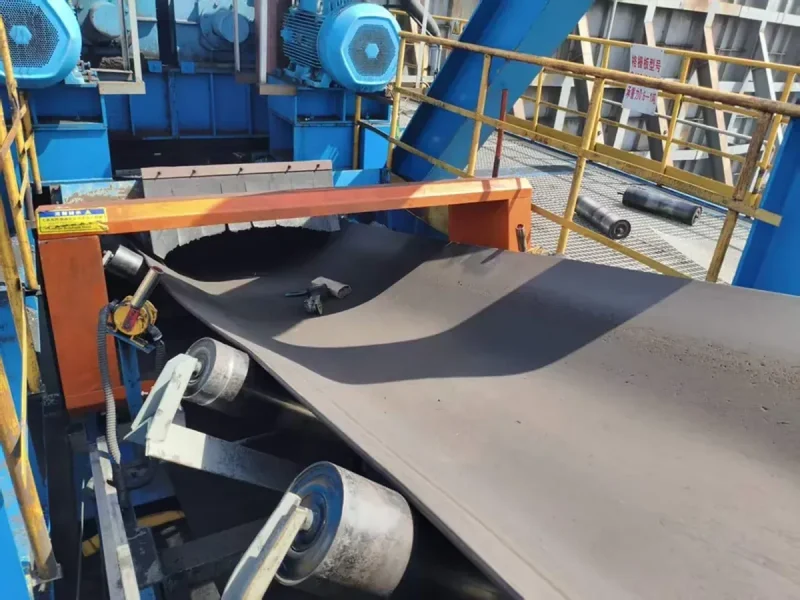
Magnetic separators can remove stainless steel when the actual pieces have enough magnetic response. They do not directly attract free aluminum or copper in the way they attract iron. Ferritic and martensitic stainless steels are usually magnetic. Annealed 304 and 316 stainless steels have very low magnetic response, although cold working can make some pieces more responsive.
For aluminum and copper recovery, consider an eddy-current separator or another non-ferrous sorting method. For occasional contamination, a metal detector with a stop or reject system may be more useful. The right choice starts with the actual metal fragment and the result you need: cleaner product, equipment protection, or a recovered metal fraction.
In this article
Which Metals Can a Magnetic Separator Remove?
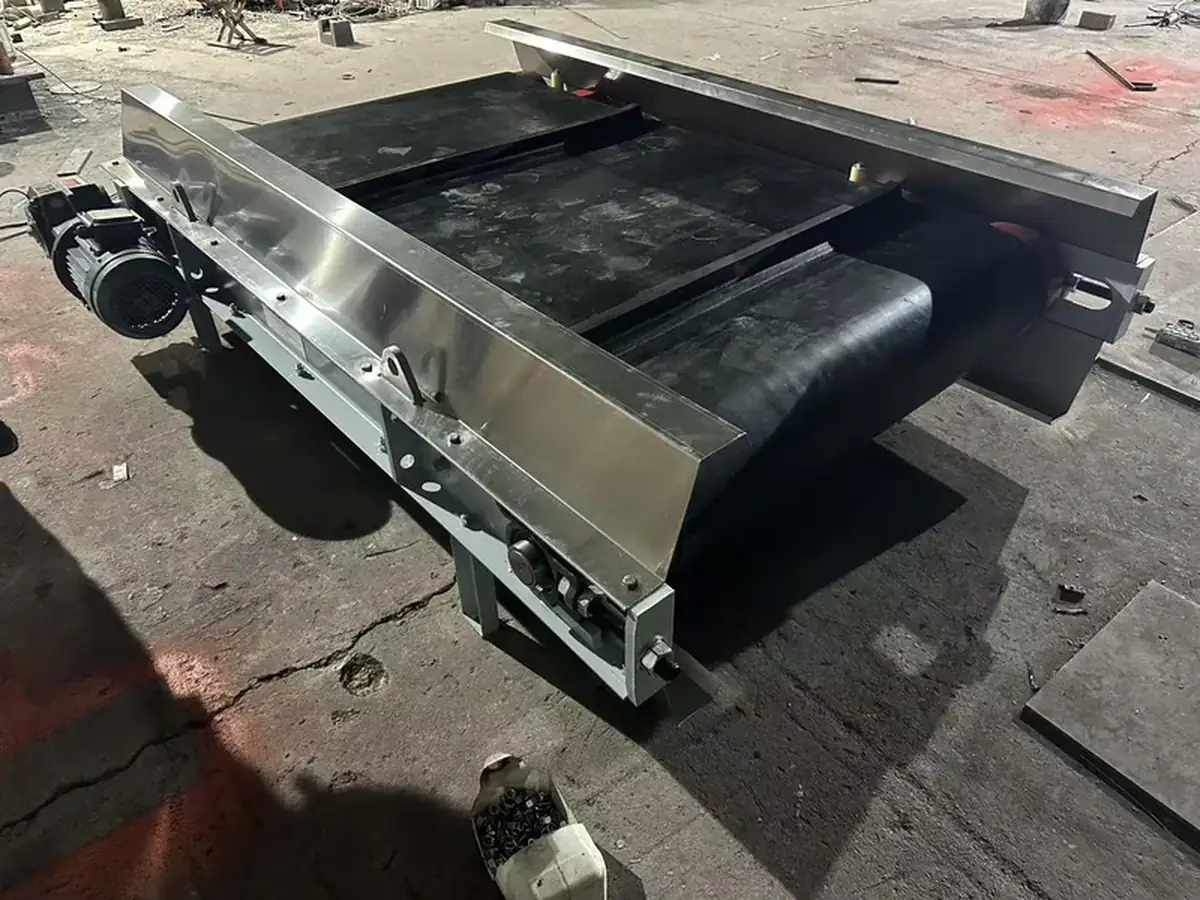
A conventional magnetic separator removes metal that responds strongly enough to its magnetic field. Stainless steel needs a closer look; free aluminum and copper need a different separation mechanism. The metal name gives you a starting point, but its condition and how it passes the separator decide the practical result.
| Metal or condition | Response to an ordinary magnet | Practical starting point |
|---|---|---|
| Iron and ordinary carbon steel | Usually strong attraction | A magnetic separator suited to the feed and working distance |
| Ferritic or martensitic stainless steel | Usually strong attraction | Magnetic separation, tested with the actual pieces |
| Duplex stainless steel | Magnetic because part of its structure is ferrite | Magnetic separation, with capture and discharge checked |
| Annealed 304 or 316 stainless steel | Usually very weak attraction | Detection or other sorting when magnetic capture is inadequate |
| Cold-worked stainless fragments | Variable; some become more magnetic | A close-contact, high-intensity separation trial |
| Free aluminum or copper | No useful ferromagnetic attraction | Eddy-current separation, other sorting, or detection with a line response |
Being attracted is only the first step. A piece must also move out of the surrounding material, stay under control, and reach the correct collection point. A stainless chip that sticks to a magnet on a bench can still escape when it is buried in a thick layer or passes too far from the magnetic surface.
Also separate the two meanings of “remove.” A recycling plant may want to recover a saleable metal fraction continuously. A plastics processor may only need to find an occasional fragment and isolate the affected material. Those jobs can justify different equipment even when the target metal is the same.
Why Does Some Stainless Steel Stick to a Magnet?
Stainless steel’s magnetic response depends on its internal structure and processing history, not just the fact that it contains iron. Two pieces described as “stainless” can behave very differently.
Ferritic stainless steel, such as grade 409, and martensitic stainless steel, such as grade 420, are strongly attracted to a magnet. Duplex grades contain both ferrite and austenite, so they also have magnetic response. The Australian Stainless Steel Development Association’s explanation of magnetic effects describes these differences between stainless families.
Can a Magnet Remove 304 and 316 Stainless Steel?
Do not rely on ordinary magnetic capture for annealed 304 or 316 stainless steel. Some cold-worked pieces may be captured, but the actual fragments need testing. Austenite is the internal structure that makes these grades much less responsive in their annealed, softened condition.
Cold working means permanent deformation, such as bending, drawing, or shearing. In some austenitic stainless steels, it changes part of the austenite into magnetic martensite. The British Stainless Steel Association explains this change and notes that the response can appear around sheared edges or machined surfaces.
That is why a piece of flat sheet and a distorted fragment from that sheet may respond differently. The amount of change varies with composition and deformation. “Work-hardened” does not mean every stainless particle will become easy to separate. Nor does a magnet test establish whether an unknown piece is grade 304, 316, or another alloy. Use material records or alloy analysis when grade identity matters.
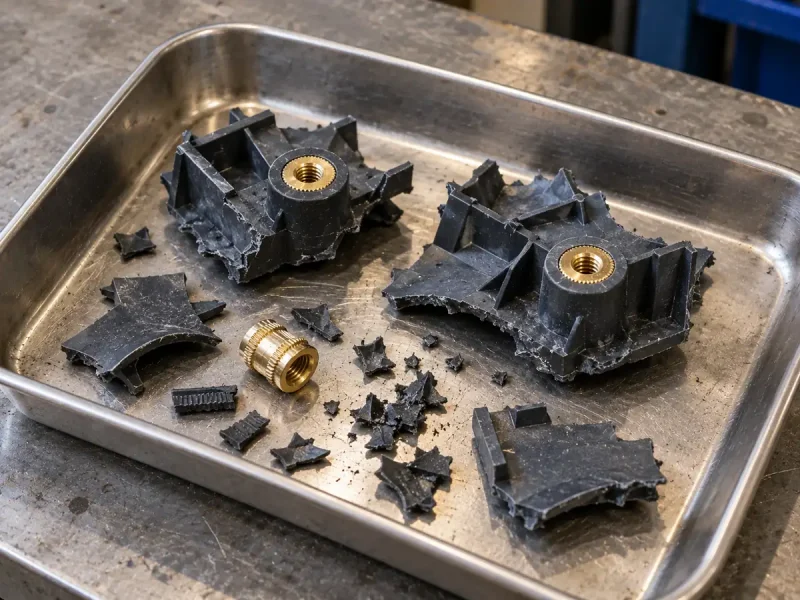
For a wear-contamination problem, keep fragments collected from the product as well as a sample of the part suspected of shedding them. A clean, unused bolt is a poor substitute for thin worn shards. Test the form that actually reaches the separator.
When Can a High-Intensity Separator Recover Stainless Steel?
Consider a dedicated high-intensity stainless separator when the fragments have measurable magnetic response and can pass close to the magnetic roll in a controlled feed. Increasing the strength of an overhead magnet is not automatically an equivalent solution.
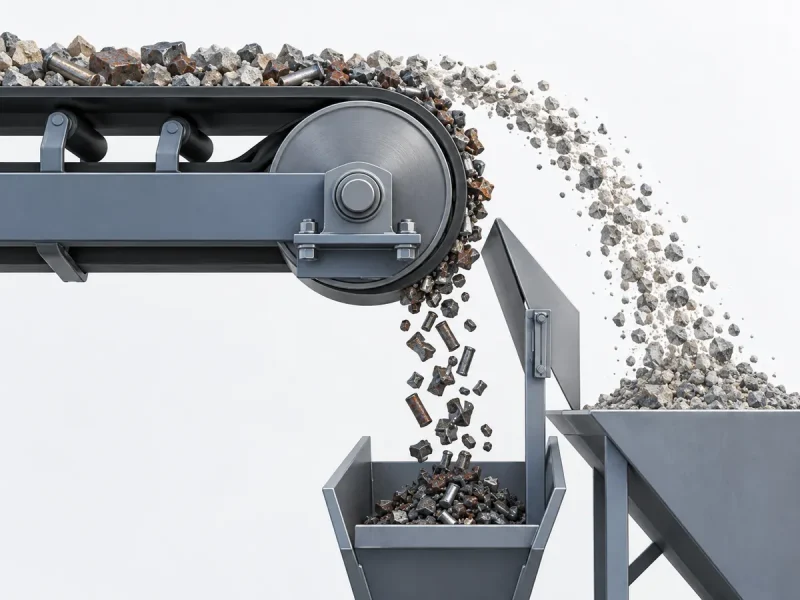
A dedicated stainless recovery conveyor brings the material close to a strong magnetic roll at the belt discharge. Responsive pieces stay with the belt farther around the roll, while other material follows a different path. A divider, called a splitter, separates the outgoing streams. Feeding and splitter position matter because a magnetic force alone does not put the recovered metal into the correct bin.
This is established equipment practice: Eriez describes a stainless steel separator that targets work-hardened stainless and other weakly magnetic material, with even feeding, variable belt speed, and an adjustable splitter. Its application describes a specific machine and feed; it does not establish that any magnetic roller will recover every stainless alloy.
For dry shredded scrap or plastic flake, prepare the feed before comparing machines:
- Remove large, strongly magnetic iron upstream where it would overload the fine separation stage.
- Spread the material into a thin, even layer so fragments can reach the effective magnetic zone.
- Separate very different size fractions when they need different feeding or splitter settings.
- Break up clumps and release metal attached to other material before judging the separator.
If the target responds on the bench but is missed in a thick bed, first test a thinner, more even feed at a recorded rate. If capture improves, feeding or capacity is part of the problem. If a liberated piece still shows no useful response in a suitable close-contact trial, move toward detection or sensor sorting rather than repeatedly increasing a Gauss specification.
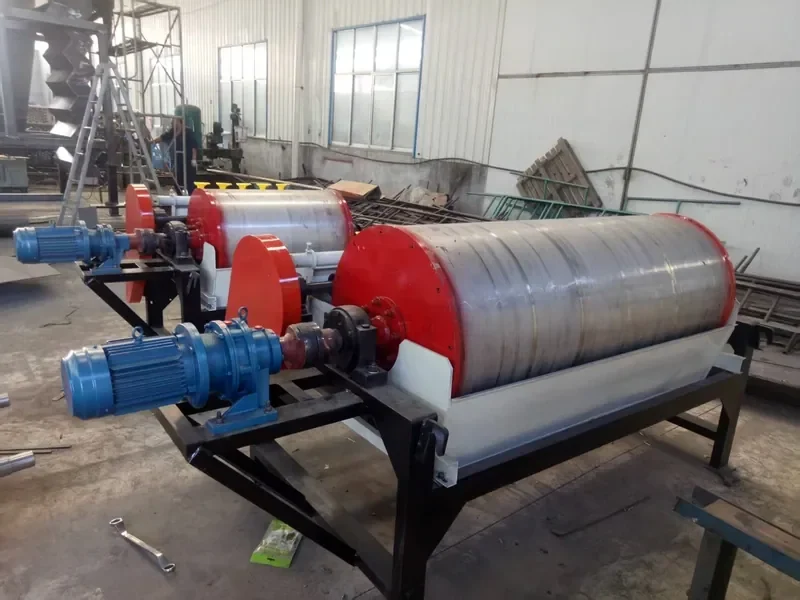
Our high-intensity magnetic roller separator is described for dry, liberated, weakly magnetic mineral particles. A stainless-scrap application needs a separate review of the actual fragments, feed, and required result. Send those details when asking us to compare equipment.
How Can You Separate Aluminum and Copper?
Use an eddy-current separator to evaluate recovery of free aluminum and copper from a suitable mixed stream. Use detection with a stop or reject action when the task is occasional contamination control. A stronger conventional iron-removal magnet does not solve the lack of useful ferromagnetic attraction.
An eddy-current separator uses a fast-changing magnetic field to induce circulating electrical currents inside conductive metal. These currents create a force that pushes the metal onto a different discharge path. Eriez explains this induction and repulsion mechanism. The machine uses magnets, but it separates aluminum and copper by a different effect from holding steel against a static magnetic surface.
Will One Eddy-Current Separator Produce Pure Aluminum and Pure Copper?
An eddy-current stage can recover a mixed non-ferrous fraction; it does not automatically split that fraction into pure aluminum and pure copper. STEINERT’s eddy-current separator overview describes recovered mixtures containing aluminum, copper, zinc, or brass after earlier processing stages.
If your buyer requires separate aluminum and copper products, plan another sorting step around the actual mix and grade requirement. Fine wire, thin foil, small dense pieces, and coated or composite fragments also need trials suited to their form. Their discharge paths can overlap with the material you want to keep. Machines designed for coarse scrap and those designed for fines should be compared on the relevant size fraction.
What If the Metal Is Still Attached to Plastic or Steel?
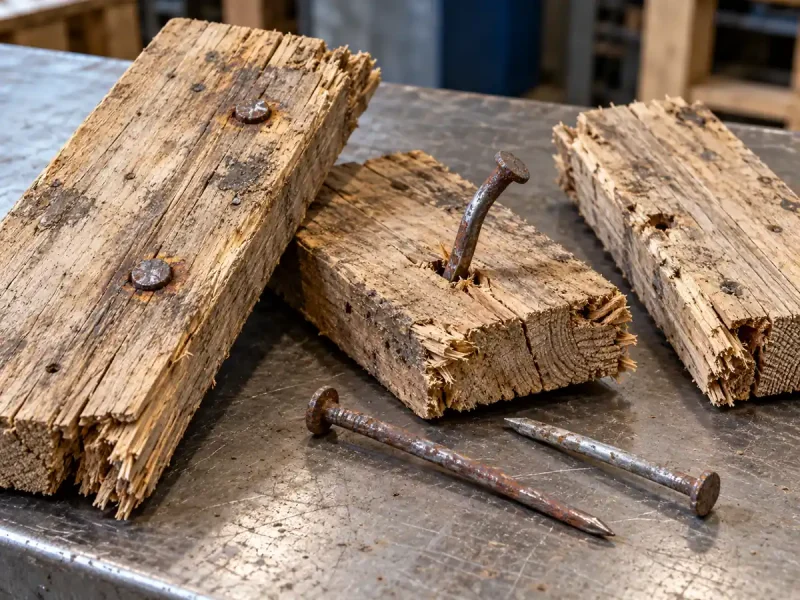
Improve liberation first when an attachment prevents the materials from separating independently. Liberation means releasing the metal from the surrounding or attached material. A steel screw can carry an aluminum part into the magnetic fraction; that does not show the aluminum itself was magnetically attracted.
For a mixed scrap line, use ferrous removal to take out responsive iron and steel, then evaluate the remaining stream for non-ferrous and stainless sorting. Our scrap metal separation applications explain where drums, overband magnets, and head pulleys fit that front-end ferrous job.
When liberation needs cutting or shredding, choose that operation from the material and equipment hazards. Intact assemblies, batteries, and pressurized parts need their own safe preparation before size reduction.
Should You Use a Separator, a Metal Detector, or Both?
Choose separation for continuous recovery of a metal fraction. Choose a metal detector with a defined line response for occasional metal that must be found and isolated. Use both when magnetic removal and detection of remaining metal serve different needs. The decision depends on what should happen after the metal reaches that point in the line.
| Your main task | Start with | What must happen next |
|---|---|---|
| Recover responsive stainless from dry recycling feed | A dedicated high-intensity stainless separation trial | Collect the target fraction and measure recovery and purity |
| Recover free aluminum and copper from mixed recycling material | Eddy-current or another suitable non-ferrous sorting trial | Collect the non-ferrous fraction; add sorting if separate metal grades are needed |
| Protect a crusher from occasional non-magnetic metal | A detector suited to the metal and conveyor | Stop the material before the metal reaches the crusher, then remove it safely |
| Find residual metal in plastic flake or other product | A suitable metal detector and reject or stop system | Isolate affected material and verify that the response actually removes the risk |
| Remove frequent ferrous contamination while monitoring for other metals | Magnetic removal followed by suitable detection | Keep both the magnetic collection point and detector response effective |
A detector does not need the target to stick to a magnet. It senses the effect of metal passing through its field. But detection is not the same as physical removal: an alarm, conveyor stop, marking system, or reject device must complete the job. Goudsmit’s separator-versus-detector explanation makes this distinction.
For a crusher-protection installation, include control delay and conveyor stopping travel when choosing the detector position. For automatic rejection, test timing and the actual path into the reject container. A visible detection light is not a complete line-response test.
Stainless detection also needs a realistic product trial. Wet, salty, or otherwise conductive products can create their own signal, often called product effect. METTLER TOLEDO’s industrial metal detection guide explains how product effect can mask small contaminants. A sensitivity result obtained on an empty conveyor can therefore give the wrong expectation for a loaded line.
Our conveyor metal detector range includes layouts for different conveyor and inspection tasks. Start with metal type, smallest important piece, belt width, material depth, belt construction, and the required stop or reject action. Those details are more useful than selecting from belt width alone.
How Do You Test the Actual Metal and Choose the Next Step?
Test representative fragments in representative material, collect every output, and compare the result with your actual objective. A hand-magnet check helps screen the material; a controlled separation or detection trial tells you whether the proposed setup completes the job.
Start With the Fragments That Actually Cause the Problem
Keep samples from the rejected metal and from the material that still fails your quality requirement. Label where each sample came from. Record alloy information if known, dimensions, thickness or wire diameter, shape, and whether the piece is free or attached. Include the smallest important fragments and the difficult shapes, not only the pieces easiest to collect.
A bench magnet comparison can sort samples into clearly responsive, weakly responsive, and no obvious response. Keep the magnet and comparison method consistent. No visible movement with a hand magnet is not a final measurement of magnetic susceptibility. It is a reason to compare a suitable high-intensity trial with another method, especially when the contaminant is very small.
Run the Trial at Conditions That Could Change the Result
Use a controlled test arrangement with an agreed sample-recovery procedure. Keep challenge material out of saleable product, account for introduced pieces, and keep hands away from moving equipment and magnetic pinch points.
- Record the feed. Include material type, size range, moisture, throughput, layer depth, and how evenly it is spread.
- Record the setup. Note the separator type, working gap, belt or roll speed, splitter position, and number of passes. For detection, record settings, target position and orientation, and line response.
- Compare normal and difficult conditions. Include the deepest relevant target position and expected peak loading. Use comparable samples when changing a setting so the result has a clear explanation.
- Collect and examine all streams. Weigh the recovered and remaining material on the same basis. Inspect both for target metal and valuable material carried into the wrong stream. Include material left inside the equipment.
- Judge the whole task. For recovery, measure target recovery, recovered-fraction purity, and losses. For contamination control, examine the remaining product and verify the stop or rejection action.
Set the acceptance requirement before the trial. State the target metal and form, tested size range, feed condition, required result, and sampling method. When fine particles cannot be reliably hand-sorted, use a suitable laboratory analysis for the stream composition.
How Are Recovery and Purity Different?
Recovery measures how much of the target you collected; purity measures how much of the collected fraction is actually the target. Use mass with mass, or counts with counts, and state which basis you used.
Suppose a demonstration feed contains 1 kg of stainless steel and 9 kg of other material. The recovered stream contains 0.9 kg of stainless and 0.3 kg of other material. On a mass basis:
- Stainless recovery = 0.9 ÷ 1 × 100 = 90%.
- Recovered-stream purity = 0.9 ÷ (0.9 + 0.3) × 100 = 75%.
- Stainless left outside the recovered stream = 1 − 0.9 = 0.1 kg.
For a scrap-recovery task, the 75% purity may require a cleaner cut or another cleaning stage, depending on the buyer’s requirement. For product cleanup, the remaining 0.1 kg is the problem to investigate. Moving the splitter to collect more material may increase recovery while also carrying more good product into the reject.
These figures are a worked example. For a real comparison, account for the full 10 kg across all outlets and retained material, then repeat with a representative sample. One high recovery number cannot describe purity or the cleanliness of the remaining product.
What Should You Change When the Trial Falls Short?
Use the failure pattern to choose the next action: improve feeding when thin layers work, improve the split when recovery is high but purity is low, and compare another method when suitable magnetic trials remain ineffective. The checks below help separate those cases.
| What you observe | What to investigate first | Next action |
|---|---|---|
| A free stainless piece has little useful response even close to the test surface | Actual alloy, condition, and suitability of the magnetic method | Compare detection or sensor sorting if a suitable high-intensity trial remains ineffective |
| Thin feed separates, but a thick or surging feed does not | Access to the magnetic zone and uneven loading | Stabilize and spread the feed; retest at the required throughput |
| Target recovery is good, but the collected fraction is dirty | Overlapping discharge paths, attached material, or a broad splitter cut | Improve liberation or tune the cut; measure recovery and purity again |
| Aluminum or copper enters the magnetic collection bin | Steel attachments, trapped pieces, or mechanical carryover | Inspect the collected pieces before changing the magnet |
| The detector signals, but contaminated material continues downstream | Timing, stopping distance, reject operation, or bypass | Correct the response and repeat the complete detection-to-removal test |
Keep the sample labels, settings, stream weights, composition results, and acceptance requirement together. A repeat trial or an independent laboratory’s analysis can then check the result against the same material and method.
Can magnetic separators remove stainless steel? Yes, when the metal’s magnetic response and the separation conditions are suitable. Ferritic, martensitic, and some cold-worked stainless pieces can be practical targets. Free aluminum and copper need an eddy-current or another suitable non-ferrous method; occasional non-magnetic contamination may be better handled by detection and a working stop or reject system.
To discuss your application with Corvelan, send the material, target metal, fragment dimensions, throughput, normal and maximum material depth, and a line photo or drawing. Include your current separation result and the result you need. Use our contact form to share those details and request an equipment recommendation.
Frequently Asked Questions
Does a Stainless Steel Housing Mean a Separator Can Remove Stainless Steel?
No. Housing material describes the machine’s construction, not the magnetic response of the target metal. A 304 stainless cover may enclose a strong magnetic circuit. Select the separator from the actual contaminant and feed conditions rather than the housing grade.
Is a Stainless Steel Ball Test Enough for Thin Wire Contamination?
No. Add representative wire trials when wire is a real target. A sphere and a thin wire of the same longest dimension contain different amounts of metal, and a wire’s orientation can change its detector signal. Record wire diameter, length, and direction of travel; test relevant orientations with product present, then verify the line response.
Can the Same Dry Stainless Separator Handle Wet, Sticky Feed?
Do not assume a dry recovery conveyor will handle wet or sticky material in the same way. Clumps can hold pieces together and prevent a controlled layer. Establish whether the process can provide a suitable dry feed or needs equipment designed for wet service, then test the actual material condition.
Can Magnetic Separation Sort Grade 304 From Grade 316?
A magnet is not a reliable method for identifying and sorting 304 from 316. Their response also changes with processing history. For alloy-specific recycling, use material traceability or suitable composition-based sorting; for an unknown sample, arrange alloy analysis before claiming a grade.
What Is the Smallest Stainless Fragment a Separator Can Remove?
There is no universal minimum size that applies to every stainless grade, particle shape, and separator. Specify the smallest fragment that matters, including thickness or wire diameter, and test it in the real feed. A published size range for one recovery conveyor is not a limit or guarantee for a different machine or for fine-powder cleanup.