Find equipment by installation point and separation task.
All magnetic separators →Start with the material or production line you need to protect.
All applications →Compare technologies, check parameters and prepare your RFQ.
All guides →See the factory, quality checks and answers before you request a quotation.
RCYQ Series Self-Cleaning Permanent Magnet Separator
Corvelan supplies this self-cleaning cross belt magnetic separator for removing iron and steel tramp from belt conveyors.
The magnet lifts the metal from the moving material. A cleaning belt then carries it to the side for discharge.
We size the separator around your conveyor, material depth and available installation space. In magnetic separation, the distance from the magnet face to the target metal is called the working distance. The depth of material on the belt is called burden depth.

We usually recommend this model when you need automatic removal of recurring iron or steel tramp from an open belt conveyor.
This separator is for iron and steel pieces that a magnet can attract. In magnetic separation, these are called ferrous or ferromagnetic tramp metal.
Material condition still matters. Particle size, moisture and bulk density — how heavy the material is for its volume — can change how deeply the target metal is buried in the burden.
The current RCYQ family specification lists environmental protection, wood processing, grain, foundry, chemical, building-material, mining and light-industry applications. We still size the separator from the actual material and conveyor conditions rather than from the industry name alone.
Remove ferrous tramp from conveyor flow before downstream handling or processing equipment.
Use the suspended magnet as a conveyor-protection step where iron or steel contamination is present.
Remove magnetically responsive tramp metal from suitable conveyor applications before downstream equipment.
Use the family only where the material, environment and installation conditions suit this equipment type.
Remove ferrous pieces from suitable bulk-material conveyor streams.
Apply the same selection checks: working distance, material depth, belt speed and tramp-metal condition.
The magnet pulls iron and steel pieces out of the moving material. The cleaning belt then carries the captured metal away from the working face. Once the metal leaves the strongest part of the magnetic field, it drops into the planned collection area.
The main conveyor carries the product beneath the suspended magnet.
Ferrous tramp is pulled upward when the magnetic force is strong enough at the real working distance.
The cross belt carries the captured metal away from the product flow.
The separated metal falls to the side into the discharge area or collection point.
The magnetic field comes from a permanent magnetic system, so the separator does not need excitation power to create magnetism. The cleaning belt still uses an electric motor.


We do not choose the separator from one Gauss number alone. We first check how far the magnet needs to work, how deep the material is, how fast the conveyor runs and what kind of tramp metal needs to be removed.
| Process condition | What changes | What Corvelan does |
|---|---|---|
| Working distance | The magnetic field becomes weaker as the metal moves farther away from the magnet. | We size from the real metal-to-magnet distance, not from mounting height alone. |
| Burden depth | Buried tramp metal sits deeper in the material bed and is harder to lift. | We review normal and maximum material depth before choosing the magnetic route. |
| Conveyor speed | A faster conveyor gives the magnet less time to act on the metal. | We review speed together with magnet size, position and separator type. |
| Conveyor width | The separator must cover the full material stream. | We match the machine width and frame layout to the real belt width. |
| Tramp-metal shape | Wire, bolts, plate and long steel pieces do not behave the same way inside the burden. | We ask for a photo or size description of the target metal. |
| Material condition | Moisture, particle size and bulk density change how the metal is buried in the material bed. | We use the material name and process condition to judge whether a permanent cross-belt route is suitable. |
| Installation space | Support points, headroom and discharge clearance can limit the layout. | We confirm the mounting direction and discharge side before quotation. |
Conveyor belt width is the first model filter, but it is not the only selection factor. The current RCYQ family specification defines five standard models. Corvelan still checks burden depth, working distance, belt speed and tramp-metal condition before confirming the final model.
| Conveyor Belt Width | Standard Model | Rated Suspension Height | Catalog Magnetic Field |
|---|---|---|---|
| 400 mm | RCYQ-4 | 100 mm | 60 mT |
| 500 mm | RCYQ-5 | 150 mm | 60 mT |
| 650 mm | RCYQ-6.5 | 200 mm | 70 mT |
| 800 mm | RCYQ-8 | 250 mm | 70 mT |
| 1000 mm | RCYQ-10 | 300 mm | 70 mT |
| Model | Belt Width mm | Rated Suspension Height mm | Catalog Magnetic Field mT | Applicable Belt Speed m/s | Duty | Drive kW | A mm | B mm | C mm | D mm | E mm | F mm | Weight kg |
|---|---|---|---|---|---|---|---|---|---|---|---|---|---|
| RCYQ-4 | 400 | 100 | 60 | 2.0 | Continuous | 0.75 | 1270 | 840 | 540 | 670 | 580 | 270 | 380 |
| RCYQ-5 | 500 | 150 | 60 | 2.5 | Continuous | 0.75 | 1322 | 1006 | 615 | 722 | 680 | 270 | 490 |
| RCYQ-6.5 | 650 | 200 | 70 | 2.5 | Continuous | 1.1 | 1545 | 1150 | 710 | 945 | 830 | 270 | 640 |
| RCYQ-8 | 800 | 250 | 70 | 3.5 | Continuous | 1.5 | 1712 | 1385 | 735 | 1112 | 980 | 270 | 850 |
| RCYQ-10 | 1000 | 300 | 70 | 4.0 | Continuous | 2.2 | 1882 | 1535 | 735 | 1282 | 1180 | 270 | 1300 |
RCYQ family table note: A–F follow the outline-dimension references used in the current RCYQ family specification.
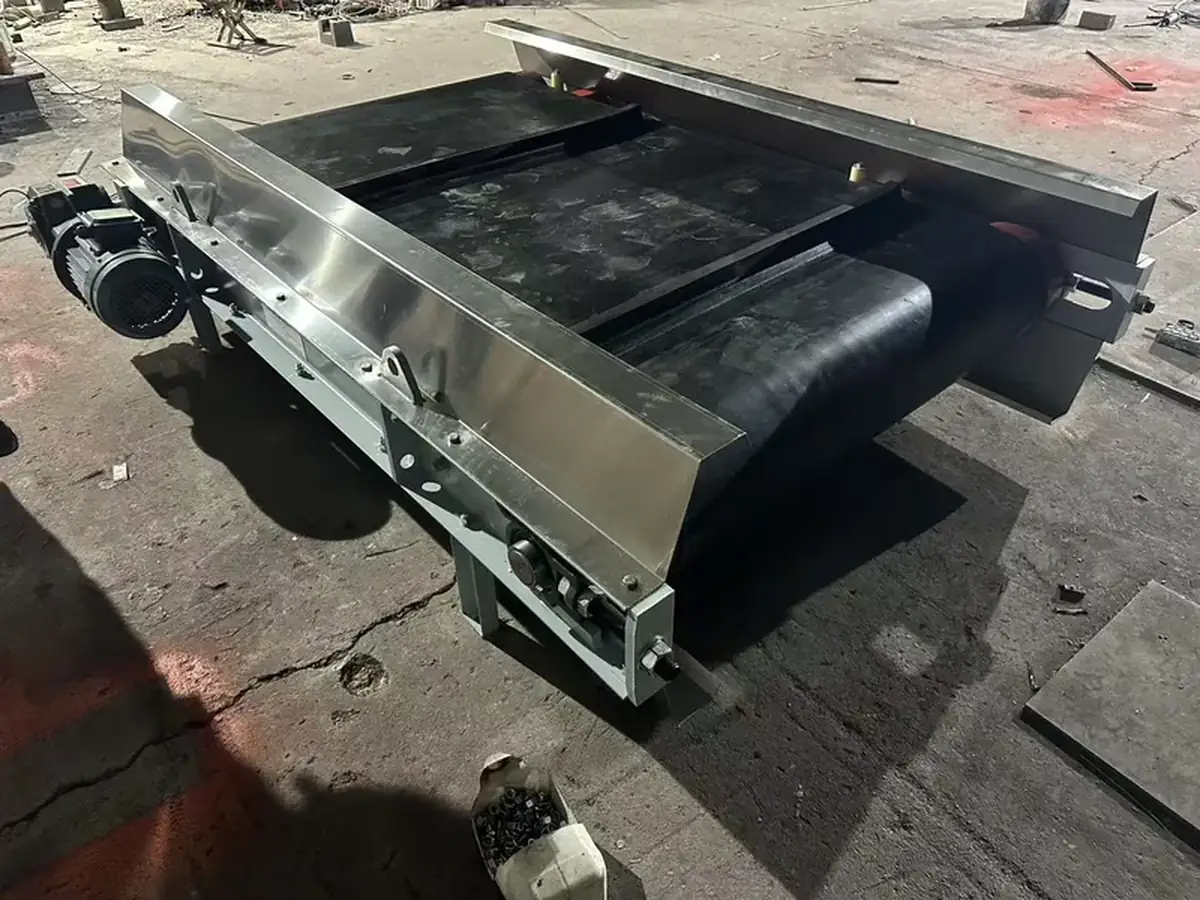
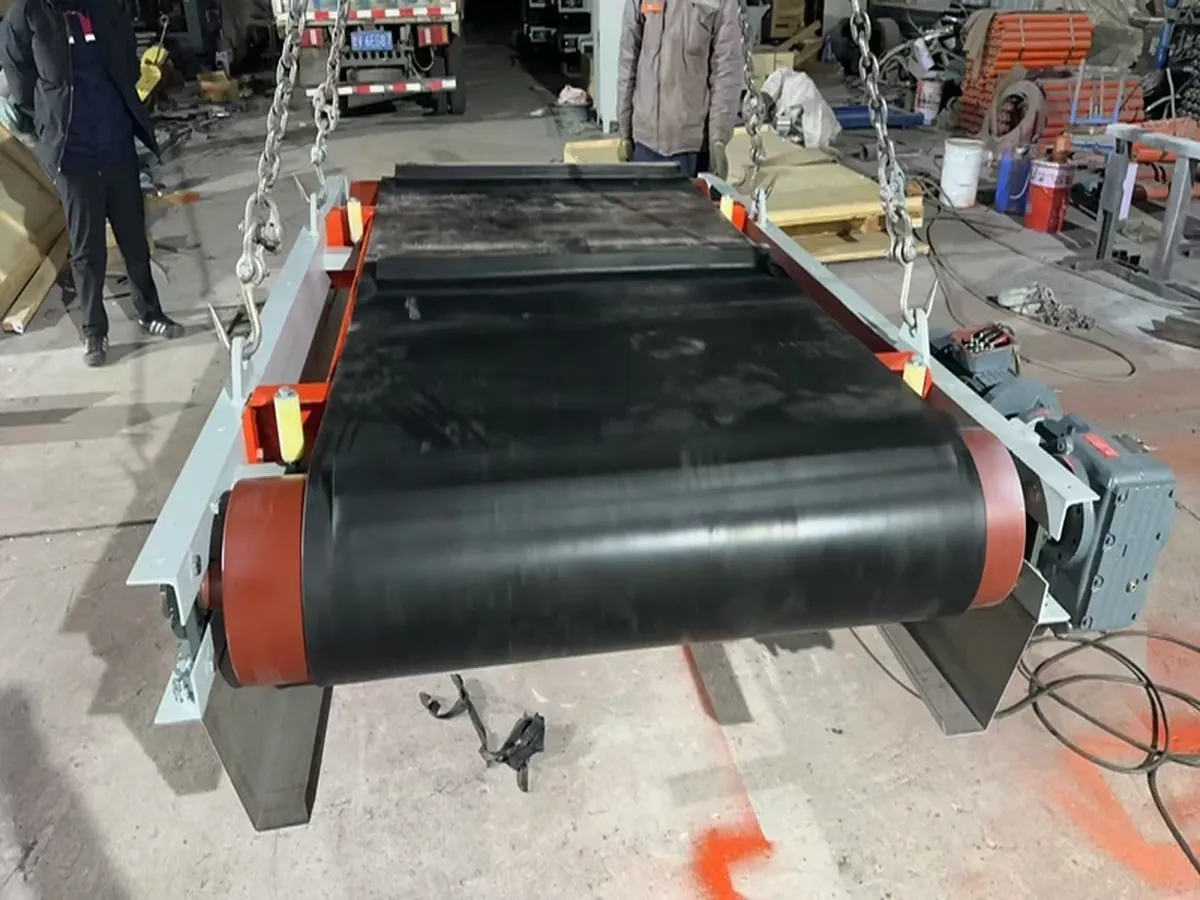
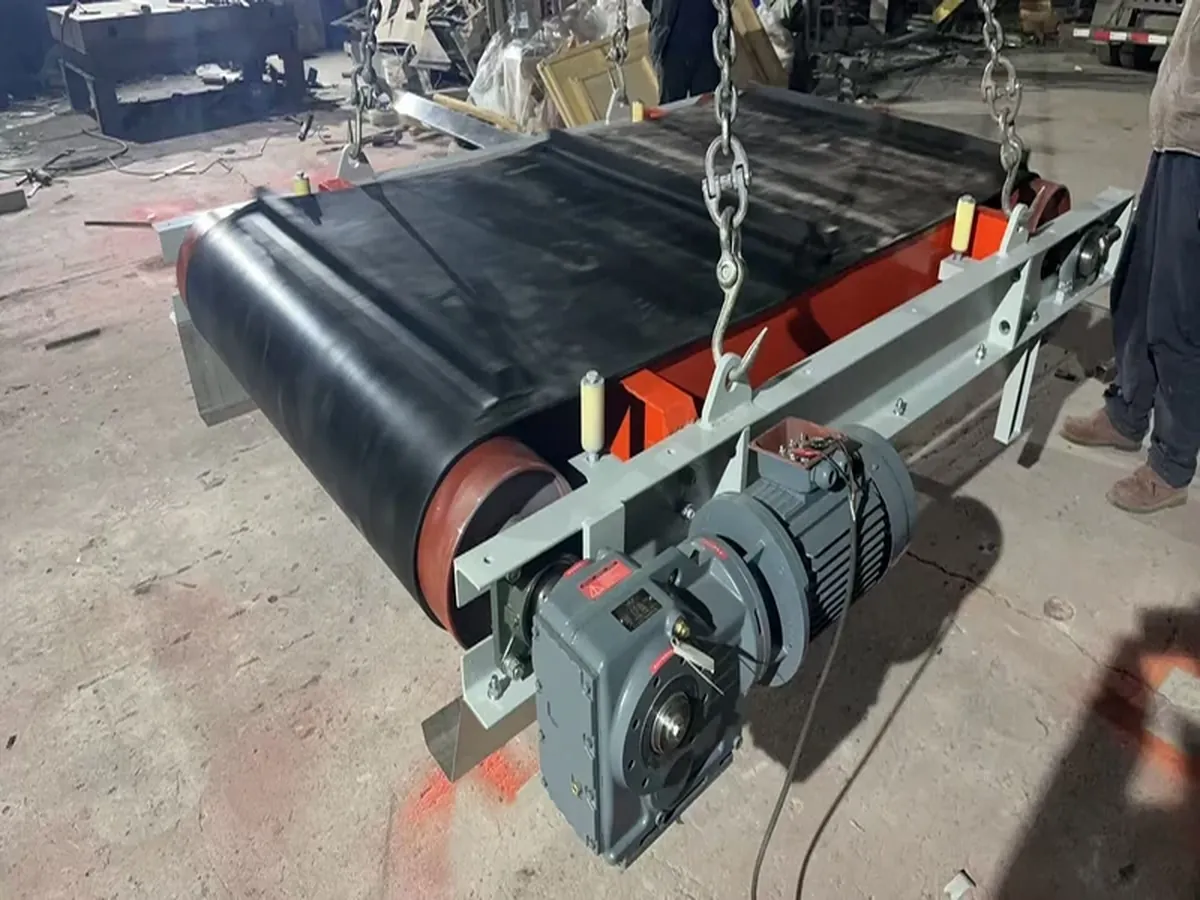
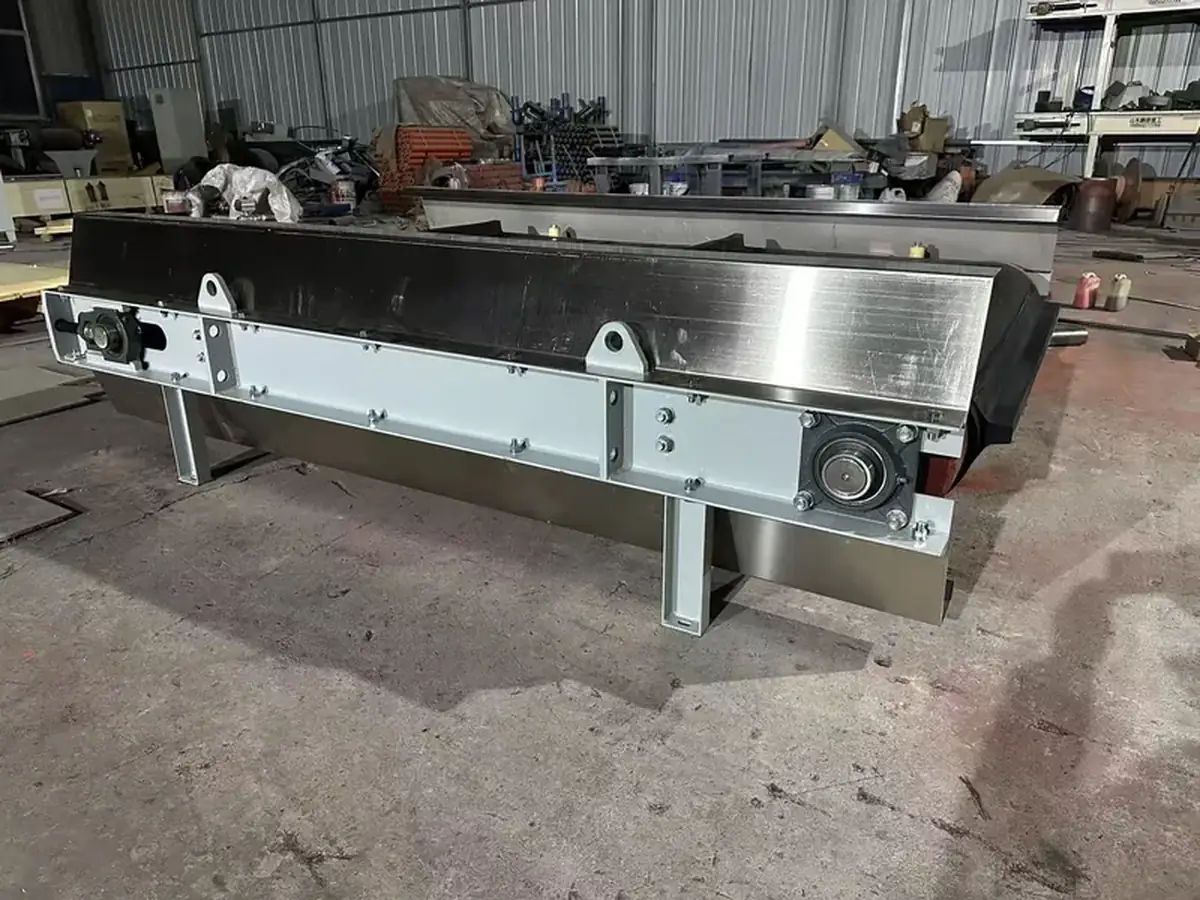
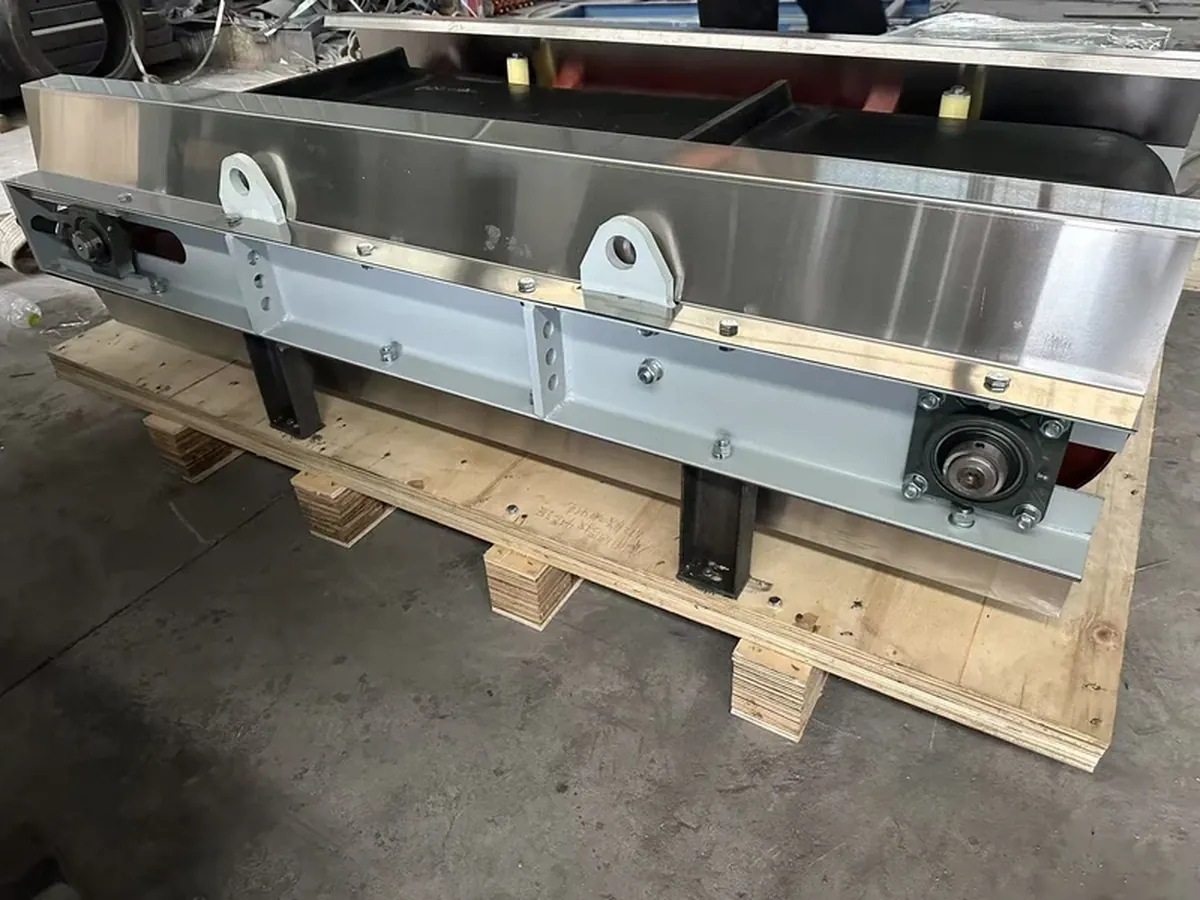
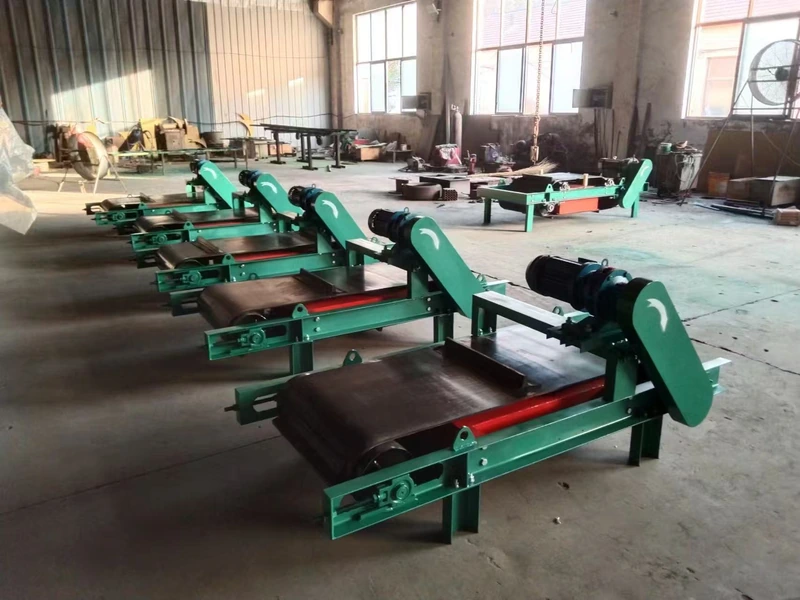
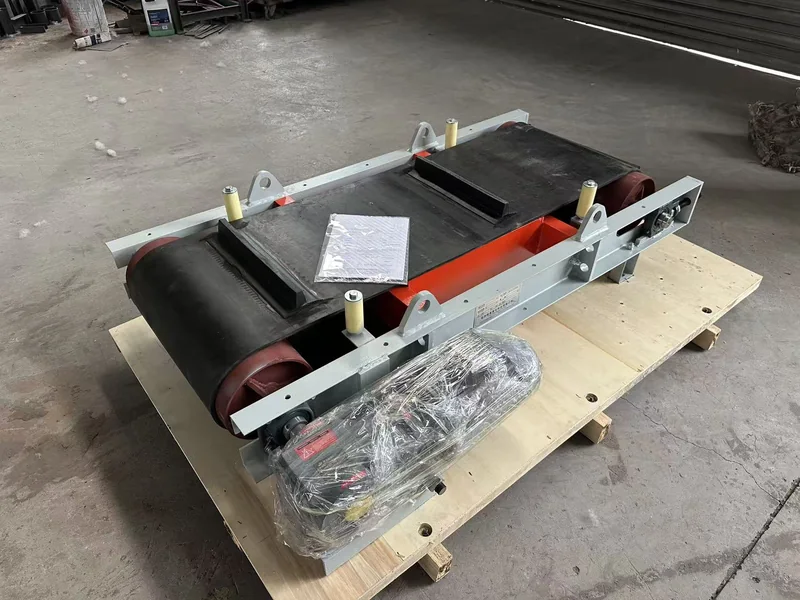
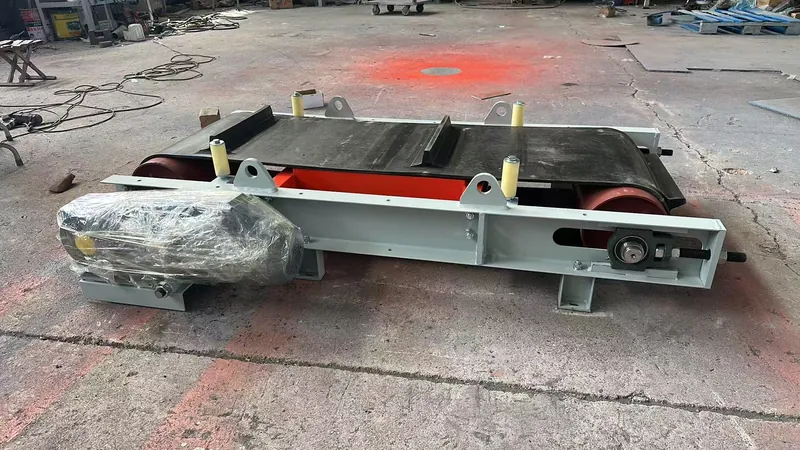
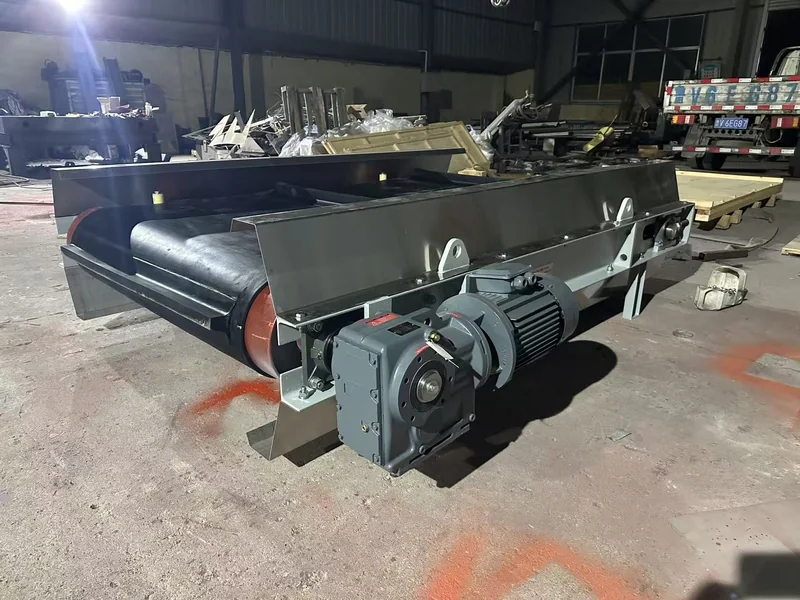
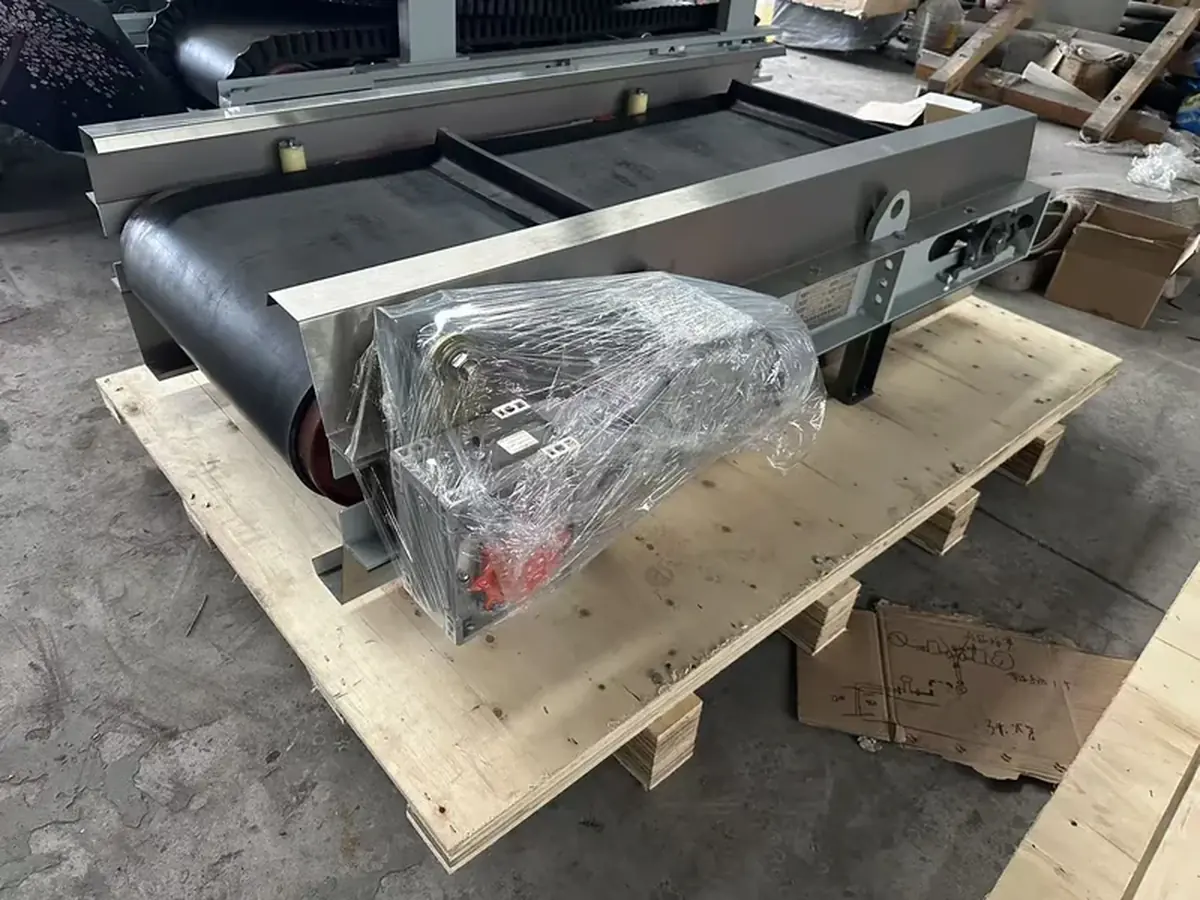
The current RCYQ family specification describes the series as compact, relatively light and designed for continuous iron pickup and discharge. The real equipment photos also show a simple self-cleaning belt, pulley, drive and frame arrangement.
The light-duty family uses a compact frame and cleaning-belt arrangement that is practical where installation space matters.
The cleaning belt carries captured ferrous metal away from the magnetic working area during operation.
The belt, pulleys, bearings and drive are visible mechanical service points on the real equipment.
The real units show lifting and suspension points that support overhead conveyor installation and handling.
The family specification identifies low noise as a product feature. No fixed dB value is published on this page.
The RCYQ family is positioned as a practical permanent-magnet route for suitable light-duty conveyor applications.
The current RCYQ family specification lists 60 mT for RCYQ-4 and RCYQ-5, and 70 mT for RCYQ-6.5, RCYQ-8 and RCYQ-10.
The current family specification does not define the exact measuring position, air gap, probe direction or instrument. For that reason, these values should be treated as catalog magnetic-field references, not as separation-efficiency guarantees.
A photo of the tramp metal often tells us more than the word “iron.” A long steel bar, a bolt, thin wire and a flat plate do not behave the same way in a moving burden.
We choose the mounting direction from the conveyor layout, material flow and metal discharge path — not from the separator name alone.
With a cross-belt layout, the cleaning belt runs across the main conveyor and usually discharges captured metal to the side. With an in-line layout, the separator follows the conveyor direction, often near the head pulley or transfer point where the material stream may open up.
| What to compare | Cross-Belt | In-Line |
|---|---|---|
| Magnet position | Across the main conveyor | In the direction of conveyor travel |
| Typical metal discharge | To one side of the conveyor | Beyond or around the transfer point |
| Retrofit | Often easier above an existing conveyor when side space is available | Depends more on head-pulley and transfer-point geometry |
| Material presentation | The target metal stays inside the moving burden | The material may open as it leaves the head pulley, which can expose buried metal |
| Main space to check | Side-discharge and maintenance clearance | End-of-conveyor and transfer-point clearance |
| What to send Corvelan | Belt width, material depth and side-clearance photo | Head-pulley / transfer-point drawing and available end clearance |
Corvelan sizes the separator around your conveyor instead of forcing one fixed model onto every line.
| What you send | What Corvelan defines | Why it matters |
|---|---|---|
| Conveyor width | Separator working width and frame coverage | The magnet must cover the full material flow. |
| Material depth | Required magnetic working reach | Buried metal sits farther from the magnet. |
| Belt speed | Magnet size and mounting check | Higher speed reduces the time available to lift the metal. |
| Tramp-metal photo / size | Magnetic route and cleaning-belt duty | Shape, size and frequency change both capture and discharge needs. |
| Preferred discharge side | Cleaning-belt direction and drop point | Captured metal needs a clear path out of the product flow. |
| Available height | Suspension and mounting layout | Working distance and maintenance room must both fit. |
| Voltage / frequency | Cleaning-belt motor and electrical setup | The permanent magnet needs no excitation power, but the cleaning belt does. |
| Environment | Construction and protection requirements | Dust, weather, washdown or corrosion can change the mechanical setup. |

The photos below show real belt, drive and frame details from the current equipment set. We use them to show how the self-cleaning mechanism is built and where routine inspection happens. They are product-construction evidence, not a controlled separation-performance test.


These are real product photos from the current RCYQ family equipment set. They show real family equipment and mechanical construction. The visible photos do not show a readable model nameplate, so we do not assign a specific RCYQ model number to an individual machine photo.


We check where the magnet will sit, how it will be supported and where the captured metal will discharge.
The magnet should cover the full width of the material flow. We also review nearby steelwork that may affect the magnetic field.
We check available height, support points and the space needed to inspect and adjust the cleaning belt.
There must be a clear path, chute or collection area so captured metal does not fall back into the product.
Steel directly below or very close to a suspended magnet can become magnetized and change the intended field around the separator.
Corvelan reviews rollers, support steel and conveyor structures around the mounting position before the final layout is fixed.
The exact non-magnetic clearance is not published as one universal Corvelan number on this page because it depends on the final magnetic design and conveyor layout.
The current technical data also include the WCTG non-magnetic parallel-idler family for use with suspended magnetic separators. The sheet describes the idler as a non-magnetic metal roller installed below the conveyor belt so the belt can be supported without placing a conventional magnetic-steel roller directly in the magnetic working zone.
The WCTG technical data also describe the flat-support arrangement as helping the material spread more openly under the suspended separator. Final suitability still depends on the real conveyor structure and installation layout.
| WCTG Model | Belt Width mm | Weight kg | A mm | B mm | D mm |
|---|---|---|---|---|---|
| WCTG-5 | 500 | 13 | 750 | 600 | 89 |
| WCTG-6 | 600 / 650 | 16 | 900 | 750 | 89 |
| WCTG-8 | 800 | 20 | 1100 | 950 | 89 |
| WCTG-10 | 1000 | 28 | 1300 | 1150 | 108 |
The current RCYQ page shows only the WCTG sizes most directly aligned with the RCYQ belt-width family. The supplied sheet also contains larger WCTG sizes for wider conveyors.
We do not try to force every conveyor to fit one machine. If another separator gives you a better layout or a more suitable working route, we change the recommendation before quotation.

Before we release the final setup, we check that the separator matches the agreed conveyor, discharge direction and installation space. These are configuration checks. We do not claim a completed factory test unless that evidence is part of the actual order.
| Check | What it confirms |
|---|---|
| Application check | The agreed material, conveyor width, belt speed and target metal still match the selected separator route. |
| Layout check | The working distance, discharge side, support points and maintenance access match the approved layout. |
| Belt-path check | The cleaning belt has a clear movement path and metal can leave the working area correctly. |
| Electrical check | The cleaning-belt motor and electrical setup match the order requirement. |
| Acceptance check | If magnetic measurement is part of the order, the measuring point, gap and method are agreed before values are compared. |
We do not size a cross-belt magnet from conveyor width alone. We also check material depth, belt speed, tramp-metal condition and the actual installation layout.

If this light-duty cross-belt model is not the best fit, we change the separator route before quotation.
| Your process condition | Route we review | Main reason |
|---|---|---|
| Tramp metal is rare | Manual suspended permanent magnet | Self-cleaning may be unnecessary if planned manual cleaning is practical. |
| Tramp metal appears often | Self-cleaning cross-belt magnet | Automatic side discharge reduces metal build-up on the working face. |
| Head-pulley / transfer layout is better | In-line overband magnet | The conveyor geometry may give better access to the material stream. |
| Separation should happen at conveyor discharge | Magnetic head pulley | The separator becomes part of the conveyor discharge point. |
| The permanent route does not suit the required working condition | Electromagnetic overband | A different magnetic route may be needed for the duty. |
| The target is aluminium, copper or other non-ferrous metal | Eddy-current separator | The separation physics are different from ferrous tramp removal. |
Not sure which route fits? Send us your conveyor layout and material details, or read our Conveyor Belt Magnetic Separator guide.
A cross belt magnetic separator is a suspended magnet installed above a conveyor. It pulls iron and steel pieces out of the moving material, and a cleaning belt carries the captured metal to the side for discharge.
The permanent magnet does not need excitation power to create the magnetic field. The self-cleaning belt still needs an electric motor. The current RCYQ family specification lists drive power from 0.75 to 2.2 kW depending on model.
The current RCYQ family specification starts with RCYQ-4 for 400 mm belts, RCYQ-5 for 500 mm, RCYQ-6.5 for 650 mm, RCYQ-8 for 800 mm and RCYQ-10 for 1000 mm. Final selection still checks material depth, belt speed and working distance.
It is the catalog suspension reference listed for each standard RCYQ model. It should not be treated as the same thing as the distance from the magnet to buried tramp metal, because burden depth increases the real working distance.
Not by itself. The current RCYQ family specification lists 60 or 70 mT by model, but it does not define the exact measuring position or air gap. Magnetic-field value, pull force and separation efficiency are different quantities.
A cross-belt separator runs across the conveyor and normally discharges captured metal to the side. An in-line separator follows the conveyor direction, often near a head pulley or transfer point. Corvelan reviews the actual conveyor layout before recommending either route.
Ferromagnetic steel close to the suspended magnet can become magnetized and change the intended working field. The current technical data also include WCTG non-magnetic idlers as one option for the conveyor zone below a suspended separator.
Start with the material, target tramp metal, throughput and a conveyor photo or drawing. Also send belt width, belt speed, burden depth, expected suspension height, available installation space and site voltage if known.

Start with the conveyor belt width. This lets us compare your line with the standard RCYQ-4 / 5 / 6.5 / 8 / 10 family. Then send the material, target tramp metal, throughput and a conveyor photo or drawing.
After we receive the data, we first check whether this light-duty permanent cross-belt route fits. If another magnetic separator is a better choice, we change the recommendation before quotation.