Self-Cleaning Conveyor Tramp-Iron Removal

RCDFQ Forced-Oil-Cooled Electromagnetic Separator

Corvelan RCDFQ removes unwanted iron and steel from bulk material moving on a conveyor. It is a suspended electromagnetic separator with automatic belt cleaning and forced oil cooling. The cleaning belt carries captured metal away automatically, helping protect downstream equipment without routine manual magnet cleaning.

Best ForCrusher, screen, mill and conveyor protection where ferrous tramp must be removed continuously.
TargetResponsive ferrous tramp such as steel pieces, bolts, rods and wire.
InstallationSuspended above a conveyor with a self-cleaning reject belt.
We Select FromBelt width, burden depth, working distance, belt speed, target iron, installation space and project utilities.
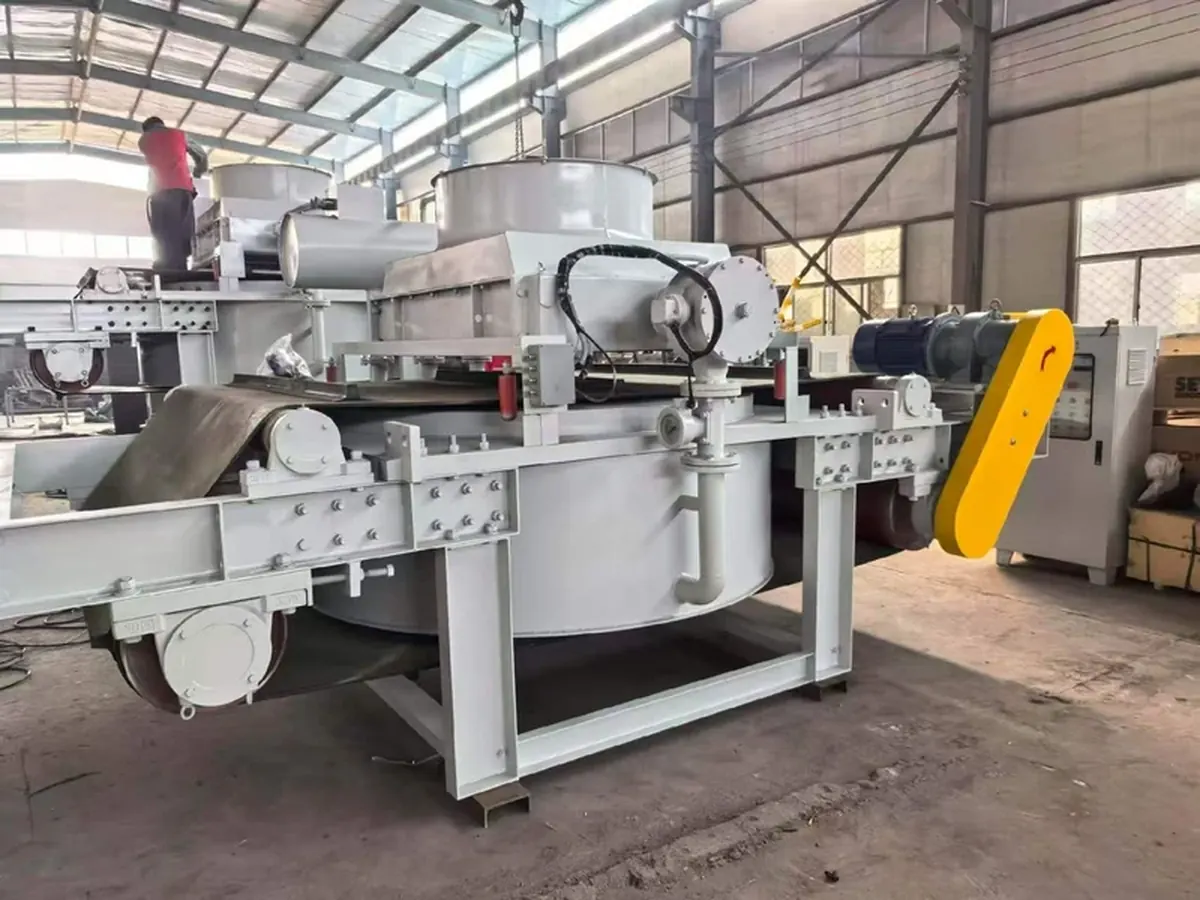
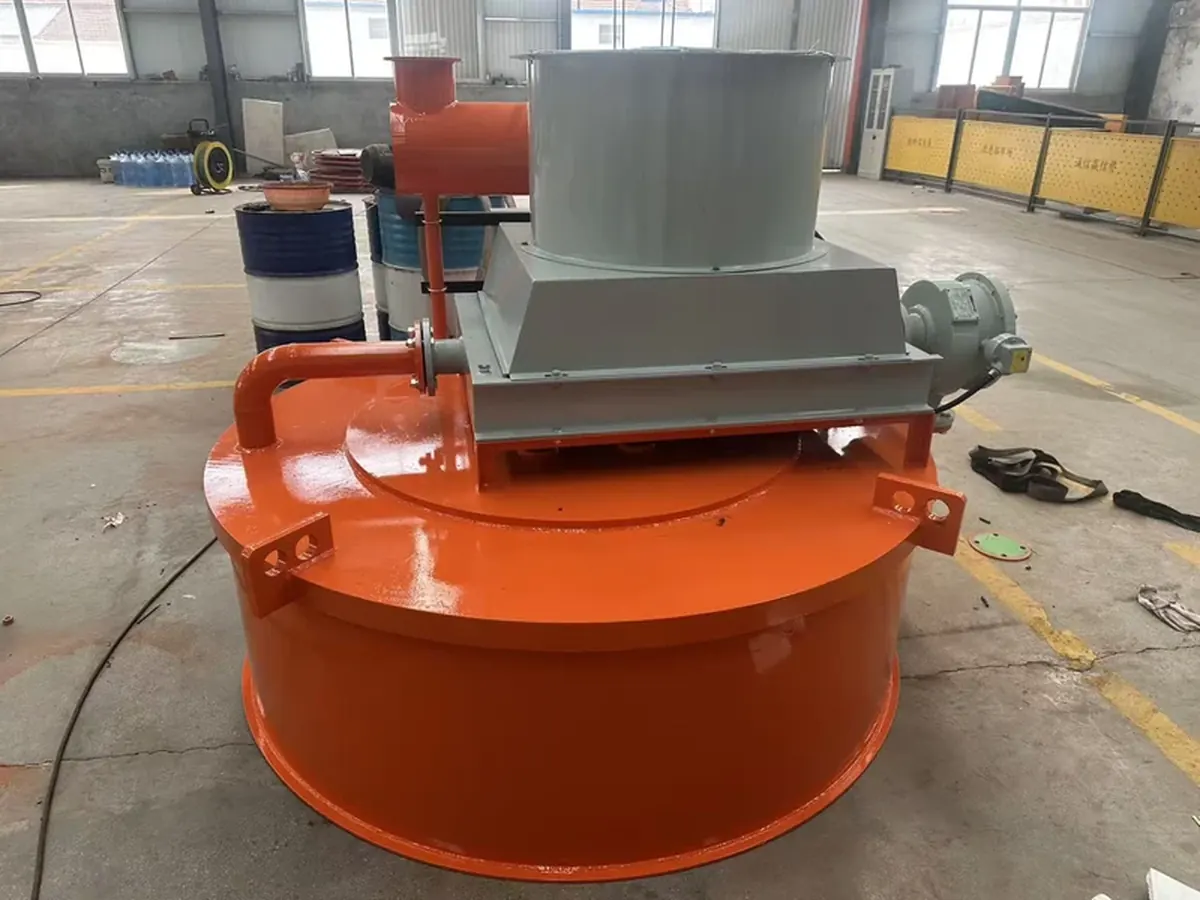
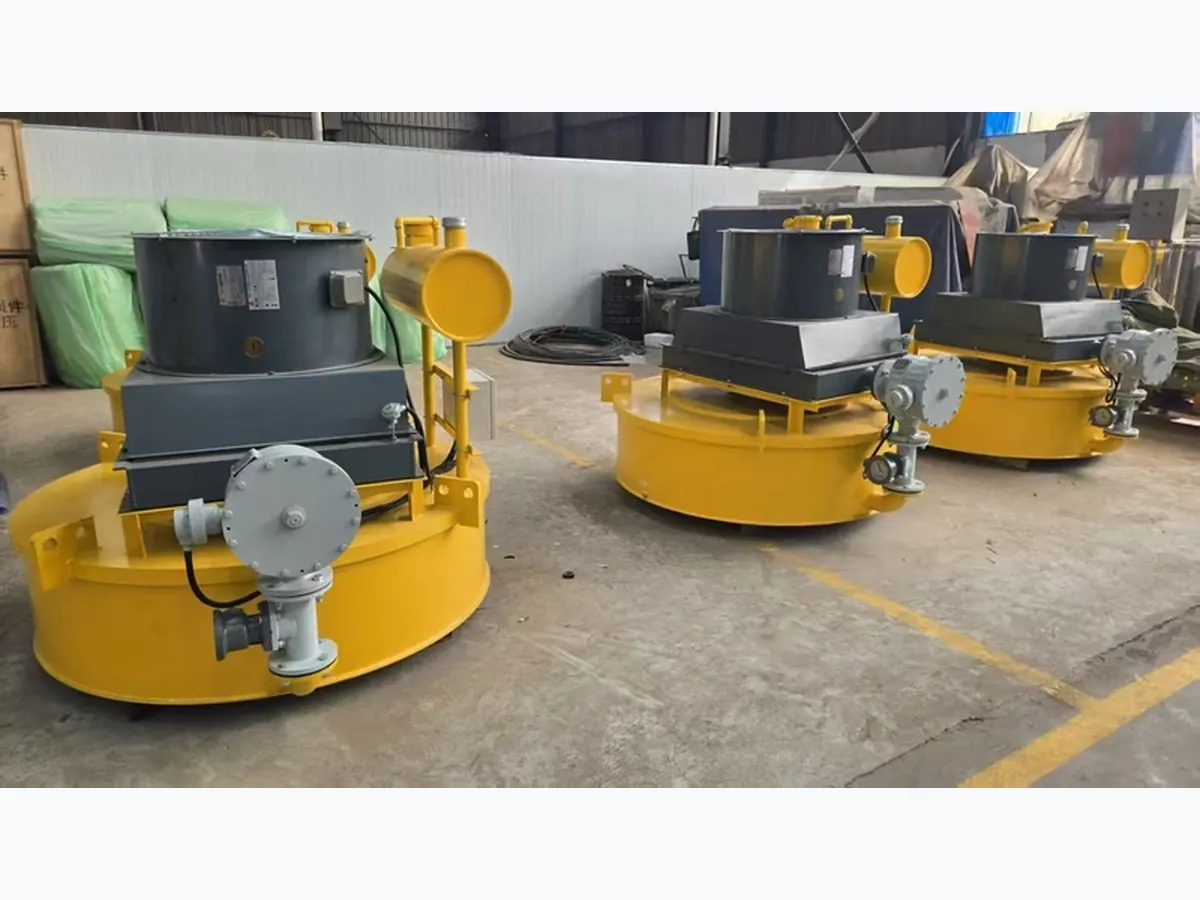
Coverlan RCDFQ forced oil-cooled electromagnetic separator with self-cleaning belt and cooling-related assembly in a workshop
Quick Fit

Is RCDFQ the right type of separator for your process?

We recommend RCDFQ when bulk material moves on a conveyor, the target is iron or steel, and captured metal needs to discharge automatically. We recommend another separator type when the target is non-ferrous, the process is not conveyor-based, or the installation cannot provide a safe suspended position.

RCDFQ is a good fit when

  • Unwanted iron or steel must be removed before a crusher, screen, mill or other equipment that could be damaged or jammed.
  • There is enough space and structural support to suspend the separator safely above the conveyor.
  • Captured metal needs to discharge automatically and often enough to keep the line running.
  • The site can support the required electrical supply and the selected cooling arrangement.

We recommend another type of separator when

  • The main target is aluminum, copper or another non-ferrous metal.
  • The main job is weakly magnetic mineral separation or a wet/slurry process.
  • There is no safe place to discharge captured metal, no service space, or no suitable support above the conveyor.
  • Oil cooling, electrical equipment or site rules do not suit the installation.
Application Fit

Where is RCDFQ commonly used?

We install RCDFQ above conveyors carrying bulk material. Its job is to remove recurring iron or steel before that metal reaches equipment that could be damaged, jammed or contaminated.

Crusher & mill protection

Remove bolts, rods, plate fragments, wire and other magnetic iron or steel before crushing, milling or screening equipment.

Coal & mineral handling

Use RCDFQ where the material layer on the conveyor can be deep or uneven. This material layer is often called the burden, and its depth changes how far the magnet must reach.

Aggregate & cement raw material

Protect downstream equipment when mixed bulk material can carry unwanted iron or steel through transfer conveyors.

Heavy bulk-transfer lines

Use automatic overband discharge when tramp iron appears often enough that stopping to clean a magnet by hand would interrupt operation.

RCDFQ or a permanent overband magnet? We normally consider RCDFQ when the conveyor needs an energized electromagnetic system and the site can support electrical power and cooling. A permanent overband magnet may be simpler when that level of magnetic duty is not needed. We compare both options using the same working distance, material depth and target-iron data.
Working Principle

How does the RCDFQ electromagnetic separator remove tramp iron?

RCDFQ creates a magnetic field above the conveyor. Iron and steel that respond to the field are lifted from the moving material layer. The separator belt carries the captured metal out of the magnetic zone and drops it at the planned reject point.

Material enters the separation zone

Bulk material passes below the suspended separator at the actual belt speed and material depth.

Ferrous tramp responds to the field

Iron becomes harder to capture when it is farther from the magnet, buried deeper in the material, smaller, or held down by surrounding material.

Captured metal transfers to the cleaning belt

The cleaning belt holds and carries the captured iron away while the main conveyor keeps running.

Reject leaves the magnetic zone

After the captured metal leaves the magnetic zone, it drops into the planned side or end collection point.

Forced oil-cooled design: RCDFQ uses oil cooling to help manage heat while the electromagnet is energized. For the selected model, we confirm the oil circuit, cooling equipment, electrical scope and controls in the quotation and approved drawing.
RCDFQ Design Features

What is built into the Corvelan RCDFQ series?

Our RCDFQ product documentation identifies the magnetic-circuit design, coil insulation treatment, automatic iron discharge, belt-tracking functions and rectifier/control equipment as part of the series design.

Computer-simulated magnetic circuit

The RCDFQ magnetic circuit is designed using computer simulation. We use the design together with the listed model and T-level data when reviewing the required magnetic duty.

Simulation supports design work; it is not a measured field test or a separation-efficiency result.

Coil insulation and curing treatment

The coil uses a dip-insulation and curing process intended to improve insulation protection against dust and harmful gases during industrial service.

Automatic iron discharge

The self-cleaning belt carries captured iron away from the magnetic zone so the separator does not rely on routine manual removal of captured metal.

Automatic belt-tracking correction

The product documentation lists an automatic belt-correction function for the cleaning belt. We still include alignment, pulley and discharge checks in routine maintenance.

Sealed bearing housings

The cleaning-belt assembly uses sealed bearing housings as part of the mechanical design. Bearing condition and access remain part of the service review.

Rectifier and control functions

The RCDFQ documentation includes rectifier equipment with manual and centralized control functions. We confirm the final control interface and site electrical scope for each project.

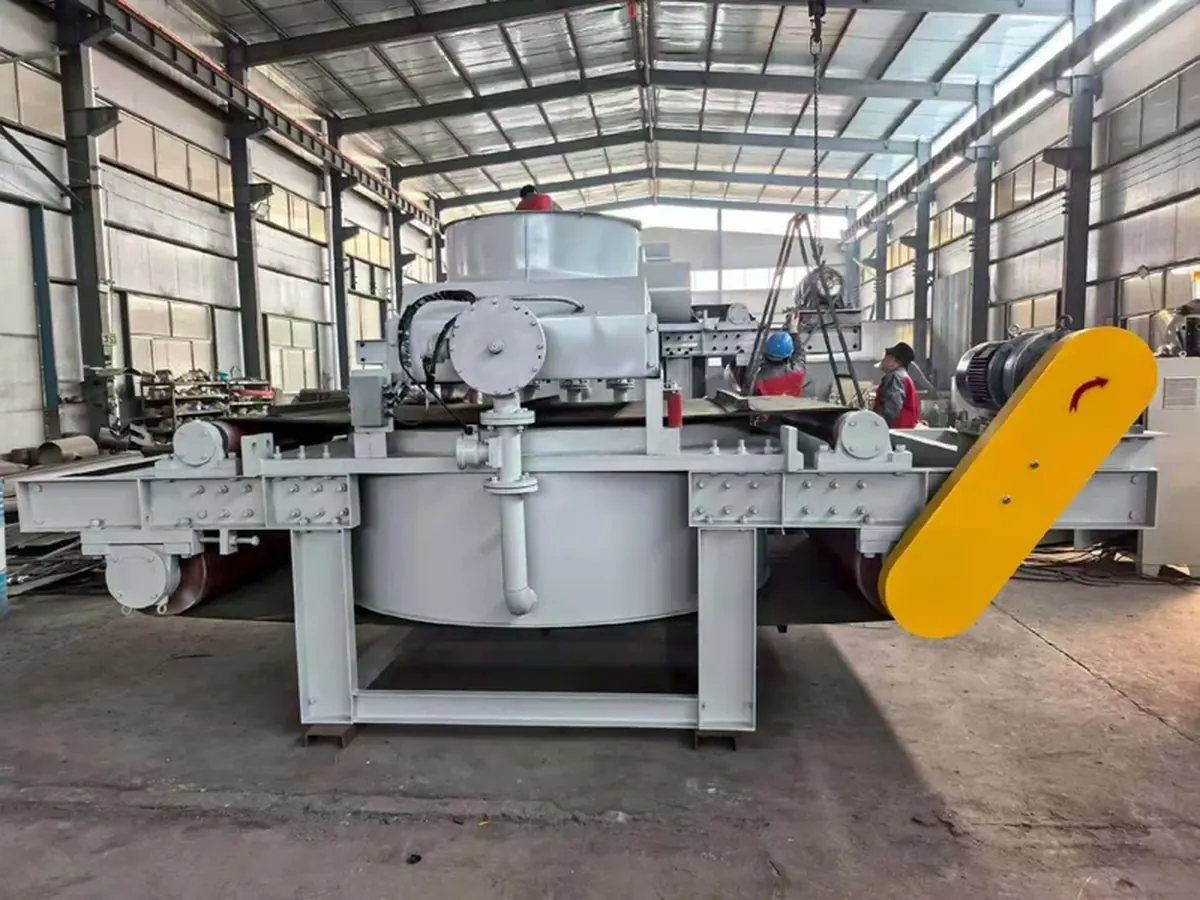
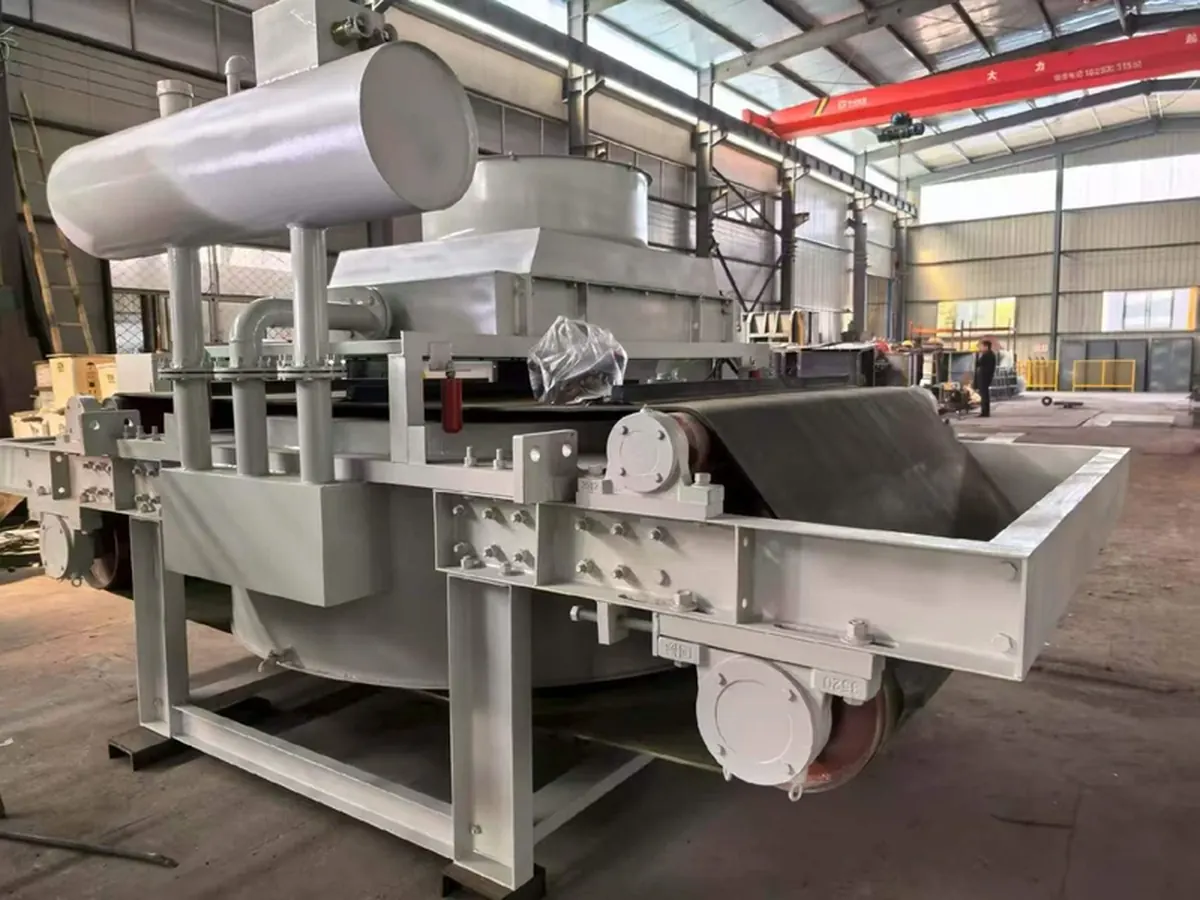
Complete Coverlan RCDFQ self-cleaning electromagnetic separator assembly in the workshop
Complete separator assemblyShows the suspended frame, electromagnet body, self-cleaning belt, drive and external assemblies as one integrated unit.
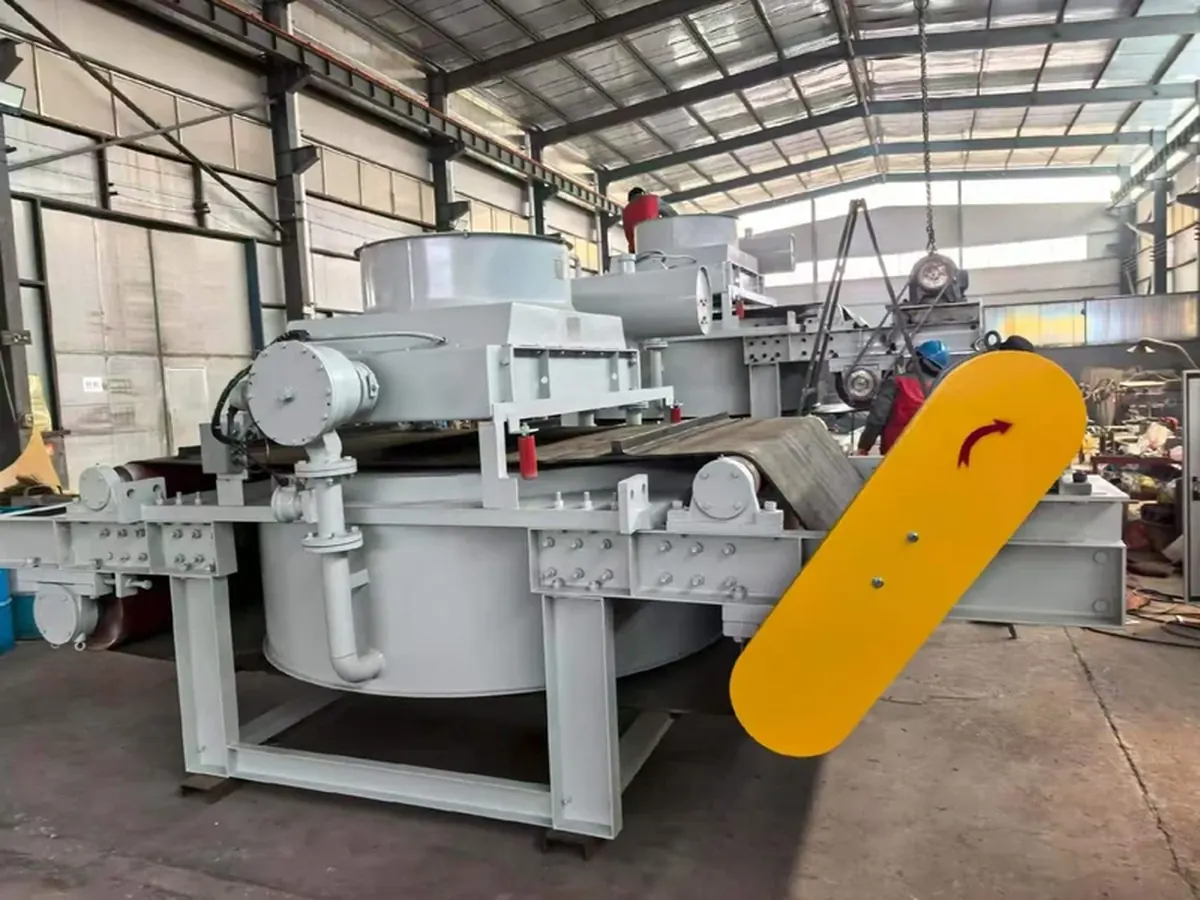
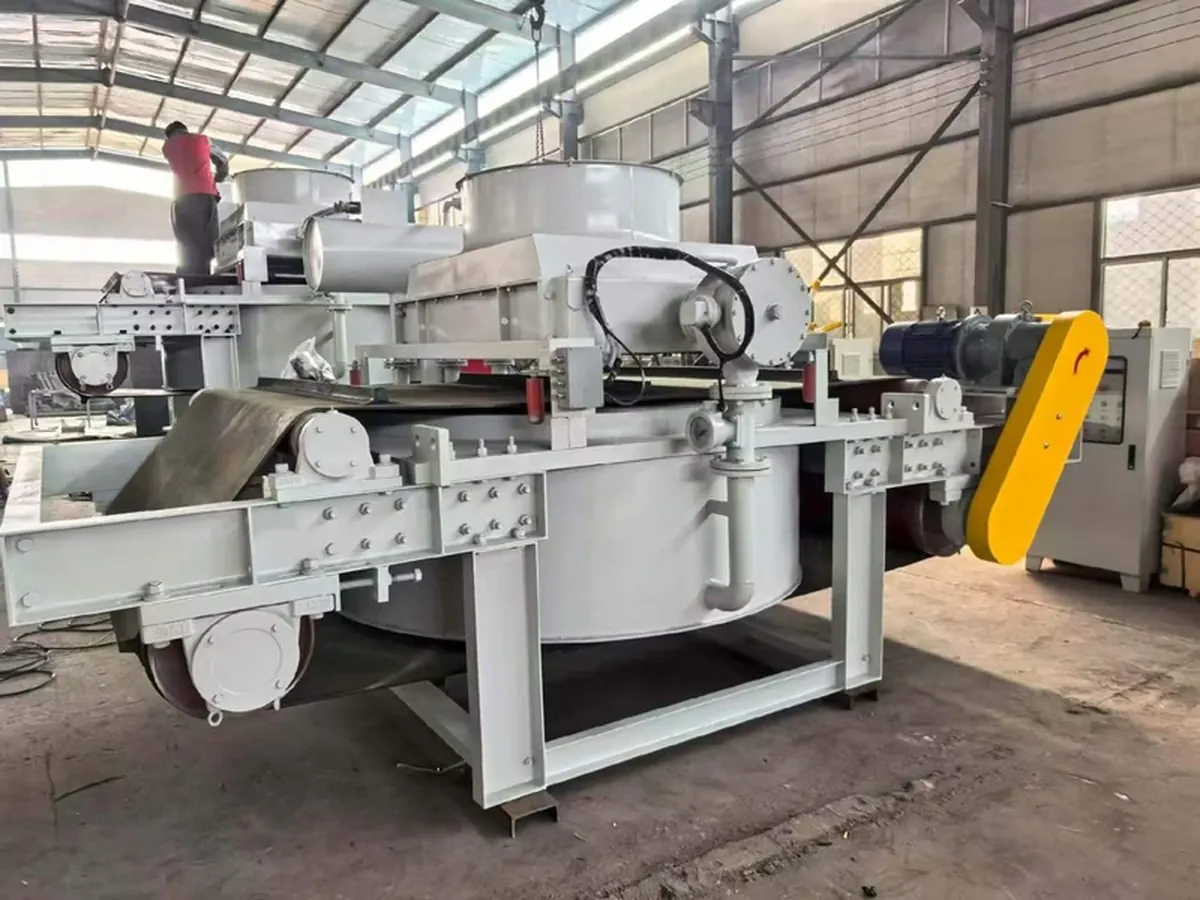
Coverlan RCDFQ self-cleaning belt drive and electromagnetic separator structure in the workshop
Self-cleaning structureShows the cleaning-belt path, drive-side components, frame and service areas used in the mechanical review.
Performance Factors

What affects electromagnetic separation performance on a conveyor?

We do not choose an electromagnetic separator from one magnetic number or belt width alone. Magnetic flux density is often shown in millitesla (mT). We start with the hardest iron or steel piece you need to remove. Then we check working distance, material depth, belt speed and the installation position.

Target Iron
Working Distance
Burden Depth
Belt Speed
Installation
Model / T-Level

How far is the iron from the magnet?

The farther the iron is from the magnet, the harder it is to capture. We call this working distance. Measure from the magnetic face to the iron you need to remove. Include both the air gap and the depth of the iron inside the material layer.

What iron or steel do you need to remove?

Tell us the hardest piece you need to capture. Its size, shape, weight, position and how often it appears all affect selection.

How fast is your conveyor running?

A faster belt gives the magnet less time to lift the target. Send us the normal and maximum belt speed when available.

How deep is the material on the belt?

A deeper material layer makes buried iron harder to lift. Engineers often call this burden depth. Bulk density, moisture, large lumps and tangled material can also make capture harder.

Where will the separator be installed?

Cross-belt or in-line position, nearby steel, the conveyor trough and discharge space all affect how the separator can work and be serviced.

How will we confirm the required result?

If the project needs a specific test or pass/fail result, tell us before model approval. We can then define the test piece, operating condition, measurement point and acceptance method.

Magnetic intensity is not the same as separation efficiency. The RCDFQ table lists magnetic flux density in mT, but a higher mT value does not by itself guarantee better iron removal. Working distance, material depth, belt speed and the target iron also matter.
Separator Type Decision

RCDFQ electromagnetic separator or permanent overband magnet?

Both can remove ferrous tramp from conveyor-fed material. The right choice depends on the required magnetic duty, working distance, material depth, target iron, utilities, installation space and how the separator will be operated and maintained.

Selection QuestionRCDFQ ElectromagneticPermanent Overband
How is the magnetic field produced?An energized electromagnet produces the magnetic field.Permanent magnets produce the magnetic field without excitation power.
Does the magnet itself need excitation power?Yes. Electrical excitation is part of the RCDFQ system.No excitation power is needed to create the magnetic field. A self-cleaning belt can still require its own drive.
Is an electromagnet cooling system required?Yes. RCDFQ uses a forced oil-cooling arrangement that must be included in the project review.No electromagnet cooling circuit is required because there is no energized coil.
What process inputs still matter?Target iron, working distance, burden depth, belt speed, conveyor width and installation geometry.The same process inputs still matter. Magnet type alone does not determine capture performance.
How do we make the final choice?We compare both options from the same conveyor and target data instead of choosing from magnet type or one magnetic value alone.
Need help choosing? Send us the conveyor condition and target iron. We can first confirm whether RCDFQ is the right separator type before narrowing the model.
Corvelan Selection Method

How does Corvelan select an RCDFQ model and T-level?

We do not start from mT alone. We move from your conveyor and target iron to a candidate base model, T-level and installation check, then confirm what still needs drawing or test validation.

Start with belt width

Belt width narrows the RCDFQ base-model range and gives us the first equipment size check.

Check magnetic reach

We review the real working distance and material depth to see how far the magnetic field must act into the burden.

Define the target iron

We use the hardest piece that matters: its type, size, shape, approximate weight and likely position in the material layer.

Check operating conditions

Belt speed, throughput, lumping, moisture and material behavior affect the time and difficulty of capture.

Compare T-levels

We use the series data to compare candidate T-levels after the process conditions are defined. We do not treat mT as a separation-efficiency number.

Check mechanical and electrical fit

We review dimensions, equipment weight, support, excitation power, cooling auxiliaries, reject direction and service access.

Confirm the selected configuration

We close the remaining questions with the installation drawing, defined magnetic readings or a representative capture check when the project requires it.

Selection Inputs

What do we need from you to select RCDFQ?

Start with what you already know. The four groups below are enough for an initial engineering review, and a conveyor photo or drawing can answer several installation questions at once.

Target Iron

Tell us the critical iron or steel piece: type, approximate size, shape, weight if known and where it may sit inside the material.

Conveyor & Material

Provide belt width, belt speed, material depth, throughput and the material condition that makes the target hardest to capture.

Installation Space

Show the available headroom, suspension structure, working distance, nearby steel and required reject direction.

Required Confirmation

Tell us if approval depends on dimensions, magnetic readings, a representative capture check or another project requirement.

Useful but not required for the first review: bulk density, moisture, temperature, trough profile, destination power supply, cleaning preference and any site-specific acceptance requirement.
RCDFQ Series Data

Which RCDFQ electromagnetic separator models are available?

Use the table below to narrow the RCDFQ base model. We make the final selection from your material, material depth, target iron, working distance, conveyor speed and installation conditions.

RCDFQ series at a glance

1000–2400 mm

Listed conveyor belt-width classes across the RCDFQ series.

300–650 mm

Listed rated lifting-height references across the series.

90–250 mT

Listed magnetic-intensity references across different models and T-levels.

T1–T7

Tier availability depends on the RCDFQ base model.

6.5–200 kW

Listed excitation-power range across all tabled configurations.

≤5.8 m/s

Listed maximum belt-speed reference in the current RCDFQ specifications.

2620–35000 kg

Listed equipment-weight range across the current RCDFQ configurations.

Series-range note: these values come from different RCDFQ models and T-levels. They are not one machine specification and should not be combined as if they describe a single separator.

Tier availability by base model: RCDFQ-10, RCDFQ-12 and RCDFQ-14 are listed with T1–T3 configurations. RCDFQ-16, RCDFQ-18, RCDFQ-20, RCDFQ-22 and RCDFQ-24 are listed with T1–T7 configurations.
How to use this table
  • Start with belt width. This narrows the RCDFQ base model.
  • Check rated lifting height. Rated lifting height is a preliminary model reference. Final operating distance depends on material depth, belt speed, target-metal size and installation conditions.
  • Compare T-levels. Higher tiers change magnetic intensity and can also change power, size and weight.
  • Do not choose from mT alone. Send us the working distance and target iron before final selection.
Base ModelBelt Width (mm)Rated Lifting Height (mm)TiersListed Magnetic Intensity (≈mT)Excitation Power Range (kW)Weight Range (kg)
RCDFQ-101000300T1–T390–1506.5–152620–3900
RCDFQ-121200350T1–T390–1509–203700–6000
RCDFQ-141400400T1–T390–15014–294450–7450
RCDFQ-161600450T1–T790–25018–1046500–17650
RCDFQ-181800500T1–T790–25026–1078800–23000
RCDFQ-202000550T1–T790–25030–1259950–25600
RCDFQ-222200600T1–T790–25039–17612440–27000
RCDFQ-242400650T1–T790–25040–20016000–35000

How to read the magnetic data: mT means millitesla, a unit of magnetic flux density. The listed mT values and rated lifting heights are series selection references. They are not a universal field-at-distance guarantee and they are not a separation-efficiency percentage.

How should you read the RCDFQ specifications?

SpecificationWhat it helps us checkWhat it does not prove by itself
Belt WidthBase-model matching to the conveyor class.Final magnetic capture performance.
Rated Lifting HeightA series reference for narrowing the model range.A guaranteed capture distance for every iron piece.
Magnetic Intensity (mT)A listed magnetic-field reference for comparing the series.Separation efficiency or guaranteed removal rate.
Excitation / Auxiliary PowerElectrical load and project utility planning.Capture performance by itself.
Overall Dimensions & WeightSupport, lifting, access and installation fit.Magnetic reach or separation efficiency.
Maximum Belt SpeedA listed equipment reference that must be checked against the conveyor duty.A guarantee that every target will be captured at that speed.
View detailed RCDFQ model data (all listed variants)
ModelTierBelt Width mmRated Lifting Height mmMagnetic Intensity ≈mTExcitation Power kWFan Power kWL mmW mmH mmMax Belt Speed m/sWeight kg
RCDFQ-10T11000300906.50.252960162014805.82620
RCDFQ-10T210003001209.50.252960162015205.83220
RCDFQ-10T31000300150150.253000162015505.83900
RCDFQ-12T112003509090.253250177015205.83700
RCDFQ-12T21200350120140.253350177015505.84000
RCDFQ-12T31200350150200.253520177015905.86000
RCDFQ-14T1140040090140.253350175015505.84450
RCDFQ-14T21400400120200.253520186015905.86500
RCDFQ-14T31400400150290.253630186016205.87450
RCDFQ-16T1160045090180.253520185015905.86500
RCDFQ-16T21600450120280.253750225016205.88300
RCDFQ-16T31600450150320.253950225016305.89600
RCDFQ-16T41600450175520.754120247017505.811700
RCDFQ-16T51600450200700.754170247017505.813755
RCDFQ-16T61600450225851.14230249018005.816130
RCDFQ-16T716004502501042x0.554350253018605.817650
RCDFQ-18T1180050090260.753950225016305.88800
RCDFQ-18T21800500120320.753900245016505.811500
RCDFQ-18T31800500150400.754000245016705.813380
RCDFQ-18T41800500175560.754240250018005.816560
RCDFQ-18T51800500200750.754300252018505.820254
RCDFQ-18T61800500225901.14300258019005.822000
RCDFQ-18T718005002501072x0.554400265019505.823000
RCDFQ-20T1200055090300.753950245016505.89950
RCDFQ-20T22000550120390.754100268016705.811800
RCDFQ-20T32000550150410.754260268016705.813500
RCDFQ-20T42000550175702x0.554400268018305.821560
RCDFQ-20T52000550200832x0.554470270019005.821580
RCDFQ-20T620005502251042x0.554520273021505.824890
RCDFQ-20T720005502501252x0.554600280022505.825600
RCDFQ-22T1220060090390.754100268016705.812440
RCDFQ-22T22200600120420.754260275016905.815700
RCDFQ-22T32200600150450.754500275016905.816500
RCDFQ-22T422006001751002x0.554650285022005.818500
RCDFQ-22T522006002001212x0.554700290023005.821000
RCDFQ-22T622006002251532x0.554780290023005.823000
RCDFQ-22T722006002501762x0.554830295023705.827000
RCDFQ-24T1240065090400.754260275016905.816000
RCDFQ-24T22400650120460.754500275016905.818000
RCDFQ-24T32400650150540.754800295017205.820700
RCDFQ-24T424006501751202x0.554600285021005.824000
RCDFQ-24T524006502001502x0.554700295022805.828000
RCDFQ-24T624006502251802x0.754850300024305.831000
RCDFQ-24T724006502502002x1.14950310025605.835000
Installation & Interfaces

What do we check before RCDFQ is installed above the conveyor?

We check two things together: whether the magnet can reach the target iron and whether there is enough space to install and maintain the separator. Matching conveyor width is not enough if the support, reject path, nearby steel or service access does not work.

  • Conveyor belt width, speed, trough profile and normal/maximum material depth.
  • Available headroom, suspension points, support loads and lifting access.
  • Target position inside the material layer and nearby steelwork around the magnetic zone.
  • Reject direction, collection bin/chute and clearance for the largest expected captured piece.
  • Cleaning-belt drive, pulley/bearing access, guarding and lockout access.
  • Electrical supply, controls, cooling arrangement, ambient conditions and site requirements.
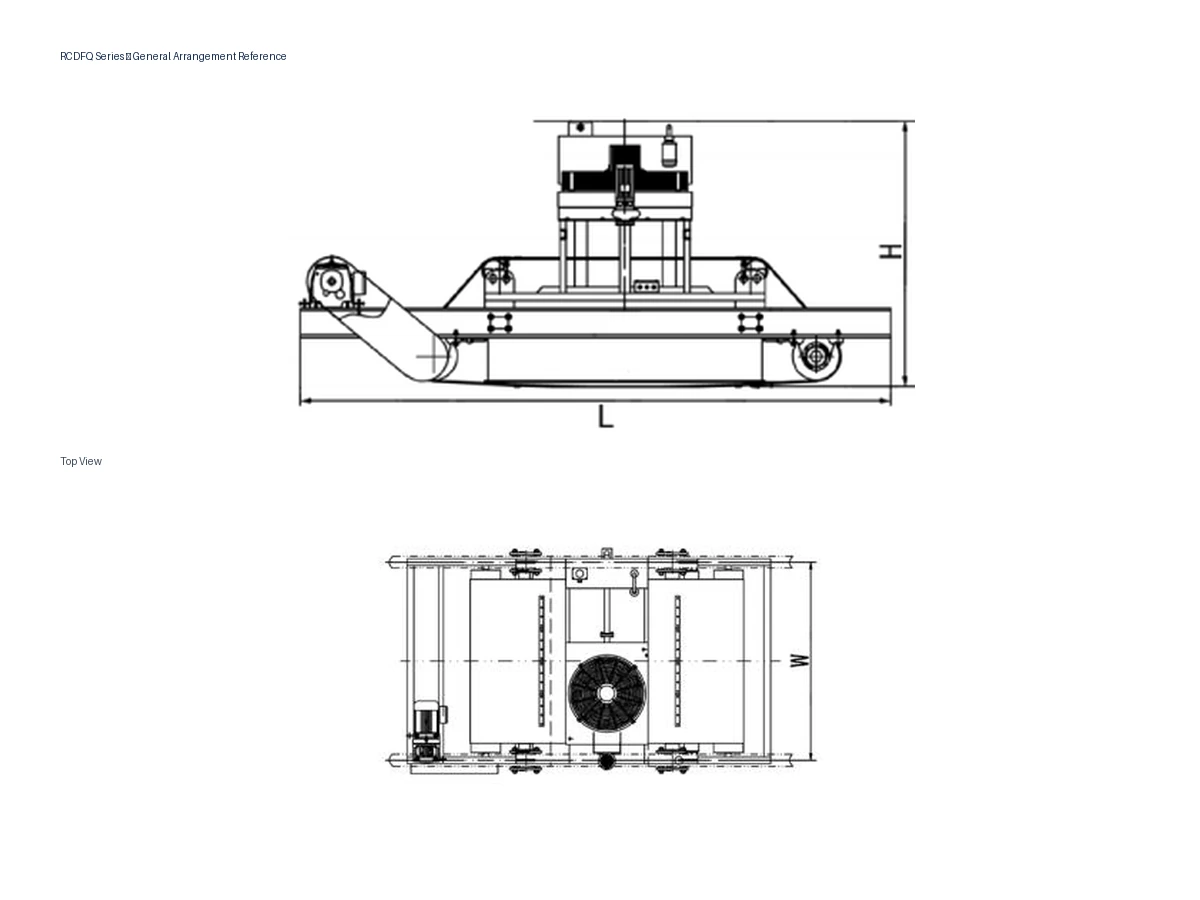
On the installation drawing, we review: suspension points, conveyor clearance, magnetic working distance, reject direction, cleaning-belt clearance, maintenance access and nearby steel structure.

This general-arrangement image is a series reference. We confirm the selected model dimensions, connection points and installation details in the quotation and approved project drawing.

RCDFQ series general arrangement reference showing side and top views with L, W and H dimensions
Electrical & Control

How is the RCDFQ powered and controlled?

RCDFQ is an energized electromagnetic separator, so excitation power, auxiliary fan power, rectifier equipment and control interfaces are part of the project review. The exact electrical scope depends on the selected model and T-level.

Rectifier equipment

Our RCDFQ product documentation includes rectifier equipment as part of the electrical system. We confirm the selected project scope in the quotation and approved drawing.

Manual and centralized control

The product documentation lists both manual and centralized control functions. We confirm the final control interface, interlocks and site connections for the project.

Model-specific electrical load

Excitation power and fan power are listed by configuration in the RCDFQ table. We use the selected row for electrical planning rather than applying one value to the whole series.

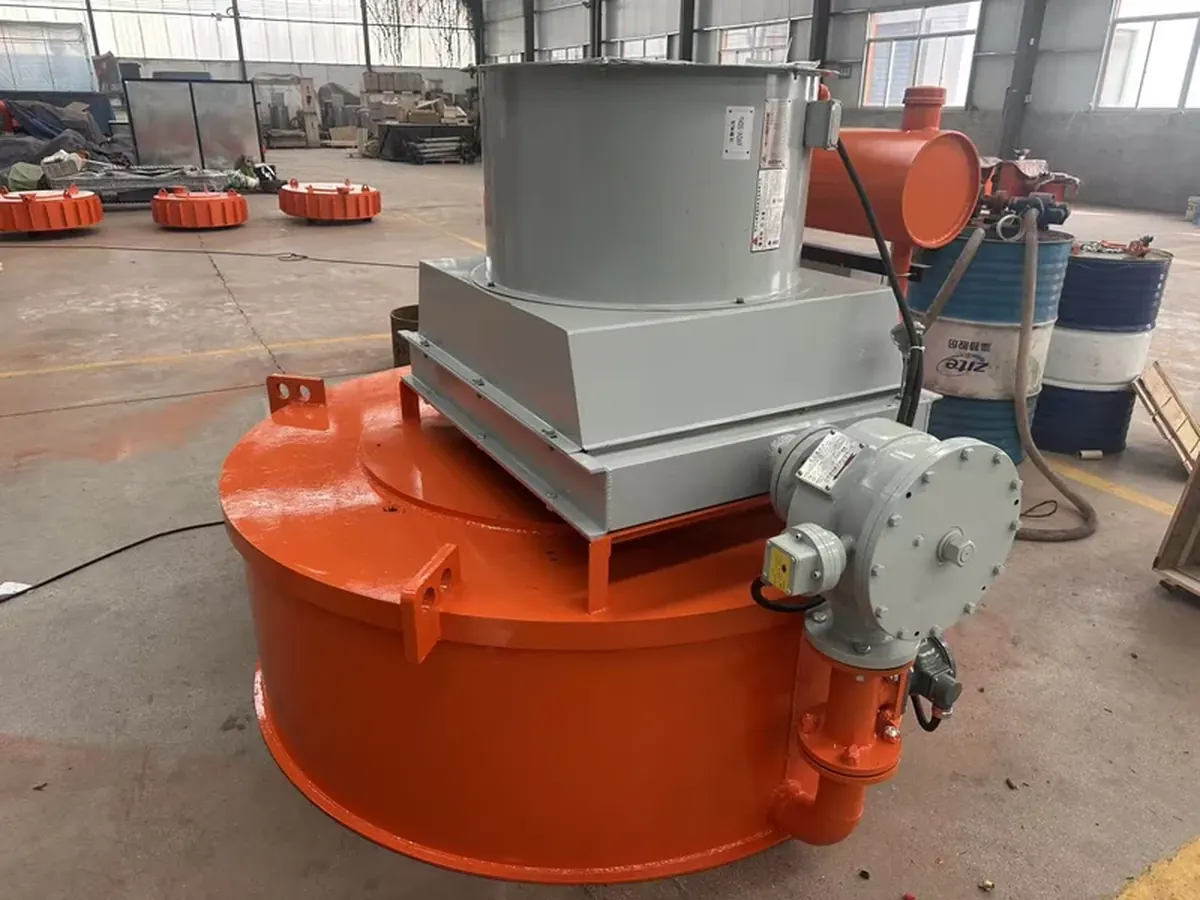
Side view of a Coverlan RCDFQ electromagnet and cooling-related assembly with external electrical enclosure
Electromagnet and auxiliary assemblyShows the electromagnet body, external assembly components and electrical enclosure used for equipment-identity and interface review.
Front view of a Coverlan RCDFQ electromagnet and cooling-related assembly in the workshop
Front assembly viewHelps review external component location, clearance and the physical arrangement around the electromagnet body.
Cooling-data boundary: the RCDFQ product identity is forced oil-cooled and the series table lists fan power by configuration. We confirm the selected cooling equipment and auxiliary arrangement in project documentation rather than inferring one cooling layout for every model.
Cleaning, Maintenance & Safety

What should be isolated and checked before RCDFQ maintenance?

RCDFQ has three main service hazards: electrical power, the moving cleaning belt and the suspended machine itself. Isolate all three before maintenance and follow the approved site lockout procedure.

Cleaning belt and tracking

The RCDFQ product documentation lists automatic belt-tracking correction and sealed bearing housings. During routine inspection, check belt alignment, pulley condition, bearing condition, drive access and the reject path.

Electrical and magnetic isolation

Use the project-approved isolation and lockout procedure before service. We confirm the electrical scope and required protection in the quotation. We do not assume a site certification that has not been verified.

Cooling circuit

For the selected model, we define the oil-cooling components and auxiliary equipment. Follow the inspection points and operating limits in the approved project documentation.

Validation Before Order

How do we confirm the selected RCDFQ before you order?

We confirm the installation first, then define any magnetic reading or capture check that the project needs. One catalog mT value is not enough to prove performance on a real conveyor.

Check the installation drawing

We confirm dimensions, suspension points, conveyor clearance, reject route, service space and nearby steelwork before the equipment layout is closed.

Define the magnetic reading

If a magnetic reading is required, we agree on the instrument, probe direction, measurement point, distance and energized condition before comparing results.

Define the capture check

If the project needs a capture test, we define the test piece, material condition, belt speed, working distance, number of passes and pass/fail rule before testing.

Why this matters: Gauss or mT describes magnetic flux density at a defined point. It does not, by itself, prove separation efficiency or guarantee capture of every iron piece.
Measurement & Capture Method

How should magnetic performance be checked on an RCDFQ project?

A useful check starts by defining the test condition. We do not compare magnetic readings or capture results until the measurement point, distance and operating condition are clear.

1. Define the point

State where the reading will be taken on the magnetic face or in the working zone.

2. Define the distance

Record the distance between the magnetic face and the measurement point or target iron.

3. Define the condition

Record the energized state, conveyor condition and any other project condition that can change the result.

4. Define acceptance

Agree on the reading, capture result or drawing condition that must be confirmed before approval.

When is a magnetic reading useful?

Use a magnetic reading when the project needs a field value at a defined location. Keep the instrument, probe direction and distance consistent so different readings can be compared.

When is a capture check more useful?

Use a representative capture check when the real question is whether a specific piece of iron can be removed under the project working distance, material condition and belt speed.

Representative Material+Representative Iron+Working Distance+Belt Speed=More Useful Capture Check

Simulation, catalog data, magnetic measurement and capture testing answer different questions. We keep them separate when we review an RCDFQ application.

Configuration Review Output

What will Corvelan return after the RCDFQ configuration review?

The purpose of the first review is to turn your process data into a practical equipment direction. We return the model recommendation together with the points that still need engineering confirmation.

You send

Material, target iron, throughput, conveyor width and speed, burden depth, working distance and available installation space.

Corvelan returns

Candidate base model, candidate T-level, electrical checks, installation checks, drawing items and any validation items still required.

Recommended Base Model

We narrow the RCDFQ size from conveyor width, working distance, material depth and installation fit.

Candidate T-Level

We recommend the T-level from the target iron and the difficulty of the capture duty, not from mT alone.

Electrical Checks

We identify the listed excitation and auxiliary loads that apply to the candidate model and what site information still needs confirmation.

Installation Checks

We identify the support, clearance, reject route, nearby steel and service-access items that must fit the actual conveyor.

Drawing Items

We list the dimensions, suspension points and interface details that need to be closed on the project drawing.

Checks to Agree Before Ordering

If the project requires measurement or capture testing, we define what needs to be measured, tested and accepted before final approval.

RCDFQ Specifications, Drawings and Testing

What evidence supports the RCDFQ selection on this page?

Use the RCDFQ specifications to compare models and the general arrangement drawing to check installation space. We confirm the selected configuration in your quotation. Project-specific validation is added where the application still needs proof.

Exact Series Data

RCDFQ Series Data

Our RCDFQ table lists belt-width classes, rated lifting height, T-level, magnetic intensity, excitation power, fan power, dimensions, belt-speed reference and weight.

Review RCDFQ model data

Installation Drawing

RCDFQ General Arrangement

Our series drawing supports review of overall dimensions, orientation, suspension, conveyor clearance and service access. Final project interfaces still need selected-model confirmation.

Review installation checks

Real Product Views

Product Documentation & Workshop Views

Our RCDFQ documentation and workshop images support product identity, self-cleaning structure, electromagnet assemblies, belt-tracking features and control-equipment discussion.

View RCDFQ product angles

How the Equipment Will Be Checked

Project Validation

When the project needs proof beyond series data, we define the drawing check, magnetic measurement condition or representative capture check before approval.

Review validation method

Rated lifting height helps compare models. The listed magnetic-field value does not guarantee iron capture at every installation height; confirm the required test conditions for your conveyor.

What do the Corvelan RCDFQ workshop views help us check?

These Corvelan RCDFQ workshop views show the equipment construction, cooling arrangement and service access. Magnetic and separation performance are evaluated against the agreed test conditions.

Front view of a Coverlan RCDFQ self-cleaning electromagnetic separator assembly
Front geometryHelps review frame width, belt path and conveyor-side clearance.
Drive-side view of a Coverlan RCDFQ self-cleaning electromagnetic separator
Drive sideShows the self-cleaning belt drive area and service access around the mechanical system.
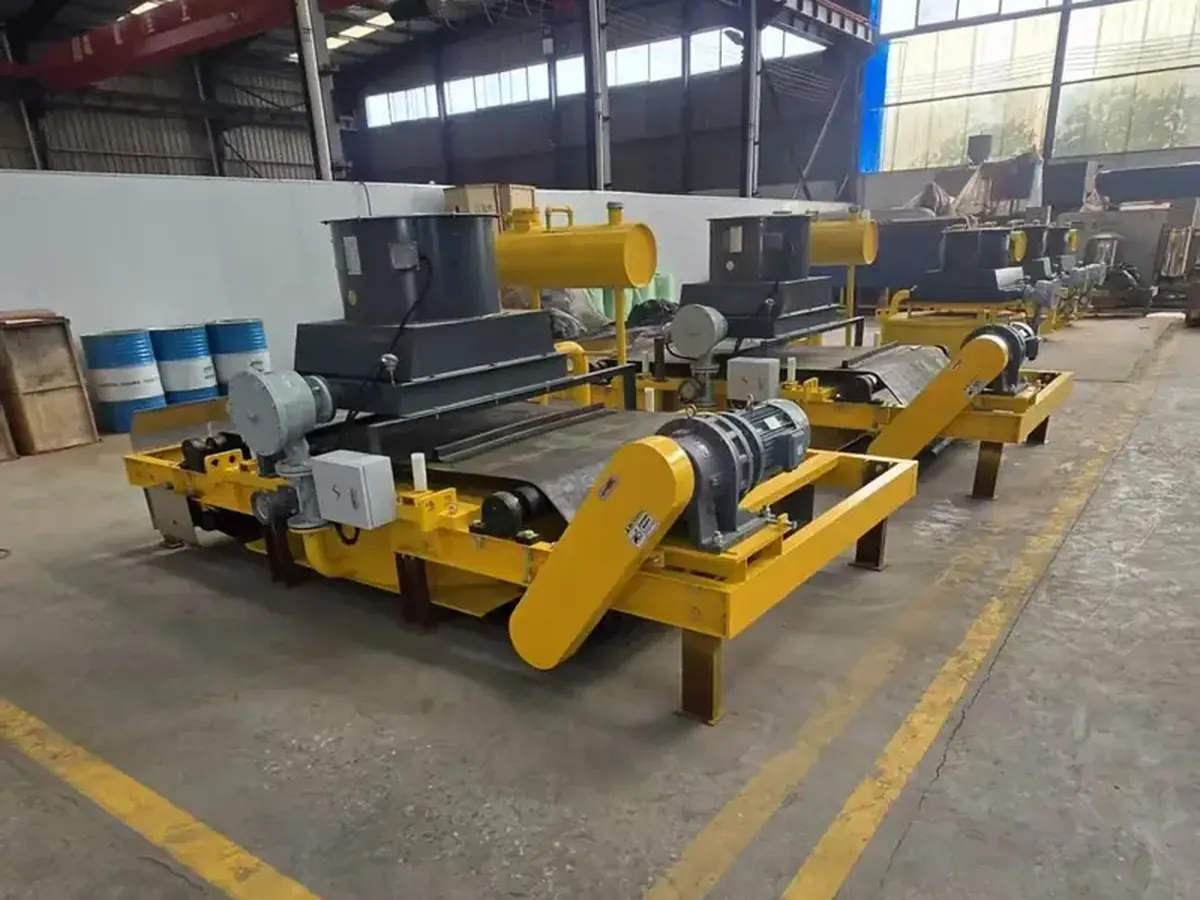
Multiple Coverlan self-cleaning electromagnetic separator assemblies in the workshop
Workshop lineupShows multiple self-cleaning separator assemblies during workshop preparation.
Multiple Coverlan electromagnet and cooling-related assemblies in the workshop

What does the electromagnet-assembly view add?

The workshop photo shows the electromagnet bodies, cooling components and mechanical assemblies. Specifications for the quoted unit are confirmed separately.

We use drawings, model data and project-specific checks—not image appearance alone—to close a final configuration.

Series Data ReferenceUse this for the published RCDFQ model range and listed dimensions or electrical values.
Project DrawingUse this to close selected-model dimensions, suspension points and site interfaces before manufacturing or installation approval.
Magnetic Measurement PlanUse this when a field reading must be checked at a defined point and distance.
Representative Capture CheckUse this when the real acceptance question is capture of a defined iron piece under defined process conditions.
Why Corvelan

What does Corvelan check before recommending an RCDFQ configuration?

We do more than match one catalog value to one model row. We check process fit, magnetic duty, installation fit and the proof still required before we recommend a configuration.

Application Review

We first check whether RCDFQ is the right separator type for the material flow and target iron.

Model Review

We compare belt width, working distance, target iron, material depth and operating condition before narrowing the base model and T-level.

Installation Review

We check suspension space, reject direction, service clearance and the interfaces that can change the final installation.

Plan the Required Tests

Where the project needs proof beyond catalog data, we define the drawing, measurement or capture check that must be completed.

FAQ

RCDFQ electromagnetic separator FAQ

What is an RCDFQ electromagnetic separator?

RCDFQ removes iron and steel from bulk material moving on a conveyor. It is a suspended electromagnetic separator with automatic belt cleaning and forced oil cooling. The cleaning belt carries captured metal away from the main material stream.

Why use a forced oil-cooled electromagnetic separator?

We use forced oil cooling to help manage heat while the electromagnet is energized. For the selected RCDFQ model, we confirm the cooling circuit, auxiliary equipment and operating conditions in the project specification.

Is the RCDFQ series self-cleaning?

Yes. RCDFQ uses a moving cleaning belt to carry captured iron or steel out of the magnetic zone. The belt then discharges the metal away from the main material stream.

How do I choose between T1, T2, T3 and higher T-levels?

We first choose the base model from your conveyor width and working distance. We then match the T-level to the target iron and how difficult it is to capture. Higher T-levels can also change power, cooling equipment, dimensions and weight, so we do not choose from the mT value alone.

Does a higher mT value guarantee better iron removal?

No. Magnetic flux density in mT is not the same as separation efficiency. Material depth, working distance, target size and shape, belt speed, material behavior and installation position also affect capture.

What conveyor belt widths are listed for the RCDFQ series?

Our current RCDFQ series data covers conveyor-width classes from 1000 to 2400 mm. We still check the conveyor profile, material depth, support structure and available clearance before final model selection.

Can this separator remove aluminum or copper?

No, not as the main separation method. RCDFQ is designed for iron and steel that respond strongly to a magnet. Aluminum, copper and other non-ferrous metals usually need a different separation technology.

Is RCDFQ an overband electromagnetic separator?

Yes. RCDFQ is a suspended, self-cleaning electromagnetic overband separator. It is installed above the main conveyor, and its cleaning belt carries captured iron or steel away for automatic discharge.

Should the separator be installed cross-belt or in-line?

Both layouts can be used in suspended overband applications. The right choice depends on conveyor geometry, material flow, reject direction, available headroom and service access. Send us the conveyor drawing or photos and we will review the installation position.

What should I send for RCDFQ selection and quotation?

Send us the material, target iron or steel, throughput, belt width and speed, and material depth or working distance. Also send a photo or line drawing, available space, site requirements and any required test. We use these inputs to recommend the RCDFQ base model and T-level.

Initial RFQ

Send four inputs to start your RCDFQ configuration review

Start with what you already know. A conveyor photo or drawing can answer several installation questions at once.

MaterialMaterial name, physical form and particle or lump size if known.
Target Iron / SteelPiece type, approximate size, shape and how often it appears.
ThroughputNormal and peak feed rate when available.
Installation / Process ConditionBelt width, speed, material depth, photos or drawing and available space.

Useful extras: bulk density, moisture, temperature, nearby steelwork, discharge side, electrical/control requirements and any required test or acceptance condition.

What happens next?

We first check product fit, then recommend the base model and candidate T-level. We also define the remaining installation, drawing and validation requirements needed for quotation.

Get An Instant Quotation Now