
01 · SELECTION
Choosing a Magnetic Separator
Start with the material, contamination type and installation location before choosing a magnetic separator model.
View 6 questions →Find equipment by installation point and separation task.
All magnetic separators →Start with the material or production line you need to protect.
All applications →Compare technologies, check parameters and prepare your RFQ.
All guides →See the factory, quality checks and answers before you request a quotation.
Use this page to resolve the questions that normally appear before a magnetic separator is selected, tested, integrated into a line or released for production.
Start with the material and process problem. Gauss, capacity, recovery, cleaning and installation only become useful specifications when their measurement or operating conditions are clear.
You do not need a finished specification before the first discussion. Send what is already known and mark the open points. The useful starting information is:
A useful FAQ should help buyers quickly find the information they need before selecting a magnetic separator.
Start with the material, contamination type and installation location before choosing a magnetic separator model.
View 6 questions →Understand what magnetic numbers can prove, and what still needs process evidence.
View 8 questions →Tie throughput to the real material and operating window instead of one catalog number.
View 4 questions →Use the test method that matches the buying decision you actually need to make.
View 7 questions →Define the interfaces, access and geometry needed to fit the separator into the real line.
View 5 questions →Protect the working geometry and establish repeatable inspection conditions after installation.
View 6 questions →Make drawings, tests, documents and commercial scope clear before production release.
View 6 questions →Diagnose equipment and process changes with evidence instead of guessing.
View 4 questions →A magnetic reading belongs to a defined point and method. It does not automatically prove capture rate, recovery or product purity.
Throughput needs the real material, feed presentation, operating window and required separation result attached to it.
A test result applies to the sample, setup and conditions tested. Production-scale performance still depends on the installed process.
Start with the separation duty, then compare the feed and installation conditions. Identify whether you need to remove tramp iron from a conveyor, protect a gravity-fed powder line, recover magnetic minerals, or separate weakly magnetic material. Confirm whether the feed is dry or wet, its particle size and throughput, the target contaminant or product, working distance, burden depth, cleaning method, and available space. These inputs help narrow the equipment family; they do not replace a material test when performance is critical. Share available process data and a layout for an application review. Read the Magnetic Separator Selection Guide →
Choose the separator based on the material, contamination type, installation location and operating conditions. The suitable equipment type depends on factors such as working distance, material flow, cleaning method and available installation space.
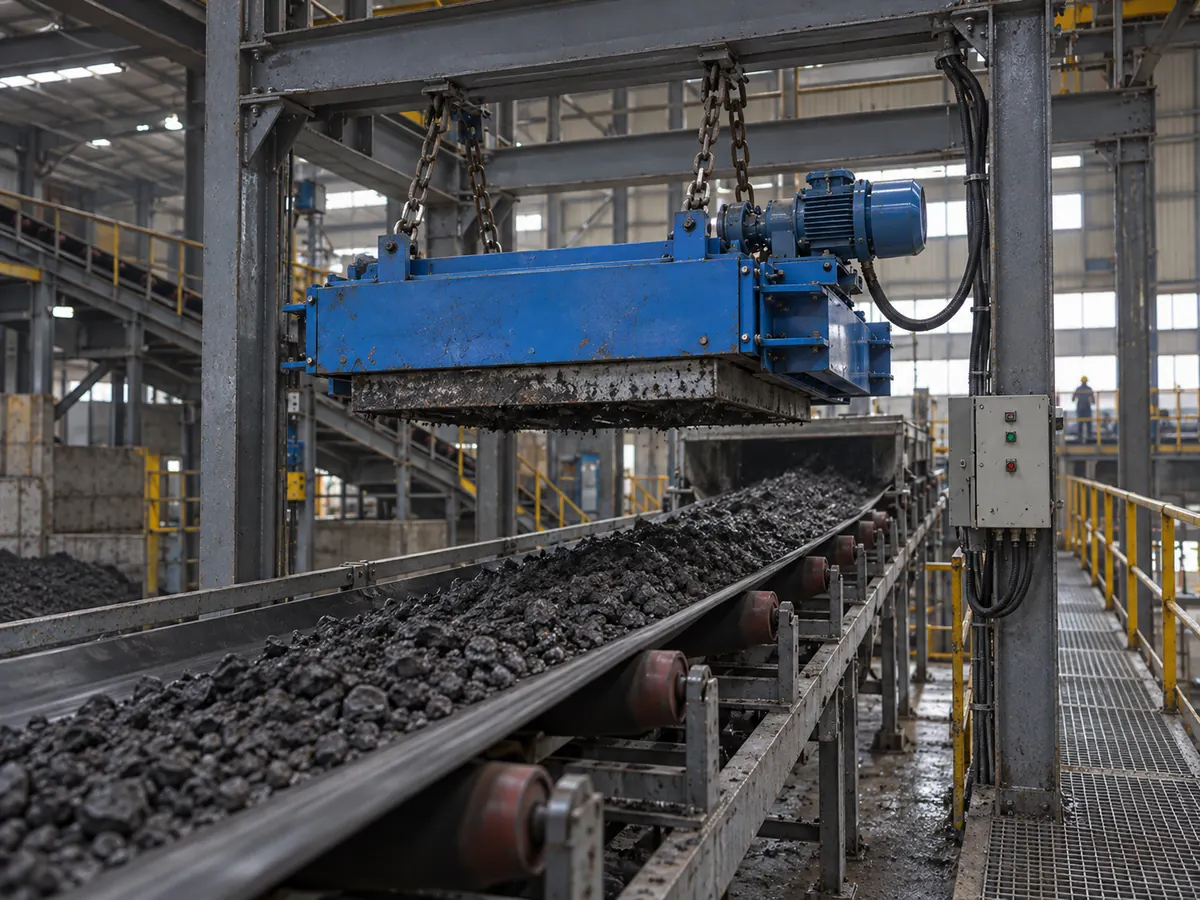
The suitable equipment may include a suspended magnet, overband separator, magnetic head pulley, magnetic drum or another arrangement. Belt width alone is not enough. Burden depth, working distance, contaminant size, belt speed, material trajectory, cleaning duty and discharge direction can change the choice.
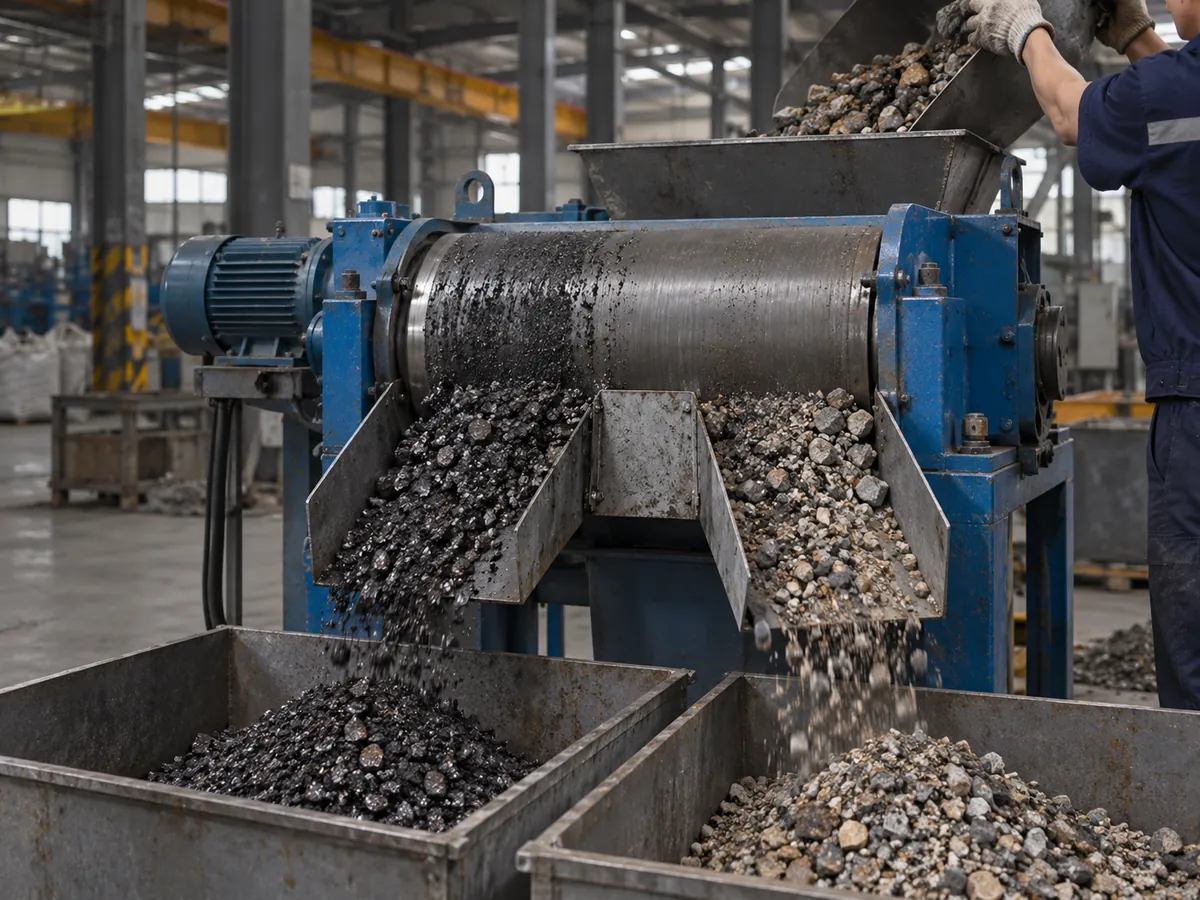
A magnetic drum normally separates material as it passes over or around a rotating drum and directs magnetic and non-magnetic fractions to different discharge paths. A suspended magnet works above or near a conveyor stream to lift ferrous material out of the burden. Installation position and discharge geometry are therefore fundamentally different.
The decision should be based on the required working distance, contamination type, duty cycle, available power, installation space, cleaning method, control needs and operating environment. The magnetic source is only one part of the equipment decision.
No. A useful first enquiry can begin with the application. Send the material, target contamination, installation location and available layout information. The equipment family can then be narrowed before a final configuration is discussed.
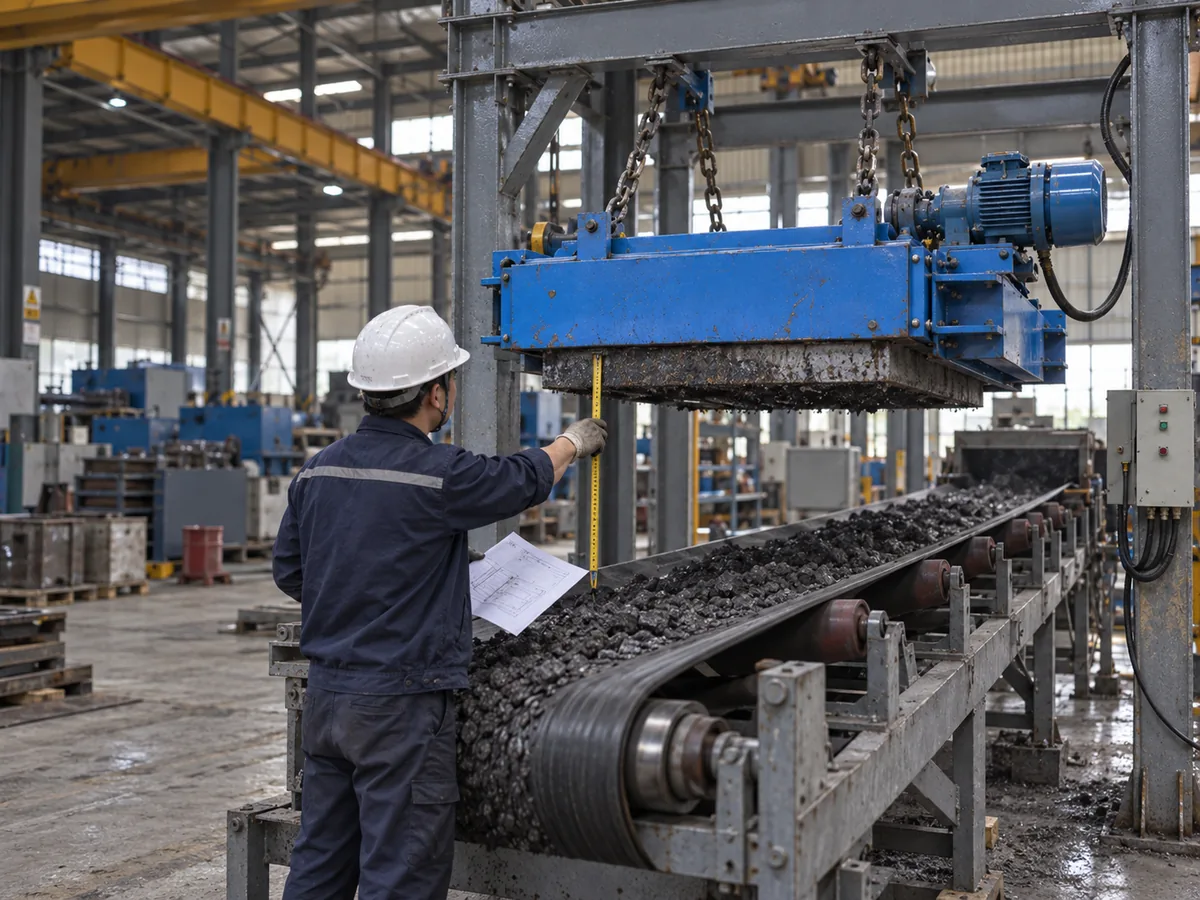
No. Gauss is magnetic flux density at a defined measurement point and method. Separation performance also depends on working distance, magnetic gradient, target properties, burden depth, feed presentation, separator geometry and operating conditions.
A surface reading is taken at or very near the magnetic surface. A working-distance reading is taken at a defined gap away from that surface. The two values describe different positions and should not be compared as though they were the same measurement.
No. A Gauss reading can verify a defined magnetic condition. Removal efficiency, recovery, purity and product loss require representative material testing or production validation with a defined sampling and calculation method.
Material magnetic response, liberation, particle size, moisture, feed distribution, burden depth, working distance, separator geometry, magnetic field profile, operating speed, residence time and discharge arrangement can all affect the result.
Particle size changes liberation, mass, drag, contact behavior and the force required to alter a particle trajectory. A wide size distribution can also cause fine and coarse fractions to behave differently, so particle range should be part of the selection and test plan.
Moisture can change flowability, agglomeration, carryover and how particles present themselves to the magnetic field. Sticky or wet feed may need a different equipment route, feed presentation or cleaning approach than free-flowing dry material.
A deeper material bed increases the distance between the magnet and particles lower in the burden. It can also shield or physically restrain target pieces. This is why conveyor selection should use the real burden depth rather than belt width alone.
No. A process result should be tied to the actual material, separator configuration, installation and operating conditions. Where a numerical result is important to purchasing, define the acceptance metric and test method before treating it as a requirement.

Capacity should be tied to the material and operating conditions, not copied as one universal number. Bulk density, particle size, moisture, feed presentation, burden depth, belt or rotor speed, separator geometry and required separation result can all affect the practical operating range.
Two materials can differ in bulk density, flowability, particle size distribution, moisture, magnetic fraction and required separation duty. The same equipment volume or belt width can therefore produce very different practical throughput conditions.
Yes. Belt speed changes residence time and particle trajectory. It can also change how captured ferrous material reaches the discharge zone. The effect must be reviewed together with burden depth, working distance, contaminant size and separator type.
Yes. Surges, uneven loading and segregated feed can change burden depth and the probability that target material enters the effective magnetic zone. Stable presentation generally makes both testing and production performance easier to interpret.
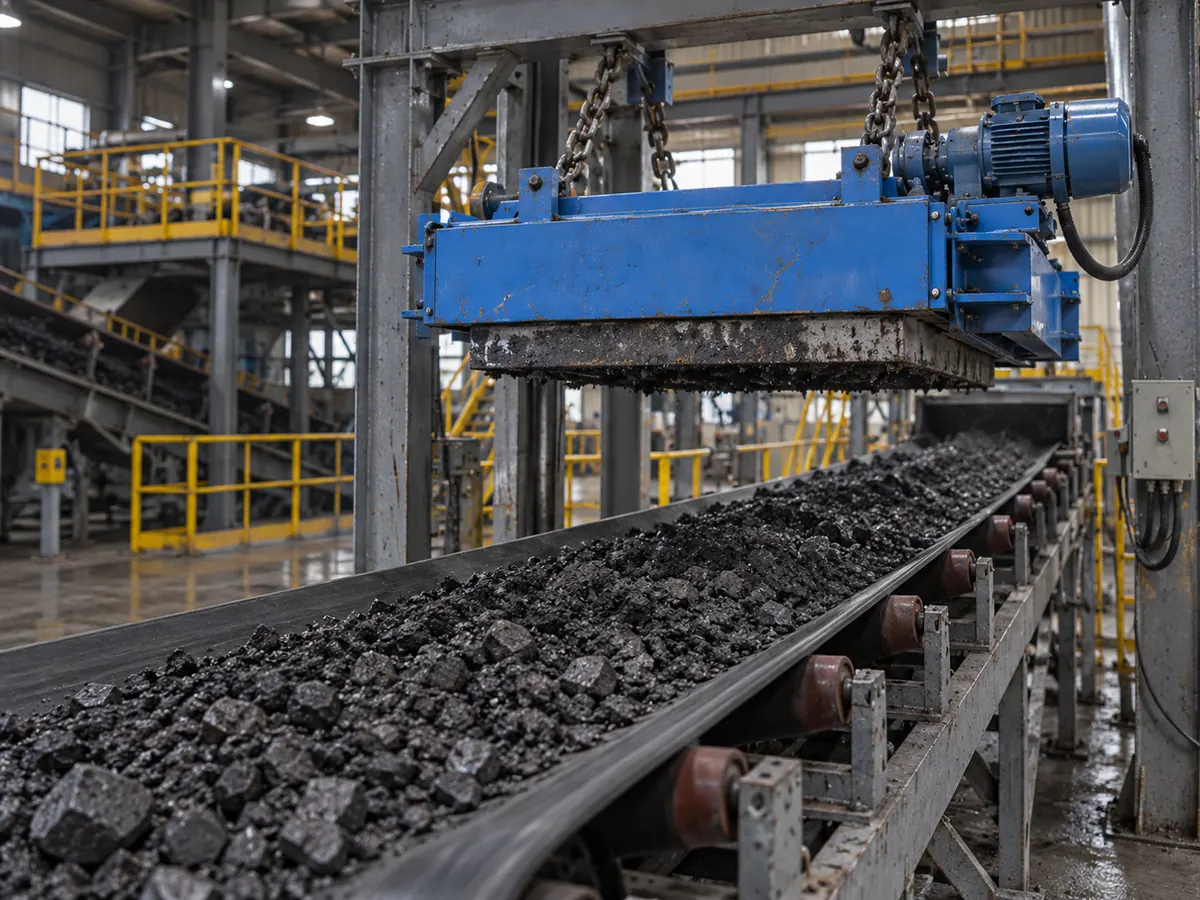
Use material testing when the actual magnetic response, contaminant behavior, separator route or required process result cannot be judged responsibly from drawings, photos or catalog data alone.
No. Start with the material, target, process position, test question and acceptance metric. Testing can help narrow the separator principle, while the final equipment choice still needs to fit the production installation and operating conditions.
No. Pull force is a defined mechanical comparison using a specific test piece, fixture and motion. It can be useful for controlled comparison or monitoring, but it does not reproduce a moving bulk-material stream or the separation of real fractions.
Define the decision to be supported, sample identity, sample condition, equipment configuration, feed method, working distance or gap where relevant, operating variables, fraction collection method, sampling method and acceptance metric.
No. The result applies to the tested sample, method, separator configuration and operating window. Production scale-up must consider material variability, feed presentation, working distance, equipment geometry, operating rate and the final acceptance method.
There is no responsible universal sample quantity for every application. The required amount depends on material variability, particle size, test equipment, number of conditions to compare and the measurement that must be made. The sample plan should be defined before material is shipped.
At minimum, it should identify the sample, test question, separator configuration, relevant operating conditions, measurement or sampling method, observed result and the boundary of what the result can support.
Yes, the technical review can be built around an existing layout. The useful inputs are process drawings, photos, conveyor or chute dimensions, mounting points, working clearance, material path, cleaning access, discharge direction and any control interfaces that affect the equipment scope.
The critical dimensions depend on the separator type, but they can include conveyor width, chute or inlet size, mounting centres, available height, working gap, shaft interfaces, discharge position, splitter position, service access and surrounding clearances.
Project-specific inlet, outlet and mounting interfaces can be reviewed when they are necessary for integration. Final dimensions should be tied to the accepted drawing and order scope rather than assumed from a website illustration.
Cleaning duty is part of separator selection. Manual cleaning, self-cleaning belts, drawers, easy-clean tube arrangements or other mechanisms suit different contamination loads and access conditions. The appropriate route should be selected from the real process rather than added as an afterthought.
A 2D layout, relevant 3D model where available, process-flow sketch, equipment photos, installation dimensions and a short description of the current problem are usually more useful than a long purchasing specification that omits the material path.
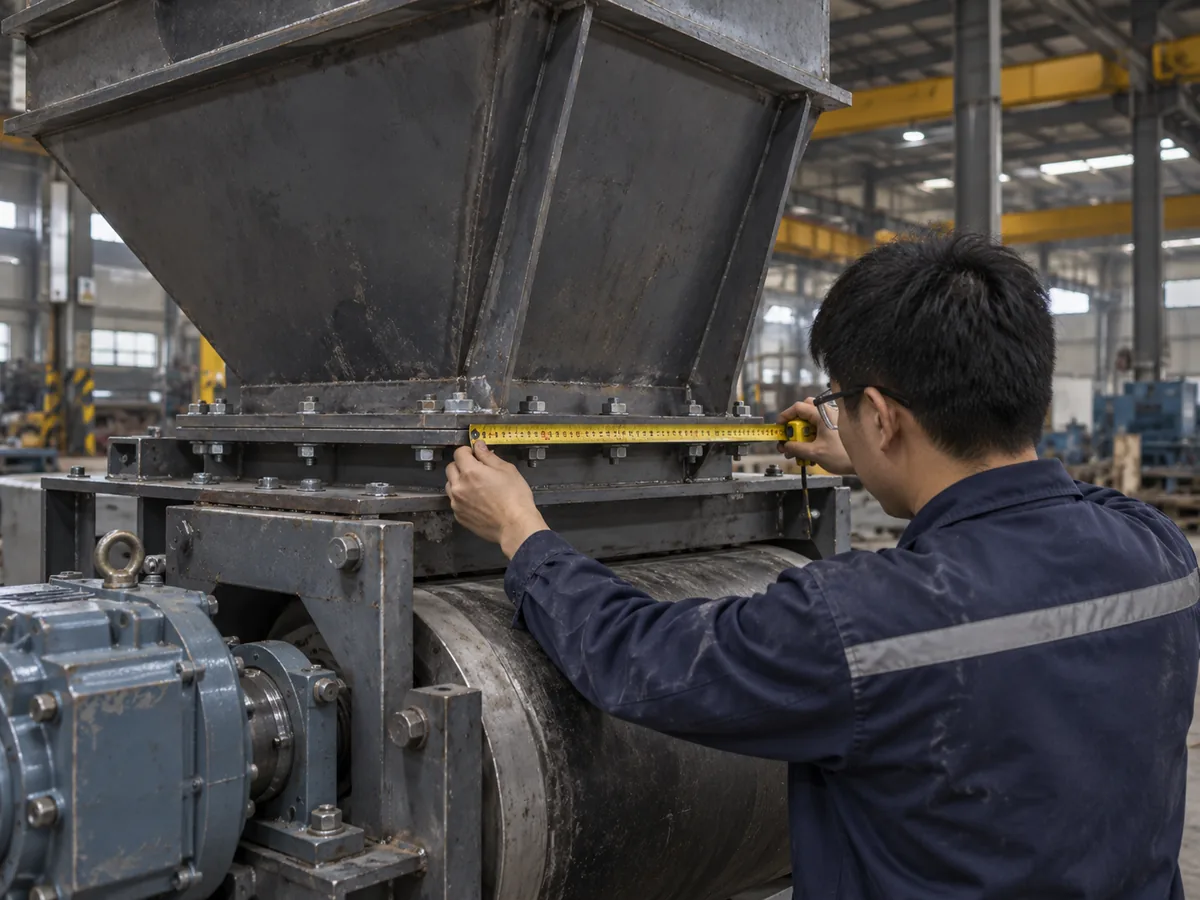
Confirm the approved installation position, working distance, supports, surrounding steel, service access, material trajectory, discharge clearance, lifting or handling needs, power and control interfaces where applicable, and the direction of movement.
Magnetic field strength and gradient change with distance from the magnetic source. If the installed gap differs from the design or test condition, the magnetic force acting on target material can also change.
Ferromagnetic structures can influence magnetic flux paths, installation clearance and the behavior of captured metal. Surrounding steelwork should therefore be considered during layout review, particularly near strong magnetic circuits.
There is no single interval for every plant. A practical program should reflect contamination risk, process severity, audit requirements and the consequence of failure. Baseline testing is especially useful after installation, maintenance, impact, suspected overheating or when performance is questioned.
Maintenance should focus on the components that can change separation conditions or safe operation: cleanliness, build-up, belt or drum condition, bearings, scrapers, splitters, fasteners, guards, working clearance, drive components and repeatable magnetic checks where the application requires them.
Recheck when the equipment is installed, after repairs or changes that may affect the magnetic system, after severe impact or overheating, and whenever contamination control or separation performance appears to have changed. Use the same method and test points if the goal is to compare against a baseline.
Include the material, particle size, moisture or temperature where relevant, target magnetic material, normal and peak throughput basis, process position, installation dimensions, cleaning requirement, available utilities, destination, and any inspection or documentation requirements already known.
The normal technical path is to review the application, identify the likely equipment route, list missing variables, define interfaces and acceptance needs, and then prepare the commercial scope around the configuration that has been accepted for quotation.
Critical geometry and project interfaces should be confirmed before production release when they affect fit, magnetic working distance, material flow, cleaning or maintenance. The accepted drawing revision should remain part of the production and inspection reference.
Yes. If dimensions, magnetic measurements, material trials, functional checks, customer inspection or Factory Acceptance Test items affect purchasing acceptance, define the scope and method before production rather than inventing the rules on the inspection day.
There is no universal document package stated on this page. Required drawings, inspection records, test records, certificates, packing documents or other deliverables should be listed in the accepted quotation or project scope.
These commercial terms are project-specific and should be confirmed in the quotation. This FAQ does not publish a universal MOQ, production lead time, payment ratio, shipping term or warranty condition for every separator.
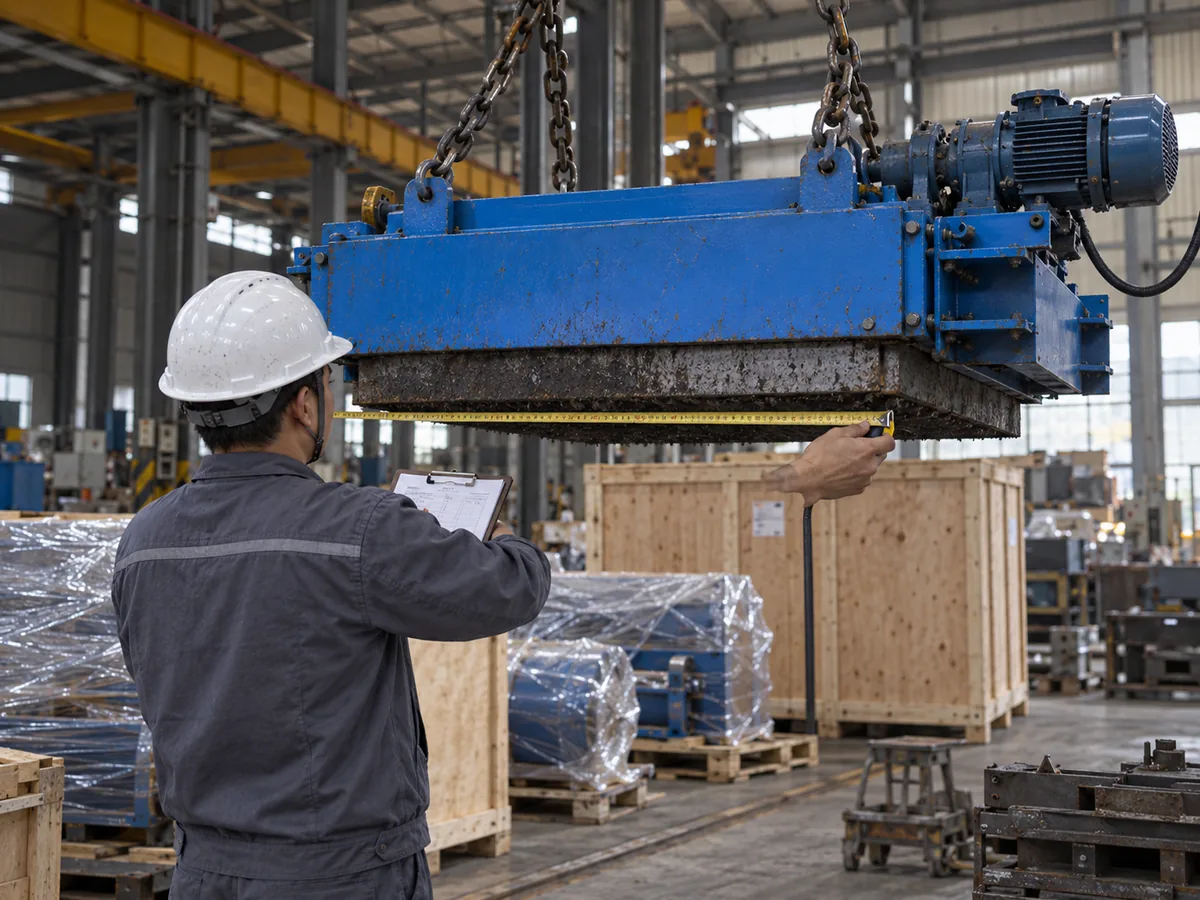
Send the order or equipment reference, photos or video, material and operating conditions, installation measurements, description of the symptom, when it started, and any changes made before the issue appeared. Providing photos, operating conditions and problem details helps us identify the cause faster and provide an effective solution.
Spare-part needs depend on the separator design. Driven systems may use belts, bearings, scrapers, motors, gearboxes, sensors or electrical components, while passive magnetic assemblies have a different service profile. The recommended list should follow the supplied configuration.
Magnetic assemblies can be affected by excessive temperature, severe impact, corrosion, physical damage or changes to the working geometry. Apparent performance loss can also come from build-up, increased working distance, changed feed conditions or mechanical wear, so diagnosis should separate magnetic condition from process changes.
Establish a baseline using a repeatable method when the equipment is new or accepted. Later checks should use the same test piece or probe, measurement points, orientation, gap and method so the trend can be compared meaningfully.

Magnetic separator quotations should be compared based on the same application requirements, equipment configuration and service scope.
Are both suppliers proposing the same separator principle and installation location?
Are throughput, burden depth, speed, material and working distance defined the same way?
Does a magnetic or process target state where and how it will be measured?
Are drives, controls, supports, accessories, records, testing and packing actually included?
You do not need every answer before contacting Corvelan. The purpose of the checklist is to prevent a quotation from quietly filling missing information with assumptions.
This information is not enough to select the right magnetic separator. A useful enquiry should include the material, target metal, required capacity, installation location and available space. Photos or drawings of the installation area are also helpful.
Commercial conditions such as price, MOQ, lead time, payment, Incoterms, warranty and document package should be confirmed in the project quotation rather than assumed from this general FAQ.
Learn more about Corvelan's manufacturing process, quality control and project experience.
Review the material-first selection logic, engineering route, testing philosophy and project process.
Review incoming inspection, dimensional checks, magnetic testing, functional testing, material trials and final inspection logic.
Corvelan can help identify the right magnetic separator based on your material, contamination type and operating conditions. The goal is to recommend a suitable solution instead of selecting a model only from standard catalog options.