Scrap Recycling · Ferrous Recovery

Scrap Metal Magnetic Separator for Recycling & Ferrous Recovery

Recover iron and steel from shredded scrap, reduce ferrous carryover before downstream sorting, or protect shredders and crushers from damaging tramp metal. Corvelan configures magnetic separation around your scrap type, material condition and separation requirements.

For controlled post-shred streams, a magnetic drum is often the first separator to evaluate. For conveyor protection or discharge-point separation, an overband magnet or magnetic head pulley may fit the process better.

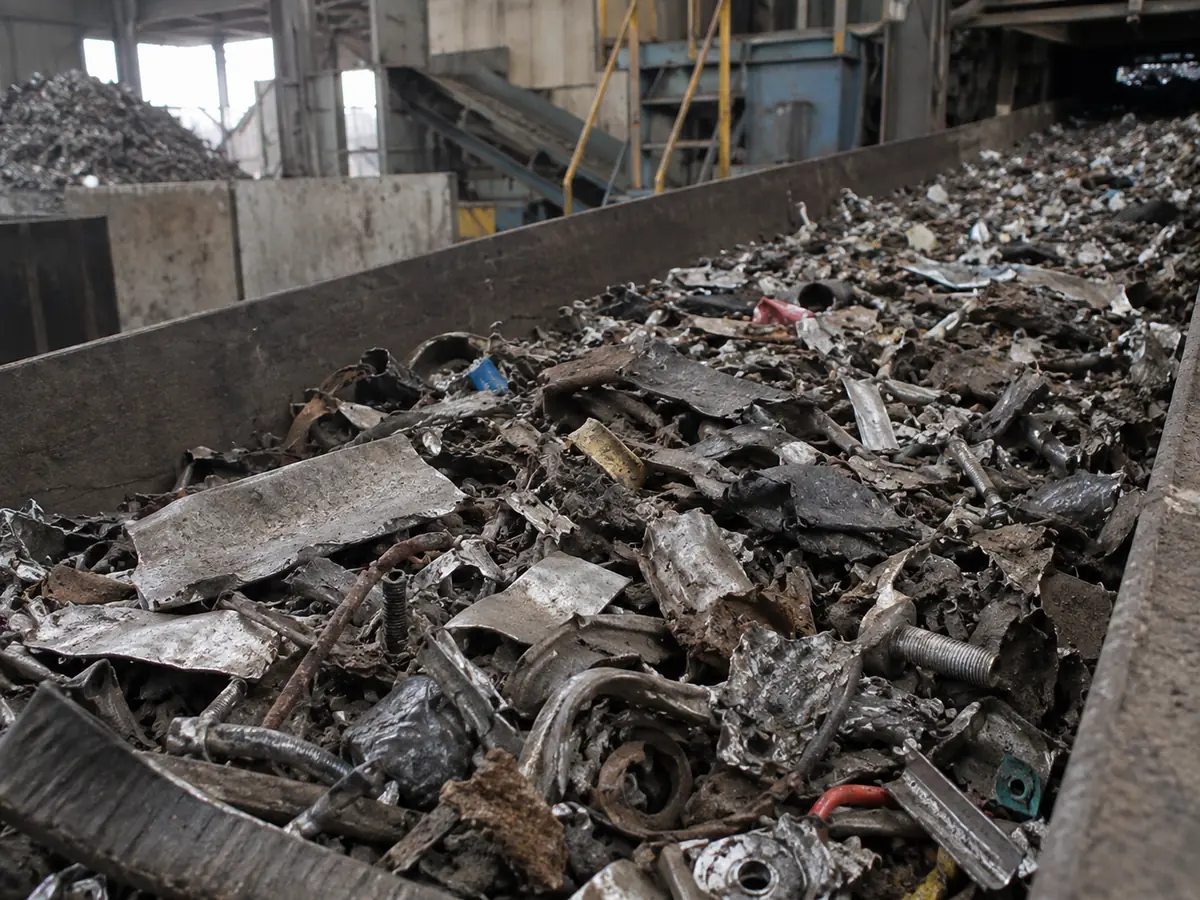
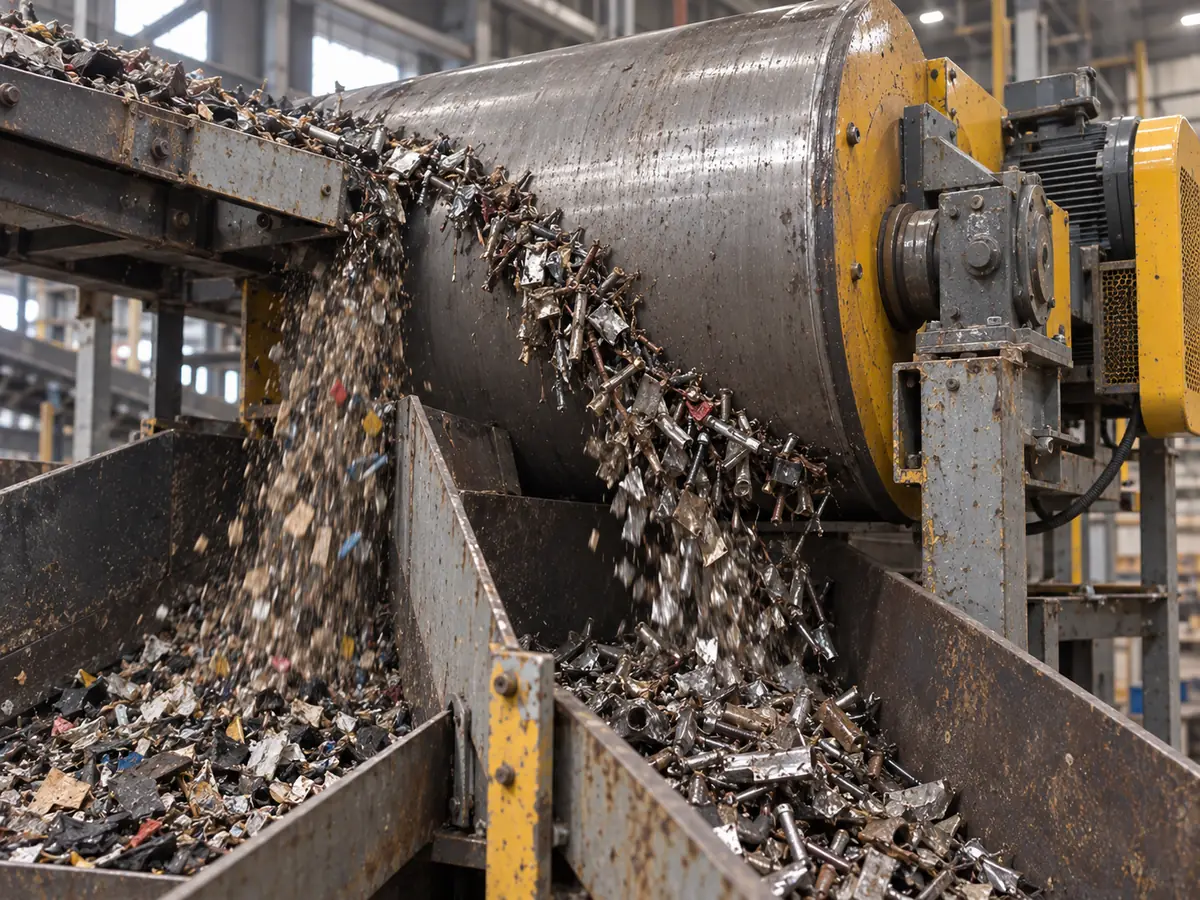
Scrap metal magnetic drum separation at a recycling line

Quick Answer: Which Magnetic Separator Fits Your Scrap Application?

For post-shred scrap with exposed ferrous pieces and controlled feed, start with a magnetic drum. For tramp iron above a conveyor before a shredder or crusher, use a suspended or self-cleaning overband magnet. For continuous separation at a conveyor discharge, review a magnetic head pulley.

Free aluminum, copper and brass are not recovered by ordinary ferromagnetic attraction and normally require downstream non-ferrous separation after ferrous removal.

Post-shred ferrous recoveryMagnetic drum
Pre-shred protectionSuspended / overband magnet
Belt discharge separationMagnetic head pulley
Free non-ferrous metalsDifferent downstream technology

Scrap Recycling Magnetic Separator Applications

Magnetic separation is usually one stage inside a larger recycling process. The correct equipment depends on the scrap condition, material size and the separation result you need.

1Incoming Scrap

Mixed scrap, bulky pieces, tramp iron or pre-sorted feed.

2Pre-Shred Protection

Remove exposed damaging ferrous pieces where required.

3Shredding / Sizing

Expose and liberate iron and steel from attached material.

4Ferrous Separation

Recover liberated ferrous material from a controlled stream.

5Downstream Sorting

Continue with non-ferrous or final cleanup stages.

Selection guideline: do not select the magnetic separator as an isolated machine. Choose it based on scrap condition, material flow and required separation result.

What Separation Result Do You Need?

Recover

Recover Ferrous Metal

Recover liberated iron and steel as a reusable or saleable fraction from shredded or sized scrap.

Protect

Protect Downstream Equipment

Remove damaging tramp iron before shredders, crushers, screens or other vulnerable equipment.

Clean

Reduce Ferrous Carryover

Remove remaining ferrous pieces before non-ferrous sorting or final product cleanup.

Typical Scrap Materials for Magnetic Separation and Ferrous Recovery

The same magnetic separator should not be assumed to fit every scrap stream. We evaluate the material condition and the required separation task before choosing the suitable magnetic separator.

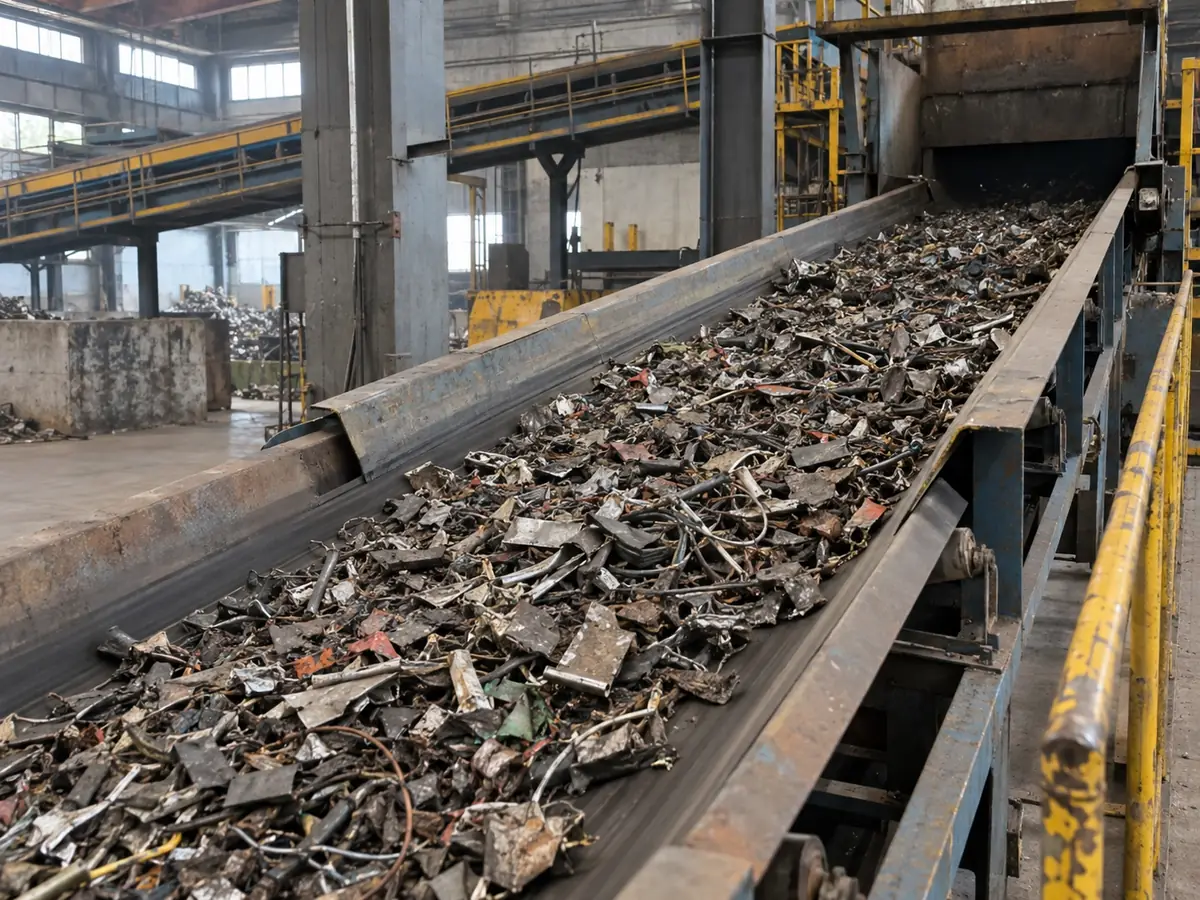
Mixed shredded scrap metal on a recycling conveyor

Shredded Mixed Scrap

Mixed steel fragments, wire, fasteners and non-ferrous or non-metallic residue after size reduction.

Automotive Shredder Residue / ASR

Post-shred material where liberated ferrous pieces may need primary recovery or secondary cleanup before later sorting stages.

Construction & Demolition Scrap

Mixed C&D fractions containing exposed steel, fasteners, wire and other ferrous contamination.

WEEE & Appliance Recycling Residue

Processed appliance or electrical recycling fractions containing liberated magnetic steel pieces.

Mixed Metal Recycling Streams

Mixed metal fractions where ferrous removal is required before the remaining material moves to non-ferrous sorting.

Is Magnetic Separation Right for Your Scrap?

Good Starting Conditions

  • Ferrous pieces are exposed or sufficiently liberated.
  • The material can be presented in a reasonably controlled layer.
  • Iron and steel can physically move away from the bulk stream.
  • Separate ferrous and non-magnetic discharge paths are available.
  • Feed condition is reasonably stable.

Another Route May Be Needed

  • Aluminum, copper or brass is the main recovery target.
  • Ferrous remains mechanically locked inside composite pieces.
  • Material is severely sticky, bridging or difficult to present.
  • Feed cannot be controlled at the magnetic zone.
  • The target is only weakly magnetic and requires another separation method.
Liberated shredded scrap before magnetic separation

Ferrous Recovery Starts With Liberation

A stronger magnetic field cannot remove iron that is still attached to another material. Shredding, crushing or sizing may be required to expose the steel pieces before magnetic separation.

Provide before-and-after shredding photos, particle size information and examples of attached steel pieces. This helps determine whether the separator is used for primary recovery, secondary cleaning or equipment protection.

Important: magnetic attraction does not create mechanical liberation. If a steel part remains attached to plastic, rubber, aluminum or another large object, the attached material may travel with the steel pieces.

Choose Scrap Metal Magnetic Separators by Application

Post-Shred

Magnetic Drum Separator

Best fit: controlled post-shred ferrous recovery.

Use when liberated ferrous material is distributed across a continuous feed and two discharge paths can be created around the drum.

Protection

Suspended / Overband Magnet

Best fit: conveyor tramp-metal removal.

Use before shredders, crushers or other vulnerable equipment when larger exposed ferrous pieces must be lifted from the conveyed burden.

Discharge

Magnetic Head Pulley

Best fit: continuous separation at belt discharge.

Use when the conveyor discharge point is the natural place to split magnetic and non-magnetic trajectories.

Gravity Flow

Plate Magnet

Best fit: selected chute or gravity-flow duties.

Useful where the material path and required cleaning method suit a plate-style magnetic surface rather than continuous drum discharge.

How a Scrap Metal Magnetic Drum Works

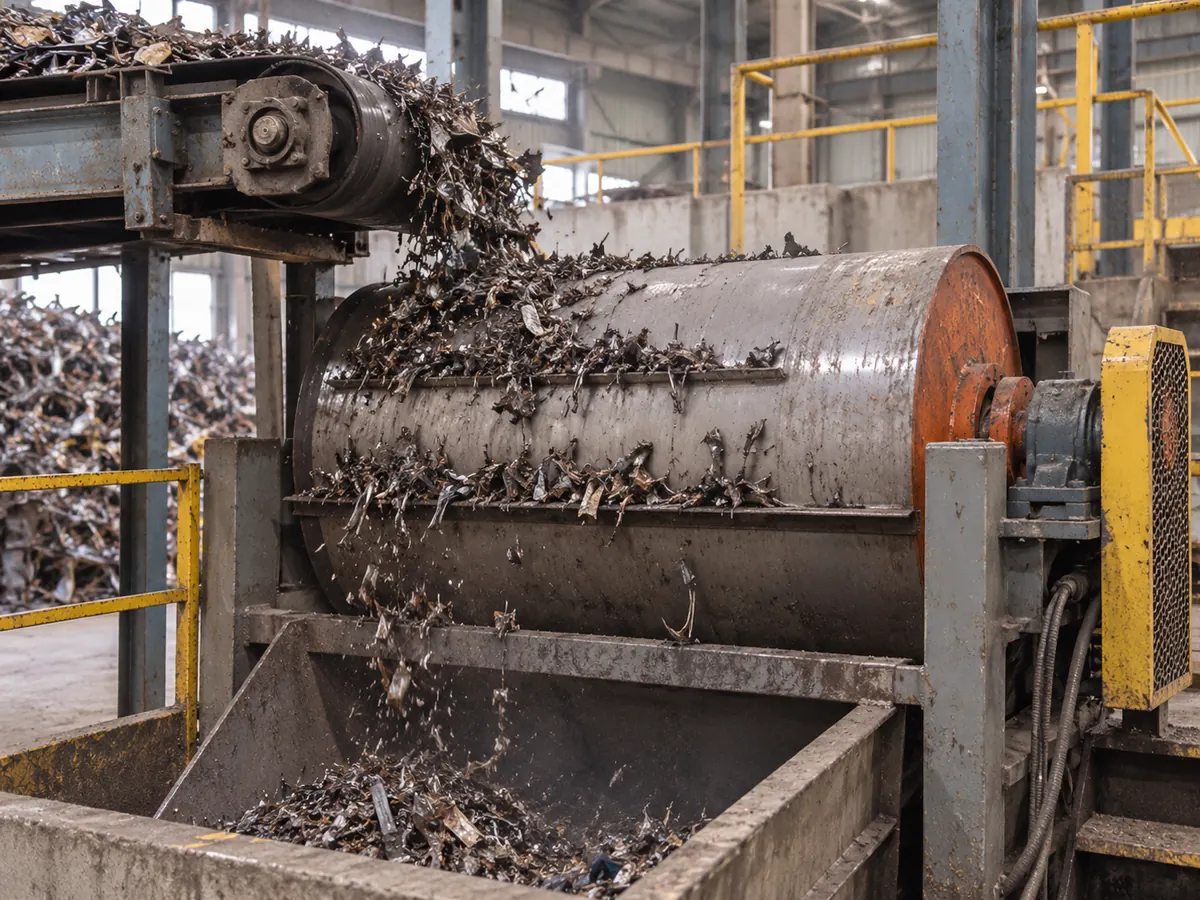
A magnetic drum presents a rotating shell around a stationary or controlled magnetic zone. As scrap reaches the drum, magnetic steel pieces are held on the drum surface while non-magnetic materials continue through the discharge area. The separated materials leave through different discharge paths.

Separation performance depends on material condition, working distance, feed thickness and separator settings — not only magnetic strength.

Practical point: the splitter should match the actual material discharge. Final adjustment may be required after observing operating conditions.
Magnetic drum separating ferrous material from shredded scrap

How Scrap Reaches the Magnetic Drum Matters

Feed arrangement changes how the material meets the magnetic zone, how deeply the field must act through the burden and how the two fractions leave the drum.

Controlled Feed

A stable layer approaches the upper working area of the drum. This is easier to evaluate when feed width and burden depth are reasonably consistent.

Underfeed Arrangement

Material passes through the lower working area where the process may require magnetic pieces to lift away from the main bulk stream.

Conveyor Discharge

The existing belt trajectory helps define the separation zone and the available space for magnetic and non-magnetic discharge paths.

Six Factors That Change Ferrous Recovery

1. Liberation

Exposed steel can respond independently. Locked or attached ferrous material behaves as a composite piece.

2. Burden Depth & Feed Distribution

A deep or uneven burden increases the distance between buried ferrous pieces and the magnetic surface.

3. Working Distance

Chutes, covers, wear liners and air gaps all add distance between the target and the magnetic circuit.

4. Particle Size & Shape

Long wire, flat sheet, compact steel pieces and fine fragments behave differently during attraction, retention and release.

5. Drum Speed & Retention

Speed changes residence time, centrifugal effects and the release trajectory of captured ferrous material.

6. Splitter & Discharge Geometry

Recovery can be lost if the physical discharge paths do not match the actual trajectories of the separated fractions.

Other duty conditions: ferrous loading, abrasion, sharp pieces, moisture and feed instability can affect separator design and separation performance.

Magnetic Separator Design Considerations for Scrap Recycling

Magnetic Circuit

Magnet type, pole arrangement and useful magnetic coverage are selected around target ferrous size, working distance and the required separation zone.

Shell & Wear Protection

Abrasive and sharp scrap may require additional wear protection. Any protective layer is considered because it also increases magnetic working distance.

Drive, Bearings & Mechanical Load

Drum speed, expected loading, service access and the installation arrangement influence the drive and support design.

Splitter, Chute & Discharge

The magnetic and non-magnetic paths must fit the actual line geometry and provide enough space for stable discharge and maintenance.

Installation Information We Need Before Quotation

We do not need a finished engineering package to start. A simple line drawing, photos and measured interfaces are usually enough for the first review.

Feed width and material direction
Inlet and discharge elevations
Available machine envelope
Burden depth at the magnetic zone
Chute, conveyor or transfer-point geometry
Maintenance and cleaning access
Required discharge directions
Environmental and guarding conditions

Magnetic Strength Does Not Determine Scrap Recovery

Gauss tells you magnetic flux density at a defined measurement point. It does not tell you scrap recovery. Recovery also depends on liberation, working distance, burden depth, particle behavior, drum speed and discharge geometry.

If a Gauss value is part of acceptance, the test should define the instrument, measurement location, surface condition and method. If recovery or cleanliness matters, define a material test separately.

Measuring Scrap Metal Separation Performance

A repeatable test is more useful than a vague claim such as “high recovery.” Corvelan recommends defining the feed, collection method and acceptance calculation before comparing results.

1. Define FeedMaterial type, size range, feed mass, burden depth and test duration.
2. Collect FractionsKeep ferrous product and remaining stream separate during the test.
3. Measure Missed FerrousInspect or reprocess the remaining fraction with the agreed method.
4. Record ConditionsDocument feed setting, drum speed, splitter position and relevant observations.

Performance results depend on the tested material and operating conditions.

Before Manufacturing Starts

Approved Layout

Equipment envelope, feed direction, mounting points and discharge arrangement.

Magnetic Performance Requirements

Measurement location and test method when a magnetic acceptance value is required.

Mechanical & Wear Scope

Shell, guards, drive access, wear protection and project-specific interfaces included in supply.

Inspection / Test Scope

Inspection steps, material trial requirements and documentation agreed for the project.

Why Corvelan for Scrap Metal Separation?

Application-Based Selection

We select the separator based on scrap condition and separation requirements rather than forcing every project into the same machine type.

Integrated Mechanical Review

Feed, magnetic zone, shell, splitter, discharge and installation interfaces are considered as one material-handling system.

Defined Performance Requirements

Magnetic field inspection verifies the agreed measurement conditions. Material recovery is evaluated separately using the defined feed, collection and calculation method.

Get the Right Scrap Metal Magnetic Separator Configuration

You do not need a finished specification. Send the information you already have and Corvelan will use it to recommend a suitable magnetic separator and identify any additional engineering inputs needed.

Material

  • Scrap type and photos
  • Particle-size range
  • Moisture / stickiness
  • Abrasive or sharp condition

Process

  • Normal and peak throughput
  • Feed width and burden depth
  • Pre- or post-shred position
  • Existing sizing stage

Ferrous Target

  • Typical iron / steel size
  • Approximate ferrous loading
  • Remove or recover
  • Primary recovery or cleanup

Installation

  • Line drawing or sketch
  • Inlet / outlet elevations
  • Available space
  • Discharge directions

Performance Requirements

  • Recovery target if defined
  • Cleanliness target if defined
  • Gauss test method if required
  • Sampling / FAT requirement

Site Conditions

  • Ambient environment
  • Dust / moisture exposure
  • Guarding requirements
  • Electrical scope if applicable

Scrap Metal Magnetic Separator FAQ

What is the best magnetic separator for scrap metal?

There is no single best separator for every scrap line. A magnetic drum is a strong starting point for continuous ferrous recovery from controlled post-shred material. A suspended or overband magnet fits conveyor tramp-metal removal, while a magnetic head pulley fits separation at a belt discharge.

Should magnetic separation come before or after shredding?

It can be used in both positions for different jobs. Before shredding, magnetic separation may remove exposed tramp iron and protect equipment. After shredding, newly liberated ferrous material can be recovered from the processed stream.

Can a magnetic separator recover aluminum, copper or brass?

Not by ordinary ferromagnetic attraction. Magnetic drums, overband magnets and head pulleys primarily target sufficiently magnetically responsive ferrous material. Free aluminum, copper and brass normally require another downstream separation method.

Why does liberation matter in scrap recycling?

A magnetic separator cannot create mechanical liberation. If iron or steel remains attached to plastic, rubber, aluminum or another material, the attached material may travel with the steel pieces. Shredding, crushing or sizing may need to expose the steel pieces first.

How do you size a scrap metal magnetic separator?

Corvelan evaluates scrap type, particle-size range, feed width, normal and peak throughput, burden depth, working distance, ferrous loading, abrasiveness, target fraction and installation envelope. Throughput alone is not enough.

Does higher Gauss mean higher scrap recovery?

No. Gauss is magnetic flux density at a defined measurement point. Scrap recovery also depends on working distance, field gradient, feed depth, liberation, particle behavior, drum speed and discharge geometry.

What should I send Corvelan for a quotation?

Send the scrap type, feed photos, particle-size range, normal and peak throughput, feed width, burden depth, typical ferrous size and loading, line drawing, available space, discharge directions, environmental conditions and your separation objective.

Related Corvelan Equipment

Use these equipment families as the next comparison step once the application condition is clear.

Send Your Scrap Material & Line Drawing

Corvelan can review the material, application condition and installation interfaces before you lock the separator type.

Start Your Scrap Separation Review

Get An Instant Quotation Now