Continuous Dry Ferrous Removal

Magnetic Drum Separator for Continuous Ferrous Removal

Corvelan magnetic drum separators continuously remove ferrous metal from dry bulk material. They can also recover a magnetic fraction from the product stream. The SXGT family data supplied for this page gives real reference sizes for dry continuous separation, while final model selection still depends on your material, throughput, feed condition and line layout.

Best forDry conveyed or gravity-fed bulk material
TargetFerrous tramp metal or a strongly magnetic fraction
Reference belt width1000–1600 mm — SXGT family
Reference drum diameterΦ800–Φ1600 mm — SXGT family
Reference drive power3.0–7.5 kW — SXGT family
InstallationConveyor discharge, transfer point or controlled gravity feed

Reference values above come from the supplied SXGT family technical sheet. Final model, interfaces and duty are confirmed for the actual project.

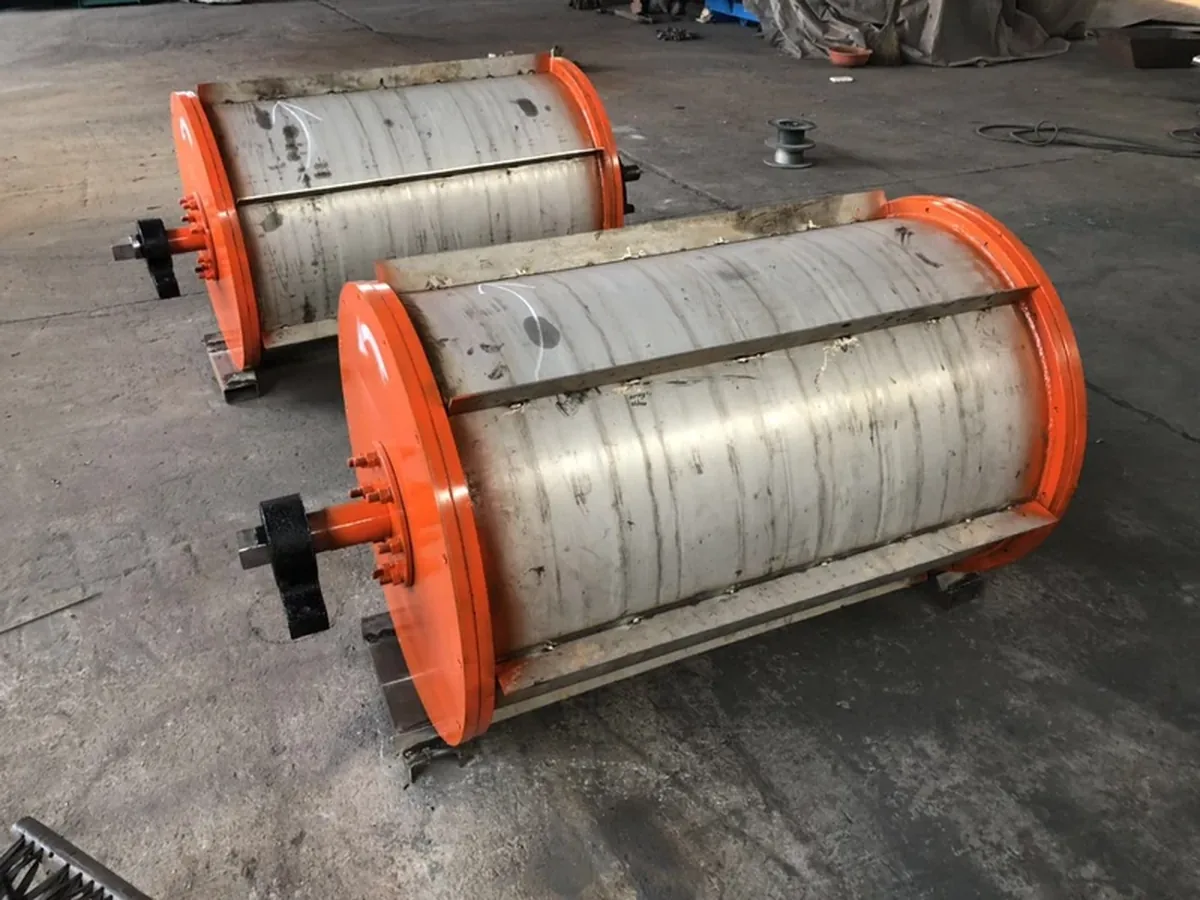
Real Coverlan magnetic drum separator units with cylindrical drum shells and orange end plates in the workshop.
Fit

Is a Magnetic Drum Separator Right for Your Process?

Corvelan uses a dry magnetic drum when dry material can reach the drum in a steady, controlled flow. The drum removes or recovers magnetic material continuously. This can reduce the need to stop the line for frequent manual magnet cleaning.

Good Fit

Dry bulk material, steady feed, a ferrous or strongly magnetic target, and enough room for two separate discharge paths.

Send More Details

We need more information if your material is sticky, bridges in the chute, contains very fine weakly magnetic particles, or causes heavy wear. High temperature, limited space and special safety requirements also need to be checked.

Better Route

If your material is a wet slurry, we will check a wet drum separator instead. Non-ferrous sorting normally needs a different separation technology.

Material & Contaminant

What Materials and Contaminants Can a Drum Separator Handle?

Corvelan configures this dry drum separator for free-flowing or controllable dry bulk material. The target must have enough magnetic response for the drum to attract and hold it while the material passes the magnetic area. Common uses include minerals, aggregates, recycling, scrap handling and equipment protection.

To select the drum, we first look at your bulk material and the metal or magnetic fraction you want to remove. We also check particle size, moisture, bulk density, flow, burden depth and magnetic loading. These conditions change how the material reaches the drum and how easy it is to separate.

Applications

Where Does a Magnetic Drum Separator Fit?

We use magnetic drum separators where dry bulk material needs continuous ferrous removal or magnetic recovery. A good application also has a controlled feed and enough room for separate magnetic and non-magnetic discharge paths.

Material or processWhat you need to doWhat we need to check
Aggregate and mineral bulk flowRemove tramp iron or recover a magnetic fraction before the next process step.Material depth, particle size, wear, feed uniformity and working distance.
Recycling and scrap processingRecover or remove ferrous material from a moving dry stream.Magnetic loading, particle mix, feed path and discharge space.
Plastic pellets or dry granulesRemove ferrous contamination from a free-flowing product stream.Flowability, feed width, particle size and target magnetic response.
Glass batch or culletRemove ferrous contamination before downstream handling or final product cleanup.Abrasion, particle size, feed distribution and target size.
Wood or biomassRemove nails, screws or other ferrous pieces from a dry conveyed stream.Burden depth, target shape, feed stability and downstream protection needs.
Conveyor discharge or transfer pointSeparate magnetic material while the product drops or changes direction.Material trajectory, drum position, working distance and splitter location.
Controlled gravity feedRemove or recover magnetic material with continuous automatic discharge.Feed presentation, magnetic loading and room for both discharge paths.
Steel slag and heavy scrap recoveryRecover large ferrous pieces before or between crushing, screening and downstream separation stages.Whether the duty needs a standard dry drum or a dedicated heavy-duty steel-slag / scrap separator route, plus burden depth, working height and discharge path.

These are common industry use cases. Final fit still depends on the actual material, target metal, throughput and line layout.

Understand

How Does a Magnetic Drum Separator Work?

A magnetic drum has a rotating outer shell and a fixed magnetic area inside it. Engineers often call this the magnetic working zone. Material moves toward the drum. Non-magnetic material follows its normal path. Magnetic material sticks to the drum shell and travels farther around the drum. It drops after it leaves the magnetic working zone. A splitter keeps the two discharge streams apart.

Because the magnetic material leaves at a different point, the drum can separate it continuously. Corvelan sets the magnetic working zone, drum speed and splitter position around the real material path and separation target.

Performance Factors

What Controls Magnetic Drum Separation Performance?

Magnetic drum separation depends on the material, the feed and the machine setup. Corvelan checks these factors together because one surface gauss reading cannot predict the full separation result.

Material and target metal

The type, size, shape and amount of metal affect how easily the drum can capture it.

Feed rate and distribution

If too much material reaches the drum at once, the iron can be buried and become harder to capture.

Particle size and material depth

A deeper material layer keeps some metal farther from the drum, which can make capture harder.

Working distance and field gradient

The magnetic field must still be useful where the target metal actually passes the drum.

Velocity and contact opportunity

The metal needs enough time near the drum to be attracted and carried to the magnetic discharge.

Drum geometry and magnetic area

Drum diameter, face width, magnetic arc and magnetic circuit design shape the working area.

Speed and trajectory

Drum speed changes how material approaches the drum and where each stream leaves it.

Splitter and discharge position

The splitter must sit where the magnetic and non-magnetic streams naturally separate.

Working distanceThe real gap between the target metal and the active magnetic area. A surface measurement does not show this full condition.
Burden depthThe thickness of material passing the separator. Metal buried deeper in the material is farther from the drum.
Material trajectoryThe path the material follows as it approaches and leaves the drum. This path helps set the drum and splitter positions.

Three Things a Gauss Number Cannot Tell You

Actual Working Distance

A surface gauss value does not show the magnetic condition where the target metal actually travels.

How the Material Is Presented

Deep, uneven or surging feed can hide the target even when the drum has a strong magnetic field.

Final Separation Result

Gauss is a magnetic measurement. It is not a direct measurement of iron removal, magnetic recovery or product purity.

Troubleshooting

What Usually Causes Poor Magnetic Drum Separation?

A magnetic drum can only separate what it can reach, hold and discharge correctly. When results are weak or unstable, Corvelan checks the feed, working distance, material path and discharge before changing the magnetic system.

Material Layer Is Too Deep

Iron buried under too much material stays farther from the drum. This can make capture harder, especially for smaller pieces.

Feed Is Uneven

Surges and poor feed distribution change the material path. They can also bury the target and make separation less consistent.

Working Distance Is Too Large

Magnetic attraction becomes less useful as the target moves farther from the active magnetic area. The real working gap matters more than a surface reading alone.

Splitter Position Is Wrong

The splitter must match the real discharge trajectory. A strong magnetic field cannot correct a splitter that sends captured material back into the wrong stream.

Target Is Weakly Magnetic

Very fine or weakly magnetic particles may need a different separator type, a different magnetic design or a material test before final selection.

There Is Not Enough Discharge Space

The magnetic and non-magnetic streams need clear paths after separation. Crowded chutes can cause remixing even when the drum captures the target correctly.

Corvelan checks the whole path: feed → working distance → drum → splitter → discharge. This is why we do not use one gauss number as a stand-alone performance promise.
Select

What Can Be Configured on a Magnetic Drum Separator?

Corvelan configures the drum around the process instead of forcing the project into a catalogue number. We work through the feed, drum, magnetic area, speed, splitter and installation as one system.

Feed Arrangement

We check whether the material reaches the drum from a conveyor discharge, transfer point or gravity-fed chute. The goal is a steady, even feed.

Drum Diameter

Reference SXGT diameters include Φ800, Φ1000, Φ1200 and Φ1600 mm. We select the final diameter around the material path, feed width, available space and separation duty.

Face Width

Reference SXGT drum lengths range from 1000 to 1600 mm. The effective width must cover the feed so material does not bypass the useful working area.

Magnetic Working Area

We set the active magnetic area around the target metal, real working distance and material path. This controls where the target is attracted, carried and released.

Drum Speed and Drive

Reference SXGT drive power ranges from 3.0 to 7.5 kW. Final drive selection also depends on drum size, duty, feed condition and the required control arrangement.

Splitter and Discharge

The splitter separates the magnetic and non-magnetic discharge paths. Its position must match the real trajectory so the two streams do not remix.

Support and Guarding

We check supports, rotating-part guarding and maintenance access around the drum and drive.

Chute and Housing Interface

Feed chutes, discharge chutes and surrounding housing are checked against the material path and the space available on your line.

We select the drum size, magnetic system, speed and splitter position around your feed and required discharge arrangement. A strong magnetic field cannot correct poor feed presentation or a badly positioned splitter.
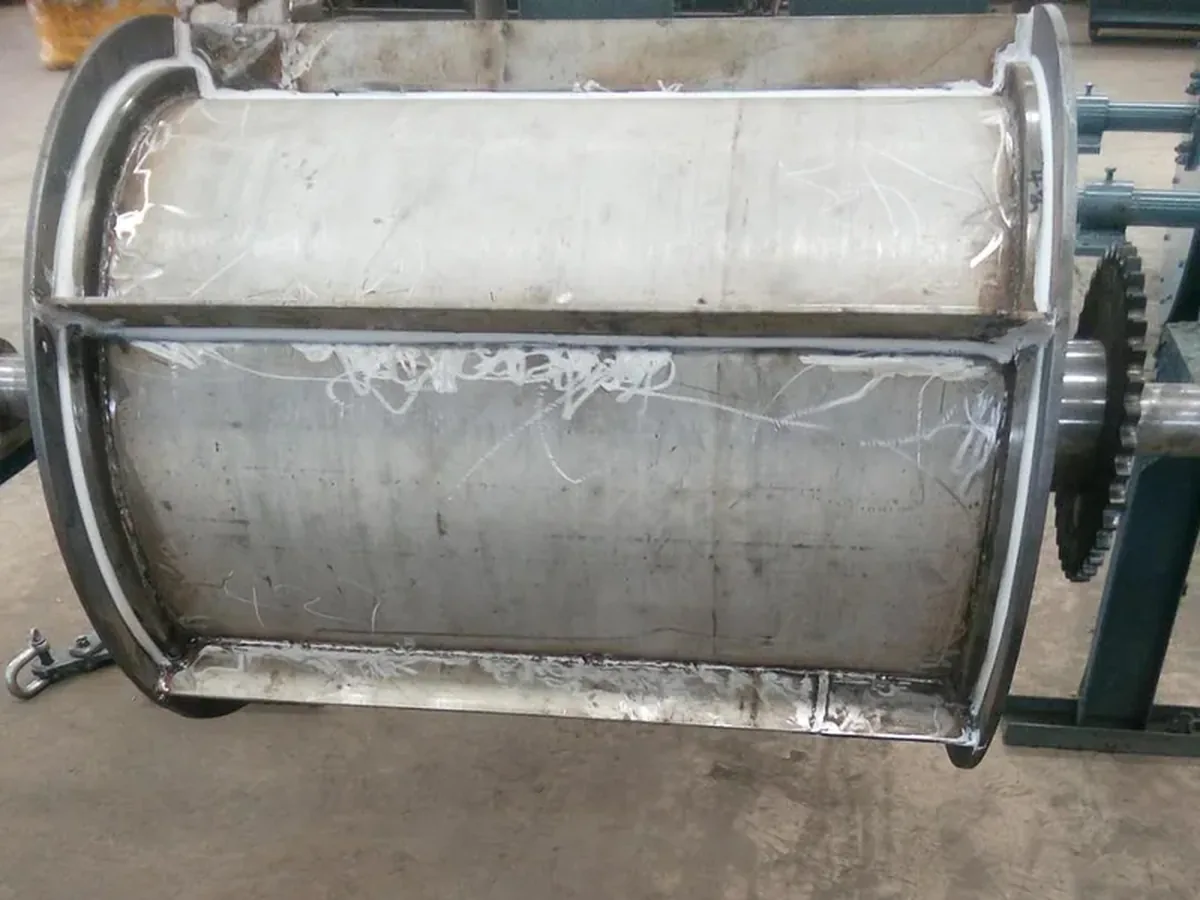
Real magnetic drum detail showing the cylindrical shell, structural ribs, shaft area and drive-side sprocket.

Real drum structure detail — This photo shows the drum shell, shaft area, support structure and drive-side components. We confirm the dimensions and configuration for the selected model.

Engineering Data

Reference Magnetic Drum Configurations

The SXGT series includes the following reference models. These values are useful for early model screening. Final dimensions, drive, interfaces and duty are confirmed against the actual material and line layout.

ModelReference belt widthDrum size (diameter × length)Motor powerWeight
SXGT-08101000 mmΦ800 × 1000 mm3.0 kW1600 kg
SXGT-08121200 mmΦ800 × 1200 mm3.0 kW1700 kg
SXGT-10121200 mmΦ1000 × 1200 mm4.0 kW1800 kg
SXGT-10161600 mmΦ1000 × 1600 mm4.0 kW2050 kg
SXGT-12121200 mmΦ1200 × 1200 mm5.5 kW1490 kg
SXGT-12161600 mmΦ1200 × 1600 mm5.5 kW2170 kg
SXGT-16141400 mmΦ1600 × 1400 mm7.5 kW3030 kg
SXGT-16161600 mmΦ1600 × 1600 mm7.5 kW3440 kg

Reference SXGT family data from the technical material supplied for this page. It is family-level information, not a universal specification for every Corvelan magnetic drum.

Documented SXGT Family Features

Magnetic Circuit

The supplied SXGT technical sheet states that the magnetic circuit is designed with computer simulation to develop the required field and gradient across the working area.

Permanent Magnet Source

The SXGT family technical sheet specifies high-performance NdFeB permanent magnet material as the magnetic source.

Automatic Iron Discharge

The documented SXGT design uses automatic iron discharge for stable continuous operation instead of routine manual removal from the drum surface.

Control Options

The supplied family data lists local manual control and centralized control, with interlocking to the belt conveyor where required.

Reference Magnetic Retention

The published SXGT specification lists a demagnetization rate of no more than 5% over eight years. Applicable project warranty terms are defined in the quotation and contract.

Project-Specific Variants

Current technical documentation states that project-specific versions can be configured for particular operating conditions and performance requirements.

What We Confirm for Your Project

What we confirmWhy it mattersWhat we need from you
Dry or wet processMakes sure we use the right separator type.Tell us if the material is dry, gravity-fed, conveyed or a wet slurry.
What you need to remove or recoverMakes the separation goal clear.Tell us if you need tramp iron removal, magnetic recovery, equipment protection or product cleanup.
Material and feed conditionAffects drum size and how well the target reaches the magnetic area.Normal and peak flow, particle size, moisture, bulk density and material depth.
Drum size and installation spaceThe drum must fit your feed width and the space available.Feed width, available space, support points and maintenance access.
Magnetic working zoneThe magnetic area must reach the target where it passes the drum.Target metal, real working distance and the required magnetic working area.
Speed, drive and controlAffects material trajectory, drum operation and line integration.Material speed, drum duty, voltage and local / centralized control requirements.
Wear and drum surfaceDepends on how abrasive the material is and how it contacts the drum.Material wear level, contact condition and maintenance needs.
Splitter / dischargeKeeps the magnetic and non-magnetic streams apart.Where each stream falls and how much discharge space is available.
Guarding / accessThe machine needs safe access around rotating parts and strong magnets.Site safety rules, lockout needs, maintenance space and lifting access.
How performance will be checkedMakes the test method and success target clear before production.Test material, test conditions and what result will count as success.
Validate

When Is a Magnetic Drum Separator Not the Right Choice?

We use another separator type when a dry magnetic drum does not fit the process. Wet slurry needs a wet drum separator. Non-ferrous sorting normally needs another separation technology. Very fine or weakly magnetic targets may need testing or a higher-intensity separator.

If you only need local tramp-iron capture in a chute, a plate magnet may be simpler. We may also use a magnetic head pulley or suspended magnet when the conveyor layout makes that option more practical.

Integration

How Should the Drum Be Installed and Integrated?

A good installation gives the drum a steady feed and gives both discharge streams a clear path. We check material distribution, material depth, support points, shaft area, drive access and splitter position. We also check chute angles, discharge clearance and maintenance space.

For the documented SXGT family, the technical sheet lists local manual control and centralized control. It also allows the separator to be interlocked with the belt conveyor. The final control scope, voltage and interlock logic are confirmed in the project documents.

Avoid sudden feed surges where possible. Keep the magnetic discharge from falling back into the clean product stream. Rotating parts must be guarded, and the site needs clear lockout and safe-access procedures.

Maintenance & Safety

How Do Cleaning, Maintenance and Safety Affect the Design?

The drum discharges magnetic material continuously, but it still needs regular inspection and maintenance. Check the drum surface, bearings and drive parts. Also check the splitter, chute, fasteners, guards and any wear liners.

Strong magnets can pull steel tools and other ferrous objects toward the machine. Rotating parts can also trap clothing, gloves or hands. Corvelan defines the guarding and access included in the machine scope. If your project needs IP protection, CE/ATEX, hygiene or other compliance requirements, tell us before quotation. We only confirm these items when they are included in the approved project scope.

Performance Check

How Do We Check Performance Before Production?

If separation performance is critical, we define how the result will be checked before production starts. The test should represent the real process as closely as practical.

1. Representative Material

Use material that reflects the real product, target metal, particle size, moisture and bulk density as closely as possible.

2. Representative Feed

Feed width, material depth and feed condition should represent the real line instead of an unrealistically easy test condition.

3. Defined Machine Settings

Record the relevant working distance, drum speed, splitter position and other settings used during the check.

4. Defined Success Result

Agree on what result will count as success. This may be iron removal, magnetic recovery, concentrate quality, remaining contamination or product loss.

Before final approval, we agree on the drawing, inspection and material tests required for your order. The approved quotation, drawing or test scope states which checks apply to the project. A surface gauss reading is not used as a substitute for a separation result.

Drum Construction and Specifications

Magnetic Drum Photos

The user-supplied product assets show multiple magnetic drum constructions. The image below is a separate supported-drum configuration, so it adds structural information instead of repeating the Hero angle.

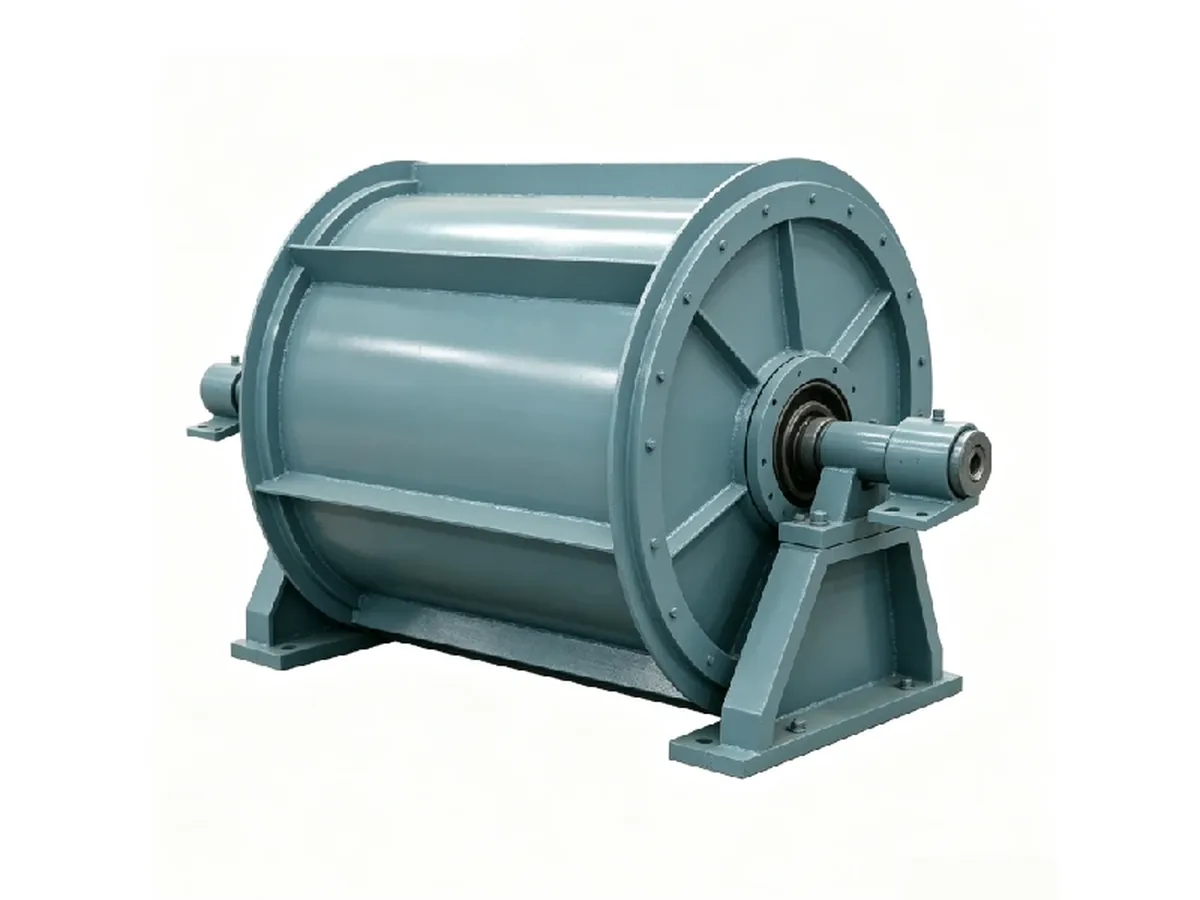
Supported magnetic drum configuration showing cylindrical shell, end frame, shaft and bearing support structures.

Supported drum configuration — Shows the cylindrical drum body, end frame, shaft and support structure. Exact project dimensions and magnetic design are confirmed against the selected model and approved technical scope.

Corvelan Engineering Support

Why Work With Corvelan on a Drum Separator?

We select around the process, not around one magnetic number. Send the material, target metal, throughput and line layout. Corvelan uses these inputs to choose the separator route, define the main drum setup and identify the remaining process and installation information required for quotation.

We Start With the Material

We first check what you are processing and what you need to remove or recover. The separator type comes after the process is understood.

We Check the Whole Material Path

Feed direction, working distance, installation space, splitter position and discharge paths are checked together. A good drum setup must work with the line around it.

We Define the Machine Before Quotation

The main drum setup, installation interfaces and missing project information are identified before the quotation is finalized.

We Keep Performance Claims Tied to Real Conditions

We do not use one surface gauss number as a substitute for separation performance. Critical results should be tied to defined material, feed and test conditions.

For each project, the approved quotation, drawing or technical scope states the sizes, materials, interfaces and checks that apply to the selected machine. Any agreed material test is recorded in the same project scope.

SXGT Series Specifications: The table lists model dimensions, motor power, unit weight, magnetic system and available control options. We use these family references for early screening, then confirm the final machine in the quotation and drawing.

Selection Output

What Do You Receive During Drum Selection?

Our job is to turn your process information into a machine scope that can be quoted and confirmed. The exact documents depend on the project, but the selection work follows the same practical path.

Separator Route

We identify whether a dry magnetic drum is the right route or whether the process points to another separator type.

Main Drum Setup

We define the main feed, drum, magnetic working area, drive and discharge requirements used for quotation.

Missing Information List

We tell you which details are still needed instead of asking you to complete a long form before the project can move forward.

Confirm the Selected Drum

The approved quotation and technical scope record the agreed machine requirements. A drawing or test scope is added when it is part of the project.

Choose the Route

Which Magnetic Separator Route Fits the Process?

A magnetic drum is one route, not the answer to every magnetic separation job. Corvelan first looks at the material state, feed path and separation point before choosing the equipment family.

Process situationSeparator route to checkMain decision
Continuous dry bulk separation around a rotating magnetic surfaceMagnetic drum separatorFeed, working distance, drum setup and discharge paths.
Ferrous removal at the end of a conveyorMagnetic head pulleyConveyor layout, burden depth and how the magnetic fraction leaves the belt.
Tramp iron removal above a conveyorOverband or suspended magnetic separatorBurden depth, suspension distance, target size and discharge method.
Localized ferrous capture in a gravity-fed chutePlate magnet or another gravity separatorFlow path, product contact, cleaning method and available chute space.
Wet slurry or pulpWet drum magnetic separatorSolids, slurry condition, magnetic target and wet-process requirements.
Non-ferrous metal sortingAnother separation technologyMetal type, particle size, feed condition and the non-ferrous sorting objective.
Steel slag or heavy scrap recoveryDedicated steel-slag / scrap magnetic separator routeLarge ferrous size, burden depth, working height, conveyor position, impact protection and discharge method.

Steel-slag and scrap process references in the supplied technical material use staged magnetic separation rather than assuming one drum will finish the whole job. Coarse ferrous pieces can be removed first, followed by further magnetic separation after crushing, screening or size reduction. Fine recovery may need another separator type or process stage.

Final selection still depends on the actual material, target, throughput and line conditions.

FAQ

Magnetic Drum Separator FAQ

Is a magnetic drum separator only for dry material?

This page covers dry continuous drum separation. If your material is a wet slurry, we will check a wet drum separator instead.

Is higher gauss always better for a magnetic drum separator?

No. A gauss reading shows the magnetic field at one measurement point. Separation also depends on working distance, target magnetic response, feed rate, material depth, particle size and speed. Drum geometry and discharge conditions also matter.

What are working distance and burden depth?

Working distance is the real gap between the target metal and the active magnetic area. Burden depth is the thickness of material passing the separator. Both affect how close the target gets to the useful magnetic field.

What is the difference between a magnetic drum and a magnetic head pulley?

A magnetic drum is a separate rotating separator placed at a feed or transfer point. A magnetic head pulley works as the conveyor head pulley. The right option depends on the conveyor layout, material depth, material path, available space and required discharge paths.

Can a magnetic drum handle high contaminant loading?

A drum can discharge captured magnetic material continuously, which can suit processes with ongoing magnetic loading. The workable loading still depends on target size, feed condition, drum setup and discharge capacity. Send the expected metal type, size and loading so we can check the route.

How is magnetic drum separator performance checked?

When performance is critical, use material and feed conditions that represent the real process. Record the relevant machine settings and agree on the result that will count as success. This is more useful than treating one surface field value or machine size as a separation guarantee.

What affects the capacity of a magnetic drum separator?

Capacity is not set by drum size alone. It also depends on material bulk density, particle size, feed width, material depth, feed speed, magnetic loading and the separation result you need. Corvelan uses normal and peak throughput together with these conditions when planning the drum.

What information do you need to select a drum separator?

Start with the material, its physical form, the metal or magnetic fraction you need to remove, and normal and peak throughput. Also send the installation condition or a line drawing. If available, add particle size, moisture, bulk density, material depth, temperature, magnetic loading, available space and the result you need to achieve.

What SXGT magnetic drum sizes are listed in the reference data?

The supplied SXGT family data lists drum diameters of Φ800, Φ1000, Φ1200 and Φ1600 mm, with reference drum lengths from 1000 to 1600 mm. Final size still depends on feed width, duty and installation space.

What motor power is shown for the SXGT reference models?

The supplied SXGT family table lists 3.0, 4.0, 5.5 and 7.5 kW drives across the reference models. Final drive selection is confirmed against the selected drum size, duty and control requirements.

Can the SXGT magnetic drum be interlocked with a conveyor?

Yes. The supplied SXGT family technical sheet lists local manual control and centralized control, and states that the separator can be interlocked with the belt conveyor. Final control logic is confirmed for the project.

Selection & Quotation

What Should You Send for Selection and Quotation?

Start with four items. They give Corvelan enough information to choose the separator route and plan the first drum setup. You do not need every project detail before contacting us.

1

Material

Material name, physical form and how it flows.

2

Target

Ferrous contaminant or magnetic fraction you need to remove or recover.

3

Throughput

Normal and peak feed rate.

4

Line Condition

Installation condition or a drawing showing the feed and discharge paths.

Helpful If Available

Particle SizeTypical range and any large pieces.
MoistureDry, damp, sticky or variable.
Bulk DensityHelps us understand the material load.
Material DepthApproximate burden depth at the separation point.
TemperatureNormal and maximum material or ambient temperature.
Feed SpeedBelt speed, falling stream or other feed condition.
Available SpaceWidth, height and maintenance clearance.
Required ResultWhat should be removed, recovered or measured.

Drawings, photos, magnetic loading, discharge preference, voltage or control needs can also help us move faster.

You do not need every detail before contacting us. Send the information you already have. We will identify what is still missing and ask only for the details needed to complete the selection and quotation.
Next Step

What Happens After You Send Your Requirement?

You do not need to guess a model number first. We use your process information to work out the right separator type and drum setup.

1

We Check the Separator Type

We check whether your process needs a dry drum, wet drum or another magnetic separator type.

2

We Plan the Drum Setup

We check the feed, magnetic working zone, drum size, drive and discharge layout.

3

We Ask for Anything Still Missing

We ask only for the extra information needed to finish the selection.

4

We Prepare the Quotation

Once the main requirements are clear, we prepare the machine scope for quotation and technical confirmation.

Send Your Separation Requirement

Send the material, target metal, normal and peak throughput, and any line drawing you already have. Corvelan will use this information to choose the separator route, plan the drum setup and identify the remaining process and installation information required for quotation.

Get An Instant Quotation Now