
A Good Choice When
Material moves on a conveyor, the unwanted metal is iron or steel, and the site has enough space for suspended installation and automatic discharge.
Find equipment by installation point and separation task.
All magnetic separators →Start with the material or production line you need to protect.
All applications →Compare technologies, check parameters and prepare your RFQ.
All guides →See the factory, quality checks and answers before you request a quotation.
Air-Cooled Electromagnetic Separation | Automatic Iron Discharge
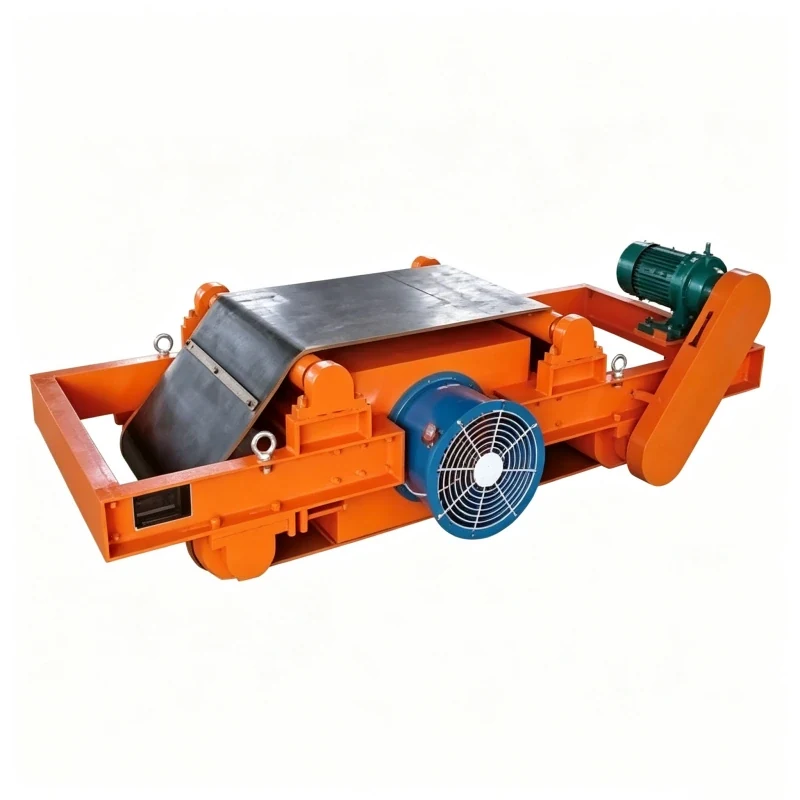
Corvelan air-cooled self-unloading electromagnetic separators remove unwanted iron and steel from dry bulk material moving on a conveyor. These unwanted pieces are often called ferromagnetic tramp iron. The electromagnet pulls the metal out of the material, while the moving unloading belt carries captured metal away automatically.
Quick Fit
This separator is a good choice for dry material on a conveyor when you need continuous removal of iron and steel without stopping for routine manual cleaning.
Material moves on a conveyor, the unwanted metal is iron or steel, and the site has enough space for suspended installation and automatic discharge.
Distance from the magnet to the target, material depth on the belt (burden depth), belt speed, target iron size, ambient temperature, dust, support structure and discharge space.
The main target is aluminum, copper or another non-ferrous metal; the process is wet or slurry-based; or the project needs a hazardous-area or other certified design that has not been defined.
Applications
We use this equipment above conveyors where unwanted iron or steel can damage downstream equipment, enter the product stream or need continuous removal.
Remove unwanted iron and steel before crushers, screens and downstream conveying equipment.
Protect crushing, milling and material-handling equipment from unwanted iron and steel.
Continuously remove iron and steel from conveyor-fed bulk fuel and raw-material lines.
Remove iron and steel pieces from dry conveyed material when an electromagnet is the right separator type.
Protect downstream process equipment where unwanted iron or steel may enter dry conveyed material.
Working Principle
When power is supplied to the electromagnet, it creates a magnetic field. The field pulls iron and steel pieces out of the material moving below the separator.
Captured metal stays against the moving unloading belt while it passes over the magnet. The belt carries the metal away from the center of the magnet. As the magnetic force becomes weaker, the metal drops into the collection area. Cooling and unloading do different jobs: the fan removes heat from the electromagnetic coil, while the unloading belt removes the captured metal.
Product Systems
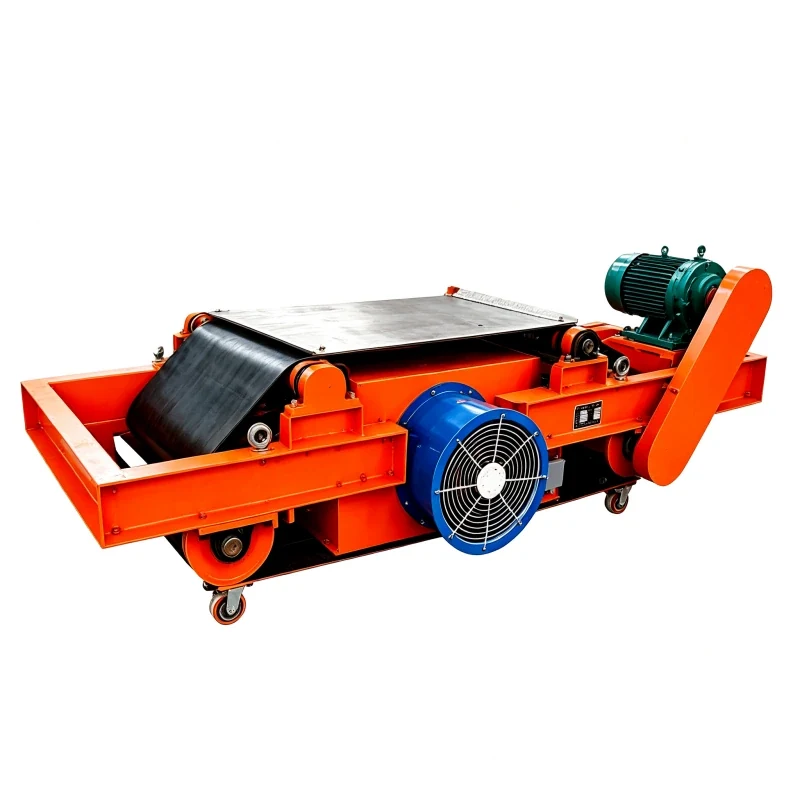
The cooling system removes heat from the electromagnetic coil during operation. Our design uses axial-flow fans to move air around the electromagnet and coil.
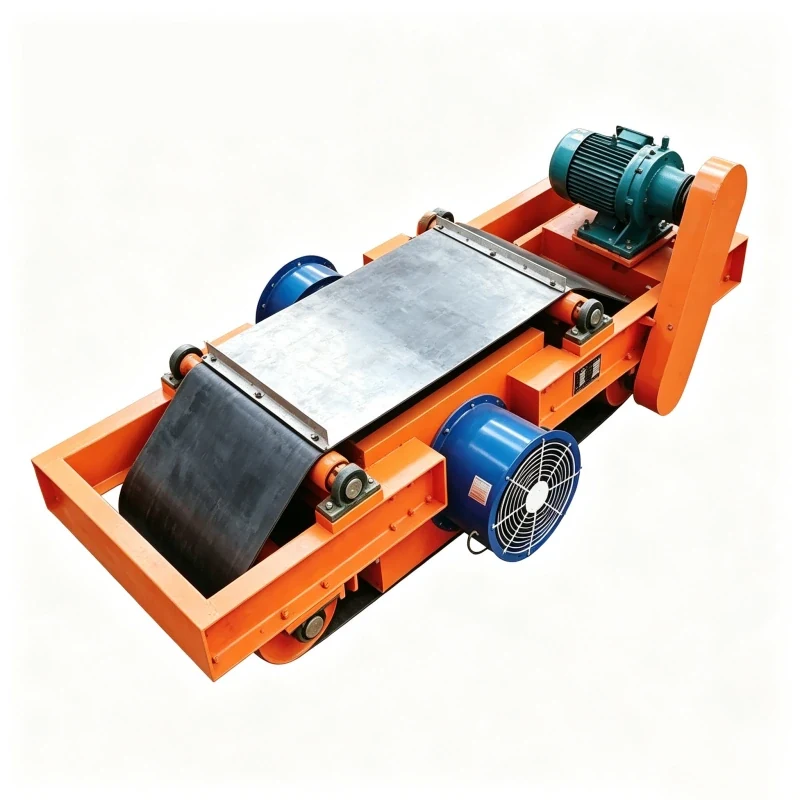
The unloading belt carries captured iron away from the center of the magnet. When the metal reaches a weaker part of the magnetic field, it drops into the planned collection area.
Selection Requirements
We do not select this separator from conveyor width alone. We match the magnetic system, cooling, unloading arrangement and installation to the real conveyor conditions.
The belt width helps define the required coverage and the starting equipment size.
The deeper the material bed, the farther some iron pieces are from the magnet. This distance matters for capture.
We check the distance from the magnet face to the target iron, not only the mounting height above the conveyor structure.
Faster material movement gives the magnet less time to attract and lift the target iron.
Size, shape and typical type matter. Tell us whether you expect bolts, bars, plates, broken equipment parts or other ferrous pieces.
Cross-belt or inline position, discharge side, service space, support and power supply all affect the final configuration.
Start With Four Numbers
These four values give us a practical starting point. We then check the target iron, available space, discharge direction, power supply and operating conditions before quotation.
Use the belt width to identify the first group of separator configurations to review. The final choice still depends on the distance to the iron and the material on the belt.
Material depth, often called burden depth, tells us how deeply iron may be buried. Deeper iron sits farther from the magnet and is harder to lift.
Suspension height is the planned distance between the separator and the conveyor or material level. We compare this with the available product range and the real working distance to the target iron.
Belt speed changes how long the iron stays inside the useful magnetic zone. Faster material movement gives the magnet less time to lift and hold a difficult piece.
Dimensions & Installation
Overall dimensions and mounting points depend on the selected configuration. We confirm the final general-arrangement (GA) drawing after the conveyor conditions and installation layout are reviewed.
Send a conveyor drawing, photo or available-space sketch. We use it to check the mounting direction, service access and discharge path before the final project drawing is approved.
Use the approved Corvelan project drawing for final fabrication and installation. Final dimensions are confirmed after the selected configuration is reviewed.
Performance Factors
Magnetic field strength matters, but it is not the only factor. We also check distance, material depth, belt speed, target size and the way material moves on the conveyor.
Working distance is the real distance from the magnet face to the target. It includes the suspension gap, material depth and conveyor geometry. More distance usually makes capture harder.
Material depth, often called burden depth, affects how close the iron can get to the magnet. Deep or uneven material can hide the target farther from the magnetic field.
Higher belt speed gives the magnet less time to attract and lift the iron from the material stream.
The size, shape, weight, position and amount of iron all affect how easily the magnet can capture it.
Lump size, moisture, bulk density and flow pattern change the depth of material on the belt and how exposed the iron is to the magnet.
Captured iron needs a clear path away from the magnet and into a safe collection area.
Separator Comparison
Choose the separator type from the cleaning requirement, magnetic system, working distance, available power and installation conditions. The table below is a starting guide, not a substitute for the final conveyor review.
| Separator Type | Good Starting Point When | Check Before Selection |
|---|---|---|
| Air-Cooled Self-Unloading Electromagnetic | Continuous conveyor operation needs an energized electromagnet and automatic discharge of captured iron. | Working distance, target iron, cooling airflow, power supply, unloading direction and collection space. |
| Air-Cooled Manual-Clean Electromagnetic | Iron loading is lower and planned cleaning stops are practical. | Safe cleaning access, iron accumulation, working distance, power supply and available headroom. |
| Oil-Cooled Electromagnetic | The project calls for an oil-cooled electromagnetic design rather than forced-air cooling. | Cooling arrangement, installation environment, maintenance access, working distance and electrical requirements. |
| Permanent Self-Cleaning Overband | Automatic iron discharge is required without electrical excitation for the magnetic field. | Required magnetic reach, target iron, belt drive, discharge path, installation space and maintenance access. |
Installation
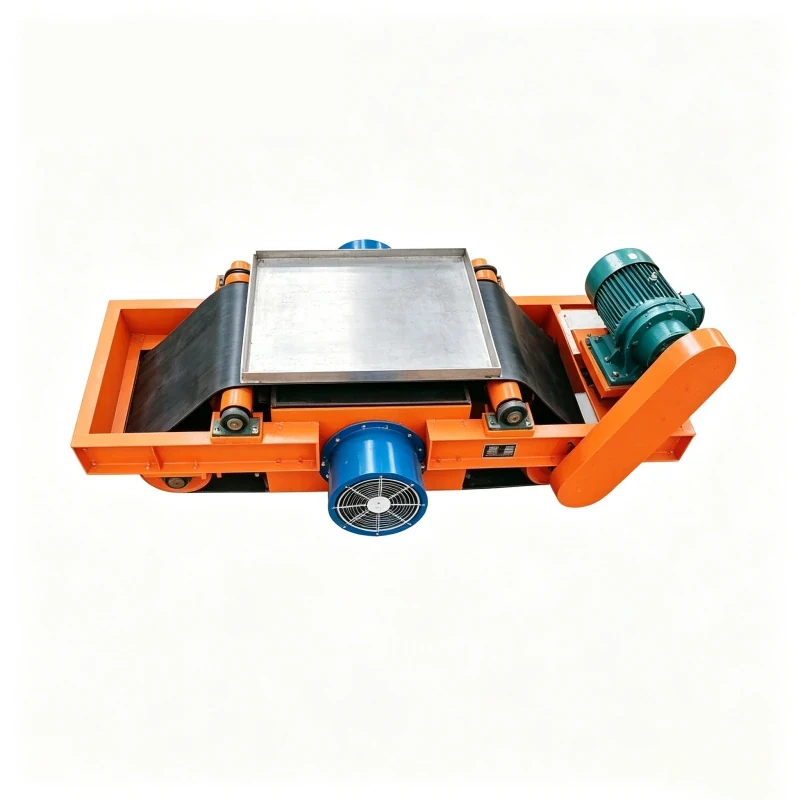
The separator sits across the conveyor. The unloading belt usually carries captured iron to the side. This setup needs enough side space, support strength and service access.
The separator follows the direction of the conveyor, often near a discharge point. This position can bring the iron closer to the magnet as material leaves the belt. The actual conveyor layout still needs to be checked.
Send us the conveyor layout or a clear installation photo. We use it to check suspension height, support, service space and discharge direction before quotation.
Process Fit
Maintenance & Safety
Check the unloading belt for wear, tracking, tension and smooth movement. The supplied design uses a crowned drive drum to help the belt stay on track.
Keep fan inlets and airflow paths clear. Dust buildup or blocked airflow can make the electromagnet run hotter.
Before inspection or belt adjustment, isolate electrical power and stop moving parts using your site's lockout and electrical-safety procedure.
Our Recommendation Process
Step 1
Send us the belt width, material depth, belt speed, planned suspension height and the largest iron or steel piece you expect to remove. A conveyor photo or drawing also helps us see the available space.
Step 2
We compare those values with the separator configuration range, then check mounting direction, discharge side, support, power supply, cooling airflow and service access.
Step 3
Before production, we confirm the selected model, dimensions, mounting, power supply, discharge direction and any inspection or test that forms part of the agreed order scope.
Product Details
These photos show the equipment features described on this page: the complete unit, forced-air cooling side, mechanical layout and self-unloading belt.
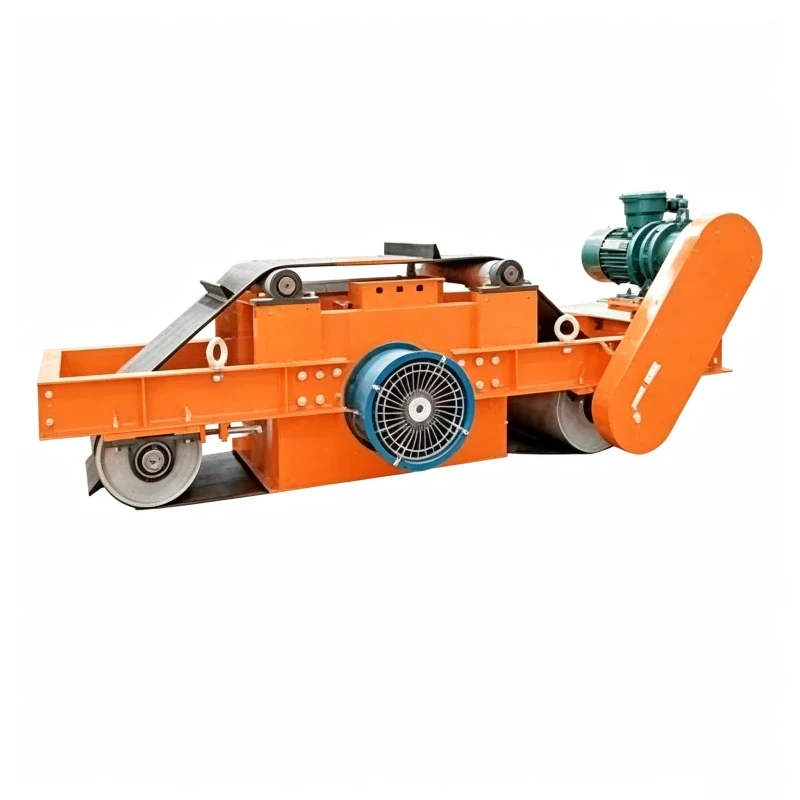
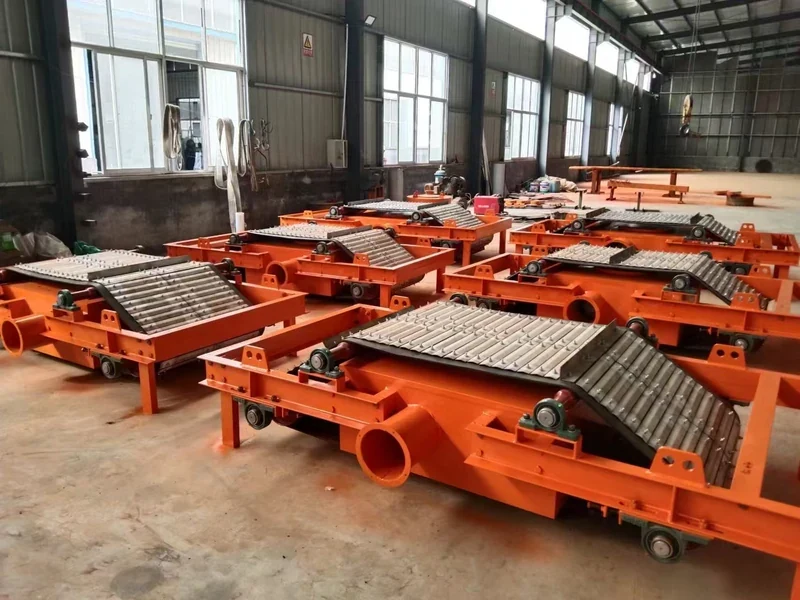
Multiple self-unloading electromagnetic separator units are shown during production and assembly. We use model-specific data and project drawings to define the final equipment for each conveyor.
This photo shows units from the same separator family during production and assembly. Final equipment details depend on the selected model and project requirements.
FAQ
We start with the material, target iron, conveyor width, material depth, belt speed and planned working distance. We then check the installation layout, discharge direction, power supply and operating conditions before confirming the equipment configuration.
No. Belt width is only one input. Material depth, working distance, belt speed, target iron and the installation layout also affect the required configuration.
The air-cooled design uses fans to move air around the electromagnet and coil. We also check ambient temperature, dust, airflow and operating conditions before confirming the cooling arrangement.
The moving discharge belt carries captured iron away from the center of the magnet. As the magnetic force becomes weaker, the metal drops into the collection area. This supports continuous discharge without routine manual cleaning of the magnet face.
No. A magnetic field value alone does not guarantee better iron removal. Working distance, material depth, belt speed, iron size, shape and separator position also affect capture. Compare measured magnetic values only when the test position and method are defined.
Both arrangements can work. Cross-belt usually sends captured iron to the side, while inline follows the conveyor direction. We review the conveyor layout before confirming the mounting direction and discharge side.
Start with the material, target iron or steel, throughput, conveyor width and installation condition. Belt speed, material depth, planned working distance, target size and a drawing or photo help us narrow the configuration faster.
An electromagnetic separator uses an energized coil to create the magnetic field, while a permanent overband uses permanent magnets. Both can use a moving belt to discharge captured iron. The practical choice depends on working distance, target iron, available power, operating conditions and maintenance needs.
Request a Quote
You do not need a finished specification to start. Send the process data you already have. We compare it with the range and tell you what else, if anything, we need before quotation.
Next Step
Send your conveyor width, material, material depth, proposed suspension height and target iron. We will match these conditions to the equipment configuration and prepare the configuration for quotation.