
Good fit
- Bulk solids moving on a belt conveyor.
- A clear point exists before a crusher, mill or other critical equipment.
- The line can use an alarm, belt stop, PLC signal or another response after detection.
Find equipment by installation point and separation task.
All magnetic separators →Start with the material or production line you need to protect.
All applications →Compare technologies, check parameters and prepare your RFQ.
All guides →See the factory, quality checks and answers before you request a quotation.
Conveyor Metal Detection Equipment
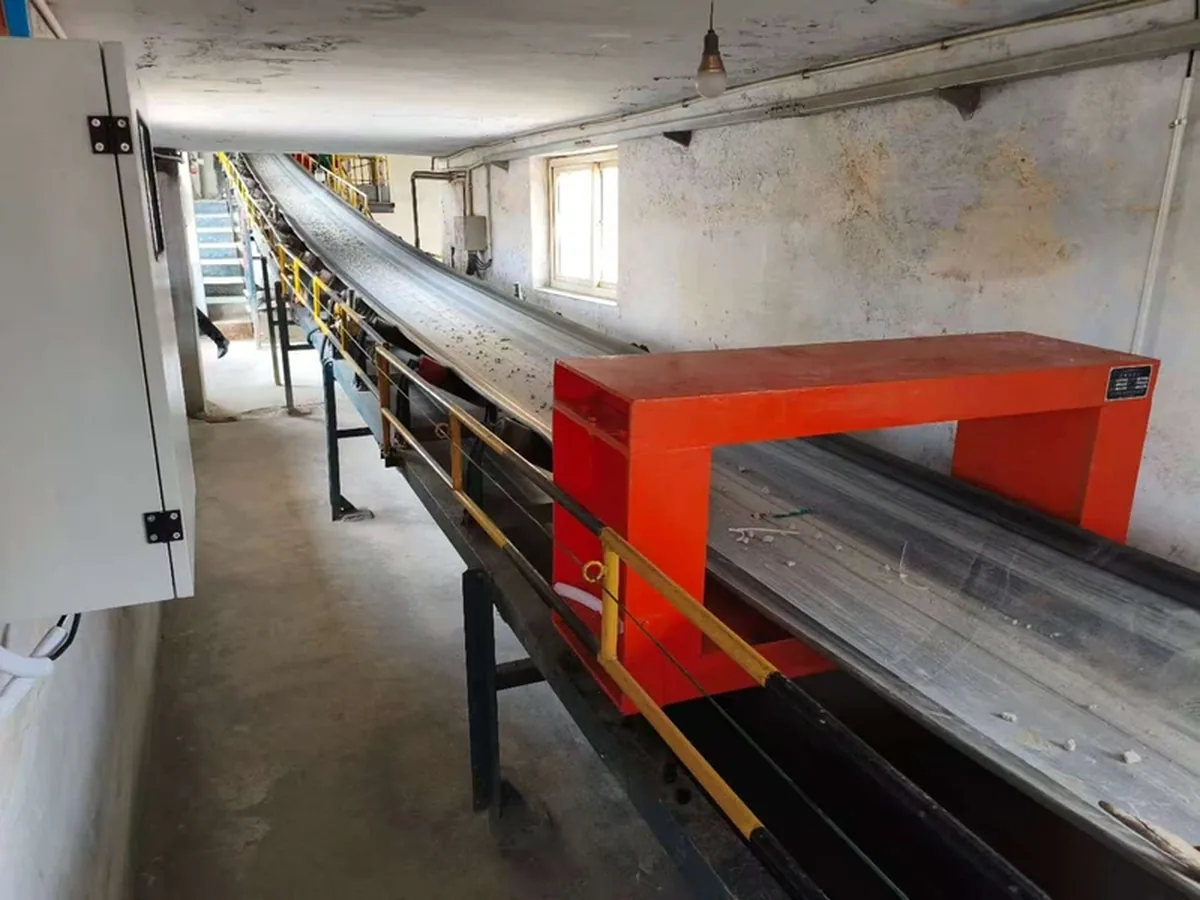
Corvelan GJT-F metal detectors find unwanted metal in bulk materials moving on belt conveyors before it reaches crushers or other downstream equipment. The current family covers nominal belt widths from 500 to 2000 mm. We select the starting model from belt width, then check material depth, target metal, belt speed and installation conditions before confirming the equipment.
Quick Fit
We recommend the GJT-F for belt-conveyed bulk material when unwanted metal must be found before the next process step. Belt width starts the model choice; the material, target metal, speed and installation decide whether the setup is suitable.
Why & Where
The detector is most useful where finding metal gives the conveyor enough time to react before a critical machine or process step. Corvelan reviews the line action together with the installation point.
Detect damaging metal before it reaches crushing, grinding or other vulnerable equipment.
Check the material after loading or transfer steps where contamination may enter the product stream.
Place the detector where an alarm, belt stop or other action can still happen before the metal reaches the protected equipment.
Use the relay output for an alarm, belt stop, PLC input, marking device or another defined line response.
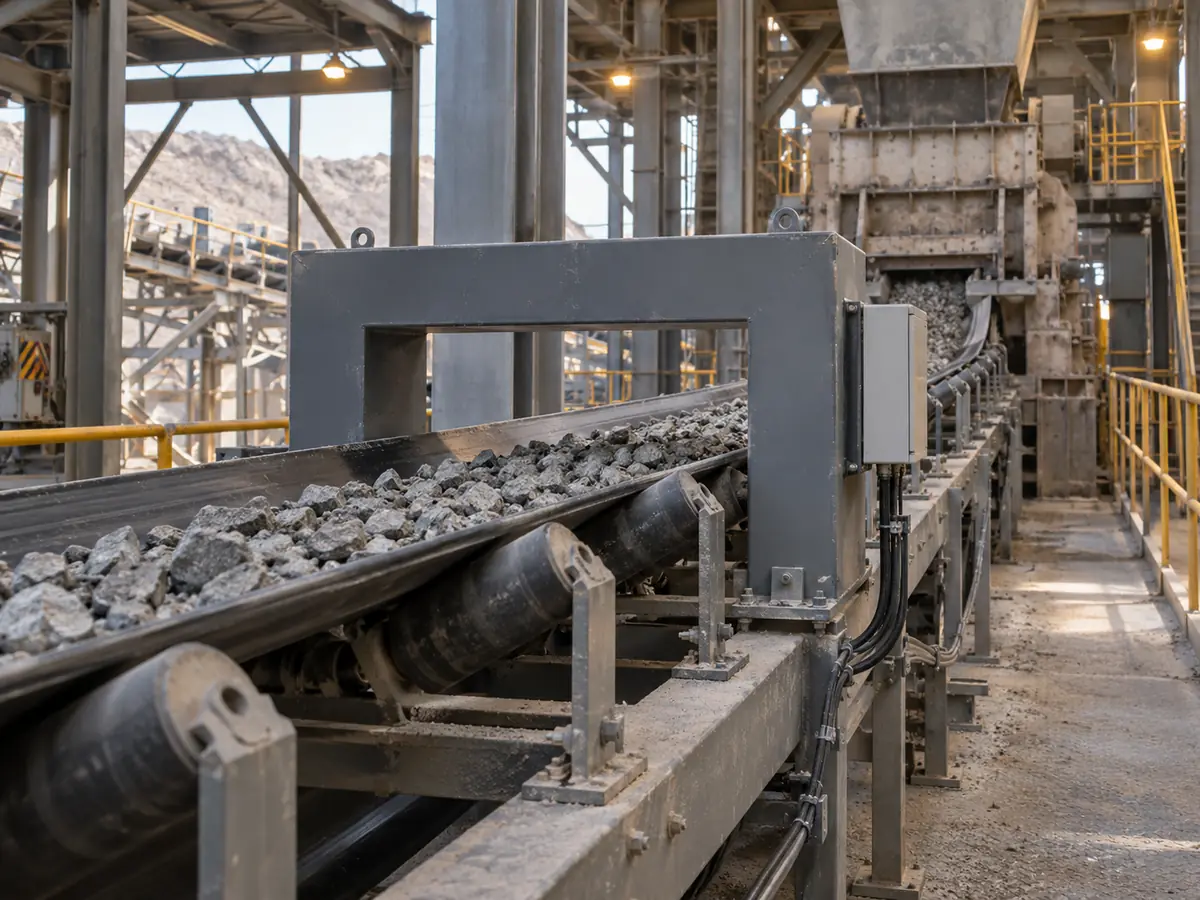
Process-position diagram showing typical detector locations before critical equipment.
Detector vs Magnetic Separator
A metal detector finds a metal event and sends a signal. A magnetic separator physically captures suitable magnetic metal. They solve different parts of the contamination problem and can be used together.
| Question | GJT-F Metal Detector | Magnetic Separator |
|---|---|---|
| Main job | Detect a metal event and send an output signal. | Physically capture or separate suitable magnetic metal. |
| Iron / steel | Can be detected when the target and operating conditions are suitable. | Suitable magnetic iron or steel can be captured by the correct separator. |
| Aluminum / other non-magnetic metal | Can be detected under suitable conditions. | Conventional magnetic separators do not capture non-magnetic aluminum. |
| What happens after detection? | Relay output can be used for an alarm, belt stop, PLC input or another action. | The separator performs the physical magnetic removal step. |
| Can they work together? | Yes. Detection can be added where the line also needs to find metal that a magnet may not remove. | Yes. Magnetic removal can be used upstream or downstream depending on the process. |
Selection point: tell Corvelan whether you need metal detection, magnetic removal, or both. We will review the material, target contaminant and conveyor layout before recommending the equipment path.
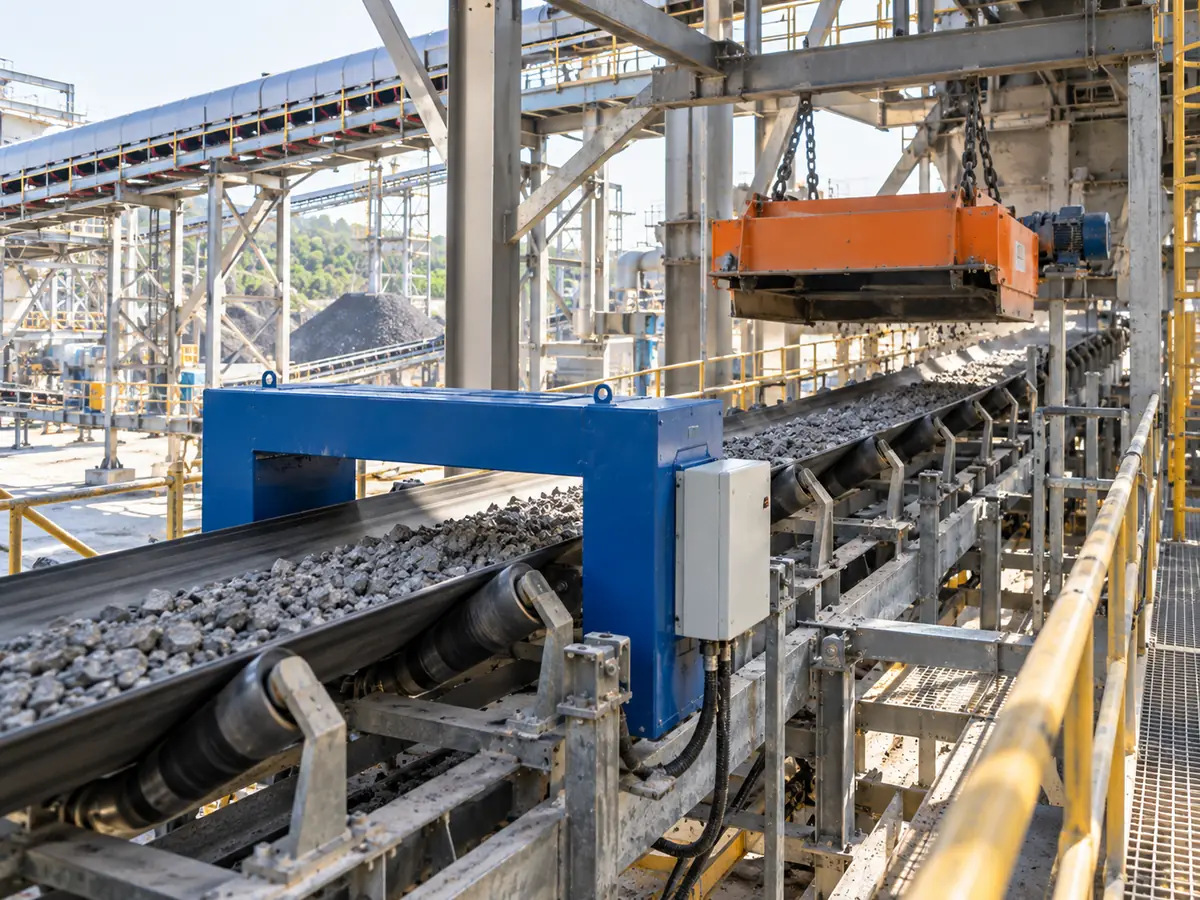
Engineering diagram comparing metal detection and magnetic removal positions on a conveyor line.
Material & Target Metal
Current GJT-F technical specifications cover applications in thermal power, cement, building materials, papermaking, mining, food and chemical processing. We still review the actual conveyed material before selecting the detector.
The specifications cover iron, aluminum, stainless steel and alloy metal targets. Detection depends on more than metal type, so send the target size or shape when it matters to your process.
Send these material details when available:
Working Principle
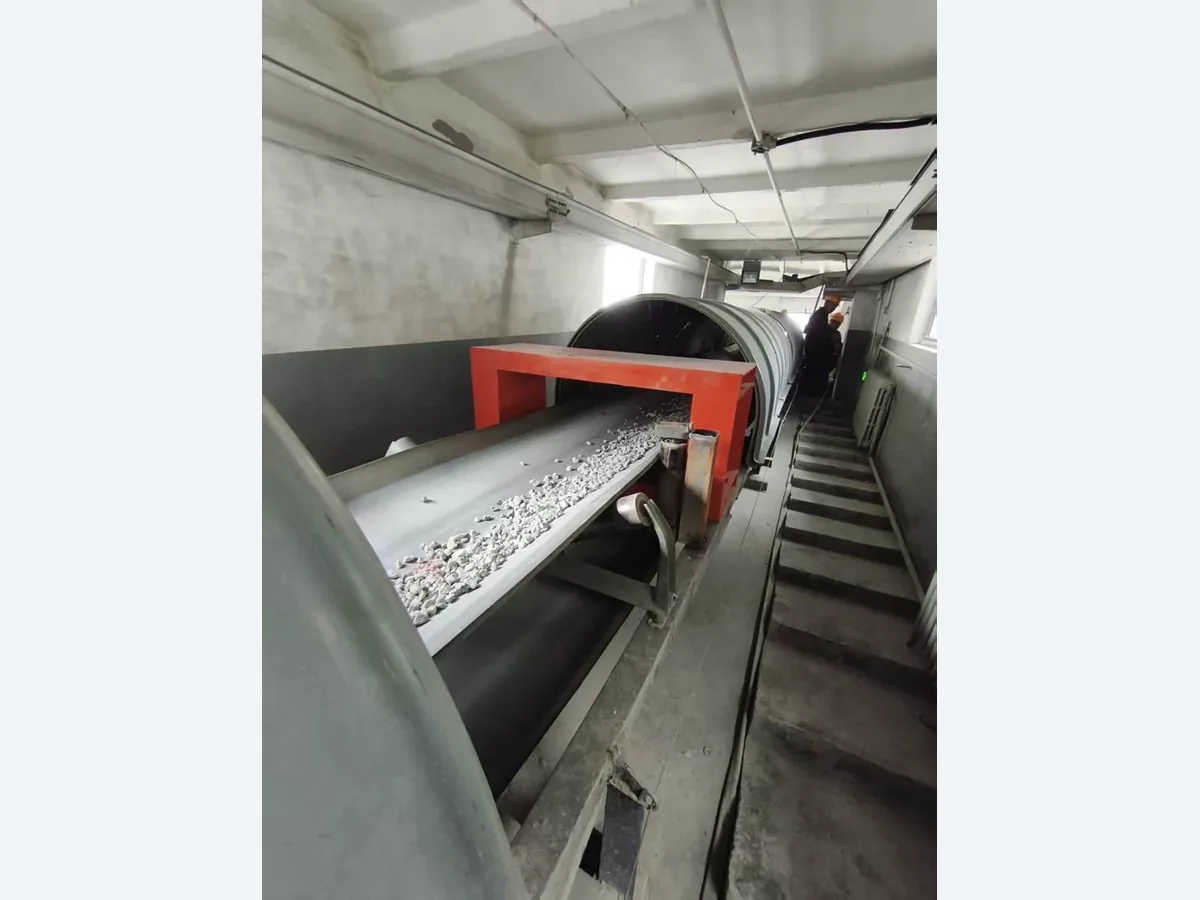
Bulk material passes through the sensing opening. A metal object changes the electromagnetic signal. The electronics evaluate that change and the relay sends a detection signal to the conveyor control system.
Model Selection
Belt width gives us the first model to review. We then check material depth, target metal, belt speed, the installation environment and the action required after detection.

Educational selection flow: belt width is the starting point, not the final model decision.
| Nominal belt width (mm) | Starting model to review | What Corvelan checks next |
|---|---|---|
| 500 | GJT-5F | Material depth, target metal, normal and maximum belt speed, available space, vibration, belt splice or clips, nearby magnets or motors, and the required alarm / stop / PLC action. |
| 650 | GJT-6F | |
| 800 | GJT-8F | |
| 1000 | GJT-10F | |
| 1200 | GJT-12F | |
| 1400 | GJT-14F | |
| 1600 | GJT-16F | |
| 1800 | GJT-18F | |
| 2000 | GJT-20F |
Model Selection Table
The current GJT-F family covers nine models for nominal belt widths from 500 to 2000 mm. Use the table for family specifications, then confirm the application conditions before treating any sensitivity value as a pass/fail requirement.
| Model | Belt width (mm) | Power (W) | Belt speed (m/s) | Family reference sensitivity* | Weight (kg) |
|---|---|---|---|---|---|
| GJT-5F | 500 | ≤40 | 0.8–2.5 | φ20 mm iron/aluminum sphere* | 105 |
| GJT-6F | 650 | ≤40 | 0.8–2.5 | φ20 mm iron/aluminum sphere* | 125 |
| GJT-8F | 800 | ≤50 | 0.8–2.5 | φ20 mm iron/aluminum sphere* | 160 |
| GJT-10F | 1000 | ≤50 | 0.8–2.5 | φ20 mm iron/aluminum sphere* | 190 |
| GJT-12F | 1200 | ≤50 | 0.8–2.5 | φ20 mm iron/aluminum sphere* | 255 |
| GJT-14F | 1400 | ≤60 | 0.8–2.5 | φ20 mm iron/aluminum sphere* | 290 |
| GJT-16F | 1600 | ≤60 | 0.8–2.5 | φ20 mm iron/aluminum sphere* | 350 |
| GJT-18F | 1800 | ≤65 | 0.8–2.5 | φ20 mm iron/aluminum sphere* | 430 |
| GJT-20F | 2000 | ≤70 | 0.8–2.5 | φ20 mm iron/aluminum sphere* | 480 |
*Reference sensitivity: the published product family specifications lists a φ20 mm iron/aluminum sphere reference but does not state the controlled test method. We use it as a family selection reference, not as an unconditional minimum-detection guarantee for every material, burden depth or installation.
Family electrical input listed in the supplied data: AC 220 V ±10%, 50 Hz.
Installation Dimensions
Use A, B, C, D, E, L and L1 from the family drawing to check whether the detector frame and support area fit the available conveyor space. The final layout still depends on the selected model and site clearances.
| Model | A (mm) | B (mm) | C (mm) | D (mm) | E (mm) | L (mm) | L1 (mm) |
|---|---|---|---|---|---|---|---|
| GJT-5F | 820 | 690 | 250 | 410 | 250 | 740 | 300 |
| GJT-6F | 1000 | 840 | 250 | 410 | 250 | 890 | 300 |
| GJT-8F | 1200 | 1010 | 250 | 410 | 250 | 1090 | 300 |
| GJT-10F | 1400 | 1240 | 250 | 410 | 250 | 1320 | 300 |
| GJT-12F | 1630 | 1470 | 250 | 430 | 300 | 1550 | 370 |
| GJT-14F | 1830 | 1680 | 250 | 430 | 300 | 1740 | 370 |
| GJT-16F | 2050 | 1890 | 250 | 430 | 300 | 1950 | 370 |
| GJT-18F | 2280 | 2120 | 250 | 430 | 300 | 2180 | 370 |
| GJT-20F | 2500 | 2340 | 250 | 430 | 300 | 2400 | 370 |
Performance & Installation
One sensitivity number does not describe the whole application. We check the metal target, material, conveyor and surrounding equipment together.
| Check | Why it matters | What to send Corvelan |
|---|---|---|
| Target metal | Type, size, shape and direction affect the detection target. | Metal type and the smallest piece that matters. |
| Material depth | Changes the distance between the target and sensing zone. | Normal and maximum depth on the belt. |
| Material condition | Conductive, magnetic or highly mineralized material can change the detector response. | Material, moisture, particle size and bulk density when relevant. |
| Belt speed | The family reference is 0.8–2.5 m/s. | Normal and maximum speed. |
| Vibration | The family instruction shows direct frame mounting below 0.5 mm vibration amplitude and a separate fixed support above that reference. | Photo, video or measured vibration information if available. |
| Belt splice / clips | Metal parts in the belt can affect the detection setup. | Photo, drawing or splice / clip type. |
| Nearby equipment | Magnets, large motors, VFDs and heavy steelwork can affect the installation environment. | Conveyor layout and the position of nearby equipment. |
Family installation references
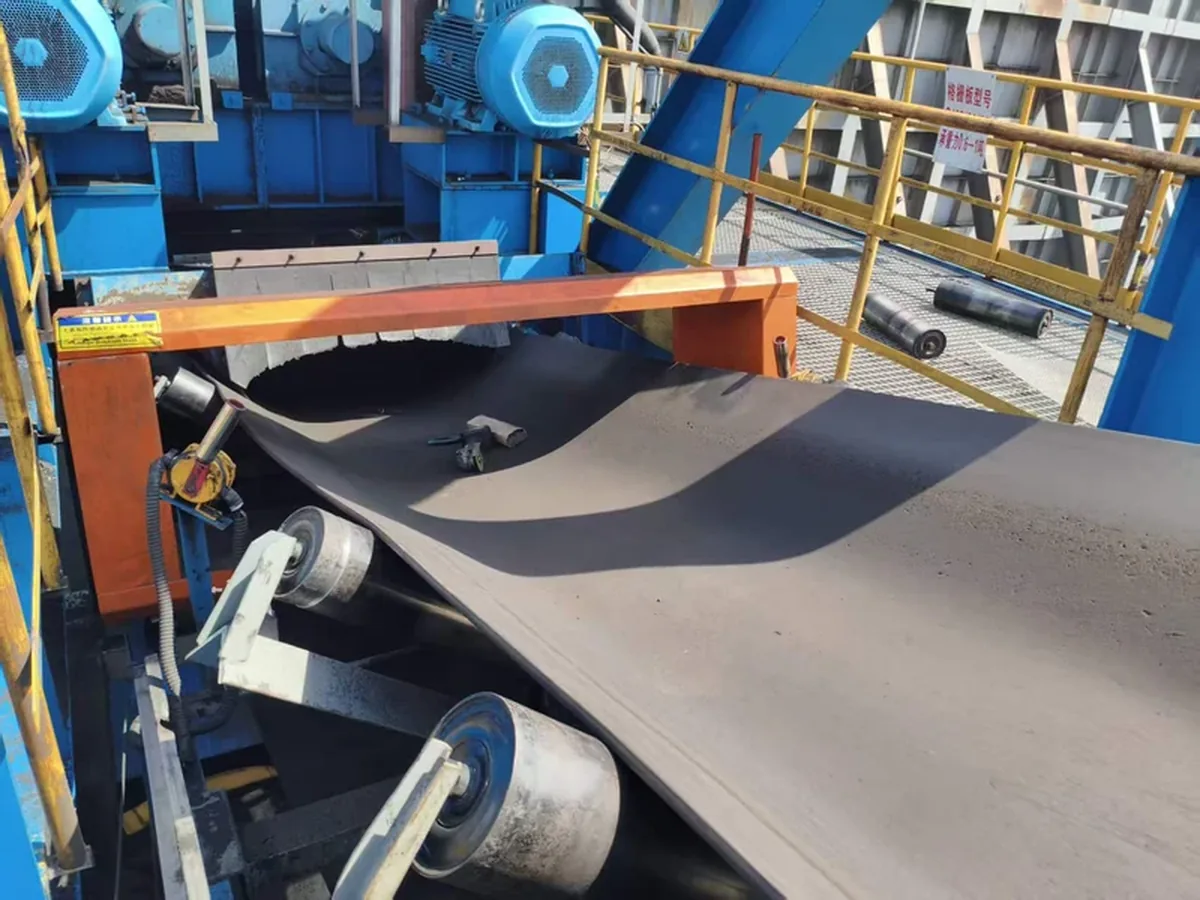
Controls & Response
The detector finds metal and sends a control signal; it does not physically remove the metal by itself. The GJT-F family data lists one normally open (NO) and one normally closed (NC) relay contact, plus a 1–10 second delayed relay release. The outputs can connect to an alarm, belt stop, PLC, marking device or another reject / separation device.
Detection Check
A useful target needs more than one sensitivity number. The φ20 mm iron/aluminum sphere value in the family table remains a family reference because the supplied sheet does not give a complete controlled test method.
Important: the family φ20 mm reference is not published here as an unconditional minimum detection guarantee.
Family Information & Project Check
The current GJT-F published product family specifications and real family installation photos support the product identity, model range, listed electrical/control data, dimensions and installation references used on this page. Detection performance for a specific line still depends on the actual material, target metal and installation condition.
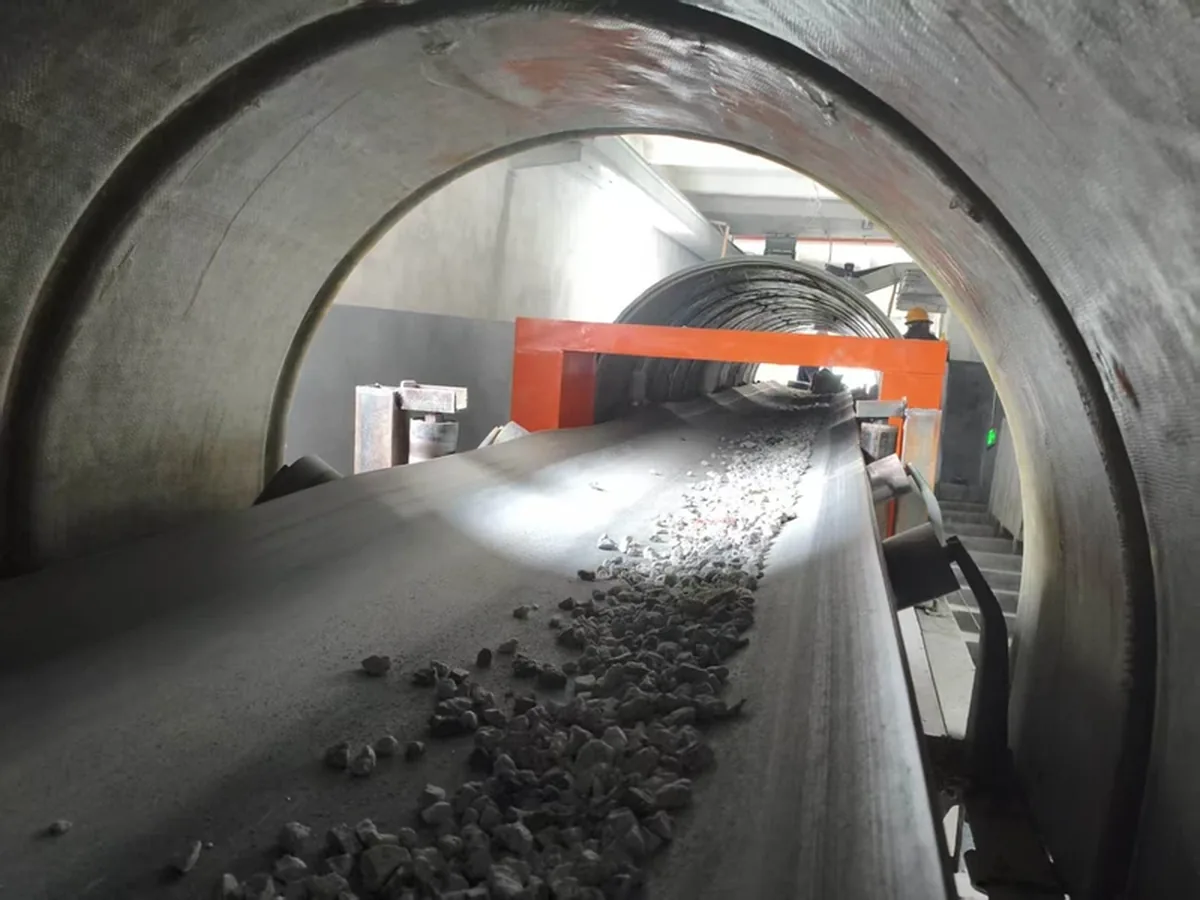
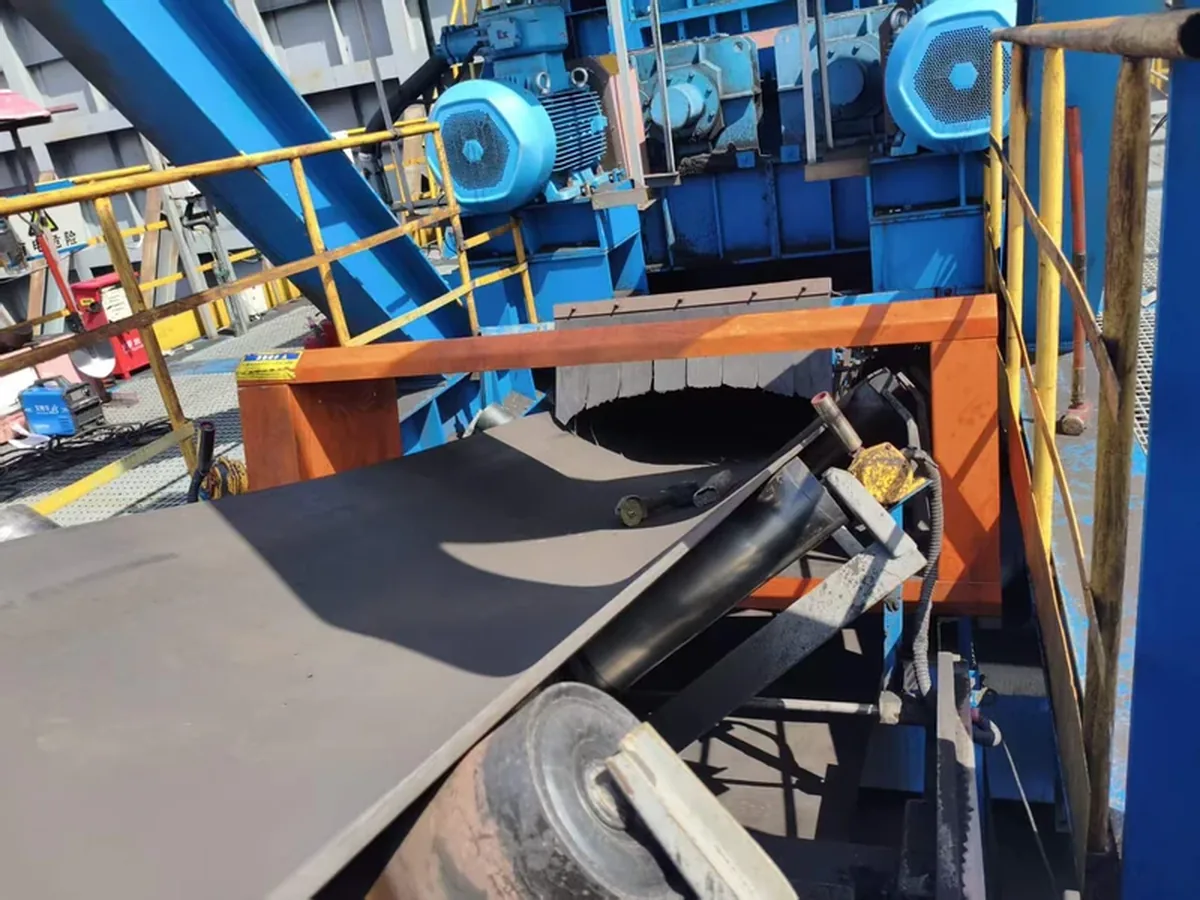
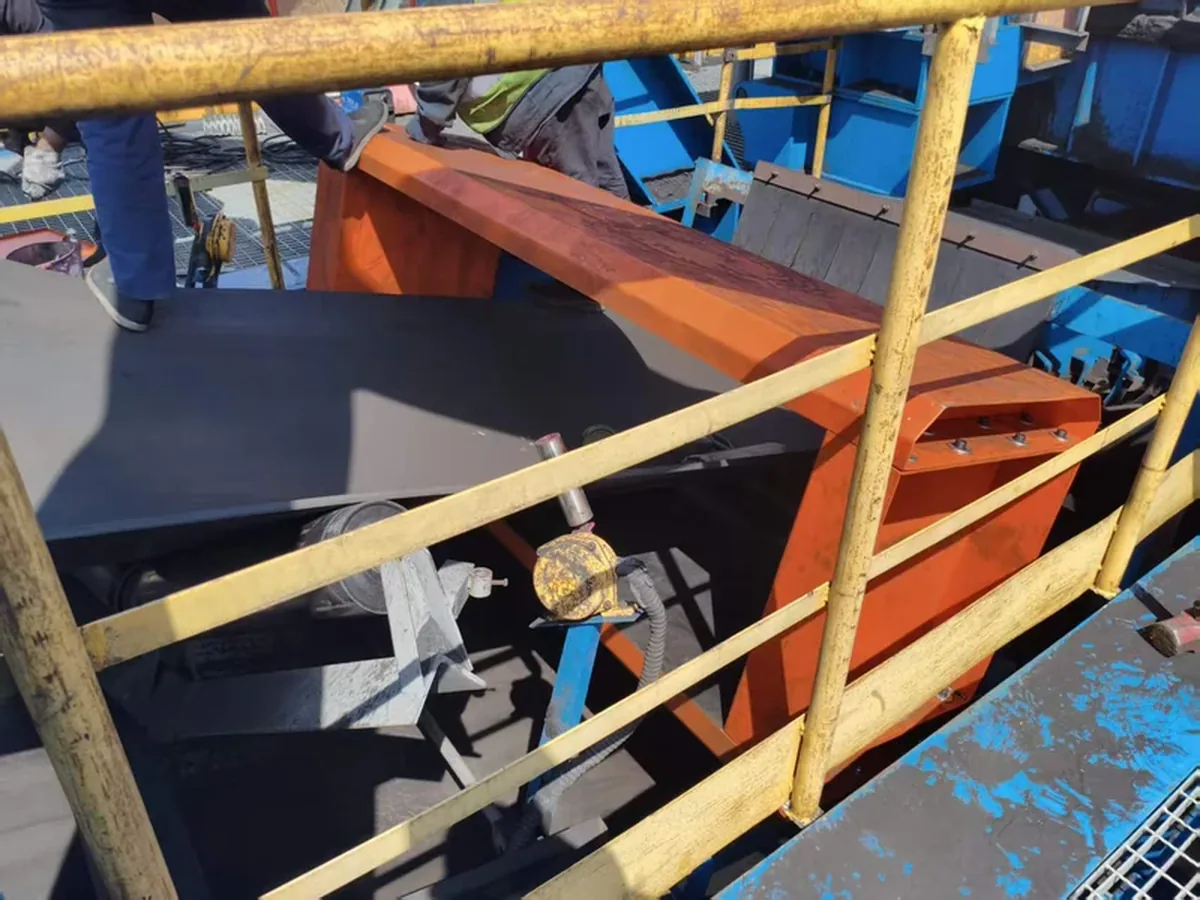
Engineering diagrams illustrate the detection principles, installation positions and key selection factors.
What Happens Next
We use the submitted information to narrow the model, check the installation conditions and define the remaining inputs required for quotation.
FAQ
Our current GJT-F family data lists iron, aluminum, stainless steel and alloy metals. The smallest metal size the detector can find in real use still depends on metal size, shape and direction, material depth, the conveyed material and installation conditions.
Our current GJT-F family range covers nominal belt widths from 500 to 2000 mm, from GJT-5F through GJT-20F. We confirm the final model against the actual belt profile, material depth and available installation space.
The family table lists a φ20 mm iron/aluminum sphere reference. Because the supplied sheet does not give a complete test method or cover every material condition, we use this value as a selection reference. If the smallest metal size is critical, we check it under the agreed operating condition.
The family layout drawing shows more than 10 m from a belt-type magnetic separator and non-magnetic rollers near the detector as an example arrangement. Send us the actual layout because magnet type, steelwork and electrical interference vary from site to site.
The family data references a metal belt-clip detection function. We confirm the actual clip or splice design and include it in the detection check for your conveyor.
No. The GJT-F detects the event and provides alarm/relay outputs. Physical removal requires the separate response designed into your line, such as belt stop/manual removal, a reject device or another separation device.
Start with the material, target metal, throughput and conveyor/installation drawing or condition. If available, also send belt width, speed, burden depth, splice type, vibration, nearby magnetic/electrical equipment, power and the action you want after detection.
What to Send for a Quote
Start with the four items below. Add conveyor and detection details when available so we can check the model and installation with less back-and-forth.
Send these details to Corvelan. We will check the GJT-F model range, installation conditions and the control action you need before preparing the quote.
Next Step
Send the material, target metal, throughput and conveyor details. We will review the starting model, installation conditions and the detection requirements needed to complete the quotation.