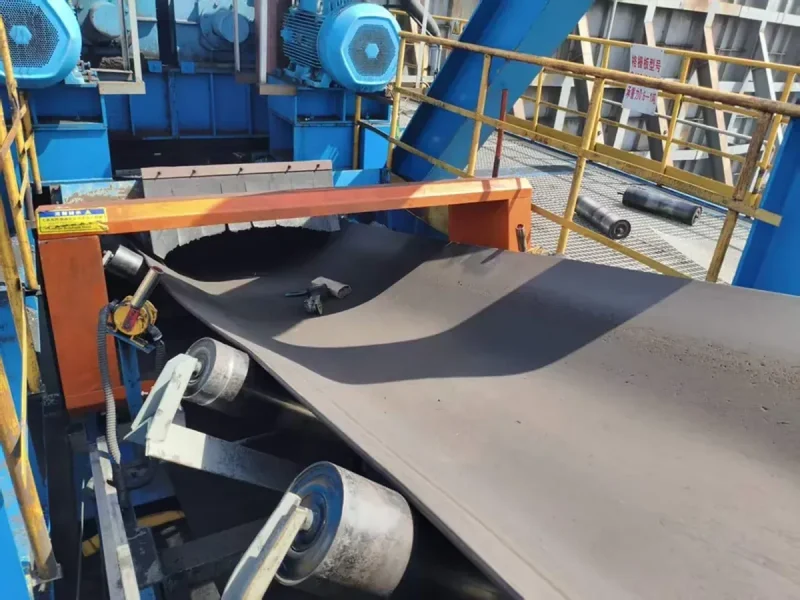
For weakly magnetic fines, start with a high-intensity magnetic roll if the dry feed spreads into a thin, even layer. Test a dry electromagnetic matrix filter if the job is to polish a fine powder that flows through a matrix. For slurry, compare a wet high-intensity plate with a matrix-type wet high-intensity magnetic separator (WHIMS).
The best magnetic separator for fine particles is the one that meets your product grade or contamination limit at the required throughput and acceptable product loss. First identify what you need to catch and where it enters the line. Then compare machines on your own material, including the fines most likely to escape.
What Is the Best Magnetic Separator for Weakly Magnetic Metals?
Start with a high-intensity separator that fits the way your material flows. A roll separates dry particles into different discharge streams. A matrix filter lets powder pass through while it holds fine magnetic contamination. A wet high-intensity separator works in slurry. “Weakly magnetic metals” can mean work-hardened stainless steel fragments or weakly magnetic minerals that contain iron. The same machine may handle one feed and perform poorly on the other.
| Feed and target | First equipment to test | What decides the choice |
|---|---|---|
| Dry mineral grains or sized fines with a liberated weakly magnetic fraction | Rare-earth roll or induced roll | Assay each outlet and check how much good material goes with the reject. |
| Fine dry powder with trace magnetic wear particles | Dry electromagnetic matrix filter | Confirm that powder still flows freely and meets the quality limit late in the cleaning cycle. |
| Pumpable slurry with weakly magnetic mineral fines | Wet high-intensity plate or matrix-type WHIMS | Compare grade, recovery and dry-solids throughput at the same feed conditions. |
| Heavy load of strongly magnetic steel or magnetite | Drum or another primary ferrous separator suited to the feed | Measure the load that remains before sizing a polishing stage. |
| Copper or aluminum fines in mixed scrap | Size-specific nonferrous recovery trial | Check whether the actual size fraction can be recovered at a useful grade and yield. |
What Are You Trying to Separate?
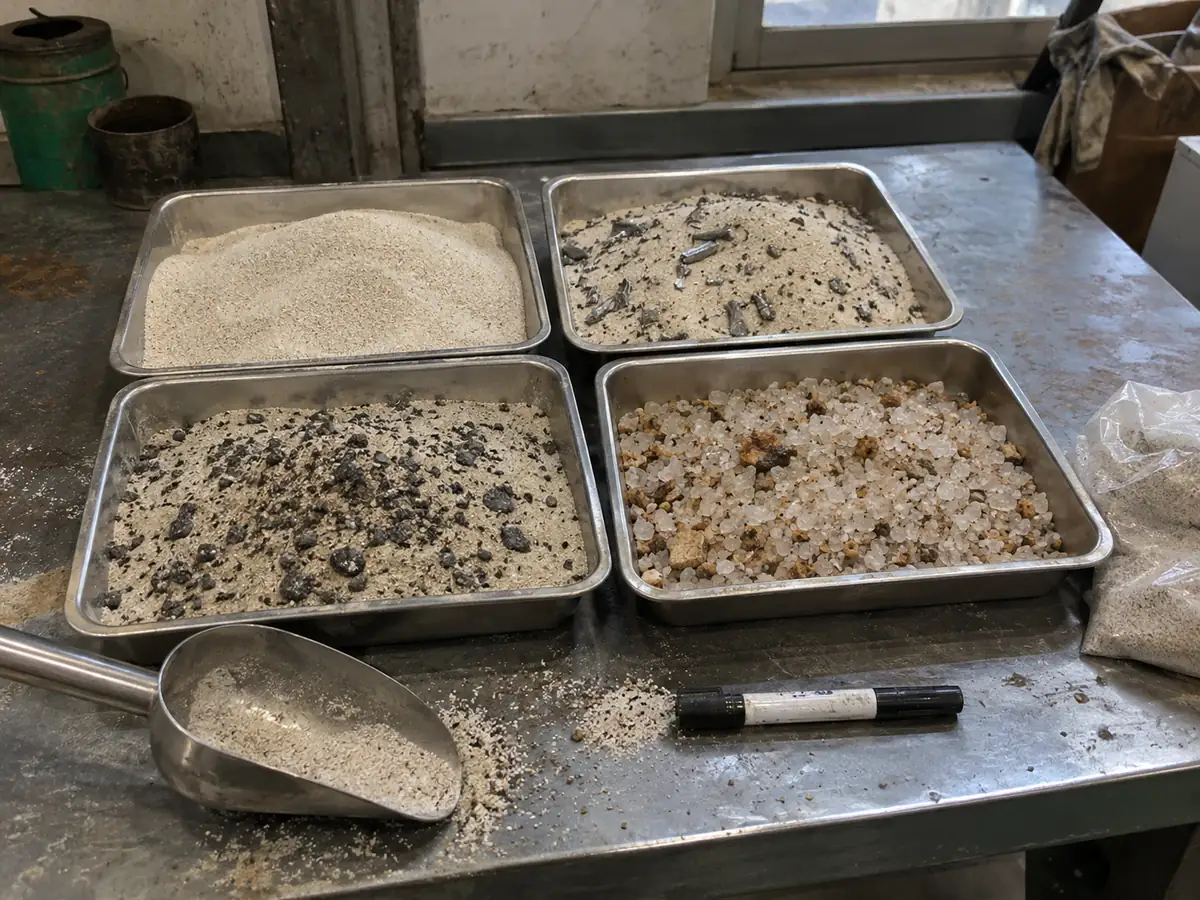
Identify the target particle and decide whether it belongs in the product or the reject. A quartz producer might want less iron in the saleable stream. A hematite plant might want more of its iron reporting to the concentrate. Those jobs can send the magnetic fraction to opposite destinations. Label the desired stream before you start testing.
Is the target strongly magnetic, weakly magnetic, or barely responsive?
Carbon-steel wear debris and magnetite are usually good candidates for a primary magnet. Weakly magnetic mineral grains and some stainless fragments need a closer look. Use a representative sample of the actual fragments. The Australian Stainless Steel Development Association’s technical FAQ explains why annealed 304 and 316 show little attraction and why cold work can make them respond to a magnet. A sample of unused stainless stock can behave differently from shavings generated by a worn screw or screen.
Is the target free or locked in the host particle?
A liberated target can move into a separate stream. When it remains locked in another mineral, the separator acts on the whole composite grain. If the rejected fraction carries valuable host mineral and the clean fraction still assays high in iron, inspect the grains or request mineralogy by size fraction. Compare an as-received split with a classified or smaller grind split to see whether liberation changes the result. Grinding can expose more iron-bearing grains and can also create ultrafines that become harder to separate. Keep the change only if the trial improves the product and recovery at a practical flow.
When Should You Use a High-Intensity Magnetic Roll?
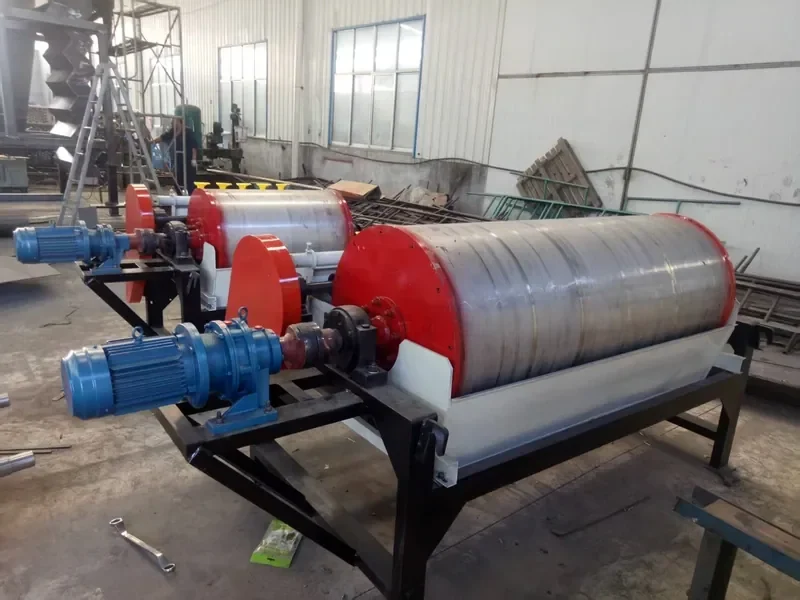
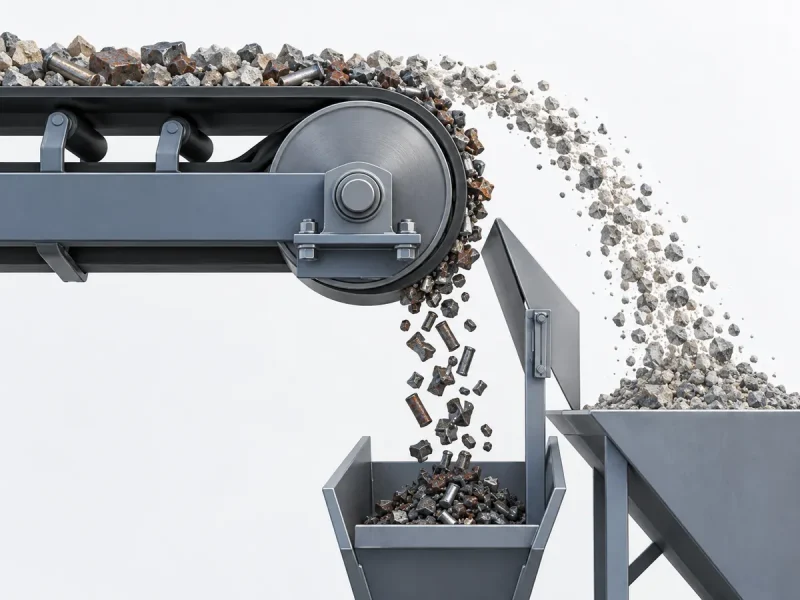
Choose a roll trial for dry, free-flowing material that can be spread thinly and split by particle trajectory. At the roll, responsive particles follow the magnetic surface farther around before leaving. Less responsive particles leave on a different path. A splitter between those paths directs the two fractions to separate outlets.
How do feed depth and the splitter change the result?
Set an even feed layer before adjusting the splitter. A thick or uneven bed puts more particles farther from the working surface and can mix the discharge paths. Run one batch at a stable feed rate, collect the outlets and inspect each size fraction. If the smallest size fraction escapes, test it separately with a thinner bed. If the streams are clearly separated but the reject is too large, move the splitter in steps and weigh and assay both streams at each position. That shows how much cleaner product costs you in lost yield.
When is an induced roll worth testing?
Test an induced roll when an adjustable field or working gap would help separate overlapping fractions. A permanent rare-earth roll is a practical starting point when a dry layer can pass close to the roll. An induced roll creates its field electromagnetically. Compare both at the same dry feed rate and with the same size split. On each machine, log the settings it actually offers and keep any middlings separate until you know their grade. The Corvelan magnetic roller separator page covers the dry roll feed, belt and outlet arrangement.
When Does Fine Dry Powder Need a Magnetic Filter?
Test a dry electromagnetic matrix filter when trace iron remains after a simpler magnet and the powder moves through a matrix without rapid buildup. The matrix is a set of magnetizable surfaces placed in the powder path. It creates many places where a particle passes close to a strong local magnetic gradient. That gives a fine contaminant more chances to be captured than it would have passing at a distance from an open magnet.
Will the powder pass through the matrix?
Check the powder at its normal and peak feed rates and near the end of a run. If it passes evenly and the cleaned powder meets the limit late in the cycle, compare the net hourly output. The Corvelan high-intensity magnetic filter for fine dry powder uses vibration to help powder move through the matrix. Its cycle pauses feed for iron discharge. If the upstream line must keep running, allow for buffer capacity or compare a parallel arrangement.
What if the powder bridges or travels in a pneumatic line?
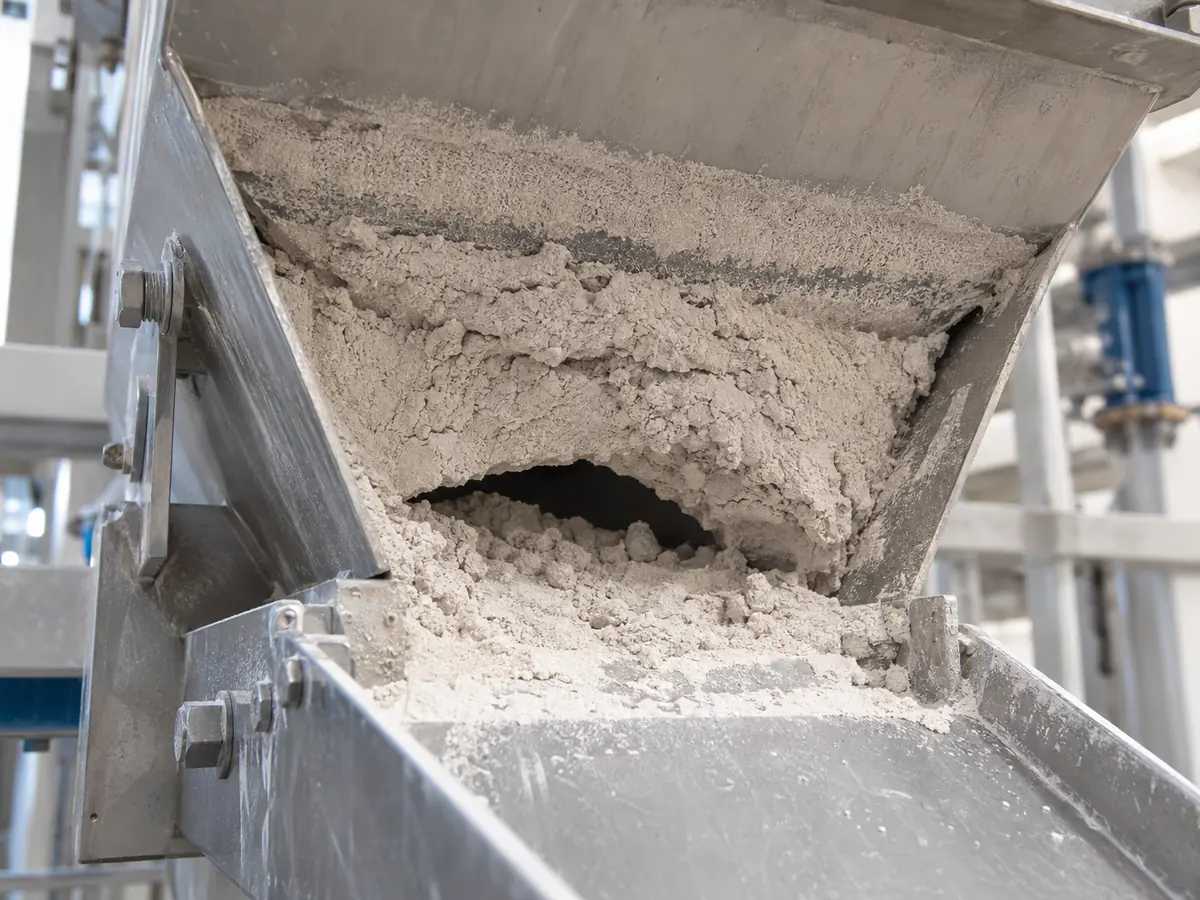
Fix the flow restriction first if the powder cakes or forms a bridge. Look for a change in hopper discharge, material packed above the matrix or a difference between dry and humid lots. Compare metering, deagglomeration or a more open separation stage using the worst normal powder condition. A pressure or vacuum conveying line needs a separator rated for that service. Record line size, pressure or vacuum, and acceptable pressure drop before comparing options. The powder separator selection guide covers grate, chute and pneumatic layouts in more detail.
Which Separator Fits a Fine Mineral Slurry?
Start with a wet high-intensity plate when the slurry spreads evenly over the working area. Compare matrix-type WHIMS when weakly magnetic fines need closer contact with high-gradient capture sites or a different continuous-flow arrangement. For strongly magnetic magnetite, a wet drum is usually the first magnetic stage. Test what remains after that stage before adding a high-intensity circuit.
When does a wet high-intensity plate make sense?
Test a wet plate when the feed is already a slurry and the target is free enough to respond as the slurry crosses the plate. Wet quartz with remaining iron-bearing particles is a candidate. Check feed distribution across the width and sample both outlets while changing one setting at a time. Match the product test to the job. If the buyer specifies fired color as well as iron, measure both. The Corvelan wet high-intensity plate separator is a belt-type plate design and the product page explains when to compare it with a vertical-ring machine.
When should you test a matrix-type WHIMS?
Test a matrix-type WHIMS when the fine fraction drives the result and the plant can operate and rinse the matrix at the required slurry flow. Compare matrix geometry, feed solids by weight, wash conditions and dry solids recovered. On machines with pulsation, track its setting as well. In Luzheng Chen’s 2009 pilot study of hematite tailings, a 1 mm rod matrix upgraded a 28.76% Fe feed to a 54.35% Fe concentrate at 35.89% Fe recovery. Going from a 2 mm to a 1 mm rod raised recovery and slightly lowered grade in that test. Compare the two results together when tuning a matrix for your ore.
How Much Do Gauss, Gradient and Particle Size Matter?
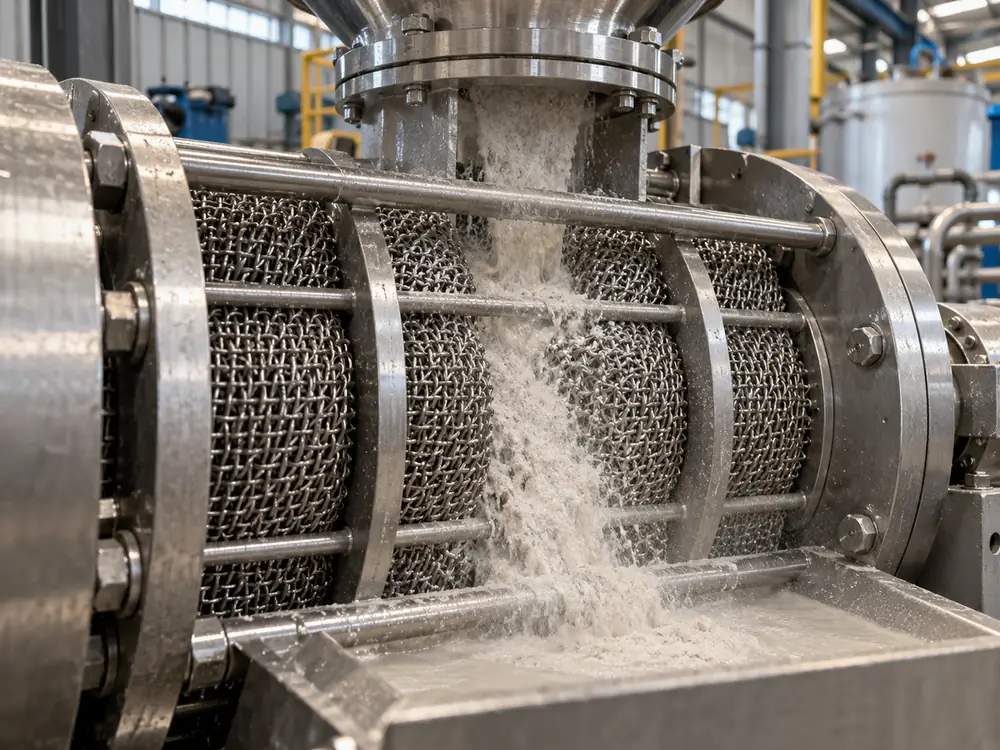
Gauss measures magnetic flux density at a stated location. The field gradient tells you how quickly the field changes over distance. Both affect the pull on a weakly magnetic particle. The particle has to pass close enough for that pull to compete with the forces carrying it onward, such as slurry drag or motion off a belt.
Where was the magnetic field measured?
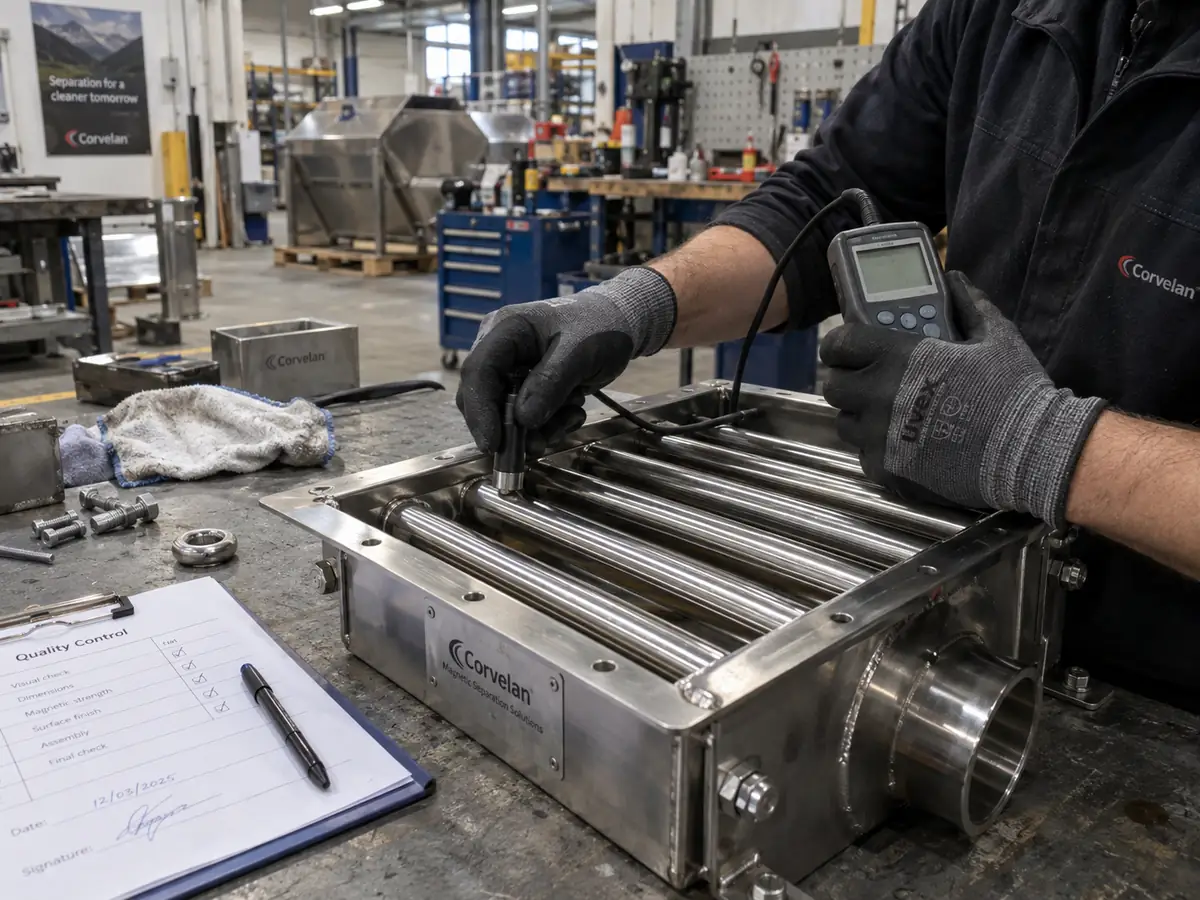
Ask whether the number describes the surface, the open working gap or the background field before the matrix is installed. For example, Eriez’s description of a matrix-type filter defines the background field with the matrix removed. The field at a matrix edge is a different reading. To compare quotes, ask for the measurement location, distance, probe orientation and operating setting. Then compare the product and reject results under the same feed conditions. Measurements verify the magnetic system, while the material test shows what the field does on the line.
What particle size should you specify?
Give the size distribution of the whole feed and the size of the target particles. At comparable composition and field, a smaller particle has less volume for the magnetic force to act on. It can be harder to move out of the stream, especially in flowing slurry. A dry fine fraction can also stick to coarser grains or form clumps. Report the sieve or analyzer method, whether the sample was dispersed and which size fraction carries the contaminant. A quoted minimum capture size is useful once it is tied to a target, a test method and a throughput.
What Should You Fix Before Adding a Stronger Separator?
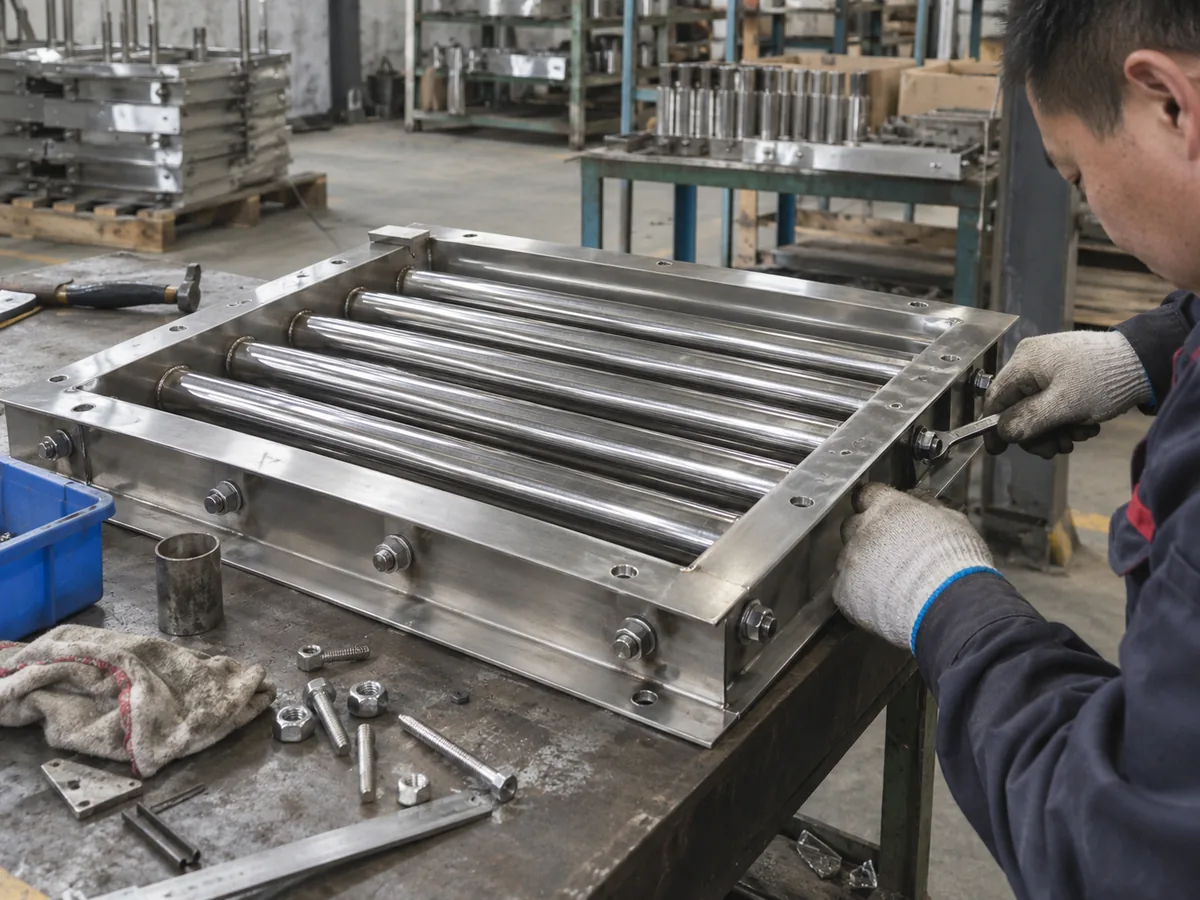
Start with whichever condition is keeping the target from reaching a useful magnetic field. If a belt carries heavy steel debris along with weakly magnetic fines, remove the easy ferrous load first. A fine matrix otherwise spends much of the run collecting particles a simpler stage could remove. Test the second stage on the first stage’s product and measure the improvement it adds.
If two dry batches of the same mineral behave differently, compare moisture, feed depth and the size split before changing the magnet. Screen or classify when the test shows one size fraction dominates either the contamination or the product loss. If a dry feed can only be dispersed well in water, compare the wet route together with its slurry preparation, water handling and downstream dewatering. Those steps are part of the cost per ton of saleable product.
Take a sample where the feed actually enters the separator. A stockpile sample can miss metal added by grinding media, an upstream conveyor or a worn transfer screw. If feed preparation changes the product’s moisture or size, use the downstream acceptance test to confirm that you still have the material the customer ordered.
How Do You Run a Useful Sample Trial?
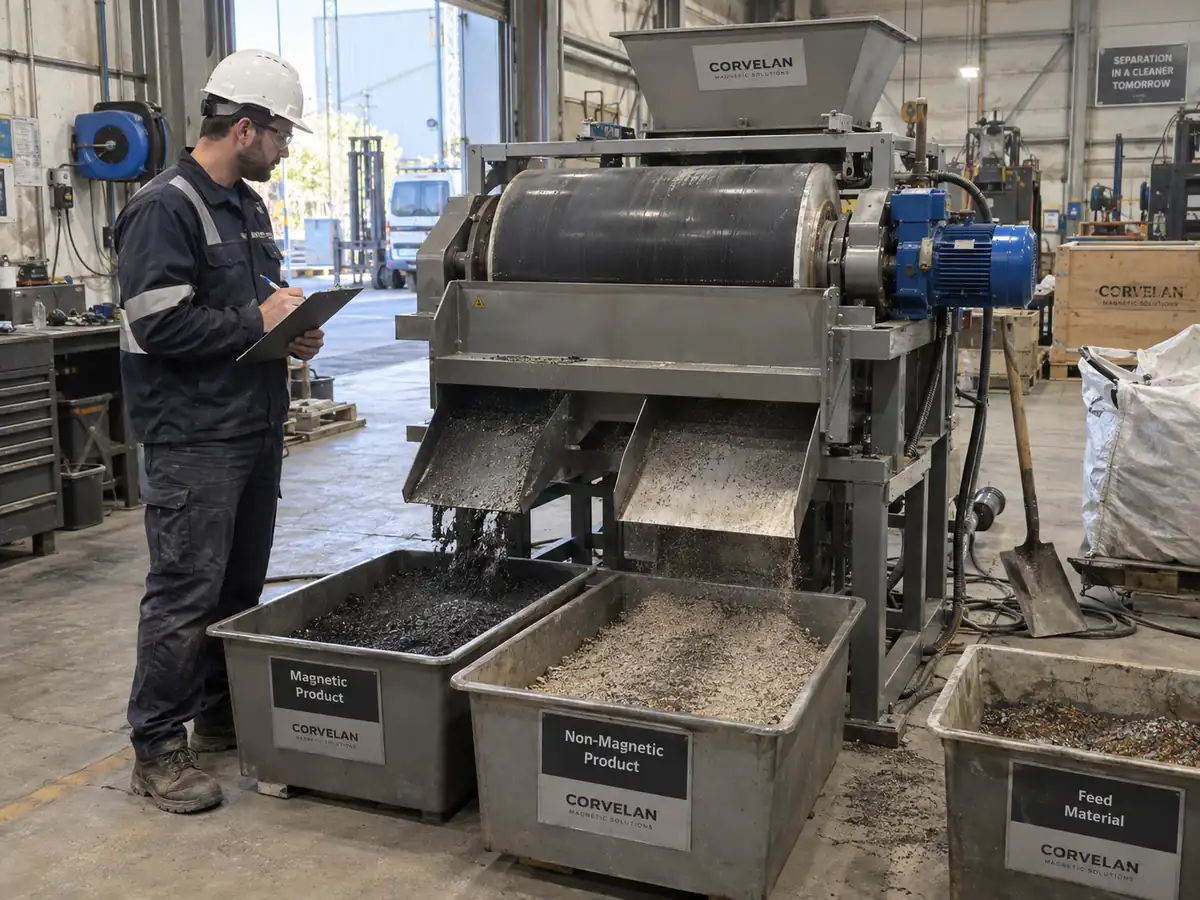
Use representative feed, weigh and assay the relevant streams, and agree on the pass criteria before you run the trial. Test the conditions that set the purchase decision: normal flow, the highest routine flow and the end of the cleaning cycle for a cyclic filter.
What do you sample and measure?
Collect feed, product and reject over a matched interval after the run stabilizes. If the separator has a middlings outlet, collect it separately. For a cyclic filter, track what remains in the unit until the captured material is discharged. Use the same sample preparation and assay method across streams, express wet samples on a dry-solids basis and record the configuration and settings. Check the mass and target balance before interpreting a low product assay. If they fail to close within the trial’s agreed sampling and analytical tolerance, check missing material, moisture correction and sampling times.
How do you read the grade, yield and recovery?
Read grade and yield together for purification, and add target recovery for concentration. Product mass yield is dry product mass divided by dry feed mass. Target recovery into a stream is the mass of the target in that stream divided by the mass of the target in the feed. To calculate the target mass, multiply the dry stream mass by its assay as a mass fraction.
Suppose two tests each start with 100 kg of dry feed at 0.20% Fe. The acceptance limits are 0.10% Fe or less in the clean product and at least 95% mass yield. In test A, 96 kg of product at 0.08% Fe contains 0.0768 kg Fe. With 0.20 kg Fe in the feed, 61.6% of the input iron stayed out of the clean product, assuming the measured streams close the balance. Product Fe concentration fell by 60% and product mass yield was 96%.
Test B gives 90 kg of product at 0.06% Fe. The product is cleaner, but its 90% mass yield misses the requirement. Choose setting A for the next trial. Run it at the required production throughput and keep the setting only if both limits still hold. If test A stops meeting grade at peak flow, check whether the feed layer thickened or the filter loaded faster before repeating the trial with an adjusted feed setup.
Why Do Fine Particles Start Getting Through?
Use the timing and location of the contamination to narrow down the cause. Compare matched samples taken near the separator discharge and at the final quality check. A weak result at both locations suggests a separation issue. A problem that shows up only downstream directs your attention to the equipment between those two sample points.
- Only at peak flow: Compare feed depth across a roll or slurry distribution across a plate at normal and peak flow. Stabilize or spread the feed, then repeat the peak-flow sample.
- Late in a filter cycle: Compare the product assay and flow early and late in the cycle. When quality falls as the matrix loads, test a shorter interval or remove more upstream magnetic load. Recalculate net output with the new cycle.
- During restart after cleaning: Sample the first product after restart. Compare it with steady production. Where the equipment has a diverter, check its timing and whether captured debris clears to the reject before product flow resumes.
- Only at the final sample point: Sample before and after each transfer, screw or screen in that part of the line. Inspect the first location where contamination rises. After the repair, repeat the same paired samples.
Follow the equipment’s isolation procedure before opening a filter, reaching into a discharge or inspecting a driven belt. Use operating records and safe sample points while the machine runs. See the magnetic filter cleaning guide for cleaning intervals and checks after restart.
What Should You Put in the RFQ?
Send the feed condition, the target particle, the normal and peak feed rates, and the product result you need. Include the size analysis and current assay when available. State the test basis for the limit and the maximum acceptable product loss. Add a process sketch showing the installation point and how material will enter, leave and be collected.
Ask suppliers to quote the same duty and specify whether their capacity is peak instantaneous, continuous, or net of cleaning. For a dry filter, ask how often the feed pauses, whether it needs a buffer, what cooling utilities it uses and how the matrix is removed. For a roll, check feeder scope and access to the belt and splitter. For a wet unit, check the solids loading, wash-water demand, discharge route and whether your downstream equipment can handle the resulting streams.
Compare power, water, wear parts, cleaning labor and planned downtime on the same operating schedule. If a vibratory feeder or cleaning mechanism will run near operators, ask for the machine’s sound data at the proposed duty and review it against the site’s requirements. If the purchase depends on one grade or recovery figure, put the representative feed, settings, sampling method and acceptance limits in the trial plan before agreeing to the equipment. For slurry, give the flow rate and percent solids by weight. If you report volume per hour, include slurry density so the supplier can size equipment on dry solids per hour.
How to Make the Final Choice
Choose the separator that meets your acceptance limits on real feed at the line’s required net output. Start with a dry roll for a thin, free-flowing bed, a dry matrix filter for free-flowing fine powder, or an appropriate wet high-intensity unit for slurry. If the test misses the target, use the outlet analyses and operating observations to decide whether to change feed preparation, the separator settings or the circuit.
Send your material and throughput details to Corvelan
Include your material, target, particle-size range, normal and peak flow, and desired result in the message. Use the application review to narrow the equipment option and define what a material trial needs to verify.
Fine-Particle Magnetic Separation FAQs
Can I shortlist a separator with a hand magnet?
Yes, use it to screen for an obviously strongly magnetic fraction. Compare actual process fragments under similar conditions. For a weak or unclear response, use a controlled separator trial and assay both streams before ruling out magnetic separation.
Why do two batches of 316 stainless fragments respond differently?
The amount and type of deformation can change the magnetic response. Collect fragments from the process step that creates them. If a blend combines material from different operations, test the least responsive fraction as well as the blend.
Can a high-intensity roll recover fine copper or aluminum?
For copper or aluminum recovery, shortlist a nonferrous process such as a fines-grade eddy-current separator. Grade the feed by size and test the individual fractions, because a successful trial on coarse pieces gives little information about your smallest fines.
Does water cooling make a dry magnetic filter a wet separator?
Cooling water can serve the electromagnet while the product stays dry. Check where the cooling water goes and whether the machine is rated to accept product slurry before connecting a wet stream.
Can I compare a feed result reported as Fe with a product result reported as Fe₂O₃?
Put both results on the same reporting basis first. Ask the lab whether Fe₂O₃ is a converted total-iron result or a measured mineral phase. Use the same agreed analyte, units and dry basis across all streams.
How should I report a product result below the lab’s quantitation limit?
Report it with the limit, such as “less than 50 mg/kg.” If your acceptance limit is 20 mg/kg, that result cannot establish a pass. Agree on a method with a suitable quantitation limit before repeating the trial.
Is D90 enough to describe the particle size for an RFQ?
Send D90 plus the top size and the size splits that carry the target. D90 is the size below which 90% of the reported distribution falls. State whether your lab reports the distribution by mass, volume, or particle count. A small amount of oversize may affect matrix passage, while the ultrafine fraction may determine the residual contamination.
Can an abrasive powder add metal while I am trying to remove it?
Yes. Wear at product-contact points can add particles during conveying or separation. If analysis points to the alloy used at a chute, screw or outlet, compare samples just before and after that point and inspect the contact surface at a safe stop.
Is it worth adding a second magnetic pass?
Add a second pass when a trial shows a useful quality or recovery gain at an acceptable extra loss. Sample after each pass and weigh both rejects. Compare the extra improvement with the saleable material, capacity and time the second pass consumes.
How do I account for cleaning time in a powder filter’s capacity?
Divide the usable product mass by the time for a complete cycle. Include filling, feed pauses, cleaning and restart time. A unit that delivers 900 kg of usable product in 60 minutes across the full cycle delivers 0.9 metric tons per hour under those conditions.