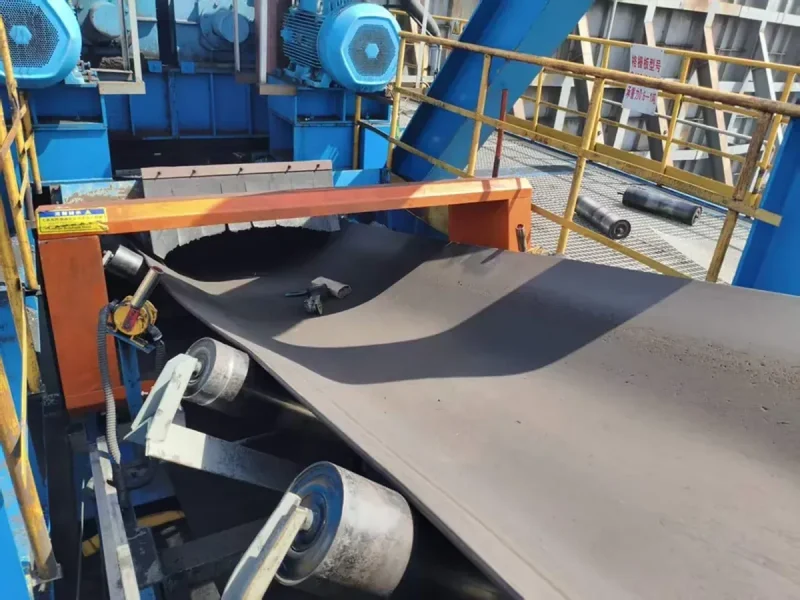
A powder magnet can reduce total iron when it removes iron-bearing particles from the powder. Iron built into the crystal structure of a particle stays with that particle. If the powder contains both steel wear and iron in the host mineral, the magnet can remove the steel while the iron in the retained mineral still appears on the lab report.
Start by checking what the lab measured and which particles carry the iron. Then compare the feed, cleaned product, and magnetic reject from the same trial. Those three samples can show whether a different separator is worth testing or the remaining iron calls for a change in material or process.
Can a Powder Magnetic Separator Reduce Total Iron?
Yes, if the separator removes a fraction richer in iron than the incoming powder. For iron that forms part of the retained mineral’s crystal structure, magnetic separation leaves the iron with the mineral. A mixed feed can contain both removable and structural iron. The composition of the reject, along with its weight, shows how much the magnetic stage can change the product assay.
What the Magnet Actually Pulls Out
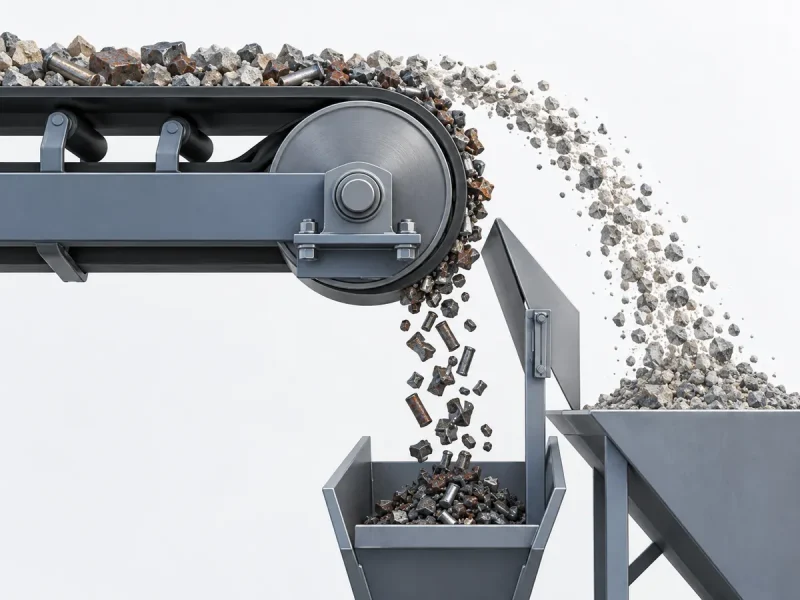
A magnetic separator pulls on whole particles. A loose steel shaving can be captured by itself. If a responsive iron oxide grain is stuck to a larger grain of saleable powder, the pair may enter the reject together. If the pair responds too weakly at the operating gap and rate, it may stay in the product. Looking at both outlets tells you which happened and how much good material moved with the iron.
Why Lattice Iron Stays With the Powder
When iron occupies a site in a mineral’s crystal lattice, it travels with that crystal. A magnetic separator can change the blend by sorting out whole iron-rich particles if their response differs enough from the rest of the feed. If the host is the material you sell, removing those particles costs product yield. Mössbauer studies of iron in kaolin identify structural iron in selected kaolins and give an example of how a lab can distinguish it from other forms of iron.
What Does “Chemically Bound Iron” Mean in Powder?
Ask the lab what hosts the iron. Plant teams sometimes use “bound” for iron that looks attached under a microscope, iron sealed inside a grain, or iron built into a crystal. Those findings lead to different trials.
| Where the iron sits | What the finding means | What to try first |
|---|---|---|
| Loose steel or magnetite particles | A separate particle can respond strongly to a magnetic field. | Screen a representative split for magnetic capture and check how the particle reaches the separator. |
| A separate iron oxide grain or a surface coating | A free grain has its own magnetic response. A coating travels with the particle it covers until the coating is detached or removed. | Trial fine magnetic capture for free grains. For a coating, ask whether controlled scrubbing can release it and test the resulting fractions. |
| An iron-bearing inclusion inside a host grain | The magnetic response and mass of the whole grain govern how it sorts. | Use microscopy to see if size reduction can free the inclusion while preserving the required product size. |
| Iron within the host crystal lattice | The iron is part of the mineral you are keeping or rejecting. | Identify the host phase and compare a feed change, a qualified beneficiation route, or selective rejection of a separable iron-rich fraction. |
Free Grains, Coatings, and Locked Inclusions
A distinct iron-bearing phase may become separable after it is freed from the host. For an exposed coating, a small attrition test, which rubs grains against one another, can show whether the coating releases. For a mineral inclusion, compare a milled split with an unmilled split. Assay corresponding size fractions and check the product size specification. Milling that frees iron while moving too much product below the specified size can solve one problem and create another.
Structural Iron in the Host Crystal
Grinding a crystal into smaller pieces still leaves structural iron inside those pieces. If the feed is a mix of grains with different iron content and magnetic response, sorting can still remove a whole iron-rich fraction. Ask the lab to determine whether the iron-rich material is a separate mineral, a distinct group of host grains, or a broadly distributed part of the saleable mineral. Each finding offers a different amount of usable separation.
What Does Your Total Iron Report Measure?
Put the feed, product, and reject assays on the same basis before you compare them. Agree on the reporting unit, dry or as-received basis, sample preparation, and lab method. Keep that agreement with the purchase or acceptance specification.
Match the Reporting Basis
Elemental Fe and total iron expressed as Fe₂O₃ equivalent are two ways to report the same amount of iron. On a dry basis, 0.050% Fe₂O₃ equivalent is 500 ppm as Fe₂O₃ equivalent, or about 350 ppm as elemental Fe. In this context, 1 ppm by mass equals 1 mg/kg. Multiply elemental Fe by about 1.430 to express it as Fe₂O₃ equivalent. Use the conversion only after confirming what each report means. The oxide equivalent is a reporting convention. A mineralogical test tells you which iron minerals are present.
Ask Whether the Method Measures Total Iron
Use a method validated for total Fe in your powder if the specification calls for total Fe. Ask the lab whether its preparation recovers iron from the host minerals and whether its reporting limit is low enough for your specification. ALS whole-rock method guidance describes fusion as a way to break down mineral phases and explains why some sample types need a tailored method. Fusion WDXRF or a suitable complete decomposition followed by instrumental analysis may be appropriate. When the specification is for acid-extractable iron, run the specified extraction and compare it with the corresponding limit.
How Can You Tell Which Form of Iron You Have?
Start with a matched feed and product test and keep the captured fraction for identification. The lab can then see whether the separator removed a distinct iron-bearing fraction and investigate the iron still in the powder.
Start With a Paired Screen and Assay
Screen a representative split and record what moves into the magnetic fraction. Keep the feed, pass-through, and captured material in separate labeled containers. Use clean sampling tools suited to the material so they do not shed the metal you are checking for. Have the lab assay each fraction on the same basis. A low iron result in the pass-through and an iron-rich catch support a production trial when the captured iron mass is large enough to matter. Weak attraction in this quick screen warrants a controlled test if mineralogy identifies fine paramagnetic grains.
Trace where the contamination enters. If a feed sample is clean but the powder after a mill or screen contains new metallic particles, inspect wear points between those sample locations. Fine iron from incoming material and iron introduced by process wear can coexist in one lot. Bunting’s guide to fine iron in powders explains those sources and how fine particles can escape collection.
Ask the Lab to Locate the Iron
Choose a method that can see the kind of evidence you need. X-ray diffraction (XRD) identifies crystalline phases when present at detectable levels. Microscopy with SEM-EDS can map iron-rich grains, rims, and inclusions in selected areas. When bulk assays show persistent iron and maps cannot locate a separate phase, ask a mineralogy lab whether Mössbauer spectroscopy or electron paramagnetic resonance (EPR) can help resolve the iron’s host. For a clay example, Biswas and colleagues’ study of Australian kaolin examined samples with different combinations of kaolinite, halloysite, and accessory minerals. The study shows why two clay lots can require different investigations even when both come from a kaolin deposit.
What Changes Between Kaolin and Quartz?
Choose the next test from the iron’s location and the product specification. Kaolin and quartz can both carry separate iron-bearing minerals, coatings, inclusions, or iron within a mineral structure. Their acceptance tests and tolerance for changing the product differ.
Check Kaolin Brightness and Clay Recovery
In kaolin, measure brightness and clay recovery alongside total iron when all three matter to the buyer. If a well-dispersed slurry contains liberated, weakly magnetic impurity grains, trial wet high-gradient separation. If the accepted kaolin itself carries much of the residual iron, compare a different feed lot or a qualified treatment for that identified form. Check whether treatment changes particle size, brightness, or another required property. Corvelan’s kaolin separator guide covers the dry and wet trial choices for this material.
Check Quartz Coatings, Inclusions, and Grain Size
In quartz, test how much iron is accessible before choosing the next purification step. Released grains can be candidates for magnetic separation. Exposed coatings can justify a scrubbing trial and re-assay. For enclosed inclusions, check whether liberation is possible within the target grain size. When iron is in the quartz lattice and persists above the specification, compare alternative feed or specialist purification on the actual material. A review of iron impurities in quartz describes the different locations and why they call for different treatments.
How Should You Test a Powder That Is Designed to Contain Iron?
Define the foreign material you want to remove and the amount of intended powder you need to keep. In iron-bearing formulations, the total Fe result can be governed by an ingredient that belongs in the product.
Keep the Intended Iron-Bearing Fraction
Powder metallurgy magnetic separation needs a test that reflects which fraction belongs in the product. For an iron-based pressing powder, the base alloy may dominate both the assay and the magnetic response. Removing a portion of that alloy can affect the blend and saleable output. If the operation is recovering a valuable magnetic fraction, measure that fraction’s grade and recovery using the intended product outlet for the calculation. Corvelan’s guide to tramp iron removal and mineral recovery explains how keeping a magnetic fraction changes the equipment decision.
Separate Foreign Wear From an Iron-Bearing Recipe
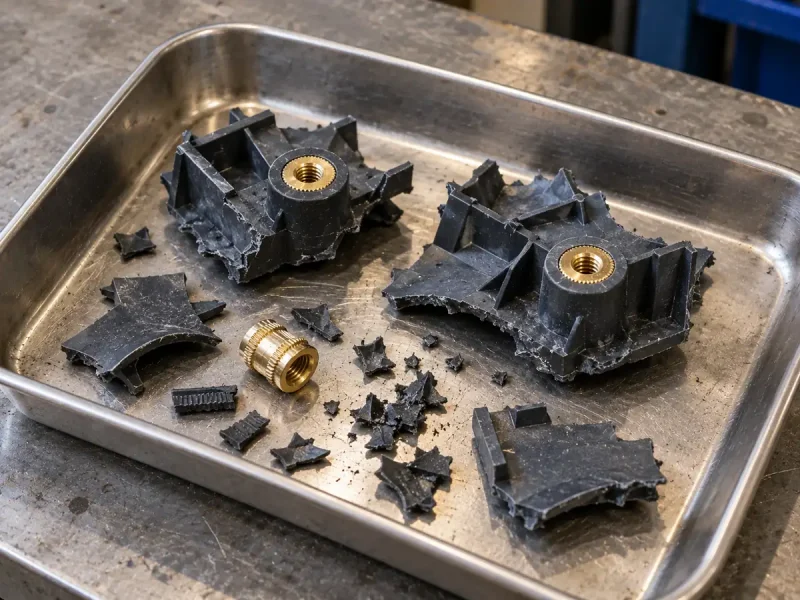
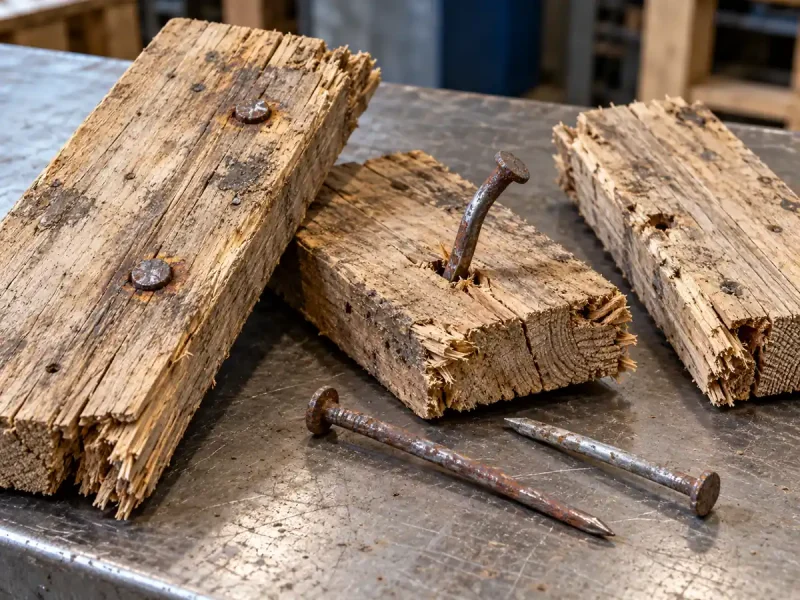
Use an acceptance test tied to the wear particle or other impurity you need to remove. Compare size, shape, and composition of the suspected wear with the intended particles. A sieve trial may make sense if the wear is distinctly larger than the powder. If the size bands overlap and both fractions respond similarly to the field, check the wear source and compare feed and reject composition before adding capture strength. Pair the contamination test with a check that the retained powder still meets the blend specification.
Which Magnetic Separator Is Worth Testing?
Choose the simplest separator that can intercept the identified particle at the required flow. Start with the feed state and contaminant type, then verify the result with the actual powder. A change in moisture, rate, or particle liberation can change the right equipment choice.
Coarse Magnetic Wear in a Gravity Chute
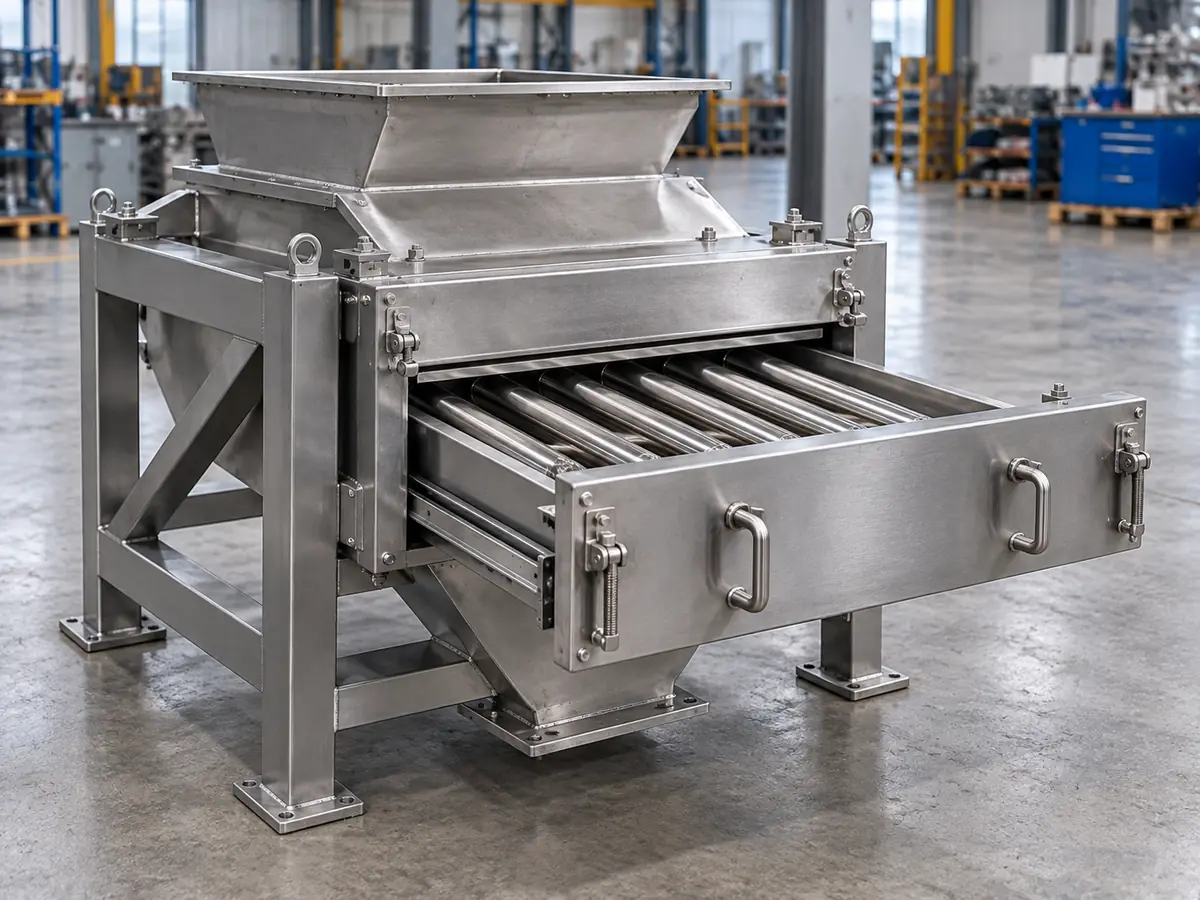
Start with an accessible grate or drawer magnet for free-flowing powder and discrete magnetic wear. Make sure the full powder stream crosses the magnetic area and check peak feed for bypass or backup. If large pieces or buildup could choke a finer matrix downstream, collect the coarse fraction first and weigh its reject separately. When a fixed grate causes bridging, compare a more open flow path and recheck capture at the same rate.
Fine, Weakly Magnetic Grains in Dry Powder
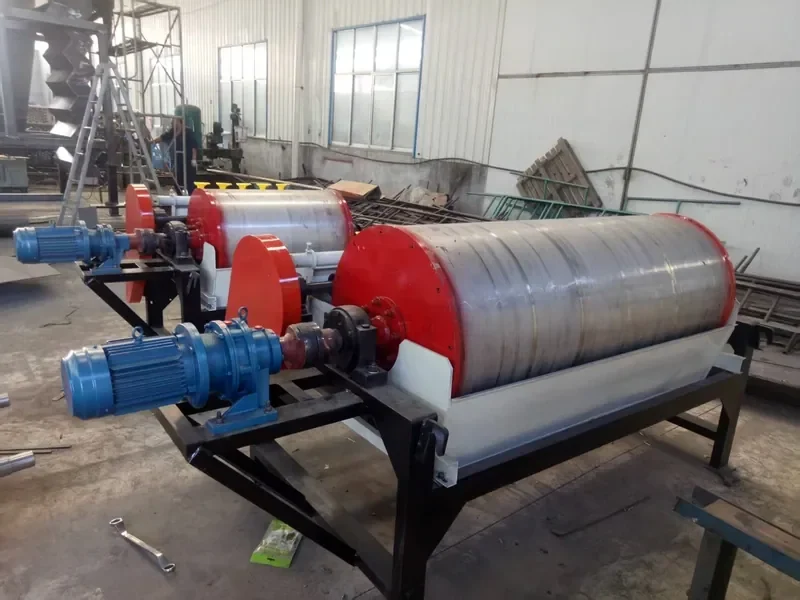
Trial a dry high-gradient matrix if fine liberated particles get past an open-gap magnet and the powder can pass through the matrix. The matrix makes the field change sharply near its edges, giving fine responsive grains a better chance of capture there. Check product loss, feed stability, and performance late in the cycle as material builds up. The Corvelan high-intensity magnetic filter is a candidate for that dry-powder trial.
Fine Grains in a Pumpable Slurry
Trial wet high-gradient separation when the responsive grains are liberated and the line already handles a stable, pumpable slurry. Record solids content, dispersion, feed rate, and the collection cycle. If the slurry settles or clumps between mixing and feeding, restore consistent delivery before comparing settings. Include water handling and dewatering if the product must leave dry.
When the Host Carries the Iron
Keep magnetic separation for the fraction it demonstrably removes and investigate the host for the remaining iron. If a distinct mineral still encloses the iron-bearing phase, compare a controlled liberation step. If the iron occurs throughout the host you sell, compare a lower-iron feed or ask a qualified lab about a treatment for that mineral. Compare yield, product properties, and waste handling before taking a new route to production.
How Do You Run a Trial That Answers the Total Iron Question?
Run a representative lot through the intended configuration and keep a matched record for all streams. A useful trial shows whether the result holds at the required rate through a full collection and cleaning cycle.
Set the Pass Criteria Before the Trial
Write down the maximum product iron, the minimum dry product yield, and the required throughput. Include the lab method, reporting basis, sampling interval, and the point at which QA will take the acceptance sample. When the expected result is close to the limit, agree how many repeats you need and how to handle method uncertainty. Confirm the separator settings and cleaning trigger before changing any variable.
Collect Matched Feed, Product, and Reject Samples
Collect samples that represent the same material and time window. Allow for travel time from feed to product, then take composites across the run using the line’s approved sample points. Keep early and late samples separate when you need to spot a change during loading. Weigh dry feed, cleaned product, and collected reject, and log any dust, spillage, or material still held in the equipment. Use the same preparation and assay for corresponding fractions.
Reproduce the Feed Condition That Causes Trouble
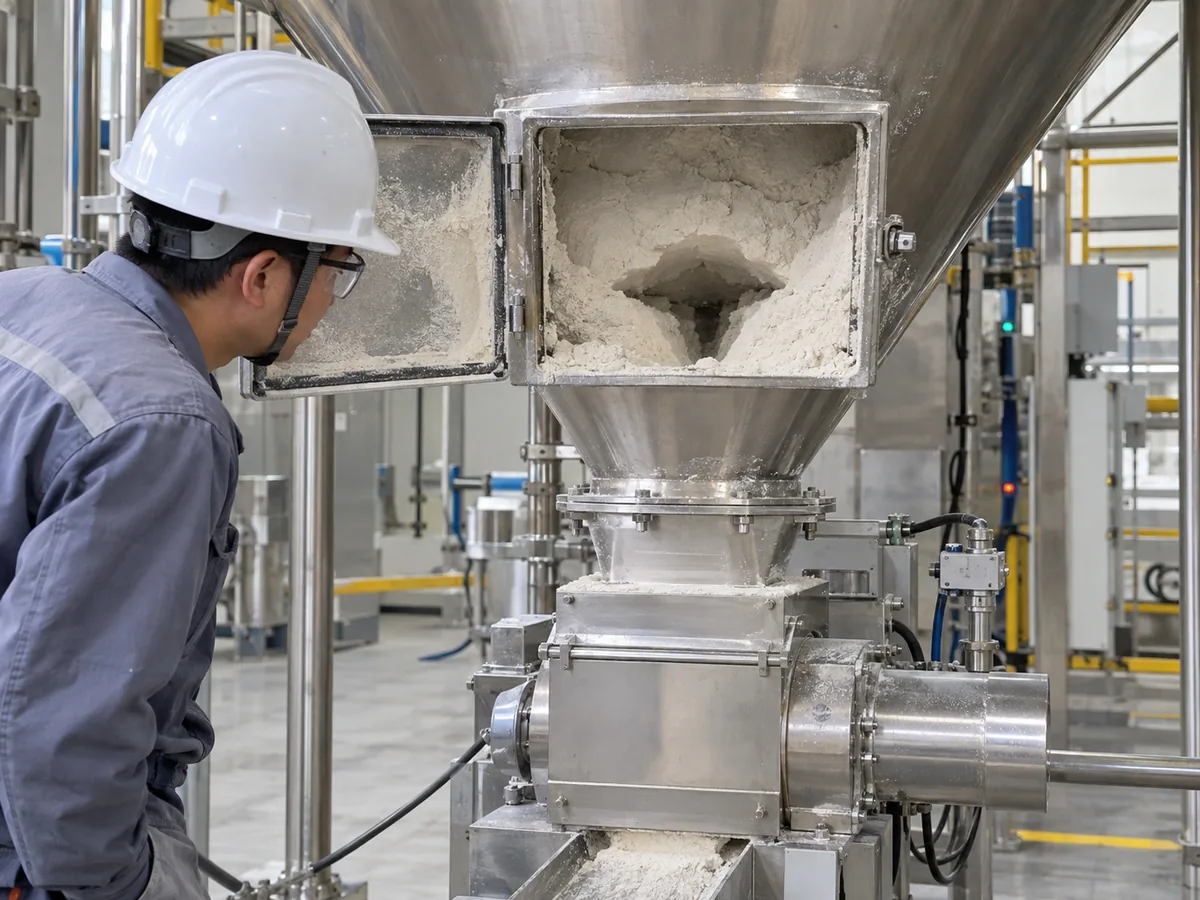
Test the lot and rate most likely to change how the powder flows. If fine powder bridges after storage or flows in surges, record the moisture and observe delivery above the magnet. Compare configurations on matched splits at the same rate. If a setup reaches the iron target only with a very thin, slow feed, repeat at required production throughput and check both iron and yield before approving it. Use approved sample ports and cleanout procedures, especially on pressurized lines or where the powder presents a dust hazard.
How Do You Calculate Iron Removal Without Hiding Product Loss?
Report product iron, iron sent to reject, and saleable yield together. A lab reports how concentrated the iron is. The weights of the streams tell you where the incoming iron and material went.
Calculate the Three Results Separately
Use dry stream weights and the same elemental Fe units for each fraction. With kilograms of powder and ppm Fe, multiply weight by ppm and divide by 1,000 to obtain grams of iron.
| Result | Calculation | How to use it |
|---|---|---|
| Drop in product Fe concentration | (Feed ppm − product ppm) ÷ feed ppm × 100 | Compare the product ppm itself with the customer’s limit. |
| Incoming Fe sent to magnetic reject | Reject Fe mass ÷ feed Fe mass × 100 | Check the amount of incoming iron accounted for by the magnetic stage. |
| Dry product yield | Dry product mass ÷ dry feed mass × 100 | Compare retained powder with the minimum acceptable saleable yield. |
Check the Iron Balance Before You Scale Up
Compare incoming Fe mass with the sum recovered in the outgoing streams. In an illustrative trial, 100 kg of feed at 1,000 ppm Fe contains 100 g of iron. The separator produces 98 kg at 850 ppm Fe, containing 83.3 g, and 2 kg of reject at 8,350 ppm Fe, containing 16.7 g. The iron balances to 100.0 g. The product iron concentration fell by 15%, the magnetic reject took 16.7% of the incoming iron, and product yield was 98%. In a two-stream test with good mass balance, a reject that is poorer in iron than the feed raises the product iron concentration, even though some iron leaves with the reject.
A limit of 800 ppm would still fail in this example. A limit of 900 ppm would meet the concentration requirement on this run, with yield and repeatability checked separately. If the measured iron in your outlets falls outside the agreed balance tolerance, check changes in equipment inventory, fines lost to dust collection, moisture corrections, and sampling before drawing a conclusion about capture.
What If the Magnet Collects Metal but Total Iron Stays High?
Use when the iron appears and what the reject contains to choose your next check. Visible filings show that some particles responded. Weigh and assay the catch before judging whether it contains enough of the feed’s total iron to change the product result.
An Early Miss and a Late Miss Point to Different Checks
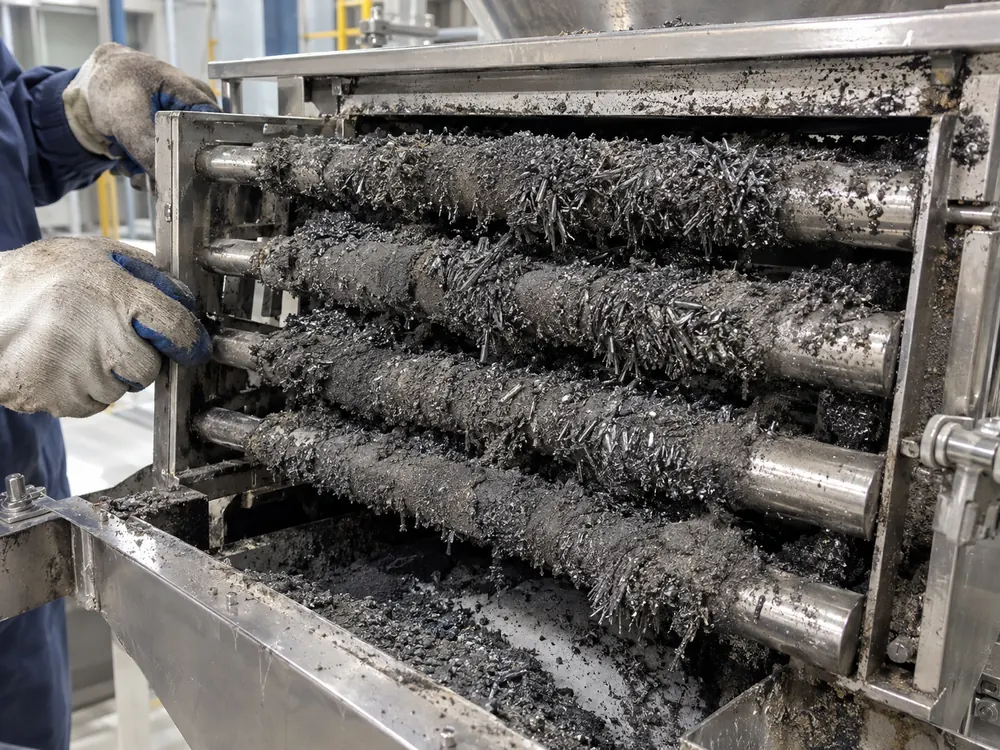
If a clean separator misses responsive particles immediately, check the feed path and exposure first. Look for gaps near housing walls, uneven feeding, moisture-related clumps, or brief surges. If early product meets the target and late product fails, compare the load on the magnet, the time since cleaning, and whether captured material can fall back into the product. Repeat the trial after correcting the suspect condition and use the same early and late sampling points.
A Repeatable Plateau Changes the Next Step
If repeated, well-matched trials reach the same iron level, identify the remaining iron before adding another stage. When the reject contains iron-rich grains and the tested product still has free responsive particles, compare a change in presentation or a higher-gradient option. When the useful host carries most of the iron, shift the trial to feed selection or a treatment matched to that mineral. If the separator outlet meets spec but the packout sample fails, trace the equipment and transfers between those two points.
What Should You Send for a Separator Review?
A separator trial is worth discussing when the material contains a responsive fraction and removing it could bring the finished powder into spec at an acceptable yield. Start with the separator choices for your powder line and compare the conditions that match your feed.
Send Corvelan your powder and iron results. Share the material and particle size, whether the feed is dry or slurry, the line rate, the existing separator if any, and the feed and target iron values with units and assay method. If you have reject data, send its weight and iron result. Those details let Corvelan review the equipment fit and discuss which representative samples and acceptance conditions would make a trial useful.
Frequently Asked Questions
Can a magnet remove an iron salt added to a powder recipe?
First establish whether the ingredient is present as its own grains or is distributed through the product. An iron salt can contribute to total Fe regardless of whether its particles respond enough for capture. If the salt is intentional, use the formulation and the lab method to verify its content and set a separate criterion for foreign metal.
Can I use a result reported as below the quantitation limit in the iron balance?
Carry it as a bounded value based on the lab’s reporting limit. If treating the result anywhere from zero to that limit changes the decision, ask for a method with a lower quantitation limit for the powder. Use the same method on the paired samples where it applies.
If a magnet picks up rust flakes, will it remove all the iron oxide?
The pickup shows that those flakes respond under the test conditions. Other iron oxides, fine particles, and oxide coatings may respond differently. Assay the product and reject using representative powder at the intended rate to determine what the production separator takes out.
What should I check before putting a magnet in a pneumatic conveying line?
Match the separator housing to the line’s pressure or vacuum and check the available pressure-drop allowance. Confirm where you can sample or clear the separator using the plant’s approved isolation and access procedure. Specify the impurity and verify capture at the actual conveying conditions.
Can a powder get brighter while its total iron stays about the same?
Yes. Removing a small but strongly colored impurity fraction can change appearance while the total iron assay changes little. Measure brightness with the agreed test and check the result against the separate chemical limit if the buyer specifies both.
Should I send off-spec material through the magnet a second time?
Run a small second-pass test first when the first-pass product still contains separable iron. Weigh and assay the new reject and calculate yield from the original feed. Compare the incremental iron drop with the extra loss of good powder and the rework needed.
Can a steel test piece verify a total iron specification?
Use a known steel test piece to verify capture for its size, material, and test path. Use the actual powder and the specified lab method for total iron acceptance. A steel test piece tests a different task from capturing fine mineral grains or coatings.
What if one size fraction has much more iron than the rest?
Weigh and assay each size fraction, then identify where that fraction should go. If a small iron-rich fraction is outside the saleable size range, test classification as well as magnetic separation. Combine fraction results by mass to compare them with the bulk assay.
How many powder lots should I test before buying a separator?
Include representative lots and a lot likely to run close to the iron or flow limit. Repeat enough runs for QA to judge feed variability and assay repeatability. One favorable lot gives a starting result, and the purchase decision should reflect the range the line will actually handle.
Can I use an ash-basis iron result to approve the finished powder?
Compare it with a specification written on the same basis. If QA requires dry-powder Fe and the lab reported Fe in ash, ask whether the measured ash fraction and method can support a dry-powder conversion. Ask the lab to confirm the basis before comparing the result with the limit.