
Dry, Controllable Feed
Use this setup for dry minerals, aggregate, granules, pellets or recycling streams when the feed can be spread across the drum and the target is ferrous or strongly magnetic.
Find equipment by installation point and separation task.
All magnetic separators →Start with the material or production line you need to protect.
All applications →Compare technologies, check parameters and prepare your RFQ.
All guides →See the factory, quality checks and answers before you request a quotation.
Use a dry drum magnetic separator when dry bulk material needs continuous removal of iron or other strongly magnetic material. This type of dry magnetic drum separator works best with stable, free-flowing feed. We match the drum to your material, feed depth, target and installation. We do not choose the machine from one Gauss number alone.
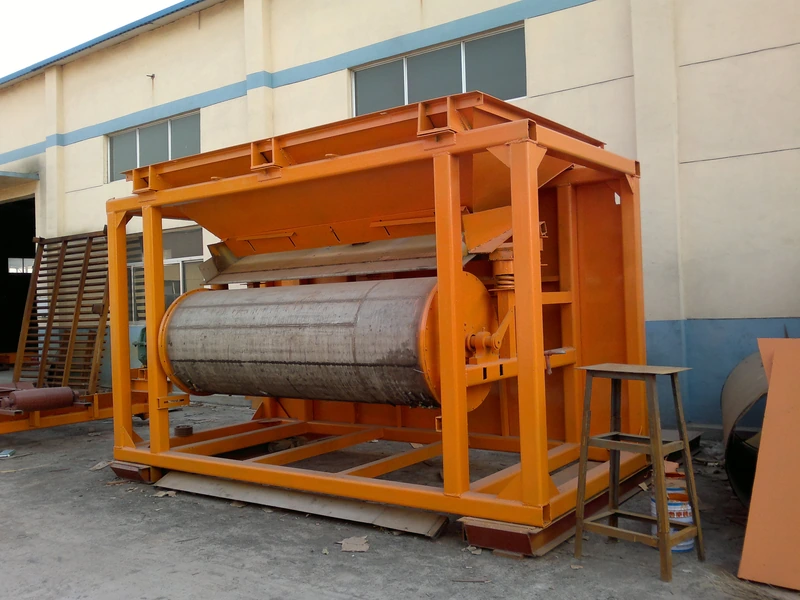
Choose a dry drum when the material flows freely and the target is iron or strongly magnetic. You also need enough space to keep the two separated material streams apart. If one of these conditions is missing, fix the feed or choose another separator type before sizing the drum.
Use this setup for dry minerals, aggregate, granules, pellets or recycling streams when the feed can be spread across the drum and the target is ferrous or strongly magnetic.
If too much material arrives at once, the feed layer becomes too deep or uneven. We first stabilize the feed. A feeder, gate, chute change or wider feed path can help more than simply using a stronger magnet.
Use wet magnetic separation for slurry. Use a non-ferrous sorting method for aluminum, copper or brass. For very fine weakly magnetic material, compare a higher-intensity dry separator instead of assuming a standard dry drum will work.
The material name alone is not enough to select the drum. Removing tramp iron, recovering a magnetic product and cleaning a non-magnetic product are different jobs. We set up and test the separator differently for each one.
Choose this duty when the main goal is to remove bolts, nails, wire, steel pieces or other ferrous contamination before a crusher, mill, conveyor, process machine or final product stream.
We check: target size, how much iron is normally present, feed width, feed depth, impact and discharge space. Feed depth is often called burden depth. We also check the working distance, which is the distance between the target and the magnetic system.
Choose this duty when the magnetic material itself must be recovered, upgraded or separated from a non-magnetic fraction.
We check: particle size, feed stability, recovery, product purity and product loss. We also check whether the magnetic mineral has physically separated from the other material. In mineral processing, this is called liberation.
Choose this duty when the clean non-magnetic stream is the product that matters most.
We check: contamination before and after separation and how much good material is carried into the magnetic reject. Removing more material is not a good result if too much saleable product is lost with it.
A dry magnetic drum sends magnetic and non-magnetic material along different paths. The rotating shell carries the feed through the magnetic zone. Magnetic material stays with the drum longer, while non-magnetic material leaves earlier. An adjustable splitter keeps the two product streams apart.
This real equipment photo shows the drum, shaft and drive arrangement used in a dry-drum machine.
What to look at: drum support, shaft position, motor and drive access. Final magnetic configuration is confirmed for the selected machine.
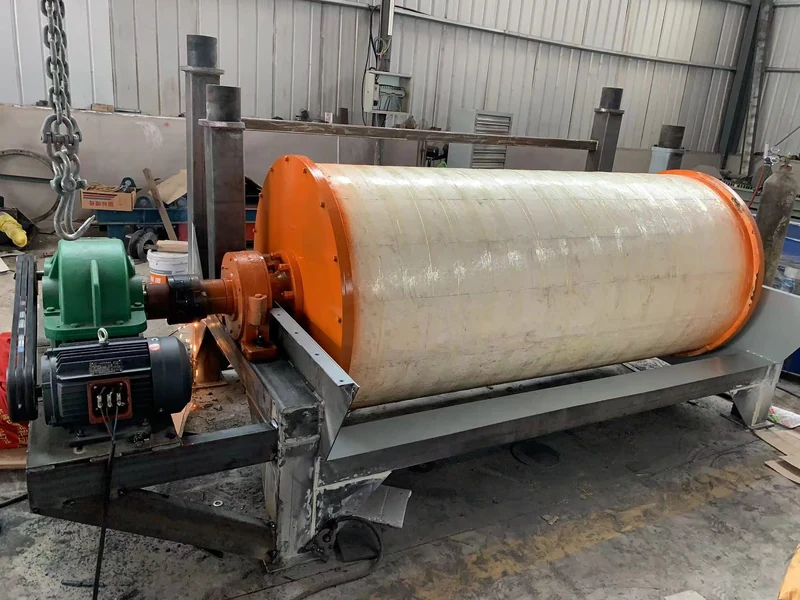
Real dry drum assembly from the supplied product materials, showing the drum, shaft, motor and drive arrangement.
We choose the process first and the exact drum second. These four rules prevent a good magnetic drum from being used in the wrong feed condition.
If material arrives in deep surges or piles on one side, we correct the feed before asking for more magnetic strength.
Surface Gauss is only one measurement. Feed depth, distance from the magnetic system, drum speed and splitter position also affect the result.
A setup that captures more magnetic material can also carry more normal material with it. We confirm which result matters more before the final setup is chosen.
Dry drums suit dry or slightly damp material that still flows freely. Slurry, sticky feed, non-ferrous targets and very weak magnetic material may need another separator type.
Start with the feed and target, then choose the machine. The table below shows how we separate common dry-drum applications from cases that should use a different arrangement.
| Your material or process | What we recommend | What we check next |
|---|---|---|
| A. Dry, free-flowing feed + ferrous or strongly magnetic target | Choose a dry drum magnetic separator. | Set the feed width, feed depth, useful drum width, magnetic zone, speed, splitter and discharge to match the real line. |
| B. Dry mineral + magnetic product recovery | Use a dry drum to recover the magnetic material. | Check particle size, how well the minerals are separated, the recovery you need, product purity, product loss and how the test sample will be measured. |
| C. Main goal is large tramp iron protection on an existing conveyor | Compare a suspended magnet before adding a separate drum. | If the contaminant can be lifted from the belt, keep the conveyor arrangement simple rather than creating an unnecessary transfer point. |
| D. Separation can happen directly at the conveyor head | Compare a magnetic head pulley. | Use a separate drum only when an independent feed, drum speed, magnetic zone or discharge arrangement gives a process advantage. |
| E. Gravity feed from a chute or hopper | Use a dry drum with controlled feed and two discharge paths. | Set the drum and splitter around where the material naturally falls, the feed width and the actual feed depth. |
| F. Vibrating feeder supplies the drum | Keep the dry drum and use the feeder to control layer depth. | Set feeder distribution, useful drum width, material path and splitter together. |
| G. Feed arrives in deep surges | Do not solve the problem with magnetic strength alone. | Add feed control, reduce peak feed depth or improve distribution before final drum selection. |
| H. Material is slightly damp but still free-flowing | A dry drum can still be used. | Confirm that the material spreads evenly and does not build up on the drum, chute or splitter. |
| I. Material is sticky, clumped or bridging | Do not use a standard dry-drum arrangement until the feed is corrected. | Improve drying or feeding so the material can flow evenly. If that is not practical, choose equipment that is better suited to sticky material. |
| J. Target is very fine and weakly magnetic | Compare a higher-intensity dry separator. | Test a sample that matches the real feed to see whether a rare-earth roll, induced-roll separator or another high-intensity method is a better fit. |
| K. Material is wet slurry or pulp | Do not use this dry-drum configuration. | Use wet magnetic separation and define solids, particle size, target and slurry condition. |
| L. Target is aluminum, copper, brass or another non-ferrous metal | Do not use a magnetic drum as the primary sorter. | Choose a separation method matched to non-ferrous metal response. |
| M. Feed is highly abrasive | Use a dry drum only with wear protection designed into the contact areas. | Check the impact point, drum shell exposure, liners, replaceable wear parts and maintenance access before the machine is confirmed. |
| N. Feed contains large impact pieces | Protect the drum before increasing magnetic duty. | Check drop height, impact zone, shell protection, support and chute geometry. |
| O. Installation space is tight | Choose the machine from the space you actually have, not from a catalogue drum size. | Check drive side, bearings, supports, splitter travel, chute angles, lifting space and maintenance clearance. |
We set the drum around the whole material flow. Feed width, feed depth, where the material falls, the magnetic zone, drum speed and splitter must work together.
| What changes in the process | How we set up the separator | Why |
|---|---|---|
| Narrow feed stream | Match the useful drum face to the real feed width and expected lateral movement. | Avoid bypass while avoiding unnecessary width. |
| Wide conveyor discharge | Cover the full effective material width and control side-to-side distribution. | Uneven loading can overload one part of the drum. |
| Deep feed layer | Reduce the feed depth, spread the material more evenly or change the feed arrangement before relying on a stronger magnet. | Particles buried deep in the feed are farther from the magnet, so they are harder to capture. |
| High abrasion | Add wear protection at the shell, impact and chute contact areas as required by the material. | Durability must be solved at the contact points. |
| Dusty process | Use an enclosed feed/discharge interface and include dust extraction connections when the line requires them. | Dust control is part of the installation, not an afterthought. |
| Gravity feed | Set the drum and splitter around where the material naturally falls. | The natural drop path determines where separation can be made cleanly. |
| Conveyor discharge | Set drum position from belt speed, drop point, feed depth and available discharge space. | Material leaving a moving conveyor follows a different path from material falling from a fixed chute. |
| Recovery is the priority | Set the feed and splitter to keep more magnetic material, then check how much normal material is carried with it. | The first priority is preventing magnetic material from escaping to the non-magnetic product. |
| Concentrate purity is the priority | Use a stable, thin feed and make sure the magnetic particles are well separated from the other material. Then adjust the splitter to reduce normal material carried into the magnetic product. | High magnetic capture alone does not guarantee a clean concentrate. |
Most separation problems come from three things: how the material reaches the drum, how strongly the target reacts to the magnet, and where the two products leave the drum. We fix the cause first. A higher Gauss number is not the answer to every separation problem.
We reduce the feed depth or spread the material more evenly. This brings more target particles closer to the magnetic system. A stronger magnet alone is not the first fix.
We correct the feeder or chute so one side of the drum is not overloaded while the other side is underused.
We check how strongly the target reacts to the magnet and how deep the feed is. We also check the distance from the drum, feed rate and splitter position before changing the machine type.
We check whether the particles are properly separated, how deep the feed is, drum speed and splitter position. The goal is to stop normal product from being pulled into the magnetic stream unnecessarily.
We correct flow, chute angle, surface condition and cleaning access. If the material no longer spreads freely, the process should not be treated as a standard dry feed.
We change the splitter and discharge path. Good magnetic separation is wasted if the two products fall back into the same chute.
Choose the priority before testing. A setup that captures more magnetic material can also carry more normal material with it. Recovery and product purity are not the same target.
Choose this when the main loss is magnetic material escaping into the non-magnetic product. We keep the feed stable and set the splitter to retain more magnetic material. Then we measure how much normal material comes with it.
Choose this when too much normal material is ending up in the magnetic product. We use a stable, thin feed, make sure the particles are well separated, and adjust the splitter to reject more non-magnetic material.
Do not approve a single drum from catalogue data alone. Test a sample that matches the real feed and agree on the result you need. If one pass cannot meet both targets, use a second separation stage or a cleaning step.
A magnetic drum can be mechanically sound and still perform poorly if the feed, splitter or separator type is wrong. We check the cause before changing magnetic strength.
| Wrong setup | What can happen in production | What we change first |
|---|---|---|
| Feed layer is too deep | Magnetic particles can remain buried too far from the magnetic system and leave with the non-magnetic stream. | Reduce peak feed depth or spread the feed across more working width. |
| Feed is uneven across the drum | One part of the drum becomes overloaded while another part is underused, so separation becomes less stable. | Correct the chute, feeder or distribution before changing the magnetic system. |
| Working drum width is too narrow | Part of the material can bypass the useful separation area. | Match the working width to the real feed width and side-to-side movement. |
| Splitter position is wrong | Material that has already separated can mix again below the drum. | Adjust the splitter around where the two product streams actually fall. |
| Drum speed does not match the job | Magnetic material can release too early, carry too far, or reduce useful capacity. | Set speed together with feed condition, magnetic response and splitter position. |
| No wear protection where it is needed | Shell, chute or contact-area wear can increase repair work and unplanned shutdown risk. | Add replaceable wear protection at the actual impact and abrasion points. |
| Standard dry drum used for a weak magnetic target | Separation may remain poor even when the surface field looks high. | Compare a higher-intensity magnetic separator and test the real material. |
| Dry drum used for slurry or the wrong material type | The machine adds cost and another transfer point without solving the real separation problem. | Choose wet magnetic separation, non-ferrous sorting or another method that matches the feed. |
Your quotation should describe the machine proposed for your line, not a generic catalogue drum. Exact values are confirmed from the selected machine, your layout and any agreed test requirements.
| Machine item | What sets it | How we confirm it | Why it matters |
|---|---|---|---|
| Feed method | Conveyor discharge, gravity chute, feeder or transfer point | Line sketch, photo or installation drawing | Controls how the material reaches the magnetic working zone. |
| Useful drum width | Real feed width and side-to-side movement | Feed dimensions and approved machine drawing | The full stream must pass through the useful drum area without bypass. |
| Drum size and layout | Material path, available space and separation job | Quotation and approved general arrangement drawing | Affects the working area, material path, supports and maintenance space. |
| Magnetic working zone | Target response, feed depth and distance from the magnetic system | Selected magnetic arrangement; field measurement can be agreed when required | Determines where the target can be attracted and carried. |
| Drum speed | Feed behavior and where each product needs to leave the drum | Drive selection and agreed operating setting | Changes contact time, holding time and release point. |
| Splitter arrangement | Where the magnetic and non-magnetic products fall | Drawing plus adjustment range | Controls remix, recovery and product loss. |
| Wear protection | Abrasion, impact and contact condition | Material condition plus the supplied wear parts listed in the quotation | Protects high-wear areas and makes planned maintenance easier. |
| Housing and chute connection | Dust, feed control, discharge and available space | Installation drawing and interface dimensions | Connects the separator to the real production line. |
| Drive and controls | Machine duty, site power and control requirement | Electrical and mechanical information for the selected machine | Shows how the separator connects to the line. |
| How the result will be checked | Iron removal, recovery, product purity or remaining contamination | Agreed material test or inspection method when required | Prevents a surface Gauss reading from being treated as the final process result. |
These values are useful for early size screening. Existing technical material for the SXGT magnetic drum family lists the reference models below. Final drum size, drive, interfaces and operating duty are still confirmed for the selected machine and your actual line.
| Reference model | Reference belt width | Drum size (diameter × length) | Motor power | Weight |
|---|---|---|---|---|
| SXGT-0810 | 1000 mm | Φ800 × 1000 mm | 3.0 kW | 1600 kg |
| SXGT-0812 | 1200 mm | Φ800 × 1200 mm | 3.0 kW | 1700 kg |
| SXGT-1012 | 1200 mm | Φ1000 × 1200 mm | 4.0 kW | 1800 kg |
| SXGT-1016 | 1600 mm | Φ1000 × 1600 mm | 4.0 kW | 2050 kg |
| SXGT-1212 | 1200 mm | Φ1200 × 1200 mm | 5.5 kW | 1490 kg |
| SXGT-1216 | 1600 mm | Φ1200 × 1600 mm | 5.5 kW | 2170 kg |
| SXGT-1614 | 1400 mm | Φ1600 × 1400 mm | 7.5 kW | 3030 kg |
| SXGT-1616 | 1600 mm | Φ1600 × 1600 mm | 7.5 kW | 3440 kg |
The SXGT family material specifies high-performance NdFeB permanent magnets as the magnetic source for this documented family.
The documented family is designed for continuous automatic discharge of captured magnetic material rather than routine manual cleaning of the drum surface.
The family material lists local manual control and centralized control, with conveyor interlocking available where the project requires it.
We do not force a dry drum into every magnetic separation job. When another arrangement gives a cleaner process or a more practical installation, we change the equipment choice.
We move the project to wet magnetic separation. The dry drum on this page is not the correct process for a slurry feed.
We compare a higher-intensity separator and use testing with material that matches the real feed when clean separation is critical.
We solve the feed behavior first. If the material cannot be spread consistently, a standard dry-drum arrangement will not give stable separation.
We compare a magnetic head pulley before adding a separate drum, feeder and transfer chute.
We compare a suspended magnet when the target can be removed directly from an existing conveyor without changing the material path.
We use another separation method for aluminum, copper, brass and other non-ferrous targets.
The separator should work as part of the whole line, not as an isolated drum. Material must reach the drum evenly. The target must pass close enough to the magnetic system, and the two separated streams need enough space to leave without mixing again.
If the upstream equipment cannot give the drum a stable feed, we add or specify the required feed-control arrangement before finalizing the separator.
Continuous discharge does not mean maintenance-free operation. We leave practical access around the parts that wear, rotate or need adjustment so routine service does not require unnecessary dismantling.
| Part | What to check | Why it matters | What we confirm before production |
|---|---|---|---|
| Drum shell / contact surface | Wear, buildup and impact damage | Wear or buildup can change the material path and increase repair work. | Shell arrangement and any agreed liner or wear protection. |
| Bearings | Noise, temperature, looseness and access | Bearing problems can stop the drum and cause unplanned downtime. | Bearing position and service clearance for the selected machine. |
| Drive | Alignment, guarding and normal operation | The drive must keep the drum running steadily at the selected speed. | Drive side, motor/gearbox arrangement and access. |
| Splitter | Wear, position and movement | A worn or misplaced splitter can mix the two product streams again. | Adjustment range and access for the selected layout. |
| Feed and discharge chutes | Wear, blockage and material buildup | Restricted flow can change feed depth and separation stability. | Chute connection, drop point and any agreed wear areas. |
| Guards and access panels | Condition and safe access | Strong magnets and rotating equipment require controlled maintenance access. | Guarding and access points included with the selected machine. |
We agree the inspection points that matter for the selected machine. Dimensions, drive operation, adjustment, magnetic readings and records can be included when they are part of the quotation or test plan.
Check the main machine dimensions, feed and discharge connections, supports and other agreed interfaces against the approved drawing.
Where required, check rotation direction, drive operation, visible vibration, guards and accessible moving parts before shipment.
If a field reading is part of the order, record the measurement position and instrument with the result. A number without the measurement point is incomplete.
Check that the splitter or other agreed adjustment points move through the required range and can be secured for operation.
Confirm the wear protection, liners or replaceable contact parts listed for abrasive or high-impact material.
If inspection photos, measurement sheets, a material test or a factory acceptance test are required, list them in the quotation before the order is confirmed.
Check the visible final assembly, guards, access points and supplied components against the agreed machine setup.
Confirm the machine identity and the agreed packing requirements before dispatch when these items are part of the order.
This real workshop photo shows a dry-drum machine during assembly. We use assembly access to check the visible machine structure, drive position, supports and service areas before the final inspection items agreed for the order are completed.
For the order: measured dimensions, magnetic readings or running results are confirmed only when the matching inspection or test record is included.
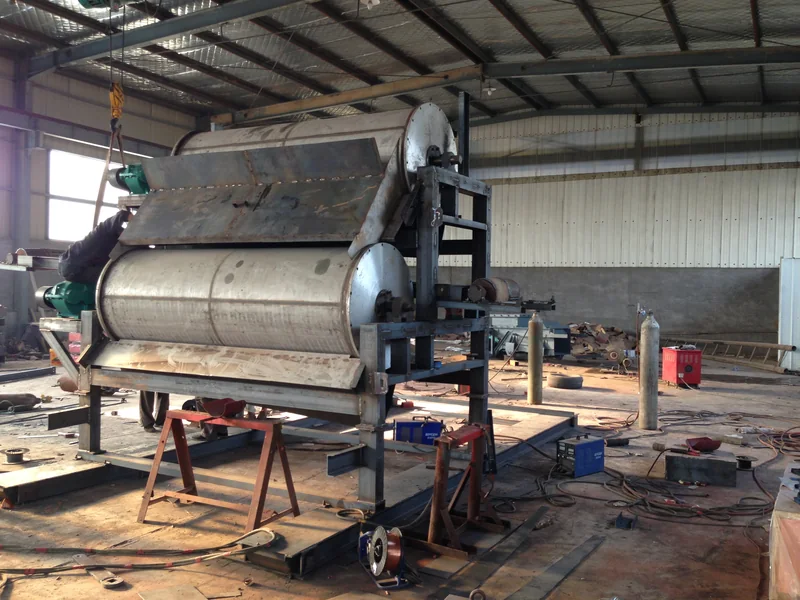
Real workshop assembly image from the supplied product materials.
The test should match the job. Iron removal, magnetic recovery and product cleaning need different measurements. If the result is critical, agree on the material, feed condition and result to check before production starts.
Use representative iron pieces and feed them in the same way the production line will. Record the target size and loading, feed condition, feed depth, machine settings, what was captured and what remained in the product stream.
What to record: counted targets + feed condition + captured/remaining count + photos or video.
Record the feed mass, magnetic-product mass and non-magnetic-product mass. When needed, also measure magnetic product quality, magnetic material left in the non-magnetic stream, recovery and valuable product loss.
What to record: mass balance + sample identification + product analysis + machine settings.
Measure the contamination remaining in the clean product and also measure normal product carried into the magnetic reject. Removing more material is not a good result if too much saleable product is lost with it.
What to record: contamination before/after + product loss + sampling method.
These examples show the selection logic, not claimed project results. The final machine setup and measured result must come from your material, target and production line.
Choose: a dry drum when the aggregate is free-flowing and the drum can sit at a controlled transfer point.
Check: steel-piece size, feed width, peak feed depth, drop height and discharge space.
Test: use counted steel pieces that match the expected contamination and feed them in the same way as the production line.
Choose: a dry drum when the magnetic fraction is strongly magnetic and the feed can be spread evenly.
Check: particle size, mineral liberation, feed stability and whether recovery or magnetic-product purity matters more.
Test: weigh the feed and both separated products, then analyze the products when the required result is critical. This creates a mass balance.
Do not choose: a standard dry drum for slurry, for aluminum or copper sorting, or automatically for a very fine weakly magnetic target.
Choose instead: compare wet magnetic separation, non-ferrous sorting or a higher-intensity magnetic method according to the real material.
Test: validate the equipment family that matches the feed and target rather than forcing the project into a dry drum.
We first make sure a dry drum is the right separator for your line. Then we define the machine, checks and documents around the real material and installation.
If a head pulley, suspended magnet, wet separator or higher-intensity dry separator fits the process better, we make that choice before defining a dry drum.
Feed width, feed depth, distance from the magnetic system, drum position, splitter, discharge and maintenance access are considered as one installation.
Dimensions, magnetic readings, material tests, inspection photos or a factory acceptance test can be defined when they are needed and listed in the quotation.
The selected machine setup, approved drawing and agreed inspection or test requirements should be clear before production starts.
The quotation should make the selected machine and its main connections clear before production starts. Drawings, inspections, tests and other documents are added when they are required and listed for the order.
The quotation identifies the selected separator setup and the main feed, discharge, drive and installation information needed for your line.
Agreed drum size, working width, speed, power and other model-specific items are confirmed for the selected machine when those values are part of the order.
A GA drawing can show the machine layout and agreed interface dimensions when drawing approval is part of the order.
Dimension checks, magnetic readings, material tests, inspection photos or a factory acceptance test can be listed when they are required for the project.
Motor, power, control and installation information can be confirmed for the selected machine where applicable.
Operation, maintenance, packing or spare-parts information can be included when it is agreed for the project.
The next step should be simple. We first choose the right separator type, then define the dry-drum setup if it fits the job. Before production, the quotation and agreed documents should make the important machine details and checks clear.
Start with the material, target, normal and peak feed rate, and a photo, sketch or drawing of the installation area.
We compare a dry drum with a head pulley, suspended magnet, wet separator or higher-intensity option when needed. If a dry drum fits, we define the feed, drum, splitter and discharge arrangement.
The quotation identifies the selected setup, main interfaces and any missing information that can still change the machine.
Before production starts, we confirm the agreed machine details and any drawings, inspections or material tests included for the order.
Start with four items. They are enough for us to make the first equipment choice without asking you to complete a long specification sheet.
Material name, physical form and whether it flows freely, clumps or bridges.
Ferrous contaminant or magnetic fraction to remove or recover, including known size or loading information.
Normal and peak feed rate are best. If you only know daily production, send that first and we can work from it.
Show where separation should happen. A process sketch, line drawing or simple phone photo is enough for the first check.
Add the particle-size range, moisture and bulk density if you know them. Feed depth, conveyor or feeder speed and peak feed rate also help. For the installation, send available space, drop height, temperature, dust or wear conditions, voltage and any cleaning or test requirement.
You do not need every detail before contacting us. Send what you have, and we will tell you which missing items can change the equipment choice or quotation.
Use a dry drum when the material flows freely. Slightly damp material can still work if it does not stick, clump or bridge. Do not use this dry-drum setup for slurry or pulp; use wet magnetic separation instead.
No. A higher surface field cannot fix a feed layer that is too deep or uneven. It also cannot fix too much distance from the magnet, the wrong drum speed or the wrong splitter position. We select the magnetic system together with the real feed and discharge conditions.
Use a magnetic head pulley when separation can happen directly at the conveyor head. Use a separate dry drum when you need more control over the feed, magnetic zone, drum speed, splitter and where the two products leave the machine.
Do not assume it can. For very fine or weakly magnetic targets, we compare a higher-intensity dry separator or another method. If the result is critical, test a sample that matches the real feed in particle size, moisture and target content before finalizing the machine.
We start with the iron size, how much iron is normally present, feed width, feed depth, normal and peak feed rate, distance from the magnetic system, impact condition and discharge space. We then set up the machine to capture and continuously discharge the target without creating a new bottleneck.
Yes, when the magnetite-bearing material is dry or slightly damp, still flows freely, and the magnetic fraction responds strongly enough to the selected magnetic system. Particle size, feed depth, mineral liberation and whether recovery or product purity matters more should still be checked before final selection.
The strongest proof is a test using a sample that matches the real feed and records the feed condition, machine settings and the result that matters for the job. For tramp iron, count captured and remaining targets. For magnetic recovery, weigh the feed and both separated products and use product analysis when required. A surface Gauss number alone does not prove plant separation performance.
Send the material, target contaminant or magnetic fraction, normal and peak feed rate, and the installation condition. Add particle size, moisture, bulk density, feed depth, feed method, available space, a line drawing, wear or dust conditions and the test result you need when available.
Send the material, target contaminant or magnetic fraction, normal and peak feed rate, and any line drawing or installation photo you already have. We will choose the separator type first. If a dry drum is the right fit, we will then work out the machine setup.