Find equipment by installation point and separation task.
All magnetic separators →Start with the material or production line you need to protect.
All applications →Compare technologies, check parameters and prepare your RFQ.
All guides →See the factory, quality checks and answers before you request a quotation.
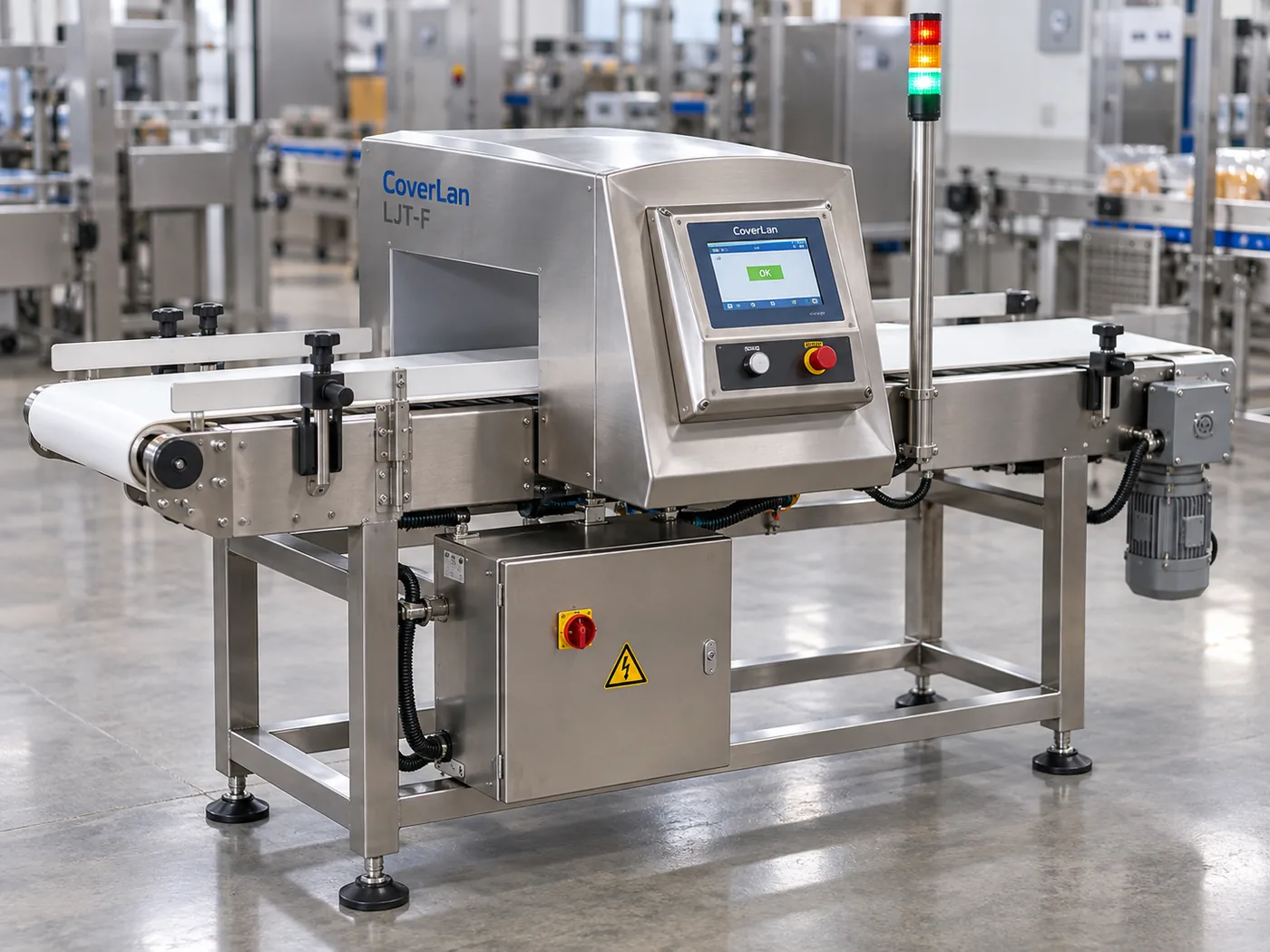
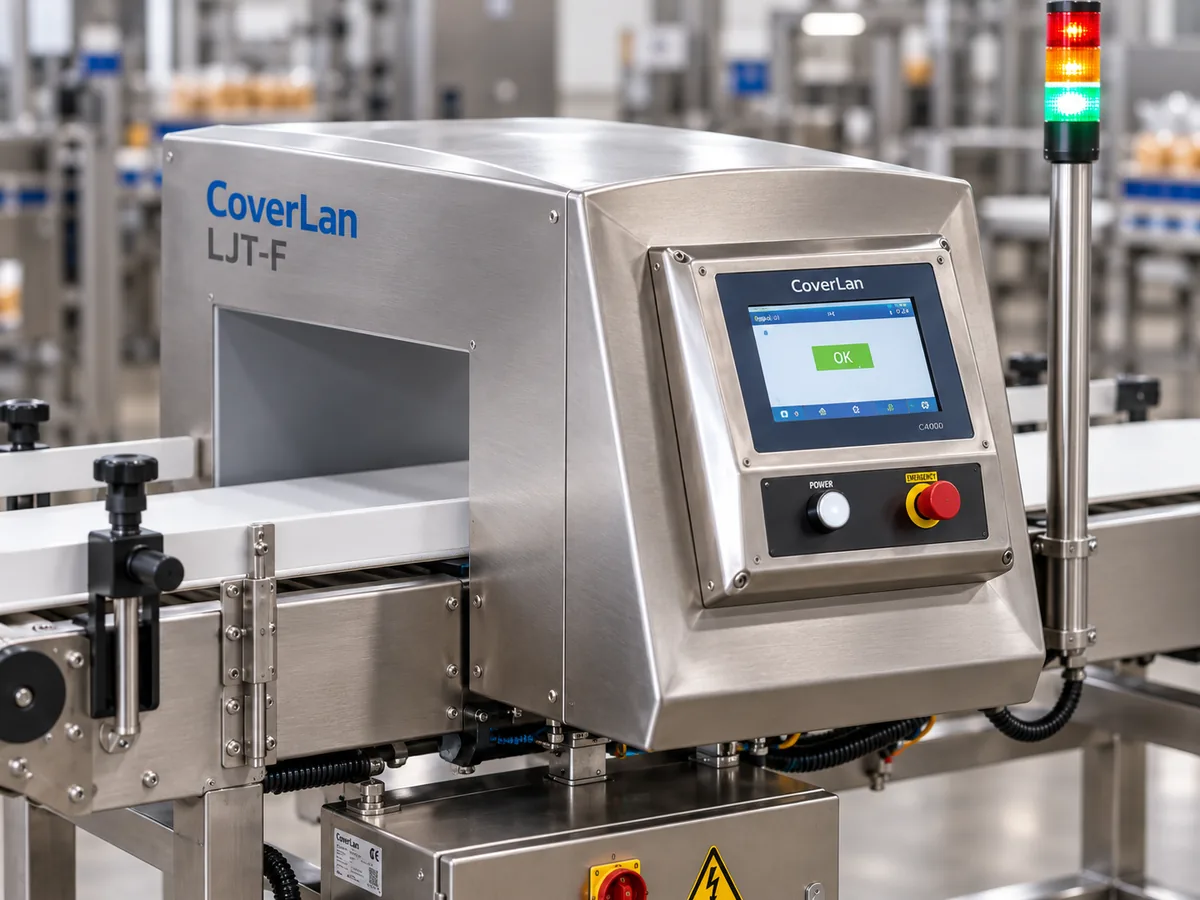
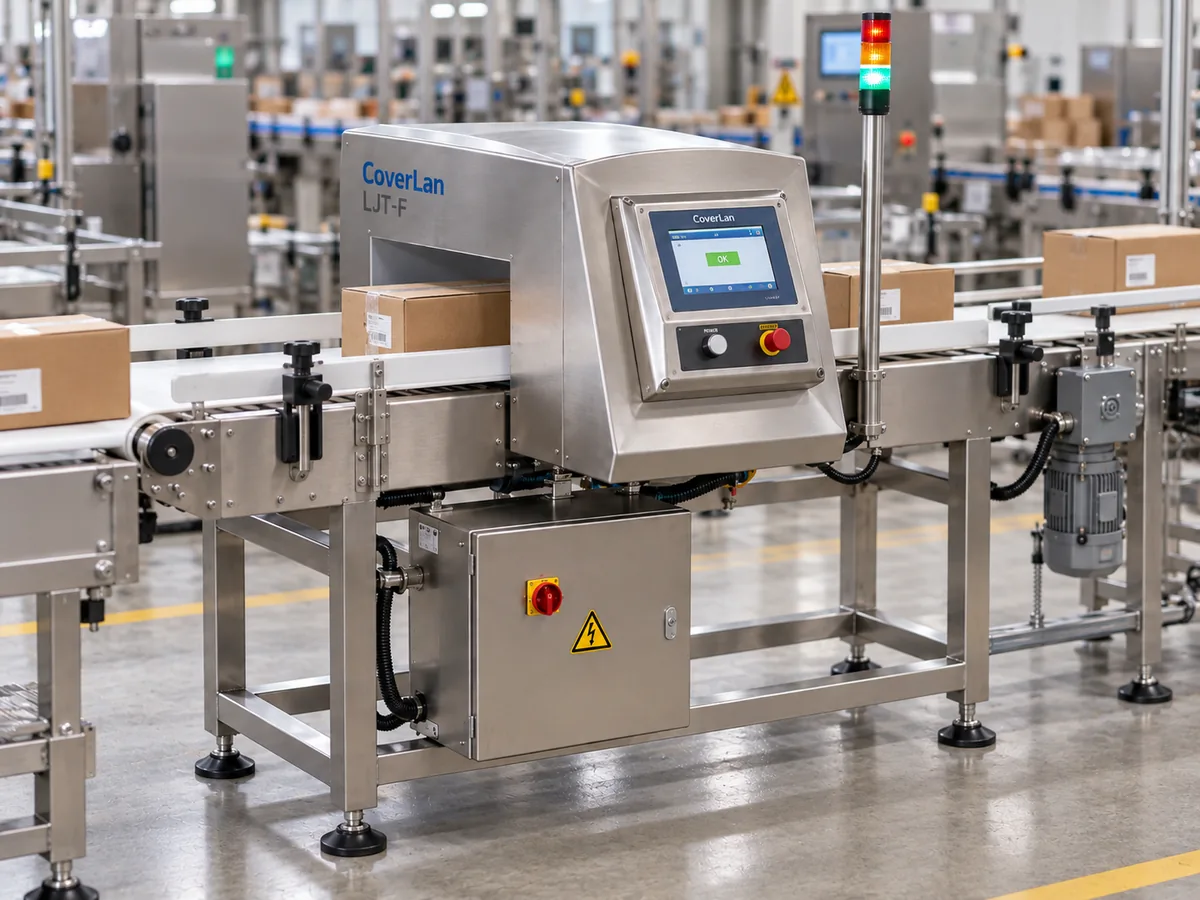
Inline metal inspection for products moving on a conveyor. The LJT-F checks for ferrous, non-ferrous and stainless-steel contamination and can work with an alarm, belt stop, marking or reject device.
Use these listed values for an early fit check. Final dimensions, operating conditions and project interfaces are confirmed for the selected model before production.
500–700 mm
Choose around your product width and required side clearance.
100–300 mm
Use the smallest practical opening that lets your product pass safely.
1500–1800 mm
Check available infeed, detector and outfeed space on your line.
710 mm listed
Confirm the final line interface before production.
Adjustable, up to 60 m/min listed
Final speed depends on product spacing, detection requirement and response timing.
OEM supported
Send product size and line layout when the listed sizes do not fit your installation.
The LJT-F works well when your product moves on a conveyor and can pass through the detector opening. This opening is often called the detection aperture. When metal is found, the system can trigger an alarm, stop the belt, mark the product or work with an automatic reject device.
If the main contaminant is not metal—such as glass, stone, bone or dense plastic—or your product cannot pass through a practical detector opening, another inspection method or line layout may be a better fit.
They solve different problems. A conveyor metal detector checks a moving product for metal and sends a signal when metal is found. A magnetic separator physically captures magnetically responsive contamination from the material flow.
| Method | Main Job | Typical Metal Target | What Happens After Detection or Capture |
|---|---|---|---|
| Conveyor Metal Detector | Inspects product passing through a detector opening. | Ferrous, non-ferrous and stainless steel under suitable product and line conditions. | Can trigger an alarm, belt stop, marking or the confirmed reject device. |
| Magnetic Separator | Captures or separates magnetically responsive metal from the product stream. | Mainly ferrous and other strongly magnetic contamination, depending on the separator and process. | The magnetic system physically holds or diverts the captured material. |
The supplied LJT-F specification groups metal targets into ferrous (Fe), non-ferrous (NFe) and stainless steel (SUS). The smallest detectable metal size is not one fixed number for every product. It depends on your product, detector opening, metal type and position, line speed, packaging and the surrounding environment.
The basic process is simple: move the product through the detector, check the signal, identify a metal-related change, then make the line respond in the agreed way.
The conveyor carries the product through the detector opening at the intended line speed.
The detector monitors the signal while the product passes through the opening.
If the signal reaches the set detection level, the system identifies the product for the required response.
The confirmed setup can sound an alarm, stop the belt, mark the product or activate an automatic reject device.
For project review, we check the core factors used across conveyor metal-detection engineering: detector opening, product effect, metal type and position, packaging, line speed, nearby metal, vibration and response timing.
Use the smallest opening that still lets your product pass safely. A larger detection aperture usually makes very small pieces of metal harder to detect.
Some products can create a signal even when no metal is present. Moisture, salt, temperature and product consistency can change this signal. The industry calls this product effect, and it can make very small metal pieces harder to detect.
Different metals are not equally easy to detect. Ferrous metal, non-ferrous metal and stainless steel can produce different detector responses. The size, position and direction of the metal piece also matter.
The supplied specification lists an adjustable belt speed up to 60 m/min. The final speed still needs to work with your product spacing, required metal detection level and reject timing.
A belt stop, also called an interlock, needs different space and controls from an automatic reject system. Fast lines also need enough distance after the detector so the correct product can be removed.
Nearby metal, vibration and electrical noise can affect the detector. We also need enough clear space around the detector so surrounding metal parts do not interfere with it.
Unstable results do not always mean the detector needs a higher or lower sensitivity setting. First check the product, opening, surrounding metal and line conditions.
The product can create its own signal. This product effect can make small metal harder to separate from the normal product signal.
A larger unused opening generally makes very small metal harder to detect. Start with the smallest practical opening for your product.
Metal close to the detector can interact with the sensing field. Keep a clear metal-free area around the detector as required by the final installation.
Machine vibration, unstable mounting or electrical interference can disturb a stable signal and should be checked during installation.
Conductive packaging, product temperature, moisture or recipe changes can change the normal product signal.
If products are too close together or spacing changes, the detector may find metal correctly but the reject timing can remove the wrong item.
You do not need every technical detail before the first review. Start with the product, detector opening, line speed and required response, then confirm the remaining items step by step.
Confirm the maximum product width, height and length. The product needs to pass through the detector opening without touching it.
Use the smallest detector opening that still lets the product pass safely. A larger unused opening can make very small metal harder to detect.
Wet, salty or electrically conductive products can create their own signal. This is called product effect and should be checked with the actual product.
Line speed needs to be considered together with product length, spacing, response distance and the time needed for a stop or reject action.
Decide whether the line should alarm, stop, mark the product or use an approved automatic reject device after metal is found.
Final detection performance should be checked with the actual product or a representative sample under the intended line conditions.
Some line conditions need a closer review before we confirm the model or detection target. Sending these details early helps avoid choosing a detector opening, response method or test condition that does not match the real process.
The table below shows the dimensions listed in the current LJT-F specification. Start with your maximum product width and height, then check conveyor length and line height against the available installation space.
| Model | Nominal Belt Width | Detector Opening Height | Detector Belt Width | Conveyor Length | Conveyor Height | Good Starting Point When… |
|---|---|---|---|---|---|---|
| LJT-F-5010 | 500 mm | 100 mm | 470 mm | 1500 mm | 710 mm | |
| LJT-F-5020 | 500 mm | 200 mm | 470 mm | 1500 mm | 710 mm | |
| LJT-F-6015 | 600 mm | 150 mm | 570 mm | 1500 mm | 710 mm | |
| LJTF-6020 | 600 mm | 200 mm | 570 mm | 1600 mm | 710 mm | |
| LJT-F-7030 | 700 mm | 300 mm | 670 mm | 1800 mm | 710 mm |
The supplied specification also lists 8 memory entries and an adjustable belt speed up to 60 m/min.
| What to Check | Why It Matters | What to Send Us |
|---|---|---|
| Your product and packaging | Wet, salty or conductive products and some packaging can affect the detector signal and product handling. | Product name, product condition, moisture or salt condition, and packaging type. |
| Product size | Helps us choose the smallest detector opening that still passes your product safely. | Maximum product width, height and length. |
| Metal you need to detect | Tells us what metal test piece and test method need to be considered. | Fe, non-ferrous metal or stainless steel, plus the required test-piece size if you already have one. |
| Line speed and output | Output, often called throughput, means how much product passes through the line in a set time. It affects spacing and how much time the line has to respond. | Current belt speed, target output or throughput, and product spacing. |
| Available space | Tells us whether the conveyor length, line height and detector position can fit your line. | Line drawing, available space, and infeed and outfeed details. |
| What should happen after detection | Defines how the line should respond when metal is found. | Alarm, belt stop or interlock, marking, or automatic reject preference. |
| How you want to test the system | Gives us a clear test method before any sensitivity result is discussed. | Test-piece standard, test positions, repeat count, and pass/fail requirement if you already have one. |
Detection is only useful when the line response matches your product and production flow. The supplied information lists alarm, belt stop or interlock, marking and automatic rejection as available response routes; the final hardware and sequence are confirmed for each project.
| Response | What It Does | What We Need to Check |
|---|---|---|
| Alarm | Alerts the operator when metal is detected. | Alarm type and what the operator should do next. |
| Belt Stop / Interlock | Stops product movement or sends a stop signal to the line. | Stop logic, restart procedure and upstream/downstream line behavior. |
| Marking | Identifies the suspect product for later removal or checking. | Product surface, package type and marking method. |
| Automatic Reject | Removes the suspect product from the production line automatically. | Product weight, size, spacing, belt speed and available reject distance. |
Corvelan supports OEM configurations for project-specific line requirements. Start with your product size, required detector opening, conveyor height, available line length and the response you need after metal is found.
We review detector opening, conveyor width, conveyor length and line height against your product and available installation space.
Send a drawing or clear layout showing infeed, outfeed, product direction, nearby metalwork and where the line needs to stop, alarm, mark or reject.
OEM support does not mean every material, control, enclosure or compliance option is automatically available. Project-specific requirements are confirmed before quotation and production.
Before we prepare the final machine setup and quotation, send us the infeed and outfeed heights, available conveyor length, product transfer details, detector opening, product guides, line direction, nearby metalwork and access for cleaning and maintenance. If you need automatic rejection, also send product spacing, available reject distance and any air or electrical requirements.
Corvelan can provide installation and commissioning support for supplied equipment. Commissioning means checking the machine setup and operation after installation. The exact support scope is confirmed for each project.
Keep the conveyor and detector opening free from buildup and loose metal that can cause false signals or unstable operation. Routine checks should include belt tracking, detector mounting, changes to nearby metal, reject-device movement and any sensor used to confirm a rejected product.
Electrical isolation, guarding and access procedures should follow the final machine design and your site safety rules.
A proper detection test should show that the complete system works under your real line conditions. This type of check is often called validation. Use your actual product or a representative sample, agreed metal test pieces and the intended belt speed. Place the test pieces in the positions you need to check and confirm the full response from detection through alarm, belt stop or rejection.
Before testing, define the metal size the system needs to detect and what the line should do when that metal is found. If you already have a retailer, customer or internal QA test method, send it with your inquiry so we can review the machine setup against it.
We focus on matching the detector to the product and production line instead of choosing a machine from one number alone.
We review product size, condition, packaging and the metal you need to detect before narrowing the detector opening and model.
Line speed, product spacing, available space and the required alarm, stop, marking or reject response are considered together.
OEM configurations can be reviewed when the listed dimensions do not match your existing conveyor or installation space.
Support is available for supplied equipment, with the project scope confirmed before delivery.
We recommend confirming the product, test piece, detector opening, speed and required response before treating a sensitivity result as meaningful.
If a condition still needs testing or confirmation, we keep it open instead of turning an unverified assumption into a fixed performance claim.
We check the product, maximum size, line speed, detector opening, available space and what the line should do when metal is found.
We confirm the selected model or OEM direction, final dimensions, machine interfaces, project drawing or specification, and agreed options.
We confirm the installation condition, product setup, detection test method and required alarm, stop, marking or reject response.
Start with four items. These are usually enough for us to check the basic machine size and line setup without asking you to complete a long technical form.
Tell us what moves on the conveyor, how it is packed, and the maximum product dimensions.
Tell us whether you need to detect Fe, non-ferrous metal or stainless steel, plus any required test-piece size.
Send the belt speed, product spacing and target output. Output is also called throughput.
Send the available space, line height, infeed and outfeed arrangement, and what you want the line to do after metal is found.
If available, also send the moisture or salt condition, temperature, line drawing, cleaning requirement, power details, reject preference, destination and any required test or documentation standard.
The LJT-F specification uses ferrous, non-ferrous and stainless-steel categories. The smallest detectable metal size still depends on the product, detector opening, metal position, packaging and line conditions.
Start with the smallest opening that lets your product pass safely. A larger opening generally makes very small metal harder to detect, so send the maximum product width and height before the final model is selected.
Sensitivity changes with detector opening, metal type and position, product characteristics, packaging, line speed, vibration, nearby metal and other operating conditions. This is why one sensitivity number should not be treated as a guarantee for every product.
Wet, salty or electrically conductive products can create their own signal inside a metal detector. The industry calls this product effect. It can make small metal harder to separate from the normal product signal and can contribute to false rejects if the setup is not matched to the product.
Common causes include product effect, an opening larger than needed, nearby or moving metal, vibration, electrical interference, conductive packaging, product changes, unstable spacing and incorrect reject timing.
The supplied information lists alarm, belt stop or interlock, marking and automatic rejection as available response routes. The final response hardware and timing need to match the product, spacing, belt speed and available line space.
Use a metal detector when you need to inspect a moving product for metal and trigger a line response. Use a magnetic separator when the main job is to physically capture magnetically responsive contamination from the process stream.
Send the product and packaging, maximum product dimensions, metal or test-piece requirement, belt speed or output, product spacing, available line space and the response you want after metal is found. A line drawing is useful when available.

Share your product, maximum size, metal target, line speed or output, available space and required line response. We will check the LJT-F size, OEM direction if needed, and the details that still need to be confirmed.