Conveyor Tramp Iron Removal

Oil-Cooled Suspended Electromagnetic Separator

Corvelan oil-cooled suspended electromagnetic separators remove unwanted iron and steel from bulk material moving on a conveyor. These magnetic pieces are often called ferromagnetic tramp iron. They help protect crushers, mills, shredders and other downstream equipment. We choose the separator around your belt width, material depth, belt speed, target iron, magnet-to-iron distance and cleaning method.

ApplicationProtect crushers, mills, shredders and other equipment from unwanted iron and steel.
Target MetalIron and steel pieces that a magnet can attract.
Installation PositionSuspended above a belt, transfer point or discharge area.
Key Selection DataBelt width · material depth (burden depth) · distance to target iron (working distance) · belt speed · target iron · iron loading.
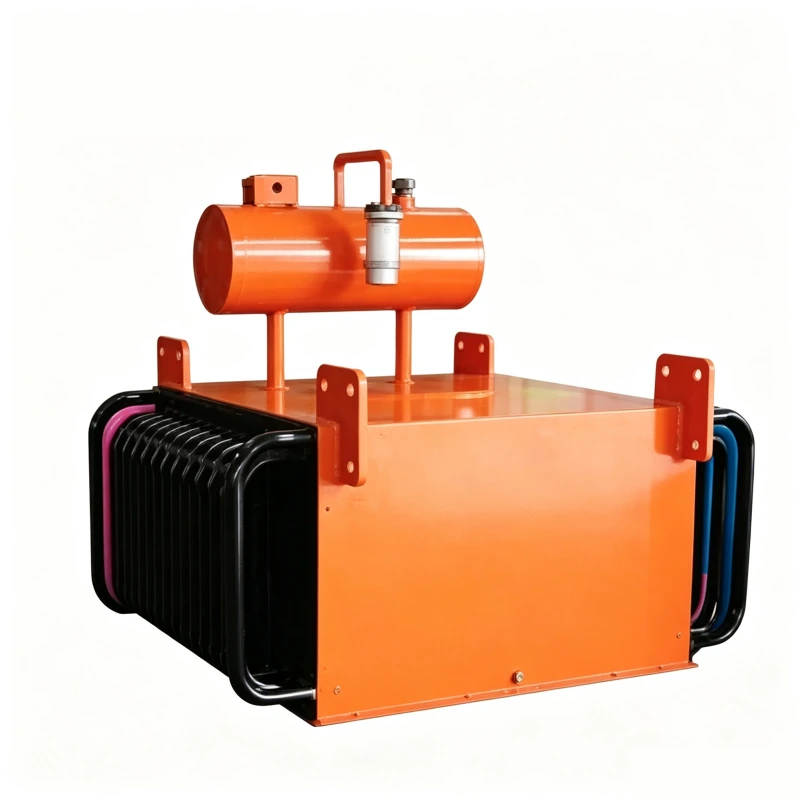
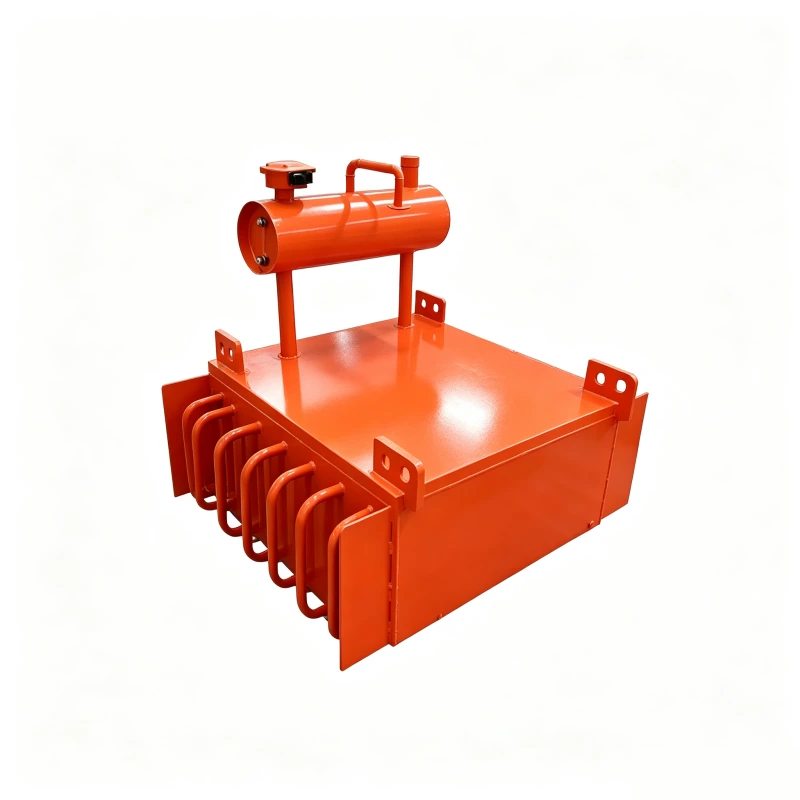
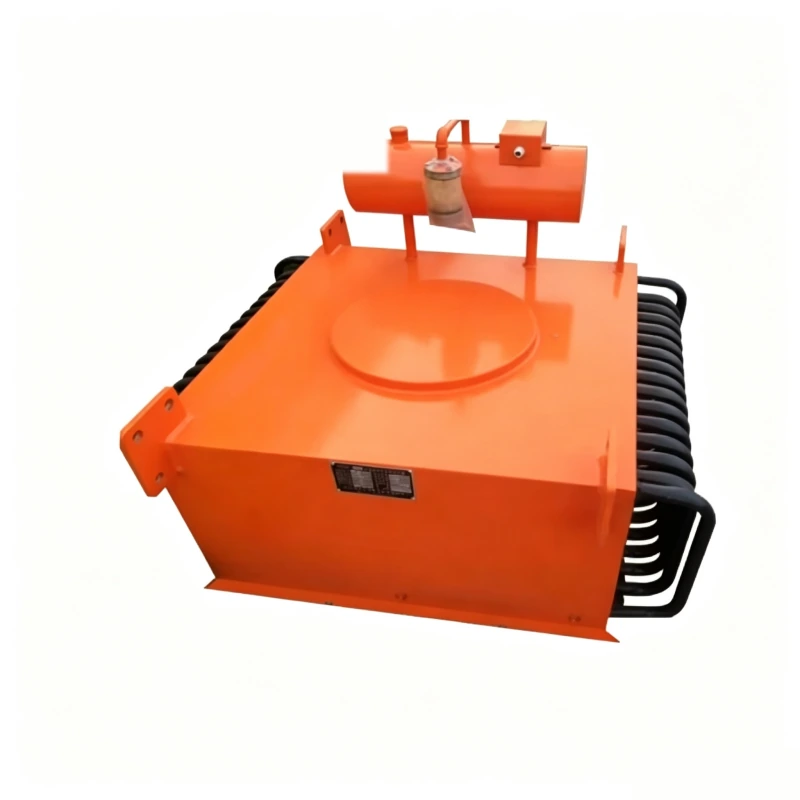
Oil-cooled suspended electromagnetic separator with rectangular magnet body, upper assembly and external piping
Oil-cooled suspended electromagnetic separator product view. Final magnetic performance, cooling system, electrical details, dimensions and suspension points are confirmed in the project quotation and approved drawing.
Product Basics

What Is an Oil-Cooled Suspended Electromagnetic Separator?

An oil-cooled suspended electromagnetic separator is an electrically powered magnet installed above a conveyor to remove iron and steel from bulk material below. Oil in the cooling system carries heat away from the electromagnetic coil. This type of separator is commonly used before crushers, mills, shredders and other equipment that can be damaged by tramp iron.

What It Removes

Iron and steel pieces that respond strongly to a magnet.

Where It Works

Above a conveyor, transfer point or discharge area where tramp iron can be lifted out of the material flow.

What Sets the Size

Belt width, material depth, working distance, belt speed, target iron, iron frequency and the cleaning method.

Quick Fit

When Should You Choose This Separator?

Choose this manual-clean oil-cooled suspended electromagnet when iron appears only from time to time, the conveyor can stop for planned cleaning, and oil cooling is allowed at the site. If iron appears often, production cannot stop, oil is not allowed, or the main target is aluminum or copper, choose another separator type.

Good Fit

Occasional Iron

Use this separator when bolts, nuts, bars or other iron pieces appear occasionally and operators can safely clean the magnet during a planned stop.

Choose Self-Cleaning

Frequent Iron or No Stop

Use a self-cleaning suspended electromagnet when captured iron builds up often or production cannot stop for manual cleaning.

Choose Another Technology

Non-Ferrous or Fine Mineral Target

If aluminum, copper or fine weakly magnetic minerals are the main target, this is not the right separator for the job.

This equipment may also be called an electromagnetic iron remover or an oil-cooled electro suspension magnet in conveyor applications.

Choose the Right Type

Which Suspended Magnet Should You Choose?

Choose from the real conveyor condition, not from a familiar model number or the highest surface Gauss value. The target metal, working distance, iron frequency, cleaning method and conveyor layout tell you which type fits the job.

Your Conveyor ConditionPermanent Suspended MagnetManual-Clean ElectromagnetSelf-Cleaning Electromagnet
Iron appears only occasionallyGood starting point if the required distance is within its magnetic reachGood fitUsually more equipment than needed
Iron appears frequentlyOnly if paired with a suitable automatic cleaning systemAvoidChoose this
Production cannot stop for cleaningOnly with automatic cleaningAvoidChoose this
Deep material or long magnet-to-iron distanceUse only if it can meet the required distanceElectromagnet is the stronger starting pointElectromagnet is the stronger starting point
No electrical supply for the magnetChoose permanent routeNot suitableNot suitable
Need a powered magnetic systemNo powered coilYesYes
Manual access is difficult or unsafeDepends on cleaning designAvoidChoose this
If the process does not allow oil, do not choose the oil-cooled version. Use an air-cooled electromagnet or another suitable magnetic system. If aluminum or copper is the main contaminant, use equipment made for non-ferrous metal separation instead.
Material and Target Iron

Choose for the Hardest Dangerous Piece of Iron, Not Just the Largest

Do not choose the magnet only from the largest piece of iron you expect. Choose it for the dangerous piece that is hardest to capture. A large plate on top of the material can be easier to remove than a smaller bolt buried at the bottom of a deep material layer.

Tell Us About the Material

  • material name and physical form;
  • particle or lump size;
  • bulk density;
  • moisture, stickiness and interlocking behavior;
  • normal and maximum material depth (burden depth);
  • normal and highest expected material load.

Tell Us About the Iron to Remove

  • smallest dangerous piece;
  • largest dangerous piece;
  • approximate mass and shape;
  • whether it is exposed or buried;
  • how often it appears;
  • the test piece you want us to use, if the protection point is critical.
Do not choose from throughput alone. The same throughput can produce very different conditions on a narrow, shallow belt and a wide belt with a deep material layer. Check belt width, material depth, speed, material behavior, and target iron together.
Working Principle

How Does an Oil-Cooled Suspended Electromagnetic Separator Work?

When electrical power is supplied to the coil, the separator creates a magnetic field below the magnet. Iron and steel pieces that respond to the field are pulled upward. Gravity, deep burial, material drag, and conveyor movement work against that pull. On this manual-clean design, captured iron stays on the magnet face until it is removed during the planned cleaning stop.

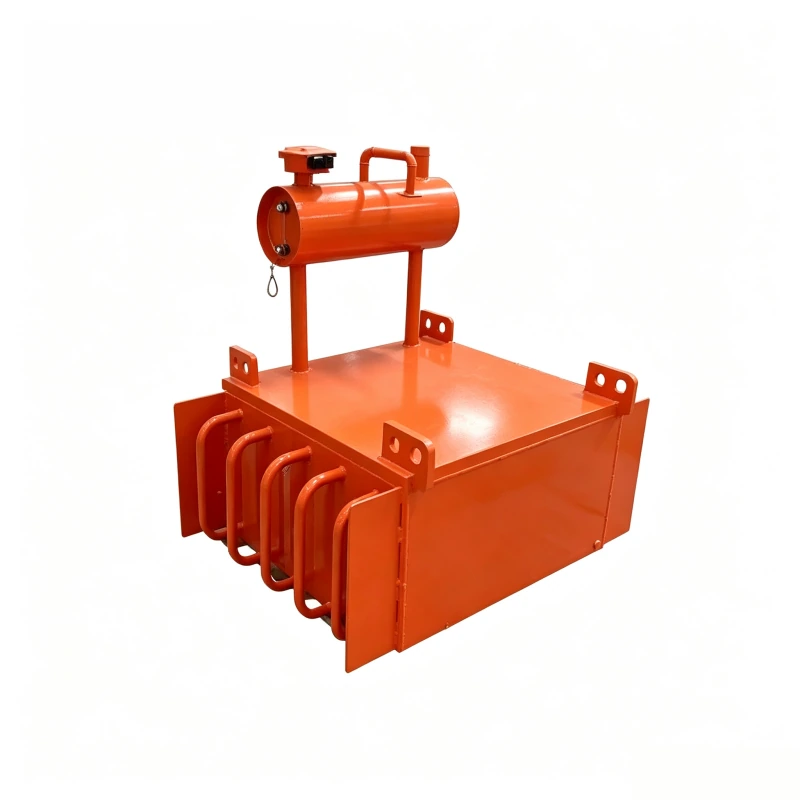
Front perspective of an oil-cooled suspended electromagnetic separator showing suspension lugs and external piping
Product structure view showing the suspended magnet body, upper assembly, visible suspension points and external piping.

What You Can See in the Product Photo

The supplied product photo shows a rectangular suspended magnet body, an upper assembly, visible lifting or suspension points, and external pipes around the housing.

The photo shows the external structure. We confirm coil power, voltage, cooling details, magnetic requirements and dimensions in the selected unit’s technical specification.

Material Moves Under the Magnet

Belt speed and material depth affect how long the iron stays under the magnet and how far it is from the magnetic face.

The Magnet Attracts the Iron

Iron closer to the magnet is easier to attract. Its size, weight, shape and position also affect how strongly it responds.

The Iron Must Be Pulled Free

The magnet must do more than attract the iron. It must pull the iron free from the material around it at the real working distance.

Captured Iron Is Cleaned Off

Remove captured iron during the planned cleaning stop. If you need automatic discharge while the line keeps running, choose a self-cleaning separator instead.

When Should You Choose Oil Cooling?

When This HappensWhat to Choose
The electromagnet must stay powered for long periods or the heat load is high.Choose the oil-cooled design.
Your project specifically requires an oil-cooled electromagnet.Choose oil cooling and list the cooling and monitoring requirements in the quotation.
Any oil leak would be unacceptable for the process or site.Do not choose oil cooling. Use an air-cooled electromagnet or another suitable option.
You want to avoid oil-system inspection and maintenance.Use an air-cooled option if it can handle the required heat load.
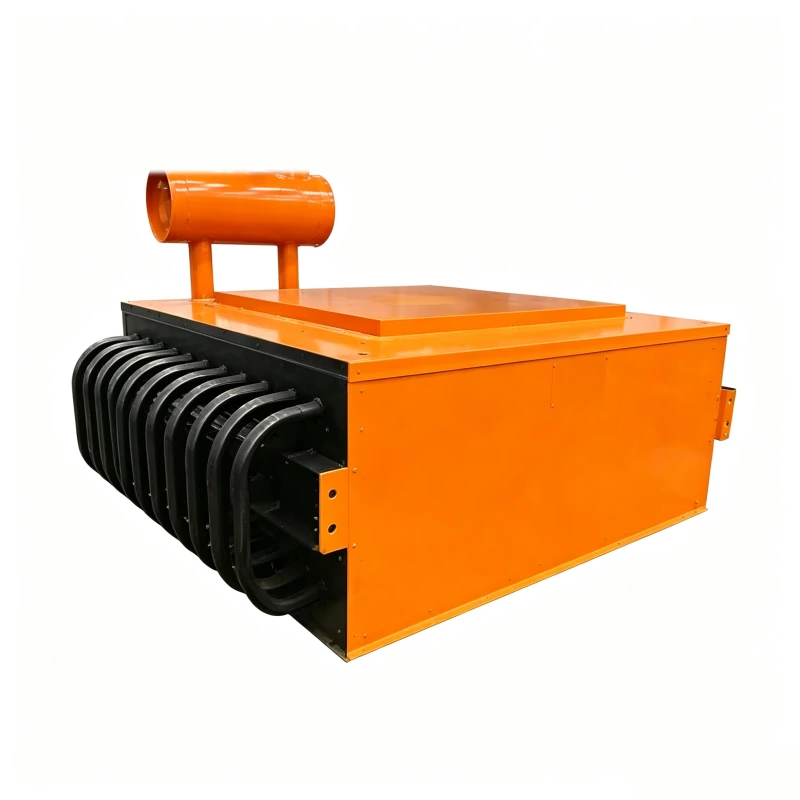
Side view of an oil-cooled suspended electromagnetic separator showing external cooling pipe assembly
Side product view with visible external pipework around the magnet housing.

What to Confirm for the Oil-Cooling System

Before production, confirm the cooling setup, oil-related inspection points, site temperature, how long the magnet must stay powered, electrical supply, monitoring needs, and the checks required before shipment.

The product photo shows external cooling pipes around the magnet body. This helps you see how much service space the equipment needs. The photo does not tell us the oil type, oil amount, internal flow path, heat-removal rate, or allowable temperature rise. Confirm these items in the technical specification.

Working Distance and Material Depth

How Do You Set the Working Distance?

Measure from the magnet face to the farthest dangerous iron that must be captured. If the iron can be buried at the bottom of the material, include the full material depth. Do not use only the empty space between the magnet and the top of the material.

Why Does Material Depth Matter?

The deeper the material layer, the farther buried iron is from the magnet. Engineers often call the material layer the burden, and its depth the burden depth. If normal production reaches 220 mm even though the average is lower, send us 220 mm. We choose for the hardest normal condition, not the easiest one.

Iron Near the Surface

Use the distance from the magnet face to the target near the top of the material. This is usually the easier capture position.

Iron at the Bottom

Add the space above the material and the full material depth. Use this longer distance when bottom iron must be removed.

Material Depth Changes

Use the maximum normal material depth. Treat rare overloads separately if they are outside normal operation.

Engineering example: if the magnet face is 250 mm above the material and the maximum normal material depth is 200 mm, a bottom target is about 450 mm from the magnet face. For this example, choose and test at 450 mm, not 250 mm. These numbers explain the calculation method only; they are not Corvelan product performance data.
When This HappensWhat to DoAvoid This
Iron can be buried at the bottomChoose and test for the full distance to the bottom target.Do not test only with iron on top.
Material depth changes during normal productionUse the maximum normal depth.Do not use only the average depth.
Material is sticky, dense or locks around ironCheck whether the magnet can pull the iron free from the material around it.Do not assume attraction alone means the iron can be removed.
A small iron piece can still damage the crusher or millUse that piece in the agreed test if it is the hardest dangerous target.Do not test only the largest piece.
Steel beams, idlers or chutes are close to the magnetShow them on the drawing or conveyor photo.Do not ignore nearby steel.

Send the Real Conveyor Condition

Send the belt width, normal and maximum material depth, belt speed, target iron, and available magnet position. We use these details to choose the separator setup.

Send Your Conveyor Data
Conveyor Speed

Does Belt Speed Affect Iron Removal?

Yes. Faster belt speed gives the magnet less time to attract and lift the iron. A target that is easy to pick up on a stationary test plate may be harder to remove when it passes under the magnet at production speed.

Lower Belt Speed

The target stays in the magnetic working area longer, so the magnet has more time to attract and lift it.

Higher Belt Speed

The target passes through the magnetic working area faster. If missed iron can damage important equipment, use a moving-target capture test at the agreed speed.

A stationary Gauss reading is not a moving-conveyor test. If actual capture at production speed matters, test the agreed target under an agreed moving condition. Engineers often call this a dynamic capture test.
Engineering Examples

Six Conveyor Conditions and the Equipment We Would Choose

These are engineering examples, not published Corvelan customer projects. The numbers show how to choose the equipment and set the factory checks. They are not Corvelan rated performance values.

Engineering Example 1

Occasional Iron and Planned Cleaning

Conveyor Condition

  • 800 mm belt
  • 1.2 m/s belt speed
  • 120–160 mm material depth
  • occasional bolts, nuts and steel pieces
  • planned cleaning stops are available

Choose

Manual-clean oil-cooled suspended electromagnet.

Why: iron appears only occasionally, so continuous automatic discharge is not needed.

What we would check: working distance, the hardest target position, safe cleaning access and suspension layout. PASS: the agreed target is captured under the agreed test condition. FAIL: it only passes after the target is moved closer or the test condition is made easier.
Engineering Example 2

Frequent Iron and No Production Stop

Conveyor Condition

  • 1000 mm belt
  • 1.8 m/s belt speed
  • crushed aggregate
  • iron appears repeatedly during each shift
  • production cannot stop every time the magnet collects metal

Choose

Self-cleaning suspended electromagnetic separator.

Do not choose: the manual-clean product on this page.

Why: captured iron must be discharged while the conveyor keeps running.

What we would check: iron frequency, side-discharge space, cleaning-belt layout, collection area and maintenance access. The magnetic strength may be adequate, but the cleaning method is still wrong if the line cannot stop.
Engineering Example 3

Deep Material and Iron Buried at the Bottom

Conveyor Condition

  • 1200 mm belt
  • 1.5 m/s belt speed
  • 250 mm from magnet face to material surface
  • 280 mm maximum normal material depth
  • dangerous steel target can sit at the bottom

Choose

Use 530 mm as the working distance in this example.

250 mm clearance + 280 mm material depth = 530 mm.

Why: the bottom target is the hardest required position.

What we would check: conveyor cross-section, bottom target position and representative steel test piece. PASS: the target is captured from the agreed bottom position. FAIL: it only passes after the target is moved to the top. Example values only; not Corvelan rated performance.
Engineering Example 4

Fast Conveyor Before a Critical Crusher

Conveyor Condition

  • 2.4 m/s belt speed
  • 180 mm material depth
  • 500 g steel bolt used as the agreed test target
  • missed iron can damage a critical crusher

Choose

Use a moving-target capture test before shipment.

Why: a Gauss reading or stationary pull test does not show whether the bolt will be removed at the agreed conveyor speed.

PASS: the target is captured at the agreed speed, depth and distance. FAIL: it only passes after the conveyor is slowed, the target is moved closer, or the material is removed.
Engineering Example 5

Aluminum and Copper Are the Main Contaminants

Material Condition

The unwanted metal is mainly aluminum and copper rather than iron or carbon steel.

Choose

Do not choose this separator.

Use an eddy-current separator, metal-detection system or another method made for the target metal.

What we would check: contaminant type, sample photos, size range and representative samples. A request to “remove metal” is not enough because different metals need different separation methods.
Engineering Example 6

The Site Does Not Allow Oil

Site Condition

Any oil leak is unacceptable or the process has a no-oil rule.

Choose

Do not choose the oil-cooled version.

Use an air-cooled electromagnetic design or another suitable magnetic system.

What we would check: why oil is not allowed, site temperature, available space, electrical supply and the cooling method permitted by the process.
Cleaning Method

Manual-Clean or Self-Cleaning: Which Should You Use?

Choose manual-clean when iron is occasional and the conveyor can stop safely. Choose self-cleaning when iron appears often or production cannot stop. The cleaning method must match how quickly captured iron builds up.

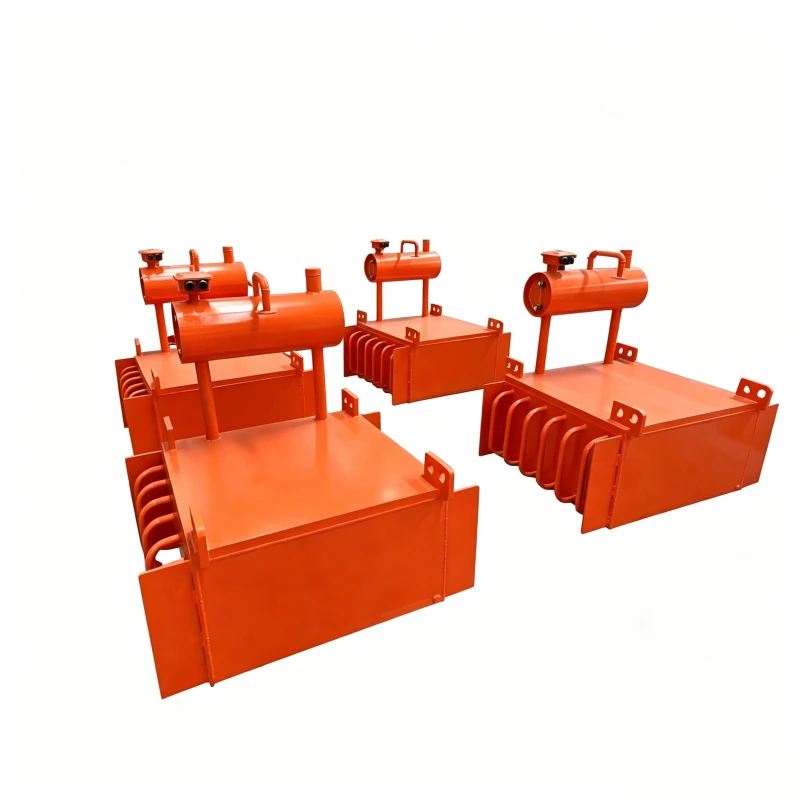
Multiple oil-cooled suspended electromagnetic separator product configurations shown together
Representative supplied product views show different external proportions. This is not a standard-size chart; final model, dimensions, ratings and interfaces must be confirmed in the quotation and approved drawing.
Your ConditionWhat to ChooseWhy
Iron appears only from time to time, and planned cleaning stops are acceptable.Manual-clean suspended electromagnet.You do not need a continuous discharge belt.
Iron appears often or builds up quickly on the magnet.Self-cleaning suspended electromagnet.Automatic discharge keeps captured iron from interrupting normal operation.
Operators cannot safely reach the magnet to remove captured iron.Self-cleaning suspended electromagnet.Do not rely on unsafe manual access during normal operation.
The conveyor cannot stop for regular cleaning.Self-cleaning suspended electromagnet.Manual cleaning would interrupt normal production.
Iron appears mainly during start-up, maintenance, or rare abnormal events.A manual-clean suspended electromagnet can be used.You can remove the captured iron during planned stops.
What to Confirm

Put These Conditions in the Project Specification

If a condition changes the equipment choice, installation, or final test, write it into the approved technical specification. Do not rely on a general catalog page.

What to DefineDetailsWhat It Affects
Separator TypeManual-clean or self-cleaning; oil-cooled or another cooling option.Equipment type and mechanical setup.
Material and ProcessMaterial, particle size, bulk density, moisture, throughput, and how steady the feed is.How the material behaves and how hard it is to pull buried iron free.
ConveyorBelt width, speed, trough shape, and normal and maximum material depth.Working distance and time in the magnetic field.
Target IronSmallest dangerous piece, largest piece, approximate weight, shape, burial position, and how often it appears.Required magnetic performance and cleaning frequency.
Magnet PositionMagnet-face reference, target distance, installation position, and nearby steel.Where the magnet must work.
Electrical and CoolingSite power, how long the magnet stays powered, site temperature, cooling setup, controls, and monitoring.Electrical and cooling design.
InstallationSuspension, support, available height, discharge route, service access, and lifting access.Whether the separator can be installed and maintained safely.
Factory ChecksGeneral arrangement (GA) drawing check, electrical check, magnetic measurement point, pull test if used, and dynamic capture test if required.What must pass before shipment.
DocumentsRequired drawings, test records, packing list, and operation and maintenance information.What you receive with the equipment.
Suitable / Not Suitable

Do Not Use This Separator for the Wrong Job

Use This Separator When

  • the primary target is ferromagnetic tramp iron in conveyor-fed bulk material;
  • the line needs protection before crushers, mills, shredders or similar equipment;
  • the iron is too far from the magnet, or too hard to capture, for a practical permanent magnet;
  • the site can support an oil-cooled electrical system;
  • captured iron can be removed safely under the selected cleaning method.

Choose Another Separator When

  • non-ferrous metal is the main target;
  • you need to recover or upgrade fine, weakly magnetic minerals;
  • iron loading requires continuous discharge but a manual-clean unit is being considered;
  • oil is prohibited or leakage cannot be accepted;
  • the proposed location creates an excessive target distance;
  • there is no safe support, guarding, service or captured-metal discharge route.

Do Not Choose a Separator Only Because…

Wrong ShortcutWhy It Can Mislead
“The Gauss number is higher.”Gauss at one point tells you the magnetic flux density there. It does not prove pull force or capture on a moving conveyor.
“The magnet body is larger.”A larger body does not prove that the magnetic field is strong enough at the iron you need to capture.
“It is oil-cooled.”Oil cooling helps control heat. It does not by itself prove that the magnet can capture the required iron.
“The belt width matches.”Belt width is only one input. Material depth, belt speed, target iron, and working distance can change the required magnet.
“It picked up iron on an empty belt.”Picking up iron on an empty belt does not prove the magnet can remove buried iron during normal production.
Installation

Choose Crossbelt, Inline or Mid-Belt From Your Conveyor Layout

Choose where the magnet will sit first. Then check the real target distance, iron discharge route, support structure, and maintenance space. Empty space above the conveyor is not enough.

Oil-cooled suspended electromagnetic separator showing visible lifting and suspension connection points
Product view showing visible lifting or suspension connection points. Final support loads, suspension hardware and geometry must match the approved project drawing.
Educational Installation Logic — Not an Approved General Arrangement Drawing
SUSPENDED ELECTROMAGNET
working zone / target distance
Before we finalize the layout, define the magnet-face reference, space above the material, material depth, target iron position, nearby steel, and where captured iron will be discharged.
Your InstallationWhat to Do
The magnet sits over the middle of the belt, and there is space to discharge iron to the side.Use a crossbelt arrangement. Check side clearance, the collection bin or chute, support steel, and maintenance access.
The magnet sits near the head pulley, and captured iron can move in the same direction as the belt.Use an inline arrangement. Check the material path, pulley position, available height, and where captured iron will go.
The magnet sits over a troughed belt.Check the full material depth and trough shape. Do not use only the vertical air gap.
Steel beams, idlers, or chute parts are close to the magnet.Show all nearby steel on the layout before we approve the installation.
Limited height forces the magnet farther away from the material.Change the layout or use a magnetic design that works at the longer distance. Do not simply raise the magnet and assume it will work the same.

Support and Suspension

Confirm the support structure, lifting points, suspension layout, and access before shipment.

Keep the Magnetic Working Area Clear

Keep unreviewed steel away from the required magnetic working area. Nearby steel can change the magnetic path.

Plan Where the Captured Iron Will Go

Give the captured iron a controlled path to a bin or safe collection area. It should not hit equipment, fall back into the material, or create a maintenance hazard.

Not Sure Whether You Need Crossbelt or Inline?

Send us the conveyor drawing or photos. We will check the target position, iron discharge route, and available support space before we choose the final setup.

Check Which Layout Fits
Cleaning and Maintenance

Plan Cleaning and Maintenance Before the Separator Is Installed

Oil-cooled suspended electromagnetic separator upper assembly and external piping for maintenance planning
Product view showing the upper assembly and external piping. Exact inspection points, instruments and service procedures depend on the final project design.

Manual-Clean Units Need Safe Access

If operators cannot isolate the equipment, safely reach the captured iron, and control where the removed metal goes, do not use a manual-clean design. Change the installation or choose a self-cleaning separator.

Check maintenance space against the approved drawing. Do not estimate it from the product photo.

What to Check During Routine Inspection

  • captured iron is building up or cleaning is no longer effective;
  • external cooling parts show damage or visible leakage;
  • electrical connections or specified monitoring devices need attention;
  • suspension hardware or the support structure has changed or loosened;
  • clearance around the magnet and iron discharge area is no longer safe.

Stop and Fix the Problem If

  • you see oil leakage;
  • an electrical or cooling alarm appears;
  • the suspension or support structure changes;
  • captured iron cannot be removed safely;
  • the real material depth or installation position no longer matches the approved design.
Before Production

What Corvelan Checks Before Production

We confirm the conveyor conditions that can change the magnet size, cleaning method or installation layout before production starts. If one of these items changes later, tell us before the equipment is built.

We CheckWhy It Matters
Belt widthThe magnet must cover the required conveyor area.
Maximum material depthThis helps set the farthest target position.
Belt speedFaster belts give the magnet less time to attract and lift the target.
Target ironSize, weight, shape and position affect how hard it is to capture.
How often iron appearsThis tells us whether manual-clean or self-cleaning is the right route.
Installation spaceThis affects crossbelt, inline, suspension, discharge and service access.
Site power and temperatureThese affect the electrical and cooling setup.
Required factory checksThese tell us what must be measured or tested before shipment.
Factory Checks

What Do Different Magnet Tests Tell You?

Different checks answer different questions. A Gauss reading tells you the magnetic flux density at one defined point. A pull test tells you how strongly the magnet attracts a defined test piece. A moving-target capture test tells you whether the agreed target is picked up under an agreed moving condition.

CheckWhat This Tells YouWhat It Cannot Tell You
General arrangement (GA) drawing and dimension checkOverall size, suspension points, interfaces and service space against the approved drawing.Whether the magnet can capture the required iron.
Electrical checkWhether the agreed electrical values and functions match the approved technical data.Whether iron will be captured from a moving conveyor.
Surface GaussMagnetic flux density at one defined surface point.Capture at the real working distance.
Gauss at working distanceMagnetic flux density at a defined point away from the magnet.Whether iron will be pulled out of moving material.
Pull testThe attractive force on a defined test piece at a defined position and condition.Full conveyor capture performance.
Moving-target capture testWhether the agreed target is captured at the agreed distance, material depth and movement speed.Performance outside the agreed test condition.
Magnetic simulationA predicted magnetic-field pattern based on the model assumptions.A measured factory or site result.
Do not compare two separators from a surface Gauss number alone. Ask where the reading was taken, what distance was used and what operating condition it represents.

When Do You Need a Moving-Target Capture Test?

Use it when missed iron can damage important downstream equipment, the belt is fast, the material is deep, the required target is small or buried, or the project requires a defined capture result.

Test the Real Job

  • agreed target iron;
  • agreed target position;
  • agreed material depth;
  • normal belt speed or agreed equivalent speed;
  • agreed working distance;
  • agreed number of passes.

Do Not Make the Test Easier

  • do not move buried iron to the surface;
  • do not reduce the working distance;
  • do not slow the belt below the agreed speed;
  • do not remove the material if the real job includes a material layer.

What Must Pass Before Shipment?

PASS

  • dimensions and suspension points match the approved drawing;
  • agreed electrical checks are within the approved values;
  • required cooling checks are complete with no unresolved leak or abnormal condition;
  • required magnetic measurements meet the agreed values at the agreed points;
  • when a moving-target test is required, the agreed target passes under the agreed condition;
  • required documents and test records are complete.

FAIL — Fix the Problem Before Shipment

  • the magnet only passes after it is moved closer to the target;
  • the conveyor must be slowed below the agreed test speed;
  • a buried target only passes after it is moved to the surface;
  • dimensions or suspension points do not match the approved drawing;
  • an agreed electrical or magnetic value is outside the approved limit;
  • a cooling leak, unresolved alarm or missing required record remains open.
Before Shipment

What You Can Ask Us to Check Before Shipment

Ask for the checks that answer the questions that matter to your project. A product photo confirms the supplied configuration. A drawing confirms dimensions. A magnetic reading confirms a value at a defined point. A moving-target test checks actual capture under the agreed test condition.

Check or RecordWhat It Should ShowWhen You Need It
Product photosOverall equipment, visible suspension points, external cooling parts and supplied configuration.To confirm what is being shipped.
Approved general arrangement (GA) drawingOverall dimensions, suspension points, interfaces, installation position and service space.Use it for every project-specific installation.
Dimension checkMeasured dimensions compared with the approved drawing.Use when installation space is tight or fixed.
Electrical test recordAgreed voltage, current, coil resistance and other specified electrical checks.When your project requires written electrical test data.
Gauss measurementProbe position, test distance, energizing condition, instrument and reading.When a defined magnetic reading is part of the order.
Pull testTest piece, position, distance and measured pull condition.When a defined pull condition is required.
Moving-target capture testTarget iron, target position, working distance, material condition, movement speed, passes and result.Use it when actual capture under motion must be checked.
Cooling-system checkVisible cooling components, specified checks and any leak or abnormal-condition check.For oil-cooled equipment.
Nameplate photoFinal equipment identity and approved rating information.Before shipment and again after delivery.
Packing photos and packing listEquipment condition and the items included in the shipment.When shipment completeness must be recorded.
A useful test record needs context. It should show what was tested, where it was tested, the test condition, the measured result and the agreed PASS/FAIL limit.
Documents and Records

What You Can Receive With the Equipment

Tell us which drawings, test records and technical documents your project needs before production starts. We can put the agreed items into the quotation and project specification.

Document or RecordWhy You May Need It
Approved general arrangement (GA) drawingInstallation dimensions, suspension points and service space.
Electrical informationSite power and control connection.
Nameplate informationEquipment identification and approved rating information.
Connection and wiring informationElectrical installation and control connection.
Cooling-system informationInspection and maintenance of the oil-cooling system.
Factory inspection recordA written record of the agreed factory checks.
Magnetic test recordMagnetic readings at the agreed point and distance when included in the order.
Moving-target capture test recordThe agreed target and moving test condition when included in the order.
Packing listReceiving and shipment completeness.
Operation and maintenance informationInstallation, inspection, cleaning and service.
Why Corvelan

How Corvelan Chooses the Separator

We do not choose a suspended electromagnet from belt width or a surface Gauss number alone. We start with the real conveyor: target distance, material depth, belt speed, target iron, iron frequency, cleaning method and available installation space.

We Choose the Cleaning Method First

If iron appears often or the conveyor cannot stop, we use a self-cleaning route instead of forcing a manual-clean design into the job.

We Do Not Treat Gauss as Conveyor Performance

Gauss, pull force and a moving-target test answer different questions. If actual capture at speed matters, we use the moving condition in the factory test.

We Check the Installation

We check suspension points, nearby steel, available height, iron discharge space, service access and maintenance space before the equipment layout is fixed.

We Tell You When This Is the Wrong Separator

If your main target is aluminum, copper or another non-ferrous metal, we will not recommend this suspended electromagnet. We will point you to another separation method.

Common Mistakes

Common Mistakes When Choosing a Suspended Electromagnet

“I know my belt width, so I can choose the magnet.”

Not yet. Belt width tells us the coverage needed, but we still need material depth, belt speed, target iron and working distance.

“Higher Gauss means better iron removal.”

Not always. A surface Gauss number does not tell you what happens to iron buried farther away.

“It picks up steel in the workshop, so it will work on my conveyor.”

Not necessarily. Belt speed, material depth and target position can change the result.

“Oil-cooled means stronger magnetic separation.”

No. Cooling method and magnetic capture are different design questions.

“The biggest iron piece is the hardest to remove.”

Not always. A smaller piece buried deep in the material may be harder to capture.

“A pull test proves conveyor performance.”

No. A pull test checks a defined test piece under a defined condition. It does not reproduce a moving conveyor by itself.

FAQ

Oil-Cooled Suspended Electromagnetic Separator FAQ

What is an oil-cooled suspended electromagnetic separator?

It is an electrically powered magnet installed above a conveyor to remove iron and steel from bulk material. Oil in the cooling system carries heat away from the electromagnetic coil.

When should I use an oil-cooled suspended electromagnet?

Use it when you need an energized suspended magnet for conveyor tramp-iron removal, oil cooling is allowed, and the cleaning method matches how often iron appears.

Manual-clean or self-cleaning: which should I choose?

Choose manual-clean when iron is occasional and the conveyor can stop safely. Choose self-cleaning when iron appears often, captured metal builds up quickly, or production cannot stop for regular cleaning.

Permanent magnet or electromagnet: which should I choose?

Choose a permanent suspended magnet when it can reach the required iron position without a powered coil. Choose an electromagnet when the target is farther away, buried deeper, or harder to capture than the permanent route can reliably handle.

How do I calculate working distance?

Measure from the magnet face to the farthest dangerous iron that must be captured. If the iron can be buried at the bottom of the material, include the space above the material plus the full material depth.

Does material depth affect magnet selection?

Yes. Deeper material places buried iron farther from the magnet. Use the maximum normal material depth when the separator must remove iron from the bottom of the material layer.

Does belt speed affect iron removal?

Yes. Faster belt speed gives the magnet less time to attract and lift the iron. When speed is high and missed iron can damage important equipment, use a moving-target capture test.

Does higher Gauss mean better conveyor performance?

No. Gauss is magnetic flux density at a defined point. It does not equal pull force and it does not prove that buried iron will be removed from a moving conveyor.

When do I need a moving-target capture test?

Use one when missed iron can damage important downstream equipment, the belt is fast, the material is deep, the required target is small or buried, or the project requires a defined capture result.

What information should I send Corvelan?

Start with belt width, normal and maximum material depth, belt speed, target iron size, approximate weight and shape, installation position, and whether the line can stop for manual cleaning. Add material details, throughput, temperature, drawings, photos, site power and required factory checks when available.

What to Send Us

Tell Us This → Corvelan Uses It for This

Each item answers a real engineering question. Send the real conveyor condition so we can choose the magnet type, cleaning method, installation layout and factory checks.

You SendCorvelan Uses It ForIf It Is Missing
Belt widthMagnet coverage and installation width.We cannot confirm coverage.
Normal and maximum material depthDeepest target position and working distance.We cannot confirm the hardest target position.
Belt speedAvailable capture time and whether a moving-target test is needed.A stationary check may not represent production.
Target iron size, weight and shapeThe iron piece that matters most for the job and the factory test.“Remove iron” is too vague for a useful test.
Where the iron can sit in the materialSurface, middle or bottom test position.The test can become easier than the real job.
How often iron appearsManual-clean or self-cleaning.The wrong cleaning method can create unnecessary stops.
Conveyor drawing or photosCrossbelt, inline or mid-belt layout, support, nearby steel, discharge route and service access.Installation details remain open.
Site temperature and power supplyElectrical and cooling setup.These items cannot be confirmed.
Required factory checksWhat must be measured or tested before shipment.PASS/FAIL can become unclear after production starts.
What to Send Us

Send These 6 Items First

Send us these six items first. We can then tell you which separator type fits, how it should be cleaned, the working distance we need to design for, and what information is still missing.

  1. Conveyor belt width
  2. Normal and maximum material depth (burden depth)
  3. Belt speed
  4. Target tramp iron — size, approximate weight and shape
  5. Installation position — drawing or photo if available
  6. Cleaning condition — can the line stop for manual cleaning?

Also Send These Details If You Have Them

Also send the material name, throughput, bulk density, and particle size if you have them. Tell us if the material is wet, sticky, or hot. For installation, send the available height, site voltage, nearby steel, and any conveyor drawing or photo. If your project has a required factory test, tell us what must pass.

What Happens Next

What Happens After You Send the Conveyor Data

We Check the Separation Problem

We check the material, the iron you need to remove, the conveyor condition, and the downstream equipment you need to protect.

We Choose the Equipment Type

We choose manual-clean or self-cleaning first. We also check whether oil cooling is right for the site and whether crossbelt or inline installation fits the conveyor.

We Confirm the Main Design Conditions

We confirm the working distance, target iron, electrical requirements, cooling setup, and installation points that must appear in the quotation.

We Confirm the Factory Checks

We confirm the drawings, electrical checks, magnetic measurements and moving-target tests required before shipment.

Send Your Conveyor Data Before We Choose the Final Magnet

The right magnet depends on the real distance to the iron, material depth, belt speed, target iron, cleaning method, and installation space. Send us those conditions first. We can then choose the right equipment type and agree on how it will be checked before shipment.

Send Your Separation Requirement

Get An Instant Quotation Now