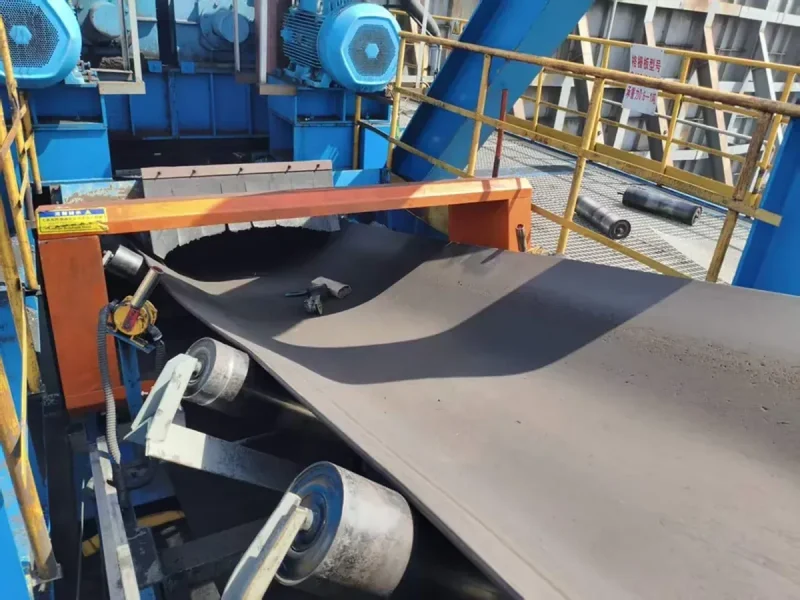
Two stage dry magnetic drum separation is worth testing when a stable first stage still misses a defined product target, and another pass could recover or clean material that remains separable. Decide which stream needs more work before choosing the second drum. Recleaning a magnetic concentrate and recovering magnetics from the first tailings are different jobs.
Start with the result you need: a higher-grade magnetic product, less valuable material in the tailings, or a cleaner non-magnetic product. Then compare the extra separation with the target loss, throughput and cost it adds.
When Should You Test a Second Dry Drum Stage?
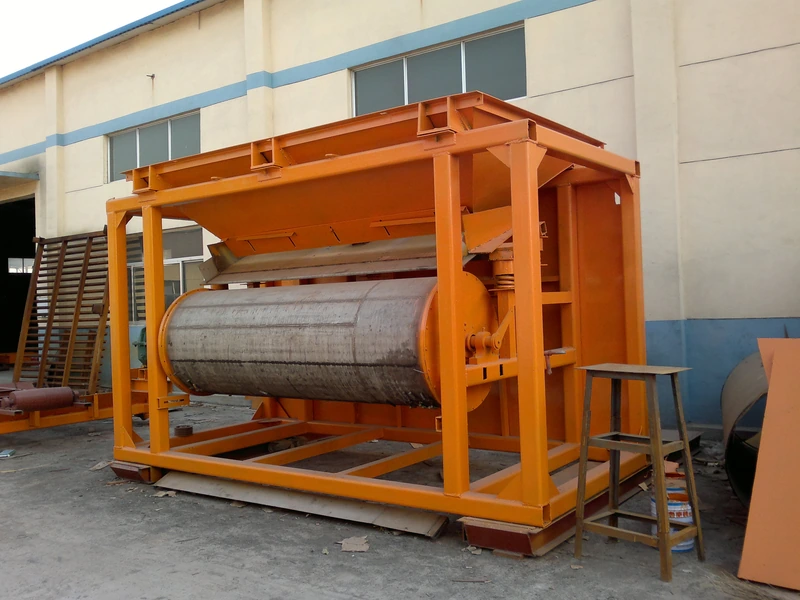
Test a second stage when the first drum gives repeatable results but cannot meet your required quality and recovery together. If results change with feeder surges, moisture or uneven loading, correct those conditions first. A second drum needs controlled feed too.
Keep the best practical one-stage setting as your baseline. Record its result at the required feed rate, rather than comparing two drums with an overloaded or poorly adjusted first drum.
| What the first-stage test shows | What to do first | When a second stage becomes useful to test |
|---|---|---|
| Magnetic concentrate contains too much loose non-magnetic material | Improve feed distribution and adjust the splitter and speed | A cleaner pass can reject more unwanted material while keeping enough valuable material |
| Valuable magnetic particles remain in the tailings | Separate losses by particle size and check whether they are free particles or locked in other minerals | A recovery pass can capture a useful share of the remaining target |
| The non-magnetic product still contains magnetic contamination | Find the residual particles and compare normal and peak feed conditions | Another pass can remove the residual target without excessive loss of good product |
| Results change between repeat runs | Stabilize feeding, sample preparation and machine settings | Continue only after the baseline becomes repeatable |
Keep one stage when it already meets the required result and a second stage has no clear extra value. If the remaining target is locked inside other particles, or responds too weakly to the proposed drum, investigate liberation or another separator type before adding the same treatment again. Liberation means freeing the useful mineral from the surrounding material.
Which First-Stage Stream Should Feed the Second Drum?
Feed the stream that contains the material you still need to recover or clean. Name the saleable product first. A magnetic stream can be a valuable concentrate in one plant and an unwanted reject in another.
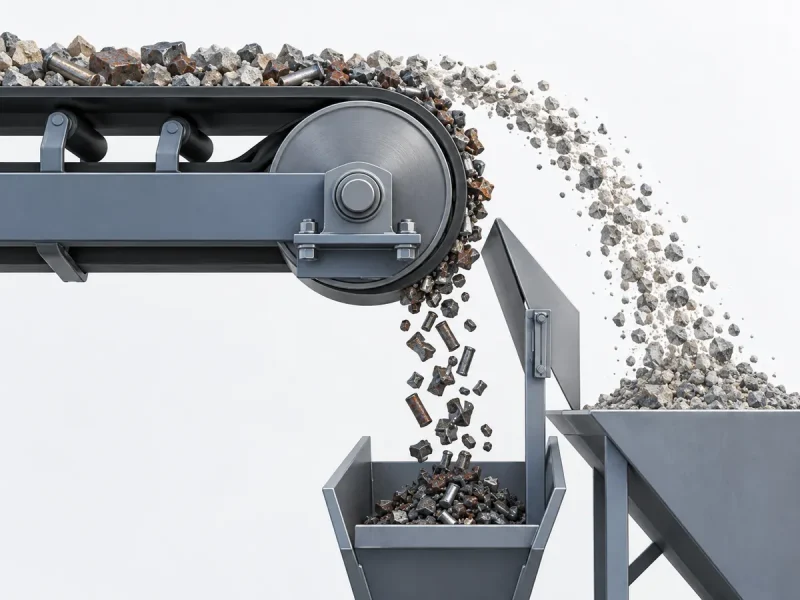
The first recovery stage is often called a rougher. A cleaner upgrades its concentrate. A scavenger recovers useful material left in its tailings. These names describe the job, rather than a fixed drum size or magnetic strength.
Reclean the Magnetic Concentrate
Send the first magnetic concentrate to the second drum when its grade is too low. Grade is the share of the specified valuable component in that product. The second pass aims to release more unwanted material while retaining the target.
The extra exposure and a fresh, controlled feed layer can help separate loose particles carried into the first concentrate. It will not, by itself, free a magnetic mineral locked inside a non-magnetic grain.
Eriez’s DF High-Speed Drum manual, MMPM-360B, page 5 describes a first stage chosen for high recovery, followed by recleaning of its magnetic concentrate. It also identifies an intermediate fraction, called middlings, which may need further treatment. The key decision is whether the cleaner’s grade gain justifies the valuable material leaving with that intermediate fraction.
Recover Magnetics from the First Tailings
Send the first non-magnetic tailings to a recovery stage when they still contain recoverable magnetic material. Keep this new magnetic fraction separate until its quality is known. Blending it with the first concentrate may raise total recovery while lowering the combined grade.
A stronger second magnetic system is one possible arrangement when the residual target needs a different magnetic treatment. Choose it from the residual material’s response and size, rather than assuming every second stage should be stronger.
Clean a Non-Magnetic Product or Recover Good Material from Rejects
If the non-magnetic stream is your saleable product, another pass through a suitable drum can remove remaining magnetic contamination. Measure both residual contamination and good-product loss.
If the first magnetic reject contains too much good non-magnetic material, test recleaning that reject instead. Recover the released good material separately and check its quality before returning it to the saleable stream. The two options treat different streams and need different acceptance measurements.
Bunting’s published pre-shipment test gives a useful recycling example. Its module used a ferrite drum to remove strongly magnetic metal, then a rare-earth drum for remaining weaker magnetic particles, before an eddy current separator recovered non-ferrous metal. Feeders controlled presentation between stages, and separate containers collected the fractions. This was separation of different magnetic targets, rather than recleaning one magnetic concentrate. Bunting reported adjustments during material testing but did not publish numerical recovery results in that article.
How Should You Compare One Stage with Two Stages?
Compare an optimized single-stage baseline with the proposed two-stage process using representative feed and the same final product requirements. A second pass at a much lower feed rate may show a useful separation opportunity, but it does not establish the required line capacity.
- Prepare representative feed. Collect increments across normal operation, rather than choosing only visibly magnetic pieces. Keep different ore types or operating conditions identifiable. Record particle size and moisture before splitting the sample into comparable test portions. Preserve a reference portion for repeat analysis.
- Establish the one-stage baseline. Test practical feeder, drum-speed and splitter settings at the required throughput. Keep all product fractions. Select the setting that best meets the agreed quality and recovery requirements.
- Screen the second-stage opportunity. Reprocess the selected first-stage stream. Running it through the same drum can show whether another pass helps. Record any change in speed, layer depth or splitter position; this is no longer the same treatment if those settings change.
- Test the proposed connected process. Where the screening result justifies further work, include the intended second drum, transfer chute and feed control. The first discharge may arrive at the second drum as a narrow pile or in clumps. Redistribute it before separation. Include any planned return stream in the test.
- Weigh, analyze and repeat. Collect every final stream, plus any separately removed dust or spill. Compare the results across repeat runs and relevant feed conditions. Investigate unexplained differences before choosing equipment.
Stop and isolate equipment before opening access panels, reaching into chutes or making adjustments that require access to moving parts. Permanent magnetic fields remain after electrical power is isolated. Keep collection and adjustment work outside the operating hazard zone.
What Should Each Test Record Include?
Record the feed condition, each drum’s settings, and the mass and analysis of every separated stream. Start with the sample ID, collection period, feed origin, particle-size distribution and moisture. At each drum, record feed mass per unit time, useful feed width, layer depth, shell speed, splitter position and the tested magnetic configuration. Shell speed means the speed of the rotating drum surface; record drum diameter as well if you use rpm.
Label the first magnetic and non-magnetic streams, the selected second-stage feed, every second-stage output, and any blend or return. For each, retain its mass and analysis. Use dry-basis masses consistently so a moisture difference does not appear to be a separation gain. If moisture is measured on a wet basis, dry mass = as-received mass × (1 − moisture fraction). Use the measured moisture for each stream.
For mineral recovery, use an agreed analysis of the valuable component. For tramp-metal removal, add the type, size and captured or remaining count of representative test pieces. For product cleaning, measure residual contamination and the amount of saleable material sent to reject. A photograph of a cleaner-looking product cannot replace these measurements.
What Should You Change When Results Do Not Repeat?
First separate material variation from machine variation using the feed and settings recorded for each run. If performance falls during feed surges, work on distribution and peak loading. If separate bins look clean but their combined discharge is contaminated, fix the downstream remixing point.
If output masses or component totals do not reconcile with the input, investigate sampling, moisture correction, retained material and dust collection. Agree acceptable closure with the testing laboratory and weighing method. If only one particle-size fraction performs poorly, test that fraction separately before changing the whole machine configuration.
How Do You Calculate Recovery Across Both Stages?
Calculate recovery from the valuable component in all accepted final products divided by that component in the original feed. Use the same analytical measure throughout. Product weight alone gives mass yield, not valuable-component recovery.
- Valuable-component mass = dry stream mass × component content as a decimal.
- Product grade = valuable-component mass ÷ product dry mass × 100%.
- Overall recovery = valuable component in accepted products ÷ valuable component in original feed × 100%.
- Mass yield = accepted product dry mass ÷ original feed dry mass × 100%.
For iron ore, agree whether the analysis measures total iron, magnetite or another defined component. Total iron content and magnetite content are different measurements. Keep the chosen basis consistent across the feed and products.
Cleaner Example: Higher Grade with More Target Loss
Consider a calculated example with 1,000 kg of dry feed containing 40% of the chosen valuable component. The original feed therefore contains 400 kg of that component. Assume the following stream measurements for a first stage and a cleaner pass:
| Stream | Dry mass | Valuable component | Grade |
|---|---|---|---|
| Original feed | 1,000 kg | 400 kg | 40.0% |
| First magnetic concentrate, sent to cleaner | 500 kg | 380 kg | 76.0% |
| First tailings | 500 kg | 20 kg | 4.0% |
| Cleaner concentrate, accepted product | 430 kg | 365.5 kg | 85.0% |
| Cleaner reject or middlings, held separately | 70 kg | 14.5 kg | 20.7% |
The first stage recovers 380 ÷ 400 = 95.0%. The cleaner retains 365.5 ÷ 380 = 96.2% of the component entering that cleaner. Overall recovery is 365.5 ÷ 400 = 91.4%, or 95.0% multiplied by the unrounded cleaner recovery.
Grade rises from 76% to 85%, but another 14.5 kg of valuable component leaves the accepted product. That is a 3.6 percentage-point drop in overall recovery. The final product mass yield is 430 ÷ 1,000 = 43%.
If your example targets are at least 84% grade and 92% overall recovery, this cleaner passes grade but fails recovery. At an agreed 90% minimum recovery, it passes those two targets; throughput, other product limits and value still need to be assessed. These are example acceptance limits, not industry standards.
Hold the 70 kg intermediate stream in the balance. Material waiting for retreatment is not yet recovered saleable product. For this open-pass example, the final outputs reconcile: 430 + 70 + 500 = 1,000 kg, and 365.5 + 14.5 + 20 = 400 kg of valuable component.
Scavenger Example: Higher Recovery with a Blend to Check
Now consider an alternative test using the same first-stage result, with no cleaner. Send the 500 kg first tailings, containing 20 kg of valuable component, to a scavenger. Assume it captures a 25 kg magnetic fraction at 60% grade: 15 kg of valuable component.
The remaining scavenger tailings weigh 475 kg and contain 5 kg of the component. Combining the recovered fraction with the first concentrate gives:
- Combined product mass: 500 + 25 = 525 kg.
- Valuable component recovered: 380 + 15 = 395 kg.
- Overall recovery: 395 ÷ 400 = 98.8%.
- Blended grade: 395 ÷ 525 = 75.2%.
The scavenger captures 75% of the component in its own feed, adding 3.75 percentage points to circuit recovery. It does not add 75 percentage points to the original 95% recovery.
This arrangement improves recovery but slightly lowers the blended grade from 76.0% to 75.2%. If the blend must meet 84%, it still fails. Keep the recovered fraction separate when blending would make the main product off specification, then assess whether it has a separate outlet or needs further treatment.
When Does the Extra Stage Pay for Itself?
A second stage earns its place when the extra value of acceptable final products exceeds its full added cost while the line still meets its output requirement. Compare the same fresh-feed quantity and operating period. A better assay does not automatically mean more profit.
For a cleaner, include the value gained from higher grade and the value lost with a smaller product mass. For a scavenger, include the recovered fraction’s actual sale value, any extra treatment it needs, and any price penalty caused by blending.
Using the cleaner example above, suppose the 500 kg first concentrate can already be sold, while the 70 kg cleaner reject has no sale value. Let the net selling prices per kilogram be P1 before cleaning and P2 after cleaning. Before extra processing cost, revenue is equal when:
430 × P2 = 500 × P1, so P2 ÷ P1 = 1.163.
The cleaner product therefore needs about a 16.3% higher price per kilogram just to match the original product revenue under those assumptions. It needs more to cover the added process cost. If payment is based on contained metal, use the actual payable-metal terms and impurity penalties. If the original concentrate cannot be sold at all, compare the cleaner with the real alternative treatment or disposal cost instead.
Include the second drum, feeder, supports, chutes, controls and installation in the investment. Add power, dust handling, wear parts, maintenance time, labor and the cost of handling intermediate material. Use the expected operating hours and available margin to calculate payback; there is no useful universal payback period for all dry-drum duties.
Two drums in series do not double line capacity. The second stage treats the selected stream. If a 10 t/h fresh feed produces a 50% mass yield to the cleaner, that cleaner receives about 5 t/h before any return flow. Its feed is also richer in magnetic material than the original feed, which changes the loading it must handle.
A narrow transfer chute can overload part of the second drum even when its total feed rate looks modest. Include chute distribution, drop height, dust extraction, access and separate discharge paths in the proposed layout. If middlings return upstream, measure that return separately and add it to the receiving equipment’s load. Repeat the connected test until circulating load and product quality are stable enough to judge.
If improved feeding reaches the target on one drum, keep that simpler arrangement. If losses are concentrated in one size fraction, compare size classification and separate treatment. If valuable minerals remain locked, investigate whether further liberation creates enough benefit to justify its cost before buying another dry drum.
What Should You Send Us Before Planning a Second Stage?
Send your first-stage results, the product target you still miss, the required throughput and a simple process layout. These show whether the next useful step is a cleaner test, a recovery test, improved feeding or a different separation method.
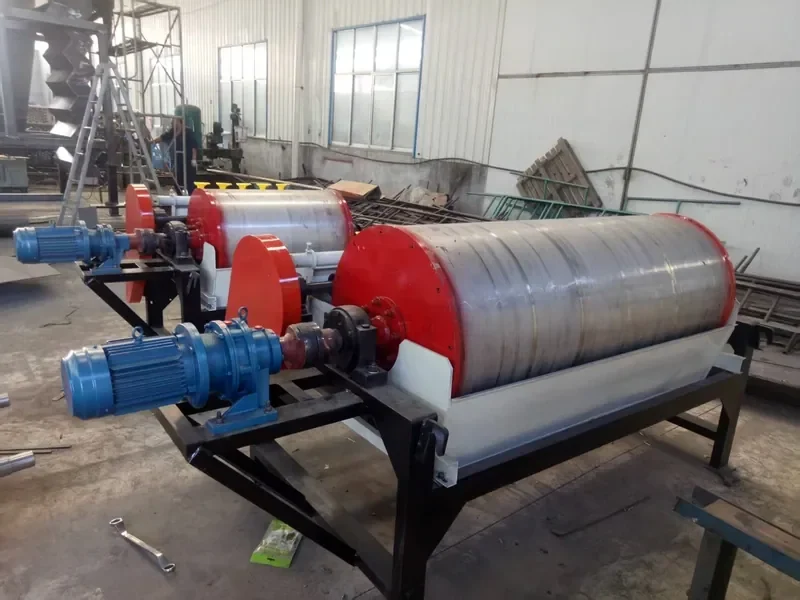
Our dry drum magnetic separator is an option for controlled, free-flowing material with a ferrous or strongly magnetic target. We review the material, feed and discharge arrangement together. For a proposed second stage, include:
- Material name, particle-size range, moisture and the target component or contaminant.
- First-stage feed and product weights, analyses, machine settings and any repeat-test results.
- Required grade or residual contamination, acceptable product loss and normal and peak throughput.
- The stream you propose to reprocess, its expected flow rate, and the available height and access around the installation.
Two stage dry magnetic drum separation is worth testing when a second, clearly defined job remains after the first drum has been set up properly. Judge the connected process by final product quality, overall recovery, saleable output and added cost. Keep one stage when it already does the job.
Send us your material and first-stage results. Describe the key details in the contact form’s message field. If you have drawings, analysis sheets or samples, tell us what is available so we can agree how to receive them and which review or test scope is needed.
Second Dry Drum Stage FAQ
Can I prove a two-stage process by running the sample twice?
A second pass can screen the opportunity, but a connected two-stage test is needed to assess the proposed installation. Collect the selected first-stage stream, feed it in a controlled way and record the second-pass settings. A hand-fed second pass can behave differently from material arriving directly through a chute. Include the intended transfer and return flows before approving line performance.
Should the second drum always have a stronger magnetic field?
No. Choose the second drum for the residual target and the cleaning or recovery job. A stronger field may help a different magnetic fraction, while concentrate cleaning also depends on how particles are released, spread and split. Compare product results at workable settings instead of selecting a second drum from its surface Gauss reading alone.
Does a higher concentrate grade prove the second stage is better?
Only when the grade gain is acceptable alongside overall recovery, saleable quantity and the other product requirements. Ask for the original-feed basis, not just the cleaner’s own recovery. For ore, also compare the buyer’s limits for other minerals or impurities; a higher iron result may still leave another sale condition unmet.
What if most valuable material is in the middlings?
Keep that stream separate and determine whether the valuable particles are free or locked before deciding to reclean, regrind or reject it. Use stream weights, analysis by size fraction and suitable mineral examination. Free misplaced particles may respond to changed feeding or separation settings. Locked particles may need further liberation. Count any return as extra equipment load, and define how to collect this stream in the proposed machine arrangement.
Can a second dry drum remove all stainless steel?
No. The useful next test depends on the magnetic response of the actual stainless-steel pieces. Bunting’s cited example involved weakly magnetic shredded stainless steel. It does not establish capture of every stainless grade or shape. Identify and test the residual pieces, then compare another detection or sorting method where their response is unsuitable for the drum.
What if the second pass works only at a much lower feed rate?
Treat the lower feed rate as a capacity constraint until the process meets quality at the required stream throughput. First improve distribution and avoid deep local loading. Then test suitable working width, feed control or size classification. Compare the cost of those changes with the value recovered. If the required output still cannot be reached, revise the process instead of accepting a low-rate demonstration as the production result.