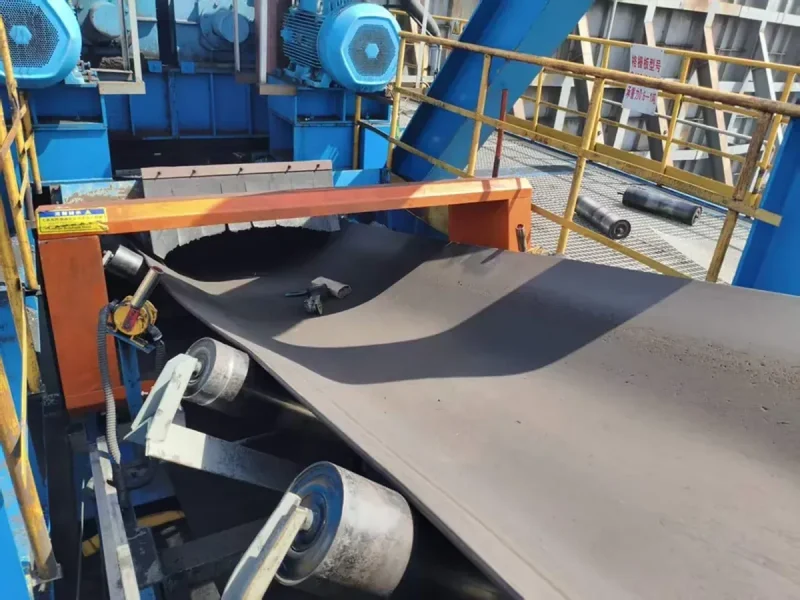
Magnetic separation works by pulling responsive particles out of the path the rest of the material follows. A separator presents the feed to a magnetic field, holds or redirects the target, and gives the captured material a separate place to discharge. The same idea lets a dry drum remove steel from granules and a wet drum recover magnetite from slurry. What changes is how the target reaches the field and what can carry it away before it is captured.
Choose a separator for your process
- For dry, free-flowing bulk solids, see the Dry Drum Magnetic Separator.
- For magnetite recovery from slurry, see the Wet Drum Magnetic Separator.
- For tramp iron above a conveyor, see the Suspended Permanent Magnet Separator.
How Does Magnetic Separation Work?
Magnetic separation creates two material paths because the target responds more strongly to a magnetic field than the material around it. For example, when dry granules and steel fragments pass over a drum, the granules fall away while the steel stays on the rotating surface long enough to reach a different outlet.
From Feed to Two Discharge Paths
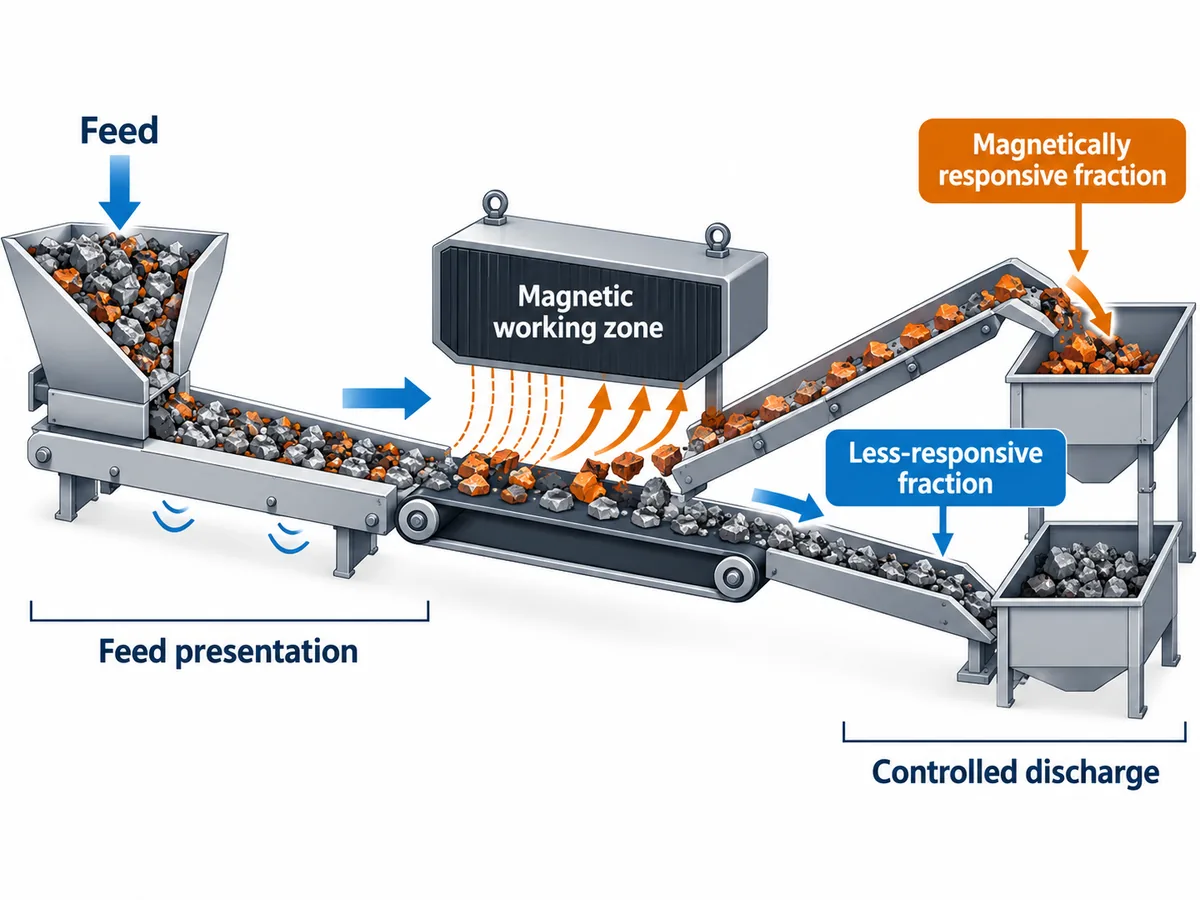
Present the feed, capture the target, then separate and discharge the two fractions. Each step has to work for the target to reach the right outlet.
- Present the feed. A feeder, conveyor, chute, or tank brings the mixture into a working zone. Feed depth and distribution set the distance each particle must cross.
- Move or hold the target. A permanent magnet or an energized coil produces the field. Responsive pieces move toward the stronger part of the field if the attraction can overcome the forces keeping them on their original path.
- Split the streams. Less responsive material continues with gravity, the conveyor, or the liquid flow. Captured material stays on a surface, travels with a cleaning belt, or is carried by a drum shell.
- Release the capture separately. A drum or belt can carry it out of the active field into another outlet. A collection grate holds it until a cleaning cycle removes it. The discharge layout keeps the two paths apart.
What a Magnetic Separator Does
Magnetic separation is the method. A magnetic separator is the machine or assembly that presents the mixture, applies the field, and collects the fractions. If a food ingredient or recycled plastic must be kept clean, the useful stream typically continues past the magnet. In a magnetite concentrator, the magnetic fraction is the useful stream. Define which outcome matters before calling either outlet the product. Eriez dry drum manual, pp. 3–4 · Eriez wet drum brochure, concentration duty
What Makes a Particle Move Toward the Magnet?
A target must move far enough, or stay attached long enough, to reach the intended outlet. Its response to the field matters, as do the forces that hold it in the feed or carry it away. The location where the particle travels is the place to start.
Magnetic Response and Particle Size
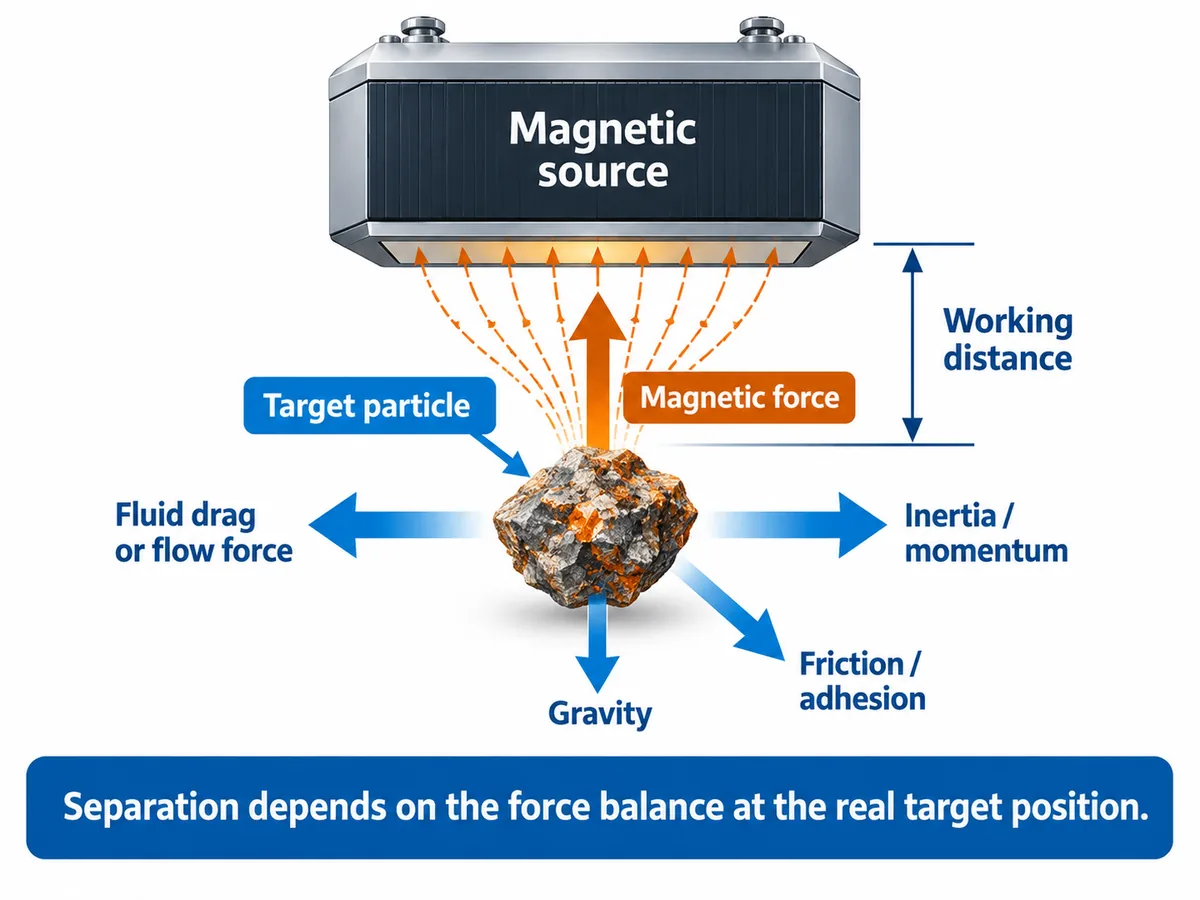
Magnetic susceptibility describes how readily a material becomes magnetized in an applied field. A strongly responsive steel fragment generally moves more readily than a similarly sized weakly magnetic mineral particle under the same conditions. Size and shape matter too. A fine particle has little magnetic material to act on and may follow the flow or stick to a larger grain. If magnetic mineral is locked inside another mineral, the field acts on the whole grain. A stronger field may recover that mixed grain, bringing unwanted material with it. If grade is the problem, check how well the minerals are liberated at the existing grind before comparing fields. LONGi’s industrial separation overview
Feed Depth, Speed, and Working Distance
In a deep conveyor load, a steel piece at the bottom starts farther from an overhead magnet and must move through the surrounding material. A faster belt also gives it less time to move within a zone of the same length. Check the deepest part of the load, especially at peak feed. If it varies across the belt, compare a shallower, more even layer with the current feed at the same speed. If misses also rise with speed under a similar load profile, check whether the material spends enough time under the magnet and whether the discharge still sends the capture to the right chute. Eriez suspended magnet selection guide
How Do Dry Magnetic Drums Separate Ferrous Metals?
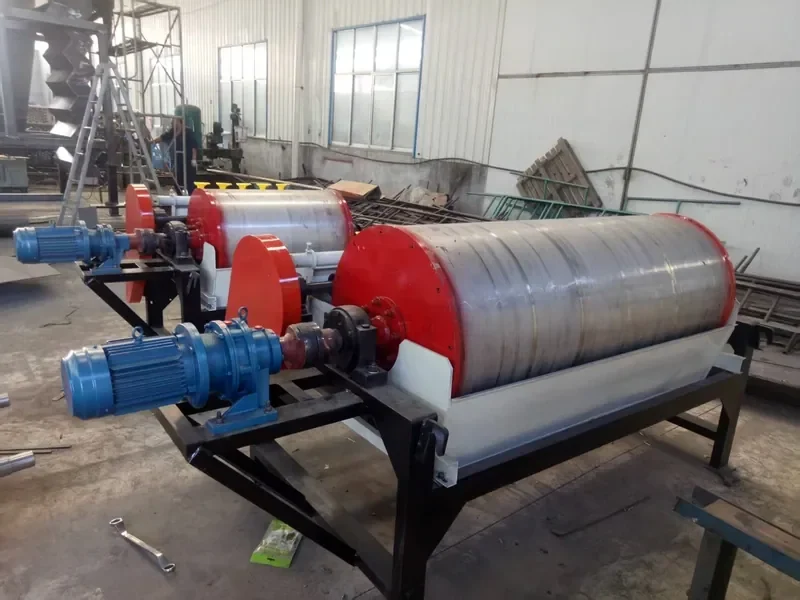
A dry drum carries responsive material around its shell after the other material has fallen away. A splitter between those two trajectories directs the streams to separate outlets. This works well for dry, free-flowing bulk material when the target responds strongly and the feed reaches the working area in an even layer.
Inside the Rotating Drum
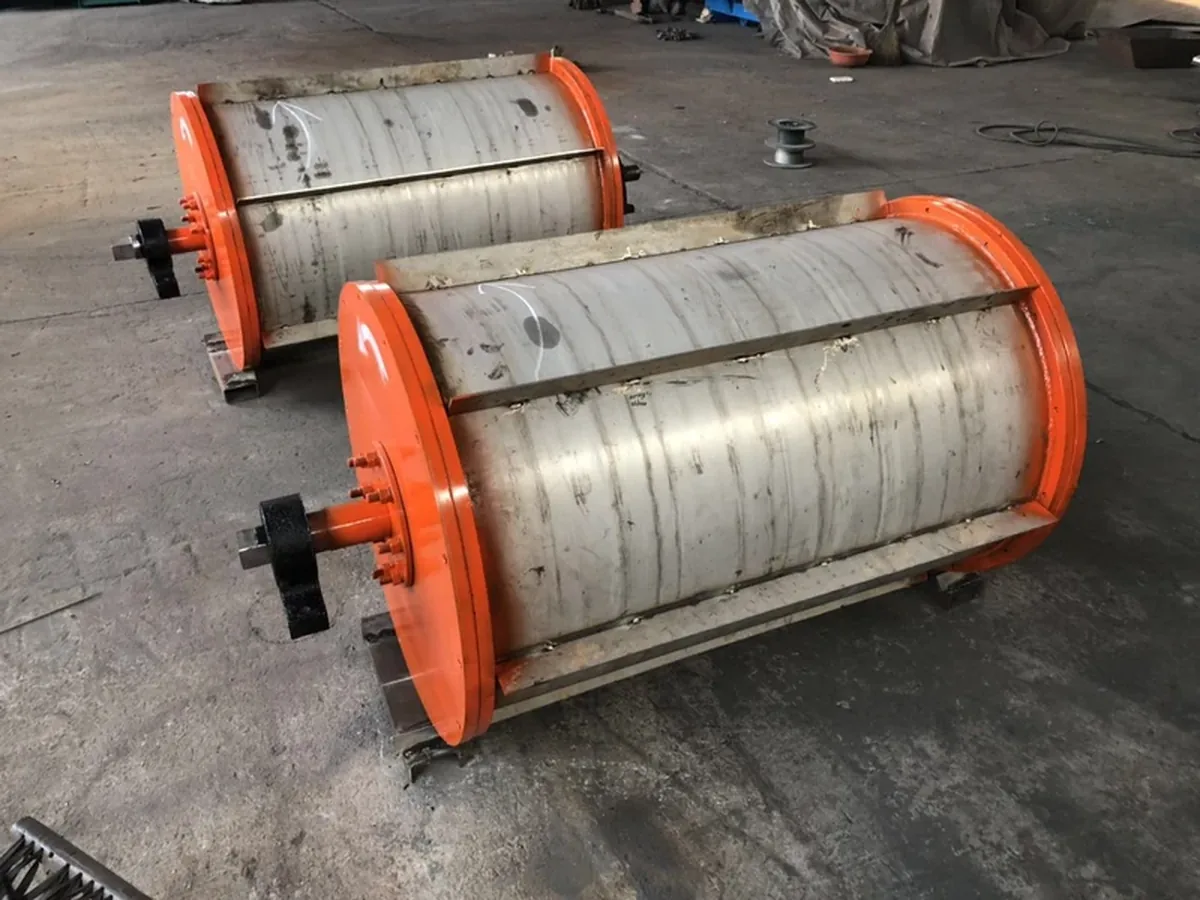
The magnet assembly stays fixed inside the drum while the shell turns around it. A feeder lays the mixture onto the shell in the active zone. Gravity and the motion of the shell carry less responsive material away. Ferrous material follows the shell farther around the drum. It releases as the shell moves past the active arc, sometimes aided by a wiper strip that carries it around the shell. The point of release depends on the active arc, shell speed, and discharge geometry. Eriez SM-340, introduction and installation
Feed Distribution and Splitter Position
If the feeder dumps a thick ribbon on one side, start by spreading the load over the useful drum width. When both fractions visibly leave the shell at different points but end up in the same bin, check where they fall relative to the splitter and whether they bounce across it. Damp feed can carry good product into the reject. After a change, sample both outlets at the usual rate and check how much useful material went with the steel. For an existing dry process, the equipment page shows how a controlled feed and separate outlets fit together. Corvelan dry drum magnetic separator
How Does a Wet Drum Separate Magnetite From Slurry?
A wet drum draws magnetite toward a rotating shell and carries it to a magnetic-product outlet while the rest of the slurry flows through the tank. Water helps carry away gangue, the unwanted minerals. Flow also exerts drag that can carry responsive fines into the tailings before the drum collects them.
Capture, Transport, and Release
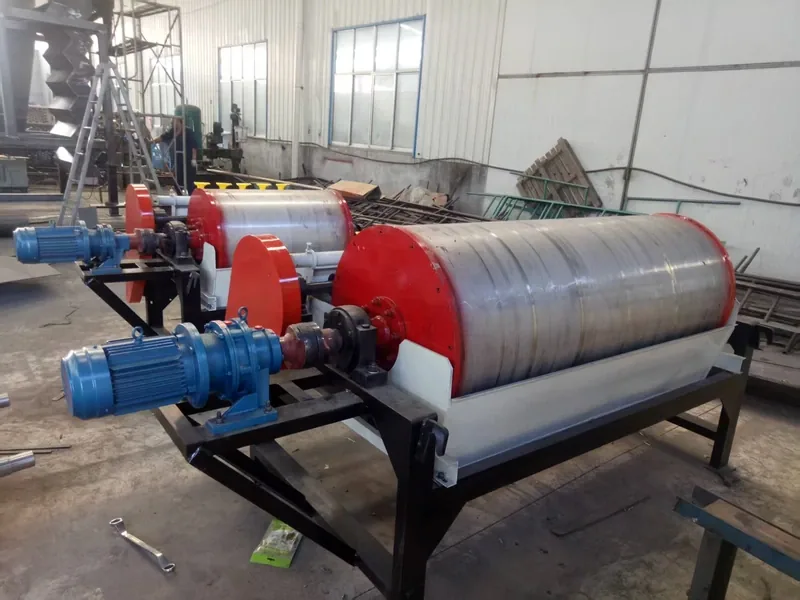
The tank feeds slurry past a fixed magnetic assembly inside the rotating shell. Magnetite attaches near the active arc, travels with the shell, and releases into the magnetic discharge beyond that arc. In a dense-medium circuit, the discharged material goes back into the medium system. In ore concentration, it can go to a cleaner stage for further upgrading. Keep the two duties in mind when comparing test reports. One tracks medium loss and return quality, while the other tracks mineral recovery and concentrate grade. Eriez MMPB-470, Heavy Media Duty and Concentration Duty
Slurry Flow, Solids, and Drum Duty
Track slurry flow and dry solids feed separately. Diluting a feed can increase the slurry volume the tank must handle while dry solids stay nearly constant. A rise in the magnetite share can load the drum more heavily even when slurry flow is steady. If magnetic losses rise during a flow increase, compare the magnetic material in tailings across steady runs with similar solids feed. Keep the dry solids rate and magnetic fraction as close as practical when testing the effect of flow. If losses rise at similar flow with richer feed, check how much magnetic material the shell must carry. A rougher usually prioritizes recovery, while a cleaner aims for higher concentrate grade. Set the duty before selecting tank style or comparing results across units. Eriez wet drum operating features · Corvelan wet drum magnetic separator
For a free-flowing dry stream, start with a dry drum trial. For magnetite already in slurry, start with a wet drum trial. Compare costs and available space for water handling and dewatering before converting a dry process to wet. Compare dry and wet drum configurations
How Do Overband Magnets and Head Pulleys Work?
An overband magnet lifts ferrous pieces away from a conveyor, while a magnetic head pulley holds them to the moving belt as it rounds the head. The lift point and the place where you can receive the removed metal determine whether either layout fits the line.
Self-Cleaning Overband Magnets
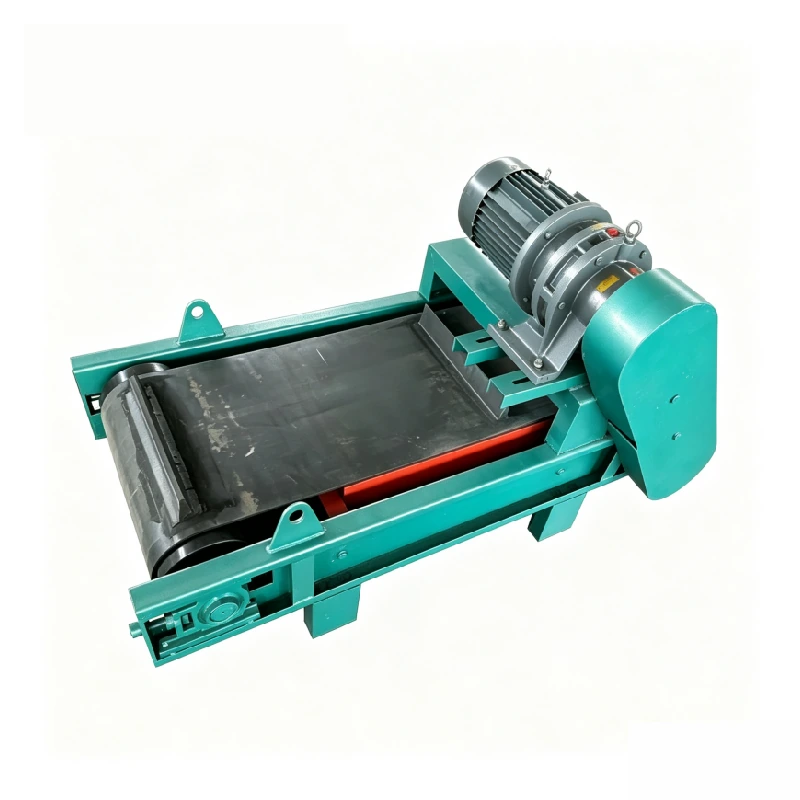
A magnet hangs over a conveyor or near its discharge. When a bolt moves up toward the magnet, a separate cleaning belt carries it away from the product and drops it outside the active zone. An electromagnet uses coil current to create the field. A permanent design has a field even when its cleaning belt is stopped. On a busy line, check the deepest burden, belt speed, and where the removed metal will land before choosing a mounting position. If a deep layer buries the target beyond the effective pickup distance, a more open discharge trajectory may expose it, provided the transfer geometry gives both discharge routes enough room. Eriez suspended magnet selection guide · Corvelan permanent overband magnets
Magnetic Head Pulleys
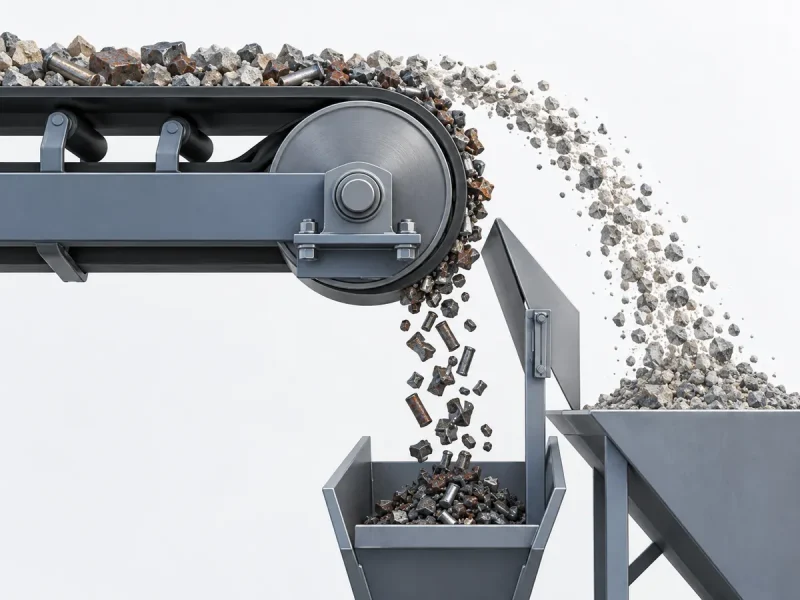
A magnetic head pulley replaces the pulley at the belt discharge. Bulk material falls away on its normal arc. Iron held to the belt travels past that point and drops farther around the pulley into a separate chute. This layout makes sense when the conveyor head has space for both outlets. If feed variations demand more control over how the material reaches the separator, a separate dry drum gives you an independent feeder, drum speed, and splitter. Corvelan magnetic head pulley
How Do Inline Magnets Separate Iron From Powders and Liquids?
Inline magnets bring a flowing stream close to magnetic surfaces so responsive particles can collect while the bulk feed passes through. The installation changes with the way the material moves. A dry gravity chute, a pressurized liquid line, and a mineral slurry tank each have different constraints.
Dry Gravity-Feed Chutes and Grates
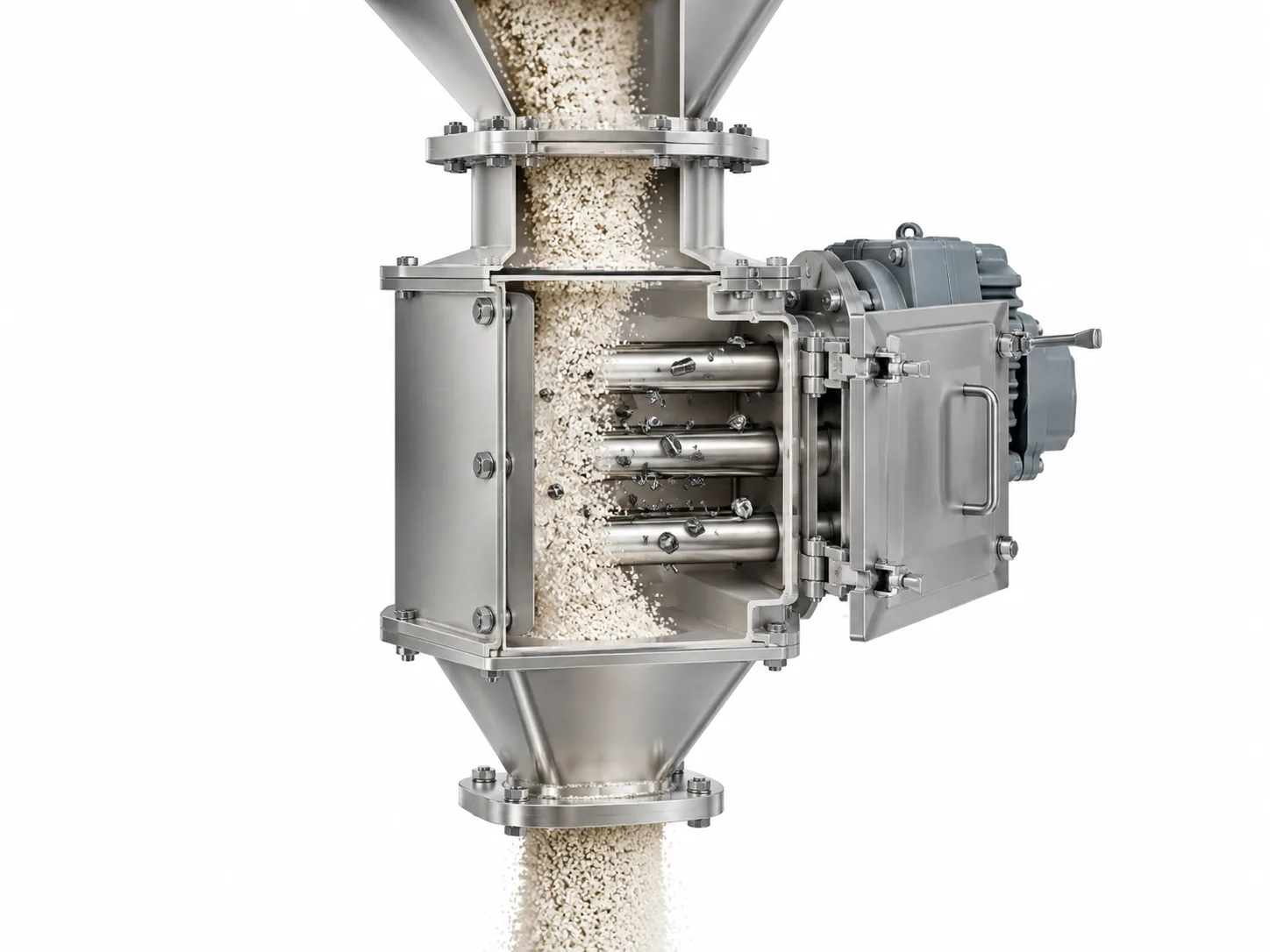
Tubes or plates give dispersed iron multiple chances to get close to a magnetic surface. Free-flowing granules can pass around a grate. Fine powder that bridges or coats those tubes may need a chute or a different geometry that preserves the flow path. Inspect for an uneven layer or a bypass where the feed avoids the magnet. As captured metal and powder accumulate, effective clearance and exposure may change, so check the capture over a normal cleaning cycle. Corvelan dry bulk pipeline separator · Selecting a magnetic separator for powders
Liquid Lines and Pumped Slurry
A liquid-line trap exposes the pumped stream to magnetic surfaces inside a housing designed for that service. Match it to pressure, temperature, flow, fluid compatibility, and cleaning access. For recirculating liquid with occasional ferrous wear particles, a trap may suit the contamination duty. A continuous slurry stream carrying recoverable magnetite calls for a wet drum trial when the aim is to collect and discharge mineral at production rates. First identify whether the line needs occasional cleaning or continuous recovery. Goudsmit separator types and magnetic filters
Which Materials Can Magnetic Separation Remove or Recover?
Start with the response of the actual target. Carbon-steel tramp and magnetite usually offer a strong response. Weakly magnetic minerals may need a stronger field gradient close to the particle path, and conductive nonferrous pieces need a different separation mechanism.
Steel, Magnetite, and Weakly Magnetic Minerals
| Material you need to separate | Industrial example | What decides the next step |
|---|---|---|
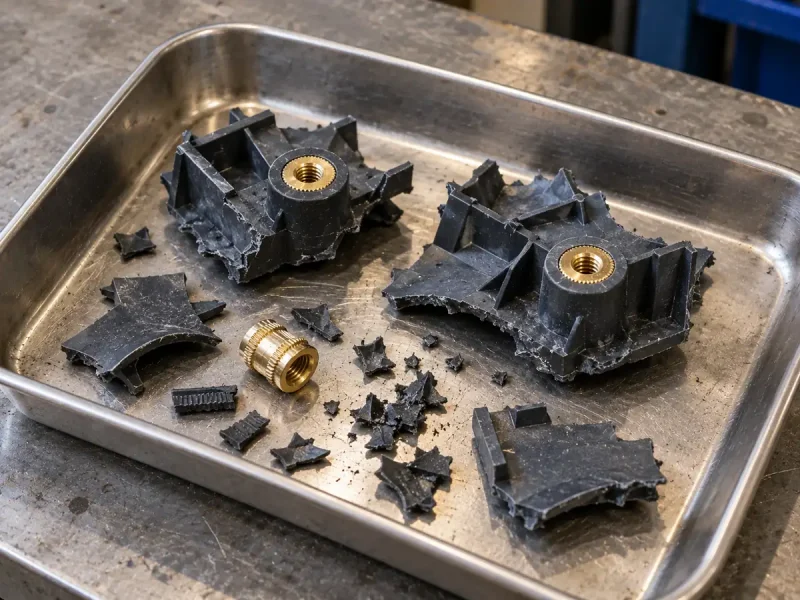
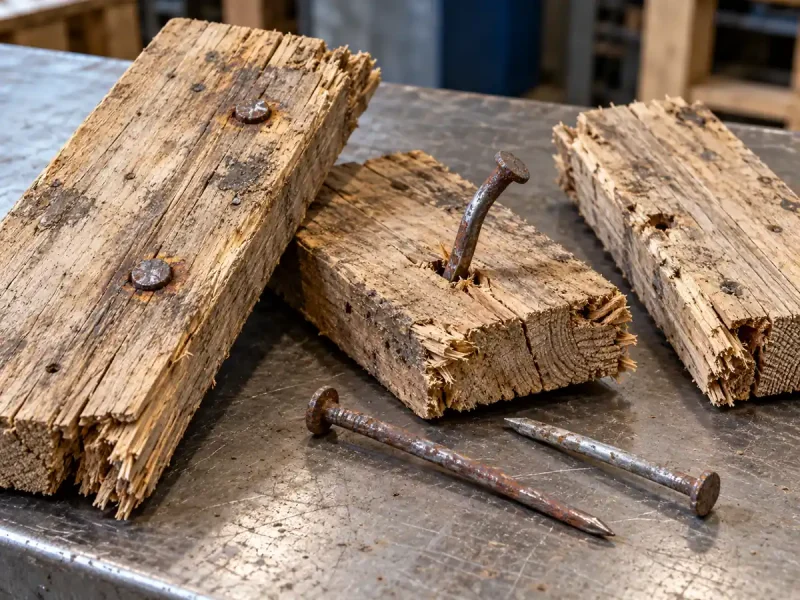
| Bolts, wire, or carbon-steel fragments | Protect a crusher or clean a dry plastics stream | Check the smallest harmful piece and whether it is buried, carried on top, or accessible at discharge. |
| Magnetite in slurry | Recover iron-bearing concentrate or return dense medium | Match the drum duty to the desired concentrate or return stream. Record slurry flow, solids level, and magnetic loading. |
| Weakly magnetic iron minerals such as hematite | Beneficiate an ore or reduce iron-bearing impurities in a prepared feed | Test mineral liberation and size. Compare a suitable high-intensity or high-gradient route using grade and recovery together. |
In a wet high-gradient separator, a suitable matrix can concentrate the field change in small zones where weakly magnetic particles can be collected. A published lab study on mixed magnetite and hematite ore tested low-intensity drums first and then a high-gradient matrix on the remaining material. If your feed also contains both minerals, that sequence gives you a starting point for a trial. Check the grade and recovery of each stage to see what treating the second stream adds. Plate and matrix designs have different flow paths, so record which arrangement you are testing and how the captured fraction is removed. Public mineral-processing study on mixed hematite–magnetite ores · Corvelan’s plate-type wet high-intensity separator
Aluminum, Stainless Steel, and Metal Detection
An eddy-current separator uses a changing magnetic field to induce electric currents in conductive pieces such as aluminum. The resulting force diverts suitably sized pieces from their original path. Stainless steel response varies with grade and processing. Some austenitic stainless steels develop a magnetic response where they have been cold-worked. Check a sample of the exact fragment. Australian Stainless Steel Development Association If the job is to find metal that the magnet may miss, an industrial metal detector can signal an alarm, stop the line, or trigger a separate reject device according to the system design. Verify sensitivity with the actual product and target. Eriez eddy-current operating principle
What Does a Gauss Reading Tell You?
Gauss measures magnetic flux density at a stated point. For separation, the field and how quickly it changes across the route of the target both matter. The rate of change with position is the magnetic field gradient.
Surface Gauss and the Target Path
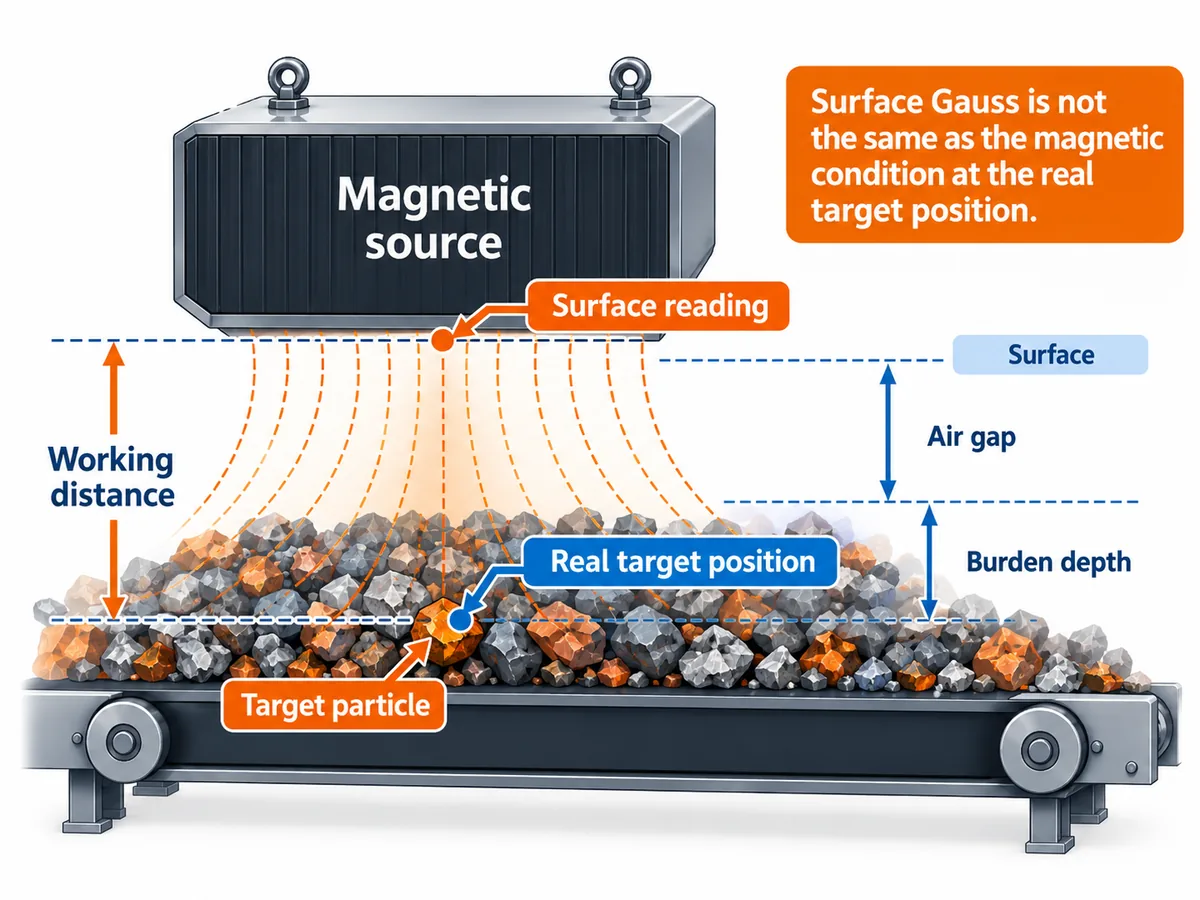
A probe touching a magnet cover measures conditions at that cover. A piece buried in a belt load may travel much farther away. For an overhead magnet, record the mounting distance with a clear reference point, then locate the target within the load. For a drum or chute, check how close the particles really pass to the shell or magnetic surface. If a specification gives only surface Gauss, ask for measurements or evidence at distances relevant to the installation. Eriez suspended magnet selection guide
Comparing Field and Pull Measurements
For a field comparison, use the same measurement points, probe orientation, distances, and operating state. A pull test measures force on a defined test piece under a stated setup. To compare it across units, record the piece, direction, contact or gap, and method. A sample run answers the next question by showing where real particles report at the specified feed condition. Request both outlet results if the equipment must meet a purity and recovery target. Corvelan magnetic separator selection guide
Why Does Magnetic Separation Miss the Target?
Check where the target was lost before changing the magnet or its setting. A particle may bypass the field, leave the collection surface too early, or mix with the clean stream after the capture point. Each observation leads to a different check.
When the Target Escapes Capture
- Misses increase at high belt load. Measure the maximum layer depth and verify the target position across the belt. Compare a more even feed at a consistent speed before making any rated change to the working gap.
- A wet drum loses more magnetite on busy shifts. Record slurry flow, solids concentration, and the magnetic fraction in the feed. Sample tailings at stable points and compare one change at a time. More slurry flow and more magnetite loading are different causes and may require different changes.
- Large pieces are captured while fines remain. Test the missed fraction by size and material. Liberated fines may need closer exposure or a different separator. If the iron is locked in another grain, examine whether liberation is worth improving before adding a stage.
When Material Mixes Again at Discharge
If the target follows the drum or cleaning belt but appears in the wrong outlet, inspect the splitter, chute, and reject bin for buildup, rebound, or overflow. Note whether the problem starts at a certain feed rate or late in the cleaning cycle. After correcting it, repeat the same sampling on both streams and check clean product loss alongside capture. Use guarded observation points and designated sample ports. Before reaching into the equipment, stop and isolate it under the site’s lockout procedure, and follow the equipment instructions for residual magnetic and mechanical hazards. Eriez dry drum manual, installation and maintenance · OSHA hazardous energy control, U.S. workplaces
How Do You Verify Magnetic Separation on Your Line?
Test the real feed at the rate and conditions the machine must handle. Measure what reaches both outlets, then decide whether the line meets the target for protection, product purity, or mineral recovery. A machine that passes with a thin bench sample can still miss targets under a deeper production load.
Representative Feed and Acceptance Criteria
- Pick a result to measure. For equipment protection, define the smallest harmful piece by material and dimensions. Use an approved test point and account for every challenge piece before releasing the product stream. For powder quality, define the assay or contamination limit plus acceptable loss of useful product. For ore, agree on grade and recovery together.
- Record the conditions. Use representative feed and include lot variation, size range, moisture, normal and peak rates, and working distance. For slurry, record both volumetric flow and solids concentration. Use the installed feed and discharge geometry or record the differences if testing on a pilot.
- Collect from both outlets at stable operation. Use comparable sample periods and a common basis for the measurements. Keep a record of what changed. When testing at peak rate, use the same acceptance criteria and check how the result shifts before setting the operating range.
Recovery, Grade, and Product Loss
Suppose a steady trial treats 100 kg of dry solids at 10% target mineral. The magnetic outlet collects 20 kg at 40% target mineral. The other outlet collects 80 kg at 2.5%. The feed contains 10 kg of target mineral, and the two outlets account for 8 kg and 2 kg. The magnetic concentrate is 40% grade, its yield is 20%, and target recovery to that outlet is 8 ÷ 10 = 80%. Each number answers a different question. Yield tells you how much mass moved, grade tells you what is in it, and recovery tells you how much of the target you kept.
If grade is acceptable but recovery is low, examine what is escaping through the other outlet before adjusting the splitter or adding a scavenger. If recovery is good but the concentrate carries too much unwanted material, check liberation, feed presentation, and the need for a cleaner stage. For a contaminant removal job, apply the same balance to the reject and track how much saleable material stays in the clean outlet.
Frequently Asked Questions
A Hand Magnet Picks Up Our Sample. Is That Enough to Choose a Separator?
Use it to screen for a magnetic response, then run a test at the working distance and feed rate. Include the smallest target that matters and its typical size distribution. A piece that sticks on contact may still escape from the bottom of a moving load.
Can Magnetic Separation Remove Rust From Powder?
A magnet can capture loose rust particles that respond sufficiently at the working distance. Oxide composition and particle size affect response, and a stain or iron locked inside a grain behaves differently from a loose particle. Check the collected material and test the clean powder against its assay limit.
Why Does a Drum Catch Bolts but Miss Fine Wear Particles?
A fine wear particle may pass outside the strongest working zone or travel with nearby grains. Screen and examine the missed size fraction. If the fines are free and responsive, compare a closer-contact unit or a higher-gradient design at the actual powder flow.
What Does a Wet Drum Recover in Coal Washing?
In a dense-medium coal washing circuit, the wet drum recovers magnetite from the dilute medium so it can return to the process. Track magnetite loss in the tailings and the density or quality required in the returned medium. Those measurements describe the recovery circuit more directly than the weight of the captured stream alone.
Can a Permanent Separator Work During a Power Outage?
Its field remains active, while a powered cleaning belt, drum, or feeder can stop. Follow the site restart procedure and check that collected material has a clear discharge path under the machine’s operating instructions. Keep the permanent field in mind during isolation and maintenance.
Does a Damp Feed Always Need a Wet Separator?
A damp feed can still run through a dry separator if it spreads, releases, and discharges cleanly. Try the representative moist feed and observe clumps, buildup, and drag into the reject. If those effects persist, compare drying or feed conditioning with a wet route that includes water handling and dewatering.
Can Two Separators in Series Improve Recovery?
A second stage can improve recovery if recoverable particles leave the first stage and the second stage can reach them. Sample the first tailings, then test the proposed scavenger on that stream. Compare added recovery with added product loss. Use a cleaner on the concentrate when the problem is grade.
How Do I Set a Cleaning Interval for a Grate Magnet?
Start with the equipment’s cleaning procedure and set the interval from measured buildup during normal and peak production. Track captured material and clean-stream contamination at comparable intervals. Shorten the interval or evaluate continuous cleaning if loaded bars begin to restrict flow or misses rise before the scheduled clean.
Can I Compare a Wet Drum Rated in Cubic Meters per Hour With a Dry Drum Rated in Tons per Hour?
Convert wet volumetric flow to dry solids mass per hour before comparing solids throughput. Multiply slurry flow by slurry density in metric tons per cubic meter, then multiply by the solids mass fraction. For instance, 20 m³/h × 1.25 metric t/m³ × 0.30 gives 7.5 metric t/h of dry solids. Check the wet drum’s hydraulic and magnetic loading limits separately.
Should I Buy or Rent a Separator to Test My Material?
Start with a representative sample trial, then consider a rented or temporary pilot if installed conditions could change the outcome. A pilot is valuable when you need to check full-rate feed, changing moisture, or actual discharge space. Compare buying after you can define an acceptance test for the configuration that fits the line.
Why Is a Separator Making More Noise Than Usual?
New scraping, rattling, or repeated impacts call for a mechanical inspection. From a guarded location, note whether the sound follows drum rotation, belt travel, or the feed. Stop and isolate the unit according to site procedure before examining a guard, bearing, shell, or chute. Check both the sound and split-stream results after the cause is corrected.
What Changes in Hot, Corrosive, or Dusty Service?
Check the temperature limits of the magnetic assembly, materials in contact with the feed, and the workplace requirements for the installation. In hot service, record actual temperature at the separator. In corrosive service, identify the liquid and cleaning chemicals. Where combustible dust may be present, have the site assess the area and specify suitable equipment before installation.