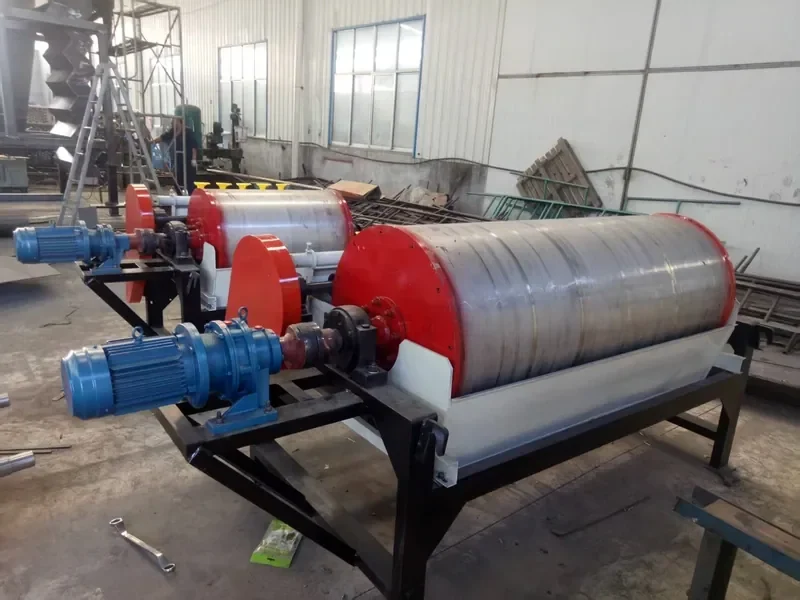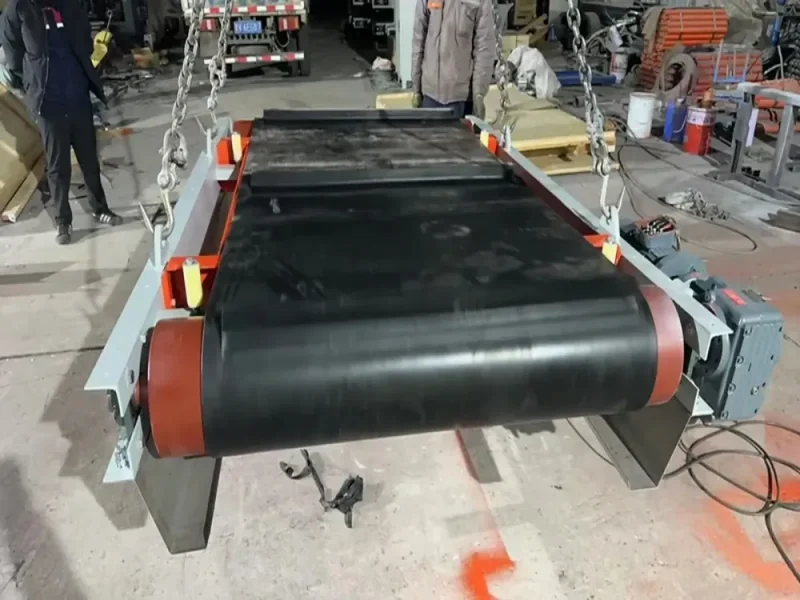
Quick answer: Neither permanent nor electromagnetic magnetic separators are automatically the better choice. Start with the actual operating conditions. If a permanent system can provide the required magnetic interaction at the real contaminant position and fits the cleaning, access, discharge, and installation conditions, adding electrical excitation may create unnecessary system complexity. If the application genuinely needs an energized magnetic system and the site can support its electrical, control, and thermal requirements, an electromagnetic option may be the better direction. If a missing project detail could change the decision, collect that information before selecting a specific configuration.
This comparison is most useful for suspended and overband magnetic separators, where both permanent and electromagnetic designs are used. The same decision logic can help with other separator types, but assumptions should not be transferred from one equipment architecture to another without checking the actual application.
Permanent vs Electromagnetic Separator: The Short Answer
Compare permanent and electromagnetic separators under the same operating conditions. Do not choose from the magnetic-source label or one headline magnetic value.
Which situation are you dealing with?
If you are choosing a separator for a new line, first compare the real working distance, material burden, target contaminant, cleaning requirement, utilities, and installation space.
If you are comparing two supplier quotations, make sure both proposals are based on the same operating conditions before comparing magnetic figures, equipment scope, or price.
If an existing separator is not removing iron as expected, do not assume the magnetic source type is the problem. First check whether burden depth, contaminant position, working distance, feed condition, cleaning, or installation has changed.
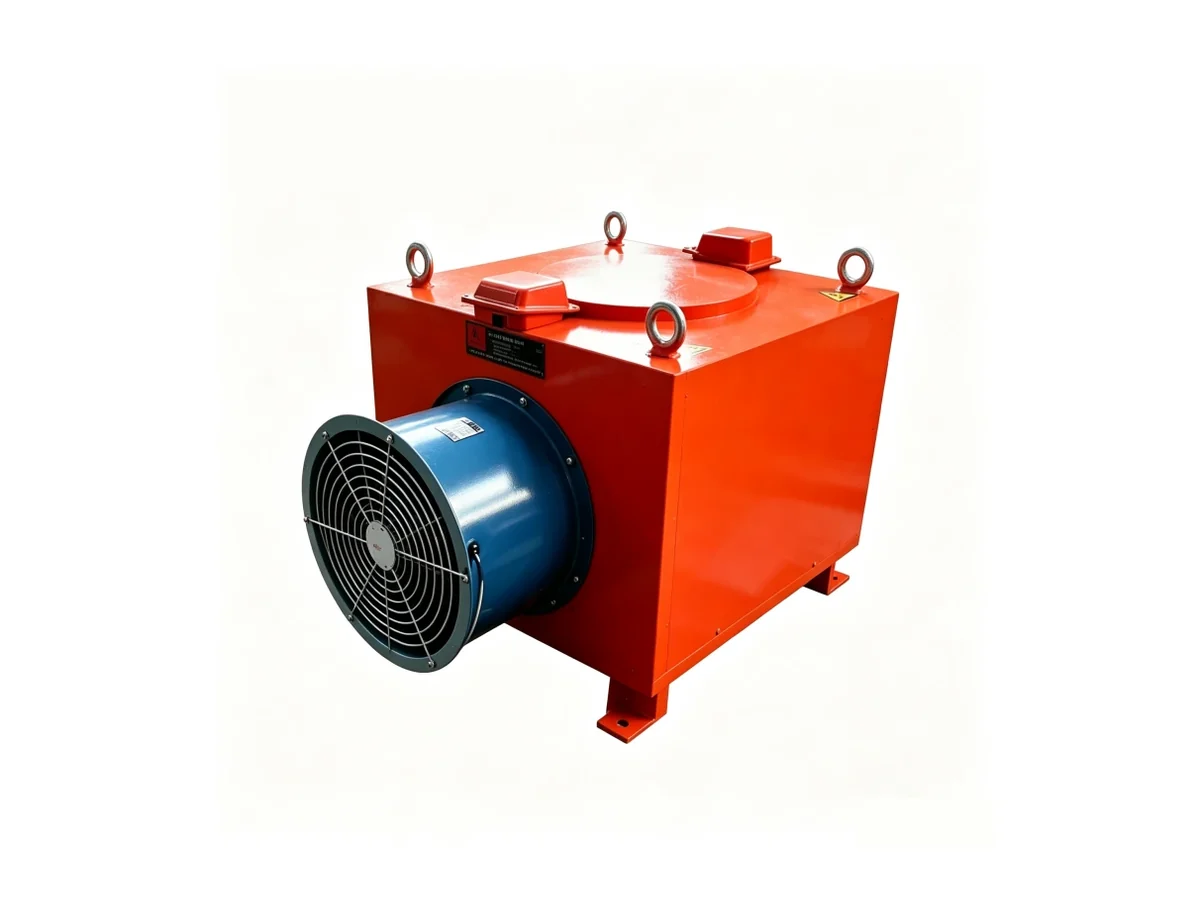
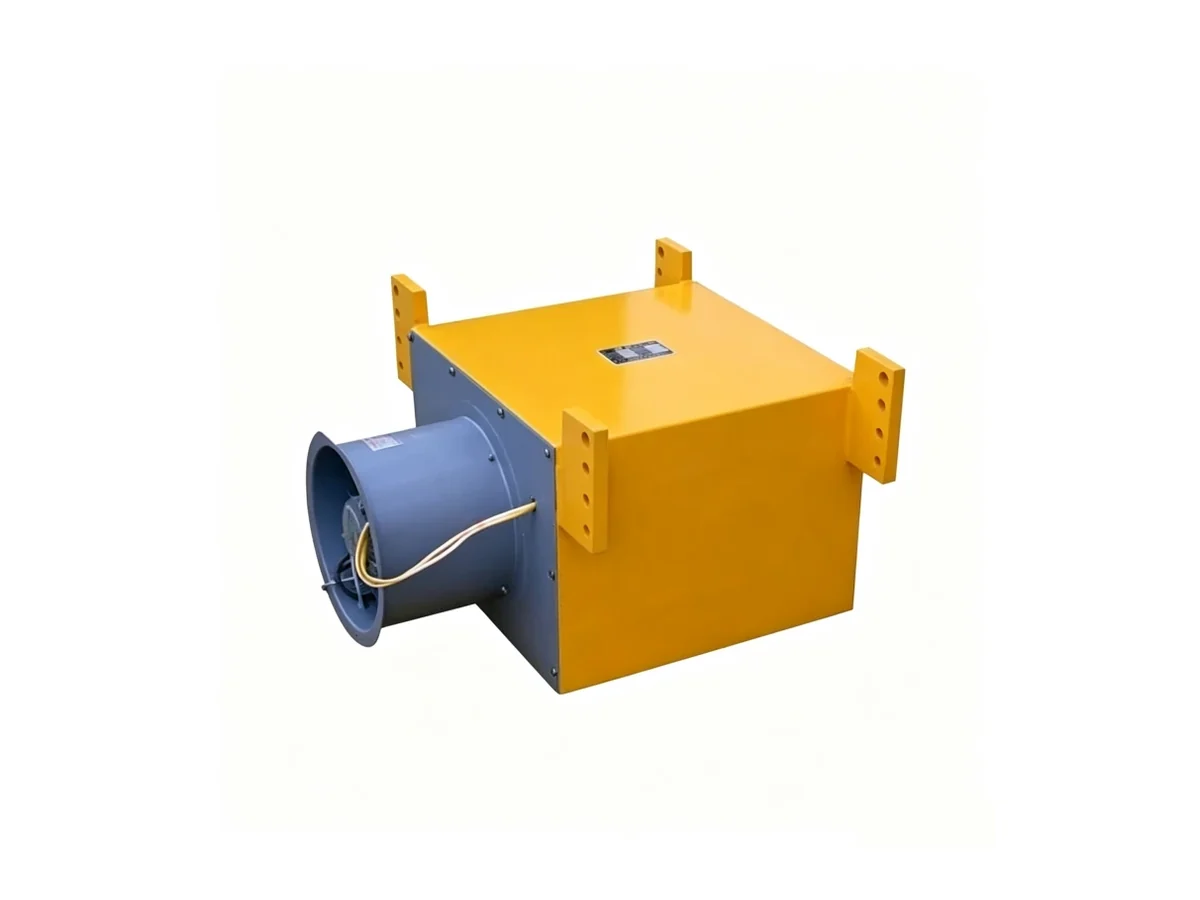
A permanent magnetic source produces its field without electrical excitation during normal operation. An electromagnetic source produces its field from an energized coil, so the installed system also depends on electrical supply and controls and, depending on the design, specific thermal-management requirements.

Before choosing between them, answer three questions:
- Can the proposed magnetic system act on the target ferrous contaminant at its real position in the material stream?
- Can captured metal be removed and discharged without creating an access, downtime, re-entry, or maintenance problem?
- Does the proposed configuration fit the site’s installation, electrical, control, environmental, and performance-check requirements?
If both options still satisfy those conditions, keep both on the shortlist until the supplier-specific configuration is compared.
Which option should stay on the shortlist?
| Your condition | Recommended direction |
|---|---|
| Stable operating conditions, workable distance, and no process need for an energized magnetic source | Keep the permanent option on the shortlist |
| The application requires an energized magnetic system and the site’s electrical/control/thermal requirements are compatible | Keep the electromagnetic option on the shortlist |
| Cleaning frequency or metal discharge is the main problem | Change the cleaning arrangement first; do not change magnetic source automatically |
| Supplier figures use different gaps, burden conditions, measurement points, or required results | Do not rank the offers yet |
| A project detail that could change the choice is unknown | Get the missing information before deciding |
Final sizing still depends on the material, contaminant, installation geometry, and the supplier’s actual magnetic design.
What Actually Changes Between Permanent and Electromagnetic Separators?
The main difference is how the magnetic field is produced. That difference affects the equipment package, but it does not by itself tell you which separator will work better in your process.
A permanent separator uses permanent magnetic material as the field source. An electromagnetic separator uses an energized coil. The electromagnetic option therefore adds electrical supply, controls, and design-specific thermal requirements. These differences can affect installation, shutdown behavior, maintenance planning, and site compatibility.
They do not automatically determine the cleaning method, the real working distance, or whether a specific piece of ferrous contamination will be removed from a specific material bed.
What the magnetic-source label does not tell you
The source type alone does not tell you the usable working distance, the amount of ferrous material that may be captured, how often the unit must be cleaned, or whether a particular contaminant will be removed from the bottom of a material bed.
Two separators can use different magnetic sources and still both remain reasonable for the same project. They can also use the same magnetic-source type and perform differently if their magnetic design, installation geometry, burden, or cleaning arrangement is different.
Example: an electromagnetic separator should not automatically be preferred just because the contaminant is difficult to remove. If the real problem is excessive mounting distance or unusually deep burden, define that geometry first and compare the proposed equipment at the actual target position. Changing the source label without correcting the comparison basis does not resolve the uncertainty.
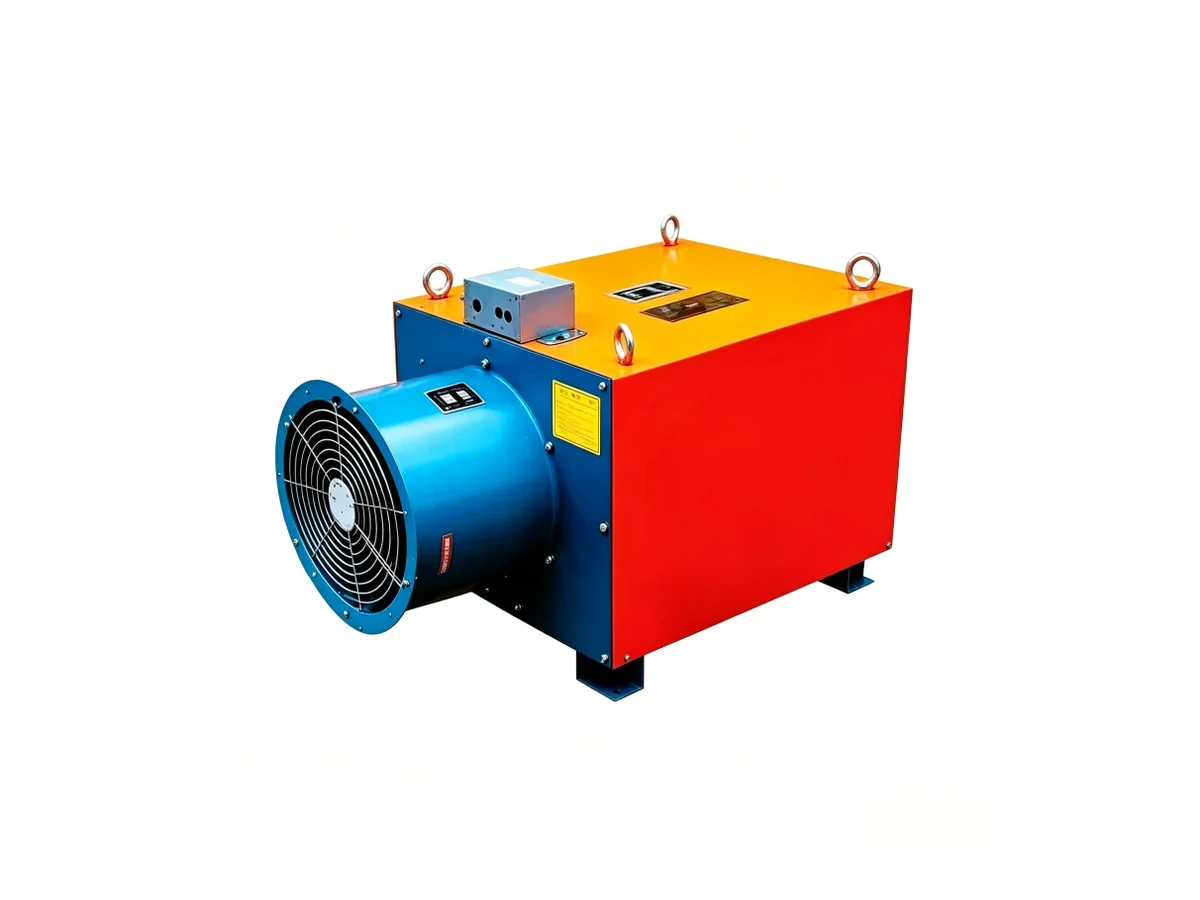
| What changes | Permanent magnetic source | Electromagnetic source | What to check |
|---|---|---|---|
| How the field is produced | Permanent magnetic material | Energized coil | Whether the quoted magnetic system suits the application |
| Electrical excitation | Not required for the magnetic field itself | Required while energized | Supply, controls, protection, and site compatibility |
| Thermal requirements | No coil excitation heat | Design-specific thermal requirements apply | Supplier requirements for the proposed configuration and environment |
| Field switching | Field is inherently present | Field can be switched by controlling coil power | Whether switching is actually useful in the process |
| Cleaning method | Manual/stationary or self-cleaning arrangements can exist | Manual/stationary or self-cleaning arrangements can exist | Captured-metal load, access, discharge, space, and cleaning interval |
| How performance is checked | Must be checked under the actual application conditions | Must be checked under the actual application conditions | Test object, location, method, condition, and required result |
Before you choose: treat the magnetic source, the cleaning arrangement, and the way performance will be checked as separate decisions. This prevents one equipment feature from being used as a shortcut for the whole selection.
Which Operating Conditions Can Change the Choice?
The choice can change when the real contaminant-to-magnet distance, burden depth, contaminant position, material presentation, operating variability, utilities, environment, or installation layout changes. These factors interact, so a decision that looks reasonable on a simplified drawing may fail once the real installation is considered.
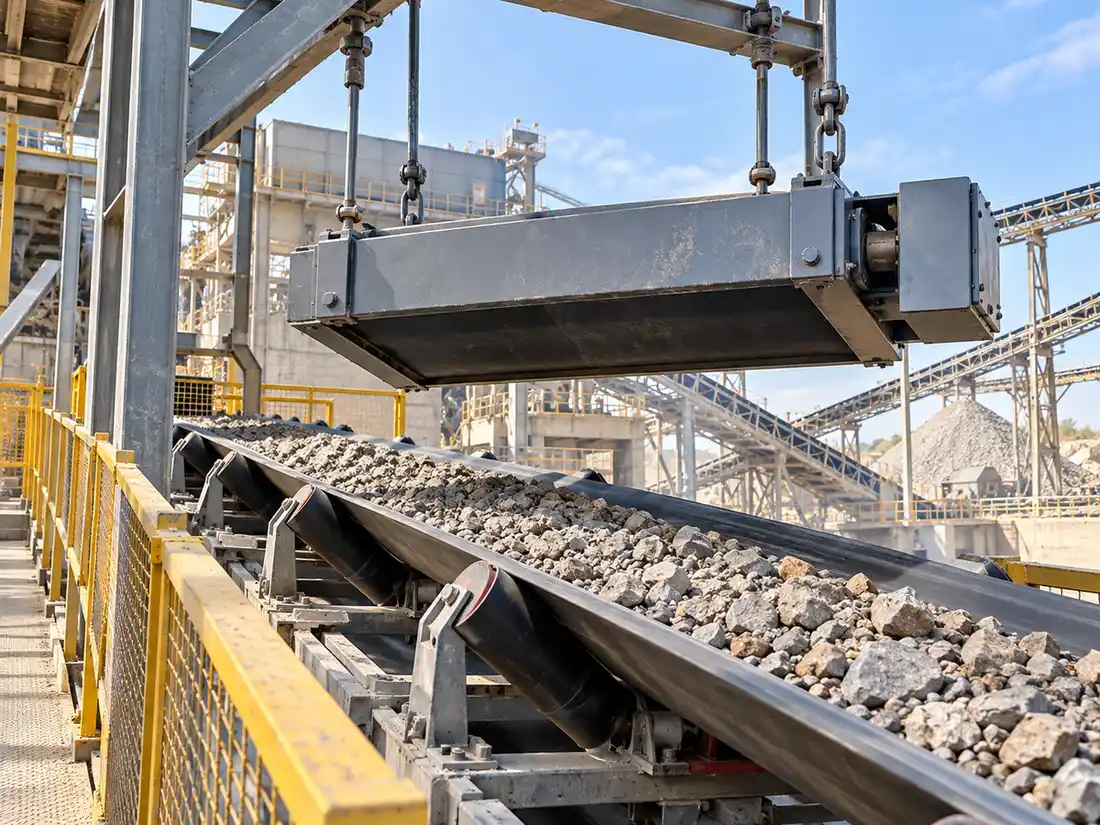
Real working distance is more than mounting height
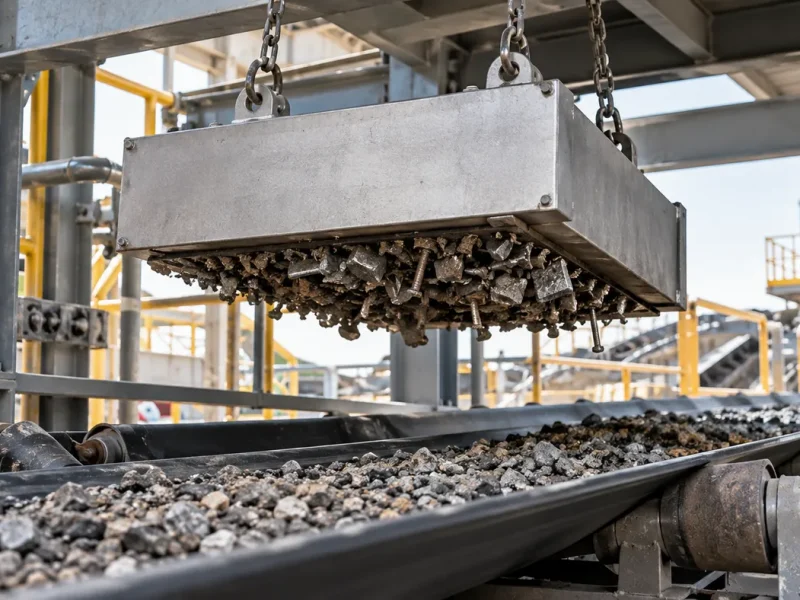
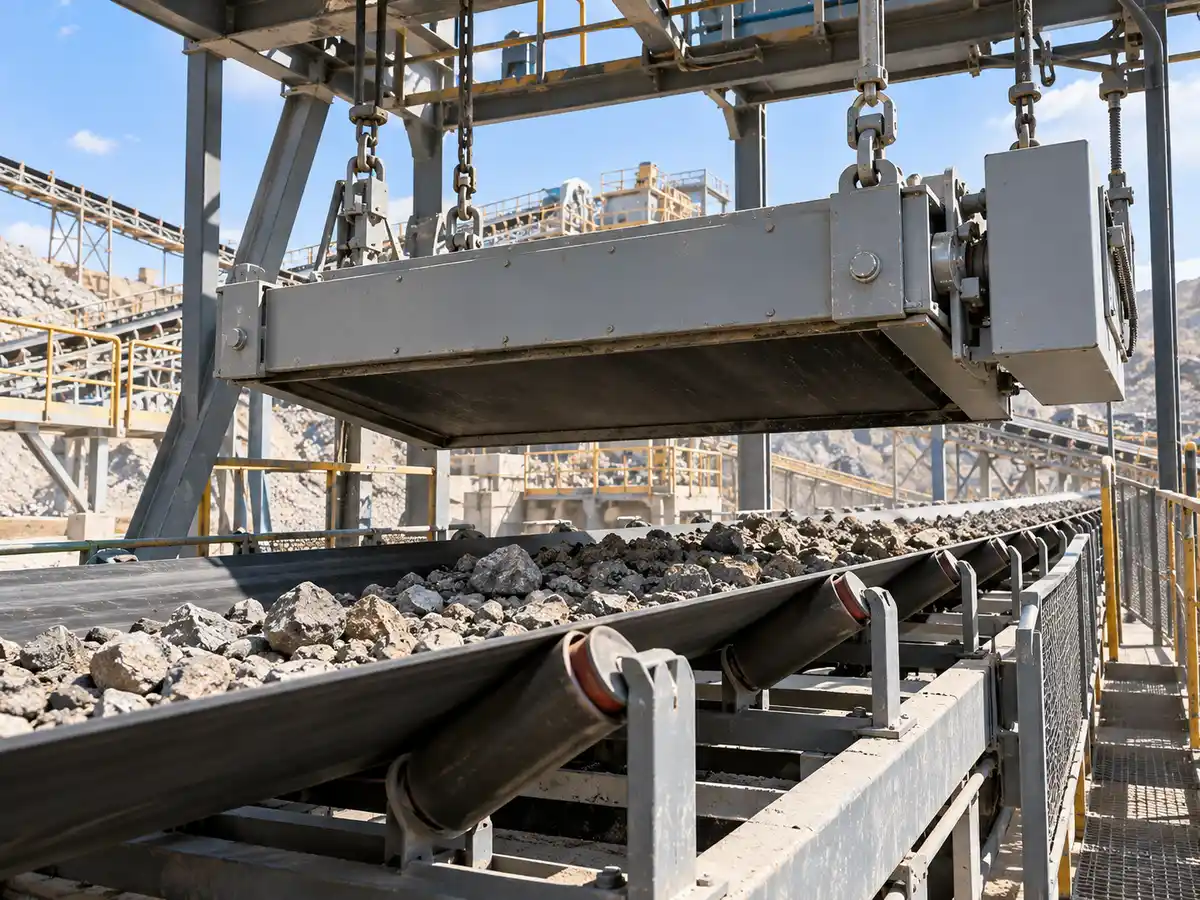
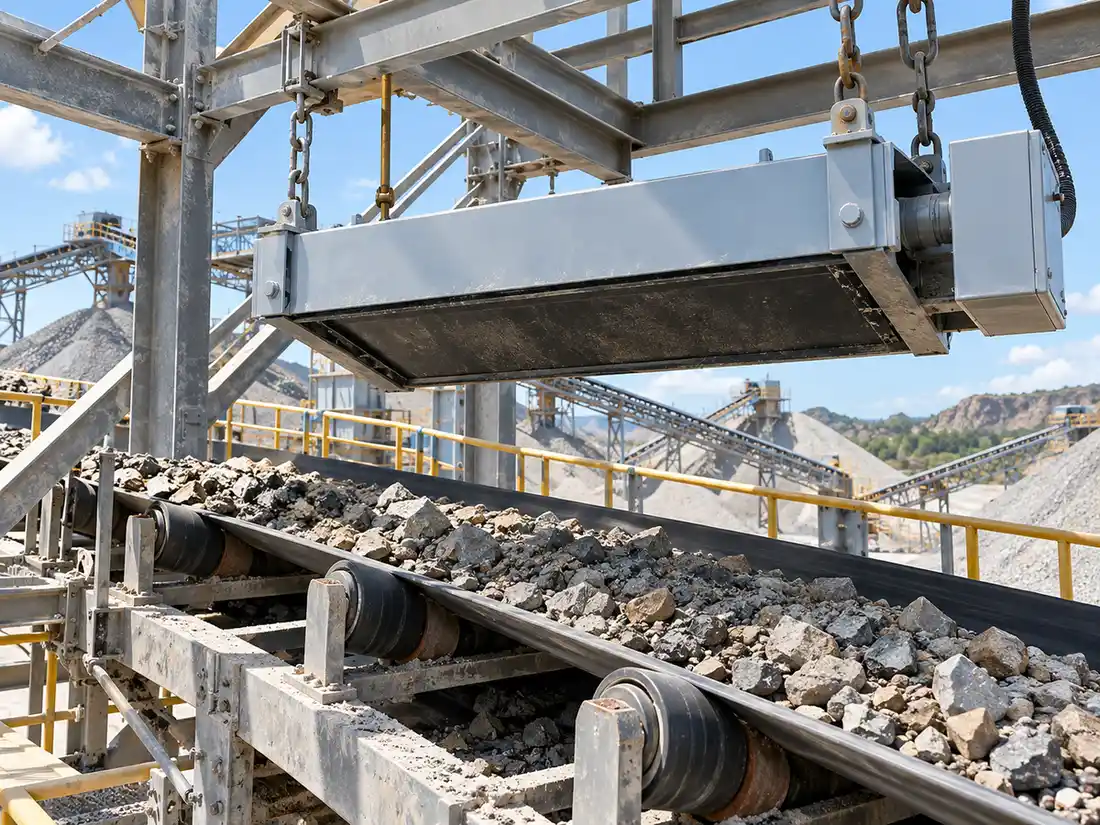
The important distance is the distance from the magnetic source to the target contaminant in the real process. The contaminant may be lower in the material bed, with belt thickness, liners, covers, structural clearance, material depth, or changing belt geometry between it and the separator.
Magnetic conditions at that contaminant position are not the same as at the separator face. A high surface Gauss value therefore does not, by itself, prove capture performance at a different working position.
For comparison, define the worst credible contaminant position and the full physical distance between that point and the magnetic source. If that distance is still uncertain enough to change the choice, keep both options open until the geometry is confirmed.
How to tell whether working distance is your real problem
Look at the contaminant position rather than only the empty gap above the material. If the target iron can sit near the bottom of the burden, include the material depth and every physical layer between that position and the magnet face.
If burden depth changes during production, check the hardest normal operating condition rather than one unusually shallow moment.
A useful warning sign is that removal appears satisfactory when the material layer is shallow but becomes less reliable when the burden is deeper. That does not by itself prove the magnet is undersized, but it is a strong reason to verify working distance and contaminant position before changing equipment type.

Burden depth and contaminant position matter
A shallow, stable material layer is not the same application as a deep or variable burden. The contaminant may travel near the surface in one process and much farther from the magnet in another. Conveyor speed, lump size, burden geometry, material flow behavior, and contaminant presentation can also change the separation condition and should be included in the equipment comparison.
Do not transfer a supplier’s “maximum suspension height” or headline magnetic value from one application to another without checking the conditions behind that figure. Ask both suppliers to work from the same normal and worst-case burden, belt conditions where relevant, contaminant definition, and installation geometry.
Do not assume that higher throughput is automatically the direct cause of poorer separation. Higher throughput matters when it changes burden depth, material presentation, belt speed, or the position of the target metal. If throughput increases while the contaminant-to-magnet relationship remains effectively unchanged, the effect can be different.
Field control matters only when the process needs it
Because an electromagnet depends on coil current, its field can be energized and de-energized through the electrical system. Any adjustable-field function beyond simple on/off operation is design-specific and should be confirmed for the proposed equipment.
If the process only needs a stable magnetic field, additional control functions may not improve the separation result. If the operating sequence genuinely requires energizing, de-energizing, or a supplier-defined field adjustment, that requirement can change the preferred option.
Site utilities and environment can rule out a configuration
An electromagnetic separator is part of an energized system. The proposed configuration may depend on power supply, controls, protection, and thermal-management provisions. Environmental or compliance requirements can also limit which configuration is acceptable unless the exact suitability is documented.
A permanent magnetic source removes the excitation-power requirement for the magnetic field itself, but it does not remove all equipment utilities or installation requirements. A self-cleaning permanent separator, for example, can still require a powered or hydraulic cleaning-belt drive.
Do not approve an electromagnetic configuration until its electrical, control, thermal, and environmental requirements fit the site. Do not approve a permanent configuration only because the magnetic field needs no excitation power; first confirm distance, burden, contaminant, cleaning, and discharge conditions.
What happens when difficult conditions occur together?
Single variables are useful for screening, but real projects often combine several difficult conditions. These combinations are more useful than asking whether one isolated parameter is “high” or “low.”
| Conditions occurring together | What changes | What you should check |
|---|---|---|
| Deep burden + contaminant near the bottom | The target is farther from the magnetic source than the visible material surface suggests | Use the bottom or hardest credible contaminant position when defining working distance |
| Deep or variable burden + changing feed rate | The hardest condition may occur only during peak operation | Record both normal and maximum burden rather than using one average value |
| Long working distance + small or awkwardly shaped contaminant | The application becomes more demanding even if the surface magnetic figure looks high | Define the actual contaminant and compare the proposed equipment at the real target position |
| High conveyor speed + difficult contaminant position | The available interaction time is reduced while the target is already difficult to reach | Include the real belt speed in the supplier comparison |
| Frequent tramp metal + manual cleaning + continuous production | Cleaning, access, and downtime can become the dominant issue | Compare a self-cleaning arrangement before automatically changing the magnetic source |
| Electromagnetic source + hot or dusty site + limited utility provision | Electrical and thermal requirements become part of equipment suitability | Confirm the proposed electrical, protection, and thermal arrangement for the actual environment |
How changing conditions affect the first choice
| If this changes | Why it matters | What it can change | What to check |
|---|---|---|---|
| Real working distance increases | Magnetic conditions change with position | A previously suitable option may no longer fit | Measure the full contaminant-to-magnet distance |
| Burden becomes deeper or more variable | Target metal may sit farther from the source | Required magnetic design may change | Record normal and maximum burden and likely contaminant position |
| Captured-metal load increases | Cleaning frequency and discharge capacity become more important | Cleaning arrangement may need to change | Estimate cleaning frequency, access, discharge, and continuity needs |
| The process needs electrical field switching | A conventional permanent magnetic source does not switch its field by controlling coil power | An electromagnetic option may become more relevant | Define the operating state and why switching is required |
| Electrical/control infrastructure is limited | Electromagnetic equipment depends on compatible infrastructure | A proposed electromagnetic configuration may be unsuitable | Confirm supply and control requirements |
| The environment has special equipment requirements | Construction, cooling, enclosure, or compliance needs may change | A configuration may need to be changed or documented differently | Define the environment and required documentation before approval |
| Discharge space or maintenance access is restricted | Captured metal still needs a safe exit path | Orientation or cleaning arrangement may change | Review access, discharge direction, and collection space |
Does Self-Cleaning Mean Electromagnetic?
No. Self-cleaning does not mean electromagnetic, and permanent does not mean manual cleaning. In suspended magnetic separation, both permanent and electromagnetic source types can be used with manual/stationary-cleaning or self-cleaning arrangements.
That means two decisions should be kept separate:
- Which magnetic source type still fits the application?
- How should the captured metal be removed?
| Magnetic source | Manual / stationary cleaning | Self-cleaning |
|---|---|---|
| Permanent | Possible in suspended equipment families | Possible in suspended equipment families |
| Electromagnetic | Possible in suspended equipment families | Possible in suspended equipment families |
This is a configuration principle, not a claim that every supplier offers every combination for every application. For a current industry example, Eriez lists both manual-clean and self-cleaning suspended permanent and suspended electromagnetic product families (permanent; electromagnetic).
Cleaning choice should reflect captured-metal load, access, cleaning interval, discharge path, available space, and the required operating continuity. Where tramp metal is infrequent and access is controlled, manual cleaning may remain reasonable. As captured-metal load rises, frequent manual cleaning can create access, labor, downtime, or re-entry problems, making a self-cleaning arrangement more attractive without changing the magnetic source type.

When does cleaning become the deciding factor?
The cleaning decision changes when metal load, downtime tolerance, access, and discharge space are considered together.
| Your situation | What it usually means for the comparison |
|---|---|
| Low tramp-metal load + safe planned stops + easy access | Manual cleaning can remain worth considering |
| Low metal load + difficult or unsafe access | Self-cleaning may still be preferable even though metal loading is low |
| Frequent tramp metal + continuous production | Self-cleaning becomes much more important |
| Frequent tramp metal + poor discharge space | A self-cleaning unit alone does not solve the problem; the discharge route must also work |
| Existing separator captures metal but metal accumulates or re-enters the product | Check cleaning and discharge before blaming the magnetic source |
Selection rule: if manual cleaning is unacceptable, reject the unsuitable cleaning arrangement—not the permanent magnetic source automatically. The same logic applies to electromagnetic equipment: a configuration-specific cleaning advantage does not prove that the magnetic source itself is the better choice for every application.
How Do You Compare Two Supplier Offers Fairly?
Compare two offers only after both suppliers use the same material, target contaminant, working distance, burden, cleaning scope, installation assumptions, and magnetic-measurement conditions. If those inputs differ, a larger magnetic number or lower price does not yet make one offer technically better value.
Use the same material and contaminant definition
Both suppliers should receive the same material description and the same definition of the ferrous contamination to be removed, including the relevant size, shape, expected position, and separation objective.
“Remove iron” is too vague. Protecting downstream machinery from large tramp steel is not the same requirement as removing smaller ferrous pieces from a deeper material bed.
Use the same geometry and burden
State the same conveyor width, belt speed where applicable, normal and maximum burden depth, mounting position, nominal clearance, maximum credible contaminant-to-magnet distance, and any physical layers between the magnet and the target metal.
If one offer is based on a shallow burden while another is based on a deeper worst case, comparing price or headline magnetic figures is misleading.
Use the same cleaning and discharge requirement
Specify whether the required arrangement is manual/stationary or self-cleaning, the expected tramp-metal load, available access, discharge direction, collection location, and any re-entry constraint.
A self-cleaning belt, drive, guards, support structure, and discharge arrangement can materially change the equipment package without changing the magnetic-source type.
Compare magnetic figures on the same measurement basis
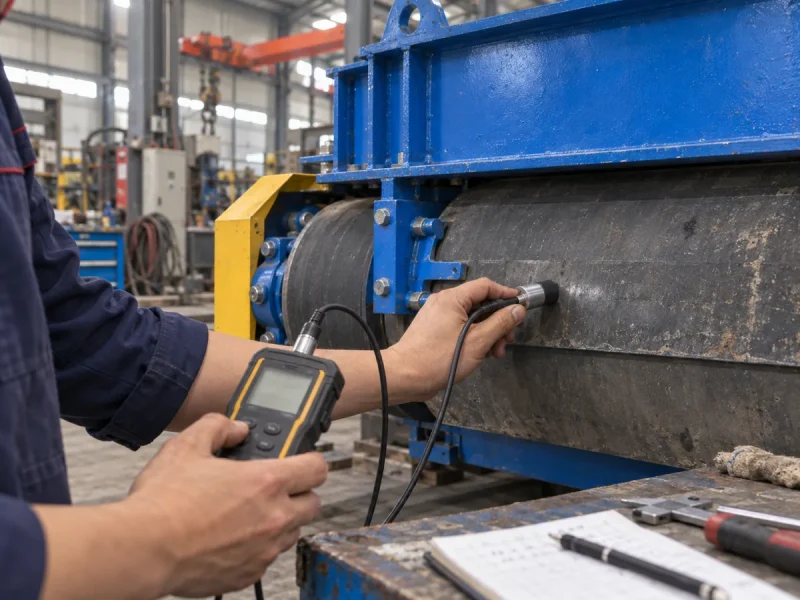
Do not compare “Gauss” as if it were a complete performance specification. Ask where the value is measured, the distance and operating condition, the probe or instrument, its orientation or method, and what the value is intended to demonstrate.
A high magnetic flux-density reading at one point does not prove the same result at the contaminant position. Hall-probe guidance from Lake Shore also notes that probe orientation, active area, position, and field gradient can affect the measurement (Hall-probe reference). Before ranking the figures, make sure the suppliers are measuring comparable conditions and that the required process result is defined separately.
Same Gauss does not mean the same operating result
Two quoted values can look similar on paper while being measured under different conditions. One may be taken close to the magnet face and another farther away; the probe orientation, active area, position, or operating condition may also differ.
Even identical numerical values do not establish identical pickup behavior at the contaminant position. The useful question is not “Which supplier has the larger Gauss number?” It is “At the same operating geometry, burden, contaminant definition, and measurement basis, what does each proposed separator demonstrate or guarantee?”
Normalize the supply scope before comparing price
A lower quoted price is not automatically a like-for-like lower price if one proposal excludes the cleaning belt, control package, cooling arrangement, support structure, discharge hardware, or other scope included in the other proposal.
Normalize the technical and supply scope first. Compare commercial value only after you know what each quotation actually includes.
Compare these supplier details
| Compare the same item | Why it matters | What to request |
|---|---|---|
| Material and bulk condition | Changes the way the burden presents the contaminant | Material description, bulk density where relevant, moisture/temperature if important |
| Target contaminant | Size, shape, magnetic response, and location affect the application | Representative contaminant definition |
| Throughput and material presentation | Changes burden and operating variability | Normal and maximum operating conditions |
| Real working distance | Mounting height may not equal the contaminant-to-magnet distance | Dimensioned installation basis |
| Cleaning arrangement | Changes package, access, drive, and discharge needs | Manual/stationary or self-cleaning scope |
| Utilities and controls | Electromagnetic equipment depends on the quoted electrical/control scope | Supply and control requirements |
| Environment | Can change acceptable construction and implementation | Ambient/process conditions and required compliance documentation |
| Magnetic measurement | Magnetic numbers are not comparable without the same conditions | Measurement location, distance, instrument/method, orientation, and operating state |
| Required process result | Equipment measurements are not automatically process performance | What must be achieved and how the result will be checked |
If a critical number is supplied without its conditions and measurement method, treat it as incomplete for comparison and ask for the missing basis.
When Should You Rule Out One Option?
Rule out a permanent or electromagnetic option only when a confirmed project condition shows that the proposed option cannot meet the requirement. If a missing input could still change the conclusion, get that information first.
This avoids two selection errors: removing a workable option too early, or approving one on assumptions that were never checked against the real installation.
Rule out the configuration for a specific reason
A useful rejection statement is specific:
The proposed configuration cannot meet the defined working-distance, installation, utility, cleaning, environmental, or required-result condition for this project.
Avoid universal statements such as “permanent magnets are weak” or “electromagnets are too complicated.” Those labels hide the actual project constraint.
If your existing separator is not working as expected, should you change the source type?
Not immediately. First identify what changed or what was never confirmed.
- If performance changes when the burden becomes deeper, check working distance and contaminant position.
- If captured metal builds up and later falls back, check cleaning frequency and discharge before changing the magnetic source.
- If the separator works on large exposed steel but misses smaller or deeply buried pieces, confirm whether the original selection requirement matches the current contaminant.
- If performance changed after a conveyor, liner, chute, or installation modification, recheck the physical distance and material path.
- If the machine never met the required result under the agreed conditions, compare the original selection basis and acceptance method with the real operating conditions.
Change the permanent/electromagnetic source decision only when the investigation shows that the current source or proposed magnetic design cannot satisfy the actual requirement.
Do not rule out an option because one supplier proposed it badly
A poor quotation does not prove that the entire equipment family is unsuitable. The proposed configuration may be wrong while another configuration using the same magnetic-source type could still be workable.
Rule out the source family only when the limiting condition is inherent to the option being considered. Otherwise, reject the proposal or configuration—not automatically the entire permanent or electromagnetic category.
Keep on shortlist, rule out, or get more information
| Decision | Use it when | Example | Next action |
|---|---|---|---|
| Keep on shortlist | No confirmed project condition eliminates the option | The proposed source type still fits the known operating and site conditions | Continue to supplier-specific configuration and sizing |
| Rule out | A confirmed requirement conflicts with the proposed option or configuration | Site infrastructure cannot support the quoted electromagnetic package, or the required performance cannot be demonstrated at the stated geometry | Evaluate the other option or change the project condition |
| Need more information | A missing project detail could change the choice | Worst-case burden, actual distance, contaminant definition, utility scope, or required result is unknown | Measure or confirm the missing input, then compare again |
Sometimes neither option should be ruled out because the comparison itself is not yet fair. Typical problems include different Gauss measurement locations, different burden depths, different cleaning packages, different electrical scope, different contaminant definitions, or an unconfirmed installation distance. Align those assumptions first, then make the technical and commercial comparison.
What Information Should You Send Before Requesting a Recommendation?
For a preliminary recommendation, send the project details that can genuinely change the permanent-vs-electromagnetic choice. A product keyword and conveyor width alone are not enough.
Start with the information that can change the decision
Must know before a useful comparison
- Material: what is being processed and how it is presented.
- Target ferrous contaminant: relevant size, shape, frequency, and likely position.
- Conveyor or process geometry: where the separator could be installed.
- Approximate burden: normal depth and, if known, the maximum operating condition.
- Approximate real working distance: from the magnetic source to the hardest credible target position.
- Cleaning requirement: whether planned stops are acceptable or continuous discharge is needed.
Strongly useful
- Throughput and belt speed where relevant.
- Maximum burden and operating variability.
- Available electrical supply and control requirements.
- Ambient temperature, dust, moisture, washdown, or other environmental conditions that may affect the equipment package.
- A conveyor photo, installation drawing, or process sketch.
- Expected tramp-metal load, discharge direction, and collection space.
Can be confirmed during the next engineering step
- Exact support and mounting details.
- Final discharge arrangement and guarding.
- Detailed controls and electrical interface.
- Formal acceptance-test method and pass/fail rule.
- Final project documentation and inspection requirements.
You do not need every number before contacting us. If a missing value could materially change the permanent-vs-electromagnetic decision, we will identify it as a project input that needs to be measured or confirmed before final configuration selection.
If a project detail is unknown, mark it as unknown rather than guessing. If it could change the selection, measure or confirm it before moving to a specific configuration.
For example, if maximum burden depth is unknown, send the normal operating condition, a conveyor photo, and mark the maximum as unconfirmed. That is more useful than supplying an estimated number that later becomes the basis for equipment selection.
Send us your material and process details, plus a drawing or process sketch where available. We can then compare the permanent and electromagnetic options against the same operating conditions before the discussion moves to a specific configuration.
FAQ: Permanent vs Electromagnetic Magnetic Separators
Is an electromagnetic separator always stronger than a permanent separator?
No. “Electromagnetic” describes how the field is produced, not a universal performance ranking. The actual result depends on the magnetic design, working distance, burden, target contaminant, process geometry, and measurement conditions.
Does a permanent separator always require manual cleaning?
No. In suspended magnetic separation, permanent systems can use manual/stationary-cleaning or self-cleaning arrangements. Choose the cleaning method from the captured-metal load, access, cleaning interval, discharge path, available space, and operating requirements.
Does an electromagnetic separator always need continuous power?
It requires electrical excitation while its electromagnetic field is energized. The operating sequence, duty cycle, controls, and thermal requirements depend on the specific configuration and should be confirmed for the proposed equipment.
Should I compare Gauss ratings directly?
Only when the measurement conditions are genuinely comparable. Ask for the measurement point, distance, operating state, probe/instrument, orientation or method, and the purpose of the value. A larger number measured under different conditions does not establish better separation at the target contaminant position.
What information matters most when requesting a recommendation?
Start with the material, target contaminant, throughput and burden, real working distance, installation geometry, cleaning/discharge requirement, site utilities and environment, and the required process result. If one of those details could change the choice and is unknown, confirm it before selecting a specific configuration.
Can permanent and electromagnetic separators both be suitable for the same application?
Yes. At the first comparison stage, both can remain reasonable if neither is eliminated by working distance, material conditions, cleaning requirements, utilities, installation limits, or the required result. The final choice should then be based on the actual proposed configurations rather than the magnetic-source label alone.
If my current separator misses iron, does that mean I need an electromagnet?
No. First check where the missed iron is located, burden depth, working distance, conveyor condition, contaminant size and shape, and whether captured metal is being cleaned and discharged correctly. Change the magnetic-source type only when the actual limitation has been identified.
Compare Relevant Product Families
Use the magnetic source type as a starting point, then compare the actual duty, working distance, cleaning arrangement, utilities and installation space. These published products are examples to review; the suitable configuration depends on your application.
- Suspended Permanent Magnet Separator
- Overband Suspended Permanent Magnet Separator
- Self-Cleaning Cross-Belt Electromagnetic Separator
For a project-specific comparison, send your material, target contaminant, burden or flow conditions, working distance, cleaning requirement and installation constraints through the magnetic separator requirement form.