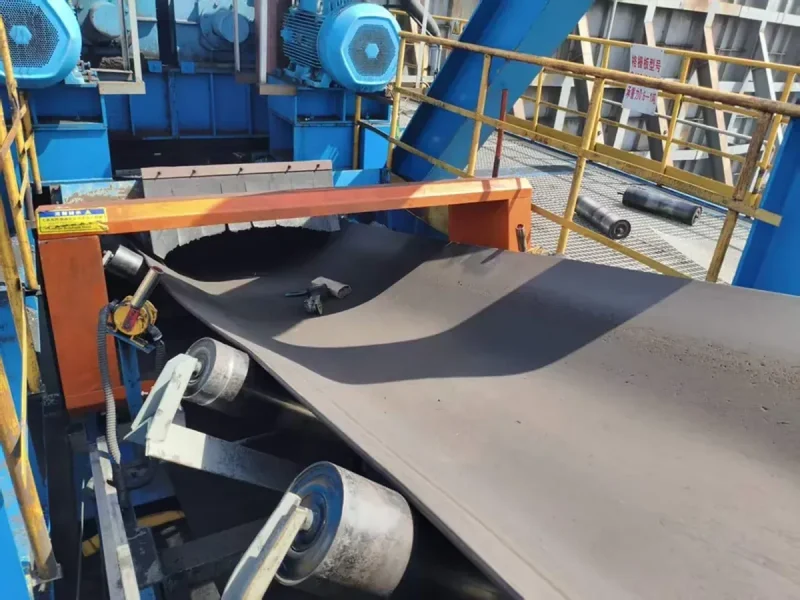
Quick answer
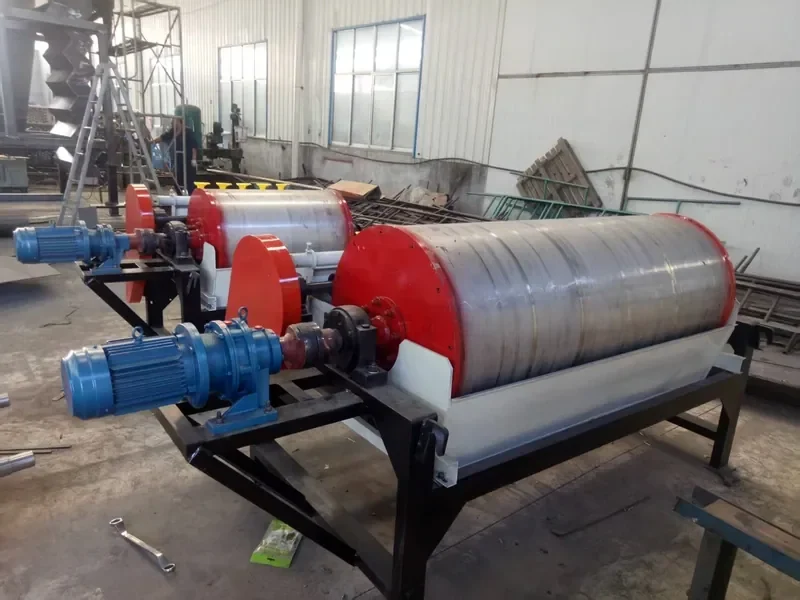
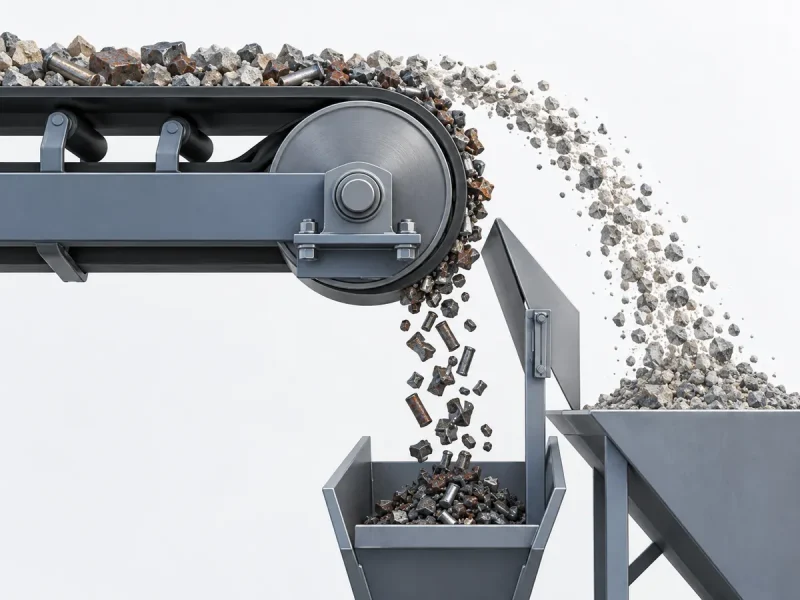
If the valuable iron is mainly liberated magnetite, start with low-intensity magnetic separation. Choose a dry magnetic separator when the feed is dry, free-flowing, and you want to reject gangue before fine grinding. Choose a wet drum magnetic separator when liberated magnetite is already in slurry, especially after grinding and classification for recovery, roughing, or cleaning.
If hematite, limonite, goethite, siderite, or another weakly magnetic iron mineral carries an important share of the value, do not expect one conventional low-intensity drum to recover everything. Recover the strongly magnetic fraction where appropriate, then decide whether the remaining weakly magnetic iron needs a higher-intensity separator or another beneficiation method.
To choose the right separator, send us your iron mineral, particle size, whether the feed is dry or slurry, normal and peak capacity, and what you want to recover or reject. We can then tell you whether to start with a dry drum, wet drum, higher-intensity separator, or another process step.
If you are not sure which case matches your ore, start with three questions: Is the valuable iron mainly magnetite or a weaker magnetic mineral? Is it sufficiently freed from gangue at the feed size? Is the separator receiving dry material or slurry? Those three answers eliminate most wrong starting choices.
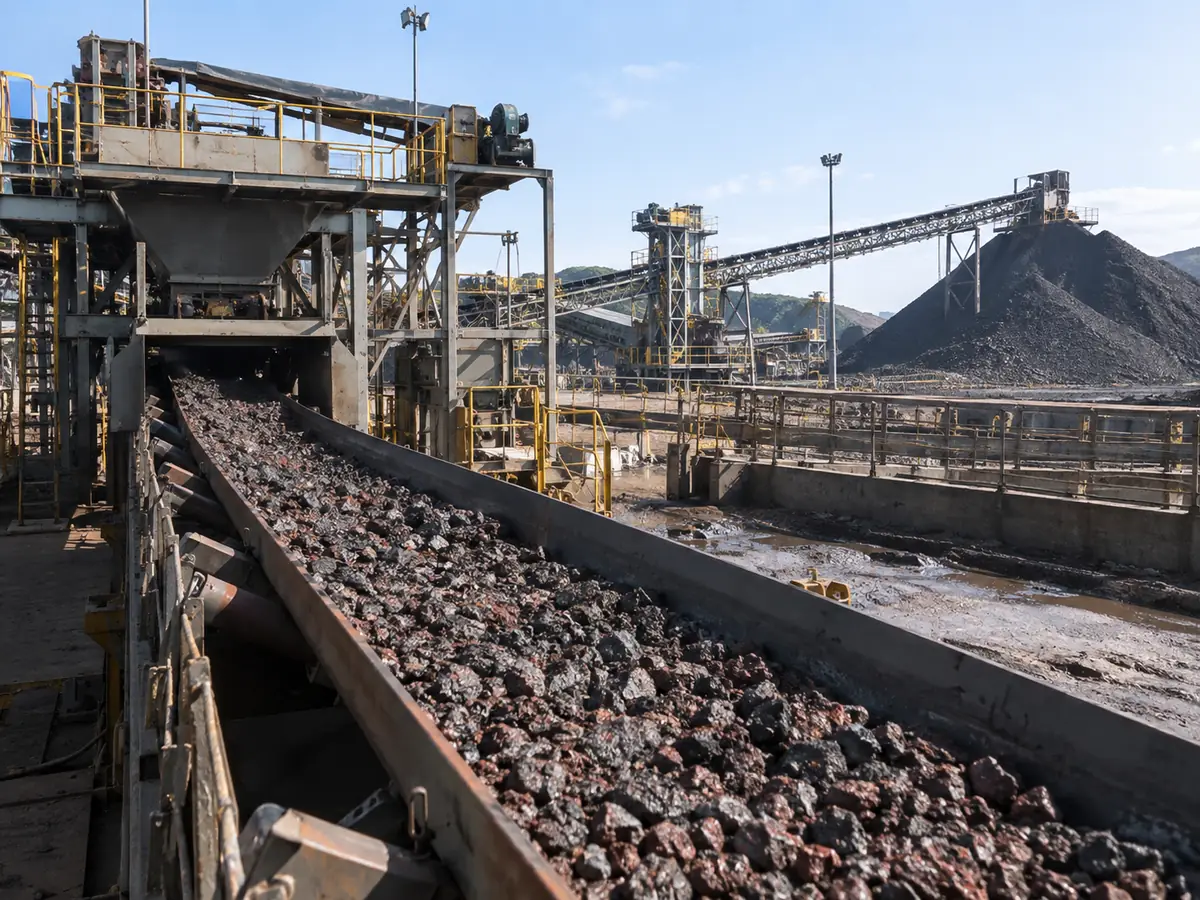
Which Magnetic Separator Should You Use for Your Iron Ore?
The first question is not “How many Gauss do I need?” Start with which iron mineral carries the value, how well that mineral is freed from gangue, and whether the feed reaches the separator dry or as slurry. Those points tell us which separator type to look at first.
| Your Iron Ore / Feed Condition | We Recommend First | Do Not Choose First | Why |
|---|---|---|---|
| Magnetite-dominant, sufficiently liberated, dry and free-flowing | Dry low-intensity magnetic separation for pre-concentration | Do not start with wet equipment unless the plant already handles the material as slurry | Strongly magnetic magnetite can be recovered before finer grinding when the dry feed layer is stable. |
| Ground magnetite slurry after grinding or classification | Wet drum magnetic separation | Do not choose the drum from dry solids t/h alone | We also need slurry flow, solids concentration, particle size, and how much magnetic material the drum must carry. |
| Magnetite rougher concentrate that needs cleaning | Wet drum for concentrate cleaning | Do not assume the rougher setting is also right for cleaning | Cleaning puts more emphasis on concentrate quality and keeping non-magnetic material out of the product. |
| Mixed magnetite + hematite or other weakly magnetic iron | Recover strongly magnetic iron first, then treat the remaining weakly magnetic iron separately if it is worth recovering | Do not expect one conventional drum to recover both mineral groups equally well | The minerals respond differently to a magnetic field and may need different equipment. |
| Hematite-, limonite-, goethite-, or siderite-dominant feed | Start with a higher-intensity / higher-gradient option or another suitable beneficiation method | Do not make a standard low-intensity permanent drum the main separator | These minerals respond much less strongly than magnetite under low-intensity separation. |
| Magnetite is still locked with gangue | Improve or check liberation first | Do not simply increase magnetic strength | A magnetic separator cannot free iron that is still physically locked inside a composite particle. |
Choose the separator type from the mineral and feed condition first. Then use capacity, particle size, available space, inlet and outlet arrangement, and the required result to choose the machine size and layout.
How to Know Which Case Matches Your Ore
You do not need every laboratory result before the first equipment discussion, but you do need to know what each piece of information can and cannot tell you.
| What You Know | What It Tells You | What It Does Not Tell You |
|---|---|---|
| Total Fe grade | How much total iron is present | Whether the iron is mainly magnetite, hematite, another mineral, or still locked with gangue |
| Mineralogy | Which iron-bearing minerals are present | Whether those minerals are sufficiently freed from gangue at the planned feed size |
| Particle size | The size entering the separator | Whether the valuable iron is actually liberated at that size |
| Dry solids t/h | The solids load | For wet separation, it does not tell you slurry flow through the tank |
| Slurry m³/h | How much slurry must pass through the wet separator | How much of that slurry is magnetic material |
| Gauss reading | Magnetic flux density at the measurement point | Recovery, concentrate grade, or whether the feed is well liberated |
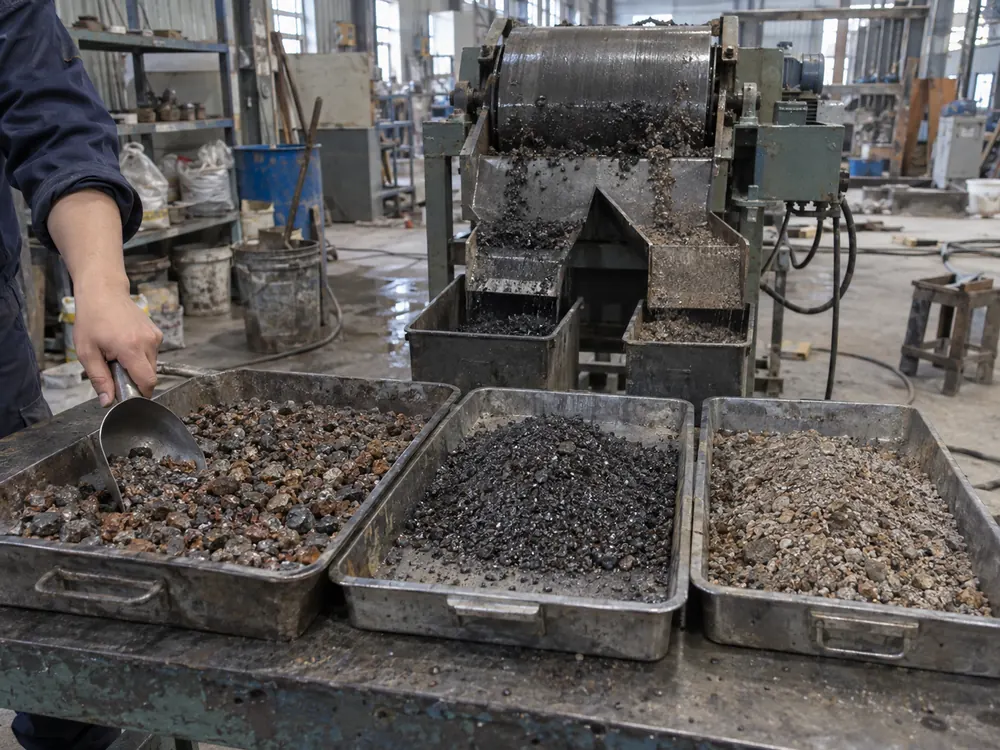
Magnetite, Hematite, or Mixed Ore: What We Recommend
When magnetite carries most of the recoverable value
We start with low-intensity magnetic separation when magnetite is the main valuable iron mineral and it is sufficiently freed from gangue at the planned feed size. If the material is dry and stable, start with dry pre-concentration. If it is ground and already in slurry, start with a wet drum.
If the tailings still contain important iron after the magnetite is recovered, do not automatically specify a stronger magnet. First check whether the remaining iron is weakly magnetic, still locked with gangue, or simply being lost because the feed is too heavy or the slurry is moving through the drum poorly.
When magnetite and hematite both matter
For mixed magnetite and hematite ore, do not expect one separator to recover both minerals equally well. Recover the strongly magnetic magnetite first. If the remaining hematite or other weakly magnetic iron is worth recovering, use a second higher-intensity step or another suitable beneficiation method.
When hematite or another weakly magnetic iron mineral dominates
We do not recommend a standard low-intensity drum as the main separator for hematite-dominant, limonite-dominant, goethite-dominant, or siderite-dominant feed. Check the mineral and how well it is freed from gangue, then look at higher-intensity / higher-gradient separation or another beneficiation method.
If you only know the total Fe grade but do not know whether the iron is mainly magnetite, hematite, or another mineral, do not choose the separator yet. Send the mineralogy or representative sample information first.
What Changes When More Than One Problem Appears?
| Combined Condition | What Usually Happens | How to Recognize It | What to Do Next |
|---|---|---|---|
| Magnetite + poor liberation | The magnet can recover magnetite, but locked gangue can follow it into the concentrate. | Recovery may look acceptable while concentrate grade stays lower than expected; composite particles may remain in the feed or concentrate. | Check grinding, classification, or liberation before increasing magnetic strength. |
| Magnetite + good liberation + low recovery | The problem is less likely to be liberation and more likely to be feed loading, distribution, slurry flow, or how much magnetic material the drum must carry. | Magnetite is visibly or analytically liberated, but magnetic iron still reports to tailings. | Check throughput, feed distribution, slurry condition, usable drum width, and magnetic load before changing the magnetic system. |
| Mixed magnetite + hematite + poor liberation | Adding a second magnetic separator may still leave both iron minerals locked with gangue. | Both strong- and weak-response iron remain in composite particles. | Check whether finer grinding or better classification is needed before separating the strong- and weak-response fractions. |
| Hematite-dominant ore + useful magnetite fraction | A low-intensity step can still recover the magnetite even though it is not the main iron mineral. | Mineralogy shows a meaningful magnetite fraction plus a larger weakly magnetic fraction. | Recover the strongly magnetic fraction first, then treat the remaining weakly magnetic iron separately if it is worth recovering. |
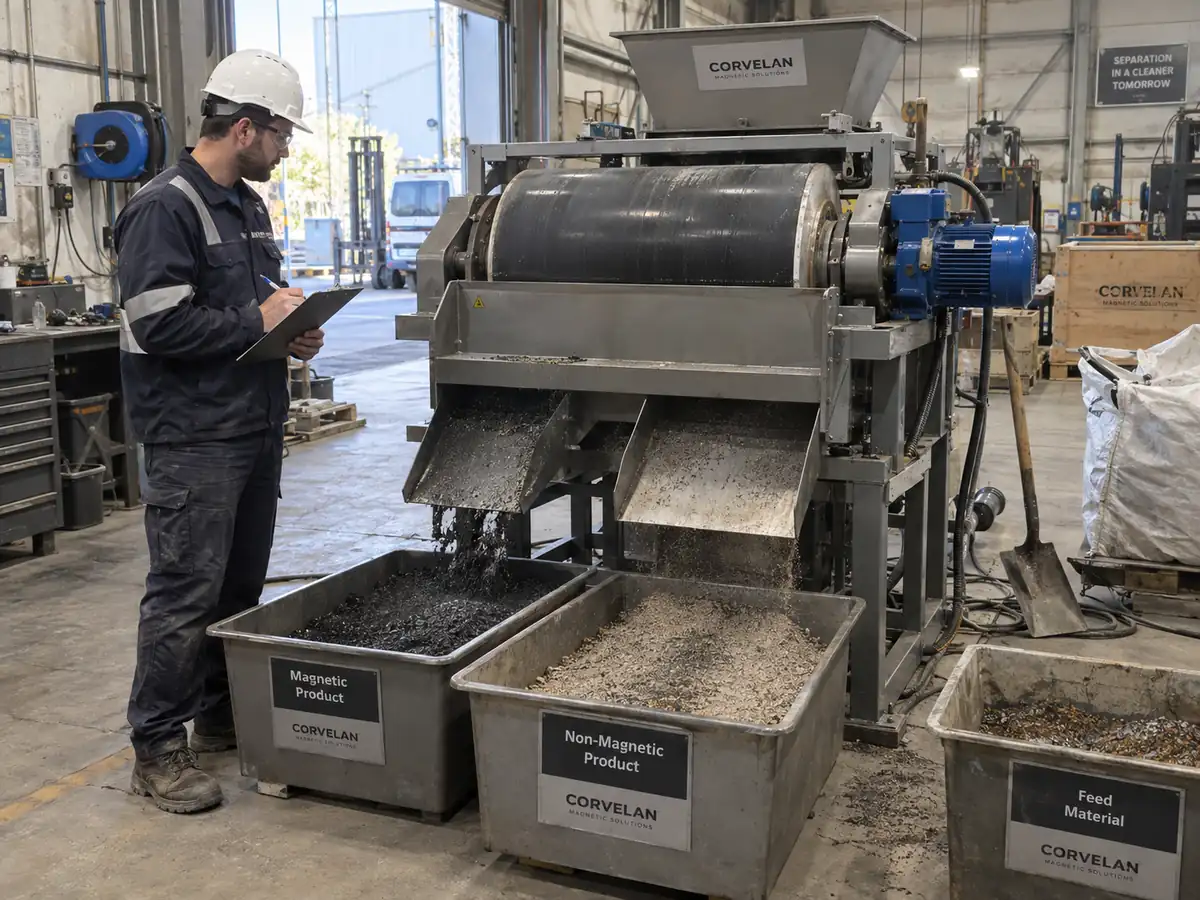
Where Magnetic Separation Fits in the Iron Ore Process
The correct installation point depends on what you need to achieve there: early waste rejection, magnetite recovery, concentrate cleaning, or recovery from tailings.
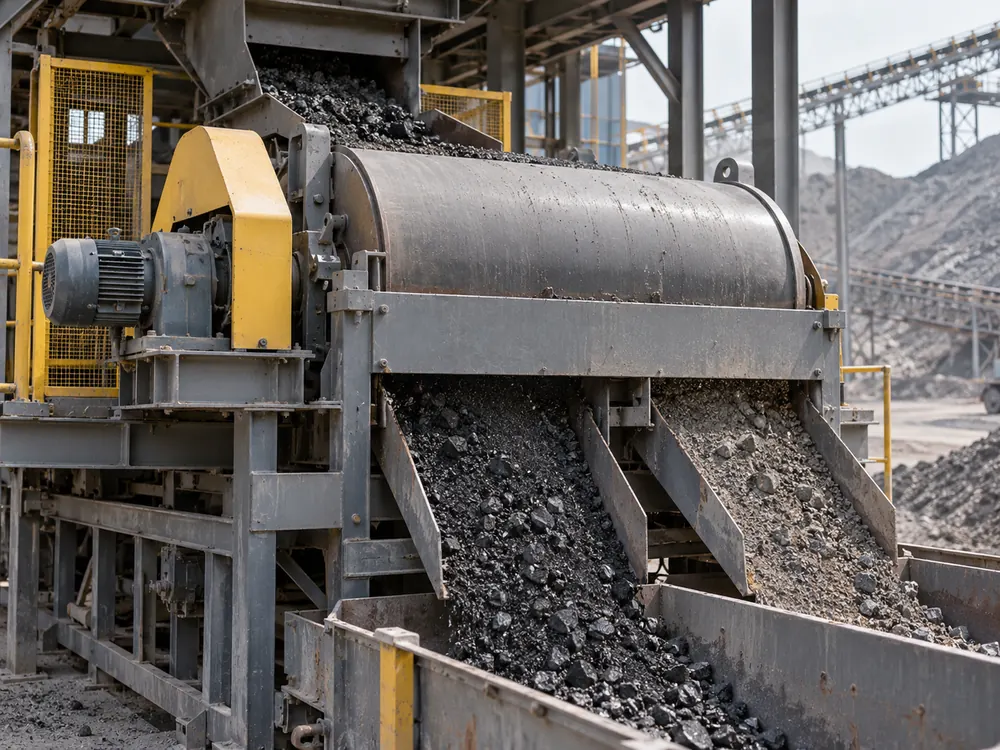
For pre-concentration, early waste rejection and lower downstream grinding load matter. For roughing, recovery usually matters most. For cleaning, concentrate quality becomes more important. For scavenging, the question is whether enough valuable magnetic material is still being lost to justify another step.
A dry pre-concentration separator should not be compared directly with a wet drum used for concentrate cleaning. They handle different feed conditions and have different targets.
Why the Same Ore Can Need Different Magnetic Separators at Different Points
Moving the separator to another part of the plant changes more than its location. The feed size, water content, magnetic concentration, and required result can all change.
| Where It Is Used | What Changes | What Matters Most |
|---|---|---|
| Dry pre-concentration | Feed is usually coarser and dry; the goal is early waste rejection. | Free-flowing feed, controlled burden depth, feed width, and whether useful magnetite is already sufficiently liberated. |
| Wet roughing | Feed is ground slurry and the main task is magnetite recovery. | Slurry flow, solids load, particle size, magnetic material in the feed, and even distribution. |
| Cleaning | The feed is already richer in magnetic material than the rougher feed. | Concentrate quality, non-magnetic carryover, and how much magnetic product the drum must carry. |
| Scavenging | The feed is tailings from an earlier separation step. | Whether the remaining iron is liberated magnetite, locked iron, or a weakly magnetic mineral. |
A cleaner can have lower total throughput than a rougher and still carry a heavier magnetic load. If a much larger share of the cleaner feed is magnetic, the drum may need substantial working area even at a lower total t/h.
Dry vs Wet Magnetic Separation for Iron Ore
| Condition | Choose Dry When | Choose Wet When | Do Not Ignore |
|---|---|---|---|
| Feed state | Material is dry or nearly dry and remains free-flowing | Material is already slurry or will be ground/classified in water | Moisture, sticking, settling, and slurry density |
| Where it is normally used | Before fine grinding, often for pre-concentration | After grinding/classification, often for recovery or cleaning | Different parts of the plant may need different separator types |
| Feed presentation | Burden depth and feed width can be controlled | Slurry can be spread evenly across the drum and tank | Uneven feed wastes part of the working area |
| Information we need | Dry t/h, particle-size distribution, moisture, burden depth, feed width | Slurry m³/h, solids %, dry solids t/h, particle-size distribution, magnetic material in the feed | Nominal t/h alone is not enough for a wet drum |
| When not to choose it yet | Do not finalize dry selection if moisture or flow behavior prevents stable feeding | Do not choose the final wet drum size until slurry flow and solids concentration are known | Stabilize the feed before blaming the magnet |
Use dry magnetic separation when the feed stays free-flowing
We recommend a dry magnetic separator when the ore is dry, free-flowing, and the goal is early gangue rejection or recovery of a strongly magnetic fraction before finer grinding. The machine must receive a reasonably even material layer. Large changes in moisture or burden depth can change the result even when the magnetic system has not changed.
Use wet magnetic separation when the process is already slurry-based
We recommend a wet drum when liberated magnetite is processed as slurry, especially after grinding or classification. For wet selection, we need more than a solids t/h figure. We also need slurry flow, solids concentration, particle size, feed distribution, and how much magnetic material the drum must carry.
If slurry flow, solids concentration, particle size, or magnetic content changes significantly, send us the new conditions before using the old separator size again.
Cases Where “Dry or Wet” Is Not Obvious
| Situation | What Changes | What We Recommend |
|---|---|---|
| Material is called “dry” but surface moisture makes it sticky | Particles can form lumps or an uneven burden even without free water. | Fix or define the feed condition first. A nominally dry material is not automatically a good dry-separation feed. |
| Very fine dry material | Dust, cohesion, and unstable thin-layer feeding can become more important than magnetic strength. | Check whether the material can still be spread evenly before choosing a dry drum. |
| Plant water is limited | Dry separation becomes attractive from a plant-utility point of view. | Use dry separation only if the ore is also free-flowing and can be presented consistently. Water availability alone should not force the wrong separator. |
| The ore is already ground and transported as slurry | Using a dry separator would require changing how the material is handled before separation. | Start with wet separation unless there is a clear process reason to dry and re-handle the material. |
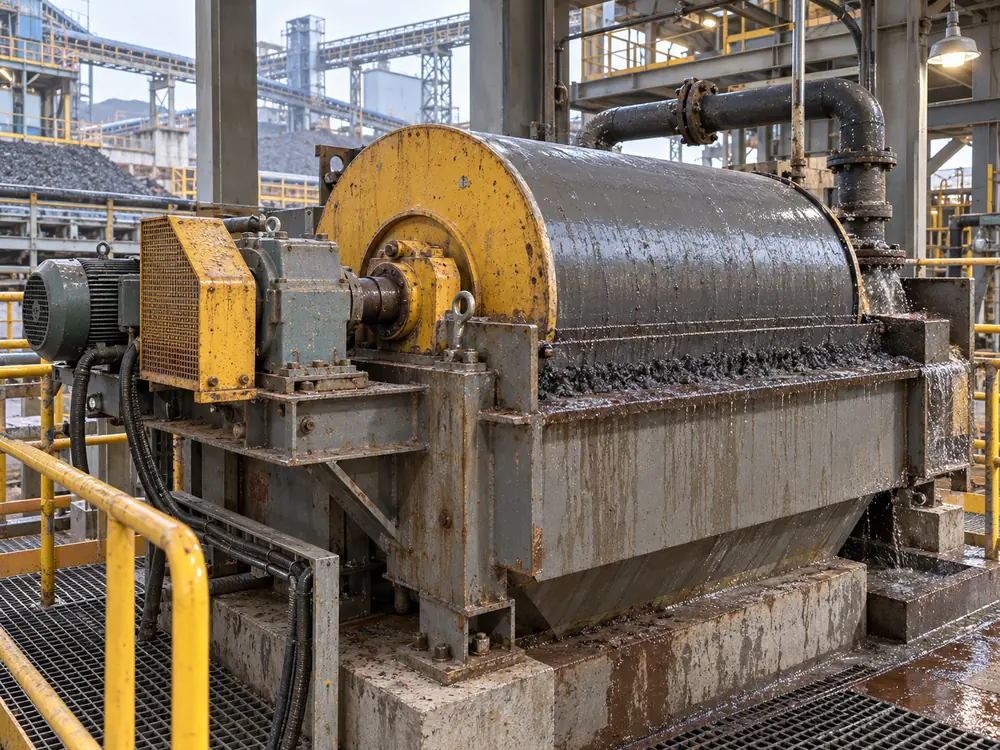
What to Send Us for Wet Drum Magnetic Separator Selection
Two wet drum projects with the same dry solids t/h can still need different equipment. Send the data below so we can see how much slurry and magnetic material the drum must handle.
| Send Us | What to Include | Why It Changes the Separator |
|---|---|---|
| Slurry flow | Normal and peak m³/h | Shows how much slurry must pass through the tank and working area. |
| Solids concentration | Normal wt.% solids and known range | Changes how much water and solid material pass through the drum at the same solids t/h. |
| Dry solids throughput | Normal and peak t/h | Shows the real solids load. |
| Magnetic material in the feed | Estimated magnetic % or available magnetic-response information | Shows how much magnetic product the drum must carry and discharge. |
| Particle-size distribution (PSD) | Top size plus the normal size range | Changes particle movement, capture, carrying, and discharge behavior. |
| How well magnetite is freed from gangue | Liberation or mineralogical information if available | Poor liberation can pull gangue into the magnetic product even when the magnetite is recovered. |
| What you need from the drum | Recovery, cleaner concentrate, lower tailings loss, or another clear target | Tells us whether recovery, concentrate quality, or low tailings loss matters most. |
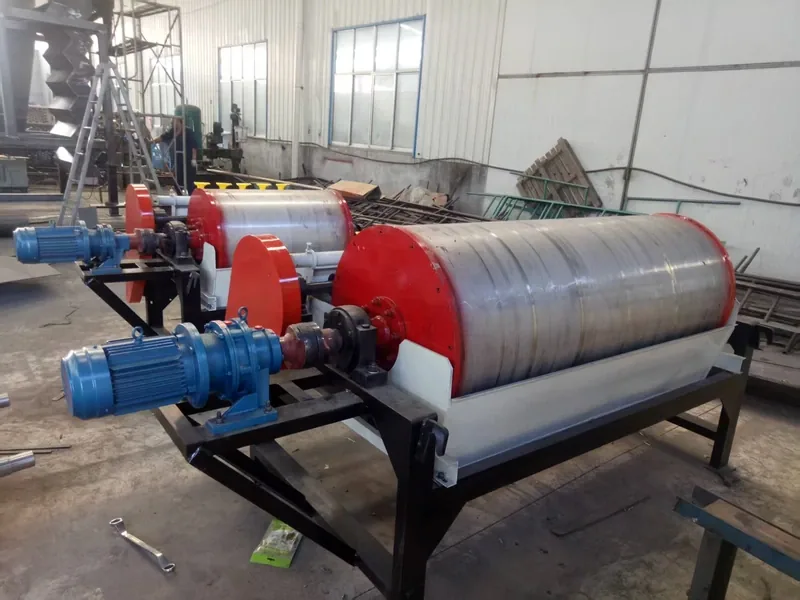
If slurry flow increases but dry solids t/h stays similar
We check how much slurry is moving through the tank and whether the available drum width is still enough. A wider drum, another unit in parallel, or a different tank arrangement may be needed if the flow becomes too high.
If the magnetic material in the feed increases
We check how much magnetic product the drum must carry, the usable drum width, and the discharge. If the magnetic load is too high, more working area or another separation step can be more useful than simply asking for a stronger field.
If solids concentration changes a lot
Stabilize the slurry first. A drum adjusted for one slurry condition can behave differently when the feed becomes much thicker or more dilute.
What Happens When Flow, Solids %, and Magnetic Content Change Together?
| Situation | What Changes | What You May See | Check First |
|---|---|---|---|
| Slurry flow rises while dry solids t/h stays similar | More slurry must pass through the same tank and working area. | Recovery may fall or become less stable even though solids t/h has not increased. | Slurry distribution, tank flow, usable drum width, and whether more flow area is needed. |
| Solids % rises while slurry flow falls | The slurry becomes more concentrated and particle crowding changes. | Transport through the tank and separation behavior can change even at similar solids t/h. | Solids concentration, feed distribution, water balance, and tank condition. |
| Magnetic fraction rises while total solids t/h stays similar | The drum must carry more magnetic product. | The magnetic layer can become heavier and discharge can become harder. | Magnetic material load, usable width, discharge, and whether another unit or separation step is needed. |
| Slurry flow and magnetic fraction both rise | The wet separator sees more hydraulic flow and more magnetic product at the same time. | Performance can deteriorate faster than when only one condition changes. | Feed distribution, working area, parallel capacity, discharge, then magnetic requirement. |
If the Wet Drum Is Already Running but the Result Changes
| What You See | Check First | Why |
|---|---|---|
| Recovery drops when throughput rises | Slurry flow, dry solids t/h, magnetic material in the feed, and feed distribution | The available working area may be overloaded before magnetic strength becomes the main limit. |
| Recovery stays high but concentrate grade drops | Liberation and non-magnetic material being carried into the concentrate | Recovering more magnetic material does not automatically produce a cleaner concentrate. |
| Results change when slurry density changes | Solids %, water balance, and slurry flow | The feed condition has changed even if the machine settings have not. |
| One side of the drum performs worse than the other | Feed distribution across the useful drum width | One side may be overloaded while part of the drum is underused. |
| Tailings loss rises after the ore source changes | Mineralogy, liberation, particle size, and magnetic fraction | The material may have changed rather than the separator. |
| The same machine worked well before but no longer does | Compare the old and current feed conditions before changing the magnet or replacing the machine | Throughput, moisture, slurry condition, particle size, or ore type may have changed first. |
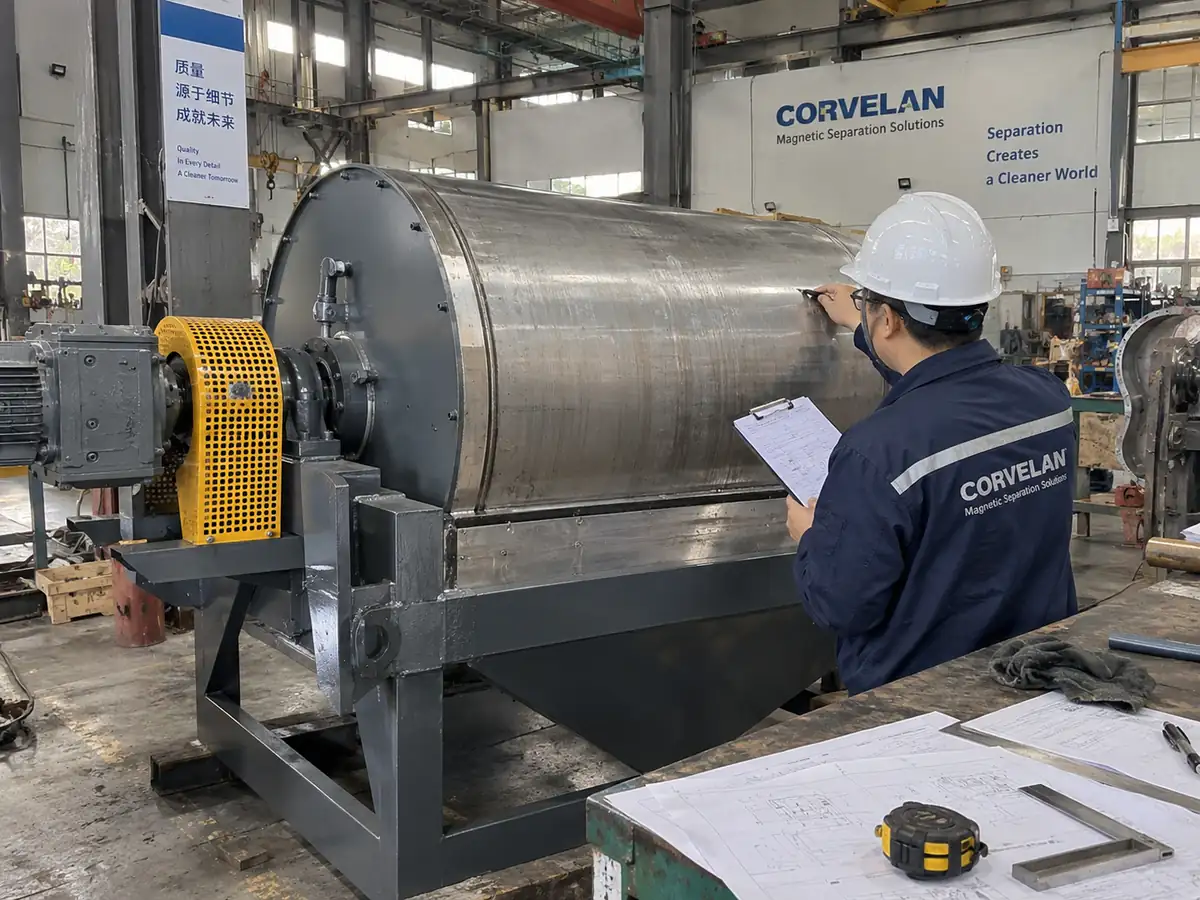
For a wet drum quotation, send slurry m³/h + solids % + dry solids t/h together. One capacity number is not enough.
When We Will Not Recommend a Standard Magnetic Drum
| Your Situation | What We Recommend | Why |
|---|---|---|
| You only know total Fe, but not the main iron mineral | Send mineralogy or representative sample information before choosing the separator | Total Fe does not tell us whether the iron is magnetite, hematite, or another mineral. |
| Magnetite is poorly freed from gangue | Check grinding, classification, or a finer liberation size first | A stronger magnet cannot free locked particles. |
| Hematite, limonite, goethite, or siderite carries most of the value | Look at a higher-intensity / higher-gradient option or another suitable method | A standard low-intensity drum is not the right first choice for a weakly magnetic main mineral. |
| A wet project only has a t/h figure | Send slurry flow and solids concentration before choosing the final drum size | The same solids t/h can mean very different slurry flow and drum loading. |
| You need a guaranteed recovery or concentrate grade | Agree on the ore sample and test method before the guarantee is added to the order | A performance result only makes sense for a defined material and defined test. |
| Inlet, outlets, available space, support points, power, or water are still unknown | Confirm these plant details before the machine drawing is approved | A separator can be right for the ore but still be difficult or impossible to install correctly. |
| Feed conditions change widely from hour to hour | Define or stabilize the normal operating range before choosing the final separator size | A machine can be lightly loaded in one condition and overloaded in another if flow, solids %, moisture, or feed rate changes too much. |
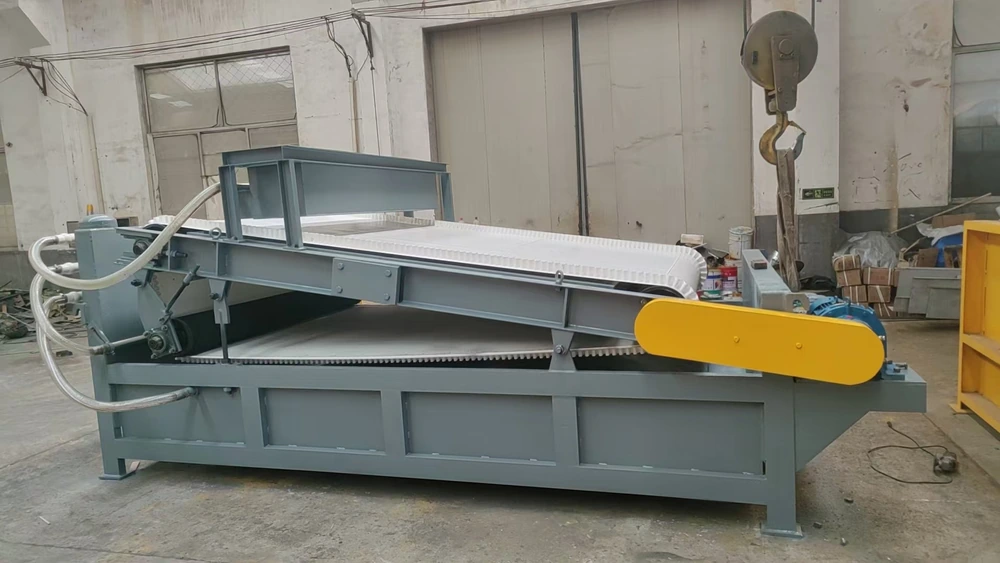
Why Higher Gauss Does Not Automatically Mean Higher Recovery
A Gauss value describes magnetic flux density at a measurement point. It does not tell you by itself how much iron the separator will recover.
Recovery also depends on the mineral, how well it is freed from gangue, particle size, distance from the magnetic system, feed depth or slurry flow, drum speed, and how evenly the material reaches the working area.
Compare Gauss only under the same measurement conditions
If you compare two Gauss values, the measurement point and method must be the same. A reading at the drum surface cannot be compared directly with a reading taken farther away from the magnetic system.
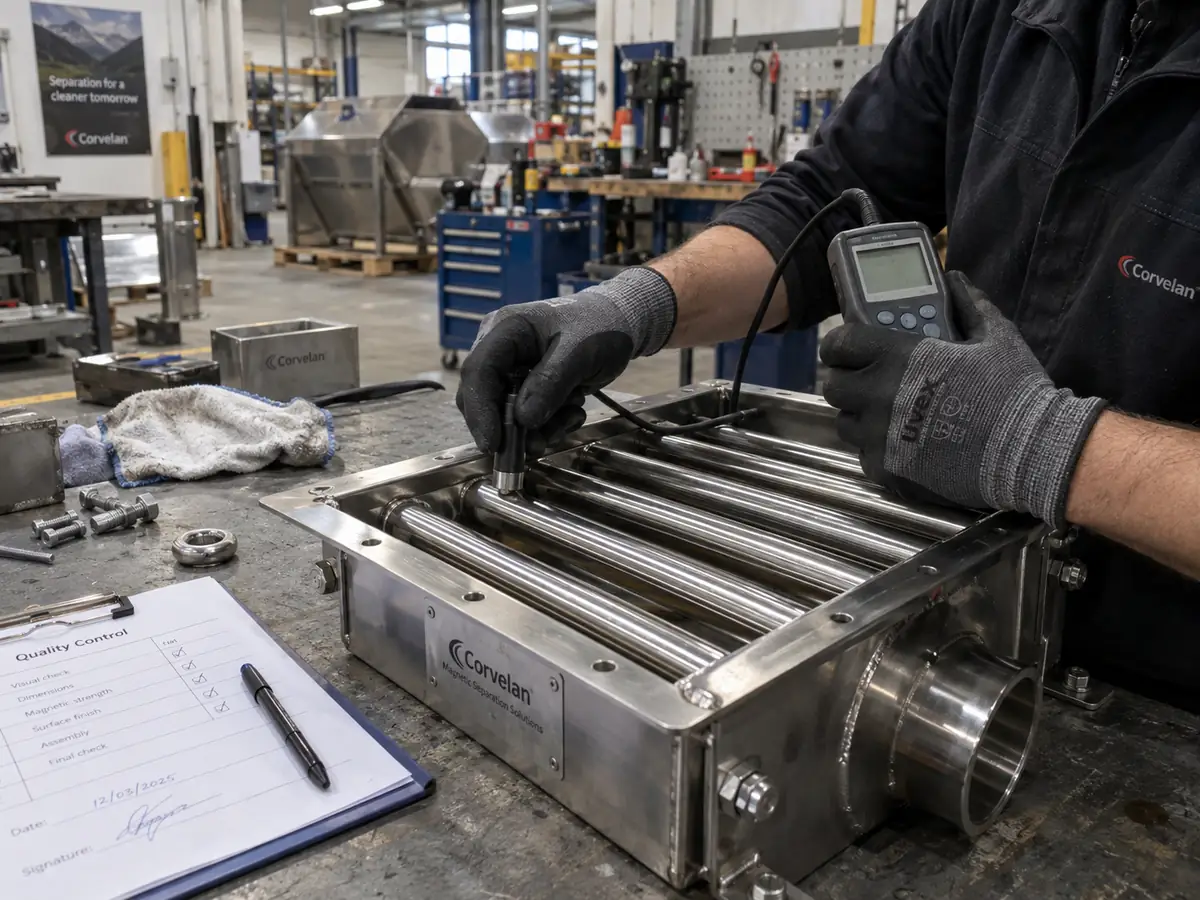
Use the ore to judge recovery and grade
If you need to know recovery or concentrate grade, test the ore—not just the magnet. A magnetic reading is useful for checking the machine. It is not a substitute for processing representative material.
Four Cases Where Higher Gauss Is Not the Answer
| Situation | Why Higher Gauss Does Not Solve It | Check First |
|---|---|---|
| High Gauss + poor liberation | Locked gangue can still follow magnetite into the concentrate. | Grinding, classification, and liberation. |
| High Gauss + too much feed | The separator can be overloaded even when the magnetic field is strong enough. | Throughput, burden depth or slurry flow, magnetic load, and feed distribution. |
| High surface Gauss + large working distance | The ore does not travel at the drum surface; magnetic conditions change with distance. | The field where the material actually passes, not only the maximum surface value. |
| Same Gauss + different feed conditions | A thin dry layer, a thick burden, and a slurry do not present particles to the magnetic field in the same way. | Feed state, particle size, layer depth or slurry condition, and measurement position. |
A Gauss reading can be a machine check. It is not a recovery guarantee.
What We Need to Know About Your Plant
A separator can be suitable for the ore and still be wrong for the installation. These details can change the drum size, tank arrangement, drive side, inlet and outlet positions, and maintenance space.
Feed and outlets
- Where the feed enters the separator.
- Normal and peak feed flow.
- Available feed width or slurry inlet arrangement.
- Where concentrate and tailings must leave.
- Required outlet heights and downstream equipment.
Space and maintenance
- Available floor space and height.
- Support points.
- Drive side and service side.
- Space to inspect or remove the drum/tank when required.
- Access to bearings, reducer, guards, liners, wear parts, and cleaning points.
Abrasion and wear
Iron ore can be abrasive. Tell us where the material impacts the machine and where buildup or heavy wear is expected. Wear protection should improve service life without adding unnecessary distance between the material and the magnetic system or disturbing material flow.
Power, water, and controls
- Power supply.
- Water and drainage for wet operation.
- Start/stop sequence and interlocks.
- Signals needed between the separator and nearby equipment.
- Site guarding and maintenance-isolation requirements.
New Plant vs Retrofit
| Project Type | What You Can Control | What Usually Limits the Choice |
|---|---|---|
| New plant | Feed direction, separator elevation, concentrate/tailings paths, structural support, and maintenance space can be planned together. | Process layout, utilities, required capacity, and future access. |
| Retrofit | The separator must fit an existing line. | Existing inlet height, outlet direction, steelwork, chutes or piping, support points, drive-side access, and maintenance clearance. |
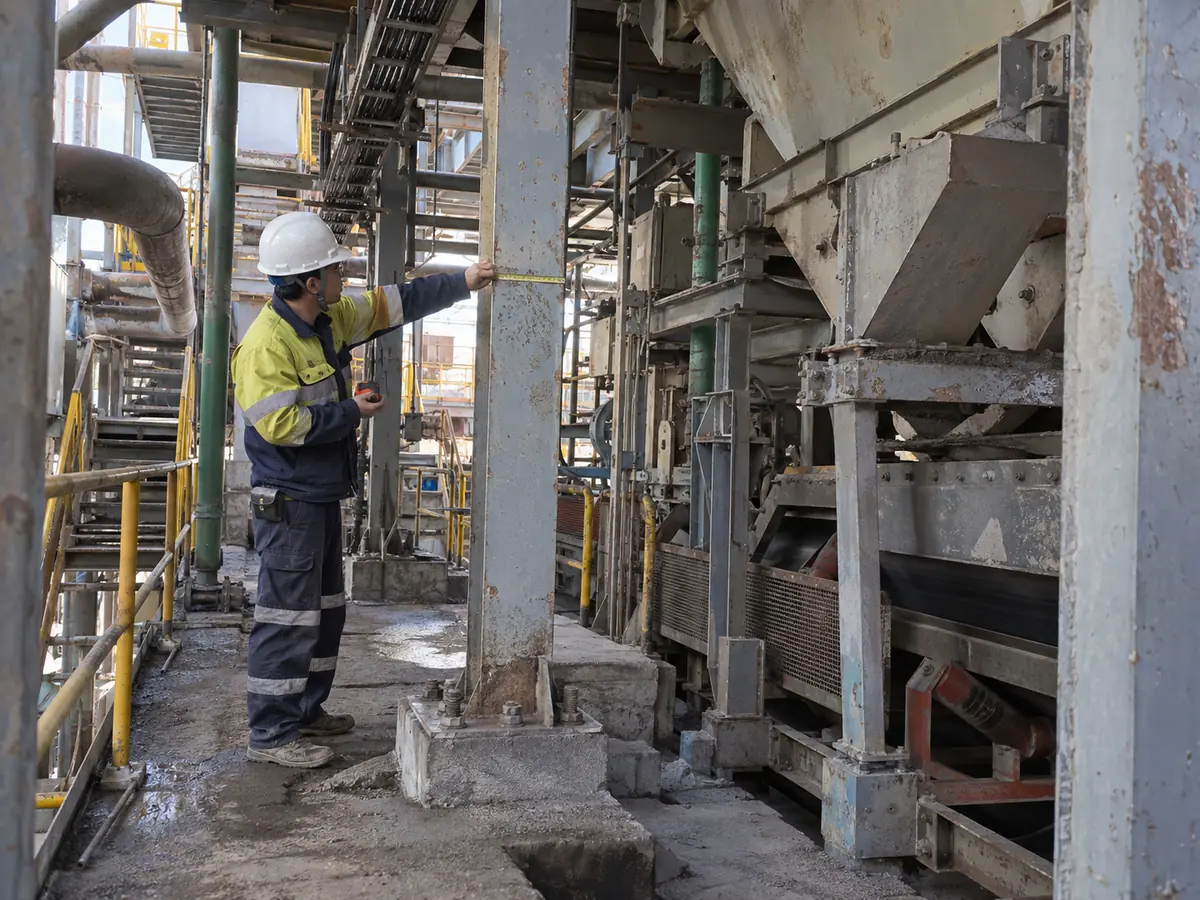
For a retrofit, the best separator on paper can still be the wrong machine if it cannot connect to the existing feed and discharge system.
Wear Protection Can Also Change Magnetic Performance
Abrasive ore may need stronger wear protection, but do not choose protection only by thickness. Extra material between the ore and magnetic system can increase working distance. The goal is to protect the machine without creating unnecessary magnetic distance or poor material flow.
For a retrofit, confirm inlet height, outlet direction, support space, and maintenance clearance before approving the machine drawing. It is much easier to solve these conflicts on a drawing than after the separator arrives.
If You Need a Guaranteed Grade or Recovery
If you need a guaranteed concentrate grade, recovery, or tailings-loss result, send us representative ore and agree on how the result will be measured before the guarantee is added to the order.
If you only need to confirm the machine
Check the model, dimensions, inlet and outlets, drive, controls, supplied items, and any agreed magnetic reading. These checks confirm the machine you bought; they do not prove recovery or concentrate grade.
If concentrate grade is guaranteed
Define the feed sample, feed grade, particle size, dry/slurry condition, product sample point, laboratory method, and required concentrate grade. Use material that represents normal production, not a hand-picked fraction.
If recovery is guaranteed
Also measure the feed, magnetic product, and tailings so the recovery calculation uses agreed weights and assays. The formula, sample points, and laboratory method should be agreed before the result is treated as a pass/fail value.
If Maximum Magnetic Loss in Tailings Is Guaranteed
Define the tailings sampling point, sampling period, laboratory method, and how magnetic loss will be calculated. A tailings target cannot be checked fairly if different samples are taken from different places or at different times.
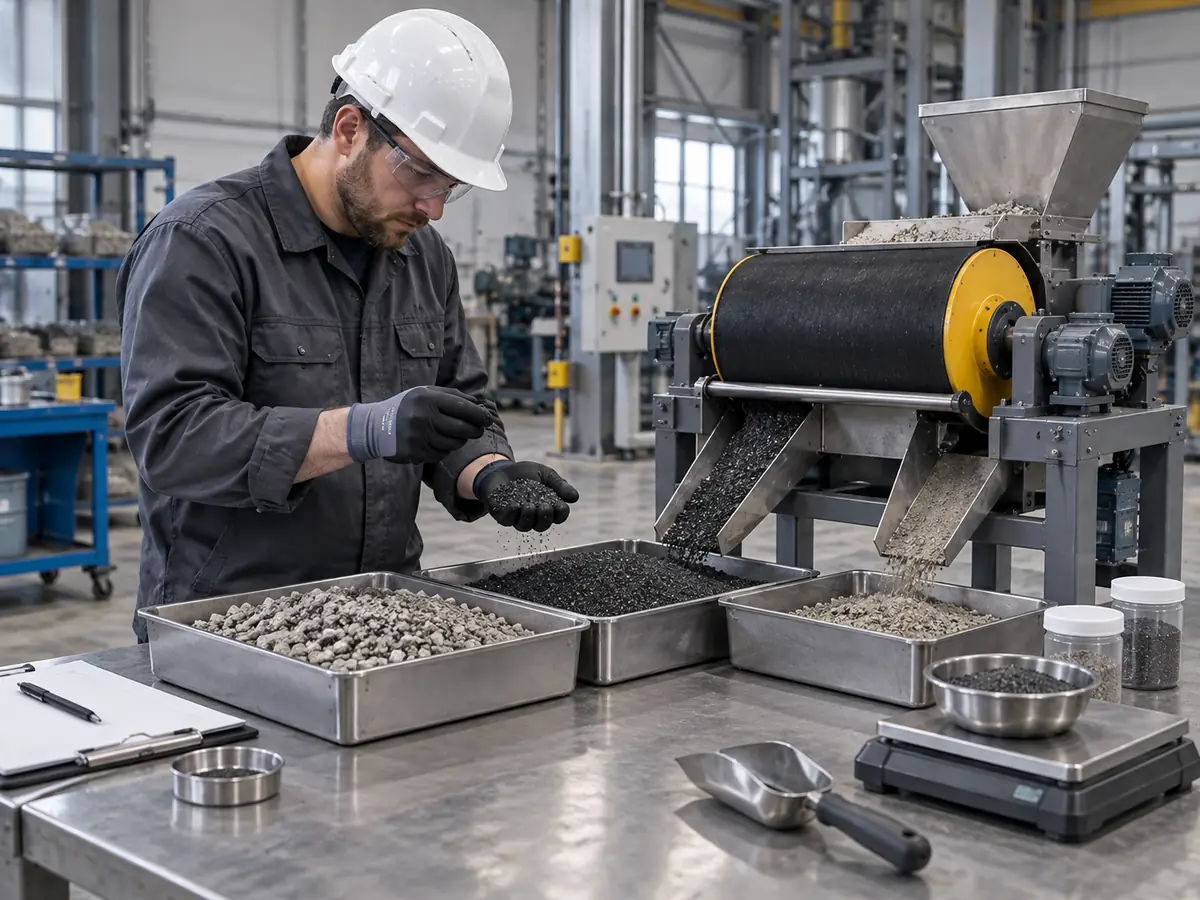
If the Ore Source Changes After the Test
Do not automatically assume the old grade or recovery result still applies. Recheck mineralogy, how well the iron is freed from gangue, particle size, magnetic material in the feed, and dry or slurry condition before using the old result as the new production target.
Keep the requirement simple: first decide what result matters, then make sure the feed sample and measurement method match that result.
What to Check Before You Order
Before you order, the quotation should clearly show what machine you are buying, what feed it is selected for, what is included, what the plant must provide, and what will be checked before shipment.
| Check Before Ordering | What Should Be Clear | Why It Matters |
|---|---|---|
| Separator | Exact separator type and quoted machine | Prevents a generic product name from hiding a different machine. |
| Feed material | Material/mineral, particle-size range, moisture or slurry condition, and magnetic material where relevant | Shows what feed the machine was selected for. |
| Capacity | Normal and peak throughput with the stated feed condition | Prevents capacity numbers from being compared under different conditions. |
| Wet operation | Slurry flow, solids %, dry solids t/h, and important operating range | Shows the real slurry and solids load. |
| Magnetic reading, if required | Where and how the reading will be taken | Makes the number repeatable. |
| Machine size and arrangement | Drum/working width, tank or dry-feed arrangement, drive side, key construction details | Confirms what is actually being built. |
| Wear protection | Wear materials or liners included | Important for abrasive iron ore and future replacement planning. |
| Inlet and outlets | Feed inlet, magnetic product outlet, tailings/non-magnetic outlet, and connection direction | Prevents installation surprises. |
| Power, water, and controls | What the machine needs from the plant | Prevents missing utilities during installation. |
| Machine drawing | Overall dimensions, support points, inlet/outlet heights, drive side, maintenance space | Lets you confirm the machine fits before production. |
| What is included | Main machine, guards, supplied controls, accessories, and other included items | Makes the price comparison real. |
| What is not included | Items the supplier is not providing | Stops a low price from hiding missing items. |
| Spare parts | Included or recommended wear/service parts where applicable | Helps with commissioning and maintenance planning. |
| Checks before shipment | Agreed dimensions, functions, magnetic reading, or material test where required | Tells you what will actually be checked before the machine leaves the factory. |
| Guaranteed result, if required | Feed sample, target, measurement method, sample points, and pass value | Prevents an undefined recovery or grade promise. |
| Documents | Machine drawing, manual, agreed test records, packing information, and other required documents | Makes handover easier. |
Which Items Matter Most for Your Project?
| Your Project | Pay Extra Attention To |
|---|---|
| New plant | Machine drawing, inlet/outlet heights, supports, utilities, maintenance space, and connection to upstream/downstream equipment. |
| Retrofit | Existing dimensions, support points, drive-side access, current chute or piping positions, and whether the new machine can be installed without major line changes. |
| Wet drum | Slurry m³/h, solids %, dry solids t/h, magnetic material in the feed, tank/feed arrangement, and concentrate/tailings outlets. |
| Guaranteed grade or recovery | Representative feed, sample points, laboratory method, calculation method, and the pass value written into the order. |
Do not place the order from model name and price alone. Make sure the quotation clearly shows the machine, feed conditions, capacity, inlet and outlets, included items, required utilities, drawing, and any guaranteed result.
How to Compare Magnetic Separator Quotations
Two quotations are only comparable when they describe the same feed, the same purpose, and the same items being supplied. If those points are different, the cheaper quotation may simply be quoting less equipment or easier operating conditions.
| Before You Compare | Every Supplier Should State | Do Not Compare Price Yet If |
|---|---|---|
| Ore / mineral | Main valuable iron mineral and relevant material description | One quote assumes magnetite while the other is based only on total Fe. |
| Particle size / liberation | Feed size and how well the valuable mineral is freed from gangue | The quotes use materially different feed sizes or one ignores poor liberation. |
| Dry or wet condition | Dry moisture or slurry condition | One supplier is quoting dry operation and another is quoting slurry operation. |
| Throughput | Normal and peak dry solids t/h | One supplier gives only a capacity number with no feed condition. |
| Wet loading | Slurry m³/h and solids % in addition to dry solids t/h | One supplier uses slurry volume and another uses dry solids without showing how they relate. |
| What the separator needs to do | Pre-concentration, roughing, cleaning, scavenging, or another clear purpose | The two machines are being asked to produce different results. |
| Required result | Recovery, grade, tailings loss, or another target plus the agreed test condition if it is guaranteed | A guarantee is shown without a defined sample and measurement method. |
| What is included | Main machine, drive, controls, guards, accessories, and included items | One price excludes items included in the other. |
| Plant connections | Inlet, outlets, supports, power, water, drainage, and control connections | The quotation cannot be matched to the real plant layout. |
| Machine drawing | Overall layout and key connection dimensions before production | A custom installation has no drawing-approval step. |
| Checks before shipment | What will be checked and what record will be supplied | “Factory test” is listed but the actual checks are not stated. |
| What is not included | Clear exclusions | You cannot tell what the lower-priced supplier has left out. |
Same t/h does not always mean the same separator
A 100 t/h dry pre-concentration application is not the same as a wet drum processing 100 t/h of dry solids in a large slurry flow. Compare capacity only after the feed state, slurry flow, solids concentration, particle size, and purpose are clear.
A machine specification is not the same as a recovery result
A motor size, drum width, or Gauss reading describes the machine. Recovery and concentrate grade describe what happened when a specific ore was processed under specific conditions. Keep those two types of information separate when comparing suppliers.
Quotation Red Flags
| If You See This | Why We Would Ask for More Detail |
|---|---|
| “100 t/h” with no feed condition | The capacity cannot be compared until dry/wet condition, particle size, and operating range are clear. |
| “12,000 Gauss” with no measurement point | The magnetic number cannot be compared without knowing where and how it was measured. |
| Recovery guarantee with no representative ore sample | The result is not tied to the material that will actually be processed. |
| Wet drum quotation with no slurry m³/h or solids % | The wet load is incomplete even if dry solids t/h is shown. |
| Custom machine with no drawing approval | Inlet, outlets, supports, drive side, and maintenance access may still conflict with the plant. |
| Very low price with no clear list of what is not included | Missing controls, guards, accessories, or other items may appear later as extra cost or site work. |
What to Send Us for Iron Ore Magnetic Separator Selection
You do not need a complete engineering package to start. Send the information that changes the separator choice first, and we can tell you what else is needed.
Start with these six items
- Ore type and known mineralogy.
- Particle-size range or particle-size distribution (PSD).
- Dry feed or slurry.
- Normal and peak throughput.
- What you want the separator to do: pre-concentration, roughing, cleaning, scavenging, or another clear purpose.
- Where the separator will be installed in the existing or proposed process.
For a wet project, also send
- Normal and peak slurry flow in m³/h.
- Normal solids concentration and known operating range.
- Dry solids t/h.
- Estimated magnetic material in the feed, if known.
- Upstream condition if slurry density changes a lot.
If you need a guaranteed recovery or grade, also send
- Head grade and required concentrate grade or recovery.
- Existing recovery, grade, or tailings-loss results.
- Liberation or mineralogical information if available.
- Representative sample information.
- Your existing test requirement, if you already have one.
For installation, also send
- Flowsheet, PFD, layout, or relevant plant drawing.
- Inlet and outlet heights/directions.
- Available floor space, height, and maintenance clearance.
- Power, water, drainage, and control requirements.
- Site photos when they help explain the installation.
What happens next?
- Send the ore and operating data. We identify the separator type that fits the material.
- Confirm the quotation. Check the machine, capacity, included items, utilities, and any guaranteed result.
- Approve the machine drawing. Confirm inlet, outlets, support points, drive side, and maintenance space.
- Production and pre-shipment checks. We build to the agreed order and complete the checks written into the quotation.
- Packing and shipment. Confirm the machine, accessories, and agreed documents before dispatch.
If You Already Have a Magnetic Separator
If the existing machine used to work but the result has changed, send us:
- Separator type or model, if known.
- Feed mineral and current ore source.
- Particle-size range.
- Normal throughput and current throughput.
- Dry moisture, or slurry flow and solids % for wet service.
- Current concentrate and tailings results, if available.
- What changed before the problem started.
- Photos of the equipment, feed arrangement, and discharge area when they help explain the problem.
The first question is not “Do I need a stronger magnet?” First ask what changed: the ore, particle size, liberation, throughput, moisture, slurry condition, magnetic material in the feed, or the machine itself.
Send Us Your Iron Ore Data
Send us your ore type, particle size, feed condition, capacity, and separation target. We’ll tell you which separator to start with, what additional information we need, and what should be included in the quotation.
Send Ore Data for SelectionIron Ore Magnetic Separation FAQ
What type of iron ore is best suited to low-intensity magnetic separation?
Magnetite-rich ore is the clearest starting point, especially when the magnetite is sufficiently freed from gangue at the planned separation size. If the valuable iron is mainly hematite, limonite, goethite, siderite, or another weakly magnetic mineral, start with a higher-intensity or alternative beneficiation method instead of assuming a conventional low-intensity drum will recover it.
Is magnetite easier to separate magnetically than hematite?
Yes. Magnetite responds much more strongly to low-intensity magnetic separation. Hematite and other weakly magnetic iron minerals usually need a different magnetic-intensity level or another beneficiation method. Mixed magnetite-hematite ore may therefore need more than one separation step.
Should iron ore use dry or wet magnetic separation?
Use dry separation when the feed is dry, free-flowing, and can be fed in a controlled layer, especially for pre-concentration before fine grinding. Use wet drum separation when liberated magnetite is already processed as slurry, especially after grinding or classification for roughing, recovery, or cleaning.
Where is magnetic separation installed in an iron ore beneficiation plant?
Common positions include dry pre-concentration before finer grinding and wet roughing, cleaning, or scavenging after grinding and classification. The best position depends on whether you are rejecting waste, recovering magnetite, cleaning concentrate, or recovering magnetic material from tailings.
Does higher Gauss mean higher iron recovery?
No. A higher Gauss reading at one point does not guarantee higher recovery. Recovery also depends on the mineral, how well it is freed from gangue, particle size, working distance, feed distribution, dry burden depth or slurry flow, how much magnetic material the drum must carry, drum speed, and how the result is measured.
Why can two wet drum separators with the same t/h rating need different sizes?
Because dry solids t/h is only one part of wet operation. Slurry m³/h, solids %, magnetic material in the feed, particle size, feed distribution, and what the drum needs to achieve can make two apparently similar applications very different.
How many magnetic separation steps are needed for magnetite?
There is no universal number. Use the steps that have a clear purpose: pre-concentration, roughing, cleaning, scavenging, or final upgrading. Add another separator when measured grade, recovery, or tailings loss shows that the extra step has a clear technical and economic reason.
Should iron ore be tested before equipment selection?
Not always. If the ore is clearly magnetite-rich, sufficiently liberated, and the feed conditions are known, we can start equipment selection from the available data. Test the ore when the magnetic response is uncertain, mixed minerals are important, liberation is unclear, or a recovery/grade guarantee is required.
Why did iron recovery drop after throughput increased?
Higher throughput can increase solids load, slurry flow, dry burden depth, or the amount of magnetic material the separator must carry. Check which of those changed before increasing magnetic strength or replacing the separator.
Can I keep the same magnetic separator if my ore source changes?
Not automatically. If mineralogy, liberation, particle size, magnetic material in the feed, moisture, or slurry condition changes, recheck the application before assuming the existing machine size and settings are still suitable.