LJT-B Split-Frame Tramp Metal Detector | Corvelan
Belt Conveyor Tramp Metal Detection

LJT-B Tramp Metal Detector for Belt Conveyors

Corvelan supplies the LJT-B for bulk-material belt conveyors. It detects unwanted metal, often called tramp metal, before it reaches crushers or other equipment. The split frame can be installed around an existing conveyor without cutting the belt.

ApplicationBelt-conveyor tramp metal detection before vulnerable downstream machinery.
Model belt widths500 to 2000 mm across the LJT-B model range.
How it detects metalIt checks how the sensor signal changes when metal passes through. The formal method uses phase-shift and correlation detection. Sensitivity is adjustable.
What we need from youBelt width, material depth, target metal, belt construction, line layout and required control action.
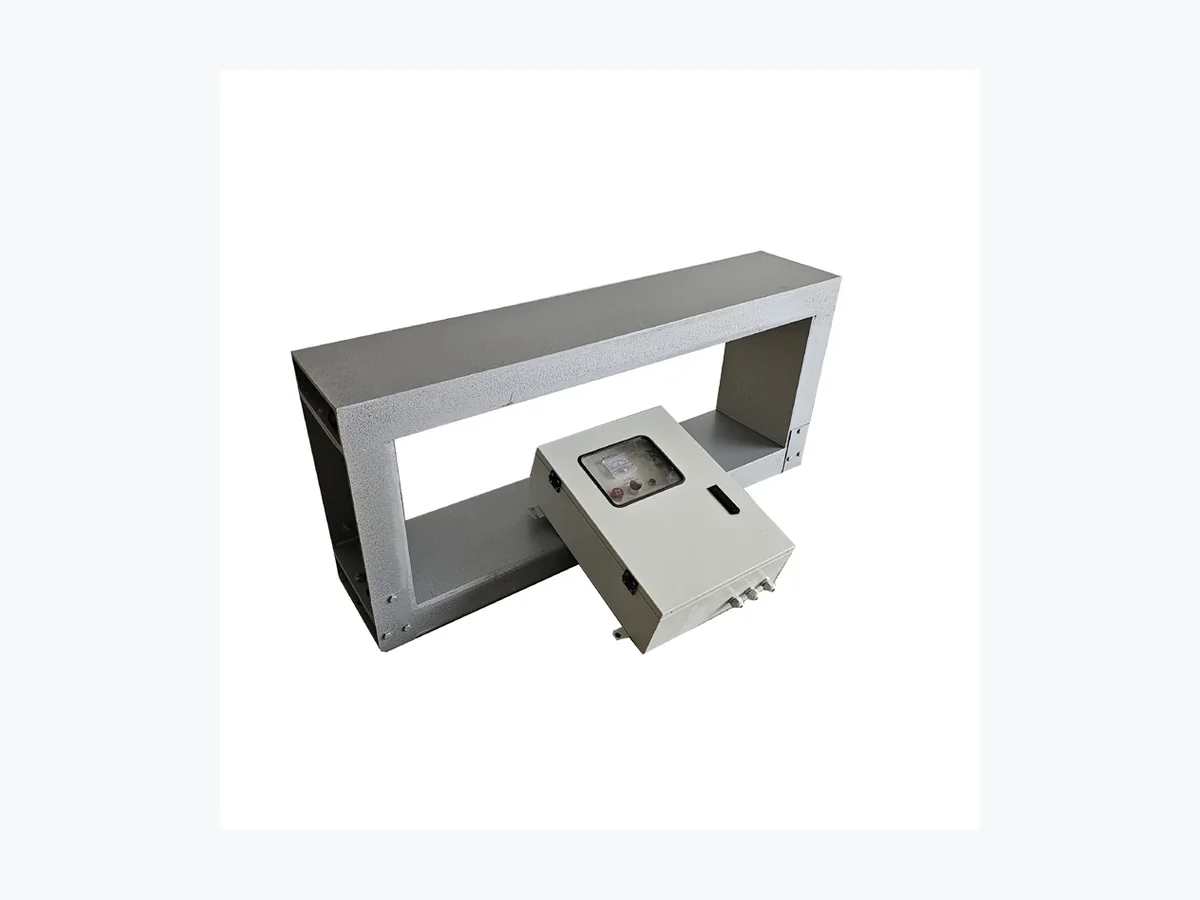
LJT-B tramp metal detector frame and control enclosure offered by Coverlan
Quick Answer

What is the LJT-B tramp metal detector?

The LJT-B is an industrial belt conveyor metal detector. It finds unwanted metal moving with bulk material before that metal reaches equipment that could be damaged.

PurposeDetect tramp metal on belt conveyors before it reaches crushers or other vulnerable downstream equipment.
Equipment roleIndustrial conveyor metal detector. It sends a control signal; it does not remove metal by itself.
Listed belt widths500–2000 mm across the LJT-B model range.
Detection setupAdjustable sensitivity with phase-shift and correlation detection.
Belt splice optionOptional splice detector.
Control responseElectrical output with a 1–10 second delayed-release setting.
InstallationSplit-frame installation around an existing belt without cutting the belt.
Next stepSend the material, target metal, belt width, material depth, belt construction, line layout and required action.

The detector sends a signal when it sees a metal event. Your line can use that signal to sound an alarm, stop the belt or trigger another action. The LJT-B does not remove metal by itself, so removal needs a separate manual, reject or magnetic-separation method.

Where It Fits

Where does the LJT-B fit on a conveyor?

Use the LJT-B when unwanted metal may travel with bulk material on a belt conveyor and could damage crushers or other equipment farther down the line.

Find unwanted metal on the belt

Use the LJT-B when metal may travel with bulk material on a belt conveyor. The detector can then send a signal for the line to respond.

Protect equipment farther down the line

Place the detector before crushers or other equipment that metal could damage. This gives the line time to alarm, stop or take another linked action.

Connect detection to the action you need

Tell us what should happen after detection: alarm, conveyor stop, marker, bypass or another automatic action. Engineers often call this linked control an interlock.

Listed application industries include thermal power, cement, papermaking, mining, forestry, environmental protection and building materials. The setup still needs to match the real conveyor and target metal.

How It Works

How does the LJT-B detect unwanted metal?

The detector watches the sensor signal while material passes through the sensing area. Metal changes that signal. The controller checks the change with phase-shift and correlation detection, and the sensitivity can be adjusted. It also uses anti-interference processing to reduce unwanted signal effects from nearby sources.

01 — Sense

Let the material pass through the sensing area

The detector frame sits around the belt. Material passes through the area where the detector watches for a metal-related change.

02 — Identify

Check whether the signal matches a metal event

The controller compares the signal pattern with a metal event. We then set the working threshold to match your conveyor, material depth and target metal.

03 — Act

Send the signal to your line control

When the detector triggers, the controller sends an electrical output to your line. It also has a 1–10 second delayed-release setting before the output resets.

What Affects Detection

What can change detection sensitivity on your conveyor?

Belt width tells you which frame size to start with. Actual detection depends on the target metal, material depth, belt construction, conveyed material and nearby equipment.

Target metal

Tell us what metal object must be detected and the smallest test size you want to use. Its size, shape, material and position can change the signal.

Material depth on the belt

Tell us the normal and maximum depth of material on the belt. Engineers call this burden depth. A deeper load can make the target harder to detect because the metal sits farther from the sensing area.

Belt construction

Splices, clips, steel cords and other metal parts in the belt can affect the signal. An optional splice detector is available, so send us the exact belt construction.

Nearby equipment

Steelwork, motors, cables and magnetic equipment can disturb the signal. Send us the layout so we can check more than just the detector frame size.

Material condition

Wet material, material that carries electrical current, high mineral content and changing product conditions can affect the signal. If the material is difficult, define the test condition first. Then set the pass/fail target.

Required action

Tell us what the line should do after detection. This may be an alarm, stop, marker, bypass or another linked automatic action.

LJT-B Model Range

Start with belt width, then check the space around your conveyor

The listed LJT-B models cover conveyor belt widths from 500 to 2000 mm. Start with belt width, then use the drawing to check the available mounting space.

ModelConveyor belt width
LJT-B-5500 mm
LJT-B-6.5650 mm
LJT-B-8800 mm
LJT-B-101000 mm
LJT-B-121200 mm
LJT-B-141400 mm
LJT-B-161600 mm
LJT-B-181800 mm
LJT-B-202000 mm
Important: belt width only gives you the starting model. Also check material depth, frame clearance, nearby equipment and the action required after detection.
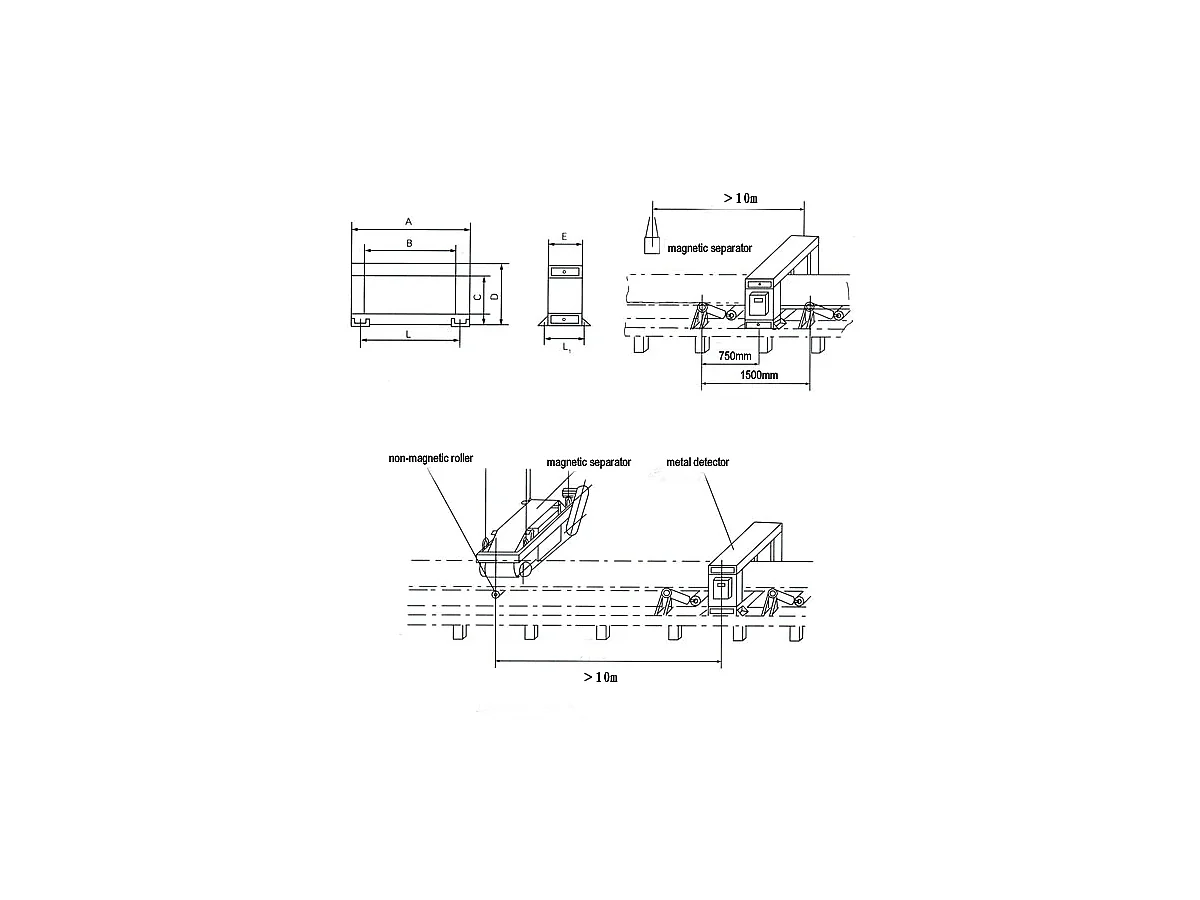
LJT-B conveyor metal detector dimensional drawing for model and installation checks

Detailed dimensions for installation

All values below are in millimetres. Dimensions C and D have Standard and Non-standard values. Corvelan checks which arrangement matches your conveyor before we quote the final setup.

ModelBelt widthABC Std.C Non-std.D Std.D Non-std.EL1L
LJT-B-5500850690310310480480250320740
LJT-B-6.56501000840330330500500250320890
LJT-B-8800120010403503505205202503201090
LJT-B-101000140012204205206107103003701290
LJT-B-121200160014204705706607603003701490
LJT-B-141400184016405206207308303003701730
LJT-B-161600204018405706707808803504201930
LJT-B-181800230021006307308409403504202190
LJT-B-202000250023006807808909903504202390
Options & Setup

What do you need to send for an LJT-B quotation?

LJT-B functions already listed for the detector

  • Adjustable sensitivity
  • Optional splice detector
  • Output control function
  • 1–10 second delayed-release setting after the electrical output is triggered
  • Installation around an existing conveyor without cutting the belt (retrofit)

What Corvelan matches to your conveyor

  • Target metal and test condition
  • Normal and maximum material depth
  • Belt construction, splices and clips
  • Conveyor speed and material condition
  • Nearby motors, steelwork and magnetic separators
  • Alarm, stop, reject or marker action
  • Power supply, control wiring, enclosure needs and any required standards
Where It Fits

When does the LJT-B fit, and when should you use another approach?

The LJT-B is a good starting point when

  • Bulk material on an existing belt conveyor
  • Tramp-metal detection before vulnerable downstream equipment
  • Existing conveyor installation where you do not want to cut the belt
  • Need for adjustable sensitivity and control output

Send us more detail when

  • Very small target metal
  • Deep or highly variable material depth
  • Wet, electrically conductive or highly mineralized material
  • Steel-cord belt or metallic splice/clip system
  • Strong nearby magnetic field or dense steel structure
  • Automatic rejection or a special linked control sequence

Use another method, or combine methods, when

  • The detector itself must physically remove metal
  • The process is not a belt conveyor
  • A guaranteed detection size is requested without defined test conditions
  • Required environmental or compliance ratings have not been established for the project
Detector vs. Magnetic Separator

Do you need a metal detector, a magnetic separator, or both?

Use a metal detector when

You need to find an unusual metal event and trigger an alarm, conveyor stop, marker or other action before equipment is damaged.

Use magnetic separation when

You need to keep removing iron or steel pieces that a magnet can capture. Engineers call this ferromagnetic tramp iron. A magnetic separator removes the metal instead of only sending a signal.

Use both when

You need continuous removal of iron and steel plus another layer of protection for unusual metal events. This can also help with targets the magnetic stage may not remove.

Not sure which route fits? Send us the target metal and conveyor layout. We will separate the detection job from the metal-removal job before we quote the equipment.
Installation

Plan the detector around your conveyor, not as a stand-alone frame

We check the detector opening, nearby sources of interference and the distance needed for the next action. This helps the detector fit the real conveyor layout.

01 — Fit

Match the belt and opening

Start with belt width, the height and shape of the loaded material, and the space around the conveyor.

02 — Clear

Check what sits near the detector

Mark nearby steelwork, motors, cables, splices and magnets on the layout. We use this to check that there is enough space and to look for possible signal interference.

03 — Act

Leave enough distance for the next action

The detector must sit far enough before the protected equipment. Engineers call this upstream. The extra distance gives the line time to stop, mark, bypass or reject the metal after detection.

After Installation & Safety

How do you check the detector after installation?

Keep the sensing area stable

Check the mounting, cables and enclosure. Also check whether conveyor changes have added new metalwork, cables or other equipment near the detector.

Test with the metal target you agreed on

Use the agreed metal target, test position, material depth and expected line response. This makes the final check match the protection job you actually need.

Remove metal safely

If the belt stops for manual metal removal, shut down and isolate the conveyor first. Then follow your site lockout procedure before anyone approaches the conveyor or material.

Need a dust or water protection rating, hazardous-area approval, certification, or a specific electrical standard? Add it to your quotation request. Corvelan will only state requirements that are confirmed for your project.

Send the conveyor layout before you lock the detector position

We can check the LJT-B model width, mounting space, nearby interference sources and the required control action together.

Corvelan Engineering Support

How Corvelan checks your LJT-B setup before quotation

We start with the detection job, then match the detector to the conveyor, define the check conditions and confirm the quotation scope.

01

Define the detection job

Tell us the material, the target metal or test object, and what the line should do after detection.

02

Match the detector to the conveyor

We check belt width, material depth, belt construction, conveyor speed, nearby equipment and available mounting space.

03

Define the check conditions

We align the target object, test position, material depth and expected line response so the final check matches the protection job.

04

Confirm the quotation scope

We confirm the LJT-B model, required options, control needs and any project-specific electrical, environmental or compliance requirement that has been verified.

Send these first

  • Material and target metal
  • Belt width and material depth
  • Conveyor speed
  • Belt construction and splice type
  • Required line action

Add these if available

  • Conveyor drawing or installation photos
  • Nearby magnetic or electrical equipment
  • Space limits and site conditions
  • Required test method
  • Required protection rating, certification or electrical standard

Corvelan can support OEM project requirements and installation or startup support within the agreed scope. We only state detection limits, ratings, certifications and other project requirements after they are confirmed for the job.

FAQ

LJT-B Tramp Metal Detector FAQ

What does the LJT-B tramp metal detector detect?

The LJT-B detects unwanted metal carried on a belt conveyor. Tell us the target metal and smallest test size you need. We do not publish one universal minimum detection size because the result depends on the material, belt and test condition.

Does the LJT-B remove the detected metal?

No. The LJT-B is a detector and control device. After detection, the line can alarm, stop or trigger another linked action. Physical removal requires a separate manual, reject or magnetic-separation method.

Can the LJT-B be installed on an existing conveyor without cutting the belt?

Yes. The LJT-B can be installed around an existing belt conveyor without cutting the belt. This type of upgrade is often called a retrofit.

Which conveyor belt widths are covered by the LJT-B model range?

The listed models cover 500, 650, 800, 1000, 1200, 1400, 1600, 1800 and 2000 mm belt widths. We also check the available mounting space around your conveyor before finalizing the setup.

How do belt splices affect detection?

Metal splices or clips can affect the detector signal. An optional splice detector is available. Send us the splice or clip type and belt construction so we can include it in the setup.

Can the LJT-B be installed near a magnetic separator?

Yes, it can be considered on a line that also uses magnetic separation. The spacing, nearby steelwork and magnetic field still need to be checked. Send us the line drawing and equipment spacing with your quotation request.

What should I send for an LJT-B quotation?

Send the material, target metal, belt width, material depth, conveyor speed, belt construction and splice type. Also include nearby magnetic or electrical equipment, the action you want after detection, available space, drawings or photos, and any environmental or test requirement.

Quotation Details

Send Us Your Conveyor and Tramp Metal Details

You do not need a finished specification. Send the main conveyor details and the metal you need to detect, and we can start from there.

Start with these details

  • Material: what is carried on the belt?
  • Target metal: what object or smallest test size must trigger detection?
  • Belt width: what is the conveyor belt width?
  • Material depth: how deep is the material on the belt?
  • Line condition: speed, belt construction, splice type and nearby equipment.
  • Required action: alarm, stop, marker, bypass or another output.

If available, also send a conveyor drawing or clear installation photos. Add any space limits, site conditions and the test method you want to use.

Get An Instant Quotation Now