Corvelan Conveyor Iron Removal

Permanent Overband Magnetic Separators

Remove unwanted iron and steel—often called tramp iron—from material moving on your conveyor. Corvelan self-cleaning permanent overband magnetic separators use a permanent magnetic field to attract the metal. A driven cleaning belt then carries the captured metal to the discharge side.

Best forRecurring iron and steel on belt conveyors
TargetIron and steel that a magnet can attract (ferrous metal)
CleaningAutomatic continuous discharge
Magnet systemPermanent magnetic field
InstallationCrossbelt or inline
What affects selectionDistance to iron · material depth · belt speed · iron size · installation space
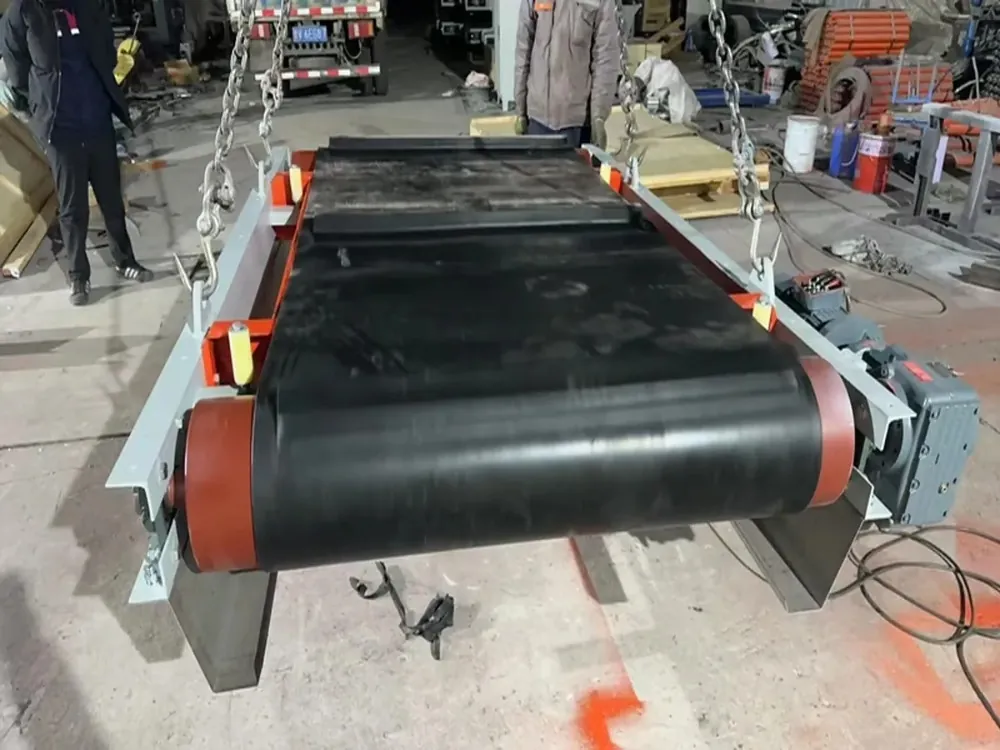
Coverlan self-cleaning permanent overband magnetic separator with continuous discharge belt

Corvelan self-cleaning permanent magnetic separator for conveyor applications. We select the final size and installation layout from your conveyor conditions.

Quick Fit

Is a permanent overband magnetic separator right for your conveyor?

This separator works well when

  • Iron or steel appears repeatedly in a dry material stream on a belt conveyor.
  • You want captured metal discharged automatically instead of cleaning the magnet by hand.
  • Your conveyor has safe support, enough headroom and a clear place for the metal to discharge.

Send us this information

  • Distance from the magnet face to the deepest iron you need to remove (working distance)
  • Normal and maximum material depth on the belt (burden depth)
  • Belt width, belt speed and trough shape
  • Iron size, shape, position and how often it appears
  • Space available for crossbelt or inline installation

Choose another separator when

  • Your main target is aluminium, copper or another non-ferrous metal.
  • Your process uses slurry, liquid or enclosed pneumatic conveying.
  • Iron appears only occasionally and safe manual cleaning is practical.
  • Your application needs more magnetic reach than a practical permanent design can provide.
One conveyor width is not enough to select the magnet. We also check material depth, the deepest iron position, belt speed, iron size and the space available for discharge.
Process Benefits

What does a self-cleaning permanent overband magnet do for your process?

Help protect downstream equipment

Remove unwanted iron before it reaches crushers, shredders, screens or other equipment that could be damaged.

Keep iron removal continuous

The cleaning belt carries captured metal away from the magnetic area, so normal discharge does not depend on cleaning the magnet by hand.

No power is needed to create the magnetic field

The magnetic field comes from permanent magnets. Electrical power is used for the cleaning-belt drive, not to create the magnetic field.

Control where captured iron goes

Crossbelt or inline installation lets us plan where the captured metal will leave the conveyor and enter the collection area.

Separator Choice

Manual suspended magnet, permanent overband or electromagnetic overband?

Choose the separator type from how often iron appears, how you want to clean it and how far the magnet must reach. The product name alone is not enough.

What to compareManual-clean suspended permanent magnetSelf-cleaning permanent overbandElectromagnetic overband
How often unwanted iron appearsOccasionalRecurringRecurring or harder-to-reach iron
CleaningCleaned by hand at planned intervalsAutomatic continuous dischargeAutomatic continuous discharge on self-cleaning versions
How the magnetic field is createdPermanent magnetPermanent magnetElectrical power creates the magnetic field
Self-cleaning beltNoYesYes on self-cleaning versions
What to checkCan the magnet be cleaned safely when iron builds up?Can the permanent magnet reach the iron at the deepest important point?Does your application need more magnetic reach or a different operating method?
Our recommendation: use a manual-clean suspended magnet when unwanted iron is truly occasional and cleaning access is safe. Use a self-cleaning permanent overband when iron appears repeatedly and a permanent magnet can reach it. Consider an electromagnetic overband when your application needs more magnetic reach or different operating control.
Material & Contaminant Fit

What material and contamination can this separator handle?

Main separation job

We use an overband magnetic separator to pull iron and steel out of dry bulk material moving on a conveyor. Typical unwanted pieces include steel fragments, bolts, wire, nails and worn machine parts.

What makes iron harder to remove?

The same piece of steel is not always equally easy to remove. Iron near the top of the material is easier for the magnet to reach. Iron buried deeper is harder to attract. Belt speed, surrounding material and the distance to the magnet also matter.

Applications

Where do we recommend a permanent overband magnetic separator?

This separator works well when a belt conveyor carries dry bulk material and unwanted iron must be removed automatically before the next process step.

ApplicationWhy the overband magnet is usedWhat Corvelan checks
Aggregate & quarryRemove iron before crushers, screens or transfer equipment.Material depth, lump size, belt speed and the deepest likely iron position.
Construction & demolition recyclingRemove iron and steel from mixed material on the conveyor.Changing material depth, iron size, discharge space and areas exposed to wear.
Waste & recyclingRemove ferrous metal continuously from conveyor-fed material.How often iron appears, how material sits on the belt, side clearance and collection space.
Coal & bulk handlingRemove damaging iron or steel before the next piece of equipment.Distance to the iron, material depth, belt speed and nearby steel structure.
Cement & mineral handlingHelp protect downstream handling or processing equipment.Material condition, conveyor shape, required magnetic reach and maintenance access.
Wood & biomass handlingRemove nails, fasteners and other iron or steel when present.Bulk density, material depth, iron shape and site housekeeping or fire-control needs.
Working Principle

How does a self-cleaning permanent overband separator work?

The permanent magnet pulls iron and steel toward the separator. The moving cleaning belt then carries the captured metal away from the product and drops it at the discharge point. The belt-drive motor moves the cleaning belt; it does not create the permanent magnetic field.

01 · Material moves under the magnet

The main conveyor carries bulk material below the suspended separator.

02 · Iron moves toward the magnet

If the magnetic field is strong enough at that distance, iron or steel moves upward. Deeply buried or trapped pieces are harder to remove.

03 · The cleaning belt carries it away

Captured pieces stay against the cleaning belt while they move away from the product stream.

04 · The metal drops into the collection area

After the captured metal leaves the strong magnetic area, it falls from the belt into the planned discharge area.

Cleaning-belt path on Coverlan self-cleaning permanent overband magnetic separator

Cleaning-belt path on a Corvelan permanent self-cleaning magnetic separator.

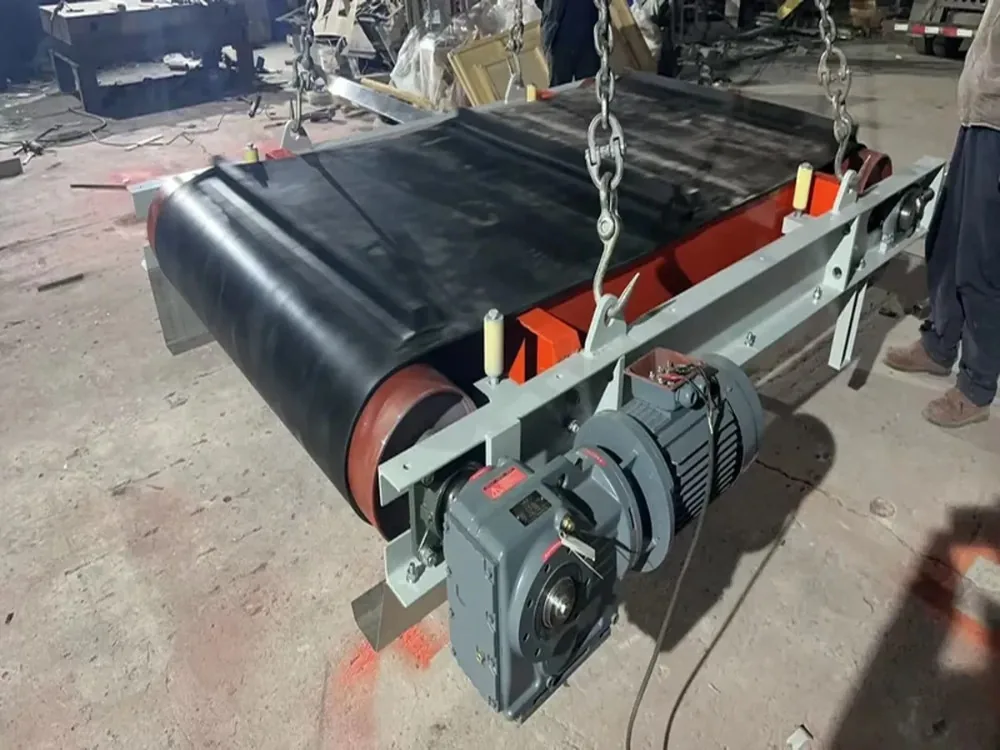
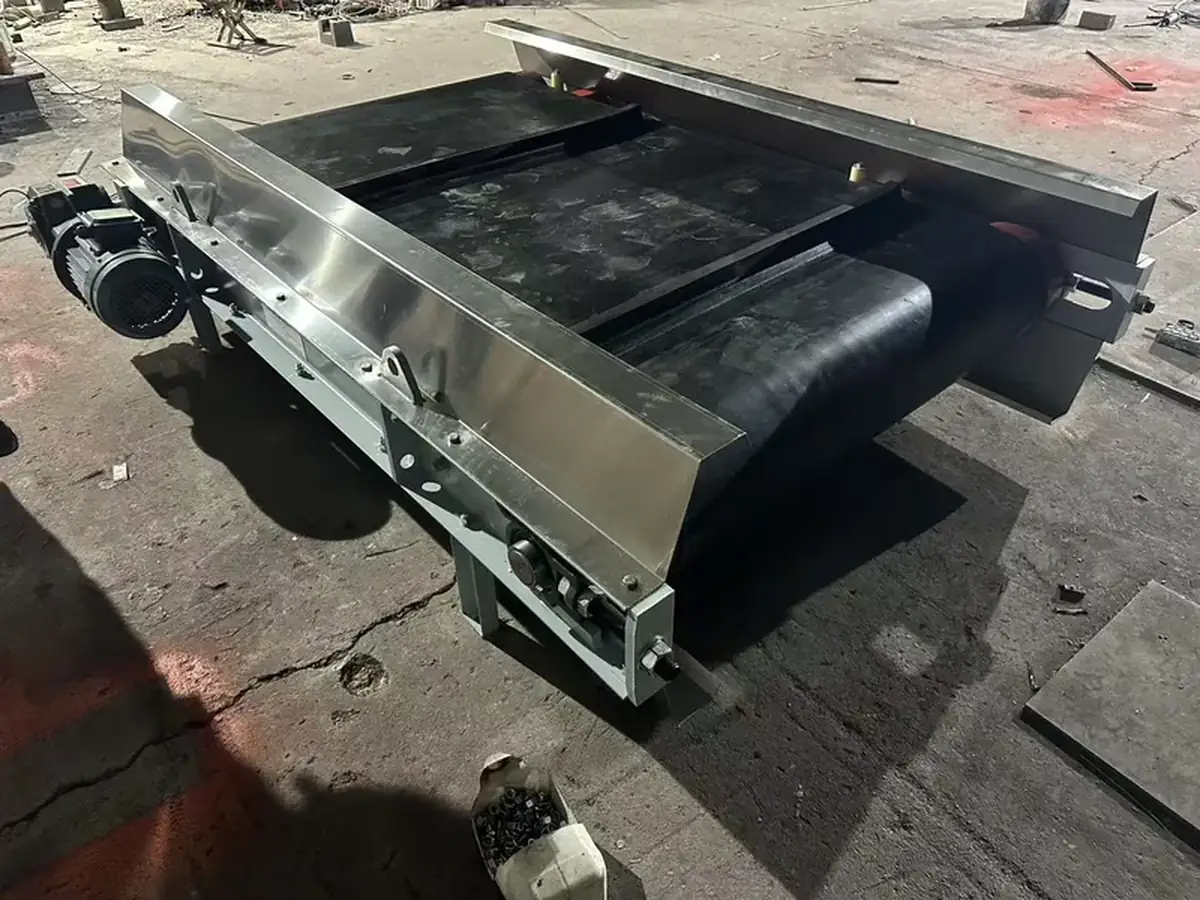
Drive side of Coverlan permanent overband magnetic separator with motor and reducer

Drive-side construction showing the motor and reducer that move the cleaning belt.

Performance Factors

What controls whether the magnet can remove the iron?

A higher Gauss number does not automatically mean better iron removal. Gauss is a magnetic-field reading at a specific point. Engineers call this magnetic flux density. It does not, by itself, tell you whether buried iron will be removed. Distance, material depth, belt speed and the iron itself also matter.

What to checkWhy it mattersHow Corvelan uses it
Distance to the iron (working distance)The magnetic field becomes weaker as the iron gets farther from the magnet.We use the distance from the magnet face to the deepest important iron position, not just the visible air gap.
Material depth (burden depth)Deeper material puts buried iron farther from the magnet and can hold it in place.We check normal and maximum material depth where the separator will be installed.
Belt speedSpeed changes how long the iron stays under the magnet. Near a head pulley, it also changes the material path.We use normal and maximum belt speed when checking the magnetic path and installation layout.
Iron size and shapeSize, shape, weight, position and magnetic response all affect how easily a piece can be captured.A photo, sample or dimensions are more useful than a general description such as “iron”.
Material conditionMoisture, particle size, bulk density and large lumps can change how deeply the iron is buried.We check the real material condition at the point where separation will happen.
Steel near the separatorNearby steel can affect the magnetic field and reduce useful installation space.We check idlers, chutes, beams and support steel around the planned magnet position.

Have a conveyor drawing or photo?

Send the material, iron or steel you need to remove, belt data and proposed installation point. We will recommend the separator type and tell you what information is still missing.

Review My Conveyor Layout
Magnetic Working Zone

Why should nearby steel be checked before an overband magnet is installed?

Steel too close to the magnet can affect the magnetic field and can also become strongly magnetized. We review the structure around the planned magnet position before the final layout is confirmed.

Check idlers, chutes and beams

Steel directly below or very close to the active magnetic area can change the magnetic path. We review the nearby conveyor structure instead of treating the magnet as an isolated machine.

Plan the magnetic working zone

Some installations need low-magnetic or non-magnetic components close to the separator. The required area depends on the selected magnet and conveyor layout, so we do not publish one fixed clearance for every project.

Protect access and service space

Strong permanent magnets can attract loose iron tools and steel parts. The final layout should leave safe room for inspection, lifting, cleaning-belt service and metal discharge.

Installation Direction

Crossbelt or inline: which installation should you use?

Choose crossbelt when captured metal needs to discharge to the side

A crossbelt separator is mounted across the main conveyor. Captured iron moves to one side and drops into a collection area. This setup is often easier to add to an existing conveyor when there is enough space beside the belt.

Choose inline when the magnet can sit near the conveyor head pulley

An inline separator is mounted in the same direction as the main conveyor, often near the discharge end. Material opens as it leaves the head pulley, which can make buried iron easier to reach. You still need enough space for the separator and for the captured metal to discharge.

If the conveyor head itself should perform magnetic separation instead of suspending a magnet above it, compare a magnetic head pulley.

We confirm the final layout from your conveyor. We check working distance, material depth, nearby steel, discharge direction, support position and maintenance space before we confirm crossbelt or inline installation.
What We Confirm

What information do we confirm for your overband magnet?

We do not use one universal installation height, motor size or Gauss number for every conveyor. The selected machine must match the real working distance, material depth, belt speed, target iron and installation space. Exact model values are confirmed for the machine quoted for your project.
What we confirmWhat it includesWhy it matters
Separator typePermanent self-cleaning overband, or another separator if your application needs itStarts the project with the right separation method.
Conveyor dataBelt width, belt speed, trough shape and material depthShows how the material moves and how much space the separator needs.
Working heightReal distance from the magnet face to the iron, plus the planned suspension positionThe magnet must be checked at the iron position, not only at the magnet face.
Installation directionCrossbelt or inlineSets the support position, metal discharge direction and service access.
Cleaning systemCleaning-belt arrangement and drive details for the selected machineMust suit how often iron appears and where it needs to discharge.
Machine size and required spaceOverall dimensions, lifting or suspension points and required clearancesHelps the separator fit the conveyor structure safely.
Power and controlsDrive power needs and project-specific connectionsNeeded for installation and start-up planning.
How performance will be checkedMagnetic measurement or a representative iron-removal check when requiredGives the project a clear method for checking the agreed requirement.
Use only model-specific values for final approval. A conveyor width, surface Gauss reading or catalog number from another machine does not prove the selected unit will work at your actual iron position. Final dimensions, drive data and any agreed magnetic check must belong to the machine quoted for your project.
Selected machine data

Machine size, suspension or lifting points, cleaning-belt arrangement and drive information for the selected unit.

Installation data

Crossbelt or inline direction, working height, discharge direction, required clearance and the main conveyor interfaces we need to match.

Check method when required

The agreed magnetic measurement point or representative iron-removal check, when a project needs a defined way to confirm performance.

Exact values belong to the selected model. We include the applicable dimensions, drive power, installation height and required magnetic data in the quotation or project documents when they have been confirmed for your project.

Suitable / Not Suitable

When is this separator a good fit, and when should you choose something else?

Good starting conditions

  • Dry bulk material moves on an open belt conveyor.
  • Iron or steel contamination appears repeatedly.
  • Automatic metal discharge is useful.
  • Safe overhead support and maintenance access are available.
  • A permanent magnet can provide enough reach for the deepest important iron position.

Choose another separator when

  • Aluminium or copper recovery is the main goal — consider eddy-current separation.
  • The process uses liquid, slurry or pneumatic conveying — use equipment made for that process.
  • The main job is separating fine, weakly magnetic minerals — use a different magnetic-separation method.
  • The required magnetic reach is too great for a practical permanent design — compare an electromagnetic overband.
Installation & Integration

What should we check around the conveyor before installation?

Steel near the magnet

We check idlers, chutes, beams and other steel close to the separator. Some layouts need a low-magnetic or non-magnetic area around the active part of the magnet.

Support and working space

We confirm the suspension structure, lifting method, headroom and the space needed to inspect, adjust and service the machine.

Metal discharge and guarding

We plan a clear place for captured metal to leave the separator. We also allow space for guards around the moving belt, pulleys and drive parts.

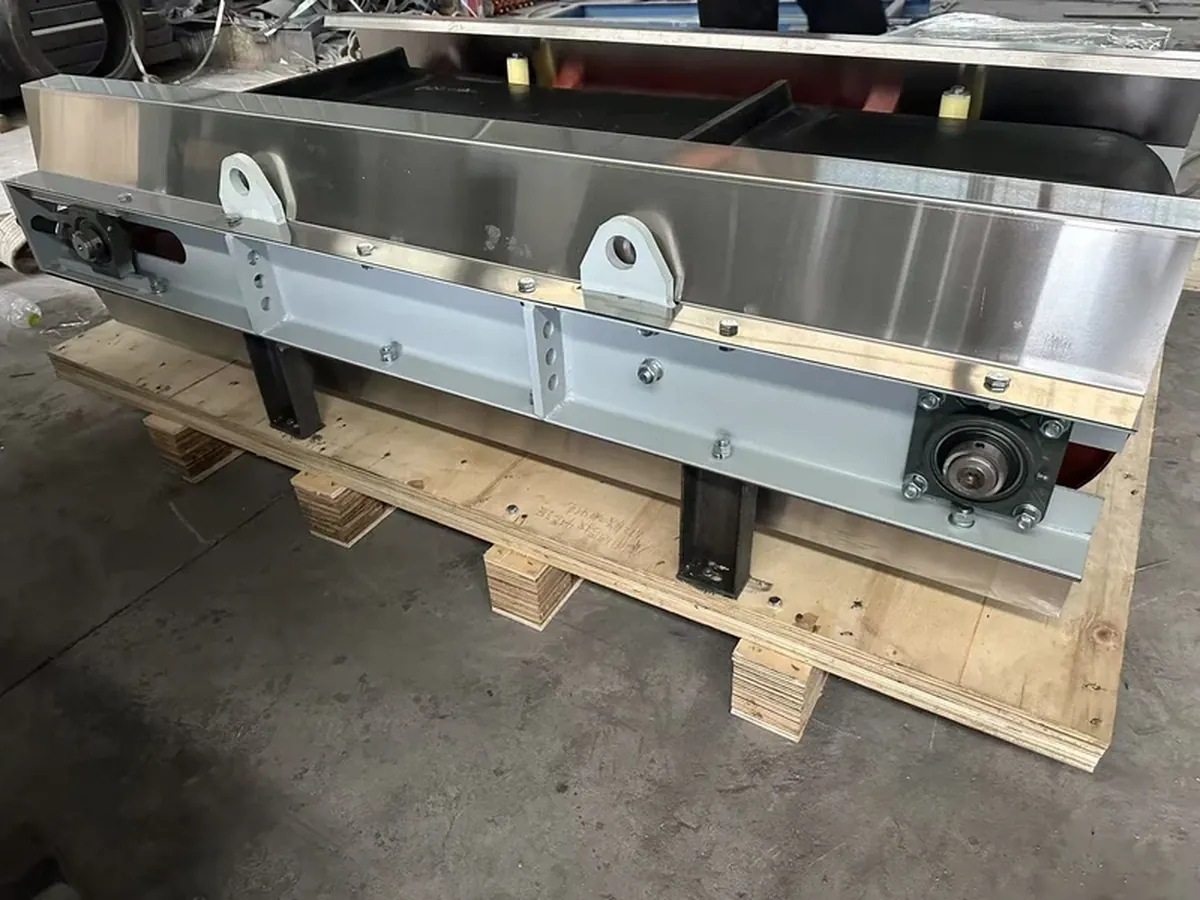
Coverlan permanent overband separator frame with lifting points and belt-tracking hardware

Frame construction showing lifting points and belt-tracking parts that need space in the final layout.

Permanent magnet safety

The magnet stays magnetic even when the cleaning-belt motor is switched off. Before maintenance, stop and isolate moving equipment. Control suspended loads and loose iron or steel tools near the magnet. Follow the equipment instructions and your site rules for sensitive devices or medical implants that may be affected by strong magnetic fields.

Cleaning, Maintenance & Safety

What needs routine attention on a self-cleaning overband?

Cleaning belt

Check belt condition, tracking, cleats and tension. The captured metal should leave the magnetic area cleanly without rubbing, coming back around or falling into the product again.

Drive and rotating parts

Check the motor, reducer, bearings, pulleys and guards as required for the selected machine. Do not work on moving parts while the drive is energized.

Structure and discharge area

Keep suspension points, fasteners, discharge chutes and collection areas in safe working condition. Remove built-up metal before it can interfere with operation.

Checks Before Shipment

What should be checked before a selected overband separator is released for shipment?

The check should match the equipment and the requirement agreed for the project. We do not treat one surface Gauss number as a complete acceptance test. When documented checks are part of the order, the record should state what was checked and under what conditions.

Mechanical fit

Check the applicable overall dimensions, suspension or lifting points, belt path, discharge direction and service clearances against the selected machine information.

Cleaning-belt and drive function

Where a running check is required, confirm belt tracking, discharge direction and drive operation under the agreed test condition. Guards and moving parts should remain part of the safety review.

Magnetic or removal check

If the project requires a magnetic reading or representative iron-removal test, define the measurement point, distance, test piece and other important conditions before using the result.

Need a specific inspection record? Send the requirement with your RFQ. We can review which dimensions, operating checks or magnetic test conditions need to be defined for the selected unit before the order is finalized.

Checking the Selection

How do we check that the selected separator fits your application?

First, we agree on what the separator needs to remove and under what operating conditions. Then we choose a practical way to check it. This may be a magnetic measurement or a removal test using representative iron pieces.

Check the layout

We confirm working distance, material depth, support position, nearby steel, discharge space and service access against the agreed conveyor layout.

Check the magnetic reading when needed

If a magnetic reading is required, we agree where to measure, the air gap and the measurement method before comparing the result.

Use representative iron when practical

When a removal test is useful, we agree on representative iron pieces and operating conditions. This makes the test closer to the real process instead of a laboratory-only check.

A useful test record should identify the test conditions, not only the final number. This makes the result easier to compare with the conveyor conditions used for selection.
RecordWhy it matters
Selected machine or project referenceLinks the result to the unit being checked instead of a different magnet.
Measurement or test positionShows where the Gauss reading or iron piece was checked.
Distance from the magnetMagnetic strength changes with distance, so the gap must be clear.
Representative iron pieceSize, shape and weight affect how easily the magnet can capture it.
Material depth and belt condition, when applicableA buried piece of iron is harder to remove than the same piece tested in free air.
Test method and resultLets the result be read together with the agreed project requirement.
How Corvelan Selects

How does Corvelan turn your conveyor data into a recommended setup?

1 · Understand your processWe start with the material, the iron or steel you need to remove, material flow and the job the separator must do.
2 · Check distance and material depthWe review working distance, material depth, belt speed and the deepest important iron position.
3 · Choose crossbelt or inlineWe choose the installation direction from support space, metal discharge space, nearby steel and maintenance access.
4 · Confirm the machine fitWe confirm machine size, suspension points, drive needs and the space needed for service.
5 · Agree how to check performanceIf a magnetic reading or iron-removal test is needed, we agree the method before using the result.
6 · Prepare the quotation packageWe use the agreed setup as the basis for the quotation and project drawing information.
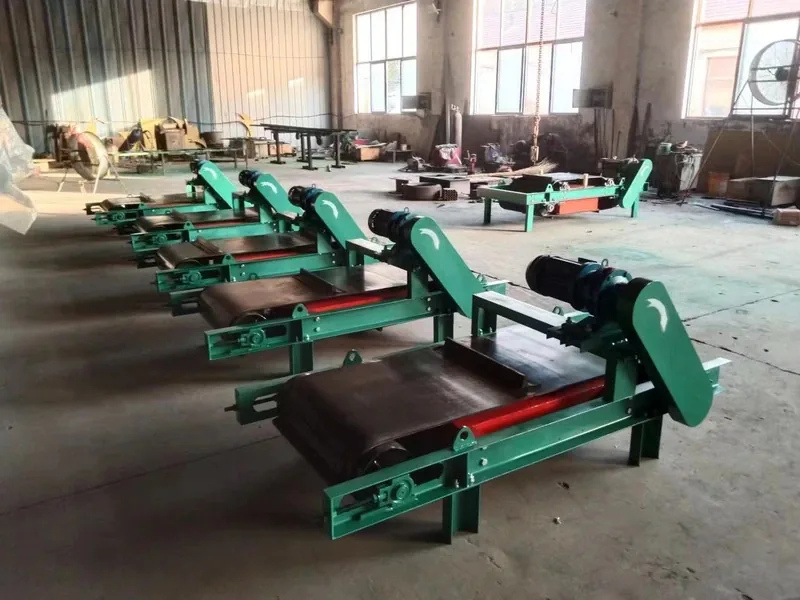
Coverlan permanent self-cleaning overband magnetic separator construction

Corvelan permanent self-cleaning magnetic separator construction used when we review installation and machine fit.

What you receive from Corvelan

  • A recommended separator type based on your conveyor conditions
  • A recommended crossbelt or inline installation direction
  • A clear list of any information still needed before we finalize the selection
  • Selected mechanical, installation and drive information in the quotation package
  • A practical test method when magnetic or iron-removal checking is requested

We connect the magnetic need, conveyor layout, cleaning method and installation space before we finalize the quoted setup.

Project Documentation

What engineering information should be tied to the selected machine?

Project documents should use the data for the selected unit, not copied values from another separator. The exact document set depends on the order and the information confirmed during selection.

Quotation data

Selected separator type, agreed conveyor inputs and the machine data needed to define the quoted setup.

Drawing information

Machine outline, suspension or lifting points, installation direction, metal discharge direction and required clearances when these items are part of the project drawing package.

Check criteria

Any agreed dimensional check, magnetic measurement point or representative iron-removal condition that needs to be documented for the project.

FAQ

Overband Magnetic Separator FAQ

What is an overband magnetic separator?

An overband magnetic separator is a magnet installed above a conveyor to remove iron and steel from moving material. A self-cleaning version uses a moving belt to carry the captured metal out of the magnetic area for automatic discharge.

Permanent overband magnet or electromagnetic overband magnet — which should I choose?

Choose a permanent overband magnet when it can reach the iron in your material and you want a magnetic field that does not need electrical power. An electromagnetic overband may be better when your application needs more magnetic reach or different operating control. Send us your working distance, material depth, belt speed and target iron, and we can compare the two options for your conveyor.

What is the difference between an overband magnetic separator and a manual suspended magnet?

A manual suspended permanent magnet holds captured iron on the magnet face and needs planned cleaning by hand. A self-cleaning overband adds a moving belt that carries the captured metal to a discharge point. Manual cleaning can work when iron appears only occasionally; repeated iron normally makes automatic discharge more practical.

What is the difference between crossbelt and inline installation?

A crossbelt separator is mounted across the main conveyor and usually discharges captured metal to the side. An inline separator is mounted in the same direction as the conveyor, often near the head pulley at the discharge end. We choose between them from magnetic reach, available space, support position and the metal discharge path.

How do I size an overband magnetic separator for my conveyor?

Do not size it from conveyor width alone. Send us belt width and speed, normal and maximum material depth, the distance from the magnet to the deepest iron, representative iron size, material condition, nearby steel and available discharge space. We use these details to recommend the magnetic and mechanical setup.

How high should an overband separator be installed?

There is no single installation height that works for every conveyor. We check the distance from the magnet face to the iron you need to remove, including the air gap and the iron position inside the material. This distance is called the working distance and is one of the main points used to select the magnet.

Does a higher Gauss value guarantee better tramp-iron removal?

No. Gauss is a magnetic-field reading at a specific point; engineers call this magnetic flux density. It is not the same as pull force or separation efficiency at the real iron position. Working distance, material depth, belt speed and iron size or shape also matter.

Can an overband magnetic separator help protect a crusher?

Yes, when unwanted iron or steel in the conveyor feed could damage the crusher and the separator is correctly selected and installed. We still need to check material depth, working distance, belt speed, iron size and conveyor layout.

Can this separator remove aluminium or copper?

A conventional permanent overband magnet is mainly for iron and steel that a magnet can attract. Aluminium and copper normally need a different separation method, such as eddy-current separation.

What should I send Corvelan for selection and quotation?

Start with the material, the iron or steel you need to remove, material flow or throughput, and the installation condition. For a conveyor, also send belt width, belt speed, material depth, representative iron size, available headroom and discharge space. A photo, sketch or drawing is very useful if you have one.

RFQ

Send the process basics first

You do not need every detail before contacting us. Send the four items below and Corvelan will tell you what else we need to recommend the right setup.

1

Material

Tell us what material is moving on the conveyor, such as coal, stone, recycled material or another bulk product.

2

Iron or steel to remove

Tell us what unwanted iron or steel you need to remove. A photo and approximate size are very useful.

3

Throughput / material flow

Tell us the normal and maximum material flow if you know it.

4

Installation point

Send a conveyor photo, drawing or simple sketch showing where you want to install the magnet.

Also useful: belt width, belt speed, material depth, trough shape, moisture, bulk density, headroom, side or end discharge space, nearby steel, site power and any test requirement.

Fastest way to start: send one conveyor photo or drawing together with the material, target iron and the operating data you already have. We can identify the missing selection details from there.

What happens next?

We review your conveyor data, recommend the separator type and tell you what information is still missing. We then prepare the project-specific setup for quotation. If another type of magnetic separator fits your process better, we tell you before the equipment is finalized.

Get An Instant Quotation Now