RCYB Series | Manual-Clean Conveyor Magnet

Suspended Permanent Magnet Separator

Corvelan supplies RCYB suspended permanent magnet separators for conveyor lines. They remove unwanted iron and steel from material moving on the belt. This unwanted metal is often called ferrous tramp iron. We choose the model from your conveyor and material details. We check belt width, material depth, the real distance from the magnet to the iron, belt speed, target iron and installation space. We do not choose a model from one surface magnetic reading alone.

Best for: conveyor-fed dry bulk materials
Target: unwanted iron and steel
Cleaning: manual-clean permanent magnet
We check: belt width + material depth + suspension height + speed

Send us your belt width, the normal and maximum material depth, and a conveyor photo. We can then narrow the RCYB model range quickly.

Suspended permanent magnet separator for conveyor tramp iron removal
Manual-clean suspended permanent magnet from the current RCYB product set. We confirm the final model and suspension arrangement for your conveyor.
400–1600 mmstandard reference belt-width range
130–450 mmstandard rated suspension-height range
80–400 mmstandard reference material-depth range
≤ 2.5 m/sreference applicable belt speed in supplied series data
RCYB Series

What Is the RCYB Suspended Permanent Magnet Separator?

The RCYB is a permanent magnet installed above a conveyor. It attracts unwanted iron and steel and holds them on the magnet face. This helps keep the metal away from crushers, screens and other equipment farther down the line. The permanent magnetic circuit does not need excitation power. The RCYB shown here is a manual-clean model, so captured metal stays on the magnet until the line is safely stopped and cleaned.

This page focuses on the manual-clean suspended permanent magnet shown in the product and installation photos. You may also see the term overband magnet when searching for this type of equipment. In many catalogs, that name is used for a self-cleaning magnet with a discharge belt. If you need continuous automatic iron discharge, we can supply a self-cleaning cross-belt separator instead.

Choose this RCYB when: the unwanted metal is iron or steel. The magnet must also fit close enough to the target, and planned manual cleaning must work for your line.
Standard Models

RCYB Suspended Permanent Magnet Specifications

Start with your conveyor belt width. Then check the material depth, suspension height, belt speed and the iron you need to remove. We use these details to confirm the final model. The table below shows the current RCYB series reference data used on this page.

Standard RCYB Reference Models

These models cover the widest belt-width and suspension-height range in the supplied RCYB data.

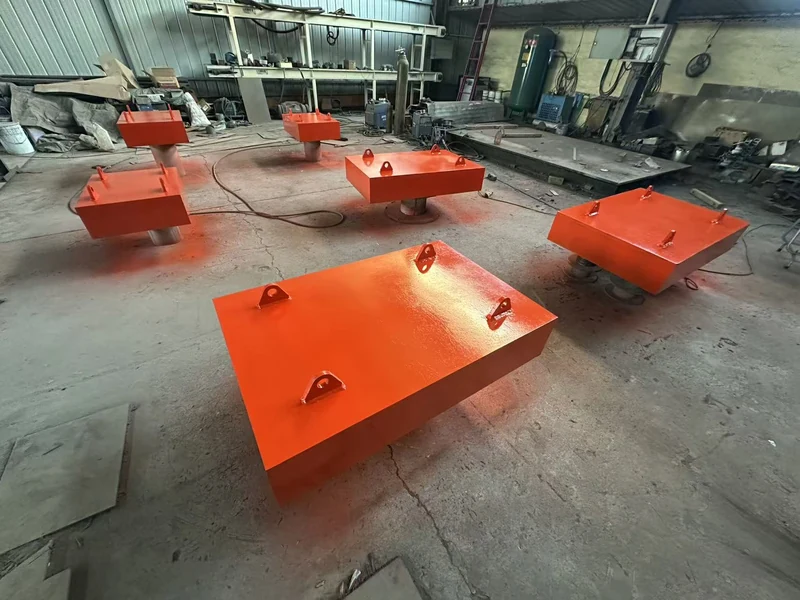
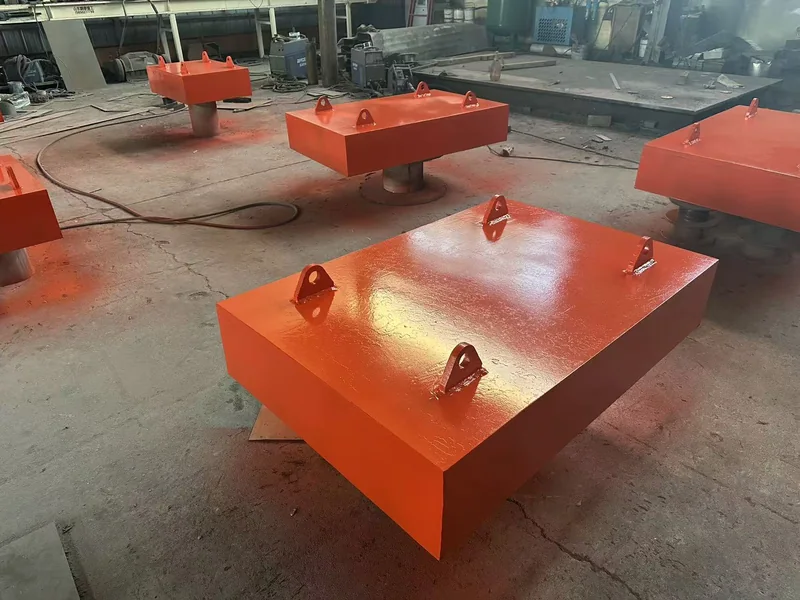
Multiple suspended permanent magnet separator sizes for different conveyor duties
Different magnet body sizes show why belt width is only the first detail we check.
ModelYour Belt Width (mm)Rated Suspension Height (mm)Material Depth ≤ (mm)Reference Magnetic Field ≥ (mT)*Conveyor Belt Speed ≤ (m/s)Weight (kg)Dimensions L × D × H (mm)
RCYB-440013080632.5115400 × 300 × 210
RCYB-5500150100632.5180500 × 400 × 230
RCYB-6600 / 650180130702.5300600 × 500 × 250
RCYB-6.5650200150702.5450650 × 600 × 250
RCYB-8800250200702.5580800 × 700 × 250
RCYB-101000300250702.58801000 × 800 × 250
RCYB-121200350300702.511001200 × 1000 × 270
RCYB-141400400350702.517001400 × 1300 × 270
RCYB-161600450400702.522001600 × 1500 × 270

RCYB-P Reference Models

ModelYour Belt Width (mm)Rated Suspension Height (mm)Material Depth ≤ (mm)Reference Magnetic Field ≥ (mT)*Conveyor Belt Speed ≤ (m/s)Weight (kg)Dimensions L × D × H (mm)
RCYB-4P4008030452.565400 × 300 × 140
RCYB-5P50010050502.5110500 × 400 × 160
RCYB-6P600 / 650150100502.5175600 × 500 × 186
RCYB-6.5P650180130502.5280650 × 600 × 186
RCYB-8P800200150502.5420800 × 600 × 186

*mT means millitesla, a unit used to measure magnetic field strength. The values above come from the supplied RCYB series sheet. If magnetic field strength must be checked for your order, we will define the test method. The quotation, drawing or test document will state where and how the reading is taken. A Gauss or mT reading at one point does not by itself prove pull force or separation efficiency.

Model Selection

How We Select the Right RCYB Model

Corvelan starts with your belt width, but we do not choose the magnet from belt width alone. We also check how deep the iron is buried and how far it is from the magnet. Then we check belt speed, installation space and how the unit will be cleaned.

01

Your Belt Width

We use your belt width to narrow the RCYB model range and the required magnet size.

02

How Deep the Material Is

We check the normal and maximum depth of material on the belt. Engineers often call this burden depth. We also check the real distance from the magnet face to the iron inside the material, not only to the top of the material.

03

Conveyor Belt Speed

The faster the belt runs, the less time the iron spends under the magnetic field. We check belt speed when choosing the model and installation height.

04

What Iron You Need to Remove

Tell us the size, shape and approximate amount of iron or steel you need to remove. These details affect how hard the separation job is.

05

Your Installation Space

We check the available headroom, support steel, conveyor shape and nearby steelwork before we confirm where the magnet will hang.

06

How Often the Magnet Needs Cleaning

We check how often iron may build up on the magnet. If planned manual cleaning would stop the line too often, we can use a self-cleaning overband instead.

Applications

Where We Use Suspended Permanent Magnets

We use suspended magnets above conveyors that may carry unwanted iron or steel with the material. The magnet removes this metal before it can damage equipment or move into the next process.

Mining & Quarrying

Remove unwanted iron carried with ore, stone and aggregate before it reaches crushers, screens or transfer equipment.

Cement

Remove unwanted iron before it reaches crushers, mills or other equipment in the cement line.

Coal & Power

Remove unwanted iron and steel from coal moving on the conveyor.

Metallurgy

Remove unwanted iron before selected downstream processing steps without touching the material stream.

Chemical Bulk Materials

Use a suspended magnet above suitable dry bulk materials when the process conditions match the quoted equipment.

Glass

Remove unwanted iron and steel from suitable raw materials moving on a conveyor.

Paper & Wood Processing

Keep unwanted steel pieces away from suitable handling, shredding and size-reduction equipment.

General Bulk Handling

Use the separator above suitable dry bulk material conveyors. The unwanted metal should be iron or steel that is strongly attracted by a magnet.

How It Works

How Does the Suspended Permanent Magnet Remove Tramp Iron?

Material moves under the suspended magnet on the conveyor. Iron and steel that are strongly attracted by a magnet move upward toward the magnet face. Engineers call these ferromagnetic materials. The deeper the iron is buried in the material, the harder it is to pull out. This is why the real distance from the magnet to the iron matters more than one surface magnetic reading by itself.

With the manual-clean RCYB, captured metal stays on the magnet face until the conveyor is stopped and the area is made safe for cleaning. The permanent magnetic field is always active, even when nearby electrical equipment is switched off.

Important: magnetic flux density is one engineering input. It is not the same as pull force and it is not the same as separation efficiency.
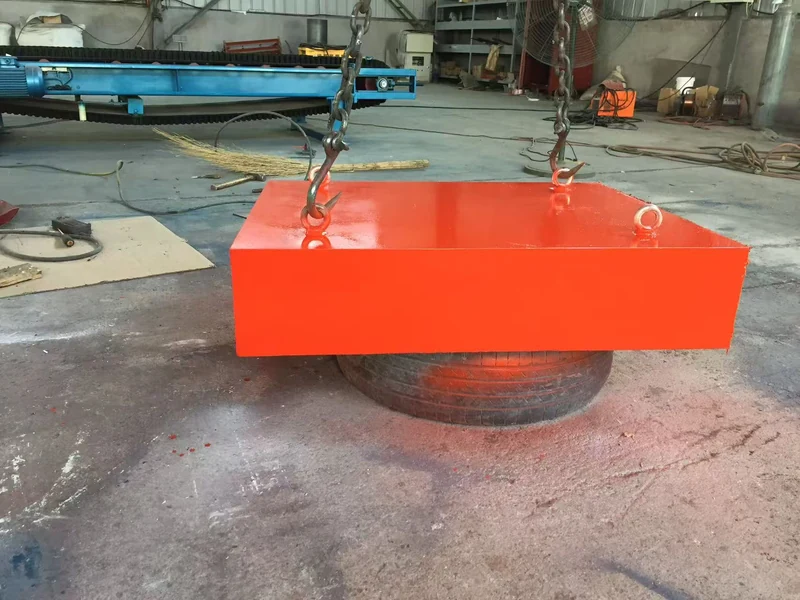
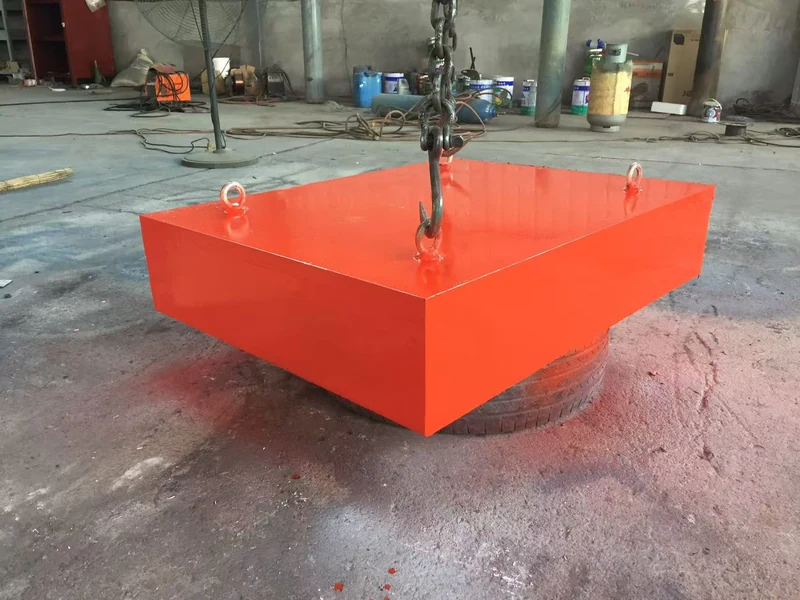
Manual-clean suspended permanent magnet separator body and lifting points
Permanent magnet body and lifting points. Suspension hardware and support structure are finalized for the actual installation.
Installation

Where Should a Suspended Permanent Magnet Be Installed?

The magnet must be close enough to the iron to do its job. It also needs safe space for the material, support frame and cleaning work. Send us a conveyor photo or drawing and we will check the proposed position before we confirm the installation.

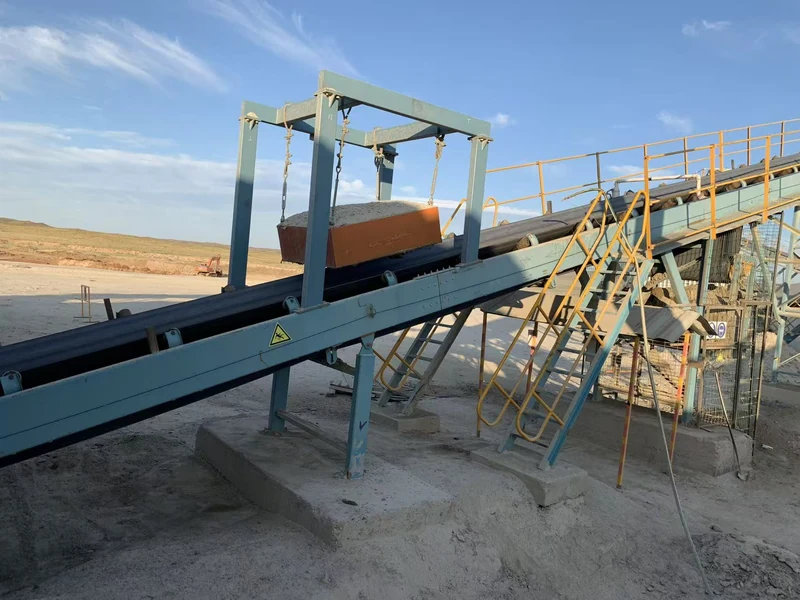
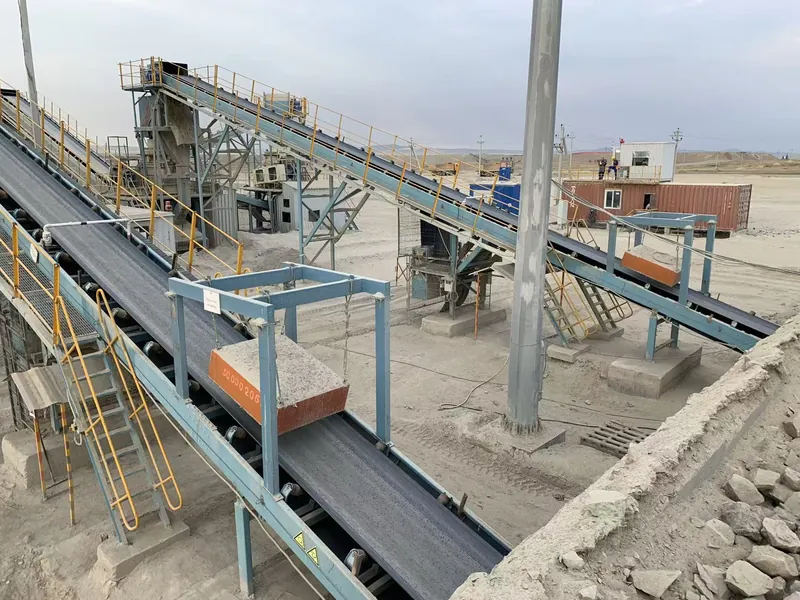
Suspended permanent magnet installed above a bulk material conveyor
Example above-belt suspension. Check belt profile, material depth, support frame, headroom and access before fixing the final height.

Dimensions We Check First

  • Belt width: the conveyor width that sets the starting magnet size.
  • Material depth: the normal and maximum depth of material on the belt.
  • Available suspension height: the space between the conveyor and the magnet face.
  • Support and cleaning space: room for suspension points, nearby steelwork and safe manual cleaning.
For the project drawing: we confirm the selected model and the installation dimensions that matter for your conveyor. A general catalog height should not be copied into a site drawing without checking the real material depth and clearance.

Above the Conveyor Belt

This works when the magnet can hang close enough to the iron. It must still leave enough clearance for the material and the largest piece that may be captured.

Near the Conveyor Head or Transfer Point

A transfer point can expose the material more openly. We still check where the material falls, where the magnet can be supported and whether there is enough safe access for cleaning. There is no single installation angle that fits every conveyor.

Performance

What Affects How Well the Magnet Removes Iron?

Distance From the Magnet to the Iron

Measure from the magnet face to the iron inside the material. Do not measure only to the top of the material. Iron buried deeper is harder to remove.

How Deep the Iron Is Buried

Material depth affects how easily the magnet can reach the iron. Large lumps, moisture, density and tightly packed material can also make the iron harder to pull out.

Size and Shape of the Iron

Large flat steel, compact pieces, long bars and small irregular fragments do not respond in exactly the same way. Tell us what you need to remove so we can check the duty.

Conveyor Belt Speed

Higher speed reduces exposure time and can make the capture window more demanding.

Conveyor Shape and Installation

The conveyor shape, support steel, headroom and nearby steelwork all affect the installation. They can limit how close the magnet can be and how it is supported.

Iron Buildup on the Magnet

Captured iron must be removed before too much metal builds up on the magnet face. Heavy buildup can reduce safe clearance and disturb normal operation.

Cleaning Options

Manual-Clean Suspended Magnet or Self-Cleaning Overband?

The main difference is how captured iron is removed. Choose the RCYB manual-clean magnet when planned cleaning stops are acceptable. Choose a self-cleaning overband when you need automatic iron discharge or manual cleaning would stop production too often.

CURRENT PRODUCT ROUTE

Choose Manual Cleaning When

  • Tramp-iron loading is low to moderate.
  • Planned safe cleaning stops are acceptable.
  • A simple permanent-magnet structure is preferred.
  • You do not need a self-cleaning belt drive.
ALTERNATIVE ROUTE

Choose Self-Cleaning When

  • Iron contamination is frequent or unpredictable.
  • Continuous automatic discharge is required.
  • Manual cleaning would interrupt the line too often.
  • There is enough space for the discharge path, drive and guarding.

The terms “overband magnet” and “cross-belt magnet” are often used for self-cleaning suspended units. We keep that product separate from the manual-clean RCYB shown here so the quoted machine matches the way your line needs to work.

Product Fit

When Should You Use This Separator?

Good Fit

  • Dry bulk material is carried on a conveyor.
  • The target is iron or steel that is strongly attracted by a magnet.
  • The magnet can be installed within a practical working distance.
  • Support, cleaning and maintenance access can be provided.
  • Manual cleaning matches the expected tramp-iron loading.

When You May Need Another Separator

  • The main target is aluminum, copper or another non-ferrous metal.
  • The objective is fine weakly magnetic mineral impurity removal.
  • The feed is slurry or pneumatic rather than conveyor-fed bulk material.
  • The iron is too far from the magnet for a practical permanent-magnet setup.
  • Automatic discharge is necessary; use a self-cleaning suspended magnet instead.
Quick Model Check

Send Your Belt Width & Material Depth

Send us your belt width, normal and maximum material depth, and belt speed. Also send the iron you need to remove and one clear conveyor photo. We will narrow the RCYB model range and tell you what else we need for a quote.

Cleaning & Safety

What Should You Plan for Cleaning and Maintenance?

The permanent magnetic field is always active. Safe cleaning and maintenance must control both conveyor hazards and magnetic hazards. Switching off nearby drives does not switch off the magnet.

  • Provide a controlled cleaning method and safe access around the magnet.
  • Inspect the suspension hardware, lifting points and support structure as required by your maintenance plan.
  • Keep loose ferrous tools and parts under control near the magnetic field.
  • Maintain enough clearance for the largest expected captured piece.
  • Tell us about dust, explosion risk, food contact, ingress protection or other compliance needs before we quote. We only state certifications that are confirmed for the supplied equipment.
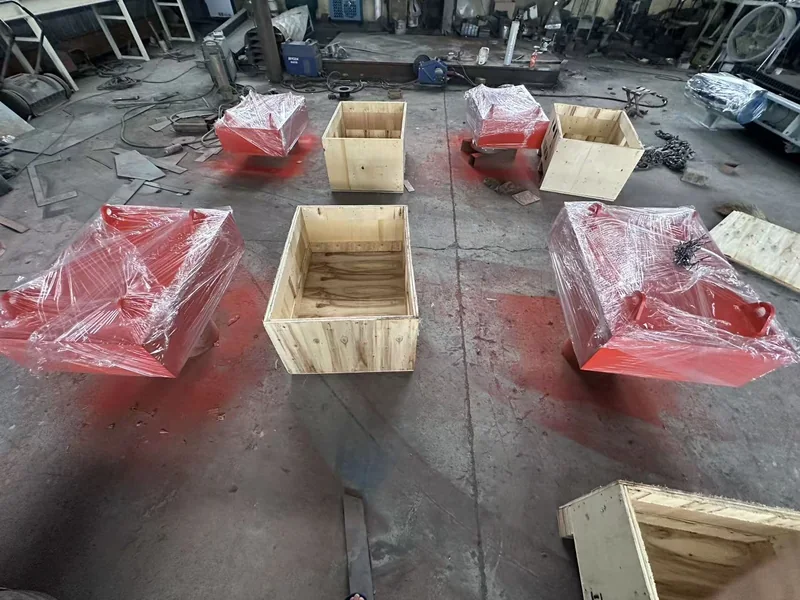
Suspended permanent magnet units prepared with wooden packing cases
Product packing reference. Final packing and handling method are matched to the equipment size and order scope.
Testing & QC

What Inspection Details Should Be Confirmed Before Shipment?

Tell us which inspection records you need before we quote. We can then confirm the inspection items and documents that will be included for the selected order. If your order requires factory inspection records or a performance test, tell us before quotation so we can agree on the inspection scope and test method.

Main Dimensions

If dimensional inspection is required, define the dimensions that must be checked against the approved drawing. Typical items include overall size and suspension-point spacing.

Magnetic Field Measurement

If an mT or Gauss reading is required, define the instrument, measurement point, probe direction and distance first. A reading without these details is hard to compare.

Final Visual & Packing Check

Define any required checks for the housing, lifting points, product identification and packing. We confirm the agreed inspection scope in the quotation or order documents.

What we will not do: we will not turn one unexplained magnetic reading into a pull-force or separation-efficiency claim. If your project needs a measurable pass/fail target, define the test condition before production or shipment.
Installation Example

What Does This Installation Show?

The real installation photo shows the product in its working position above a conveyor. It helps confirm the type of installation, available headroom, support structure and access that must be considered before the magnet is selected.

What This Photo Supports

  • A suspended permanent magnet can be positioned above the conveyed material.
  • The support frame and nearby steelwork affect the usable installation space.
  • Material depth and magnet-to-target distance matter in the real installation.
  • Safe access is needed for a manual-clean unit.

What This Photo Does Not Prove

  • It does not establish a universal capture percentage.
  • It does not prove pull force from appearance alone.
  • Ask us for the model and installation details that match your conveyor.
  • It does not replace a defined acceptance test when one is required.

For your project, we record the selected model, installation conditions and any agreed inspection or test results.

Suspended permanent magnet above a conveyor in a multi-conveyor material handling line
Real installation reference. This image supports installation context. It is not used as a controlled efficiency test.
Performance Check

How We Check Performance Before We Confirm It

Before we confirm performance, we agree on what the separator needs to remove. We also define how the result will be checked. We may define the iron size, material condition, material depth and belt speed. We can also define the distance to the iron, the number of test passes and the pass/fail rule. If magnetic field strength is part of the test, we also define the instrument, probe direction, measurement point and distance.

One magnetic number does not tell the whole story. Gauss or mT is not the same as pull force or separation efficiency. The result also depends on the real working distance, iron size and shape, material depth, belt speed and test conditions.

Capture performance depends on the target metal, material depth and installation height. If you need a measurable removal target, we can agree on a representative test method before ordering.

Corvelan Support

How Corvelan Configures and Documents Your Suspended Magnet

We choose the magnet around your actual conveyor, not from belt width alone. Send us the conveyor size, material depth, belt speed, target iron and installation photo. We use these details to match the model and check where it will be installed. We also define the drawing or inspection items that matter for the order.

We Match the Model

We use your belt width to identify the RCYB starting range. Then we check material depth and the real distance from the magnet face to the iron.

We Check the Installation

We check the proposed position, support space, lifting access, nearby steelwork and cleaning clearance from your photo or drawing.

Agree on Inspection Requirements Before Ordering

We confirm the selected model and key dimensions in the quotation or drawing. If you need inspection records or a defined performance check, tell us before the order so the required method can be agreed.

Suspended permanent magnet separator sizes prepared for different conveyor duties
RCYB product range reference: we match the model to your conveyor, material and target iron, not only to one magnetic number.
FAQ

Suspended Permanent Magnet Separator FAQ

What is a suspended permanent magnet separator?

It is a permanent magnet installed above a conveyor to remove unwanted iron and steel from moving bulk material. The manual-clean RCYB holds the captured metal on the magnet face until the line is safely stopped and cleaned.

Is an overband magnet the same as this RCYB separator?

Not always. Many suppliers use “overband magnet” for a suspended magnet fitted with a moving self-cleaning belt. This page focuses on the manual-clean RCYB suspended permanent magnet. If you need automatic iron discharge, Corvelan can supply a self-cleaning cross-belt separator instead.

What belt widths are covered by the standard RCYB reference range?

The standard RCYB table on this page covers reference belt widths from 400 to 1600 mm. Belt width is only the starting point. We also check material depth, suspension height, belt speed, target iron and the available installation space.

Does the permanent magnet need electrical excitation power?

No. The permanent magnetic circuit does not need electrical excitation power. The RCYB shown here is manual-clean, so it does not use a self-cleaning belt drive.

How high should the magnet be above the conveyor?

Use the selected model’s rated suspension height as a starting reference. Then check the real distance from the magnet face to the iron inside the material. Material depth, clearance and the largest captured piece also affect the final installation height.

Does higher Gauss or mT automatically mean better iron removal?

No. A higher magnetic reading at one point does not automatically mean the separator will remove more iron. Gauss or mT measures magnetic field strength at a defined point. Pull force, real working distance, iron size and shape, material depth and belt speed also affect the result.

Can this separator remove aluminum or copper?

No, not as the main separation method. A suspended permanent magnet is made mainly for iron and steel that are strongly attracted by a magnet. Aluminum, copper and other non-ferrous metals normally need another separation technology.

What should I send Corvelan for a quote?

Send us the material, the iron or steel you need to remove, and your belt width. Also send the normal and maximum material depth, belt speed if known, and a conveyor photo or drawing. If you have them, also send throughput, particle size, moisture, headroom and any test or documentation requirements.

Request a Quote

What Should You Send Us for a Quote?

You do not need a complete engineering drawing to get started. Send us the conveyor details that affect model fit and the real distance from the magnet to the iron. We will tell you what else we need before we quote.

Send Us These Details First

  • Material name and physical form
  • Iron or steel you need to remove
  • Belt width
  • Normal and maximum material depth
  • Belt speed if known
  • Clear conveyor photo or proposed installation drawing

If You Have Them, Also Send

  • Normal and peak throughput
  • Particle / lump size, bulk density and moisture
  • Expected iron size, shape and how often it appears
  • Available headroom and space for suspension and cleaning
  • Dust, temperature and other process conditions
  • Any test, inspection or documentation requirements
Next Step

Send Your Conveyor Details

Send us your belt width, material depth, belt speed, the iron you need to remove and a conveyor photo. We will use the RCYB reference range to choose a starting model. Then we check the real working distance and confirm whether the manual-clean suspended magnet fits your line.

Get An Instant Quotation Now