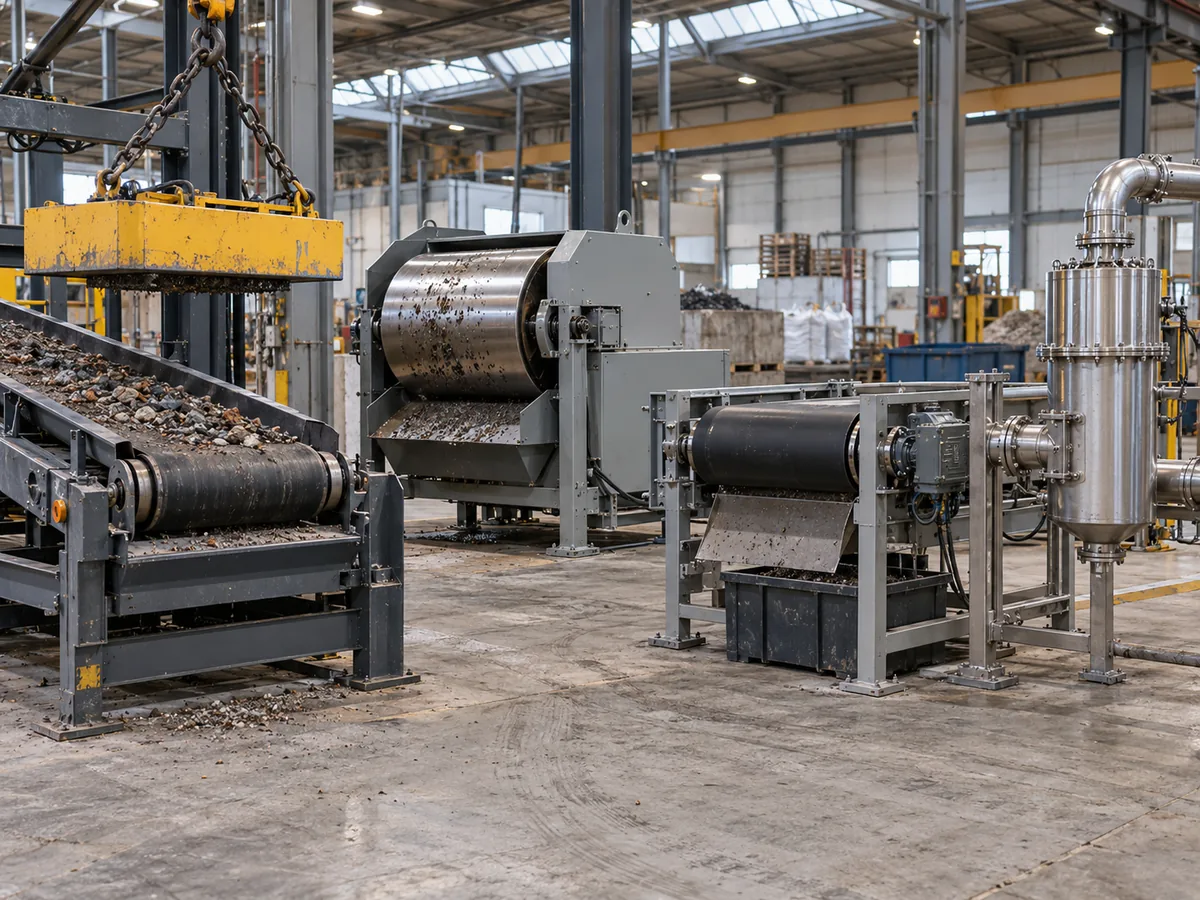
Magnetic separator type guide
Different magnetic separator types fit different material paths, targets and operating conditions. This guide shows which family to check first, what conditions can change that choice, and how to check whether the starting choice still fits your real process.
Quick Answer: Match the Separator to the Material Path
Start with three simple questions: Where does the material move? What do you need to remove or recover? How should the captured material leave the process? Then check particle size, magnetic response, working distance, feed depth and cleaning needs.
| Your process | First separator family to check |
|---|---|
| Open conveyor + occasional unwanted iron pieces (tramp iron) | Suspended permanent magnet |
| Open conveyor + frequent tramp iron | Self-cleaning overband |
| Separation at conveyor discharge | Magnetic pulley |
| Dry bulk + continuous magnetic/nonmagnetic split | Dry drum |
| Wet slurry + strongly magnetic target | Wet drum |
| Dry material + fine or weakly magnetic target | Magnetic roller or other high-intensity dry separator |
| Slurry + fine or weakly magnetic target | Wet high-intensity magnetic separator |
| Free-flowing powder or granules through a chute | Plate, grate, tube or drawer magnet |
| Dry material moving through an enclosed line | Pipeline magnetic separator |
Same material does not always mean the same separator. Material name alone does not decide the separator. Two lines can process the same material but need different magnetic equipment because material depth, moisture, particle size, contamination frequency, magnetic response or cleaning requirements are different. Material path gives you the starting family; operating conditions decide whether that starting choice still works.
Use this table to narrow the separator family, not to select a final model. Particle size, how strongly the target reacts to a magnetic field, the distance from the magnetic face to the target, material depth, moisture and cleaning requirements can change the choice.
Separator names also describe different things. “Wet” describes the process medium, “high-intensity” describes magnetic duty, “drum” describes equipment form, and “electromagnetic” describes how the field is produced. Compare the process fit first; compare field numbers only after the geometry and duty are comparable.
Start With Four Questions Before You Compare Equipment
Before you compare models, define the material path, the separation objective, the discharge method and the result that would prove the separator is suitable.
1. How does the material move?
A belt conveyor gives you different options from a gravity chute, a closed pipeline or a slurry tank. The separator must be placed where the field can reach the target without creating a new flow problem. This is why the same contamination can call for an overband on one line and an in-line magnet on another.
2. What is the separation objective?
Tramp-iron removal is not the same duty as mineral concentration. A large bolt on a conveyor, fine iron contamination in powder and weakly magnetic mineral particles in slurry need different field geometry, exposure and discharge. Define whether the magnetic fraction is waste, a hazard to downstream equipment, a product contaminant or the valuable fraction you want to recover.
3. How must the captured material be removed?
Low contamination can make periodic manual cleaning acceptable. Frequent iron can make a self-cleaning or continuously discharging design more practical. In mineral processing, the separator normally needs to create distinct material streams, so splitter position, wash water or discharge trajectory can become part of the separation problem.
4. How will you know the separator works?
Define the required result before comparing models. For conveyor protection, that may mean removing a defined piece of tramp iron from a defined position in the material bed. For mineral separation or fine contamination, a representative sample test may be more useful. The test condition should match the real process condition that matters.
These four answers work together
Do not treat these four answers as separate checkboxes. Material path normally identifies the starting separator family. Contamination frequency can change the cleaning method. Working distance can decide whether the field reaches the target at all. Moisture can change how the feed reaches the magnetic zone. One variable may only change the mechanical configuration, while another can make the whole starting family unsuitable.
Conveyor-Mounted Magnetic Separators
For material already moving on a conveyor, the main starting choices are a suspended magnet, a self-cleaning overband, an electromagnetic suspended separator or a magnetic head pulley. The Corvelan conveyor magnetic separation application shows the broader process context for this group.
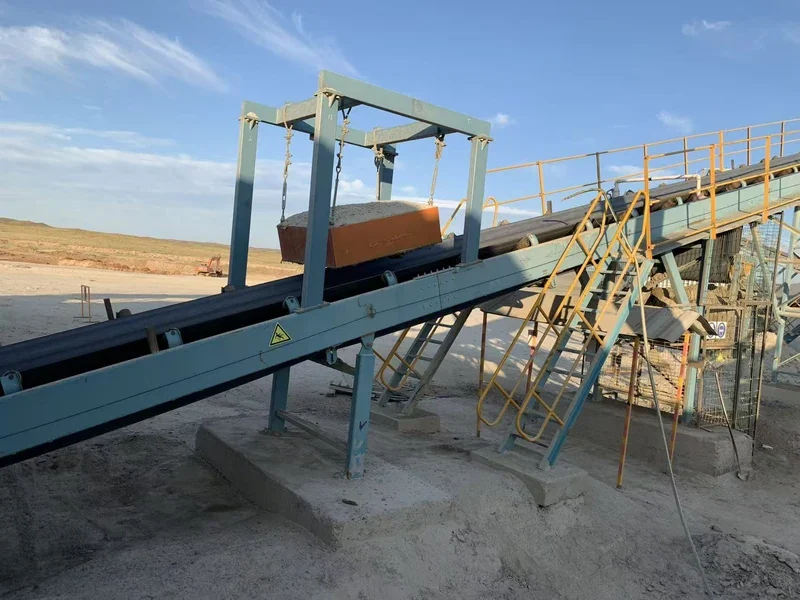
Suspended permanent magnet
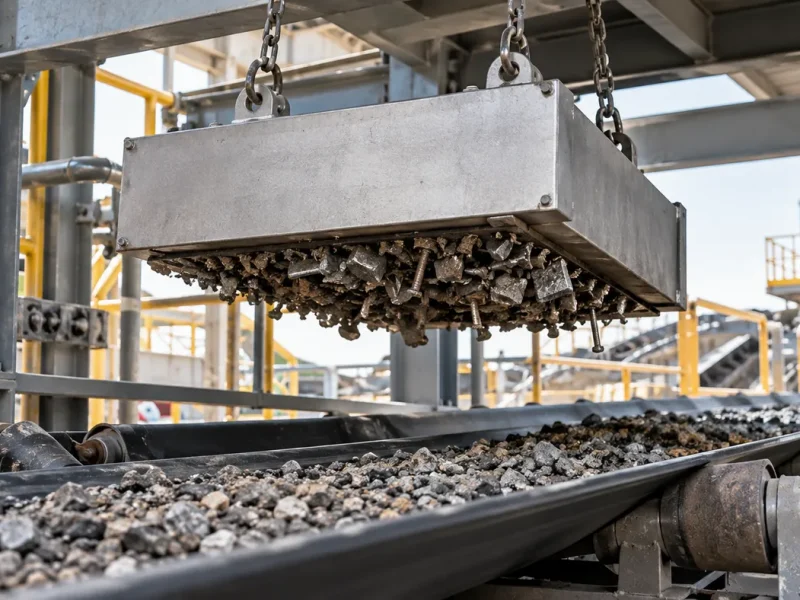
What it does: A suspended permanent magnet sits above the conveyor and pulls ferrous pieces out of the moving material.
Best starting fit: Choose this family when the main job is tramp-iron removal, contamination is relatively infrequent and safe periodic cleaning is acceptable.
Reconsider the cleaning method when: Captured iron becomes frequent enough that manual cleaning causes repeated interruptions. In that case, compare a self-cleaning overband.
Reconsider the magnetic reach when: The material layer becomes deeper or the magnet must be mounted farther from the target. Switching to self-cleaning does not by itself solve a reach problem.
What changes the answer: Cleaning frequency and magnetic reach are different design questions. One may change while the other stays the same.
Check before selection: Conveyor width, maximum material depth, actual working distance, target iron size and cleaning access.
Self-cleaning overband magnet
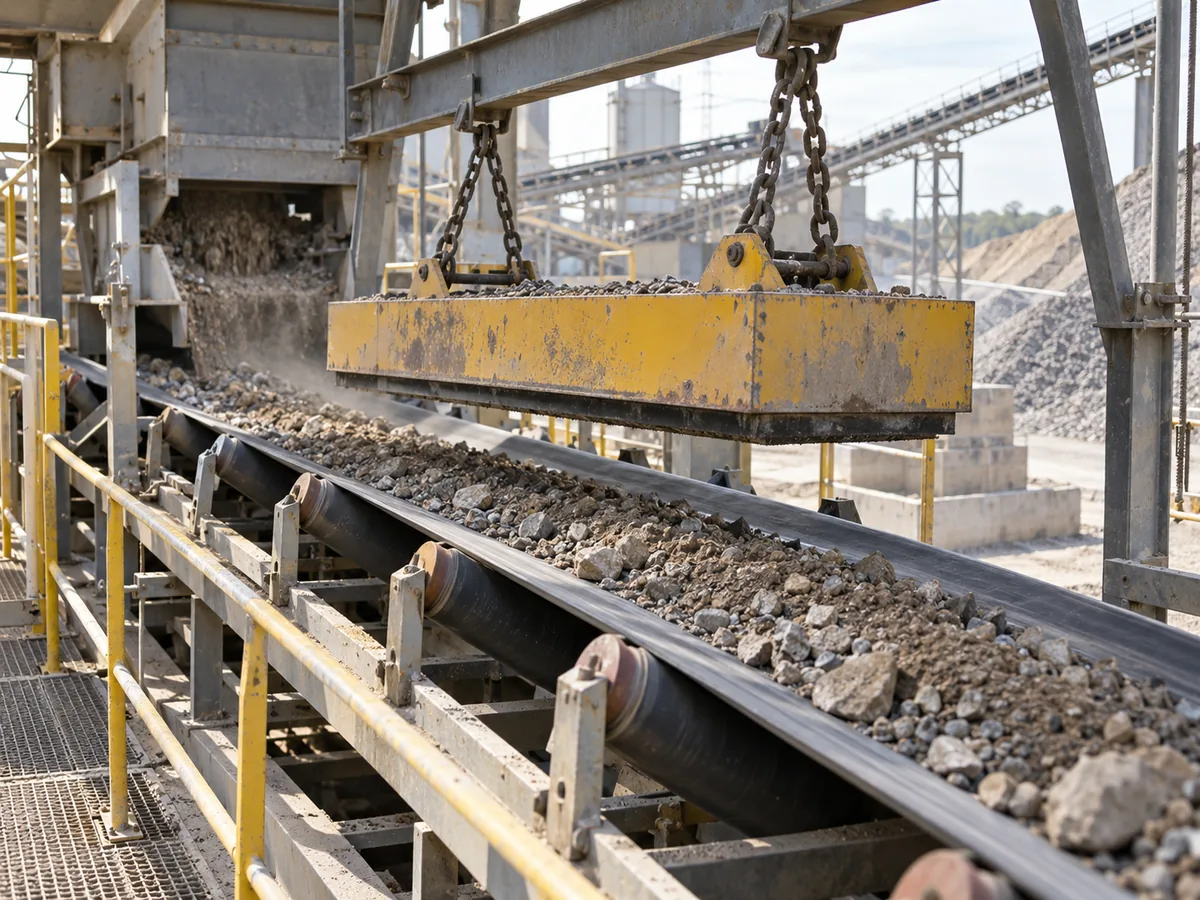
What it does: A self-cleaning overband uses a moving belt to carry captured ferrous metal away from the magnetic field automatically.
Best starting fit: Start here when material moves on a conveyor and tramp iron appears often enough that manual cleaning would interrupt production.
Reconsider it when: It can become a poor fit when there is not enough room for iron discharge, belt tracking or maintenance access.
What self-cleaning does not fix: Automatic cleaning solves the problem of removing captured iron continuously. It does not automatically solve excessive working distance, a poor mounting position or insufficient magnetic reach. If iron is still missed, check where the missed iron travels and how far it is from the magnetic face before blaming the cleaning system.
What changes the answer: Frequent contamination mainly changes the cleaning requirement. A deeper material bed changes magnetic reach. If both occur together, both questions must be solved.
Check before selection: Conveyor width, belt speed, normal and maximum material depth, actual working distance, expected iron size and frequency, and available discharge space.
For this family, see the Corvelan Overband Magnetic Separator and Self-Cleaning Cross-Belt Permanent Magnet Separator.
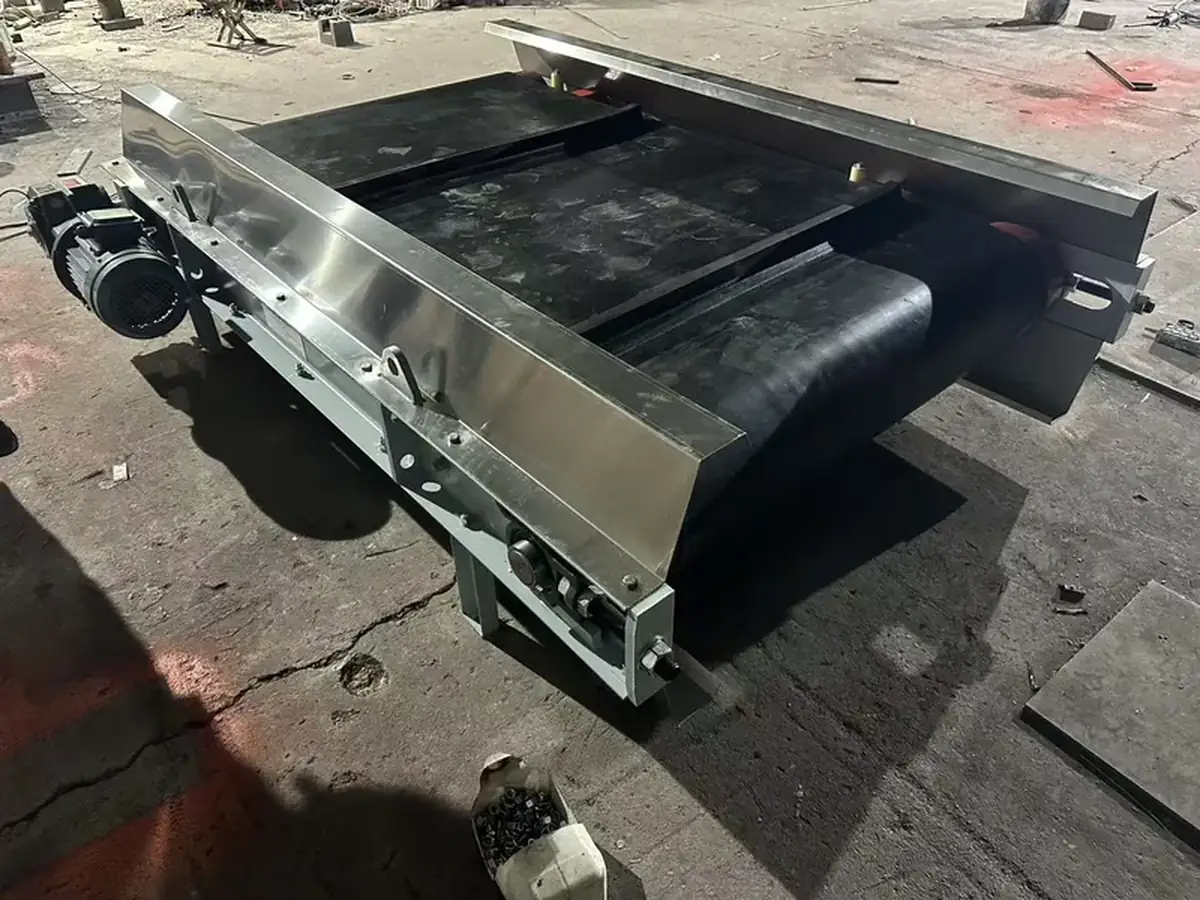
Suspended electromagnetic separator
What it does: An electromagnetic separator uses an energized coil to produce the magnetic field.
Best starting fit: Screen this family when the required magnetic duty, control method or installation envelope points toward an energized magnetic circuit.
Reconsider it when: Do not choose an electromagnet only because a specification shows a high field value. If a permanent system can meet the required duty at the real working distance, added power, controls, heat management and maintenance may not add useful value.
Do not confuse two different decisions: “Self-cleaning” describes how captured iron is discharged. “Electromagnetic” describes how the magnetic field is produced. Frequent iron may change the discharge method without proving that the field source should change.
Check before selection: Field requirement at the actual target distance, power supply, cooling method, duty cycle, controls and maintenance access.
Magnetic pulley
What it does: A magnetic pulley separates material at the conveyor head. Magnetic material stays with the belt longer and follows a different discharge path from nonmagnetic material.
Best starting fit: Check this family when the conveyor head is a practical separation point and the structure, pulley duty and discharge chutes can support the arrangement.
Reconsider it when: Do not treat a magnetic pulley as a direct replacement for an overband when the purpose is to remove damaging tramp iron before it reaches vulnerable downstream equipment. The separation point is different.
Check before selection: Belt geometry, pulley load, material trajectories, splitter/chute arrangement and maintenance access.
See the Corvelan Magnetic Pulley Separator for this equipment family.

How conveyor conditions change the starting choice
| Condition | What changed | What it means |
|---|---|---|
| Shallow load + occasional tramp iron | Low cleaning demand | A suspended permanent magnet may be a logical family to screen. |
| Shallow load + frequent tramp iron | Cleaning demand increased | A self-cleaning overband becomes more practical. |
| Deep load + occasional tramp iron | Working distance increased | Manual cleaning may still be acceptable, but magnetic reach must be checked. |
| Deep load + frequent tramp iron | Cleaning and reach both changed | Self-cleaning solves discharge; magnetic reach still needs to be checked separately. |
This is why frequent iron and deep material should not be treated as the same problem.
Drum Magnetic Separators: Dry and Wet
Drum separators provide continuous separation, but a dry drum and a wet drum solve different process problems because the feed medium and particle behavior are different.
| Feed state | What you may observe | What it means for selection |
|---|---|---|
| Dry and free-flowing | Stable, predictable feed layer | Dry-separation assumptions may still apply. |
| Damp | Small clumps and uneven presentation | Dry separation may become less stable. |
| Sticky or badly clumped | Bridging, surging or thick irregular layers | Feed behavior may need attention before separator choice. |
| True slurry | Solids are transported in liquid | Evaluate wet-separation equipment. |
Damp bulk material is not the same process condition as slurry. Adding water does not automatically make a wet drum the correct separator, and material that is only damp can already behave poorly in equipment that depends on stable dry presentation.
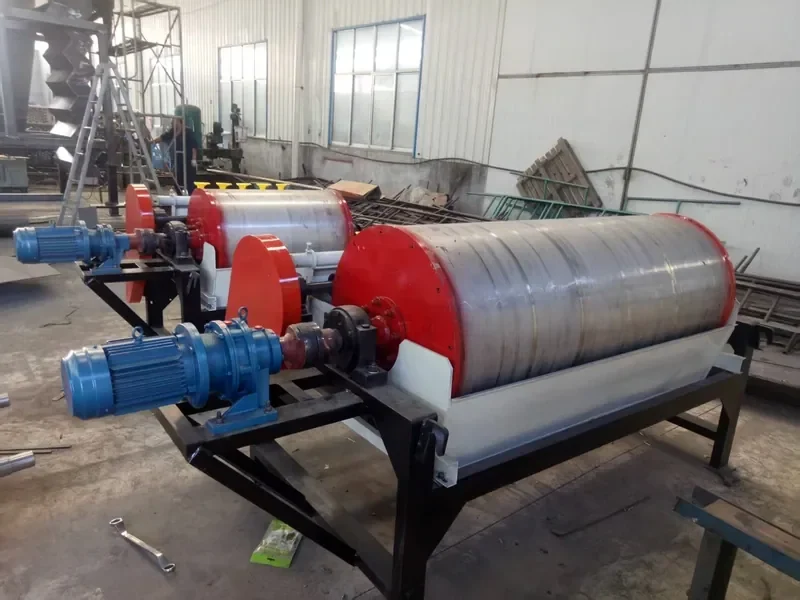
Dry drum separator
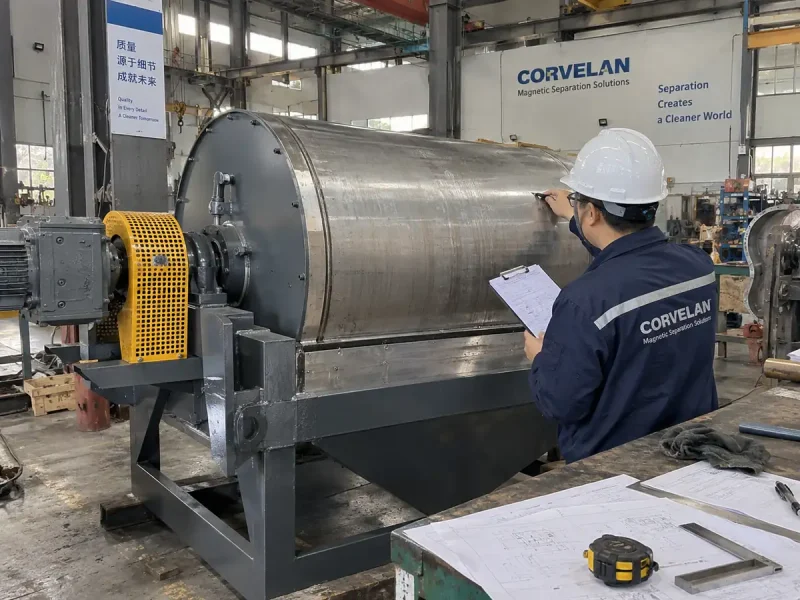
What it does: A dry drum presents free-flowing dry bulk to a rotating shell around a magnetic system. Magnetic particles stay with the drum longer while nonmagnetic material follows a different path.
Best starting fit: Use this family when dry material can be fed in a controlled layer and a continuous magnetic/nonmagnetic split is required.
Reconsider it when: Do not choose a dry drum only because the material is “mostly dry.” Moisture that causes sticking, clumping or unstable feed layers can break the dry-flow assumption.
When two conditions combine: If the feed is both fine and damp, increasing magnetic strength alone may not solve weak separation. Fine particles may respond differently magnetically, while moisture can also make the feed clump and reach the magnetic zone unevenly.
What changes the answer: Moisture changes feed presentation. Magnetic response changes the magnetic duty. These are different limitations and should be checked separately.
Check before selection: Particle-size distribution, worst expected moisture, feed uniformity, target magnetic response and the required product split.
For this route, see the Corvelan Dry Drum Magnetic Separator.
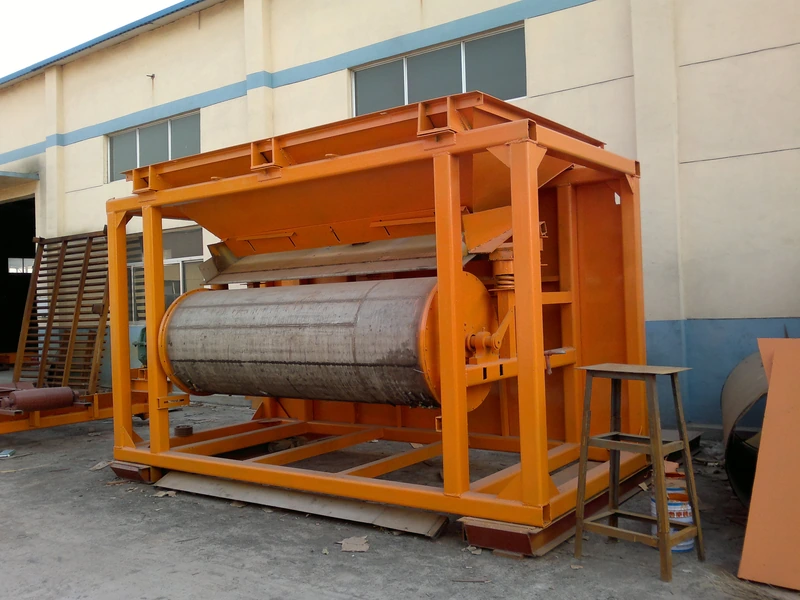
Wet drum separator
What it does: A wet drum performs magnetic separation while solid particles are carried in liquid, a mixture commonly called slurry.
Best starting fit: Screen a wet drum when the process is genuinely a slurry separation stage and the target has a strong enough magnetic response for the required duty.
Reconsider it when: Do not choose a wet drum simply because the material contains water. A weakly magnetic target, poor liberation or a process that is not a true slurry separation stage can point elsewhere.
What changes the answer: Magnetic response asks how strongly the target reacts to the field. Liberation asks whether the target exists as a sufficiently separate particle for the process to split. A strongly magnetic target can still be difficult to separate if it remains physically locked inside surrounding nonmagnetic material.
Check before selection: Solids concentration, particle size, mineral response, liberation, required concentrate/tailings split and downstream water handling. Liberation means whether the target mineral has been physically freed from surrounding material.
See the Corvelan Wet Drum Magnetic Separator. For an application-level view of dry and wet mineral routes, see Iron Ore Magnetic Separation.

| Magnetic response | Liberation | Starting interpretation |
|---|---|---|
| Strong | Good | Conventional wet magnetic separation may be a logical first option to evaluate. |
| Weak | Good | Higher-intensity wet separation may become relevant. |
| Strong | Poor | More magnetic intensity does not automatically solve the physical locking problem. |
| Weak | Poor | Both magnetic response and liberation require investigation. |
| Unknown | Unknown | Representative sample testing becomes more important. |
Higher magnetic intensity cannot create liberation that does not exist. If magnetic and nonmagnetic material remain physically attached in the same particle, the separator is being asked to split materials that have not yet been physically separated.
High-Intensity Separators for Fine or Weakly Magnetic Material
When the target is weakly magnetic, very fine or difficult to capture with conventional low-intensity equipment, closer particle-to-field presentation or higher-gradient equipment becomes more relevant.
Magnetic roller separator
What it does: A magnetic roller brings dry particles close to a concentrated magnetic field and separates fractions by their magnetic response and discharge trajectory.
Best starting fit: Screen this family for dry mineral or purification work where the target is weaker than ordinary ferrous tramp metal and the feed can be presented in a thin, stable layer.
Reconsider it when: Thick, unstable or damp feed can make particle presentation inconsistent and weaken separation control.
What changes the answer: A weakly magnetic target with a thin, stable dry feed is a different problem from the same target in a thick or damp layer. If separation improves only when the feed layer becomes much thinner, presentation may be limiting the result as much as magnetic strength.
Check before selection: Particle size, feed-layer thickness, moisture, magnetic response and representative test separation where material behavior is uncertain.
See the Corvelan Magnetic Roller Separator. Related material-purification applications include Silica Sand Magnetic Separation and Kaolin Magnetic Purification.
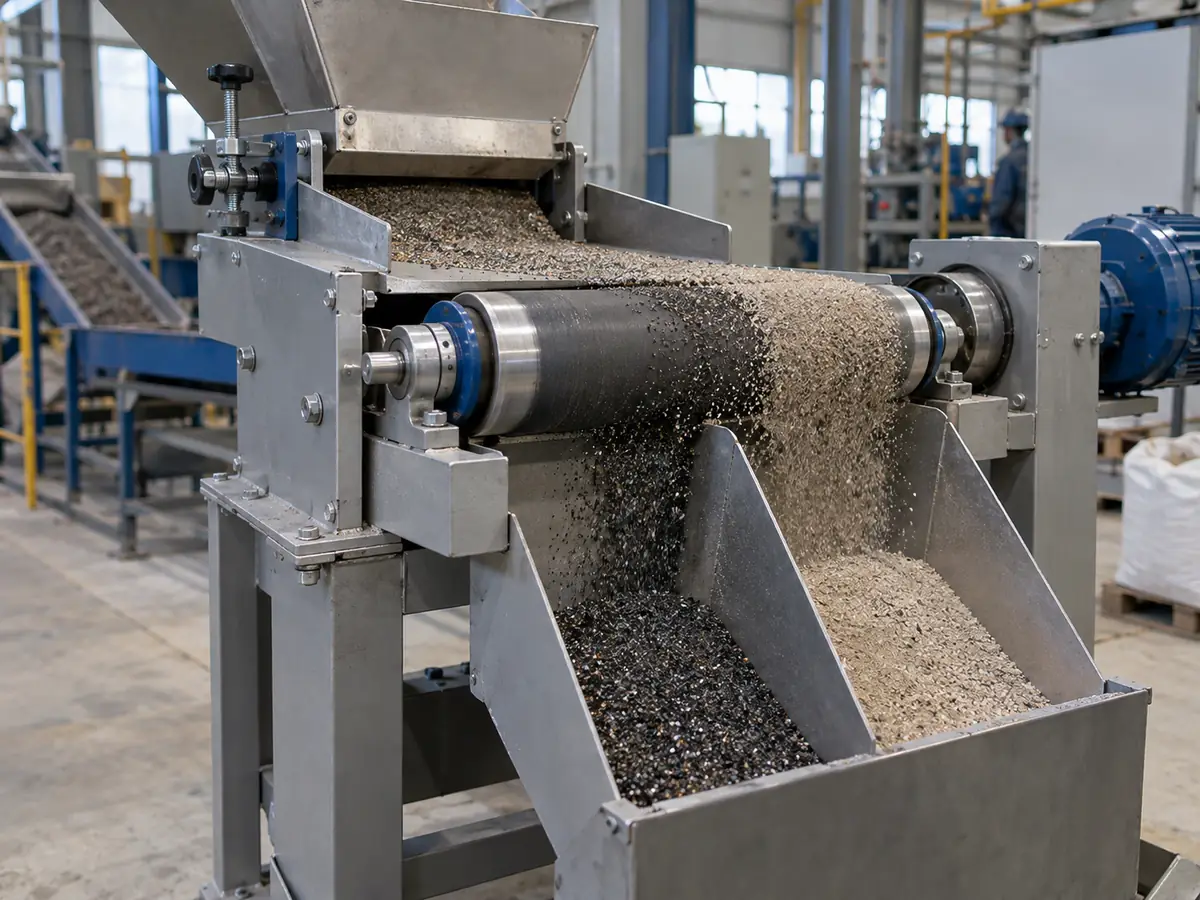
High-intensity magnetic filter
What it does: A high-intensity magnetic filter brings fine material very close to magnetized surfaces. The close spacing creates many small areas of strong magnetic pull, which can help capture fine magnetic contamination that would be difficult to pull across a large air gap. These closely spaced capture surfaces are often called a magnetic matrix.
Best starting fit: Use this family when close-contact capture of fine dry contamination is more relevant than long magnetic reach.
Reconsider it when: Bridging, excessive flow restriction, difficult cleaning or unacceptable good-product retention would make close-contact filtration impractical.
What changes the answer: Fine contamination alone is not enough reason to choose a high-intensity filter. Fine, free-flowing product and fine, sticky product are different applications because the second may not pass the magnetic surfaces consistently.
Check before selection: Flowability, target size, cleaning method, product retained with the magnetic fraction and available flow area.
This is a close-contact separator. It should not be evaluated like a suspended conveyor magnet that must pull a large steel object through a deep material bed. See the Corvelan High-Intensity Magnetic Filter.
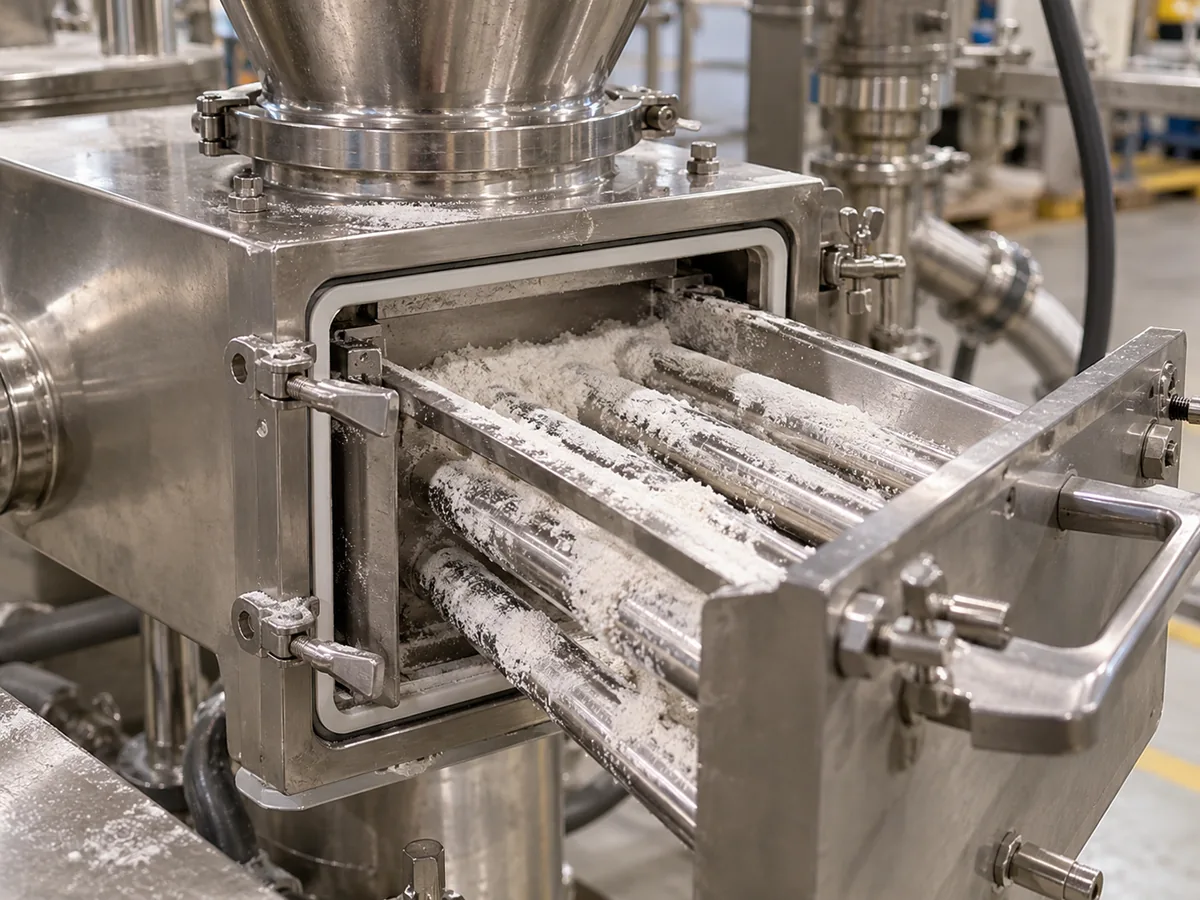
Wet high-intensity magnetic separator (WHIMS)
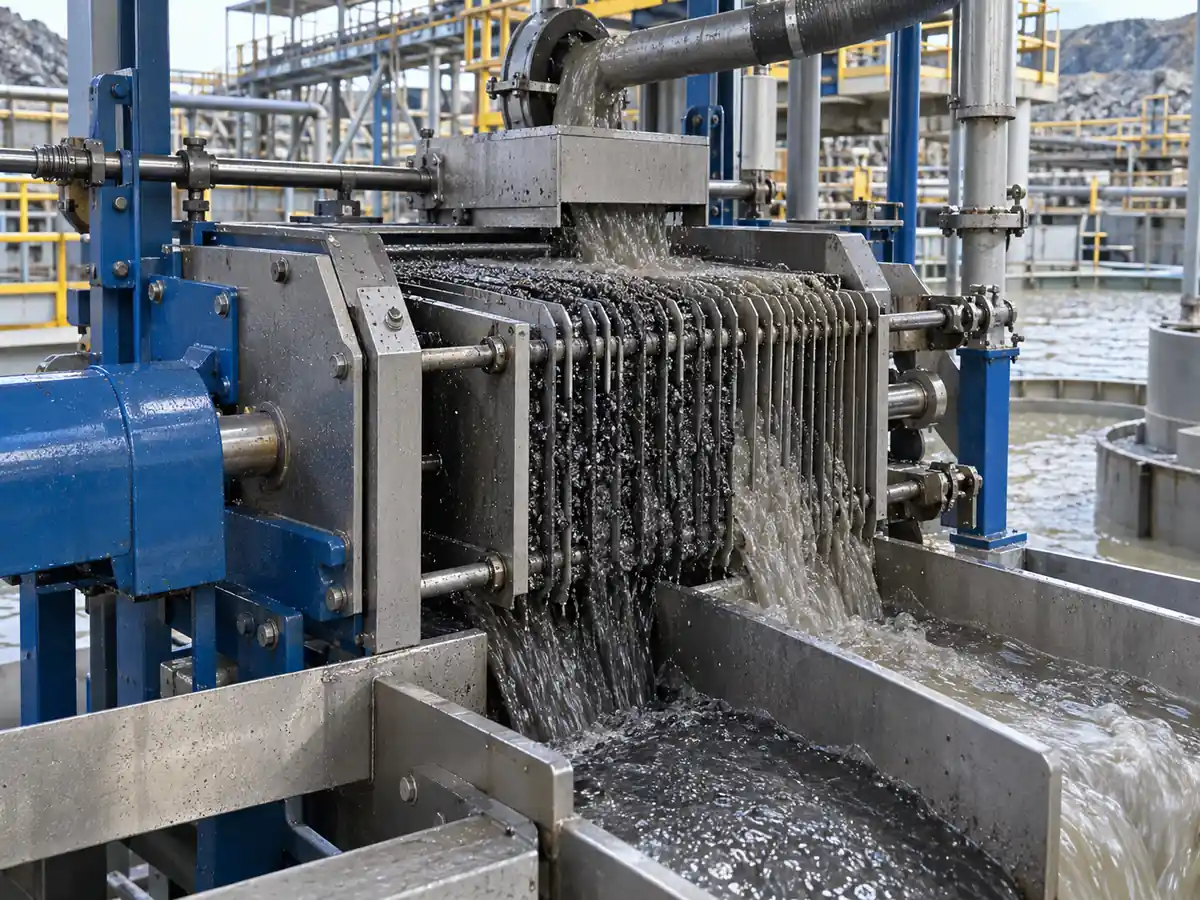
What it does: Inside a wet high-intensity magnetic separator, slurry passes through or close to magnetized surfaces that create many small areas of strong magnetic pull. This can help capture fine particles whose magnetic response may be too weak for a conventional wet drum.
Best starting fit: Screen WHIMS when the feed is a slurry, the target is fine or weakly magnetic, and a wet high-gradient duty is required.
Reconsider it when: Material name alone does not prove the application. Particle size, composition and liberation can change the result, so uncertain material response should be tested rather than assumed.
What changes the answer: Two samples sold under the same mineral name can behave differently if their particle size, mineral composition or liberation is different. The material name is a starting description; it does not mean the same configuration will produce the same result.
Check before selection: Representative sample, particle-size distribution, mineral response, liberation, slurry condition and the required separation objective.
See the Corvelan Wet High-Intensity Magnetic Separator for the current plate-type product family.
Free-Fall and Pipeline Magnetic Separators
For dry material moving through a chute, hopper or enclosed line, the magnetic surface normally needs to be close to the product without creating an unacceptable flow problem.
Pipeline magnetic separator
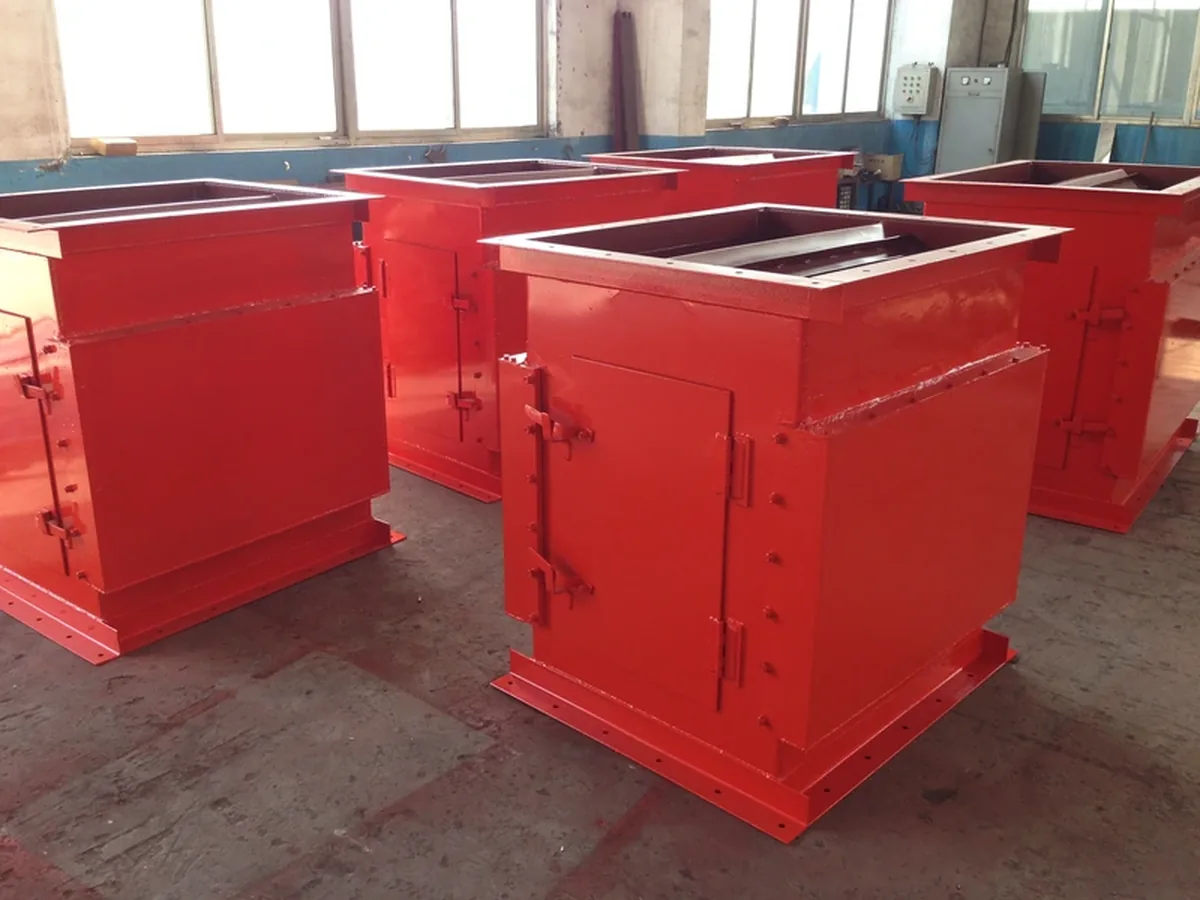
What it does: A pipeline or in-line magnetic separator places magnetic elements in or beside an enclosed dry-bulk flow path.
Best starting fit: Use this family when dry bulk already moves through a closed line and there is no better open-conveyor or gravity-fall separation point.
Reconsider it when: The design becomes less attractive if magnetic elements reduce the available flow area too much, create unacceptable restriction, encourage bridging or make cleaning difficult.
Check before selection: Product flowability, line cross-section, velocity or pressure conditions where relevant, cleaning access and allowable restriction.
See the Corvelan Pipeline Magnetic Separator.
Plate, grate, tube and drawer magnets
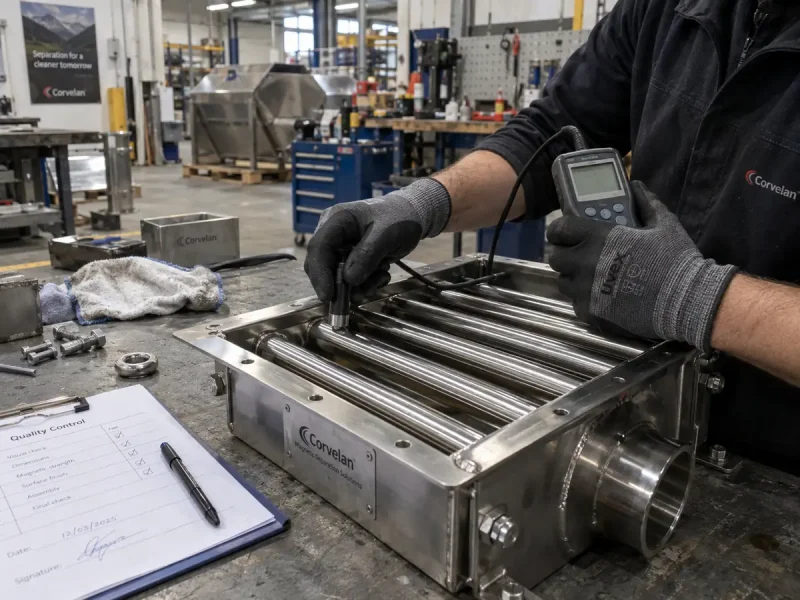
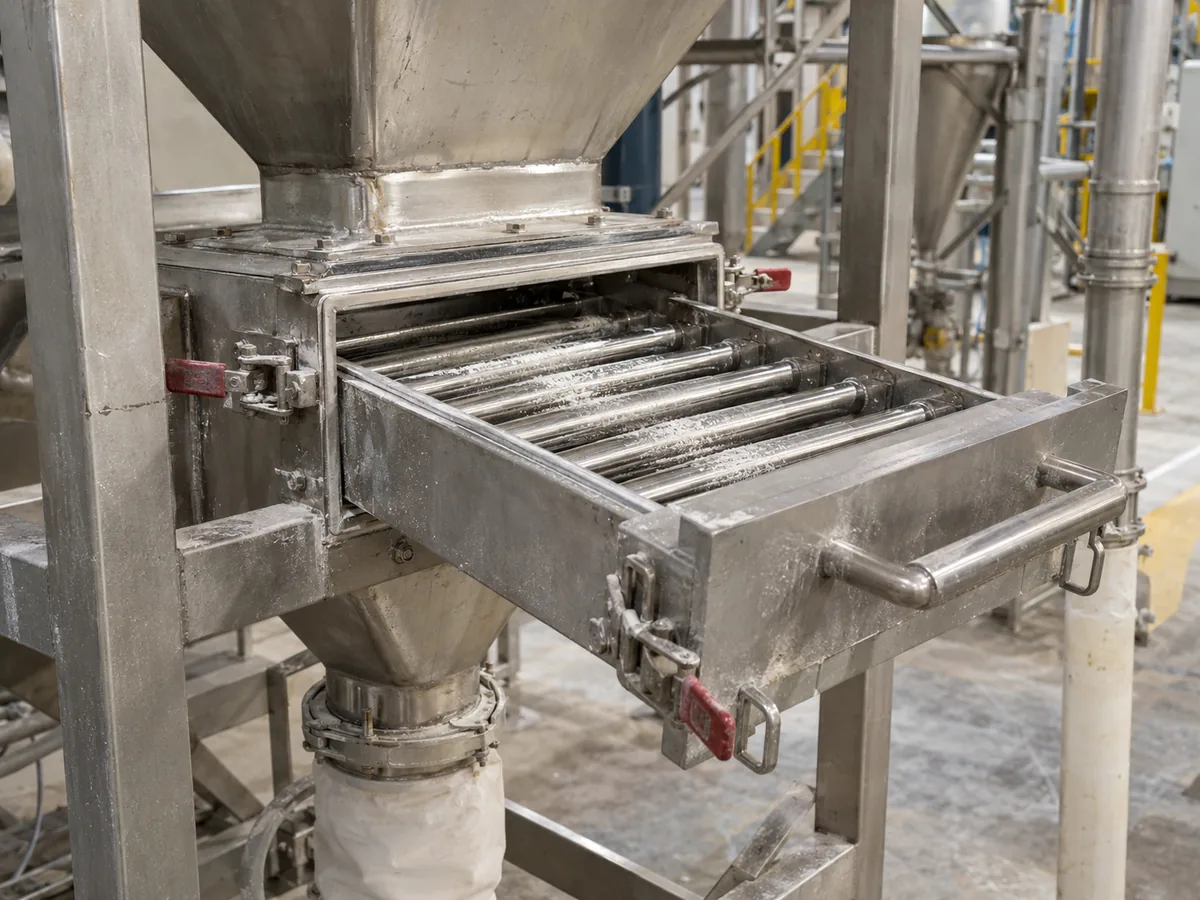
These designs place magnetic surfaces close to gravity-fed powder or granules. The best mechanical form depends on how the product flows and how the captured contamination can be cleaned without creating bridging or excessive product hold-up.
| Design | Typical role | Main caution |
|---|---|---|
| Plate magnet | Magnetic surface beside or above a product stream | Product must pass close enough to the magnetic face |
| Grate magnet | Multiple magnetic elements across gravity flow | Sticky or lumpy material may bridge |
| Tube magnet | Individual magnetic element in close contact with product | Performance depends on product proximity and cleaning access |
| Drawer magnet | Multiple magnetic elements in a removable assembly | Flow restriction and cleaning method matter |
| Hump magnet | Changes gravity-flow direction across magnetic surfaces | Works best with stable, free-flowing material |
Flow behavior can change the answer even when product chemistry does not. Free-flowing material can pass magnetic surfaces more predictably, while cohesive or lumpy material can build up, bridge or make contact irregular. High contamination loading can also make cleaning frequency more important than the basic magnetic element shape.
Similar Names That Describe Different Things
Magnetic-separator terminology can be confusing because several labels describe different engineering decisions. Do not treat them as competing names for one machine.
| Term | What it describes |
|---|---|
| Permanent / electromagnetic | How the magnetic field is produced |
| Wet / dry | The process medium and feed condition |
| Low / high intensity | The magnetic duty and target response |
| Drum / pulley / plate / grate | The mechanical equipment form |
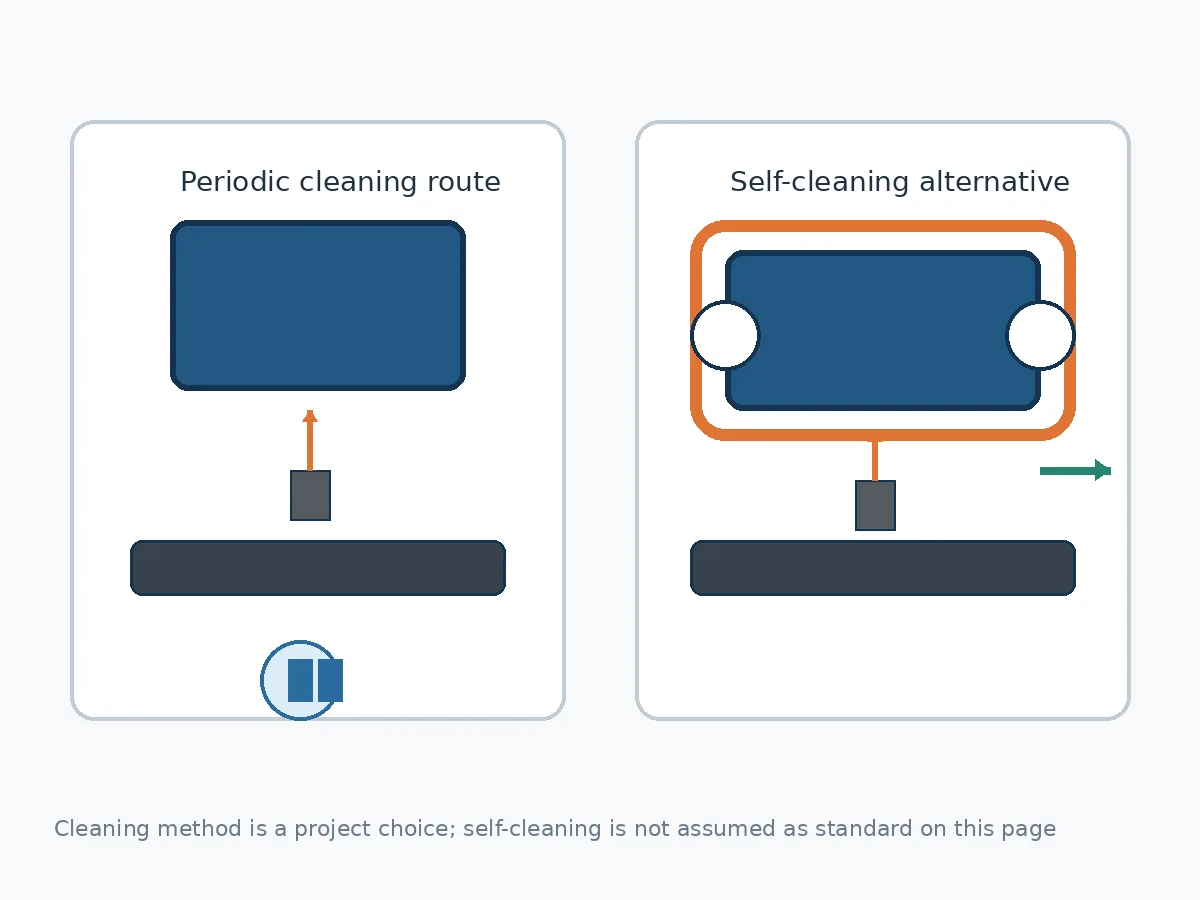
| Manual / self-cleaning | How captured material is removed |
| Eddy current | Separation of conductive non-ferrous metals |
| Metal detector | Detection rather than magnetic capture |
Remember: wet/dry describes process condition; permanent/electromagnetic describes field source; manual/self-cleaning describes discharge method; low/high intensity describes magnetic duty; drum/pulley/grate describes mechanical form.
Permanent vs electromagnetic
This describes the field source, not the cleaning method or the installation point. Compare power, control, cooling, maintenance and the magnetic duty required at the real target distance.
Magnetic separator vs eddy-current separator
A conventional magnetic separator attracts magnetic material such as ferrous metal. An eddy-current separator creates repulsive forces in conductive non-ferrous metals such as aluminum, so the target fraction is different.
Magnetic separator vs metal detector
A metal detector senses metal and can detect metals a magnet cannot capture. Some lines use both technologies, so keep magnetic separation equipment and metal detection as separate process decisions.
Common Magnetic Separator Selection Mistakes
Many wrong conclusions come from assuming one visible symptom has only one cause. Use the process condition to separate similar-looking problems.
| Assumption | What may actually be happening | How to distinguish it |
|---|---|---|
| “Higher surface Gauss means better separation.” | The target may be farther away, or the field geometry may be different. | Compare the real working distance and the magnetic condition where the target passes. |
| “Fine iron remains because the magnet is too weak.” | The feed may be too thick, damp, poorly liberated or poorly presented. | Compare particle size, feed depth, moisture, liberation and target response before changing magnetic duty. |
| “Self-cleaning will fix missed tramp iron.” | Self-cleaning changes discharge frequency, not magnetic reach. | Check the missed iron position, material depth and actual working distance. |
| “Wet separation is poor because the separator is wrong.” | Liberation, particle distribution or slurry condition may be limiting the split. | Inspect representative fractions and test the real feed condition. |
| “High contaminant capture means good separation.” | Too much good product may be leaving with the magnetic fraction. | Measure both contaminant capture and good-product loss. |
| “The same material name means the same separator.” | Particle size, composition, moisture, liberation or material path may differ. | Compare the actual feed condition, not only the material name. |
| “Average throughput describes the hardest duty.” | Short surges may create the deepest layer and worst presentation. | Check normal and peak operating conditions. |
Type-by-Type Selection Matrix
Use this matrix as a screening tool, not as a final equipment specification.
| Your condition | Start with | Reconsider if | Check before selection |
|---|---|---|---|
| Open conveyor + occasional tramp iron | Suspended permanent magnet | Cleaning becomes frequent or the required reach cannot be met | Working distance, maximum material depth, iron size and cleaning interval |
| Open conveyor + frequent tramp iron | Self-cleaning overband | Discharge clearance or maintenance space is poor | Iron loading, belt speed, mounting position and discharge route |
| Open conveyor + energized field/control duty | Suspended electromagnet | Power, cooling or maintenance are undesirable | Field requirement at the real gap, duty cycle and cooling method |
| Conveyor head discharge | Magnetic pulley | Pulley load or split-chute geometry is unsuitable | Belt geometry, pulley duty, trajectories and maintenance access |
| Dry free-flowing bulk | Dry drum | Feed is damp, sticky or poorly distributed | Particle size, moisture, feed presentation and splitter geometry |
| Wet slurry + strongly magnetic target | Wet drum | Target response is too weak or liberation is poor | Solids concentration, particle size, liberation and required split |
| Dry fine or weakly magnetic fraction | Magnetic roller / high-intensity dry separator | Feed layer is thick, unstable or damp | Particle size, feed layer, magnetic response and representative test |
| Fine dry contamination | High-intensity magnetic filter | Bridging, restriction or difficult cleaning becomes unacceptable | Flowability, target size, cleaning method and good-product retention |
| Wet fine or weakly magnetic fraction | WHIMS | Representative testing shows little useful differential response | Sample test, particle size, liberation and slurry condition |
| Enclosed dry-bulk line | Pipeline / in-line magnet | Restriction, access or bridging becomes unacceptable | Cross-section, flow condition, access and cleaning method |
What Can Change the Selection
A separator family that looks correct on paper can become the wrong choice when the real working distance, material depth, particle size, moisture, feed stability or cleaning condition changes. The useful question is not only “what changed?” but “what should that change look like in the process?”
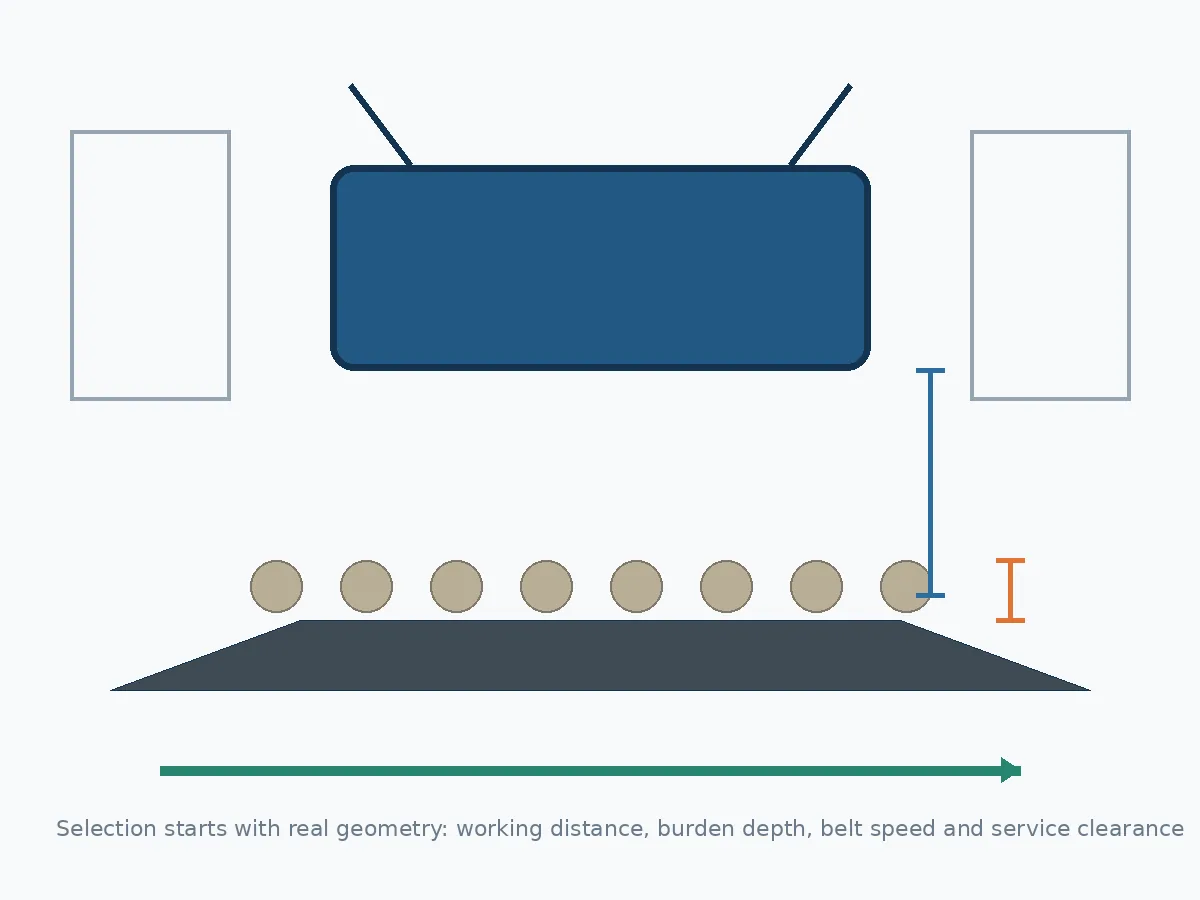
Working distance and material depth
Situation: The separator is mounted farther away or the material layer becomes deeper.
What you may see: Iron near the top of the material layer is removed more reliably than similar iron buried deeper.
Why it changes the result: The magnetic condition at the deepest target is different from the value measured at the magnetic surface.
What to check: Measure the complete distance from the magnetic face to the deepest target, including belt, liner, housing, air gap and maximum product depth.
Particle size and magnetic response
Situation: Large ferrous pieces are removed, but fine contamination remains.
What may be happening: The fine target may have a different magnetic response, poorer liberation or less consistent presentation to the field.
Do not assume: Remaining fine particles do not automatically prove that the magnet is too weak.
What to check: Particle-size distribution, target composition, liberation and feed presentation.
Moisture, slurry state and flowability
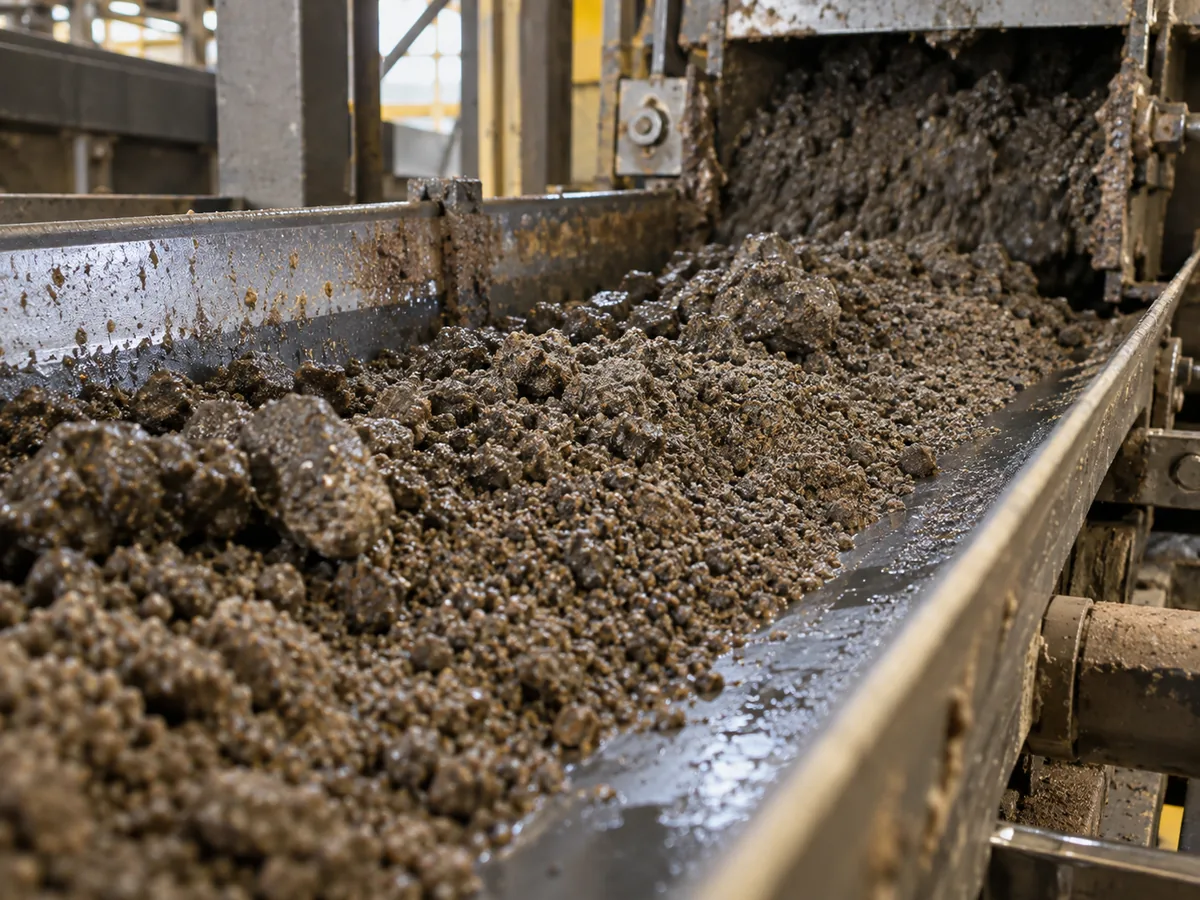
Situation: Separation becomes less stable as the material gets wetter.
What you may see: Clumps, bridging, uneven feed or sudden surges.
Why it changes the result: The material no longer reaches the magnetic zone in the same way. Damp bulk and true slurry are also different process states.
What to check: Use the worst expected production moisture, not only a dry laboratory sample.
Feed rate and layer stability
Situation: Separation changes during short production surges.
What you may see: Deeper layers, faster presentation or less stable material distribution.
Why it changes the result: Average throughput can hide the hardest condition. A short surge may create the greatest target distance even when average flow looks acceptable.
What to check: Normal flow, peak flow, maximum layer thickness and feed distribution.
Cleaning and discharge access
Situation: The magnet captures contamination, but the line still has handling or product-quality problems.
What you may see: Frequent stops, iron build-up or captured metal falling back toward the clean product stream.
Why it changes the result: Correct magnetic capture does not guarantee correct removal from the process. The discharge path is part of the separation system.
What to check: Contamination frequency, cleaning interval, discharge direction, chute/splitter arrangement, re-entry risk and maintenance space.
When Two Conditions Change at the Same Time
Real applications often change in more than one way at once. Solving only the most obvious variable can leave the real limitation unchanged.
| Combined condition | Easy mistake | What actually needs checking |
|---|---|---|
| Frequent tramp iron + deep conveyor load | “Use self-cleaning and the problem is solved.” | Cleaning method and magnetic reach. |
| Fine particles + damp feed | “Use a stronger magnet.” | Magnetic response and feed presentation. |
| Weak magnetic response + poor liberation | “Increase field intensity.” | Magnetic duty and physical liberation. |
| Fine contamination + sticky product | “Use a close-contact high-intensity filter.” | Capture need and bridging/flowability. |
| High average flow + short production surges | “Design around average throughput.” | Peak layer depth and feed stability. |
| Strong contaminant capture + high good-product loss | “The separator is working well.” | Capture and selectivity/product loss. |
When two conditions change together, solve both questions explicitly. A change in cleaning, field duty or equipment type does not automatically correct a second limitation in material presentation, reach or liberation.
Three Practical Selection Scenarios
These are illustrative engineering scenarios, not customer case studies. They show how one changed condition can alter the starting decision and how a second condition can change it again.
Scenario 1: Same conveyor, more iron, then a deeper load
A: Shallow load + occasional bolts can point toward a manually cleaned suspended magnet. B: If iron becomes frequent, cleaning frequency changes and a self-cleaning overband becomes more practical. C: If the load also becomes deeper, magnetic reach must be checked separately.
Scenario 2: Same mineral, but the feed becomes damp
A: Fine, dry material forms a stable layer. B: When moisture causes clumping, feed presentation changes even if magnetic properties do not. C: If the material is also weakly magnetic, both magnetic duty and feed presentation must be checked.
Scenario 3: Same slurry, but liberation changes
A: Liberated target particles can respond as separate particles in the slurry. B: If more target mineral remains locked with nonmagnetic material, separation can change even when the nominal mineral name is the same.
The Right Separator Type Can Still Give a Poor Result
An equipment family can be appropriate while the actual result becomes poor because the process condition moved away from the original design basis.
| The separator family may still be correct, but… | What changed |
|---|---|
| Working distance increased | The target became harder to reach magnetically. |
| The feed became wetter | Material presentation and flow behavior changed. |
| Production rate began to surge | Layer depth and exposure became less stable. |
| Liberation changed | The material became physically harder to split into separate fractions. |
| Cleaning or discharge became unsuitable | Captured material was no longer removed from the process correctly. |
If an existing separator worked acceptably before and the result later changed, first ask what changed in the material, operating condition, installation or cleaning process before assuming the separator family itself is wrong.
How to Check the Choice Before Ordering
Check the separator under the real duty that matters. A successful demonstration under an easier condition does not prove performance under a harder production condition.
For conveyor tramp iron
Define the target iron piece, its deepest expected position, the working distance and the operating condition. Use the deepest realistic target position and a realistic material layer—not only a steel sample held close to the magnet with no product layer. Then check whether that defined target can be removed under the agreed condition.
For fine contamination
Use representative product and contamination where practical. If production material is often damp, a perfectly dry laboratory sample may not reproduce the hardest operating condition. Check both contaminant capture and good product retained with the magnetic fraction; removing too much good product can make an otherwise strong capture result unacceptable.
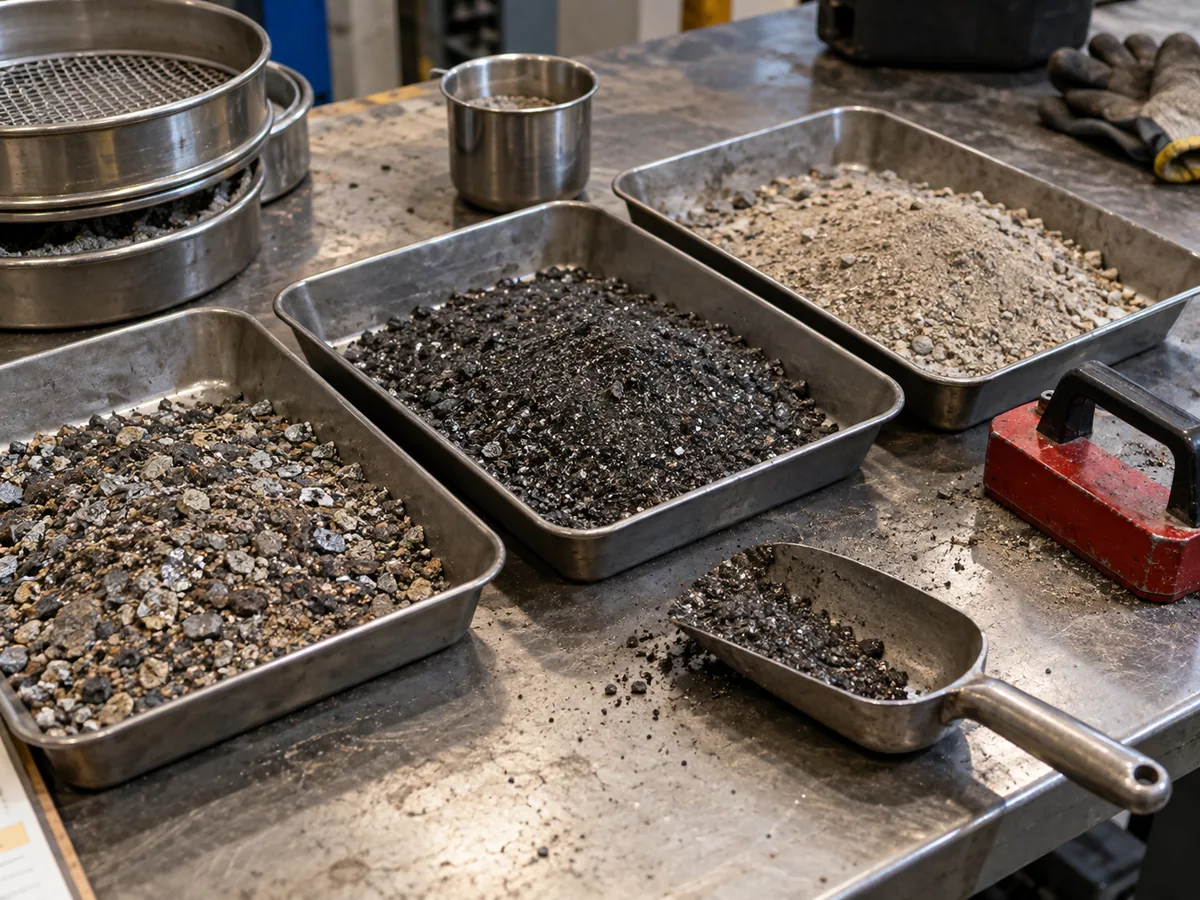
For mineral separation
Use a representative sample when mineral response or liberation is uncertain. Use representative particle size and liberation state rather than selecting only the easiest-looking sample fraction. Record feed condition, then compare the magnetic and nonmagnetic fractions with the required process objective.
Define the acceptance result before testing
| Process objective | Acceptance question |
|---|---|
| Equipment protection | Can the defined hazardous target be removed under the agreed condition? |
| Product purification | Is contamination reduced without unacceptable loss of good product? |
| Mineral recovery | Does the magnetic/nonmagnetic split meet the defined process objective? |
Define the acceptable result before testing starts. The acceptance method should match the real purpose of the separator rather than a generic idea that “more capture is always better.”
Important: A type guide can narrow the equipment family, but it cannot guarantee separation performance for an untested material or an undefined operating condition.
Information to Send Corvelan
For a useful application review, send the process conditions that control material presentation, magnetic exposure, flow behavior and removal duty rather than only a requested Gauss value.
| Information | Why it matters |
|---|---|
| Material name and composition, if known | Establishes the process context |
| Dry, damp or slurry condition | Narrows suitable separator families |
| Target contaminant or mineral | Defines what must be captured or recovered |
| Particle-size range | Changes magnetic response and material presentation |
| Normal and maximum flow | Affects exposure, sizing and worst-case conditions |
| Conveyor, chute or pipe dimensions | Defines installation geometry |
| Maximum material depth | Defines the deepest target position |
| Expected working distance | Defines the magnetic reach that must be evaluated |
| Contamination frequency or magnetic fraction | Affects cleaning and discharge requirements |
| Available installation space | Can remove otherwise suitable mechanical options |
| Preferred cleaning or discharge method | Helps separate manual and automatic-cleaning designs |
| Required result | Defines the acceptance target |
| For an existing line: what changed before the result changed? | Helps distinguish an equipment-selection problem from a changed material, installation or operating condition |
Useful changes to report include a new raw-material source, higher flow, deeper material bed, changed moisture, different contamination, a changed mounting gap or a different cleaning routine. When material response is uncertain, mineral recovery and difficult fine-contamination work may need a representative sample. For simple tramp-iron protection, line geometry plus the iron size, shape and frequency can be more important.
If one value is unknown, mark it as unknown rather than guessing. The next step is to determine whether that measurement or a representative material test is needed before configuration review.
What happens next?
| Step | Next action |
|---|---|
| 1 | Screen the separator family from the material path and separation objective. |
| 2 | Identify missing measurements or uncertain material behavior. |
| 3 | Move to configuration review or representative testing where needed. |
If you know the material path but are not sure which family to investigate, send Corvelan your material and process conditions for application review.
Frequently Asked Questions
What are the main types of magnetic separators?
Main industrial families include suspended and overband magnets, magnetic pulleys, dry and wet drums, magnetic rollers, high-intensity or high-gradient separators, magnetic filters, pipeline magnets, and plate/grate/tube designs for gravity-fed bulk.
Is a stronger magnet always a better separator?
No. A stronger field at the surface does not automatically mean better separation at the target. Working distance, field gradient, target magnetic response, particle size, material depth, feed presentation and exposure all matter.
Can I select a magnetic separator from Gauss alone?
No. Gauss is one field measurement. Working distance, field gradient, target response, particle size, material depth, feed presentation and geometry also affect separation. Compare the magnetic condition where the target actually passes, not only the surface value.
What is the difference between a magnetic separator and an eddy-current separator?
A conventional magnetic separator attracts magnetic material such as ferrous metal. An eddy-current separator creates repulsive forces in conductive non-ferrous metals, so it is used for a different target fraction.
When should I choose a wet separator instead of a dry separator?
Start with wet equipment when the real process is a slurry and the separation objective depends on wet particle transport or wet concentration. Start with dry equipment when the feed is genuinely dry and can be presented consistently without water.
Do I need a self-cleaning overband magnet?
A self-cleaning overband is most useful when captured iron arrives often enough that manual cleaning would cause unwanted stops or handling. If contamination is rare and cleaning access is safe, a stationary suspended magnet may be sufficient as a starting option.
Why can the same material need different magnetic separators?
Because the material name is only one part of the application. Material path, particle size, moisture, magnetic response, liberation, feed depth and cleaning requirement can change the separator family or configuration even when the material name stays the same.
Why can the same magnetic separator work differently on two production lines?
Because operating conditions may differ even when the machine is the same. Working distance, material depth, flow, moisture, particle presentation, contamination loading and discharge conditions can change the result.