Conveyor Tramp-Metal Detection

LJT-E Conveyor Metal Detector

Detect unwanted metal before it reaches crushers, shredders, mills and other downstream equipment. The LJT-E is built for bulk-material conveyors and current documentation lists belt-width options from 500 to 1800 mm.

Target metalFerrous, non-ferrous and manganese-steel tramp metal
Belt-width options500 to 1800 mm in current LJT-E documentation
InstallationNo conveyor-belt cutting is required according to current product documentation
Setup supportSelf-learning mode is included in current product documentation
Send four details to start: material, target metal, throughput and installation location. We use them to screen the LJT-E size, conveyor fit and required line action before quotation.
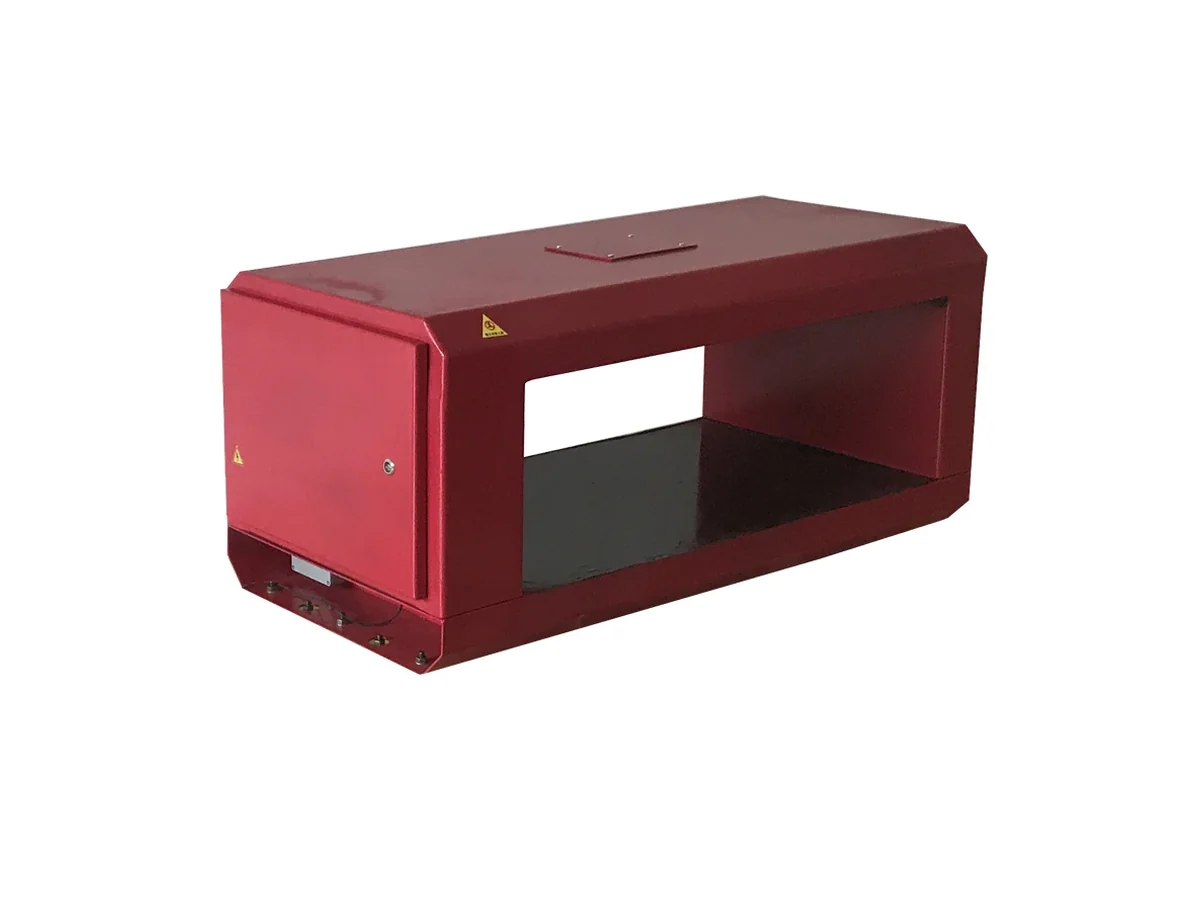
LJT-E conveyor metal detector frame for bulk material conveyor inspection

Is the LJT-E a Good Fit for Your Conveyor?

The LJT-E is a good starting point when you need metal detection on a bulk-material conveyor. Use the three checks below to see whether the application looks straightforward, needs review or should start with another separation route.

A Good Fit When

  • Bulk material moves on a conveyor before equipment that needs protection.
  • You need to detect ferrous, non-ferrous or manganese-steel tramp metal.
  • The conveyor layout has space for the detector frame around the belt.
  • The control system can use the detector signal for an alarm, stop or other planned action.

Review With Corvelan First

  • The belt contains steel cord, metallic clips, splices or repair fasteners.
  • The conveyed material is strongly conductive or magnetic.
  • Large steel structures, motors, cables or magnetic equipment sit close to the detector.
  • You have a defined detection-size, hazardous-area, hygiene or formal compliance requirement.

Consider Another Route When

  • Your main goal is continuous removal of magnetic ferrous metal rather than detection.
  • The separation point is at the conveyor discharge and a magnetic head-pulley route may fit better.
  • You need a formal hazardous-area, hygiene or certification scope that has not yet been confirmed for the LJT-E.
  • You need a guaranteed detection size before the material, belt and test conditions are defined.
When the LJT-E alone is not enough: If the project also requires automatic metal removal, we can review a reject device or a magnetic separator together with the detector. The final route depends on the target metal and conveyor layout. For continuous ferrous removal above a belt, see our conveyor magnet applications.

What Does the LJT-E Help Protect?

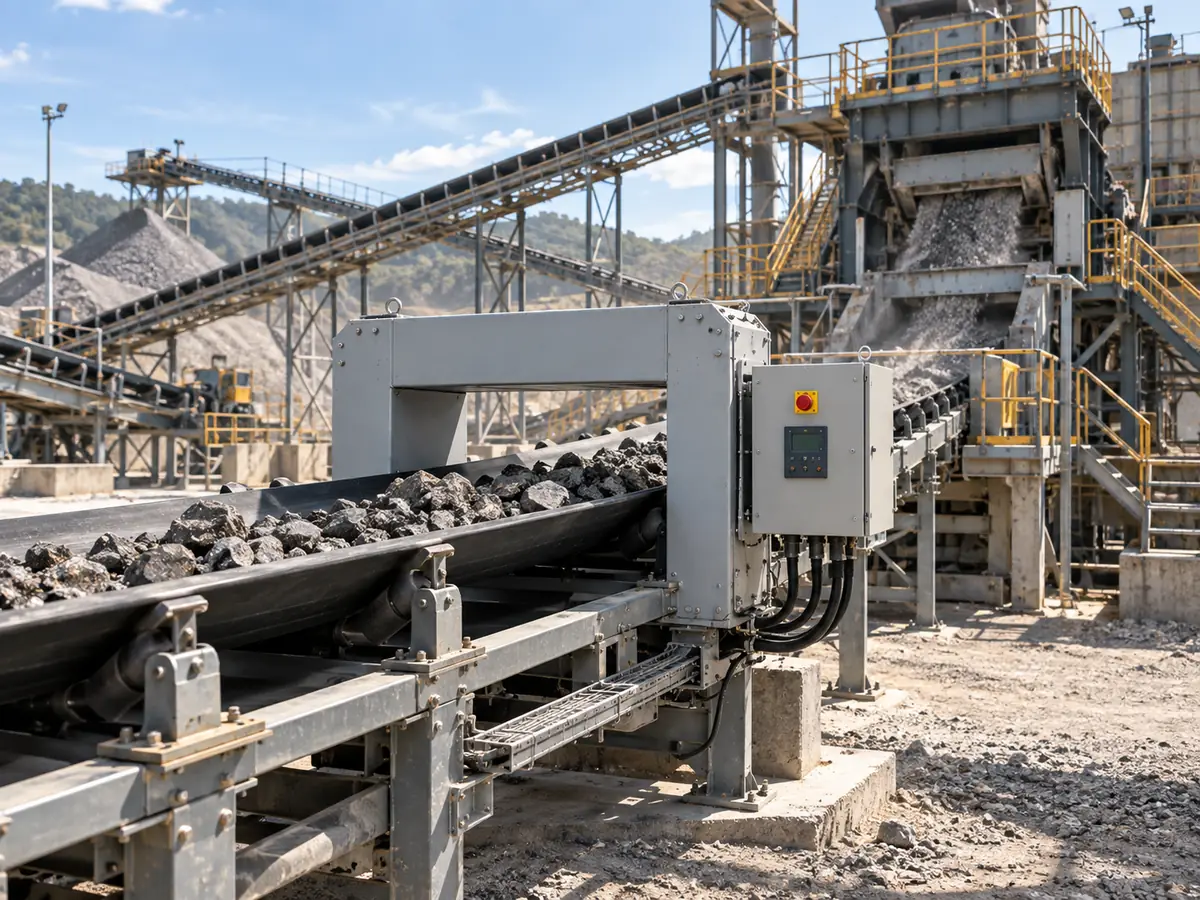
Tramp metal can travel with the bulk material toward crushers and other process equipment. The LJT-E detects the metal event before the protected machine so the conveyor control system can carry out the planned action.

Representative LJT-E conveyor metal detector installation before downstream crushing equipment
Representative industrial application image. It shows the intended protection position before downstream equipment; it is not a documented customer installation or a performance guarantee.

What Materials and Metal Contaminants Does It Address?

We use the LJT-E mainly on bulk-material conveyors where unwanted metal can reach downstream equipment. The material itself matters because moisture, conductivity, magnetic response and material-load depth can change how difficult the application is.

Typical material groups

Coal and mineral bulk solidsCement and similar dry bulk materialsGlass and culletPlastics and rubberWood and fibrous materialGrains and powders, subject to process and compliance review

What Metal Are You Trying to Find?

Ferrous metal

Steel pieces, bolts, tools and similar ferrous tramp metal.

Non-ferrous metal

Metal that a conventional ferrous magnetic separator may not remove.

Manganese steel

Wear parts and similar manganese-steel pieces may require metal detection rather than magnetic removal alone.

What can make detection harder: small or irregular metal, metal buried deeper in the material load, metal near the edge of the sensing area, conductive or magnetic material, and metal already built into the conveyor or belt.
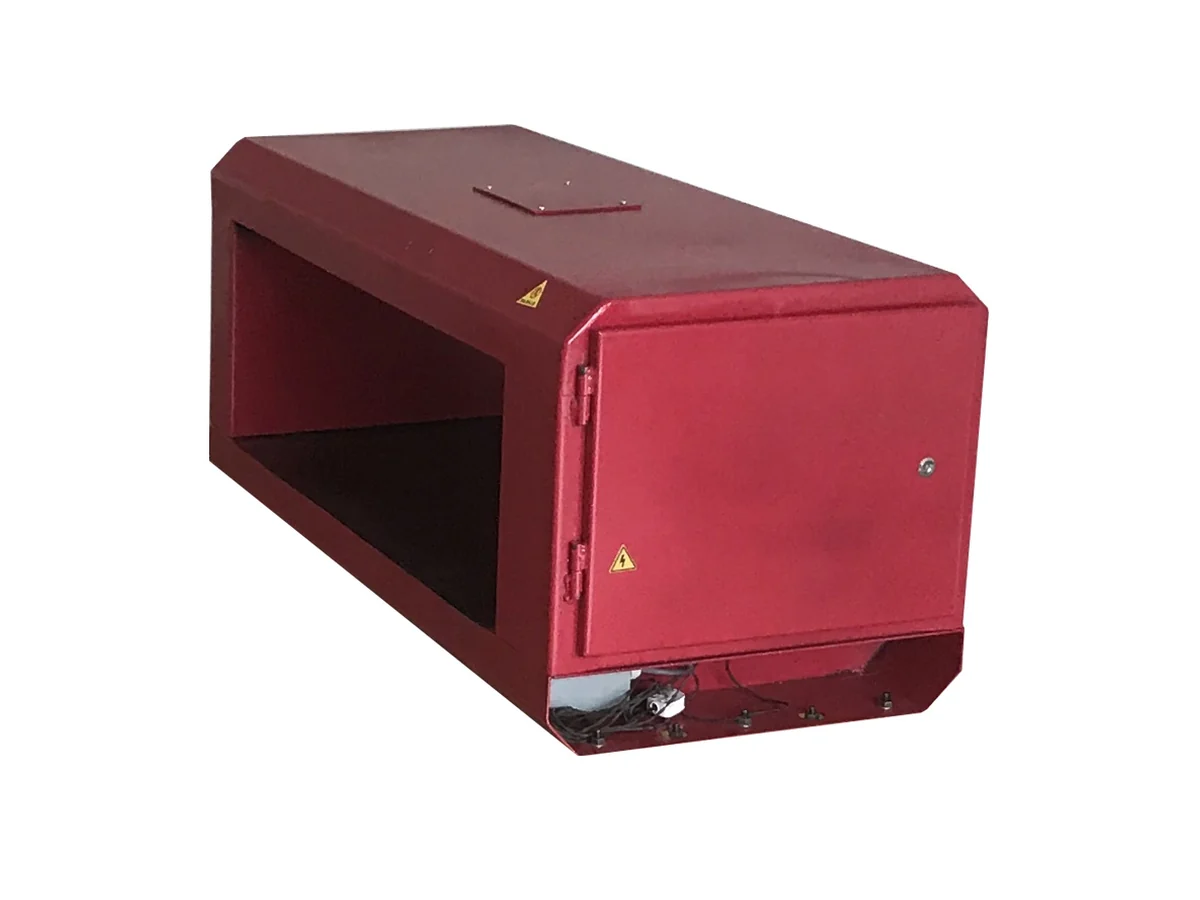
Side view of the LJT-E conveyor metal detector frame and control enclosure
LJT-E product view. Final enclosure details and connections are confirmed for the selected project.

How Does a Conveyor Metal Detector Work?

The LJT-E creates an electromagnetic sensing zone around the conveyor belt. When metal changes the signal in this zone, the detector reports a metal event. The conveyor control system can then carry out the action planned for the project.

1

Material passes through the detector

The conveyor carries the bulk material through the LJT-E sensing area.

2

The detector watches for a signal change

The sensing system looks for changes caused by metal in the material on the belt.

3

The detector reports a metal event

If the signal matches the detection settings, the detector reports a metal event.

4

The line takes the chosen action

The detector output can trigger an alarm, stop the conveyor or start another control action.

Do You Need Metal Detection, Magnetic Removal—or Both?

These jobs are different. The LJT-E detects metal. A magnetic separator physically removes ferrous metal that a magnet can attract. Choose the route from the process goal, not from the equipment name.

EquipmentWhat it doesWhen to use it
LJT-E conveyor metal detectorDetects unwanted metal in material on the conveyorUse it when ferrous, non-ferrous or manganese-steel tramp metal must be found and the line can react to the signal
Suspended magnetRemoves ferrous tramp metal that a magnet can attract from material on the beltUse it when removing ferrous metal is the main job
Magnetic head pulleySeparates ferrous metal that a magnet can attract at the conveyor dischargeUse it when the conveyor discharge is a suitable separation point
Combined protectionUses magnetic removal first and metal detection as a second protection stepReview this route when you need ferrous removal plus wider detection of metal that magnetic separation alone may not address
Selection rule: use metal detection when you need to know that metal is present; use magnetic separation when continuous ferrous removal is the main job; review both when the line needs two layers of protection.
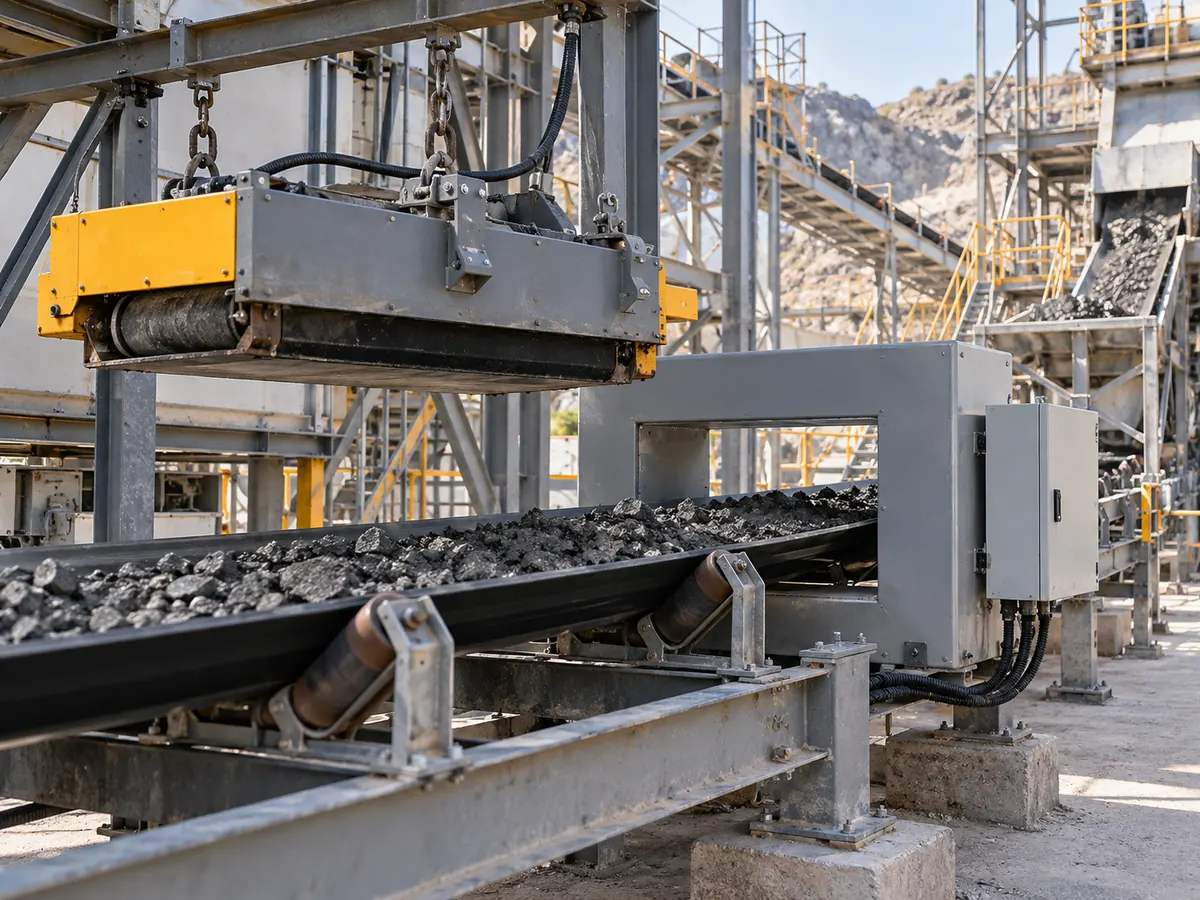
Representative conveyor line with a suspended magnetic separator upstream and LJT-E metal detector downstream
Representative combined-protection arrangement. Final equipment order, spacing and control logic depend on the target metal and conveyor layout.

What Affects Detection Performance?

We set up the LJT-E around the real conveyor. The main points are the metal you need to find, the material load on the belt, belt construction, belt width and speed, nearby steel or electrical interference, and what the conveyor should do after detection.

What to checkWhy it mattersWhat to send us
Target metalMetal type, size, shape and position can change the signal.Send the metal type and the size or shape that matters to the process. If you have an acceptance target, include it as a project requirement.
Material load (burden)The material load on the belt is often called the burden. A deeper load can place the metal farther from the sensing area and make detection more difficult.Send the material type, particle size and normal material-load depth.
Belt constructionSteel cords, metal clips or metal splices can affect the detector signal.Send the belt type and splice or fastener details.
Belt width and speedBelt width affects detector size. Belt speed affects how much time the control system has to react after detection.Send the belt width and normal belt speed. Add minimum and maximum speed if they vary.
Area around the detectorLarge steel parts, strong vibration or electrical interference near the detector can disturb the signal.Send photos or a conveyor drawing that shows nearby structure and equipment.
Action after detectionThe metal signal is useful only if the line has a clear next action.Tell us whether you need an alarm, conveyor stop, marker or separate reject/removal device.
LJT-E setup feature: Current product documentation includes a self-learning mode. We still check the setup with the normal material and an agreed metal test because actual detection depends on the full conveyor condition.
Representative technician site review for conveyor dimensions and LJT-E installation conditions
Typical conveyor installation. We confirm the detector position, surrounding steel clearance and connections against your line layout.

Five Inputs That Narrow the LJT-E Setup

These inputs connect the detector to the real conveyor. If one is unknown, send the data you already have and we can identify the remaining questions.

MaterialWhat is on the belt and how deep is the normal material load?
Target metalWhich metal type, size and shape matter to the process?
ConveyorWhat are the belt width, speed and belt construction?
InstallationWhat steel, drives, cables and space are around the detector?
Line actionWhat should happen after metal is detected?

Not sure whether the belt or material may affect detection?

Send us the belt construction, material and target metal. We will check these points before we choose the detector size and setup.

Send My Conveyor Details

LJT-E Selection Table

Start with the conveyor belt width. Current LJT-E documentation lists belt-width selections from 500 to 1800 mm and the corresponding maximum power entries shown below. We then confirm the final model code, installation layout, site power and control connection for the project.

Nominal belt widthMaximum power entry
500 mm≤ 40 W
650 mm≤ 40 W
800 mm≤ 50 W
1000 mm≤ 50 W
1200 mm≤ 50 W
1400 mm≤ 60 W
1600 mm≤ 60 W
1800 mm≤ 70 W
How to read the table: The power value is an electrical entry, not a detection-performance rating. Belt width also does not determine sensitivity by itself. Final selection still depends on the material, target metal, conveyor and test requirement.
Belt widthStart with the actual conveyor belt width.
Installation spaceCheck frame clearance and nearby steel before confirming the outline.
Project conditionsConfirm material, target metal, site power and required line action.

What Happens After the LJT-E Detects Metal?

The LJT-E identifies a metal event. Your conveyor or control system then carries out the action defined for the project. We confirm the required signal and control interface before supply; we do not assume every LJT-E uses the same alarm, stop or reject arrangement.

AlarmAlert the operator that a metal event has been detected.
Conveyor stopStop the belt so the metal can be found and removed before restart.
MarkerUse a separate marking arrangement when the project requires the detected area to be identified.
Reject or other control actionUse a separate removal device or another control action when it is included in the project design.
Important: Alarm, stop, marker, reject and PLC/control functions are project interfaces, not automatic assumptions for every LJT-E supply. Tell us what the line must do after detection.

How We Install the LJT-E on a Conveyor

Product documentation states that the conveyor belt does not need to be cut for LJT-E installation. We still check the detector location as part of the conveyor system so nearby steel, belt construction, cable routing and service access are addressed before the layout is confirmed.

Before We Confirm Installation

  • 1. Belt width: match the detector frame to the conveyor.
  • 2. Belt construction: identify steel cord, clips, splices and repair fasteners.
  • 3. Frame clearance: confirm physical space around the belt and idlers.
  • 4. Nearby steel: identify fixed or moving metal close to the detector.
  • 5. Cable route: review nearby motors, power cables and electrical equipment.
  • 6. Service access: leave space for setup, testing, inspection and electrical service.

Send These Conveyor Details to Corvelan

  • Belt width, speed and shape
  • Belt, splice and fastener construction
  • Normal material-load depth and material type
  • Nearby steel, drives, cables and magnetic equipment
  • Available frame clearance and service access
  • Required alarm, stop, marker or reject action

How We Check Detection on Your Conveyor

A sensitivity number alone does not show how the detector will work on your conveyor. A better check uses a known piece of metal, your normal material load and a defined belt speed. We then check that the detector sees the metal and that the line responds as planned.

Choose the test metal

Agree on a known piece of metal that represents the problem. This is often called a test piece or challenge piece.

Test with your normal material

Run the material and material load that are close to normal production at a defined belt speed.

Test difficult positions

Place the test piece in realistic positions in the material load, not only where it is easiest to detect.

Check the line action

Check that the alarm, conveyor stop or reject/control action works as planned after detection.

Record the setup

Keep the key settings, test piece and test method so future checks can be compared in the same way.

Cleaning, Maintenance and Repeat Checks

Reliable checks depend on keeping the area around the detector and the test method consistent. The maintenance interval should follow the final supplied documentation and your site conditions.

  • Keep the detector opening and nearby structure free of unexpected metal buildup or changes.
  • Inspect cables, connectors, mounts and the enclosure during normal plant maintenance.
  • Repeat the same metal test after the detector is moved, the conveyor is changed, major maintenance is completed or control settings are changed.
  • If false trips keep happening, check the cause before lowering sensitivity. Belt metal, moving steel, the material itself, vibration or electrical interference may be responsible.
LJT-E Specifications and Installation Requirements

What Corvelan Can Confirm Before Quotation

We start with the listed LJT-E specifications, then check the installation and detection requirements for your conveyor. You can see what is already supported by the current product information and what we still need to confirm for your conveyor before quotation.

Documented product facts

500–1800 mm belt-width selections; listed maximum power entries; ferrous, non-ferrous and manganese-steel detection scope; no belt cutting required; self-learning mode.

Source: current LJT-E product documents supplied for this page.
Application review

Material, target metal, throughput, belt width and speed, belt construction, nearby steel and the required line action.

Information needed to select the detector for your conveyor.
Engineering support

OEM arrangements plus installation or commissioning support can be defined for the project scope.

Scope is confirmed in the quotation or project agreement.
Confirmed per project

Final model code, outline dimensions, site voltage, control connection, installation spacing, metal-free zone and the agreed detection check.

These items are not treated as universal LJT-E values on this page.
1. Conveyor fitWe check whether the detector frame and sensing area suit the belt and surrounding structure.
2. Detection targetWe define the metal problem before discussing the acceptance check.
3. Line responseWe confirm what the process should do after a metal event.
4. Quotation scopeWe separate standard product facts from site-specific interfaces and options.

Send the conveyor details you already have

Material, target metal, throughput and installation location are enough to start. We will identify the next belt, electrical and control details needed for quotation.

Request a Selection Review

LJT-E Conveyor Metal Detector FAQ

Direct answers to common questions about fit, installation, detection and quotation.

Is the LJT-E a magnetic separator?

No. The LJT-E is a conveyor metal detector. It detects a metal event but does not pull metal out of the material by itself. A magnetic separator and the LJT-E can be used together when you need both metal removal and wider metal detection.

What types of metal is the LJT-E intended to detect?

LJT-E product documentation lists ferrous, non-ferrous and manganese-steel tramp metal. The smallest detectable piece depends on the setup and process conditions, so metal type alone is not a sensitivity guarantee.

Does installation require cutting the conveyor belt?

No belt cutting is required according to the LJT-E product documentation. We still need to check the available access and frame clearance on your conveyor layout.

What belt widths are listed for the LJT-E family?

The LJT-E family table lists 500, 650, 800, 1000, 1200, 1400, 1600 and 1800 mm belt-width options. We confirm the final model code and outline dimensions on the project drawing or quotation.

Why is there no single sensitivity value on this page?

Because one number without test conditions can be misleading. Metal type, size, shape and position, material load, belt construction, speed and nearby interference can all change the result.

What happens after the detector finds metal?

That depends on how the detector is connected to your line. Its output can trigger an alarm, stop the conveyor, mark the event or activate a separate reject/removal device. Tell us the action you need before quotation.

Can the LJT-E be used with a steel-cord belt or metallic belt splice?

We need to check it first. Steel cords, metal splices and other metal in the belt can affect the detector signal. Send us the belt construction and splice details before we confirm suitability.

What should I send Corvelan for selection?

Start with the material, target metal, throughput and where the detector will be installed. If available, also send belt width and speed, material-load depth, belt and splice type, a drawing or photos, site power and control details, and the alarm, stop or reject action you need.

How do I choose the correct LJT-E size?

Start with the conveyor belt width, then check the belt construction, installation clearance, material, target metal and required line action. We confirm the final model code and outline for the project instead of selecting from belt width alone.

Can Corvelan guarantee a detection size before reviewing the conveyor?

Not from one number alone. Detection depends on the target metal, its size and shape, material load, belt construction, speed, nearby interference and the agreed test method. Send the acceptance target as a project requirement and we will define how it should be checked.

Start With These 4 Details for LJT-E Selection and Quotation

You do not need a complete specification to contact us. Send the material, target metal, throughput and installation location first. These four details are enough to start the LJT-E review.

MaterialWhat is on the belt? Is it dry, wet, powdery, lumpy, conductive or magnetic?
Target metalWhich metal types, sizes or shapes do you need to detect?
ThroughputWhat is the normal process rate or material load on the belt?
InstallationWhere will the detector sit, and which equipment does it need to protect?

Helpful secondary inputs

  • Belt width and belt speed
  • Material-load depth and profile
  • Belt type and splice/fastener type
  • Particle size and moisture if relevant
  • Installation drawing or photos
  • Site voltage and control connection
  • Required alarm, stop, marker or reject action
  • Required metal test or acceptance condition

Request an LJT-E Selection Review

Send the four starting details first. We will check the detector size, conveyor fit and the required line action, then tell you which additional details are still needed for quotation.

Send Your Conveyor Details

Get An Instant Quotation Now